
The Gospel of Mark, Part 46


The Gospel of Mark, Part 46
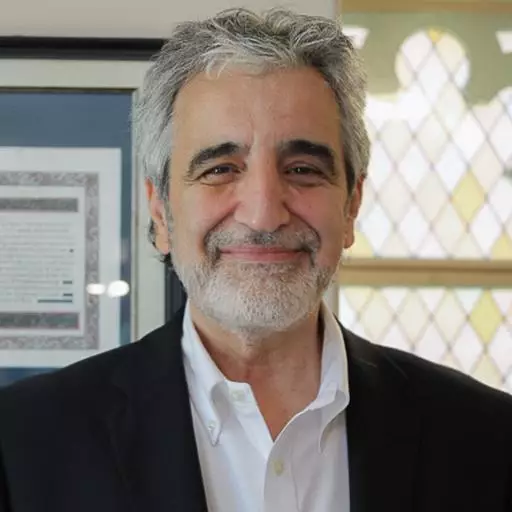
Messianic Leader J. Isaac Gabizon
https://www.bethariel.ca
https://bethariel.ca/donate/
Guest (Female): Shalom and welcome to Shalom Ariel and to this our 46th sermon in the book of Mark with Messianic leader Jacques Isaac Gabizon. When Yeshua had confronted the Pharisees concerning their traditions, telling them what hypocrites they were, it must have made the disciples very uneasy because we read in Matthew how they came to Yeshua afterwards and asked him if he knew how offended the Pharisees were by his condemnation.
I remember years ago, even as a believer, how I would look at the men wearing their Tallit, their prayer shawls on the Shabbat, on the Sabbath, walking the streets. They looked so holy and they looked so wise and such good law-abiders. How dangerous could these holy men really be, I thought? Why offend them? But if we abandoned the truth to avoid offending, what love is really being shown? Were we not offended in some way when God came to us and told us we were sinners and without his grace, we would be lost?
That offense caused our heart to be contrite before the Lord. Yeshua may appear offensive, but it is only to those who are unwilling to yield because if they would yield, then the experience of the perfume of life would come to them instead of the thorns on the rose bush. It's not hateful to be offensive and speak up concerning our faith. It's a sign of love and compassion.
Someone once said that the truth only offends those who live outside of it. And in terms of the word and its definition, offensive doesn't always mean to be hurtful or critical. Team sports often have offensive and defensive players. How might anyone score if all were playing on the defense? We need to cross the midline in the field, and we need to show the direction that we're going on in order to score.
After all, whose side are we on anyways? Let's remember that the word of God is folly and the Tauv is foolishness to those who are perishing. So we would be way off if we would think that what we say would not be offensive in some way. But a key to being on the offense without being offensive is, of course, the attitude with which we share the good news. So in an effort not to be offensive, let's remember not to take away too much of the gospel and paint another picture which will just foil the whole process. Let's let our hearts and minds be covered with love and compassion and work on the offense and let the Lord tackle the sin in everyone's heart. Be blessed as you listen in to today's message and Shalom, Shalom.
Jacques Isaac Gabizon: Here we recognize the spirit of God who so many times in the Hebrew Scriptures told Israel not to add or take off from the word. And even here, by the way, there's a touch of sarcasm. I love reading the Bible and seeing these things. Look at verse nine. He says you are experts in setting aside the commandment of God in order to keep your tradition. The word for expert is Kalos, that means beautiful, right? Literally, he was telling them see how beautiful you are, or see how beautifully you have evolved.
Another translation from the New Testament in modern speech says, "Praiseworthy indeed to set at naught God's commandment." The Jewish Complete Bible says, "You have made a fine art of departing from God's commandments." It's nice to read the Bible with this sarcasm. But let us go back to the word hypocrite. This word raises another issue. Some have cashed in on these remarks to voice their anti-Semitism and accuse the New Testament to treat Jews, and all Jews, as hypocrites.
Someone has even made a long list of about 450 examples and explicitly anti-Semitic verses throughout not only the Synoptic Gospels, that is Matthew, Mark, and Luke, but also the book of Acts. This man, his name is Norman A. Beck, happens to be a Lutheran pastor and his work is used by anti-missionaries today to bash the New Testament. He says that Jews are referred to as vipers and poisonous snakes, hard-hearted and hypocrites, thieves and robbers, and blind guides to the blind. This is what Jesus said, in fact.
But Yeshua was not speaking to the general Jewish public. What they fail to see is that these words, like the word hypocrite here, are addressed to the religious leaders who were misleading the Jewish people. They were not addressed to all Jews, but to the religious leaders. Not all Jews are Pharisees, and not all scribes and Pharisees are hypocrites. In fact, it is because of many faithful scribes that we have the word of God today.
But the very point of this text is to show us that religious leaders do not represent the people's opinion as far as God is concerned. The New Testament is a pure Jewish book promoting God's word and always promoting and protecting Israel, even at the cost of her own religious leaders. We need to make that distinction here. And notice that even the disciples fell in the net. They went as far as scolding Jesus for speaking this way to the Pharisees. Can you imagine?
It's in Matthew who reports their words. He says they said to Jesus, "Do you not know that the Pharisees were offended that they heard this statement?" They didn't get the message at all, at least not just yet. But through this saying, we can see the force and great influence of the man-made religion at that time, and today as well. But Yeshua again does not as yet answer their question directly, but he proceeds to give an example and how the tradition of the elders goes in annulling the very word of God.
The example is found in verses 10 to 12. Let us read it. It's a little bit complicated, but it's powerful. It says, "For Moses said, 'Honor your father and your mother,' and 'He who speaks evil of father or mother is to be put to death.' But you say, if a man says to his father and his mother whatever you have would help you is Corban, that is to say given to God, you no longer permit him to do anything for his father or his mother."
This is a case of using Scriptures against Scriptures, like what the cults do actually, right? They pull a verse here and a verse there, and you never end with them. Like Peter once spoke of untaught and unstable people who twist the Scriptures to their own destruction. Second Peter 3:16. The key word here is Corban. If it is left untranslated from the Hebrew, it is surely that we must search it, and when we do, we find out that this word actually opens up the book of Leviticus, the book of redemption.
It is there translated as offering, offering. It is in verse two, in the very first chapter, which says, "When any man of you brings an offering, a Corban, to the Lord." This word is used 80 times, 78 times of them to describe the means with which the Israelites could approach God through sacrifices and offerings. So it is such an important word in the Bible that it has for them become like a magical word, a password, which they believed freed them from all other things, even from other laws in the Torah.
And here they used it to actually annul the fifth commandment which says, "Honor your father and your mother." This tradition of the elders decreed that a person may free himself from his obligation to his parents by just saying Corban and diverting the help due to their parents to God, leaving his parents in the cold. I don't know if you realize the evil behind this law. They not only used the word against the word, but they put God in opposition with the parents.
They break the family unit in putting God between the child and the parents. They fabricated a situation which should never have been, for one child should always honor his parents, no matter what. The point is one cannot follow a law by breaking another. You cannot steal money and give this money as a tithe. It is an extreme example and Yeshua ends this argument by saying, "And you do many things like that." This is only one.
And again, this is not only for the Pharisees or for the other religious leaders today. They are for every believer, for we, for instance, often try to lessen the strength of a commandment in the word of God to fit our lifestyle by quoting a verse that suits our desire. I've seen this so many times. We may not comprise one commandment by disobeying another or obeying others. While we can draw great blessings from the word, we can also lose blessings if we are prone to manipulate the verses for our own benefit.
And this we see it so many times, and many do not take the whole teaching of the word, for example, and just want to take whatever they want. I believe this is speaking to them as well. It is then at this time that Yeshua answers their question directly. They asked in verse five, "Why do your disciples not walk according to the tradition of the elders but eat their bread with impure hands?" The answer, or the first answer, is in verses 14 to 16. Look at what he says.
"Listen to me all of you and understand. There is nothing outside the man which can defile him if it goes into him, but the things which proceed out of the man are what defile him. If anyone has ears to hear, let him hear." Do you understand what he meant? If you don't, don't worry about it, even the disciples did not understand. This is why when they left the crowd and went into a private place, they asked the question again, or they asked Jesus to explain.
So he proceeded to explain it again and began by saying, "Are you so lacking in understanding also? Do you not understand that whatever goes into the man from outside cannot defile him because it does not go into the heart but into the stomach and is eliminated?" thus declaring all foods clean. What Yeshua was simply saying is that it is not what you eat that makes you unholy or unclean, but it is what you say. It is what you think. It is what is in your heart. It is what is in your mind. This is what he is saying. It's as simple as this.
However, in the way verse 11 is translated, it seems at this point that Yeshua declares all foods kosher. This is what many people believe. This is what actually the majority of commentators have concluded. Others have said, no, it cannot be. It's a scribal error. Somebody made a mistake. It cannot be there. For one thing, I just want to tell you one thing. Yeshua could not have deemed all food kosher at this time, for he himself was under the Mosaic Law until his death and resurrection.
He said it in Matthew 5:17-18, "Do not think that I came to abolish the Law and the Prophets. I did not come to abolish but to fulfill. For truly I say to you until heaven and earth passes away, not the smallest letter or stroke shall pass away from the Law until all is accomplished." When would that be? Paul answered that question in Galatians 3:19. Why the Law then? It was added because of transgressions until the seed, that is the seed of the woman of Genesis 3:15, Yeshua, would come to whom the promise had been made.
That is until Yeshua fulfills it, and he fulfilled it on the Tauv, that is when he resurrected. So by the time of Mark 7, the Law was still valid and the laws concerning food also were still valid. So how can we understand what he's saying when it says that he declared all foods clean? Actually, it's not complicated. Let me read it the way the Greek renders it literally.
He says, "Because it enters not of him into the heart, but into the belly and into the draught goes out, purifying all this food." The point is that the body itself purifies all food that it intakes. This is the point. It does so by taking the nutrients and eliminating the rest. Therefore, the body can, in that sense, purify the food making the body a clean and well-functioning vessel. However, the heart cannot do that.
The heart takes in things from the outside: thoughts, ideas, temptation. That heart very often does not know how to eliminate the bad, the waste, and keeps it stored somewhere in the heart and the mind. So while the body can make all food clean, the heart cannot create a spiritually pure vessel because it does not know how to eliminate or discard all this thing. This is why we need God. This is why we need the Scriptures.
It is then a question of the heart, for our religion is one which demands a very close relationship to God who knows all things, all things in the heart. There's nowhere we can hide from him. He's the one who is able to judge the thoughts and intention of the heart. Let's give it up to him. David said, "Where can I go from your spirit?" To the remotest part of the earth, even in hell, actually, God can see. No one can hide from God. The Lord sees all things, and so it all begins in the heart.
This then is the controversy between tradition versus truth. It is sad to see how those religious leaders were so far away from the people, but Yeshua's answer to them encourages us to ask questions, to think out of the box, to investigate, and to always put the word of God as our first source of truth. To close, what really stands out again in our text of today is again and again the big chasm which exists between man-made religion and the great and pure truth we find in the word of God.
When Yeshua came, he was confronted by a very well-already established religion, that of the traditions of the elders. This is why they could not understand him. They could not see that he was the Messiah for they were so far away from the Scriptures. And Yeshua began his ministry, if you remember, by emphasizing this point. Do you remember the first miracle that Yeshua performed? Changing the water into wine at a wedding in Cana.
John tells us that right at the door of where the wedding took place, there were six containers which were used for ceremonial cleansing. The number six again reminds us the number of man, like man-made religion. These washings were connected with the outward purification. The water of these containers was used to wash both the utensils and their hands. But Yeshua turned the water into wine.
It was the first of his 35 recorded miracles of Jesus. And by changing the water into wine, Yeshua demonstrated that true religion is from the heart. He took this water that was used to wash the exterior and made it into wine so we can drink it, we can drink God's word which cleanses us and purifies us. This was a way to inaugurate his ministry, but he also brought this message to a new dimension at the end of his ministry.
Let me explain. You know during the Passover meal, which is actually the Last Supper, there were three washings of hands. Once before the first dipping, the second time before the main meal, and the third time before reciting the grace after meal. When Yeshua conducted the Passover, he skipped this tradition, but he kept only one out of the three washings. And what did he wash when he started to wash? Not the hands, the disciples' feet, showing what true washing is all about: about love and about service.
A stronger demonstration of the servant-hood we cannot find anywhere. The King of Kings washed the feet of his servants to show us how much we should love one another. Let us pray. Let's bow our head in prayer.
Heavenly Father, you did not leave the world alone, nor did you leave us orphans. Not as a whole and not a single one of us. You sought us and found us since we had fallen away from you and were lost by bringing about reconciliation, opening a path to us, and giving us a promise in your son Yeshua HaMashiach. And so whatever we've learned today, whatever we have read and heard, allow your mighty word to work in us.
And Heavenly Father, in these times of turmoil in the world, which tell us that Yeshua is coming soon, we ask for a revival beginning right here in our congregation. Move the hearts, bring us to see the urgency of the times, give us a love such as a deep one for our neighbors so that they will see you. And so we ask for thousands of conversions, for millions to have their names written down in the book of life. We ask, Lord, for your blessings upon this world before the end. Be shem Yeshua HaMashiach, to the congregation, the Lord bless you and keep you. The Lord make his face shine upon you and be gracious to you. The Lord lift up his countenance upon you and give you peace. Amen and amen.
Guest (Female): Welcome to this segment of our program where we have the Q&A with Messianic leader Jacques Isaac Gabizon and today we're going to address the subject of the denials in the end times. Be blessed as you listen in. Dear Rabbi Pastor, the Bible speaks of the end times in general, encompassing many aspects such as Israel and the nations of the world. But it also specifically addresses the church in the end times, both the invisible and the visible church. What are the signals and how can we recognize the church of the end times? Thank you and Shalom.
Jacques Isaac Gabizon: I just want to begin by telling you that there's a much larger study that was previously made on the end times which is available on our YouTube channel. You can get there by going onto YouTube, Beth Ariel Montreal, all one word, and then by clicking on playlist. There you will find a fuller study on the end time and the church in the end time. However, I will summarize the six red flags we should be recognizing as happening around us in these days.
The Bible teaches that slowly but surely the universal church will continue to fall away from God. Yeshua in his last prophecies are about the condition of the churches in history and he spoke of the last church in Revelation 3, the church of Laodicea, which he spews out of his mouth, for it is a church of non-believers in God like an empty shell. This church will characterize the one in the tribulation, something we see rising in our days.
And this final spewing follows a numerous warning found to the church in the epistles. When gathered together they underline these six red flags which we can call a system of denial, a system which now continues to spill into the evangelical churches at a very fast pace. Originally, back in the 1950s, it was Dwight Pentecost in his great book, Things to Come. He spoke of this system and formulated nine denials. We will sum them up in five major categories and add one more that is very prevalent today.
The first denial is a minimization, a diminution leading to a full rejection of the person and nature of the Messiah Yeshua. To many today he is no more the mighty God spoken of by Isaiah. He is no more the first and the last, the beginning and end. Some demote him to the rank of merely a great man and no more. And these statements are not coming from the outside, but actually from inside the church. Peter tells us that there will also be false teachers among you who will secretly introduce destructive heresies, even denying the Master who brought them. That's Second Peter 2:1. This is then the first and major sign to consider.
The second denial is an outward attack on the Scriptures itself. It denies the power of the word of God. This comes about with the departure from the literal interpretation of the Scriptures to an allegorization at which point all becomes a matter of reinterpretation with a shaky foundation. This is when the word of God falls at the mercy of both reason and imagination. God is clear throughout the Scriptures that his word is not to be trampled on. His last warning is found in Revelation 22:18 and 19.
Guest (Male): I testify to everyone who hears the words of the prophecy of this book. If anyone adds to them, God will add to him the plagues which are written in this book. And if anyone takes away from the words of the book of this prophecy, God will take away his part from the tree of life and from the holy city which are written in this book.
Jacques Isaac Gabizon: These two first denials stand at the top of the system: remove Yeshua and the Scriptures, you have Laodicea. Then you have confusion leading to the third denial, the denial of the faith, where some will substitute and replace God's gift of faith with other man-made precepts and religion which will satisfy their craving. Faith never disappears, it is just replaced by something else away from God. The first part of First Timothy 4:1 says, "Now the Spirit expressly says that in the latter times, some will depart from the faith."
The word depart is of the same root as apostasy in the Greek, which itself speaks of divorcement. This is when one divorces God as it pertains to those who in unbelief pretended to believe to take advantage of the benefit but finally left it. These are them of whom Yeshua said, "I never knew you." The fourth red flag is a consequence of the third one: it is a denial of morals. That is a departure, a rejection of what the Bible says is right and good, and some go even further by reversing morality altogether.
This is the kind of immorality that Jesus speaks about which existed when the Lord destroyed the earth with the flood and when he destroyed Sodom and Gomorrah. The words of Yeshua are found in Luke chapter 17:26 to 30. It says, "And as it was in the days of Noah, so it will be in the days of the Son of Man. Likewise, as it was also in the days of Lot." You want to know how the world will increasingly be before the coming of the Lord? See the account of the flood and of Sodom. The causes are very much the same.
The fifth denial is something that is increasing very quickly at least in the area where I live and within churches that used to be very much in the word. It is the denial of end-time prophecies. This is what Peter tells us.
Guest (Female): Knowing this first, that scoffers will come in the last days walking according to their own lusts and saying, "Where is the promise of his coming? For since the fathers fell asleep, all things continue as they were from the beginning of creation."
Jacques Isaac Gabizon: Second Peter chapter 3:3-4. By the first century already Peter saw the direction of the church and gives many warnings of which the fact that many will mock the end-time prophecies such as the coming of the Lord, such as the Rapture, such as the Millennium. After the departure of the last apostle 2000 years ago, a new kind of Christianity arose which says precisely what amillennialists and post-millennialists are saying: "Peace, peace" when there's no peace.
And they teach also that Satan is bound and that we're living in the Messianic age. This is what they always taught in the nominal Christianity and this is where so many evangelical churches are falling into today. Another type of this very denial, by the way, is not to teach prophecies at all. That amounts to denying about a quarter of the Scriptures and this also is rampant, for if there is a time when prophecy should be taught and learned, it is today.
The sixth and last red flag, such an obvious one, is the denial of Israel. This denial grew so fast after the death of John the apostle. The Church Fathers' teachings, as it is in modern churches today, hold hands in saying that Israel has been replaced by the church and that they have no right to the land of Israel. This Christian anti-Semitism which already lasted 2000 years will culminate during the tribulation time. We already see its rising around us in our days.
Yeshua, when speaking of the two godly churches out of the seven, Smyrna and Philadelphia, he warns them about the blasphemy of those who say they are Jews but are not. These may very well be those who adopt the replacement theology through the last 2000 years and were responsible for the persecution and the death of so many Jewish people, as it will be, I believe, in the tribulation.
These then are the six of the system of denial: the denial of the nature of Yeshua, the denial of the power of the word of God, the denial and rejection of the gift of faith, the denial of morality, the denial of prophecies in the Bible, and the denial of the right of Israel to exist. I encourage you to look into the series on the church of the end times to get more information.
Guest (Female): Shalom Ariel is a daily radio program emphasizing the Jewish perspective of Scripture. God is not through dealing with Israel, nor will He renege any of the promises He has made to her. Our teacher for this program, Jacques Isaac Gabizon, is a Messianic Jewish believer and Messianic leader at Beth Ariel congregation right here in Montreal. If you've been encouraged by the messages, we'd love to hear from you.
Give us a call at 1-888-685-5902 or you may write us at info@bethariel.ca, that's B-E-T-H-A-R-I-E-L all one word dot C-A. You are also welcome to join us for our Saturday morning services. We are located at 6297 Monkland Boulevard, corner of Madison in NDG. The message is given in English, but we do offer simultaneous translation into French and Russian. Services begin at 11:00 a.m. We have Shabbat school for children of all ages up to and including teens.
You may also download audio messages from our website at bethariel.ca and enjoy other in-depth teaching from Jacques Isaac. If you would like to sign up for informative newsletters, log on to our website and add your name to our email list. Shalom Ariel is a listener-supported program. If you have it on your heart to donate, it will be a great blessing for the continuing ministry and outreach of Beth Ariel. Thank you and Shalom, Shalom.
Featured Offer

Prophecies take up about ¼ of the Scriptures so we cannot simply ignore them. Knowing prophecy enables us to give a clear presentation to others of why things unfold the way they do in such areas as politics, morality, technology and global ecological changes. It also helps us to rightly place Israel in God’s prophetic plan.
Past Episodes
- The Armor of God
- The Believers in the End Times
- The Book of Daniel
- The Book of Deuteronomy
- The Book of Ephesians
- The Book of Esther - Purim
- The Book of Exodus
- The Book of Ezekiel
- The Book of Ezra
- The Book of Genesis
- The Book of Hebrews
- The Book of James
- The Book of Jeremiah
- The Book of Joel
- The Book of John
- The Book of Leviticus
- The Book of Numbers
- The Book of Philippians
- The Book of Revelation
- The Book of Romans
- The Book of Ruth
- The Book of Zechariah
- The Feast of Passover
- The Feast of Purim
- The Feast of Shavuot - Pentecost
- The Gospel of Mark
- The Gospel of Matthew
- The Letter to the Galatians
- The Messiah in Isaiah
- The Messiah in the Book of Isaiah
- The Messiah's Prayer
- The Nativity: The Unwrapped Gifts of God
- The Resurrection of the Messiah
- The Sermon on the Mount
- The Tabernacle

Video from Jacques Isaac Gabizon
Featured Offer
Prophecies take up about ¼ of the Scriptures so we cannot simply ignore them. Knowing prophecy enables us to give a clear presentation to others of why things unfold the way they do in such areas as politics, morality, technology and global ecological changes. It also helps us to rightly place Israel in God’s prophetic plan.
About Messianic Viewpoint
About Jacques Isaac Gabizon
Contact Messianic Viewpoint with Jacques Isaac Gabizon
info@bethariel.ca
http://www.bethariel.ca/
Beth Ariel Congregation
CP 46521 CSP Boul. St Jean
Pierrefonds, QC, H9H 5G9
Toll free (888)-685-5902