
The Gospel of Mark, Part 45


The Gospel of Mark, Part 45
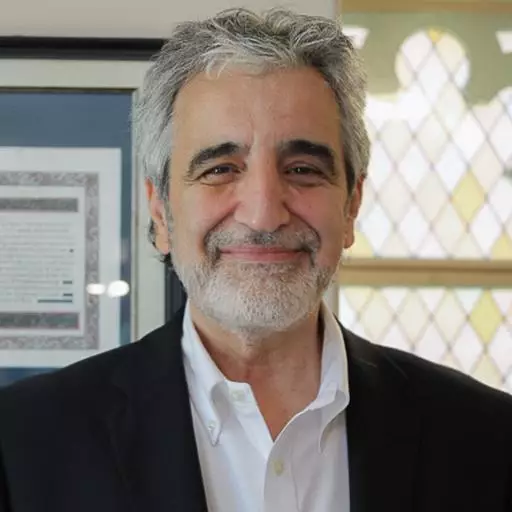
Messianic Leader J. Isaac Gabizon
https://www.bethariel.ca
https://bethariel.ca/donate/
Guest (Female): Shalom and welcome to Shalom Ariel and to this our 45th sermon in the book of Mark with Messianic Leader Jacques Isaac Gabizon. How many of you have seen the movie Fiddler on the Roof? This powerful musical starts off with a song called "Tradition." We see a fiddler and he is playing his instrument right there on the roof, a very unstable place to be standing. But that is the point of the movie. The winds of time were changing and the traditions that these European Jews were trying so desperately to hold onto were falling right out of their control. Imagine, no matchmakers for the marriages anymore.
So how important are traditions anyway? Traditions do hold a valuable place in any society. They bring us together as a community and they provide an opportunity for us to share our experiences. They allow us a moment to go back in time, reflecting on the fact that these very traditions also governed the lives of our families many generations ago. Traditions then give us this bond to the past. The problem is that because some traditions go back so very far in time, they have become validated as absolute truth because nobody can confirm their origin.
And here is where we take a look at the Gospels and see how Yeshua dealt with tradition and in particular with the tradition of the elders, man-made laws coming from the Mishnah and the Talmud. Many of these laws were impressed upon the people and following these laws were said to make a person clean or righteous. One of the traditions demanded that a person wash their hands before eating bread. This was so important that in the Babylonian Talmud, it says that whoever neglects this practice makes themselves liable to being excommunicated. We can see to what extent these traditions were considered valid, even at times seeming to surpass the validity of the scriptures themselves.
Yeshua explained to the people that we are not defiled by the things that we eat or whether our hands are washed or not, but what defiles the person is what comes out from the inside, from the heart: the thoughts, the words, and the deeds. This is what renders us unclean before a most holy God. And when we put traditions above the concern and respect for others, we will offend, we will judge, and we will condemn when this has nothing to do with the true worship of God.
How many of us like certain styles of preaching or teaching or the way one is to worship or the music that we listen to? There are some churches which won't play music during worship, claiming that only the voices should be heard. Some congregations have full bands. Is one place more holy than the other? While truth cannot be broken, traditions can and should be when necessary because then we will be liberated from the things that keep us in a box and away from the truth of the Word, the truth that our eternal future is based on. Be blessed as you listen into today's program and Shalom.
Jacques Isaac Gabizon: And so let us now pray for the Word. This is an ancient prayer before we open up the Word. You can pray with me: Blessed are you, O Lord our God, King of the universe, who has given us the Word of truth and has planted everlasting life in our midst. Blessed are you, O Lord, who gives the scriptures. Amen.
Let's open our scriptures now to the book of Mark, chapter six. The story in front of us is an eye-opener of the ever conflict between man and God. The battleground is religion, that place where one would expect to find harmony and rest. Yet it is the first battlefield. It is a fierce one, for here Yeshua removes his white gloves and denounces the abuse because Yeshua gets angry when somebody touches the Word of God as it is in the Hebrew scriptures.
Let us begin to see how these things are brought to us. We first read verse 53. That Yeshua and the disciples came to the land of Gennesaret. Here we can see that the theme of the Exodus, the new Exodus with the disciples now leading Israel to the rest we find in Yeshua, is brought back by the use of this ancient name, Gennesaret. This name was used mainly in relation to Moses and in relation to Joshua when they brought Israel into the land.
The root of the Hebrew is Kinneret, which is from the word Kinnor. It means a harp, for this is the shape of the Lake Tiberias. And so right away we are brought to see the continuation of the theme of a new Exodus, a new era that is supposed to open up in the Gospels. We have seen this Exodus motif in the feeding of the five thousand where the bread was miraculously given, recalling the manna when God fed his people.
We have seen how Yeshua asked the people to recline. The only time they were asked to recline was during the Passover meal and so recalling the Exodus. And they were to recline on green grass even though we're told that they were in the wilderness, in the desert. This again points to the great Exodus provision given then as well as what was done at that mount. At the end, twelve baskets were left, one for each of the disciples. And the word for baskets here was known to be used by Jews, indicating Israel's participation into a new phase of Bible history that is to begin the spreading of the Word of God to the nations.
The Greek word for basket is kophinos, from a Hebrew word kuppah, which is a basket that was distributed to the poor. So the twelve baskets were not for the disciples' own use, but to be given to others as the Word likewise was about to be spread abroad and not kept for themselves. And the way it is written, it says twelve full baskets. Actually, it is literally twelve baskets of fullness, indicating that God was and would be with the disciples in this important work itself.
And we have seen how Yeshua showed his glory by walking on the sea. The verse says and he willed to pass by them. The same word used by the Septuagint when God passed by Moses to show his glory at Sinai, a part of the entire Exodus event. And we also remember that according to the Hebrew scriptures, only God is seen walking or trampling over the water, and here Yeshua was doing it.
And now as we start reading the following verses, it looks like a second Exodus has ended and the beginning of the Messianic times has begun. As Yeshua came to that place, we hear that immediately the people recognized him. And we read in verse 55 that they run about the whole country and begin to carry here and there on their pallets those who were sick to the place they heard he was. Wherever he entered villages or cities or countrysides, they were laying the sick in the marketplaces and imploring him that they might just touch the fringes of his cloak. And as many as touched it were being cured.
That sounds like a great awakening. People coming from everywhere: cities, villages, countryside. And notice that so many were healed just by touching the tzitzit, the fringes of Yeshua. There must have been great joy and a sense that a new era began until you read the next verse. And now you ask, which verse since we finished chapter six? Originally the New Testament was not written with chapters, paragraphs, or even word breaks.
Bible chapters which we have today did not come into play until the 13th century. And the New Testament was not divided into numbered verses until the 15th century. So sometimes it is good to read these chapters through without a break and especially when it comes to chapters six and seven. The start of chapter seven offers no temporal or geographic changes. So we are in the same scene, same event. And if you read it through without a break, you will be struck by the obvious depth of indifference we see on the part of the religious body, which helps us to understand why Yeshua is going to be so angry.
As the people were getting healed and restored, we see a company of religious men coming from Jerusalem, unmoved by such a revival of joy. Instead, we see them focusing on what is irrelevant. See what they are concerned about in verse one and two. The Pharisees and some of the scribes gathered around him when they had come from Jerusalem and had seen that some of his disciples were eating their bread with impure hands, that is, unwashed. People were getting cured and they were concerned about hand washing. If it did not identify them as Pharisees and scribes, we might have thought that they came from Mars or Venus.
Notice how the New American Standard Bible translates this part. It says they gathered around Yeshua as if they were turning their back to the people and focusing and arguing against Jesus. For their focus we know already presumably they came to inquire and make an investigation, but we know that they already decided to destroy the Messiah. This we know from chapter three, verse six. And they came from far, realizing that they had to act because Yeshua's fame was growing.
The distance from Jerusalem to Capernaum is about 200 kilometers. That is a 35-hour walk. That is over a three-day walk. And they could not walk on a straight line because of Samaria. They must have gone over another 20 hours. So they came to see how they could even destroy him. But see when they raised the issue of hand washing. Do not think that they were concerned about hygiene. That would have been nice, but they were not. They were concerned about their own religion and how one can appear holy or holier than others.
Notice one thing, they're talking about washing hands but only for bread. Their laws speak of washing hands before eating bread but not before eating fruits, for example, not before eating heads of grain like in chapter two. They were not concerned about the health of the people but how their laws were followed regardless of the welfare of the people. If they were truly concerned about the health of the people, they would have been joyful and awestruck to see so many people healed.
So what we see is that while others were being healed and blessed, they were thinking of the disobedience of their man-made additional laws. They came to believe that not to wash would render somebody's heart unholy. This is what it means to miss the boat. Something we learn never to do from Noah. Missing God's boat is tragic. This then is how the story begins. Listen now to their question which brings us to the core of the problem. Mark quotes them in verse five. So the Pharisees and the scribes asked him, Jesus, why do your disciples not walk according to the traditions of the elders, but eat their bread with impure hands?
Here we come to the term tradition of the elders, and this is where the problem is. The tradition of the elders is what they believed to be an oral law which God gave to Moses on Mount Sinai along with the written law. And so just a century or so before Yeshua came, they made a new religion from this oral law which is enclosed in the Talmud. But the Torah itself never even speaks of an oral law. In fact, Moses even specifies many times over that everything that God told them was written down. Exodus 24:4 for instance, or the beginning of Joshua.
Now this does not mean that all that is written in the Talmud is bad or wrong. There are many very good things in there. It is an important historical document, but it is not inspired by God. And they are so convinced about it and so protective of it that it brought some of them to say in the Talmud, "The punishment of him who transgresses the decisions of the scribes is more rigorous than that which is plainly written in the scripture."
This then is the gap between Yeshua and the Pharisees, between the Torah and Rabbinical Judaism. This explains why the Pharisee could not accept Jesus. They were in two different spheres. Last week I had supper with a religious Jew, a very nice person. It was not the first time, actually we have become friends. So he told me that for the last 30 years he made a return to religion and every Shabbat since then and every holiday he goes to the synagogue. He also prays every day. And so when I spoke about Rabbinical Judaism compared with biblical Judaism, he had no idea what I was speaking about.
Then I proceeded to explain the difference between the Tanakh, that is the Bible, and the Talmud. He replied by asking me a question: Are they not the same? No, they are not. I explained that the Talmud happens to contain the traditions of the elders, but it is the Tanakh which is the full revelation of God in the Hebrew scriptures. He was surprised just as I was surprised when I originally believed in Yeshua when I learned about the difference between the tradition and the Word of God. I thought also they were the same.
For example, I used to believe that it is taught in Rabbinical Judaism that the new year is in September-October. This is not taught in the scriptures. The new year is at Passover. They teach not to mix meat and milk, yet when the Lord and the two angels came to visit Abraham, this is what Abraham served them. There were curds and there was meat together at the same table and the Bible says they ate.
What about Christianity? Here, Christmas is coming and many believe that Jesus was born on the 25th of December. Let me tell you there is one chance out of 365 that he was born on this date. So the Bible does not say which day he was born. I am not passing a judgment on Christmas here, but just for you to know. Others insist that Christians ought to pray to saints, like the Jews. Others say our worship is to Mary. Others call on the dead members of the family for help, but all of this is strictly forbidden in the Word of God. It is forbidden for us to call on the dead or to worship any created being. This breaks the first and second commandments in the Bible.
We then ought to make a distinction between tradition versus truth. And the best way is to read your Bible every day. The real issue again is not with tradition. Tradition could be nice, could be good. The real issue itself is what the people do with tradition. The very word tradition bids us to investigate, not to believe anything right away. In the Greek the word for tradition, paradosis, comes from another root word which means to betray, which means to deliver, as Judas Iscariot delivered Jesus into the hands of the religious body. Tradition could be good and it can also throw us out in another path.
Let me tell you a story. Years ago there was a lonely guard standing at attention in a secluded corner on the palace garden. The king came and he asked him, he says, what are you guarding? What are you there for? So the guard answered, I don't know. The captain ordered me on this post. So the king called the captain and he asked him what this was all about. He answers written regulations specify a guard was to be assigned in that area. But why? asked the king. The captain says, I don't know.
So the king ordered a search to find out why. The archives finally yielded the reason. Years before a queen had planted a rose bush in that corner. She ordered a guard to protect it during an evening. And so one hundred years later, after so much time wasted, guards were still guarding that now barren spot. It does not make sense. So it is not because it was done this way then that we ought to always do it this way today as well. We have to challenge these things.
We need to ask questions and think out of the box. And the best way to start is by reading the Bible, which will give us that wisdom. This is a promise from the scriptures. It would help us to develop this proper way of thinking. Now Yeshua's answer is thorough and it is thorough because it is an important issue. Though he does not answer the question right away, he will first go to the core of the problem. See the first thing he says in verse six to seven.
Well did Isaiah prophesy of you hypocrites, as it is written: This people honor me with their lips, but their heart is far from me. And in vain they worship me, teaching as doctrines the commandments of men. These are strong words coming from our Yeshua because this is what separates man from God. Yeshua calls them hypocrites. This is how the Greek language actually or Greek people at the time called an actor. But these people went way beyond the stage. It is good for an actor to really get into the skin of the person he acts, but it becomes a tragedy when a person believes that they were inspired of God in their doctrines and act as if they were emissaries of God.
And in his argument Yeshua refers to the scriptures. That is the best defense for us. This is the first time, by the way, in Mark where Jesus cites the scriptures, for this is where our foundation is sitting. So he begins by quoting a passage that was written some 700 years before his time, showing that the problem has not changed. And up to today, 2,700 years later, after Isaiah, we can quote the same passage. What did not change? The heart of man doesn't change.
The original citation is from Isaiah chapter 29, which is an apocalyptic text speaking of wars and invasion, something Israel was about to experience some 40 years after the time in the Gospel. But see that then, in the time of Isaiah and in the time of Jesus, what preceded these wars? An apostasy. An apostasy that is when people just leave the pure Word of God and attach themselves to false doctrines and prophecies. And as it was then, so it is today as we are approaching the end times. There are more and more people who are falling from faith like Paul says. The situation is similar.
And see the prominence and weight Yeshua gives to the Word of God, to the Bible. Notice the repetition on stating that they go against God. Verse seven: they were teaching as doctrines the precepts of men. Did you notice the word "as"? As, that is whatever they said, they insisted it is from God. They taught it as doctrine from God. This is where the problem is. Verse eight: they were neglecting the commandment of God. The Greek word for neglecting, aphēmi, means to divorce, that is to stop or give up.
Verse nine: they were setting aside the commandment of God. Another Greek word for setting aside meaning to nullify completely. Verse thirteen: Yeshua points out the dangerous consequence of moving away from his Word. There he's implying that they were robbing God's Word of its power. Using God's Word to support a belief we created comes out to rob God. When Yeshua begins by saying it is written, the verb actually is a perfect tense, as if he was saying it is and it stays written.
Now we understand why Yeshua is so angry. They touched his Word. Here we recognize the Spirit of God who so many times in the Hebrew scriptures taught Israel not to add or take off from the Word. And even here there is a touch of sarcasm. Look at verse nine. He says you are experts at setting aside the commandment of God in order to keep your tradition. The word for expert is kalōs, that means beautiful. Literally he was telling them, see how beautiful you are. Or see how beautifully you have evolved.
Another translation, the Modern Speech New Testament, says, "Praiseworthy indeed to set at naught God's commandment." The Jewish Complete Bible says, "You have made a fine art of departing from God's commands." It is nice to read the Bible with this sarcasm. But let us go back to the word hypocrite. This word raises another issue. Some have cashed in on these remarks to voice their antisemitism and accuse the New Testament of treating Jews and all Jews as hypocrites.
Someone has even made a long list of about 450 examples and explicitly antisemitic verses throughout not only the Synoptic Gospels, that is Matthew, Mark, and Luke, but also the book of Acts. This man, his name is Norman A. Beck, happens to be a Lutheran pastor and his work is used by anti-missionaries today to bash the New Testament. He says that Jews are referred to as vipers and poisonous snakes, hard-hearted and hypocrites, thieves and robbers and blind guides to the blind. This is what Jesus said in fact.
But Yeshua was not speaking to the general Jewish public. What they fail to see is that these words, like the word hypocrite here, are addressed to the religious leaders who were misleading the Jewish public. They were not addressed to all Jews but to the religious leaders. Not all Jews are Pharisees and not all scribes and Pharisees are hypocrites. In fact, it is because of many faithful scribes that we have the Word of God today. But the very point of this text is to show us that religious leaders do not represent the people's opinion as far as God is concerned.
The New Testament is a pure Jewish book, promoting God's Word and always promoting and protecting Israel, even at the cost of her own religious leaders. We need to make that distinction here. And notice that even the disciples fell in the net. They went as far as scolding Jesus for speaking this way to the Pharisees. It is in Matthew who reports their words. He says they said to Jesus, "Do you not know that the Pharisees were offended that they heard this statement?" They did not get the message at all, at least not just yet. But through this saying we can see the force and great influence of the man-made religion at that time and today as well.
But Yeshua again does not answer their question directly, but he proceeds to give an example of how the tradition of the elders goes in annulling the very Word of God. The example is found in verse 10 to 12. Let us read it. It is a little bit complicated, but it is powerful. It says: For Moses said, Honor your father and your mother and he who speaks evil of father or mother is to be put to death. But you say if a man says to his father and his mother whatever you have would help you is Korban, that is to say given to God. You no longer permit him to do anything for his father or his mother.
This is a case of using scriptures against scriptures. Like what the cults do. They pull a verse here and a verse there and you never end with them. Like Peter once spoke of untaught and unstable people who twist the scriptures to their own destruction, 2 Peter 3:16. The keyword here is Korban. If it is left untranslated from the Hebrew it is surely that we must search it and when we do we find out that this word actually opens up the book of Leviticus, the book of redemption. It is there translated as offering. It is in verse two in the very first chapter which says when any man of you brings an offering, a Korban, to the Lord.
This word is used 80 times, 78 times of them to describe the means with which the Israelites could approach God through sacrifices and offerings. So it is such an important word in the Bible that it has for them become like a magical word, a password which they believed freed them from all other things, even from other laws in the Torah. And here they used it to actually annul the fifth commandment which says honor your father and your mother.
This tradition of the elders decreed that a person may free himself from his obligation to his parents by just saying "Korban" and diverting the help due to their parents to God, leaving his parents in the cold. I do not know if you realize the evil behind this law. They not only use the word against the Word, but they put God in opposition with the parents. They break the family unit in putting God between the child and the parent. They fabricated a situation which should never have been. For one child should always honor his parents no matter what. The point is one cannot follow a law by breaking another. You cannot steal money and give this money as a tithe.
Guest (Female): Shalom Ariel is a daily radio program emphasizing the Jewish perspective of scripture. God is not through dealing with Israel, nor will he renege any of the promises he has made to her. Our teacher for this program, Jacques Isaac Gabizon, is a Messianic Jewish believer and Messianic Leader at Beth Ariel Congregation right here in Montreal. If you've been encouraged by the messages, we'd love to hear from you. Give us a call at 1-888-685-5902 or you may write us at info@bethariel.ca.
You are also welcome to join us for our Saturday morning services. We are located at 6297 Monkland Avenue, corner of Madison in NDG. The message is given in English but we do offer simultaneous translation into French and Russian. Services begin at 11:00 AM. We have Shabbat school for children of all ages up to and including teens. You may also download audio messages from our website at bethariel.ca and enjoy other in-depth teaching from Jacques Isaac.
If you would like to sign up for informative newsletters, log on to our website and add your name to our email list. Shalom Ariel is a listener-supported program. If you have it on your heart to donate, it will be a great blessing for the continuing ministry and outreach of Beth Ariel. Thank you and Shalom, Shalom.
Featured Offer
Prophecies take up about ¼ of the Scriptures so we cannot simply ignore them. Knowing prophecy enables us to give a clear presentation to others of why things unfold the way they do in such areas as politics, morality, technology and global ecological changes. It also helps us to rightly place Israel in God’s prophetic plan.
Past Episodes
- The Armor of God
- The Believers in the End Times
- The Book of Daniel
- The Book of Deuteronomy
- The Book of Ephesians
- The Book of Esther - Purim
- The Book of Exodus
- The Book of Ezekiel
- The Book of Ezra
- The Book of Genesis
- The Book of Hebrews
- The Book of James
- The Book of Jeremiah
- The Book of Joel
- The Book of John
- The Book of Leviticus
- The Book of Numbers
- The Book of Philippians
- The Book of Revelation
- The Book of Romans
- The Book of Ruth
- The Book of Zechariah
- The Feast of Passover
- The Feast of Purim
- The Feast of Shavuot - Pentecost
- The Gospel of Mark
- The Gospel of Matthew
- The Letter to the Galatians
- The Messiah in Isaiah
- The Messiah in the Book of Isaiah
- The Messiah's Prayer
- The Nativity: The Unwrapped Gifts of God
- The Resurrection of the Messiah
- The Sermon on the Mount
- The Tabernacle

Video from Jacques Isaac Gabizon
Featured Offer
Prophecies take up about ¼ of the Scriptures so we cannot simply ignore them. Knowing prophecy enables us to give a clear presentation to others of why things unfold the way they do in such areas as politics, morality, technology and global ecological changes. It also helps us to rightly place Israel in God’s prophetic plan.
About Messianic Viewpoint
About Jacques Isaac Gabizon
Contact Messianic Viewpoint with Jacques Isaac Gabizon
info@bethariel.ca
http://www.bethariel.ca/
Beth Ariel Congregation
CP 46521 CSP Boul. St Jean
Pierrefonds, QC, H9H 5G9
Toll free (888)-685-5902