
The Gospel of Mark, Part 44


The Gospel of Mark, Part 44
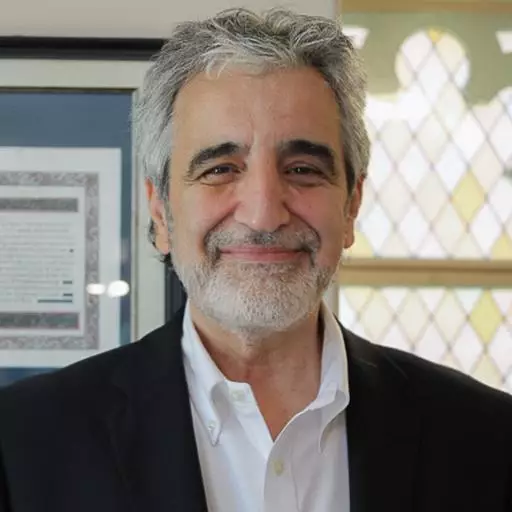
Messianic Leader J. Isaac Gabizon
https://www.bethariel.ca
https://bethariel.ca/donate/
Guest (Female): Shalom, and welcome to Shalom Ariel, and to this, our 44th sermon in the Gospel of Mark with Messianic Leader Jacques Isaac Gabizon.
Jacques Isaac Gabizon: Here is an important question for all of us. When God calls us into obedience, does that mean we will always be at peace?
This pericope of Mark that we are in right now challenges us with this very concept. When Yeshua commanded his disciples to go into the boat and cross over to the other side, they acted in obedience. They got into the boat, but what happened? Halfway across the lake, there was a storm. There was no peace facing them at this point, that is for sure. At this point, the disciples could have asked themselves, "Why did Yeshua send us out? Why would Yeshua put us in a situation of difficulty like this? Did we not do what he asked?"
But we see from this story that Yeshua put his disciples in this situation to teach them, to reveal more of himself, more of his glory, so that they would be utterly dependent on him as the one who controls the weather and walks upon the raging waves. In the same way, God calls us to live in obedience, and not that the end goal would be our happiness, but that the end goal would be the growth of our holiness.
How many prophets followed God, but struggled greatly? Jeremiah was known as the weeping prophet. Elijah wanted to cease living. Isaiah was told by God that he would go to a people, but they would not listen. What do all these people have in common? Their end goal was not their happiness, but rather their holiness.
Struggling plants seeds of holiness because of a choice we make to obey. A friend of mine is now going through chemo, and she will also need to undergo surgery, and then three more sessions of chemo. This, however, did not stop her from witnessing to another Jewish woman who was also undergoing chemo. Right now, my friend is discipling this woman. Imagine this other special peace that is prevailing at this point. My friend does not know the end result of all this chemo, but she is obedient to witness nonetheless.
Let us remember that obedience and doing the will of the Father is not an option. It is a test of our faith. We, in turn, must not focus on the end result, but on the blessings that obedience brings us through while we walk that storm. Be blessed as you listen into today's program, and Shalom Shalom.
Have you, for instance, yourself passed through the Philip experience? Do you know about it? One day, when Philip was about his business, the spirit spoke to him and brought him right next to a person who actually had a question about Isaiah 53. The reader was wondering whom the prophet actually is speaking in this chapter, of whom. Right there and then Philip showed the unique that it spoke about Yeshua, and he accepted the Lord, and he was baptized.
Have you lately been carried to reach such a person as we see in Acts chapter 8? The Philip experience will bring you to places you never dreamt to be before, and it will bring people to you you never expected to meet before. This is the way the Lord passes by.
Have you, for instance, enjoyed the Moses experience? It was after, you know, the third try that Moses was finally ready to do something in his life for the Lord. It took him 40 years in the comfort of the palace in Egypt to realize that he was called to deliver his people. And when he understood his mission, he went about to do it in his own way. He went and killed an Egyptian, and so he had to flee. For another 40 years, that was not the way to do it.
Then, when he was 80 years old, he finally submitted to the Lord, so that he was now ready to humbly lead the people. Have you felt that you were lost in time perhaps, or perhaps that you lost time, a lot of time, right? You feel perhaps that you missed the boat.
With God, there should not be such thing as resting one's case. He is the healer, the health giver. He empowers even the most feeble and brings him, him or her, to produce great works. We need only to will and to see when he passes by.
Another one. Have you ever been face-to-face with the Amos experience? Beautiful. You know, one day, as a very rich man was going about his business, when the Lord put such a deep urge for justice and such a great love for his word and for his people, that this same businessman and prophet Amos went to confront the most powerful and wicked people in Israel, and he blessed so many.
Have you had this urge, this deep call to do something for God and his people? It was, you know, Amos who said, "Surely the Lord does nothing unless he reveals his secret counsel to his servant the prophets." God very often does not work alone. He loves to work with people. Let us open the door, allowing him, or allowing ourselves, to see him pass by.
Now, the last verse of this account is on the one hand encouraging, yet on the other hand, very sad. Let us see what it says, verse 52. "For they had not gained any insight from the incident of the loaves, but their heart was hardened." That is the disciples, by the way. Now what is so encouraging about this verse? If it took so long for the disciple to realize such great miracles, then I am not so bad. That is the idea, right? I love the way, by the way, the scriptures reveal the true nature of God.
This you will not find in other religious books, remember, where their leaders are always heroes and superhuman. The Bible shows how we, being so frail, so sinful, could be brought to such great things and do great things for God. All men in the Bible begin low, at the bottom. No one was born an Isaiah or a Paul as we know them today. And for some of us, we might just be starting out, but that too is okay, of course.
The word "to gain any insight" is one word in the Greek, *synekan*, meaning to understand, to comprehend. It is not that they did not know or see, but they did not put things together. And when we do not exercise our ability to think, to meditate on these things, our heart hardens. Their heart were hardened. Why? Because a lack of understanding. This is not you, right? Same thing, problem with Israel. My people perish because of a lack of knowledge.
It was Peter himself who said to always be ready to make a defense to everyone who asks you to give an account for the hope that is in you, 1 Peter 3:15. But of course, I did not want to close this great account without telling you about the sixth miracle. This one is found in Matthew, and tells us that when Peter saw Yeshua walk on the water, did you know that he also walked on the water?
Now, that is so revealing, in that the Messiah is willing to bring a disciple to do what is impossible, even against nature, defying time, space, gravity, for there is no limit to where the Lord may bring us to do wonderful things if we are in his will. However, however, something happened when Peter began to walk on the water.
Let us see what happened. The account is in Matthew 14. So as Peter stepped out of the boat, and great, he started to walk, but it says, "When he saw that the wind was boisterous, he was afraid, and beginning to sink, he cried out, 'Lord, save me!'" And immediately Jesus stretched out his hand and caught him, and said to him, "Oh, you of little faith, why did you doubt?"
You know, perhaps as astonishing and paradoxical as the miracle is, so is Peter. He goes from great faith, really, to little faith. But why did Peter begin to sink in the water? Why? Simply because he lost sight of Jesus. He looked elsewhere.
The verse in Matthew begins by saying, "But when he saw the wind," that is it. He lost it. And when he was so close to Jesus, he was actually an arm's length from his savior, for Jesus only needed to stretch his hand to grab him. He was not far. The whole thing then is given here to bring us a very simple message: do not lose sight of God. Do not lose sight of Yeshua. He already showed us that he is willing to do great miracles through us, that is, he showed us that prayer is essential, recognizing his omnipresence is essential. Now he tells us not to be afraid of the things around us. "Do not lose sight of me," he says.
But Peter, Peter was not alone in failing at such crucial moment. Curiously enough, the other two men we spoke about, those who had a similar theophany, Moses and Elijah, also failed in a similar way when they were face-to-face with God. Did you know that? You remember that after Moses experienced a theophany, that is again a revelation from God, and after God declared his name, I Am, Yod He Vav He, the Lord wanted to further encourage Moses and train him for the work he was to do in Egypt. So God asked Moses, he says, "What is in your hand?" And Moses said, "A rod." So the Lord told him, "Cast it on the ground." So, as the account goes, he cast it on the ground, and it became what? A serpent.
Guess what happened after? Do you know what happened after? Moses run away. He fled. But how can you flee in fear when actually the Lord is standing next to you? And after that, he revealed himself so mightily, even revealing his name. Thank God again for these accounts. Okay, if Moses once fled, we do not have to feel so bad either.
This is when God called them back, by the way, and he had them actually grab the snake from the tail. I think it took some time, we do not know that. But he grabbed the tail, and the snake became a rod. We can be sure that every time actually he used his staff to guide his flock, he would remember this incident and God's power with him.
What about Elijah? It is similar. He had the courage to confront and by himself alone all the false prophets in Israel, 450 of Baal, and 400 of Asherah. They were 850 against one. That is faith in action. And he did it in a most extraordinary way. He built an altar, and then he asked the people to fill the water pots with water and put it on the burning, on the burnt sacrifices, and on the wood, fill it up with water. That is 1 Kings 18. They did it once, they did it twice, they did it a third time. And then he prayed to God. And then the fire of the Lord came and consumed the burnt offering, and the wood, and the stones, and the dust, and it licked up the waters that was in the trans, 1 Kings 18:38.
That was such a revelation from God, and everyone witnessed it, and not only that, he also prayed for rain, and the rain came after a severe drought, but then, then something happened. He received a death threat from a wicked queen, Jezebel. And you know what happened? He run away. He fled. He actually walked from Mount Carmel, you know, up north, down south to Mount Sinai, to flee.
How could it be that after getting such revelations and power from God, he, and Moses, and Peter actually fled or got scared? The reason is the same. They lost sight of God, even though they were so close to God. And so the message then is again, stay close to God, stay close to his word, stay close in prayer, in fellowship with the body, that is his will.
You know, to sum up all these great six miracles, the first one is when we have seen in the first verses the urgency of sending the disciples away from the crowd. You know, Yeshua made his disciple get into the boat and send them away. Surely he wanted to protect them for the forceful crowd who wanted to make him king. And then he stayed to confront this 10 to 15,000 people who must have been so excited at the prospect to have a king. However, how did Yeshua escape their forced coronation? He just vanished out of their sight.
Whatever it was, by the way, Yeshua made sure to be on the tough, on the cross, that is, at the right moment, at Passover. Okay, on the right day, at the right hour to give his life to us. The second miracle, as he was on the mountain praying, he felt and saw his disciples' pain, suffering, struggling in the storm. The distance, the darkness were no obstacles at all, for our Lord is omnipresent and always on the lookout for his own.
And the third miracle, a most powerful, he came to their rescue, walking on the water. Gravity is no obstacle to the Lord. Nothing is, as Paul says, "Nothing can separate us from the love of Yeshua." Romans 8. And the fourth miracle, as soon as he got into the boat, the storm subsided. The wind stopped, and this without a command, but just through perhaps a thought. This is how powerful Yeshua is.
And then the fifth miracle, the moment he got into the boat, we are told that the boat was already on the shore. Time, space are no stumbling block for our Creator. And then the sixth miracle, Peter walked on the water. That is a wonderful piece of information telling us that we are already co-heirs with the Messiah. And it seems that even some of his great miracles, he is willing to share with us.
These six miracles were only for us, again, the believers. No one else outside the circle of faith saw them. They can read about them and try to find all kinds of logic behind them, at the end, they were just for us. To close, you know, the message of today's *parasha*, *Parasha Toledot*, that is the section of the Torah they read this Shabbat in the synagogue. Today it has very much the same message we brought, that is, when you lose sight of God, things become very messy.
Among other passages, they will read the fourth chapter of Genesis 27. There we have a great illustration of what happens when God is forgotten or not considered. This chapter 27 again of Genesis must be among the many proofs that the Bible is the inspired word of God, because no one would write such an account of the history of his people. It is such a mess again. Everyone is doing something wrong. Tempers flare up, lies, accusation, character assassination. It is all in there. And these things are from individuals among whom are of faith, great faith, Isaac, Jacob, Rebecca.
Isaac, the one who typifies so well the Messiah, and who willed to be sacrificed on Mount Moriah, I do not know what happened to him in Genesis 27. He so anointed with his son Esau. He wanted him to have the blessing of the firstborn, he wanted him to be the ancestor of the seed of the Messiah, yet Rebecca must have told him that God clearly said that it was not for him, but that it is from the younger brother Jacob that the seed would come as Yeshua came. Rebecca received the prophecy, so he perhaps did not believe her, or maybe he forgot, who knows.
And Rebecca, seeing this, panics and forgets God as well, and takes it upon herself to preserve the prophecy, but she does it through deceit, and bold deceitfulness. You should read that chapter. And Jacob, here he follows every word, every command from his mother like a good Jewish boy, you know, submitted boy. At no time he complains about the evil behind the actions. He just does what he says. There is, there he is asked to play the bad guy, and he does it so badly. It was a pitiful job. After all, he is the *tam*. He is called the *tam*, that is the blameless, the perfect one God said that he was.
And then you have Esau, the worst of him comes out. When he finds out about this scheme, he is so overwhelmed by a feeling of victimization. He, he weeps out of pain and regrets and complains that Jacob stole his birthright. He actually forgot that he sold it himself, or maybe he just reneged it. It is really interesting to read this chapter.
This story and the story of the 12 disciples, and that of Moses, and that of Elijah are there to encourage us to always keep next to God, to keep sight and keep a relationship with God. Nothing can replace this. Amen.
Let us pray. Let us bow our head in prayer. I will include in this prayer an ancient prayer. And so thank you, Lord, for this great and powerful chapter where we see these powerful miracles of Yeshua. Let us give praise to God on high. He is blessed, he is, so to be blessed, for no one is like you, for you are great in holiness and doing wonderful things. Blessed are you, O Lord our God, the God who is great, powerful, and revered, the God Most High, the Lord of heaven and earth, our shield and the shield of our fathers, the God who increases our faithfulness.
For all these things, Lord, we praise you and thank you that you reveal your feelings, even your emotion to us in your word. And bless each and every one present here, and each and every one who is listening to this prayer. Put your healing hand upon those who are sick, and who are looking for you, for comfort, for direction. Rest your spirit on those who are hurting, who are going through a difficult time. Give them hope. Give them joy. Rest your salvation on those who desire it, but are not saved yet. Let them come and see who you are. And to the congregation, the Lord bless you and keep you. The Lord make his face shine upon you and be gracious to you. The Lord lift up his countenance upon you and give you peace. Amen and amen.
Guest (Female): Welcome to this portion of our program, the Q&A with Messianic Leader Jacques Isaac Gabizon. And let us listen into both the question and the answer dealing with Israel and the fig tree.
Guest (Female): Referring to the passage of Matthew 21:19, where Yeshua curses the fig tree, many say that he cursed Israel. How can Israel be cursed when she still has so many promises and blessings that are upcoming according to the scriptures? Can you please explain exactly what the fig tree represents, and what those fruit on the tree might mean? And of course, for what reason is Israel here being cursed?
Jacques Isaac Gabizon: Thank you for this question. No, Yeshua did not curse Israel. He would not curse a nation he died for, but he did curse that part of the nation that did not bear the fruits proper to a chosen people, and encouraged others to disobey the word of God by luring them into idolatry. This is what Jesus had in mind here.
The fig tree only represents one facet of Israel, that is, its religious institution, and by extension, its national standing, since it was its religious leaders who were at the head of the nation and who refused to recognize the Messiah, which brought about the destruction of the nation in 70 AD. The words of Yeshua here reflect the words of the Lord throughout the Torah and throughout the Prophets and the Ketuvim, where we find so many of these warning curses.
Let us begin to look at the passage you are referring to. It is in Matthew 21, verses 19 to 20. "Seeing a lone fig tree by the road, he came to it and found nothing on it except leaves only. And he said to it, 'No longer shall there ever be any fruit from you.' And at once, the fig tree withered. Seeing this, the disciples were amazed and asked, 'How did the fig tree wither all at once?'"
This actually was prophetic of the fall of Jerusalem and the destruction of the temple again in 70 AD, and also of the many prophecies we find in the Hebrew scriptures about this current diaspora or dispersion of the Jews throughout all the nations of the world. However, staying in the context of Matthew, Yeshua gave another prophecy in Matthew 24, where he also prophesied about the rebirth of the fig tree as we see it today. He said in Matthew 24:32, "Now learn this parable from the fig tree. When its branch has already become tender and puts forth leaves, you know that summer is near."
Here he speaks, Yeshua speaks of yet another time when Israel, the fig tree, will come back again as a nation. And this specific time refers to 1948. It was not long ago, since from 70 AD it never was a nation living in the land and governing in any capacity until recently in May 1948, when and against all odds, and coming out of the Holocaust, which aim was to eradicate Israel, the nation rose again because God said it would.
And notice the wording of the prophecy. Yeshua, he does not speak of fruits or of figs yet. He spoke of leaves only, referring to the fact that at this point Israel is not yet a believing nation. It does not produce spiritual fruits. The fruits will come later when Yeshua comes back the second time to establish his kingdom.
From 1948, including our current period of time, Israel is back to the land in unbelief, in preparing also for the Tribulation time which is about to come very soon. This is why there is no peace in Israel. This is why the believers in Israel, the believers in Yeshua, are scorned by the general public in Israel, and are living with, in varying degrees, the persecution laid on them by the general public and by the religious orthodox community.
This prophecy of Yeshua follows the one of Ezekiel, who also prophesied concerning the return of Israel in unbelief before the Tribulation time. Ezekiel saw a valley of bones in Ezekiel 37, and suddenly bones coming together to form a body, but Ezekiel was surprised by the absence of a very important element. He said in Ezekiel 37:8, "And I looked, and behold, sinews were on them, and flesh grew, and skin covered them, but there was no *ruakh*, there was no spirit in them." So Israel today is very much religious, but not according to the word of God. Otherwise they would discover the truth of what the scriptures say about Yeshua.
While the fig tree represents national and religious Israel, leaves without fruit represents false religion. This we can understand, by the way, by going back to other places in the scriptures, where the leaves of a fig tree are also covered our first parents to hide their unfruitfulness. In Genesis 3:7, after Adam and Eve committed their first sin, their first attempt was to cover themselves, and they did it with what? Fig leaves. Then the eyes, we read in Genesis 3:7, "Then the eyes of both of them were open, and they knew that they were naked, and they sewed fig leaves together and made themselves coverings."
Here the fig leaves play the same role as it did in the first century, and even today. It attempts to bypass God. It attempts to please God in a new self-directed way, one that avoids the only means to salvation, recognizing that you cannot work for this salvation, but it is only given to you through faith in Yeshua. We see that the first thing that God did for Adam and Eve was to provide the needed covering, the blood via the animal skins, the means by which they could enter into eternal life with God. This was the first death in the Bible, if you remember, demonstrating what exactly is needed for salvation. And as more revelation is given in the scriptures, it points us to the final sacrifice, who is Yeshua HaMashiach.
Fig leaves cannot save anyone. No man-made religion can save anyone. Only God's way through his Son. As for the idea of cursing, it is indeed very strong, but the Hebrew scriptures are filled with so many curses poured on those on Israel because of their disobedience. And the cursing of this fig tree finds its root with two prophecies, so important prophecies of Moses at the beginning of the Exodus in Leviticus 26, and at the end of the Exodus in Deuteronomy 28.
Considering Leviticus 26, it is so extensive that from verses 15 to 67, these, about 53 verses, are full of countless curses, should Israel not obey the word of God. In Deuteronomy 28, when the Jewish people were at the door of the promised land, they were given one more large reprimand from verses 15 to 68, which are filled with warning. In both these passages we can perceive the suffering that Israel endured these last 2,000 years, including the Holocaust, including the many pogroms. But see that among the last curses, found in both passages of the diaspora itself, that is, the diaspora itself. This is the same warning we find with the withering of the fig tree in Matthew 21.
To sum all this, in the withering of the fig tree, Yeshua announced one of the fulfillments of Moses' prophecies, that is, the diaspora, the last stroke of these curses. And then in Matthew 24, 25, Yeshua begins to give further details concerning the eventual rebirth of the fig tree, by first bringing out the great difficulties they will experience during the Tribulation, through Matthew 24. The seeds we are already seeing in today's times, this time of tribulation will eventually lead to the Messianic times, when Israel will be fully reestablished and justified, when at the end of Matthew 25, the sheep and the goat are judged.
Guest (Female): Shalom Ariel is a daily radio program emphasizing the Jewish perspective of scripture. God is not through dealing with Israel, nor will he renege any of the promises he has made to her. Our teacher for this program, Jacques Isaac Gabizon, is a Messianic Jewish believer and Messianic Leader at Beth Ariel Congregation right here in Montreal. If you have been encouraged by the messages, we would love to hear from you. Give us a call at 1-888-685-5902, or you may write us at info@bethariel.ca. You are also welcome to join us for our Saturday morning services. We are located at 6297 Monkland Boulevard, corner of Madison in NDG. The message is given in English, but we do offer simultaneous translation into French and Russian. Services begin at 11:00 AM. We have Shabbat School for children of all ages, up to and including teens. You may also download audio messages from our website at bethariel.ca and enjoy other in-depth teaching from Jacques Isaac. If you would like to sign up for informative newsletters, log on to our website and add your name to our email list. Shalom Ariel is a listener-supported program. If you have it on your heart to donate, it will be a great blessing for the continuing ministry and outreach of Beth Ariel. Thank you, and Shalom, shalom.
Featured Offer

Prophecies take up about ¼ of the Scriptures so we cannot simply ignore them. Knowing prophecy enables us to give a clear presentation to others of why things unfold the way they do in such areas as politics, morality, technology and global ecological changes. It also helps us to rightly place Israel in God’s prophetic plan.
Past Episodes
- The Armor of God
- The Believers in the End Times
- The Book of Daniel
- The Book of Deuteronomy
- The Book of Ephesians
- The Book of Esther - Purim
- The Book of Exodus
- The Book of Ezekiel
- The Book of Ezra
- The Book of Genesis
- The Book of Hebrews
- The Book of James
- The Book of Jeremiah
- The Book of Joel
- The Book of John
- The Book of Leviticus
- The Book of Numbers
- The Book of Philippians
- The Book of Revelation
- The Book of Romans
- The Book of Ruth
- The Book of Zechariah
- The Feast of Passover
- The Feast of Purim
- The Feast of Shavuot - Pentecost
- The Gospel of Mark
- The Gospel of Matthew
- The Letter to the Galatians
- The Messiah in Isaiah
- The Messiah in the Book of Isaiah
- The Messiah's Prayer
- The Nativity: The Unwrapped Gifts of God
- The Resurrection of the Messiah
- The Sermon on the Mount
- The Tabernacle

Video from Jacques Isaac Gabizon
Featured Offer
Prophecies take up about ¼ of the Scriptures so we cannot simply ignore them. Knowing prophecy enables us to give a clear presentation to others of why things unfold the way they do in such areas as politics, morality, technology and global ecological changes. It also helps us to rightly place Israel in God’s prophetic plan.
About Messianic Viewpoint
About Jacques Isaac Gabizon
Contact Messianic Viewpoint with Jacques Isaac Gabizon
info@bethariel.ca
http://www.bethariel.ca/
Beth Ariel Congregation
CP 46521 CSP Boul. St Jean
Pierrefonds, QC, H9H 5G9
Toll free (888)-685-5902