
The Gospel of Mark, Part 42


The Gospel of Mark, Part 42
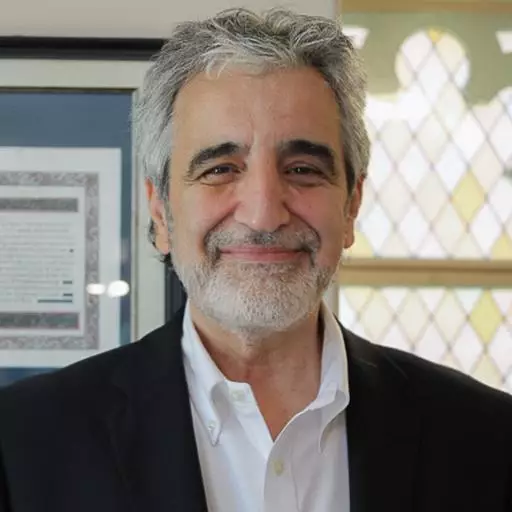
Messianic Leader J. Isaac Gabizon
https://www.bethariel.ca
https://bethariel.ca/donate/
Guest (Female): Shalom and welcome to Shalom Ariel and to this our 42nd sermon from the book of Mark with Messianic leader Jacques Isaac Gabizon.
From our last program, we began to taste and witness the two banquets going on. Each one in its extreme representation. The banquet of Herod was lavish but riddled with evil intent. From the dance of the daughter to the beheading of the messenger of God. Imagine fellowshipping with such a crowd and being a witness to all that went on there.
Imagine how far pride went in the heart of Herod, as he was no king at all, but instead felt under the pressure of the guests and their possible judgment. Is that what we do as well? Are we concerned by what the crowd will say about us and do we make decisions based on the awful combination of pride and fear? What earthly banquets will do for us is fill our temporary whims and delights. But it will not be the solution for those deep and eternal needs we have.
While Herod's banquet was nothing less than lavish, this other one on the mountain with Yeshua offers us a simple menu of bread and fish, which one would you choose to attain? This was the banquet that was important enough for all four gospel writers to mention. This was the one to go to and to be excited about. As David said, I would rather be a doorkeeper in the house of God than to dwell in the tents of wickedness.
At this feast on the mountain, the impossible was made possible. Not only were there close to 15,000 people who were being fed, but the initial fear that there would not be enough is totally erased because Jehovah Jireh is the supplier of all our needs. And he not only spiritually feeds everyone by the teaching, but physically feeds with even an abundance left over. From five loaves of bread and two fish, we count both those numbers together and we get seven. That perfect number that speaks about perfect completion.
This mountain experience was just a taste of what we will experience in the millennium. When we will have an opportunity to taste of the finest wine. We read what's going to be served in Isaiah 25:6, which says, on this mountain, the Lord of hosts will make for all people a feast of rich food. A feast of well-aged wine, of rich food, full of marrow, of aged wine well refined.
Notice that this time it will be all peoples, all nations who will have entered into the millennium, who will be enjoying what the Lord has prepared. We might think that Yeshua's basket might have become empty at some point, that he might have given out all the blessings. Like Esau felt when he cried to his father Isaac. But each time Yeshua placed his hand in the basket, there was multiplied more bread and more fish. The Lord is never limited in his love and in his compassion. In the same way, let us never come up empty in giving out to someone when they come in need. Be blessed as you listen into today's program and shalom shalom.
Jacques Isaac Gabizon: Now, as the story continues, see what we learn. Herod kept him, that is John the Baptist, safe. He kept John the Baptist saved because he liked him, but how did he do that? This is when we get deeper into the story, it's long, even disturbing, but I just want to give you the main line.
Herod decided to marry his half brother's wife Herodians. Something that is forbidden by the law of God, Leviticus 18, while Herod was a convert to Judaism, he actually was breaking the law. And once as he must have called John the Baptist to hear some good words from him to soothe his soul, there was Herodius with him, and John did not lose time to denounce their awful relationship. We read in verse 18. He would tell them, and very courageously, it is not lawful for you to have your brother's wife. See how he calls his wife, your brother's wife, even though they were married. She was in the eyes of the law, his brother's wife, for scriptures only recognizes one wife.
And we read that John the Baptist has been saying it in the imperfect sense, meaning he often reminded him. So much so that Herodius wanted to kill John. So in order to keep John safe, Herod put him to jail until we read in verse 22, see how it starts. A strategic day came when Herod and his on his birthday gave a banquet for his lords and military commanders and leading men of Galilee. Until a strategic day. What is a strategic day in the Bible? You know this word is mentioned twice in the scriptures.
We see it mentioned in Hebrews chapter 4:16, where it speaks of this great strategic day when one received mercy and finds grace and salvation, but here it is a strategic day for evil, for it was then that Herodius found a way to have her wish fulfilled, to have John the Baptist killed. This strategic day is found during Herod's birthday. You know, usually if you have your birthday, someone makes a party for you. But here, he makes himself a party and gives a lavish banquet for his lords, military commanders, leading men, that is the cream of the crop of a bad harvest really.
So, taking advantage of these days when all men over drank, Herodius sends her daughter to dance for all of them and seduce Herod. Who comes to the point of promising her anything she asks for. And so at this point, the young girl, young girl that is, runs out to her mother who asks and ask her what should I ask, and the mother said, ask for John the Baptist's head. And because Herod could not refuse in front of such distinguished crowd, he was caught in his own web of sin if you want, and while he felt sorry about it, he got John the Baptist beheaded.
The girl's name was Salome, that is what Josephus tells us. But see how she's described. A daughter and a girl in verse 22. The word girl is the same given to describe a 12-year-old girl who Yeshua rose from the dead, she was just a young teenager. Here we see two evil women, Herodius and Salome in contrast with two righteous women, if you remember, the woman who was sick for 12 years, and the 12-year-old girl, both healed by Yeshua. These two pairs stands as a stark contract showing the two parallel worlds we live in, that is of good and of evil. Two women who find life in Yeshua and two who give themselves over completely to evil. But there's much more to the story.
Yeshua associated John the Baptist with Elijah, he even said that if you are willing to accept it, he is, John the Baptist is Elijah, in spirit, of course. This connection goes much further in this account, the story of both men looks very much the same, both Elijah and John were pursued by a woman who wanted to kill them. In both cases, a foreigner who found her place as queen in Israel. Jezebel sought to kill Elijah, if you remember, just as Herodius sought to kill John the Baptist, there's a parallel here.
Both women brought down their men, God judge Ahab and his family for the stealing of Nabal's land, if you remember, Herodians, Herodius that is, influenced Herod to get that title of king, which cost him his Tetrarchy. And as Jezebel was responsible for killing the prophets of God, we see this in First Kings 18, Herodius killed the representative of the last of the prophets of the Hebrew scriptures, the last prophet, if you want, of the Hebrew scriptures, who is John the Baptist. But there's a prophetic aspect to this story.
The same spirit of Jezebel that of strife, grudge and evil is also found in Herodius, is spoken of also as a rising spirit in the end times. Yeshua's last words to the seven churches in Revelation to the fourth one, the church of Thiara. He said, Revelation 2, but I have this against you that you tolerate the woman Jezebel, who calls herself a prophet and she teaches and leads my bond servants astray so that they commit acts of immorality and eat things sacrificed to idols. What made both Jezebel and Herodius distinctive was that they taught and led men astray from God and went after men of God to kill them.
In the Hebrew scriptures, Jezebel was skilled in the art of mixing, she understood to unite the religion of Israel and the religion of Phoenicia. Because Yeshua brings her back in the end, we can expect that this same spirit of Jezebel and Herodius will continue to beat in today's congregation of God. This is the ecumenical spirit. The spirit of false teaching which will characterize the church of the end times. It is with the spirit of Jezebel that the time of tribulation is directly connected. If you remember what Yeshua said also in Revelation 2:22, behold, I will throw her on a bed of sickness, and those who commit adultery with her into great tribulation unless they repent of their deeds.
The word tribulation in Revelation 3:10 is in singular, it is in reference to the tribulation of the moment that is of the last seven years, Daniel explained in his chapter 9. And John also in Revelation with the seven seals, the seven trumpets, the seven balls. The story of Herod, Herodius and Salome brings to consider the depth of sin and its dire consequences.
Now before we move into the next story, what was Yeshua's reaction to the death of John the Baptist? What was his reaction? You know what he did? He prayed. He prayed. This we are told by Matthew, and I didn't want to miss this point, it is important. Matthew tells us, Matthew 13:13, when Jesus heard it, he departed from there by boat to a deserted place by himself. This is one verse which tells us much about who our Lord is.
After he heard of the death of John the Baptist, whom we know he appreciated so much for he spoke so highly of him. He went to a deserted place by himself, surely to mourn the death of a friend and surely to pray. Here we see how sensitive our Lord is, and how he loved and how much a sad situation on earth actually will affect him. Remember the time when he wept, it is reported that he cried, but why was he crying? Because he cried because he lost a friend. Remember Lazarus, that made him cry. This is the side of Yeshua, I believe that he still has today, he is the same always for eternity and he is so sensitive and yet so powerful. And again, he went to pray by himself. Personal prayer is so important for every believer.
And after this time of prayer, we read in Mark 6:32-32 that the disciples came back from their ministry of evangelism. After they were sent out two by two. And see what it says in verse 30, there's something I want to tell you again, truly beautiful in there. It says, the apostles gathered together with Jesus and they reported to him all that they had done and taught. You know, they must have been so excited to tell all to their teacher, and what is most touching is that Yeshua knew it all. For he was with them all the way through in spirit, yet there he allowed them to speak and to tell of the details of their journeys, for it is important, I believe, to allow people to express their joy and difficulties, even when we think it is not important. We can say that God is a great listener. We know he knows every word, by the way, of our of our prayers, even before we utter any of them. Yet he asked us to pray without ceasing. And he surely enjoys listening to each of our words, even though he knows them all. This is beautiful, by the way, that encourages us to pray.
Now after Herod, as it is with the other prophecies of the Hebrew scriptures, so it is here as well, for in the next story, the son of righteousness rises, there we will see Yeshua in all his love and grace. Let us move into the next banquet. It doesn't look like one at all, like Herod's meal. This feast is held on a mountain of green grass. It was a great one, it was a godly one. The story is about the feeding of the 5,000. Which were really not 5,000, but much more for Matthew tells us that there were 5,000 besides women and children. They were very numerous, especially when one considers that the cities around like Capernaum, Bethsaida, each contained about 2 to 3,000 inhabitants.
This is when Yeshua was touched by the large crowd, and there we read that he felt what? Compassion for them. And because they were like sheep without a shepherd, what did he do? He began actually to teach them, to give them the information. Perhaps teaching them about the Messianic prophecies. About salvation and the history of redemption in the scriptures, perhaps to even save a few of them. But we also learn that as he was teaching them, we read that it was quite late in the day. This is when the disciples interrupted him and told him in verse 35 to 36. And they asked him to send the people away and to send them to buy some food in the nearby villages.
Now, this is when Yeshua came out with such a powerful statement, they must have never forgotten, and that's is for us as well. This is when he said, you give them something to eat. Imagine some 10 to 15,000 people, hungry people waiting to be fed. How in the world are you going to do that? We know from the book of John that the one who came to Jesus to ask this question on behalf of the others was Philip. For he lived in the vicinity of Bethsaida, Bethsaida, which means house of fish, and he knew the surrounding.
So Philip answered, and he says in verse seven, on behalf of the others, shall we go and spend 200 denary on bread and give them something to eat? Now, how much is 200 denary? If a denary is a day's wage, then 200 is more than half a year's salary, as if he would say to Yeshua, you want to spend $25,000 just on one night for all these people? This is when Jesus gave Philip such a tailored answer, this is nice, he says to him in verse 28, how many loves do you have? Go and look. Go and look. This was such again a tailored answer, remember it was Philip who brought Nathanael, if you remember the story, and Nathanael began to argue with Philip, and what did Philip told Nathanael? Come and see. And here Yeshua gave him basically the same answer that he gave to Nathanael.
He did and found really nothing in the bag, except what? Five loaves and two fish. But what both Nathanael and Philip found is another facet of Yeshua, something great. This is when Jesus prayed over the food. And miraculously began to pull out loaves of fish after loaves of fish. Imagine every time he put his hand in the basket, it came out with more food. Clearly, he was showing them that he was the provider and miracle worker for every believer. This miracle was for the disciples, and it was for us because we read the details here. And most of the people present, by the way, would not have seen or even realized perhaps that miracle. They were maybe too far away. And at the end, verse 42, we read that they ate, they were all ate and were satisfied. And after this, they even had enough to fill up 12 baskets, one for each disciples, so that they would remember.
Yes, we learn about the terror and about the leaven that they would be so prominent, but much bigger is our Lord and Savior, who is a great miracle worker. This is what this part is about. And again, one main reason why Yeshua fed the people was not so that they would recognize him as the Messiah, by this time he was already heading for the cross for the Tav. The main reason he fed the people was because he loved them. He had compassion, it says on them. Even though they were not believers at all. And they were not going to be believing him. Here again, we are encountering the concept of common grace, which was Yeshua Minha to men, that is gift to men. And this is because of his great love and compassion for them. The word compassion in the Greek, it is what describes the inner part of the body, which is the seat of emotion of the heart.
Jesus knew very well that the greater majority of these people will just live. He said it in John 6:26, he says, truly you came to me, not because you you seek miracles, but because you ate the loaves and you were filled. But even then, when it is written in John 3:16, God so loved the world. The word love is Agape, the highest level of love and offered even to those who will knows will not believe in him.
And beyond these great gems, in Mark 6, there's one typology that that is coming out strong, that of the Exodus, like marking a new era for the disciples. Just as they had been commanded about the staff, if you remember, the shoes, the garment and the bread before, they set on a missionary tour. Here they are again reminded of the Exodus. First, the dilemma was very similar to that of Moses, who was also faced with the responsibility of feeding, how many people? At least 3 million people, 3 million Jews who came out of Egypt and to feed them for a long period of time. The disciples were presented with the same dilemma, you give them something to eat. And like Moses and the Israelites in the Exodus, they had to learn to rely on God, who's always ready to perform great miracles for his lambs. This must be a main point for the disciples to learn. For the term bread, by the way, is used at least 17 times from chapter 6 to 8.
Furthermore, see how Yeshua asked the disciple to place the people before he fed them. He asked them in verse 40 to place them in rows of hundreds and 50. But, you know what, the last time the Israelites were asked to be placed in such a manner was in the Exodus. As they were in the desert, heading for the promised land. Later the disciple must have realized that these people who were being fed were they themselves as well. They were fed, and they were starting that new era.
And furthermore, you know that Yeshua asked the people to recline. You know, the word sit down, actually in the Greek is to recline in this verse 40 in fact. So Jews will usually sit down at a table. And the only time they asked to recline is when? At Passover. At Passover. The time that the Jewish people reclined was at Passover, according to the time, all the reclining was a sign of freedom. And here it shows us the freedom we have when we believe that Yeshua is the Messiah. Recline them, I'm going to feed them.
And the words we read in verse 23, they were like sheep without a shepherd, must have reminded many of the Exodus as well. The same words were pronounced by Moses before he anointed Joshua to lead Israel. We read in Numbers 27:17. They asked, who will go and come in before them? Who will lead them, because Moses was leaving, he says, who will lead them and bring them in so that the congregation of the Lord will not be like sheep without a shepherd? This is when he called Joshua. Who has actually the same name as Yeshua, Yeshua is a shortened form of Joshua, meaning Yahweh is salvation. As Joshua led the Israelites to the promised land, Jesus, Yeshua leads us to a promised rest. Our final destination, which is really the city of rest, heaven, and in many ways, the feeding of the 5,000 brings us to remember this great Exodus out of slavery and into a new freedom. This is what happens when one believes in Yeshua.
Now to close, there is in this great story of the feeding of the 5,000, the concept of true rest in the Lord. The account reminds us of a great psalm, a psalm that most of us know and many of us, by the way, know by heart, it is Psalm 23. Let me read you the first two verses and see if you can spot the similarities with the feeding of the 5,000. You can say it with me, by the way. The Lord is my shepherd, I shall not want, he makes me lie down in green pastures, he leads me beside quiet waters. Here is our shepherd, Jesus, Yeshua himself. And while the people had no shepherd, he became their their shepherd. And see where he led Israel to lie down, to recline, do you know where he asked them to recline on green pasture? Green pasture. And what's the most unusual is that we're told and three times over in verse 31, 32, 35, that they were actually in a secluded place. You know, the Greek word for secluded is actually wilderness in the desert. There's no green grass in the wilderness. Unless you know the great miracle worker who is Yeshua. By now in Mark 6, we know he can do wonderful things for his people. And one last thing. The spirit called this great feast if you want a banquet. In verse 39, says as he commanded them all to sit by groups on the green grass, the word for groups is symposium, that is a banquet, a great party that is. And this is in view of the great meals that we will have with Yeshua when he comes back. The word symposium comes from the word Sampino, which means to drink, and this is when Yeshua will drink that cup of wine, he promised to drink when he will be regathered with us. Amen. Let us pray.
You know, when Yeshua blessed the loaves, by the way, of bread, he probably prayed the ancient prayer Birkat Hamazon, which is a blessing over food, I will begin with this prayer. Blessed are you, oh Lord, our God, king of the universe, who feeds the whole world with your goodness, with grace, with loving kindness and tender mercy. You give food to all flesh, for your loving kindness endures forever. Through your great goodness, food has never failed us, or may it not fail us forever and ever for your great name sake, since you nourish and sustains all beings and those good unto all and provides food for all your creatures whom you have created. Blessed are you, oh Lord, who gives food unto all.
Guest (Female): Welcome to this segment of our program, the Q&A, where we ask Messianic leader Jacques Isaac Gabizon some sometimes more than difficult questions. Today we're going to read from John 14:12, which says, very truly, I tell you, whoever believes in me will do the works I have been doing. And will do even greater things than these. So what can this mean, do believers actually do greater works than Yeshua himself did? Let's tune in and find the answer, be blessed.
Jacques Isaac Gabizon: Well, to say that a believer can do or perform greater miracles than than Yeshua is a very serious and grave statement, which borders on blasphemy. This reminds us of Satan's statement as he said, you know, I will be like the most high, which was his last statement before his fall. This one was the last of the five I will of Satan in Isaiah 14, you can find him in verses 13 to 14. However, this is not at all what John 14:12 says. In John 14, we are a moment when Yeshua was about to leave the earth and so he encourages the disciples and tells them that they will do greater works than he did.
First, the word works is not the word for miracle. You will probably recognize the word, the Greek word, it's Ergon, Ergon from where we get our word Ergonomics. Which is defined as the study of the people efficiency in their working environment. This is what this Greek word means, it is translated by words like duty, like deeds, like tasks or works, but not as miracles. As for the word greater. It is Megas, Megas, which indicates something greater in size, but not better or greater in quality. As an example of greater works in number, look at Peter's sermon and the coming of faith of 3,000 Jewish souls. The fulfillment of what Yeshua said already came to pass not much longer after he left to be with the Father.
In fact, this is the reason believers will do more in numbers now after just three years. He is going to his father, so he worked only for three years. However, we as a ministry can last for decades, right? In that sense, it is greater in extent. So while Yeshua also reminds us that our time will last longer, he does not leave us orphan. And and I love what he says in this passage in verse 16, in the same text, he says, I will pray the Father that he will give you another helper that he may abide with you forever. While Yeshua left us to go to heaven so that he could perform his ministry of high priest, because this is what he's doing now, sitting at the right hand of God. His spirit, his Holy Spirit, the did come to dwell in us to help us do these, these works. That each believer is assigned to.
It is again a matter of looking at the words in the original language and understanding it according also to the context. When we do this, we can avoid so many problems. And so this to say that we all have works to do. Jesus said it, he says, I chose you so that you may bear fruits. And so the question that every believer should ask himself or herself is, what fruits am I bearing? What is it that Jesus wants me to do? He has prepared something for us, a work to do. So, let's try to figure out what it is. And of course, for I'm sure you you are already doing works in your prayers, in your preaching the word, in testing the testimony of the word and so on, so forth.
Guest (Female): Shalom Ariel is a daily radio program emphasizing the Jewish perspective of scripture. God is not through dealing with Israel, nor will he renig any of the promises he has made to her. Our teacher for this program, Jacques Isaac Gabizon is a Messianic Jewish believer and Messianic leader at Beth Ariel congregation right here in Montreal. If you've been encouraged by the messages, we'd love to hear from you. Give us a call at 1888-685-5902. Or you may write us at info@bethariel, b e t h a r i e l all one word.ca. You are also welcome to join us for our Saturday morning services. We are located at 6297 Monkland Boulevard, Corner of Madison and NDG. The message is given in English, but we do offer simultaneous translation into French and Russian. Services begin at 11:00 a.m. We have Shabbat school for children of all ages up to and including teens. You may also download audio messages from our website at bethariel.ca and enjoy other in-depth teaching from Jacques Isaac. If you would like to sign up for informative newsletters, log on to our website and add your name to our email list. Shalom Ariel is a listener supported program. If you have it on your heart to donate, it will be a great blessing for the continuing ministry and outreach of Beth Ariel. Thank you and shalom shalom.
Featured Offer

Prophecies take up about ¼ of the Scriptures so we cannot simply ignore them. Knowing prophecy enables us to give a clear presentation to others of why things unfold the way they do in such areas as politics, morality, technology and global ecological changes. It also helps us to rightly place Israel in God’s prophetic plan.
Past Episodes
- The Armor of God
- The Believers in the End Times
- The Book of Daniel
- The Book of Deuteronomy
- The Book of Ephesians
- The Book of Esther - Purim
- The Book of Exodus
- The Book of Ezekiel
- The Book of Ezra
- The Book of Genesis
- The Book of Hebrews
- The Book of James
- The Book of Jeremiah
- The Book of Joel
- The Book of John
- The Book of Leviticus
- The Book of Numbers
- The Book of Philippians
- The Book of Revelation
- The Book of Romans
- The Book of Ruth
- The Book of Zechariah
- The Feast of Passover
- The Feast of Purim
- The Feast of Shavuot - Pentecost
- The Gospel of Mark
- The Gospel of Matthew
- The Letter to the Galatians
- The Messiah in Isaiah
- The Messiah in the Book of Isaiah
- The Messiah's Prayer
- The Nativity: The Unwrapped Gifts of God
- The Resurrection of the Messiah
- The Sermon on the Mount
- The Tabernacle

Video from Jacques Isaac Gabizon
Featured Offer
Prophecies take up about ¼ of the Scriptures so we cannot simply ignore them. Knowing prophecy enables us to give a clear presentation to others of why things unfold the way they do in such areas as politics, morality, technology and global ecological changes. It also helps us to rightly place Israel in God’s prophetic plan.
About Messianic Viewpoint
About Jacques Isaac Gabizon
Contact Messianic Viewpoint with Jacques Isaac Gabizon
info@bethariel.ca
http://www.bethariel.ca/
Beth Ariel Congregation
CP 46521 CSP Boul. St Jean
Pierrefonds, QC, H9H 5G9
Toll free (888)-685-5902