
The Gospel of Mark, Part 41


The Gospel of Mark, Part 41
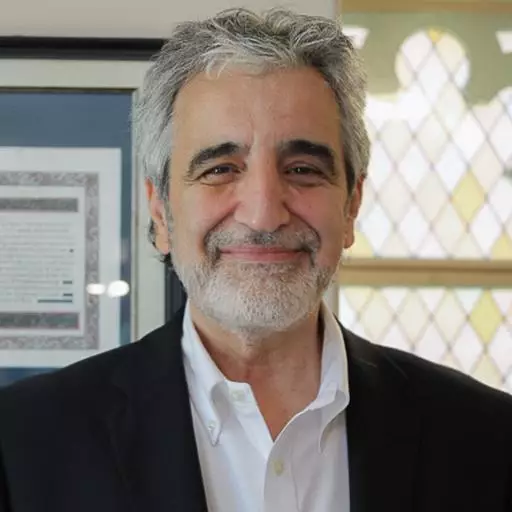
Messianic Leader J. Isaac Gabizon
https://www.bethariel.ca
https://bethariel.ca/donate/
Guest (Female): Shalom and welcome to Shalom Ariel and to this our 41st sermon in the book of Mark with Messianic leader Jacques Isaac Gabizon. Today, we're going to hear how that all-important question, "Who is Yeshua?" was becoming more widespread among the people.
Yeshua's fame grew because the disciples were healing and making miracles in Yeshua's name. So people were asking, "Who is Yeshua?" and there were many opinions out there, but very few were saying that he was the Messiah.
And look at Herod's answer. We understand that it was fear which gripped him because he carried tremendous guilt due to the beheading of John the Baptist. Who is Yeshua? Both lack of knowledge and fear can make us blind, and these two problems are very real for Jewish people then and today.
Many Jews are not being pointed to the Torah or to the Tanakh as a means to knowing the Messiah. Fear of rejection from the community or of being considered a traitor has made it very difficult for many Jews to investigate Yeshua any further. But we are not to fear man; we are to fear the Lord.
There is a beautiful Talmudic passage that says, "If a man has fear of anything except the creator, he is in some degree an idolater. For to fear is to offer worship to the thing which is feared." God brought the Jews out of Egypt, not to return there again, which is what many of the Israelites wanted to do.
Fear made them want to return to Egypt. Have you ever felt like running back to what you already know just because it's so comfortable there, instead of inching forward, testing the waters, and then being able to make a discerning decision? By replacing fear with an honest research, we will gain wisdom and understanding, and that will lead us to true knowledge of who Messiah Yeshua really is.
Let's get past all the public opinion polls because fearing God far outweighs any of the temporal costs of fearing man. God's eternal benefits are clearly worth the effort. When we are going to stand in front of the judgment seat of God, we will not have our spouse there, our children there, our neighbor, or our cousin beside us.
We will need to give an account of our choice independent of any intermediary. And no matter what faith system you come from, you inevitably come up against that question: Who is God, and what does he require of you? Many say that prayer and works and charity and good deeds can compensate for the fact that the temple was destroyed and there's no sacrifice.
But there is still a sacrifice waiting to cover your sins. Yeshua's sacrifice, Yeshua's covering, Yeshua's atonement. His kapara for our sins is still available until our very last breath. That's how generous and patient our God is. He's an amazing Lord, and that is who Yeshua is. Be blessed as you listen in to today's program, and shalom, shalom.
Jacques Isaac Gabizon: Shalom, shalom. So shalom Beth Ariel and friends of Beth Ariel and those who are following online. Blessings to all of you. I want to tell you, it's my prayer that today we'll all be filled with the power of the words of God, and especially with this section we are about to look into.
We will be brought to hear the story of two kings: one who was not a king at all—he was not a king but sought only his own interest—and the other who was the real king, even the King of kings. But this great and true king first decided to come and to live with his people humbly so he could know them better, so he could even die for them. This is the best story ever, really.
And what a powerful contrast between these two kings. In today's section, we will attend two different banquets: one which will be worldly, charged with envy, strife, superstition, and murder, while the other banquet we will get to taste what the King of kings got to serve. It was a feast overflowing with compassion, with grace, and with love.
And after considering both events, you will definitely want to stay close to Yeshua, close to your Savior. As we move deeper into the book of Mark, the distinction between the ways of this world and God and His Word are being more and more obvious and understood as Yeshua's miracles also are seen more powerfully and extraordinary so we may know that we have a shepherd who's always looking for His lambs.
And together we can bless the Word before we open it. Blessed are you, O Lord our God, King of the universe, who has given us the word of truth and has planted everlasting life in our midst. Blessed are you, O Lord, who gives the Scriptures. Amen.
So let's open the Word of God to chapter 6 of Mark, beginning in verse 14. Right away, we are brought to see the sad state of religion and how these leaders were so far from the people who were actually these leaders were called to be the shepherds of these people. Let's read verses 14 to 15.
It says, "And King Herod heard of it, for His name, Yeshua's name, had become well known; and people were saying, 'John the Baptist has risen from the dead, and that is why these miracle powers are at work in Him.' But others were saying, 'He is Elijah,' and others were saying, 'He is a prophet, like one of the prophets of old.'"
Now, who did they think Yeshua was? Anyone, it seems, but the Messiah. And their belief is a reflection of the sad spiritual condition Israel was at that time. Some said that Yeshua was John the Baptist resurrected. They somehow thought that the spirit of a deceased man could and would come back to empower a living person. But where did they get this teaching from? This is so foreign from the Tanakh, that is, from the Bible.
Others thought Jesus was Elijah, and others thought that He was a prophet of the Hebrew Scriptures who has been resurrected. But again, where were the shepherds of Israel to explain at least some truth of the Scriptures to these people? That they did not believe that Jesus is the Messiah, we know that already. But that they believed such things demonstrates the big gap between God and the people.
As it was before the destruction of the first temple, when God said through Isaiah and through Hosea, "My people perish. My people are going into the diaspora for their lack of knowledge," so it was during the events surrounding the second temple—lack of knowledge of God, which in this case would lead Israel to lose their privilege of the land. Soon, very soon in the next chapter, we will hear of Yeshua's anger against these religious leaders who did not teach nor lead the people of God as they were called to.
And today, who is teaching the precepts of the Torah to Israel? And when they say Torah, I mean the Word of God without putting any writings at par with it. Today, the word Torah has become so wide as to include in it the writings of man. Torah means the first five books of the Bible and nothing else, or the Tanakh, which includes as well all the rest of the Hebrew Scriptures and no other additions.
Who is teaching only this today in Israel, remembering how many times the Lord said not to add and not to take off from His Word? Similarly, who today is teaching the undiluted Word of God to all who believe, Jews and Gentiles? There are some great teaching churches around, but statistics show a marked decline of those evangelical congregations who hold on to the substantial, solid teaching of the Bible.
As I mentioned several months ago, and according to another survey, it confirms once again that close to one-third of evangelicals admit to Yeshua being a good teacher, but he's not God; he's not divine. Another incredible statistic claims that a significant majority, 65%, believe that Jesus is the first and greatest being created by God.
But if Yeshua is not divine, then we're all idolaters worshipping a created being like someone who is like ourselves. There is, it seems, an increasing confusion about the person of the Messiah. And so, in summary, there's not much difference between those who believe that Jesus is John the Baptist resurrected or one of the prophets resurrected. The problem is the same: Where are the teachers of the Word of God?
However, there is something right in the first words of this story, which brings us to consider the type of man Herod was and the type of world it was then. See how verse 14 begins: "And Herod the king..." Now, stop here because there's something not right here. You know why? Because Herod was no king at all.
He was a tetrarch, that is, a governor of one of the four provinces in Judah and the surrounding territories. They were divided actually into four. Upon the death of his father, Herod the Great—the one, actually, who wanted to kill Yeshua when he was a baby—his kingdom was divided into four parts, one of which was given to his son, Herod Antipas, the one we read about in Mark 6.
However, after the death of Herod the Great, the father, the Romans removed the title of king, for Caesar was the only king in the Roman Empire. In fact, Herod Antipas, who was far from being a king because after a king, that is, just below the level of king, you have the ethnarch, and under the ethnarch, you have the tetrarch. But he thought he was king.
So he was just a governor. The question is, why call him king in the Scriptures here? He is called king most probably because he acted as one when he is not one. And the Word of God wanted to enhance his silliness. We recognize here a sense of humor in the Scriptures that we see throughout the Scriptures.
This is the same kind of irony we find elsewhere, as when, for instance, Isaiah prophesied against Assyria and said, "You shall be as the glory of the children of Israel," but you see Israel would have been completely destroyed by this point. Noticing these ironies, by the way, will make Bible reading much more pleasant.
And Mark plays with this irony even more, calling Herod Antipas "king" at least five times in different places in this story. And see that Herod was so convinced that he was king that at some point in the banquet we're about to consider, he is so enamored with a young dancer that he promised in verse 23 to give her half of his kingdom. But it was a kingdom he did not have; it belonged actually to Rome.
And this great desire to become king actually cost him his job. It was his unlawful wife, Herodias, whom we'll meet soon, who, according to the historian Josephus, convinced Herod to go to Rome and to ask the emperor to give him the title of king. But the emperor, who was the only king, actually banished him to Gaul. He banished Antipas and Herodias. That is the story of a man who had the thought of grandeur for himself, but he lost it all.
Okay, so that again is a brief story of Herod, but there is much more to this man because through him we're going to have, or we're given, the anatomy of a disturbed mind. That is the anatomy of a man who's in sin and who does not repent. The next verse, 16, tells us his reaction when he heard of the three different explanations about Yeshua. It says, "But when Herod heard of it, he kept saying, 'John, whom I beheaded, had risen.'"
One of the three choices that are given in verse 14-15 about who Yeshua is, Herod opted for the first one. Why? He believed that Jesus was John the Baptist resurrected. This, I want to tell you, was his guilt speaking out, for he is the one who killed John the Baptist. And he was so disturbed by this murder that he came to believe such a thing.
You know, someone said, "The murderer fears the one he has murdered." That is, the murderer will never allow the murdered to rest. This act will continually rise in the mind of the murderer in the form of guilt, just as God had warned Cain before the murder of his brother Abel. He says, "The voice of your brother's blood," he says after he killed him, "is crying to me from the ground." Genesis 4:10.
Murder or any sin, really, will not rest until it is dealt with. It is dealt with, and of course, through Yeshua. Yet we see that in worldly matters, Herod was not a fool. He rebuilt and fortified many cities. He also built a new city in Galilee that is still standing today in Israel, Tiberias, named after Tiberius Caesar.
But as smart and intelligent and productive as he was, still sin blinded him to act this way, and we're going to see the rest soon. Have you heard, by the way, of the expression "smart people do dumb things"? You know, I want to tell you, I read an article in the magazine Psychology Today from last July with this same title: "Smart People Do Dumb Things."
And the writer, a psychologist, somehow came out with the same conclusion as the Scriptures. Let me quote what she wrote. She says, "When smart people make dumb mistakes, it usually isn't because of stupidity, ignorance, or apathy. They make dumb mistakes because they've been seduced by their own success. And the rewards," she continues, "of success help them develop expectations about how things are supposed to be."
Let me translate this for you in biblical terms. Smart people do dumb things because of pride, because of sin. When one is seduced by their own success, Scripture tells us it is when one has stepped over the threshold to sin. If you remember, was not this the way Satan fell?
Ezekiel 28 tells us that he was the seal of perfection, full of wisdom and perfect in beauty, and yet he was in Eden, the garden of Eden, until it says that sin was found in him. Until he thought that he was better than God and literally wanted to replace God. This is how far it went. Such proud people as Herod the king are the offspring of Satan's pride.
It was Mark Twain, again, who once said, "A proud man is one who waits for a vacancy in the Trinity." But now we ask, how did Herod get to know John the Baptist? What's the relation? This in itself is very interesting. It's bizarre as well. See the first part, or see what it says in verse 20.
It says, "For Herod was afraid of John, knowing that he was a righteous and holy man, and he kept him safe. And when he heard him, he was very perplexed, but he used to enjoy listening to him." Herod knew John the Baptist, and we're told that he was afraid, but he was perplexed by him and that he actually loved to listen to him.
What kind of relationship do you think this is? Does that sound somehow familiar? This is the case of one who was attracted to God, enjoying listening to the Scriptures, but could not have a relationship with Him because of his or her own sin they didn't want to let go.
This individual somehow loved God without commitment at all to Him, which at the end turns out to be fake love. Yeshua explained well what it means to follow God when he said in Matthew 7:21, "Not everyone who says 'Lord, Lord' will enter the kingdom of heaven, but he who does the will of my Father who is in heaven will enter." Doing the will of the Father is to be committed to God with a constant growth attached to it.
Many love to listen to Bible stories. Many are attracted to what is holy, to what is good, but when it comes to dedicating just at least a few hours a day, they're unwilling and may expose a false relationship here. Now, as the story continues, see what we learn.
Herod kept him, that is, John the Baptist, safe. He kept John the Baptist safe because he liked him, but how did he do that? This is when we get deeper into the story. It's long, even disturbing, but I just want to give you the main lines. Herod decided to marry his half-brother's wife, Herodias.
Something that is forbidden by the law of God, Leviticus 18. While Herod was a convert to Judaism, he actually was breaking the law. And once, as he must have called John the Baptist to hear some good words from him to soothe his soul, there was Herodias with him. And John did not lose time to denounce their awful relationship.
We read in verse 18, he would tell them, and very courageously, "It is not lawful for you to have your brother's wife." See how he calls his wife "your brother's wife" even though they were married. She was, in the eyes of the law, his brother's wife, for Scriptures only recognize one wife.
And we read that John the Baptist has been saying it in the imperfect sense, meaning he often reminded him. So much so that Herodias wanted to kill John. So in order to keep John safe, Herod put him to jail until we read in verse 21 see how it starts.
"A strategic day came when Herod on his birthday gave a banquet for his lords and military commanders and leading men of Galilee." "Until a strategic day." What is a strategic day in the Bible? You know, this word is mentioned twice in the Scriptures.
We see it mentioned in Hebrews chapter 4:16, where it speaks of this great strategic day when one receives mercy and finds grace and salvation. But here it is a strategic day for evil, for it was then that Herodias found a way to have her wish fulfilled, to have John the Baptist killed.
This strategic day is found during Herod's birthday. You know, usually, if you have your birthday, someone makes a party for you, but here he makes himself a party and gives a lavish banquet for his lords, military commanders, leading men—that is the cream of the crop of a bad harvest, really.
So taking advantage of these days when all men over-drank, Herodias sends her daughter to dance for all of them and seduce Herod, who comes to the point of promising her anything she asks for. And so at this point, the young girl, young girl that is, runs out to her mother, who asks and asks her, "What should I ask?" and the mother said, "Ask for John the Baptist's head."
And because Herod could not refuse in front of such distinguished crowd, he was caught in his own web of sin, if you want. And while he felt sorry about it, he got John the Baptist beheaded. The girl's name was Salome, that is what Josephus tells us, but see how she's described: a daughter and a girl in verse 22.
The word "girl" is the same given to describe a 12-year-old girl whom Yeshua raised from the dead. She was just a young teenager. Here we see two evil women, Herodias and Salome, in contrast with two righteous women, if you remember: the woman who was sick for 12 years and the 12-year-old girl, both healed by Yeshua.
These two pairs stand as a stark contrast showing the two parallel worlds we live in: that is of good and of evil. Two women who find life in Yeshua and two who gave themselves over completely to evil. But there's much more to the story. Yeshua associated John the Baptist with Elijah.
He even said that if you are willing to accept it, he is, John the Baptist is Elijah, in spirit of course. This connection goes much further in this account. The story of both men looks very much the same. Both Elijah and John were pursued by a woman who wanted to kill them.
In both cases, a foreigner who found her place as queen in Israel. Jezebel sought to kill Elijah, if you remember, just as Herodias sought to kill John the Baptist. There's a parallel here. Both women brought down their men. God judged Ahab and his family for the stealing of Naboth's land, if you remember.
And Herodias influenced Herod to get that title of king which cost him his tetrarchy. And as Jezebel was responsible for killing the prophets of God—we see this in 1 Kings 18—Herodias killed a representative of the last of the prophets of the Hebrew Scriptures, the last prophet, if you want, of the Hebrew Scriptures, who is John the Baptist.
But there's a prophetic aspect to this story. The same spirit of Jezebel, that of strife, grudge, and evil, is also found in Herodias. It's spoken of also as a rising spirit in the end times. Yeshua's last words to the seven churches in Revelation, to the fourth one, the church of Thyatira, he said, Revelation 2: "But I have this against you, that you tolerate the woman Jezebel, who calls herself a prophetess, and she teaches and leads my bondservants astray so that they commit acts of immorality and eat things sacrificed to idols."
What made both Jezebel and Herodias distinctive was that they taught and led men astray from God and went after men of God to kill them. In the Hebrew Scriptures, Jezebel was skilled in the art of mixing. She understood how to unite the religion of Israel and the religion of Phoenicia.
Because Yeshua brings her back in the end, we can expect that this same spirit of Jezebel and Herodias will continue to be in today's congregation of God. This is the ecumenical spirit, the spirit of false teaching which will characterize the church of the end times. It is with a spirit of Jezebel that the time of tribulation is directly connected, if you remember what Yeshua said also in Revelation 2:22: "Behold, I will throw her on a bed of sickness, and those who commit adultery with her into great tribulation, unless they repent of their deeds."
The word "tribulation" in Revelation 3:10 is in singular. It is in reference to the tribulation of the moment that is of the last seven years Daniel explained in his chapter 9 and John also in Revelation with the seven seals, the seven trumpets, the seven bowls.
The story of Herod, Herodias, and Salome brings to consider the depth of sin and its dire consequences. Now, before we move into the next story, what was Yeshua's reaction to the death of John the Baptist? What was his reaction? You know what he did? He prayed. He prayed.
This we are told by Matthew, and I didn't want to miss this point. It is important. Matthew tells us, Matthew 13:13, "When Jesus heard it, he departed from there by boat with a deserted place by himself." This is one verse which tells us much about who our Lord is.
After he heard of the death of John the Baptist, whom we know he appreciated so much for he spoke so highly of him, he went to a deserted place by himself, surely to mourn the death of a friend and surely to pray. Here we see how sensitive our Lord is and how he loved and how much a sad situation on earth actually will affect him. We remember the time when he wept. It is reported that he cried. But why was he crying? Because he lost a friend. Remember Lazarus? That made him cry. This is the side of Yeshua, I believe, that he still has today. He's the same always for eternity, and he is so sensitive and yet so powerful.
Guest (Female): Shalom Ariel is a daily radio program emphasizing the Jewish perspective of Scripture. God is not through dealing with Israel, nor will He renege any of the promises He has made to her. Our teacher for this program, Jacques Isaac Gabizon, is a Messianic Jewish believer and Messianic leader at Beth Ariel congregation right here in Montreal.
If you've been encouraged by the messages, we'd love to hear from you. Give us a call at 1-888-685-5902, or you may write us at info@bethariel.ca. You are also welcome to join us for our Saturday morning services. We are located at 6297 Monkland Avenue, corner of Madison in NDG.
The message is given in English, but we do offer simultaneous translation into French and Russian. Services begin at 11:00 AM. We have Shabbat school for children of all ages, up to and including teens. You may also download audio messages from our website at bethariel.ca and enjoy other in-depth teaching from Jacques Isaac.
If you would like to sign up for informative newsletters, log on to our website and add your name to our email list. Shalom Ariel is a listener-supported program. If you have it on your heart to donate, it will be a great blessing for the continuing ministry and outreach of Beth Ariel. Thank you and shalom, shalom.
Featured Offer
Prophecies take up about ¼ of the Scriptures so we cannot simply ignore them. Knowing prophecy enables us to give a clear presentation to others of why things unfold the way they do in such areas as politics, morality, technology and global ecological changes. It also helps us to rightly place Israel in God’s prophetic plan.
Past Episodes
- The Armor of God
- The Believers in the End Times
- The Book of Daniel
- The Book of Deuteronomy
- The Book of Ephesians
- The Book of Esther - Purim
- The Book of Exodus
- The Book of Ezekiel
- The Book of Ezra
- The Book of Genesis
- The Book of Hebrews
- The Book of James
- The Book of Jeremiah
- The Book of Joel
- The Book of John
- The Book of Leviticus
- The Book of Numbers
- The Book of Philippians
- The Book of Revelation
- The Book of Romans
- The Book of Ruth
- The Book of Zechariah
- The Feast of Passover
- The Feast of Purim
- The Feast of Shavuot - Pentecost
- The Gospel of Mark
- The Gospel of Matthew
- The Letter to the Galatians
- The Messiah in Isaiah
- The Messiah in the Book of Isaiah
- The Messiah's Prayer
- The Nativity: The Unwrapped Gifts of God
- The Resurrection of the Messiah
- The Sermon on the Mount
- The Tabernacle

Video from Jacques Isaac Gabizon
Featured Offer
Prophecies take up about ¼ of the Scriptures so we cannot simply ignore them. Knowing prophecy enables us to give a clear presentation to others of why things unfold the way they do in such areas as politics, morality, technology and global ecological changes. It also helps us to rightly place Israel in God’s prophetic plan.
About Messianic Viewpoint
About Jacques Isaac Gabizon
Contact Messianic Viewpoint with Jacques Isaac Gabizon
info@bethariel.ca
http://www.bethariel.ca/
Beth Ariel Congregation
CP 46521 CSP Boul. St Jean
Pierrefonds, QC, H9H 5G9
Toll free (888)-685-5902