
The Gospel of Mark, Part 27


The Gospel of Mark, Part 27
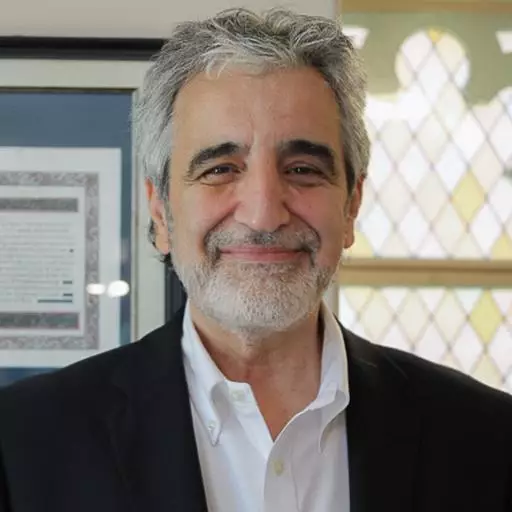
with Messianic Leader J. Isaac Gabizon
https://www.bethariel.ca
https://bethariel.ca/donate/
Guest (Female): Shalom and welcome to Shalom Ariel and to this our 27th message from the Gospel of Mark with Messianic leader Jacques Isaac Gabizon. Today we're going to hear something very interesting concerning the kingdom of Satan. Yeshua tells the scribes that Satan's kingdom is not divided, because if it was, it wouldn't stand. The fact that demons were possessing people and were the precursors to certain diseases proved that the satanic realm was strong and undivided.
But here is the bright side. When we consider the end of Satan's kingdom and his defeat, we know that it's not because of internal divisions or rebellion from within. That's how the Roman Empire fell. One of the main reasons for the Roman Empire's fall was because of division and strife from the inside. They hired mercenaries as soldiers, fortune seekers who had no loyalty to the empire, so there was division even in the army.
So if Satan's kingdom is undivided, his defeat comes directly from the outside, that is, from the Lord himself. And there's no real battle of strength between the two kingdoms because God has no equal. We learn from Revelation chapter 20 that in fact it's an unnamed angel—not the Father, not the Son, neither of the archangels, Michael or Gabriel—but one who is even unnamed who actually takes Satan down to the pit, just to show us how powerful the Lord's kingdom is.
Knowing that encourages us that we have a safe and secure eternal place because we are the possession of the eternal King whose kingdom is forever. We come to you, O Lord God of Israel, for you are the Holy One, the highly exalted one, and let it be known today that your kingdom alone will rule forever, for you are matchless and you alone are God. Be blessed as you listen into today's program and shalom shalom.
Jacques Isaac Gabizon: And of course let us bless the word before we actually open it. You can do it with me. Blessed are you, O Lord our God, King of the universe, who has given us the word of truth and has planted everlasting life in our midst. Blessed are you, O Lord, who gives the scriptures. Amen.
So let's open our Bibles to this powerful, powerful book of Mark chapter three and begin reading from verse 22 where we see the religious leaders' final verdict concerning Yeshua. This is what it says: "The scribes who came down from Jerusalem were saying 'He is possessed by Beelzebul, and He casts out the demons by the rulers of the demons.'"
See how these scribes are here characterized. They were not the local religious authorities. These come down from Jerusalem. We remember that after the healing of the leper—the Messianic miracle which triggered many scribes and Pharisees to travel up to Capernaum from Jerusalem—what did they do that? To investigate who was the one who healed leprosy. And they found out that it was Jesus. This was the unofficial delegation sent by the Sanhedrin.
So after investigating the miracle and the other miracles and words and actions of Jesus, their final verdict is that He is possessed by Beelzebul and He casts out demons by the ruler of the demons. But who is Beelzebul? The verse tells us he's the ruler of demons and Yeshua in verse 23 associates him directly to Satan. He calls him Satan. This is their final decision on Yeshua. First, they accuse Jesus to be demon-possessed, and second, they accuse Him of working for Satan.
This was the final break. Do you know that this decision changed the whole course of history, and especially that of Israel? And it is a great enigma that these leaders, who were intelligent, educated, even in the scriptures, would be led to make such a drastic decision. We knew that Jesus was to be rejected, but the level of hatred and this disproportionate aversion is astonishing, especially when one considers all the good things, the healing especially, that He performed before.
In reality, these religious leaders were themselves under the spell of Beelzebul, and this is what Jesus is about to tell them in His defense. Let us see how He answers such accusations. While severe, I want to tell you, there's grace even there. Let's read verse 23: "And He called them to Himself and began speaking to them in parables. How can Satan cast out Satan?"
See that Yeshua is not angry, but surely very sad and so His first reaction is to call them to Himself. He did not at the beginning have harsh words against them, but He called them back to Himself as a last appeal, or perhaps because a few among them would realize the grave decision He was making. He did not say "Cursed are you," but "Come to me, listen to me," for the consequence of the decision would have eternal consequences.
And the first part of His response is "How can Satan cast out Satan?" Did they not remember that He Himself cast out demons and brought blessings to so many in Israel? Satan doesn't do that. Satan destroys, he pulls down, he tears down. Yeshua calls him by his name, Satan, which is a Hebrew word meaning adversary, opponent, accuser, the slanderer, and he was well known in the Hebrew scriptures.
There in the Hebrew scriptures he's called HaSatan, that is the Satan, for he is indeed the ruler of the demonic forces and they knew him very well. In the Hebrew scriptures he is seen opposing God and accusing believers. He accused Job, if you remember. He accused the High Priest Joshua in Zechariah. He's the one who stood up against Israel and moved David to number the people in First Chronicles. He still is standing against Israel. As it is in Mark here, accusing Yeshua of doing these things.
And his most effective strategy is to be able to work his works of destruction without anyone realizing that he's doing them. This is where Yeshua's argument in the next verse leads us to. Look at verse 24 to 26. Listen to what He says: "If a kingdom is divided against itself, that kingdom cannot stand. If a house is divided against itself, that house will not be able to stand. If Satan has risen up against himself and is divided, he cannot stand, but he is finished."
The word "stand" and "divided" is the theme here. Each is mentioned three times. But why is Jesus here speaking of divided kingdom and divided house? Which divided kingdom and house was then completely split up at that time? He may have prompted them to turn around and see that what was divided at that time was the kingdom of Israel and the house of David.
But this is what Yeshua came to repair. He came to gather Israel together, but they accused Him to work with the author of their own destruction. And how could they say that Satan is divided when his own work is being accomplished within their very midst? This is like a man who is standing in front of his burning house and yet he prevents the firemen from extinguishing the fire, saying "Everything is fine, all is well," for they fail to see the evil arsonist at work, and they fail to see the Savior in front of them.
And in His words, Yeshua affirms that the kingdom of Satan is well and alive on earth. It is. If it was not divided, He would not have had so much trouble with them. Yeshua says at the end of verse 26 that if it was divided, this means that Satan is finished—telos in Greek—that he's consummated, gone, with no chance of return. It was Yeshua, by the way, this word telos, it was Yeshua's last word on the tav. He said "It is finished." It is telos. It was the end of His ministry and with the resurrection the beginning of a new era.
But Satan's telos was not yet come. His judgment is sealed by the resurrection, but his kingdom was still very operational then and today as well. He was not yet bound at this time as many thought he was. He was not yet to get into Judas Iscariot as we see later on in John 22. In the same chapter of John 22, we see him asking permission to sift Peter. He was not bound.
In the letters of the New Testament, how is he called? "The god of this world." Second Corinthians 4:4. He's called "The prince and the power of the air." We are told that we are not fighting against flesh and blood but against principalities and power which are led by him and his hordes of demons. We are to realize he's not bound. The word Beelzebul is well chosen for it really means the Lord of the dwelling, like the god of this world.
But why is Jesus' argument here so important for us today? The scribes from Jerusalem made the same mistake which was duplicated by the majority of influential church fathers, the same mistake we see in our day today. Now this is important. What is the mistake? It is Satan's dream that man should believe that he is bound today and powerless, then he can work his ways. Like the Pharisees and the Sadducees of the time, while they saw the visible outward manifestation of demonic activities, they failed to see the internal harm and division Satan was causing within them.
They did not see the true work of Satan as their own house was being burned to the ground. As for the church, the mistakes there, it all began with the teaching of some powerful church fathers. And two of them, which I will mention, are first Augustine, known as the father of the church, and second Jerome, who from this passage of Mark right here regarded the binding of Satan and the reign of the church as the whole period subsequent to the incarnation.
That is, they believe that since the time of Mark, Satan is bound and everything is going well and the church will change the world. For Augustine, the thousand years of the Messianic era was a thousand years in the whole time between the resurrection and the second coming. But by saying this, he just erased the book of Revelation and dozens and dozens of prophecies. They allegorized them. So when one reads Revelation 20 verse 2 which says "The devil and Satan and bound him," that is he was bound for a thousand years, Augustine says it did happen already.
But what is the problem here? People today speak of Great Augustine, but history does not bring us to the same conclusion. But who pays for this? It's Israel, because if you remove prophecies from the scriptures, you remove the promises to Israel. This is why this passage is important to understand. Now Jesus' last point of the argument is seen in verse 27.
See what it says: "But no one can enter the strong man's house and plunder his property unless he first binds the strong man, and then he will plunder his house." Actually the first strong man there would be Satan, the second strong man would be Yeshua who will bind Satan. Only one can bind Satan, Yeshua, or in the power of Yeshua. The same word "bound" is the same as is found in Revelation 20 where Satan is bound for a thousand years.
But the binding is future. Today Satan is well again and alive and he's strong, but Jesus is stronger and it is in Him where we must find our shelter. For now, while Satan is not bound, he is also fully restrained by the Lord. As it was with Job, remember he had to ask permission before speaking. All this we need to know, not to be scared, but to rely on the Lord and to know that he's working havoc in this world.
Now we come to the second verdict. Tough one. The verdict from on high. The religious leaders had pronounced their own, now Yeshua will declare His. This is in verse 28 and 29. See what it says: "Truly I say to you, all sins shall be forgiven the sons of men and whatever blasphemies they utter; but whoever blasphemes against the Holy Spirit never has forgiveness, but is guilty of an eternal sin."
So He begins with the word "truly" which actually is a Hebrew word. It is the word Amen. Amen coming from the word emet meaning truth. What Yeshua is about to say, He affirms and He says, "Now this is the truth." But see how He begins with powerful words and again with a note of grace. He says, "All sins shall be forgiven the sons of men." This is one of the most generous statements in the Bible, just before what is one of the hardest sayings of Jesus.
That is so much our God, by the way, always bringing in grace before judgment. All sins shall be forgiven, whatever you have done, whatever you have said, whatever it was, it is forgiven in Yeshua. However, if one refuses this forgiveness, what else can God do? What is left is eternal separation from God. This is the message here. God could never force anyone to heaven. That would be infringing in his or her free will.
But what is this eternal sin, the blasphemy against the Spirit? Let's consider the context. The primary group that is in view here are the religious leaders of the first century—the Pharisees, the Sadducees, the Essenes, and all the fringe groups who had Bible in hand which contains all that they needed to know about the Messiah. But when He appeared, they refused Him.
But the particularity of this sin is that it was not a sin born out of ignorance, but a sin made with all knowledge. That is why there is no remission for this particular sin. Paul, who was at one point among them, among these Pharisees especially, and persecuting the body of the Messiah, helps us actually to make a distinction between willful and unwillful sin. Look what he says in First Timothy 1:13. He says, "Even though I was formerly a blasphemer and a persecutor and a violent aggressor, yes, I was shown mercy because I acted ignorantly in unbelief."
At the time of his action, Paul acknowledges that he did not realize who he was fighting. It was ignorance. Perhaps he was fighting to keep his tradition alive. Perhaps he thought, as many Jews today do, that by refusing Jesus they would help the cause of Judaism which upholds the survival, they believe, of Israel when it is God who upholds the survival of Israel. But even in all his wrongdoings, once revelation came, Paul saw the mercy of God. He saw his wrong and was forgiven.
For as Yeshua says, all sins are forgiven. However, once revelation comes to us, we have a choice. We have a choice and the tragedy is that too many end up fighting against the mercies of God. And by doing that, they willfully actually blaspheme the power of that gift. All of this, by the way, teaches us that those who commit the eternal sin know what they are rejecting and that they are aware of this blasphemy. Another irony is that they were here themselves these people committing a sin which they will later accuse Yeshua of, that is blasphemy against God.
Speaking of eternal sin, let us remember that is biblically absolutely not true that all Jews are going to heaven because they are Jewish. The Talmud teaches that all Israelites have a share in the world to come. That's like taking a sleeping pill and overlooking the smoke in your bedroom. Let us also remember the idea of purgatory which is adopted by many Christian denominations is also biblically absolutely not true either. Heaven is not gained by pertaining to a denomination or through good works. It's by faith in Yeshua only.
Now the great blasphemy leading to the eternal sin is summed up for us in verse 30. "Because they were saying 'He has an unclean spirit.'" Imagine. For this the Lord cannot do anything anymore. This is then God's dividing line, and this is one point that we don't talk much about when we present Yeshua. Dividing lines, by the way, are everywhere. They are lines drawn at intersections so that pedestrians know where to cross the street.
There are lines in parking lots to designate a parking space. Don't you get frustrated when someone parks their car over the line on your space and you can barely open the door of your car? You know that we often do this to the Lord even when dealing with His dividing line. He is so gracious, He's patient, and seeing Him move through the scriptures we can say that He would do everything possible to get one soul to be saved.
One more point in Yeshua's answer. Why focus on the Holy Spirit? Yeshua said, "But whoever blasphemes against the Holy Spirit never has forgiveness." Why is it called the sin against the Holy Spirit? This has to do with the works of the Spirit of God in the heart of the people then and now. This we can understand through John 16 verses 8 to 11, but especially verse 8. We read: "And He, when He comes, will convict the world concerning sin and righteousness and judgment."
This is what the Spirit of God does. He convicts. That is, He exposes, He explains, He reasons with the individual to bring him or her to a saving knowledge of the Messiah or back to God if the person is a believer. It is even written in the book of Romans that all men know God, and they do not only through nature, but through the Holy Spirit who works, I believe, in every single man.
David said in Psalm 104, "You sent forth your Spirit and they are created." The Spirit today has not finished His work of creation. He's still hovering over this fallen world in order to lead men and women to salvation. And a refusal of His gentle work in the hearts of men will end up committing the sin against the Holy Spirit.
Now that all these things were said and done, the direction of the Gospel changes—that is, the direction of the ministry of Jesus. This is when He begins to tell us of the consequences of the changes. Let us move to chapter four where we read of the parable of the sower. Verses 31 to 35 of chapter three were covered in our last study. Let's read verses one and two of chapter four.
"So He began to teach again by the sea, and such a great large crowd gathered to Him that He got into a boat in the sea and sat down and the whole crowd was by the sea on the land. And He was teaching them many things in parables and was saying to them in His teachings" and so on. You know there's a movement here from Yeshua's teaching at the synagogue to by the sea. In chapter one we see Him teaching in the synagogue, but as His ministry grew and as the rejection also grew, He taught by the sea.
In history, this is where Jews would gather to worship in the case of an absence of a synagogue. It was always Paul's habit, if you remember, to first go to a synagogue when he entered the city. However, where there was no synagogues, he would go to a large body of water, knowing that Jews would be present there to meet them and to pray with them. For instance, when he first entered the city of Philippi, he looked for a synagogue.
There he could not find any, so that what he did is he went to a large body of water. We read in Acts 16:13, "And on the Sabbath day he went out on the city to the riverside where he prayed and customarily made, and we sat down and spoke to the women who met there." This is where he met some Jewish people and Lydia who became a believer whose house became the center from where Europe was evangelized.
And it was by the sea that Jesus began to teach them in parables, and the first parable was the parable of the sower which stands as a key parable for Yeshua says in verse 13, "Do you understand this parable? If you don't, how will you understand the others?" So this parable we are about to read is so important that without understanding it we could not understand the other parables or the kingdom of God, that is the current world where we live. So it is crucial.
However, don't worry about it if you don't understand it right away, because Jesus Himself will explain it to us later in this chapter. Let us first read it and see what you can pull from it. Says, "Now listen to this." This is how it starts, by the way. "Listen to this. Behold, the sower went out to sow. And he was sowing some seed fell beside the road and the birds came and ate it up. Other seed fell on the rocky ground where it did not have much soil, and immediately it sprang up because it had no depth of soil.
And after the sun had risen, it was scorched and because it had no root, it withered away. Other fell among the thorns and the thorns came up and choked it and it yielded no crop. Other seeds fell into the good soil and as they grew up and increased, they yielded a crop and produced thirty, sixty, and a hundredfold." Now what did you gather from this parable on your own? How do you understand it?
On the surface, what we see is that Yeshua here brings out a scene the Israelites at that time were very familiar with—a sower working in his field. Sowing and harvesting constituted an important source of food and so cities were surrounded by fields. We know that in their daily prayer, the Amida, the Jews would daily pray for rain so that the harvest would be plentiful. And so sufficient rainfall was perceived as a demonstration of God's favor and blessings.
So while they were very familiar with this scene, there are some unusual things in this parables which may have attracted their attention, something that Jesus will explain later. They surely have thought the sower perhaps to be not very careful. Why? Because he was throwing seeds besides the road. Why would he do that? He was throwing seed in the bushes. Why? Usually one would plow the field and put the seed in the opening and then close the earth on top.
What could be the significance of this great generosity? And while the first three fields do not produce any fruits, the last produces a staggering amount of fruits, one hundredfold. That was considered very high. What could be the significance? And why is it 30, 60, 100? Why not 30, 60, 120? If the first number is doubled, why not double the second as well? Something came short. What? What is it?
And this parable in Mark is somehow different from the one related to us by Matthew where the numbers are reversed. Matthew speaks of a hundred, sixty, thirty. What is the difference? And the overall, what does this parable mean to us? Well, and again, don't worry about it because Yeshua will explain it for us. But He doesn't do it right away. He doesn't. Before this He speaks words which many deemed as among the most difficult to understand.
The whole text is like a suspense thriller, by the way. Every time you want to know what happens next, another scene emerges that you have to deal with, and it's more complicated than the previous one. But let's follow the author. Let's follow the book. Let's read verses 10 to 12 now. He says, "But when He was alone, those around Him with the twelve asked Him about the parables.
And He said to them 'To you it has been given to know the mystery of the kingdom of God, but to those who are outside, all things come in parable so that seeing they may see and not perceive and hearing they may hear and not understand otherwise they should turn and their sins be forgiven.'" So the first thing we see is that Jesus began to speak in parables to the crowd. And the first question we ask is why did He do that? A question that prompted disciples to ask.
Guest (Female): Shalom Ariel is a daily radio program emphasizing the Jewish perspective of scripture. God is not through dealing with Israel, nor will He renege any of the promises He has made to her. Our teacher for this program, Jacques Isaac Gabizon, is a Messianic Jewish believer and Messianic leader at Beth Ariel congregation right here in Montreal. If you've been encouraged by the messages, we'd love to hear from you.
Give us a call at 1-888-685-5902 or you may write us at info@bethariel.ca—B-E-T-H-A-R-I-E-L all one word—dot CA. You are also welcome to join us for our Saturday morning services. We are located at 6297 Monkland Boulevard, corner of Madison in NDG. The message is given in English, but we do offer simultaneous translation into French and Russian. Services begin at 11:00 AM. We have Shabbat school for children of all ages up to and including teens.
You may also download audio messages from our website at bethariel.ca and enjoy other in-depth teaching from Jacques Isaac. If you would like to sign up for informative newsletters, log on to our website and add your name to our email list. Shalom Ariel is a listener-supported program. If you have it on your heart to donate, it will be a great blessing for the continuing ministry and outreach of Beth Ariel. Thank you and shalom shalom.
Featured Offer

Prophecies take up about ¼ of the Scriptures so we cannot simply ignore them. Knowing prophecy enables us to give a clear presentation to others of why things unfold the way they do in such areas as politics, morality, technology and global ecological changes. It also helps us to rightly place Israel in God’s prophetic plan.
Past Episodes
- The Armor of God
- The Believers in the End Times
- The Book of Daniel
- The Book of Deuteronomy
- The Book of Ephesians
- The Book of Esther - Purim
- The Book of Exodus
- The Book of Ezekiel
- The Book of Ezra
- The Book of Genesis
- The Book of Hebrews
- The Book of James
- The Book of Jeremiah
- The Book of Joel
- The Book of John
- The Book of Leviticus
- The Book of Numbers
- The Book of Philippians
- The Book of Revelation
- The Book of Romans
- The Book of Ruth
- The Book of Zechariah
- The Feast of Passover
- The Feast of Purim
- The Feast of Shavuot - Pentecost
- The Gospel of Mark
- The Gospel of Matthew
- The Letter to the Galatians
- The Messiah in Isaiah
- The Messiah in the Book of Isaiah
- The Messiah's Prayer
- The Nativity: The Unwrapped Gifts of God
- The Resurrection of the Messiah
- The Sermon on the Mount
- The Tabernacle

Video from Jacques Isaac Gabizon
Featured Offer
Prophecies take up about ¼ of the Scriptures so we cannot simply ignore them. Knowing prophecy enables us to give a clear presentation to others of why things unfold the way they do in such areas as politics, morality, technology and global ecological changes. It also helps us to rightly place Israel in God’s prophetic plan.
About Messianic Viewpoint
About Jacques Isaac Gabizon
Contact Messianic Viewpoint with Jacques Isaac Gabizon
info@bethariel.ca
http://www.bethariel.ca/
Beth Ariel Congregation
CP 46521 CSP Boul. St Jean
Pierrefonds, QC, H9H 5G9
Toll free (888)-685-5902