
The Gospel of Mark, Part 25


The Gospel of Mark, Part 25
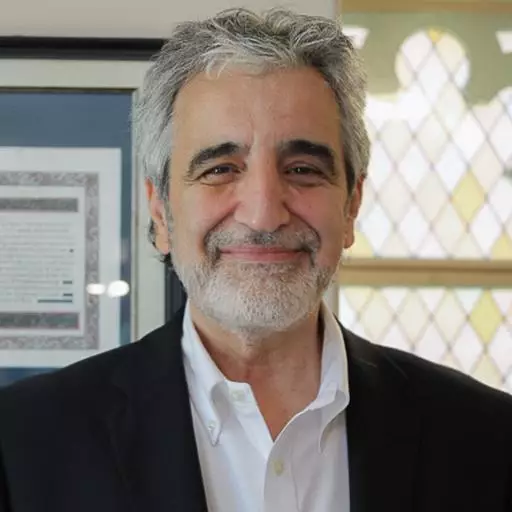
with Messianic Leader J. Isaac Gabizon
https://www.bethariel.ca
https://bethariel.ca/donate/
Guest (Female): Shalom and welcome to Shalom Ariel as we are in our 25th sermon in the Gospel of Mark. Today we're going to be hearing about nicknames. It's funny how God gave Peter the nickname Rock when he seemed to be anything but a Rock. Denying Messiah, falling into the water when he should have been walking on it, and maybe Peter did act like a rock at that moment because he could have sunk right down had he not been grabbed and saved by Yeshua, who is the true rock.
When our eyes are kept on Yeshua, then we have a rock-solid faith that can take us through many turbulent storms. Maybe God gave Simon the name Petros to bolster his weakness, to steady his impetuous character. Many of us as children might have received a nickname. Some were probably endearing ones and others weren't so pleasing, ones that we would rather forget about. I remember, for example, when my older sister would call me little baby or scaredy cat or infantile.
Those names that we received as children could unfortunately stay with us and continually mark us even into our adulthood. To undo any of those nicknames, let's instead stand firm on the nicknames that we already have from the Lord. Which one of these names would you rather call yourself: child of God, child of the kingdom, child of light, child of the day and not the night, child of the living God, child of your Father in heaven, child of the promise?
Wouldn't it be nice to call each other some of those names? Maybe one day when you're texting your friend you go, "Hey, how are you doing, overcomer? How are you, disciple? Prisoner of Messiah, blessed one, beloved one, friend, servant." These are the nicknames that we're going to keep forever because God's promise will never get broken. You, O Lord, are unchanging, fully dependable, faithful and sovereign. Because you go unchallenged from generation to generation, we can always enjoy the benefits of our childhood in you, no matter how old we get in this life. Be blessed as you listen into today's program, and shalom shalom.
Jacques Isaac Gabizon: Let us now follow an ancient tradition to bless the word of God before we open it. You can pray with me: Blessed are you, O Lord our God, King of the Universe, who has given us the word of truth and has planted everlasting life in our midst. Blessed are you, O Lord, who gives the scriptures. Now let's open our Bible to the book of Mark, chapter 3. We are at the moment when Yeshua chose the 12 disciples, a major turning point since he himself said that the 12 disciples will sit at the head of the nation of Israel in the future.
In Matthew chapter 19 verse 28, he promises them that they shall sit upon 12 thrones judging the 12 tribes of Israel. So their ministry to Israel really began then. At the beginning, they were to go to Israel exclusively. Yeshua told them in Matthew, "Do not go in the way of the Gentiles or do not enter any city of the Samaritans, but rather go to the lost sheep of the house of Israel." Israel was to receive the word first and gather the remnant of the nation for the spread of the gospel again to the nations of the world.
But see how Jesus calls them: the lost sheep of the house of Israel. Lost why? Because they were without shepherds. They had no shepherd. The 12 disciples represented then the new spiritual leadership of the remnant of Israel. But their physical leadership when they will be sitting on the 12 thrones will not be right away, as many expected. It will come later on. There is a gap of time between the spiritual and the physical kingdom, and this is what the Lord calls a mystery. He's about to reveal this mystery to us later on in this text.
So this revelation will help us to better understand the times we're living in and why it's taking so long for the Lord to come to put an end to evil and suffering and establish his physical kingdom. Why is it taking so long? We will see that the reason behind this long gap is his great patience and his great love and desire so that everyone that is will come to a saving knowledge of God, if possible, of course. Let us then meet the 12 disciples. For while we don't have much information for most of them, there is something which stands out really for each of them almost.
We begin with Peter, who was nicknamed the stone, Petros, meaning a small stone, something small enough that a man can take in his hand. But this nickname makes us think of another Greek word, petra, which is a cliff or projecting rock, and with that our thoughts go to the Messiah, who is actually our rock. Peter is very present in the gospel as he opened the kingdom of God to the nations. He's got the key. His name is mentioned some 155 times, almost as often as Abraham's name, and this man Abraham was also named the stone from where Israel was hewn. Both are seen at the threshold of the formation of the nation of Israel, one physical and the other one spiritual.
Let's meet now the other disciples. Next on our list, we meet two brothers, James and John, Ya'akov and Yochanan. These, along with Peter, were the closest disciples to Yeshua. He would bring them along on many occasions while the other nine were not called to witness some important event. These three were the only ones who witnessed the Transfiguration in Mark chapter 9, and they were the only ones present in the Garden of Gethsemane where Yeshua had that spiritual battle. To both these brothers, James and John, Yeshua gave a nickname: sons of thunder.
We're not told why, but we can think of a time perhaps when they were going through a Samaritan village which did not welcome Yeshua. Then James and John asked Jesus and said, "Lord, do you want us to command fire from heaven to come down and to burn them?" But here they were to learn that we don't kill people if they don't believe in Jesus. Salvation is a choice. It requires a person's acknowledgment of God and the Messiah. But nicknames at this time would look to bring out the best of men, so this title, son of thunder, may have reference to their zeal to preach the gospel.
The word thunder is from a Greek word which was used to describe one's ability to speak with power and to strike with astonishment. It may have been in this sense that they were sons of thunder. This word thunder in the Septuagint is often used to describe the terrifying revelation of God. John himself wrote an important book, of course, the book of Revelation of the end time, a book which still speaks to us today. We can almost hear the same rumbling of thunder then roaring into our world today.
As for James, he was actually the first martyr, surely because his words, his powerful preaching, must have vexed the people and so they killed him then. There's something else that stood out with both these two and their mother, by the way. Because there were many women following Yeshua, and one of them was the mother of these two who actually thought the world of James and John, and she made it known to all. I don't know if you remember the story. One time she took both James and John and went right to Jesus and asked him that when he would establish his kingdom, one of her sons would sit on his right while the other would sit on his left.
When she asked it, she made sure that all the others heard, and they did, and it caused a big commotion. As if Yeshua did not have enough to deal with with the Pharisees, the Sadducees, the Herodians and the others, he had to quench internal fires as well. The story, by the way, is in Matthew 20, but you cannot really blame a mother for wanting her sons to be first and best. Do not all mothers think that their children are the best in the world? I think so. There's a very old tradition in Judaism which teaches that one can expect the Messiah to come in every generation.
Jewish mothers would look to their newborn son and think that one day they could be the Messiah of the world. That kind of unwarranted pressure and guilt that some Jewish mothers put on their sons, especially when their sons don't act so great. So James and John's mother is not that bad after all, as she settles for second place after the Messiah. But there's someone else who also shows his love for these two. See how verse 17 is written: "And James the son of Zebedee and John the brother of James." See how the name James is mentioned twice?
It could have said, "and James the son of Zebedee and John his brother." After all, the book of Mark is a very short book, but the Spirit repeated the name James. You know when you love somebody, you repeat his name. Perhaps this was Yeshua's way to affirm his love for James and build great confidence in him as if he did repeat his name twice. It is perhaps that soon after Jesus' own crucifixion, James would give his life for his Lord. He was thrown, by the way, from a pinnacle of the temple and then beaten to death with a club. However precious is the death of his people, the Spirit was with him always.
So we have here the longest-living disciple, John, and the shortest-living one, James himself. Here Yeshua gave a nickname for only the first three. Let's see if we can give other nicknames to the others for what we know. You know, at the time nicknames were very popular and many were given to many rabbis. To give you an idea in the Talmud, one rabbi was nicknamed a strong surging spring. Rabbi Gamaliel, the son of the one mentioned in the book of Acts, was called a basket of spice traders. It's nice. Another was called the one who learns much and forgets little.
It's nice to remember the best of a person by giving them an appropriate, nice nickname. In fact, you can give yourselves a nice nickname. It will encourage the other person. So let's consider the other apostles. The next one on the list is Andrew, Peter's brother, who introduced him to Yeshua. We don't know much about him except that he must have been a storehouse of faith. During the feeding of the 5,000, Jesus challenged and tested the 12 disciples to find ways to feed all these 5,000. He wanted them to think out of the box, to look at the miracles they could actually call upon.
While the others debated among themselves, Andrew stood up and very candidly told Jesus, "You know, there's a young boy here who has five barley loaves and two small fish." These were obviously not enough to feed 5,000, but it seems that he in turn challenged Jesus to perform a miracle which he did right away. He knew to turn to the Lord when a situation seemed impossible. Andrew, whose name means manly or strong, must have been a good friend to hang on with, a good friend to have because he looked always for the Lord, it seems, for answers.
Then comes Philip, of whom we know so little. His name is made of two words: friends and horse, more likely in the sense that it was used to describe one who expressed anything with power. Philip was a popular name for kings, for leaders, and so our Philip must have been a powerful speaker of the word. The names of Philip and Bartholomew are linked together. They were friends before they met Jesus, and it was Philip actually who introduced Bartholomew to Yeshua. The name Bartholomew is from the Aramaic bar-Talmai, which means the son of Talmai, and he's also known as Nathanael, meaning a gift from God.
So Nathanael stands out as a student of the word of God. In the words of Yeshua, he must have been a very sincere and humble man. We read in John 1:47, when Jesus first saw him, he says, "Behold, an Israelite indeed in whom there is no deceit." That is quite a compliment coming from the mouth of the Messiah. Nathanael must have been among the most gentle and genuine person, people, and we have actually an indication of what contributed to his character. You know, when Jesus pronounced these words, Nathanael asked how he knew him. Jesus answered and said, "Before Philip called you, when you were under the fig tree, I saw you."
What was he doing under a fig tree? We learn that the rabbis had a custom to study under and besides one of these three trees which symbolize Israel: the vine, the olive, and the fig tree. That Nathanael was studying the word explains his immediate response as he readily recognized the author of the book he must have been reading. He said to him, "Rabbi, you are the son of God! You are the King of Israel!" He readily recognized the Messiah spoken of in the scriptures. Imagine you read the scriptures and you meet the author right in front of you.
Nathanael then is the student of the word. What the tribe of Issachar was to Israel, Nathanael was to the 12 disciples. Both were known actually to study the word. See, each one has a story to tell us, each of the 12 disciples and each believer. This is why I love to listen to how people came to a saving knowledge and how the Lord actually worked in them. Next comes Matthew or Levi, the tax collector. Then again, there's a debate about identifying Matthew with Levi. Some see two different persons, but it really doesn't matter.
These types of complex problems are there so that we keep always our eyes on God and not on this one or that one disciple. Matthew in Hebrew means again a gift of God, and so he was to us who gave us the Gospel of Matthew. He's the one who got so excited, if you remember, when he first met Jesus. What did he do? A big party, and he invited every one of his friends. Next we have Thomas. His name is from the Hebrew and the Aramaic Toma, which means twin. He's known as Doubting Thomas. This is how we remember him, but we should really remember him as Faithful Thomas.
Let me tell you why. It's true that he did not believe the testimony of the other 11 disciples when they told him about Yeshua's appearance after the resurrection. However, to him and for him alone, Jesus made a special appearance and it had a great effect on him. This is when all the 12 were gathered in a room and suddenly Yeshua enters the room, and not by opening the door, by the way, but literally through the door, and stood in front of Thomas. He told him, "Now reach here and reach there. I am Jesus, and I'm resurrected."
This is when Thomas, overwhelmed by the Messiah's presence, said, "My Lord and my God!" Whoa, John 20:28. He directly called Jesus God. Quite a statement and an affirmation of the deity of Yeshua, which he accepted. See, having doubt doesn't mean you are not a believer, for only believers really have doubt. The others have nothing to doubt about because they don't believe. Yes, he was Doubting Thomas, but let's remember him as Faithful Thomas. He saw the Lord and recognized them. Then comes James, the son of Alphaeus.
Here's another James among the 12. Beyond his name, which is mentioned in the four lists of the disciples, we don't know anything about him, but that's okay. The Lord knew him; he chose him. Then we have Thaddaeus, which means large-hearted in the sense of courageous. He's also called Lebbaeus and Judas. He has three names, by the way, so we don't know much about him either. The next one is Simon, a second Simon. It was told that the name Simon, by the way, was the most common given name for Jewish males at the time.
He was a Zealot. A Zealot belonged to a political movement who used violence against the Romans. This movement rose as a protest against the high taxes imposed on Jews. But notice who was in the room with him: Matthew. He was a tax collector for the Romans. In the world, these would be enemies, but in Yeshua, they are one. They could be in the same room. I don't believe that anything else could have brought them together but the love of God. Only in the scriptures can two enemies meet and find their feelings of antagonism disappearing.
He's also called Simon the Canaanite. This adjective at the time was used for merchant. This is what Canaanite means, by the way. So like Amos, he was a businessman who left all to follow Jesus. Now all of these, except for John who died of old age, the others died a cruel death because of what they believe. This is something we ought to remember. Peter was crucified upside down, head downward, during the persecution of Nero. Andrew died on a cross. Nathanael was flayed alive in Armenia. James the elder, son of Zebedee, was beheaded at Jerusalem.
Thomas was run through the body with a lance. Philip was hanged against a pillar. Thaddaeus was shot to death with arrows. Simon died on a cross. Matthias, who replaced Judas Iscariot, also died on the cross. But I want to ask you: what motivated these men to give their lives for the Messiah? Three words, three events: the life, the death, and the resurrection of Yeshua. All this witnessed the life of Yeshua and the great things he did and the way, especially, I believe, he loved. And they knew of his great powers and yet they saw him willingly go to the Tav, the cross.
They also saw him resurrected, and this, I want to tell you, no one could take away from them. Their death remains one of the great proofs of the validity of the scriptures, for no one would deliberately die for a lie. We know that. In many ways, we also see the Messiah resurrected ourselves, every day for his power of the resurrection lives in us, and we see the effect of this great event in history and in the lives of so many around us. I see it. I saw a man come to a saving knowledge last week and I saw the power of the Spirit working in him. That was Yeshua resurrected.
And then we have a great dilemma, an enigma: Judas Iscariot, the one who betrayed Jesus. What is he doing in this list? Right at the outset, we read in verse 13 that Jesus went up to the mountain and summoned those who he himself wanted. A first question we ask is why did Jesus want him, knowing that he would betray him? And see that Judas Iscariot was given so much power. We're told in verse 15 that he was given authority over the demon to cast them out. And we learn from other gospels that he was given power to heal. Yet he was not a believer.
We will try to answer this question and look at the complex character of this man as we move deeper into the book. However, for now, we can say that Jesus did not choose a traitor as a disciple. Judas Iscariot became a traitor with time. This resolved the problem of seeing many leaving the faith. I'm not talking about those who are backsliding and then return, but those who move away from the faith by rejecting and renouncing Jesus. But what really is an enigma, I want to tell you, it's not rare. Judas Iscariot is not alone. He is one of the many who follow after him, and this may be the reason why Jesus put him in the list.
The New Testament letters, I want to tell you, have much to tell us about this type of individual. John speaks of those who left but because they were never of us, 1 John 2:19. The author of Hebrews speaks of those who were partakers of the Holy Spirit, like Judas Iscariot, and then denied him. He says it's impossible for them to come back. Paul goes as far as warning believers in Corinth. "Test yourselves," he says, "to see if you are in the faith. Examine yourselves." Biblical Christianity is not easy. It demands a constant growth and testing of ourselves to see if we are on the right track.
But this very problem Yeshua is about to expound in the parables and when dealing with the sin against the Holy Spirit which he calls actually in Mark 3:29 the eternal sin, the eternal sin, which we will look more in detail in our next study. Well, all of this is to prepare the believer for the event that someone leaves the faith. These things should not shake our faith or our belief in the eternal security we have in Jesus. If you believe in Jesus, you have eternal security. If you're ever worried about committing the eternal sin, I would say that it is a good sign because those who do not believe won't even worry about their eternal security.
They don't ask this question. They just don't believe, and this is why they leave the church, the congregation. They did not lose their salvation because they never had it. Remember, nothing can separate us from the love of Christ, Romans chapter 8. So what do we know about Judas Iscariot? Iscariot is a reference to the city of Kerioth in Judah, not far from Jerusalem. Perhaps the fact that only Jesus and Judas Iscariot were known to be from the tribe of Judah may have triggered a seed of jealousy in Judas.
And within the group of 12, Judas actually had a special function. He was a treasurer, right? He received the offerings and managed the expenses. However, we're told in John 12:6 that he was a thief and that he had the money box and used this to pilfer what he put in it. However, this the disciples did not know. For when Jesus told them at the supper, "One of you is going to betray me," they had no idea who it would be. Here we learn also how Jesus loved everyone.
So what we learn from Judas Iscariot is that incredulity, that is, unbelief, even in the face of the greatest miracle and the greatest presence for Jesus was always there with him, unbelief, putting all the fundamental doctrines of the Bible in question can completely blind a person and push it away or push him or her away from God. This is an enigma. The sin of unbelief has many facets. It is very subtle. And what we also see is that the cause of the fall of Judas Iscariot is very similar to the fall of the scribes and the Pharisees and the religious leaders in Jerusalem.
All of them were confronted with so many witnesses concerning the validity of the Messiaship of Yeshua. All of them at the end denied these proofs and committed that sin. And so it is right after the mention of Judas Iscariot that the text begins to show us that the walls actually were beginning to close in on Yeshua. The situation became unbearable, as it is described from verses 20 to 23. Let's begin with verse 20: "And he came home, and the crowd gathered again to such an extent that they could not even eat a meal." This was the ultimate moment.
By the way, it was also a dream time for whoever is looking for fame, but it was not Yeshua's desires to be popular. For he came to die for the sins of the people. If you follow the progression, by the way, of his fame, the number of people following him increased to the point that he couldn't eat anymore. Let me show you a chart here. In chapter 1 verse 33, we read: "And the whole city had gathered at the door." Chapter 2 verse 2, we read: "And there was no longer room, not even at the door." 2:13, we read that all the people were coming to him.
3:7 to 10, we read that he withdrew to the sea with his disciple because there were too many in the city. Then 3:20, our verse: there were so many that they couldn't even have a meal. Then the next chapter, as the break became more obvious, in chapter 4 verse 1, we read that there was such a large crowd gathered to him that he got into a boat in the sea. This time he didn't go to the sea, he went on a boat in the sea. After this there was nowhere to go. But he did not come for fame. People ask how come we don't have peace in the world if Jesus came? Because he came to die first.
He could have said, "I'm the King of Israel," and everybody would have followed him. So his success was not based on the praise given by others. He came to give his life for his lambs. This is one aspect of his life we should not forget. So he successfully in the way he was to die at the proper time at Passover and at the proper place. We're going to see that his greatest miracles were there so that the way will always be open. Again, Jesus did not come to bring peace on earth, but salvation first.
Guest (Female): Shalom Ariel is a daily radio program emphasizing the Jewish perspective of scripture. God is not through dealing with Israel, nor will he renege any of the promises he has made to her. Our teacher for this program, Jacques Isaac Gabizon, is a Messianic Jewish believer and Messianic leader at Beth Ariel Congregation right here in Montreal. If you've been encouraged by the messages, we'd love to hear from you. Give us a call at 1-888-685-5902, or you may write us at info@bethariel.ca, that's B-E-T-H-A-R-I-E-L all one word, .ca.
You are also welcome to join us for our Saturday morning services. We are located at 6297 Monkland Boulevard, corner of Madison in NDG. The message is given in English, but we do offer simultaneous translation into French and Russian. Services begin at 11:00 a.m. We have Shabbat school for children of all ages, up to and including teens. You may also download audio messages from our website at bethariel.ca and enjoy other in-depth teaching from Jacques Isaac.
If you would like to sign up for informative newsletters, log on to our website and add your name to our email list. Shalom Ariel is a listener-supported program. If you have it on your heart to donate, it will be a great blessing for the continuing ministry and outreach of Beth Ariel. Thank you and shalom shalom.
Featured Offer

Prophecies take up about ¼ of the Scriptures so we cannot simply ignore them. Knowing prophecy enables us to give a clear presentation to others of why things unfold the way they do in such areas as politics, morality, technology and global ecological changes. It also helps us to rightly place Israel in God’s prophetic plan.
Past Episodes
- The Armor of God
- The Believers in the End Times
- The Book of Daniel
- The Book of Deuteronomy
- The Book of Ephesians
- The Book of Esther - Purim
- The Book of Exodus
- The Book of Ezekiel
- The Book of Ezra
- The Book of Genesis
- The Book of Hebrews
- The Book of James
- The Book of Jeremiah
- The Book of Joel
- The Book of John
- The Book of Leviticus
- The Book of Numbers
- The Book of Philippians
- The Book of Revelation
- The Book of Romans
- The Book of Ruth
- The Book of Zechariah
- The Feast of Passover
- The Feast of Purim
- The Feast of Shavuot - Pentecost
- The Gospel of Mark
- The Gospel of Matthew
- The Letter to the Galatians
- The Messiah in Isaiah
- The Messiah in the Book of Isaiah
- The Messiah's Prayer
- The Nativity: The Unwrapped Gifts of God
- The Resurrection of the Messiah
- The Sermon on the Mount
- The Tabernacle

Video from Jacques Isaac Gabizon
Featured Offer
Prophecies take up about ¼ of the Scriptures so we cannot simply ignore them. Knowing prophecy enables us to give a clear presentation to others of why things unfold the way they do in such areas as politics, morality, technology and global ecological changes. It also helps us to rightly place Israel in God’s prophetic plan.
About Messianic Viewpoint
About Jacques Isaac Gabizon
Contact Messianic Viewpoint with Jacques Isaac Gabizon
info@bethariel.ca
http://www.bethariel.ca/
Beth Ariel Congregation
CP 46521 CSP Boul. St Jean
Pierrefonds, QC, H9H 5G9
Toll free (888)-685-5902