
The Gospel of Mark, Part 24


The Gospel of Mark, Part 24
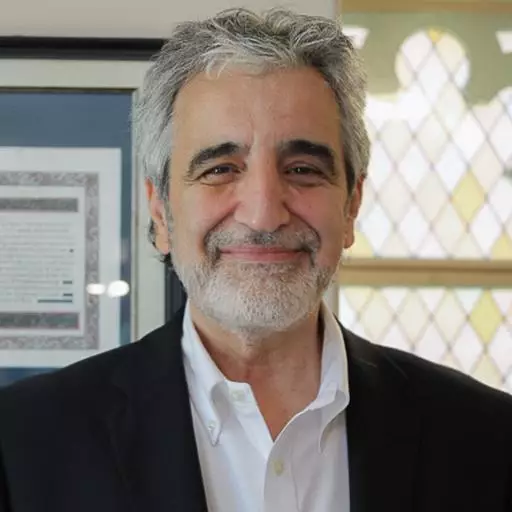
with Messianic Leader J. Isaac Gabizon
https://www.bethariel.ca
https://bethariel.ca/donate/
Guest (Male): Shalom and welcome to Shalom Ariel and to this, the 24th sermon in the Gospel of Mark with Messianic leader Jacques Isaac Gabizon. Are we impressed by the credentials of the 12? Fishermen, a tax collector, a Zealot against the Romans? But there's only one who we are to be impressed by. So, what are our credentials? We are now kings. Wow, that's impressive. Yes, we have authority over fears and doubts, authority over our enemies, but only when the King of kings reigns in our hearts.
And we have yet another credential. We are now priests, aren't we? Yes, that's impressive. Yet, without the Spirit, we can do nothing because there is only one Lord of lords, one King of kings, and one High Priest. Did you know that three times in Scripture, human kings were called king of kings, referring to Artaxerxes, also known as Ahasuerus and Nebuchadnezzar?
But we know that one day soon, all rulers will be conquered, and Yeshua will make the earth's rulers emptiness. Isaiah 40:23 says, "The great men of the earth, kings, rulers, and nobles, these He brings to the dust, and all their counsels, schemes, and purposes come to nothing, and their monarchies and kingdoms too, all in time."
Compare the dissolving of these great empires to that which has eternal value, that which will never burn up or get lost in the dust. That's what we need to be impressed by when it comes either to us or to the 12. As Yeshua was humble, so was He glorified. As Yeshua was obedient, so was He exalted above every name. Let's be impressed not by trade or profession, but by the humility and obedience it takes to stand with Peter, who said, "For truly You are the Messiah, the Son of the living God." That is one of the most impressive statements we can ever make. Be blessed as you listen into today's program, and shalom shalom.
Jacques Isaac Gabizon: They were always present as they are today, having the same strategy: hit and hide. The first encounter was with Eve, if you remember. The devil did not come looking like a devil to Eve, but like a serpent, surely as an innocent-looking and good-looking serpent, perhaps veiling himself as he looked like in heaven before his fall.
In Genesis 6, we see the demonic invasion to stop the seed of the woman, but the people did not know that. These sons of God came and married women to corrupt the seed, most probably through possession of corrupt men. But again, these demons were somehow disguised. Samuel understood the connection when he says rebellion is as the sin of witchcraft.
What is witchcraft? *Kesem* in Hebrew is from the word *kasam*, which describes the practice of divination or calling on demons. Here, rebellion against God has a demonic origin. The existence of demons was known by the prophets; even Isaiah gave them names, which are translated into animals. In Zechariah 3, Joshua the High Priest did not know that Satan was standing next to him to test him and persecute him.
The point is that just as they operated during the Hebrew Scriptures era, they are operating today, very subtly, very discreetly, which is much harder for us to deal with than with a direct confrontation. When a demon manifests himself, we know who we are dealing with. This is relatively the easy part. But when they attack from the back, which they do, then it becomes much more difficult to spot them and deal with them. This is where the New Testament, the letters written for the believers, trains us to recognize them and to properly fight them.
Let us not lure ourselves into thinking that they're not active, for they are and are always trying to undermine what is God's, what is godly, what is right. Yeshua will emphasize this point in speaking of the two kingdoms of the world right in this chapter. You have the kingdom of God and the kingdom of Satan. But the New Testament tells us much about the organization and their field of action.
Remember Ephesians 6? It tells us about their organization. There we're told that our struggle is not against flesh and blood, but against what? Look what it says: "rulers, against the powers, against the world forces of this darkness, against spiritual forces of wickedness in the heavenly places." Ephesians 6:12 first reminds us that we're fighting a spiritual battle. Not realizing the depth of the implication of this truth, we've already lost the war then.
Then we learn that they are divided into four well-organized battalions, so to speak. Four, just like the four powers in the time of Daniel or the four powers of the end time. We see their footprints of their influence in this world. You ask, why do we need to know that they are divided into four well-organized battalions? This is for us to know that as Jesus uncovered them by His presence, He knows exactly where they are today. The Word uncovers them completely. This must be the purpose of this verse. God knows, and that He knows is very comforting for us.
But then we're told how they operate, and this is important so that we may be ready to fight back. Let me give you one important verse: 1 Timothy 4:1. "But the Spirit explicitly says that in later times some will fall away from their faith, paying attention to deceitful spirits and doctrines of demons." First, we have deceitful spirits roaming the places where believers are, the congregations, the churches. These spirits may refer to false teachers, or demons, or both working together in unison.
It is, however, in the second clause that we read "doctrines of demons," for this is where demonic activity is more active. It attacks the Word of God. This is what they do today. Remove the Bible from a believer, and you have no more direction, no more vision, you have chaos. As they did with Israel, which brought God to say through Hosea, "My people are destroyed for a lack of knowledge."
In the history of Israel, demonic activity was done mainly through foreign false religion, as it is today through false doctrines. Yeshua gave us such a great example on how to fight demons, how to cast out demons. Did you notice that at the temptation, when three times Jesus said, "It is written"? Right away and three times, the devil just disappeared. The devil's attack finally ended.
So surely they would attack our beliefs, and this is our means to fight back: know your Bible. This way, we can cast out demons. So, having an authority over the demons is primarily to be freed from their influence and to cast them out through the power of God. While there may be at times a direct confrontation with an exorcism, most of the time it involves knowing the Word of God and using it to fight back.
Let us now meet the 12 apostles. It's like reading the list of a graduation. For this comes after they have spent at least two years with the Messiah. Now they're trained. Now, among many others, because there were so many who followed Jesus, Jesus chose 12 of them whom He appointed and is about to send. From that point on, it becomes "the 12." We read this ten times over in the Gospel of Mark.
This appellation must have attracted the attention of many in Israel. You know that the rabbis used to call the 12 minor prophets "the 12." But here are a new 12 with a new mission and a new message. Here is the list: we have Peter, James, and John, Andrew, Philip, Bartholomew, Matthew, Thomas, James, Thaddaeus, Simon, and Judas Iscariot.
Furthermore, it's not easy to follow them, for many of the apostles have more than one name, and many have the same name as others in the list and the same name with other individuals elsewhere in the New Testament. Many times, to figure out who's who requires some gymnastics of the mind. For instance, Peter is Simon, but there is another Simon in verse 4, and there are seven other Simons in the New Testament.
There are two Judases in the list. One we know as the traitor, and the other has two other names. He is called Judas, Thaddaeus, and Lebbaeus. In addition to these two Judases in the list, we have four more Judases in the New Testament. Complicated, isn't it? So, when we hear of the name Judah, we need to figure out which one it is.
But why is it so complicated? There are some very easy things in the Scriptures. Why not make it easy to have only one name for each so we don't have to always go on a mission to search and seek? One thing is that this helps us to keep our eyes on one hero, the hero of the Bible. His name is Yeshua. Just remember Yeshua. That's His book. It helps us not to overemphasize the work of one man over another and especially over the Messiah.
Beyond these things, we're going to see how sincere and open the Scriptures are about man, and this book uncovers both sides of man: the good and the bad. It's not like an account in the history of many nations, like that of the Babylonians or the Egyptians, who have created a spic-and-span and immaculate perception of themselves in their history. Here, this history is written by God, and you can be sure you're going to have the right information.
What is the practical application of this? Like we often said before, there were not really 12 disciples. How many were there? 13. Who's the 13th? It's you, the reader, the student, the seeker. We are walking with them. For in each of the 12, we can find some of us, perhaps in one more than another. However, what is so valuable in reading about them is that we're going to see how God reacts with them, how Jesus was so patient, how He was so loving. He always saw them at their best, as they would be, not as they were.
And so He will teach us to do the same: to always give the benefit of the doubt and to always love, always love. Behind the story of each apostle, there are miracle over miracles. Follow them one after the other. Furthermore, looking at the list overall, we realize that none of them were theologians or even religious. Some religious and educated people did join in later on—Nicodemus, Paul—but the nucleus is made up of those who were not expected to be chosen: fishermen, tax collector, a fighter. Those considered the less prominent and intelligent in the society. Yet, this is whom Jesus went to seek.
But the common denominator with all this was a humble and sincere heart. This is what I believe Yeshua is looking for in everyone, and then He will change that person. Let's begin to look at the first one: Peter. We will hear so much about Peter in the next chapters and find out more about his passionate and very assertive and confident and loving character. But it is in his new name where we can see a powerful message. See how he is introduced: Simon, to whom He gave the name Peter, meaning a stone, a petros.
Peter has three names: Simon, which was changed to Peter and Cephas. Both Peter and Cephas mean stone, one in Greek and the other one in Aramaic. But it is in this new name, stone, which carries us back to the beginnings again of Israel and to remind us that something new is starting. Peter is the new leader, and so he's called the stone. But in the same way, Abraham, the father of Israel, and Sarah, the mother of Israel, were both called the stone of Israel.
We read in Isaiah 51:1-2 when God encourages the remnant of Israel. He says, "Listen to Me, you who pursue righteousness, who seek the Lord: Look to the rock from which you were hewn, and to the quarry from which you were dug. Look to Abraham your father and to Sarah who gave birth to you in pain; when she was but one I called them, then I blessed them and multiplied them." When you are in trouble, the Lord says, look at the great example of Abraham and of Sarah and from where they were hewn.
And the purpose of the blessing and the multiplying their descendants was for the very same purpose of the choice of Peter. This is the proclamation of the Word to the nations of the world. Remember it was God who told Abraham in the Abrahamic Covenant, right at the end of verse 3 of chapter 12 of Genesis: "In you all the families of the earth will be blessed." That's why He chose him.
This was the very purpose of the choice of Peter, to whom Jesus gave the keys to the kingdom and who opened the gospel to the nations. He's the one who first went to Cornelius in Acts 10, and then from Cornelius, it went out to all of Europe and to the whole world. In the first century, some religious groups were quite aware of the association between the rock, the stone, and Abraham, the Essenes, for instance.
Those who wrote the Dead Sea Scrolls compared their community of priests and assemblies as stone on which the renewed Israel was to be built and on which the new temple was to be built. Here Yeshua comes and says, no, it's Simon, the Peter, the stone. But let's see more of the relation between Abraham and Peter. On what basis were these two chosen? For both, their election was based on faith. It's always salvation by faith.
Of Abraham, we read that Abraham believed, and it was accounted to him for righteousness. See how the words "believe" and "righteousness" are brought together, for there was nothing that Abraham did which saved him but only his faith. Salvation was always again by faith. As for Peter, see how his confession brought him to be the stone, the head of this new entities of Jews and later Gentiles who will proclaim the gospel to the unsaved.
It was in Matthew 16 when Yeshua asked Peter, "But who do you say that I am?" Great question for all of us. This is what Peter answers: "You are the Messiah, the Son of the living God." This is when Jesus told him, "You are stone, you are this stone, you are Peter, and upon this rock I will build My church." The rock is not Peter. It is feminine; it is petra, not petros. But it is Peter's confession of faith in saying that Jesus is the Messiah. Upon this rock, the ekklesia was to be built, upon this declaration of faith.
Both Abraham and Peter were driven by faith. Both these stones were established on God-given faith. This is how the naming of Simon as Peter brings us to consider. For the Jews of the first century, it must have meant something to hear this word, stone. Furthermore, the idea and the concept of a stone given to Peter and the number 12 would have recalled many to consider major part in the history of Israel.
This brings us to Moses as well, who after writing down the words of the law he received of Mount Sinai, we read in Exodus chapter 24:4 he rose early in the morning and built an altar at the foot of the mountain with 12 pillars of the 12 tribes of Israel. He then set up 12 memorial stones, standing stones for each of the 12 tribes.
To conclude, there's one more individual that is associated with 12 stones, one for each of the 12 tribes of Israel: Elijah. It was when Israel was submerged into false religion, wrong teaching. There was a time in the history of the nation where the demons were very active. It was surely with Elijah, but they were doing it so subtly as they do it today. But again, this man arose, who challenged all their false doctrines and all their priests.
At that time, he asked them to build an altar, to put their sacrifice on it, and to ask their god to send fire from heaven. Maybe he's a real god. If he's a real god, he should be able to do that. It never happened. At which point Elijah mocked them and telling them that maybe their god was on a journey or perhaps he was asleep. Then Elijah proceeded to build an altar. See how he did it. Elijah took 12 stones according to the number of the tribes of Israel, of the sons of Jacob, to whom the word of the Lord had come saying, "Israel shall be your name."
Then on this altar, he made 12 stones and he put wood and fire, and he put so much water in there. And then he prayed, and fire of the Lord fell and consumed the burnt offering and the whole altar. At which point he ordered to take the false priests of Baal and to kill them. 450 of them were killed. But there's one thing that he said just before challenging them. This is in 1 Kings 18:21. Elijah came near to all the people and he said, "How long will you hesitate between two opinions? If the Lord is God, follow Him. If Baal, then go to Baal."
How long will you hesitate in making a decision between God and the others? People were wavering and jumping from God to Satan, from one kingdom to the other. Elijah was echoing Yeshua's word to the church of Laodicea, the last church of the tribulation time. It was lukewarm. It was on the fence. But really, not making a decision is having a no decision. But a decision to accept and to follow Yeshua is one major resolution which promises to bring all the blessings of God in one's life and family.
It's never too late to make the most important decision in your life, either to accept Him if you don't know that He's the Savior, or if you're a believer, to be ready to be sent. Take time to deliberate, but when the time for action arrives, stop thinking and just do it. Amen? Let's bow our heads in prayer.
Heavenly Father, we thank You for Your presence, Your presence among us this morning. We thank You for the presence of your Ruach Hakodesh in us to guide us and to always remind us that we are Your children called to do great things on this earth. We also thank You for Your Word. We know that we can always find You among its powerful pages. Lord, we pray today for all those present here in this congregation, those who are listening. Some here today need healing, some need revival in their hearts, some need restoration in their friendship, in their families. For those here this morning who wonder if they've been left behind, who fear You've forgotten them, show Yourself to them. Teach them that Your delays are not denials. May we wait on You, and may our strength be renewed and our souls be restored. All this we pray in the name of Yeshua Hamashiach. Amen and amen.
Guest (Male): Welcome to this segment of our program where we ask Jacques Isaac Gabizon pertinent theological questions. One which comes up again and again focuses in on the importance or value of Messianic congregations. You might know a Jewish believer who attends a Messianic congregation and you might think, "Hmm, maybe they're being exclusive or they segregate themselves. Shouldn't they just be in a church like the rest of us?"
There are, by the way, many Gentiles who do attend Messianic congregations, but the important thing to remember as well is that not all Messianic congregations are the same. Investigate their claims, investigate their doctrinal position as you would any house of God. So, let's listen into this Q&A. Be blessed and shalom.
Why do believing Jews call themselves Messianic Jews and why are they not in Gentile churches? Some of my friends are a little upset concerning this name. Can you explain, please? Thank you, Pastor Isaac.
Jacques Isaac Gabizon: There are many facets to the answer of this question. The first one is, why wouldn't the Jewish people have their own congregation as the an Italian or Korean congregation? A Jew belongs to a people with a long history of tradition. Should he renounce in all this when he comes to believe in Jesus? When a Jew believes in Yeshua, he remains a Jew, just like a Portuguese or Canadian who comes to believe in Jesus. Portuguese remains Portuguese and keep on making their great Portuguese chicken, and they still carry on with their traditions. Why not the Jew? One cannot ask a Jew to stop eating bagels with some cream cheese on Saturday; it's part of his tradition.
Have you asked yourself why one would not ask this very question to another people, but only to the Jewish people? This is when we come to another facet of the answer. See that for the last 2,000 years, Jews were not welcomed in churches. At the beginning, in the first century, you had the Nazarenes and the Ebionites, two groups of Jewish people who were literally kicked out of the churches for the same reasons that these churches thought Jews should forget their Jewishness.
Those who were accepted in the main faction of Christianity, that is, the Catholic Church, had their name changed and were expected to deny their traditions and customs. Even today, while there are some great churches who love Israel and where there are even a few Jews attending, most churches are of the amillennialist and postmillennialist position, which deny the very existence of Israel. Some very subtly, others very overtly. Can a Jew really enter and attend these congregations?
Let me give you another major reason. For the past 2,000 years, Jews were persecuted by the nominal church. Personally, before I came to believe in Jesus, the cross and the name of Jesus were synonymous to antisemitism. There's a big struggle for Jews to go through these historical facts which describe how the church, the nominal church again, has persecuted, even killed Jews through their crusades and false accusations.
Today, the Messianic congregations are here as a bridge between the Scriptures and faith and denounce this persistent anti-Jewishness. A most beautiful thing about Messianic congregation is that the Gentiles are in the majority. For they are not that many Jews who believe in Jesus, and the Gentiles' presence testify of their love for God, for His Word also, and for Israel, something secular Jews need to see.
Furthermore, one thing that we do in Messianic congregation is to look at the Scriptures from its context, bringing out the Jewishness of Jesus and of all the writers of the Bible and seeing the Hebrew Scriptures and the New Testament as one book with the same author, something that has been lost in time for the greater part of the church. Now, these being said, there are different Messianic congregations in the world as there are different types of churches in Christianity.
Before entering one of them, ask for the statement of faith, just like you would ask for the menu when you enter a restaurant, for you want to know what they serve. Here in Montreal, there are a few small Messianic groups, and one of them clearly denies the divinity of the Messiah. You surely don't want to associate with them nor associate them with us, even though they call themselves Messianic.
In North America, as opposed to many congregations in Israel, many Messianic congregations are back also to the law and believe that Jews, and for many of them that Gentiles as well, should live by the Mosaic law. See that the Messianic movement has nothing to envy from the church in general. So it is imperative to find out what they teach before entering one of them. Lastly, Jews need to hear the Word of God, and we exist for this main purpose. For instance, I don't know of a Gentile church here in Montreal which goes to the Jews, and yet there are about 100,000 Jews.
We at Beth Ariel not only go to them, but to all people. In fact, in our years of ministries, so many more Gentiles came to believe in Yeshua than Jews themselves. The word Messianic comes from the word Messiah and is equivalent to Christ and means Christians with a touch of Jewish flavor, and all are welcome.
Guest (Male): Shalom Ariel is a daily radio program emphasizing the Jewish perspective of Scripture. God is not through dealing with Israel, nor will He renege any of the promises He has made to her. Our teacher for this program, Jacques Isaac Gabizon, is a Messianic Jewish believer and Messianic leader at Beth Ariel congregation right here in Montreal.
If you've been encouraged by the messages, we'd love to hear from you. Give us a call at 1-888-685-5902, or you may write us at info@bethariel.ca, that's B-E-T-H-A-R-I-E-L all one word, .ca. You are also welcome to join us for our Saturday morning services. We are located at 6297 Monland Boulevard, corner of Madison in NDG.
The message is given in English, but we do offer simultaneous translation into French and Russian. Services begin at 11:00 AM. We have Shabbat school for children of all ages up to and including teens. You may also download audio messages from our website at bethariel.ca and enjoy other in-depth teaching from Jacques Isaac.
If you would like to sign up for informative newsletters, log on to our website and add your name to our email list. Shalom Ariel is a listener-supported program. If you have it on your heart to donate, it will be a great blessing for the continuing ministry and outreach of Beth Ariel. Thank you and shalom shalom.
Featured Offer
Prophecies take up about ¼ of the Scriptures so we cannot simply ignore them. Knowing prophecy enables us to give a clear presentation to others of why things unfold the way they do in such areas as politics, morality, technology and global ecological changes. It also helps us to rightly place Israel in God’s prophetic plan.
Past Episodes
- The Armor of God
- The Believers in the End Times
- The Book of Daniel
- The Book of Deuteronomy
- The Book of Ephesians
- The Book of Esther - Purim
- The Book of Exodus
- The Book of Ezekiel
- The Book of Ezra
- The Book of Genesis
- The Book of Hebrews
- The Book of James
- The Book of Jeremiah
- The Book of Joel
- The Book of John
- The Book of Leviticus
- The Book of Numbers
- The Book of Philippians
- The Book of Revelation
- The Book of Romans
- The Book of Ruth
- The Book of Zechariah
- The Feast of Passover
- The Feast of Purim
- The Feast of Shavuot - Pentecost
- The Gospel of Mark
- The Gospel of Matthew
- The Letter to the Galatians
- The Messiah in Isaiah
- The Messiah in the Book of Isaiah
- The Messiah's Prayer
- The Nativity: The Unwrapped Gifts of God
- The Resurrection of the Messiah
- The Sermon on the Mount
- The Tabernacle

Video from Jacques Isaac Gabizon
Featured Offer
Prophecies take up about ¼ of the Scriptures so we cannot simply ignore them. Knowing prophecy enables us to give a clear presentation to others of why things unfold the way they do in such areas as politics, morality, technology and global ecological changes. It also helps us to rightly place Israel in God’s prophetic plan.
About Messianic Viewpoint
About Jacques Isaac Gabizon
Contact Messianic Viewpoint with Jacques Isaac Gabizon
info@bethariel.ca
http://www.bethariel.ca/
Beth Ariel Congregation
CP 46521 CSP Boul. St Jean
Pierrefonds, QC, H9H 5G9
Toll free (888)-685-5902