
The Gospel of Mark, Part 20


The Gospel of Mark, Part 20
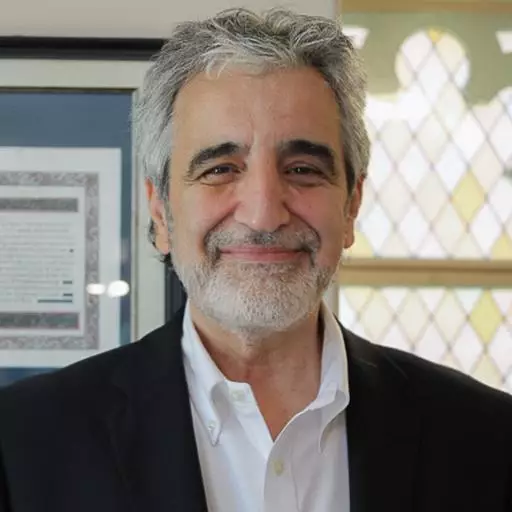
with Messianic Leader J. Isaac Gabizon
https://www.bethariel.ca
https://bethariel.ca/donate/
Guest (Female): Shalom and welcome to Shalom Ariel and to this, our 20th sermon in the Gospel of Mark with Messianic leader Jacques Isaac Gabizon. Did you know that Mark is the only one of the four gospel writers to record that the Sabbath was made for man? It's ironic when we think of Mark as the one who is usually rushing through the verses and spending little time on events when compared to the other gospel writers.
But let's not speed through things here and let's spend just a little time in marveling in the different ways in how God tests us so that we can grow. He is constantly asking us, "Do you depend on me?" What he commanded from the Israelites was that they must not pick up the manna on the Shabbat. Wouldn't you just love for your boss to call you up and say, "Hey, just work a little harder today and tomorrow you have it off?" That is the gift from the great Kavod Yahweh, the glory of God.
He commands us to listen to him, and in that way, we will be blessed. The first time that term, Glory of Yahweh, Kavod Yahweh is used is when he provided the manna back in Exodus chapter 16. While Israel still needed to go out and get the manna for herself, there were rules. It was to be retrieved early in the morning, and there was only one day's worth of supply that was to be collected. Anything more would just melt. Stored manna would be turned to maggots in no time, except for the manna collected on Fridays. That day's manna lasted until after Shabbat, the following day.
What kind of ingredients was this manna made from that in six days it would melt if it wasn't eaten on time or turn to worms if it was stored, but on the seventh day it lasted for at least 24 hours? This manna was something that gave enough caloric intake to sustain the Israelites, yet it was a miraculous manna because it was consistently there day by day, as is God. It nourished and brought Israel to depend on it daily, as we should the word of God. Manna was a foretaste of the eternal blessing we will have when we will feed on heaven's true food, the gift of God's grace.
You talk about a chef and their secret recipes. We still only have a vague idea about what manna looked like and what it tasted like, and that is just part of accepting that the secret things belong to the Lord. Yet, while we might not know the recipe for the manna, we are called to share with others how to purchase the manna, how to eat the manna. Purchase it by giving all that you are to the Lord and then enjoy this manna and come and eat of it freely. Be blessed as you listen to today's message and shalom, shalom.
Jacques Isaac Gabizon: The Mosaic Law clearly stipulated that only the priests were to eat this bread. So why wasn't God angry at David? Why wasn't he angry at the high priest for giving the bread? What do you think?
This is when we come to consider the Mosaic Law itself. Yeshua is here addressing the essence of this law. The Mosaic Law in its entirety was given for the welfare of man, not the other way around. It was in history added to redirect man to the right path and to serve man but not to abuse man as it was transformed with time.
And so some of its ceremonial laws, less important laws, were subject to change with circumstances in order to serve man. There are some laws that are not negotiable, which carry an eternal weight like the law of love, of hatred, of murder. But along with these are the many ceremonial laws which can be adapted to man's need. This is where the freedom of the law lies, something the Pharisees have missed. So the Mosaic Law stands in one principle: love. Love towards God, love towards our neighbors. There we have the eternal principle. The rest is adaptable.
Again, these ceremonial laws were subject to be reinterpreted for the welfare of man. The high priest was right in giving this bread, and David was right in eating this bread. Their freedom defeated the legalism of the Pharisees. But do you see how completely opposed are these two sets of law, between religious leaders and those of God? One imprisons; the other one frees. By the way, this will carry on throughout the gospel. And it's not the first time that God changed some minor laws to accommodate men and women. He changed the laws of inheritance of the land with the five daughters of Zelophehad, if you remember. This man had only daughters and one day he died. However, the law stipulated that the inheritance would go only to a man, a cousin maybe.
But the five daughters did not agree. And so they went to God to reconsider the law. And when God made a decision, and while some of the priests surely expected fire from heaven to consume these five women who would dare to challenge the law of God, God made his decision and he told Moses, "Go tell them that the five daughters are right. Give them their land."
This freedom is an aspect of the Mosaic Law that is often overlooked. Another instance is when some men could not assist or perform the commandment of the Passover so they asked God. God said, "No problem. Do it the next month." See the freedom, the liberty in the law of God, something that disappeared when it comes to legalism in men's heart.
So Yeshua's argument could not have been better chosen. In there, we see the chasm between the religion of man and that of God, the rejection of God and the freedom of walking with God. Even the wording of the text leads us so much further in considering how they refuse God's anointed. I don't want to be dogmatic about this, but I want to share this with you. You know the words in verse 23 where we read that his disciples began to make their way along while picking the heads of grain? We have seen that the words used here are the same as building new roads, what the Romans would do when a king would come for a visit in the town.
We might say that right here, the disciples were making a road for the King of Kings to enter, actually, and to go in. Even the choice of the word "grain field." You know this Greek word is one reserved for this occasion only. It is mentioned three times in the Gospel of Mark, Matthew, and John for the same event. The usual word is not the one used here. It would be for "field." It would be *agros* mentioned 37 times or *chora* mentioned 28 times. But here the word is *sporimos* from the word "seed" meaning "to sow" or "to bear seed," often used for the conception of a child. And here comes Yeshua, who is the physical descendant of David, whose word will come that is, whose word will conceive and bring forth new life on the soil upon which it falls. These two words, "making a way" and "grain field," remind us of the coming of the Son of David.
To make it easy for them to understand, I just wanted to tell you this. Jesus was using actually a well-known method of interpretation that they were using in the first century called *Kal v'Chomer*, which was in use in Israel before 70 AD. The full name of this was *Kal v'Chomer, v'Chomer v'Kal*. Simple and complex, complex and simple. He brought the individual to a more complex and fuller example in the scriptures to explain to them the liberty to have in the Shabbat and at the same time reinforcing the identity as the Messiah of Israel so they know what he was talking about.
But what is it really at the core of this argument? This is what I want to bring you to here. It is the Shabbat. You know, this controversy happened during a Shabbat which was at a time and even today has been surrounded with so many additional laws that the biblical and original Shabbat became unrecognizable. Yet there is so much beauty, there is so much freedom and blessing in this institution. We remember that the Shabbat was created by God, and where was it created? In Paradise, in the Garden of Eden. This is where it started, and from there it brings us along with the memory of this lost place and the hope of regaining it. And further into the future in heaven where the believers will experience a heavenly Shabbat when we meet Yeshua.
This is what is behind the great day of rest. It is there to remind us that this life is indeed short and that there is another up there for which we are now being prepared for. And so every week, in whichever day you choose, by the way, this day is given so that you can refuel and strengthen your hope in heaven and get closer to God. That's what the Shabbat is. From this point on, we can better understand Yeshua's second answer in Mark 2:27 when he said the Shabbat was made for man and not man for the Shabbat. That is, a Shabbat was given for the welfare of man and not the other way around. However, their laws made it almost impossible to get hold of this great blessing that one can experience with the Shabbat.
And by the way, Yeshua's words here are not new. They were not new sayings but reflect the complaints of many of their own rabbis within Rabbinic Judaism. Some rabbis realized the abuse of the Shabbat and came out with similar statements. We find this in two sources. The Babylonian Talmud once said, "Behold, it says in Exodus 31:14, 'Keep the Shabbat for it is holy to you.' That is, the Shabbat has been given to you, and you have not been given to the Shabbat." Similar, right?
But it is in the second part of the second statement that Yeshua gives another explosive statement that brings us to consider the great depth of the Shabbat and also his nature. This is when he said, "The Son of Man is Lord even of the Shabbat." By this word, the Son of Man is Lord even of the Shabbat, he tells them that he is the Creator of the Shabbat. And one more time he affirms his divinity, for it is the Lord himself who established the Shabbat in Genesis. Both are again one *Echad*. And being the Creator and Lord of the Shabbat, it is then in him where we can find the true and genuine Shabbat rest and from whom true peace can emanate. This is what we read in Colossians 2:17. It even speaks about the Shabbat day. It says it's a shadow of what is to come, but the substance belongs to the Messiah himself.
Practically, despite the argument that may seem complicated, all of this is to tell us that a true genuine rest is found in him and only in him. He is the Creator of the Shabbat and the dispenser of salvation. One cannot separate rest from Yeshua, salvation from Yeshua. Even in the events with David in the Tabernacle, we can see how the Messiah is associated with the Shabbat. Now, going back to Shiloh, do you remember when David was given the bread? Do you remember how these breads were called? *Challa*. Hebrew means the "pierced bread." *Challa* means pierced.
The word is found in Leviticus 24:5, translated "cakes," which is the word *challa* in Hebrew. And the word *challa* comes from the Hebrew word *challal* meaning "to pierce," as the Messiah was. Same word. There's a sense that this bread represents the Messiah himself, always providing food for David, being the Lord of the Shabbat. And the word *challa* comes from the word again *challal*, and we see it where? In Isaiah 53:5. This is what it says: "But he was pierced through or wounded or *challal* for our transgression. He was crushed for iniquities. The chastising of our well-being fell upon him, and by his scourging, we are healed." This is the Messianic redemption in action. That is what Yeshua did for us.
And the correlation between the Messiah and the Shabbat is further seen when we consider where in the Torah the first time the word Shabbat is mentioned. While it was first spoken of in the Garden of Eden, it was given as a commandment in Exodus 20, but in between it is mentioned in actually Exodus chapter 16 and it is related to the manna, the manna itself. When they were in the wilderness, the Israelites' food was the manna which came down from heaven. And from this, the Lord said in John 6:31-35, "Our fathers ate the manna in the desert, as it is written: 'He gave them bread from heaven to eat.' But assuredly I say to you, Moses did not give you the bread from heaven, but my Father gives you the true bread from heaven." He's speaking of himself. "For the bread of God is he who comes down from heaven and gives life to the world." This manna represents the Messiah and its preciousness and immeasurable value. As the Israelites were fed in the wilderness, so are we fed when we seek and find Yeshua. This manna, like the 12 breads, by the way, is God's provision for us today.
Now something else I want to share with you before we close is concerning the importance of the Shabbat as it stands between men and between God. You know that after the creation, again the Shabbat was, and for Israel turned into a commandment. There is something about the placement of the Shabbat in the Ten Commandments that is revealing and will lead us to see what it actually means for us today. The Shabbat is what divided the Ten Commandments into two parts. It comes right after the first three laws which speak of our relationship with God and just before the six other laws which describe the way we ought to live and love our neighbors. Three for God and six for men, being the number of God three and six the number of man. But see that the Shabbat stands in between like a link, like a bridge, a bond that is renewed every week, but which extends way further than the 24-hour rest. And see that the Shabbat is given such an important place. It stands out as the only law associated with ceremonies while the other nine in the Ten Commandments do not attach themselves to any ceremonies.
Now to conclude, let us remember the comforting words of the Messiah, those we have studied with in Matthew 11:28. "Come to me," he says. "All you who are weary and heavy-laden, and I will give you rest." The word labor speaks of worries. It speaks of trouble. When we experience these things, Jesus says that he is waiting for us to give us rest and Shabbat. The other word heavy-laden is one word in Greek and speaks of burdens, speaks of loads. But the way it is translated in the Septuagint is very revealing. There this word is used as the offering, as a sacrifice brought to the altar of the temple. Perhaps Yeshua was giving a preview of the benefit of his death and all that he had taken on himself. Perhaps because we feel that we often need to go to the cross for a loved one, for a child, but Yeshua did that for us. He says, "Come to me. I've done it before and find rest in him."
But Jesus is not only speaking of the rest that is available to us today, right now. He's also speaking of the eternal rest that he promises to whoever recognize him as their personal savior. And the question is, have you done that before? Have you given your life to Yeshua? And this is important. This is actually the most important decision a man or a woman can do in their lifetime because it has to do with our eternal destiny. We read in John 3:36, "He who believes in the Son has everlasting life." But what does the word say about those who do not believe? The rest of the verse is clear. "He who does not believe in the Son shall not see life, but the wrath of God abides in him." That's the word of God, the word Jesus always brings us back to.
And so the question is on which side are you today? Would you like to know more about the deeper and richer meaning of say, the Shabbat, what it could mean in your daily walk along with the peace that comes with knowing that in this world we are going nowhere but the Lord will open up a new path even through the grain fields and make a new way for your life, crushing not only the grain but crushing the power of the enemies in your life. If you do not know Jesus as your personal savior, and if you want to receive his word and his life and receive everlasting life, we read in Romans chapter 10, verse 9, the Bible says that if you confess with your mouth the Lord Jesus to Jesus, to God, and believe in your heart that God has raised him from the dead, you will be saved. This is where salvation comes.
If you feel that God is calling you, if you feel the love of the Spirit moving in you, and if you have not yet accepted Yeshua as your personal savior, you may, wherever you are, just repeat this prayer with me, either audibly or in your mind, or if you want to stand up or raise your hand to mark this moment. In this prayer, I will say that today I recognize Yeshua as the Messiah, as my savior. It's like signing a covenant with God. This is how the prayer goes. You can repeat after me.
Jesus, today I recognize that I am a sinner. Today I recognize that you came to die for my sins. And today I open the doors of my heart to receive you as my savior. Thank you, Father, for sending your son in Jesus' name, amen. If you've prayed this prayer, come and see me afterwards, write me. I would want to pray for you. Now the Aaronic blessing for the congregation: The Lord bless you and keep you. The Lord make his face shine upon you and be gracious to you. The Lord lift up his countenance upon you and give you peace. Amen and amen. May you be greatly blessed by the words that we've covered.
Guest (Female): Welcome to this segment of our program where Messianic leader Jacques Isaac Gabizon will answer a question concerning the English translation of Isaiah 9:6 from a Jewish Bible publication. Be blessed as you listen in.
I was looking at this verse online from the prophets in the Jewish Bible in English. Why is this particular verse worded differently? Has this to your knowledge been changed by the people who translated it into English? It seems here that the son who is given by the Father will give him only one name, the Prince of Peace. But we know from our scriptures that it is written that he represents all the names like Counselor, Father, Mighty God, etc. So here is what I found online in the English Jewish Bible. It says, "For a child has been born to us, a son given to us, and the authority is upon his shoulder, and the wondrous adviser, the mighty God, the everlasting Father, called his name the Prince of Peace."
Jacques Isaac Gabizon: The words in this verse, in this translation, are not faithful to the original Hebrew text. This is really a commentary I suspect was fabricated in order to avoid saying that the Messiah is actually the Mighty God and the everlasting Father himself as the verse says. But the Hebrew is clear. This is one of the most powerful verse where we can see that the son is the Father, and the child is the Mighty God, and the two are one and the same. This is where the *Echad* comes, you know. So this verse became a battleground for many rabbis, and a few of them had the decency to just skip it altogether and not force an interpretation. For the original text in Hebrew is very clear: the Son, the Messiah, is divine.
Let us read it from the New King James Version, which renders the original Hebrew, and it's not difficult at all. The Hebrew is quite clear. This is what Isaiah 9:6 says: "For unto us a child is born, unto us a son is given. The government shall be upon his shoulder and his name will be called Wonderful, Counselor, Mighty God, Everlasting Father, Prince of Peace." See how this powerful verse shows the unity of the *Echad* of God.
First, notice that there's only one name. His name will be for five titles: Wonderful, Counselor, Mighty God, Everlasting Father, Prince of Peace. It is the same person who carries all these names, and this person is the son, the child. This is who the seed of the woman that we have seen in Genesis 3:15 is. Eve understood that when she said, "I've gotten a child," and she named them by the name of God.
And look at the next slide. So what we have here, you have the child who is the son, whose name is Mighty God, and even more, he is the everlasting Father. This one name describes the child-son who is the Mighty God and who is the everlasting Father. How could this be? And see how the son in this light is the everlasting Father in the same verse. This again is the *Echad* of God. And see how the child is the Mighty God, how the Mighty God comes down as a child. This I want to tell you is a great mystery of God. This is how the Bible explains God. This is how powerful this verse is.
And while this is a mystery, like when Jacob wrestled with God and he saw God and he did not die, he, the Lord, does not believe, I believe, require us to fully understand this mystery because we cannot. No one can. But God has given us enough passages in the scriptures to verify the revelation of both these natures, and he has also given us enough faith to believe in it, of course, if you ask for this faith. Even Paul, when confronted with such deep and eternal truth, said in 1 Timothy 3:16, "And without controversy, great is the mystery of godliness: God was manifested in the flesh, justified in the spirit, seen by angels, preached among the Gentiles, believed on in the world, received up in glory."
See how Paul begins this verse. Without controversy, without doubt, without all question, most certainly he knew. But he knew it by faith. By faith, because while we may not fully understand the great nature of God, the Lord did put eternity in our hearts so that we may perceive and comprehend enough of this great truth so that we may greatly be blessed. Just I want to tell you, to see the depth of Isaiah 9:6 is a great grace from God. Again, we may never fully know our God, but what is revealed is enough for us to spend eternity, all eternity, to ponder on this. That the seed is the child and the son who is the Mighty God and everlasting Father, this is one of the greatest revelation one can have from the scriptures. Nowhere except in the scriptures we can find such truth and revelation of our Creator.
The passage of 1 Timothy 3:16 says that it is seen by angels. I love this. You know, and the word "seen" is a prolonged extended form of the middle voice. It means that they are still seeing it non-stop. They began but cannot stop. They are still in awe of what they are seeing, as in Isaiah 6 when the angels continually says, and also in Revelation, "Holy, holy, holy is the Lord of hosts." They never can get over the revelation, the progressive, so to speak, revelation of God. And as they go on, they discover more things about God, so much so that they are constantly amazed. Holy, holy, holy. Yes, this is what we're going to be doing in heaven. We're going to be constantly amazed by our Creator.
It is then not surprising, not surprising that the common denominator of the sects and of the world's man-made religions to deny the deity of the Messiah. Because this is where the natural man stops and cannot go further. Our thoughts, our understanding have great limitation when it comes to spiritual matters. How in the world can one understand such an eternal truth as the humanity and deity of the Messiah if he or she does not allow the spirit of God explain it in their hearts, just like we read in 1 Corinthians 2:14. "But the natural man does not receive the things of the spirit of God." So every time we open up the scriptures, we say, "Lord, please reveal me great truth." This then is one of the most powerful verse we have in the scriptures.
Guest (Male): Shalom Ariel is a daily radio program emphasizing the Jewish perspective of scripture. God is not through dealing with Israel, nor will he renege any of the promises he has made to her. Our teacher for this program, Jacques Isaac Gabizon, is a Messianic Jewish believer and Messianic leader at Beth Ariel Congregation right here in Montreal. If you've been encouraged by the messages, we'd love to hear from you. Give us a call at 1-888-685-5902 or you may write us at info@bethariel.ca, that's B-E-T-H-A-R-I-E-L all one word, .ca.
You are also welcome to join us for our Saturday morning services. We are located at 6297 Monckland Boulevard, corner of Madison in NDG. The message is given in English, but we do offer simultaneous translation into French and Russian. Services begin at 11:00 a.m. We have Shabbat school for children of all ages up to and including teens. You may also download audio messages from our website at bethariel.ca and enjoy other in-depth teaching from Jacques Isaac. If you would like to sign up for informative newsletters, log on to our website and add your name to our email list. Shalom Ariel is a listener-supported program. If you have it on your heart to donate, it will be a great blessing for the continuing ministry and outreach of Beth Ariel. Thank you and shalom, shalom.
Featured Offer
Prophecies take up about ¼ of the Scriptures so we cannot simply ignore them. Knowing prophecy enables us to give a clear presentation to others of why things unfold the way they do in such areas as politics, morality, technology and global ecological changes. It also helps us to rightly place Israel in God’s prophetic plan.
Past Episodes
- The Armor of God
- The Believers in the End Times
- The Book of Daniel
- The Book of Deuteronomy
- The Book of Ephesians
- The Book of Esther - Purim
- The Book of Exodus
- The Book of Ezekiel
- The Book of Ezra
- The Book of Genesis
- The Book of Hebrews
- The Book of James
- The Book of Jeremiah
- The Book of Joel
- The Book of John
- The Book of Leviticus
- The Book of Numbers
- The Book of Philippians
- The Book of Revelation
- The Book of Romans
- The Book of Ruth
- The Book of Zechariah
- The Feast of Passover
- The Feast of Purim
- The Feast of Shavuot - Pentecost
- The Gospel of Mark
- The Gospel of Matthew
- The Letter to the Galatians
- The Messiah in Isaiah
- The Messiah in the Book of Isaiah
- The Messiah's Prayer
- The Nativity: The Unwrapped Gifts of God
- The Resurrection of the Messiah
- The Sermon on the Mount
- The Tabernacle

Video from Jacques Isaac Gabizon
Featured Offer
Prophecies take up about ¼ of the Scriptures so we cannot simply ignore them. Knowing prophecy enables us to give a clear presentation to others of why things unfold the way they do in such areas as politics, morality, technology and global ecological changes. It also helps us to rightly place Israel in God’s prophetic plan.
About Messianic Viewpoint
About Jacques Isaac Gabizon
Contact Messianic Viewpoint with Jacques Isaac Gabizon
info@bethariel.ca
http://www.bethariel.ca/
Beth Ariel Congregation
CP 46521 CSP Boul. St Jean
Pierrefonds, QC, H9H 5G9
Toll free (888)-685-5902