
The Gospel of Mark, Part 19


The Gospel of Mark, Part 19
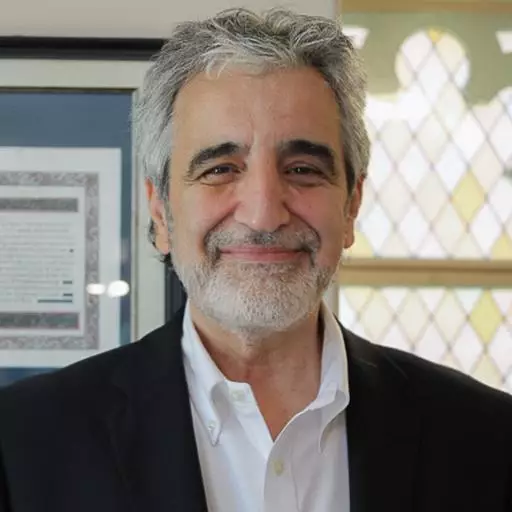
with Messianic Leader J. Isaac Gabizon
https://www.bethariel.ca
https://bethariel.ca/donate/
Guest (Female): Welcome to Shalom Ariel and to this our 19th sermon in the Gospel of Mark with Messianic leader, Jacques Isaac Gabizon. Today we're going to hear about the Sabbath, and we're going to go back to creation, where we're going to see something very special. See how he prepared everything for man even before he was created. He prepared all things in advance, the fullest of blessings that were to come, including all foods, a beautiful environment, a beautiful garden in which to work.
But see what God also made for man after he was created. He gave him the Sabbath, a time of rest and a much needed time to worship. A place in time where he could escape. Why would he need to escape? The Lord knew all things beforehand, and he knew that man and woman would sin in the garden. And so because of the labor and the heaviness that comes with sin, he gave us an open door, and he made the Sabbath for us.
And every provision and every blessing and benefit we need is provided through the one who is Lord over the Sabbath, Yeshua, the Son of Man. And Mark points out that Yeshua has authority over the Sabbath. And since our welfare is the greatest concern for God, Yeshua, the Lord of the Sabbath, took authority to decide when mercy rules over judgment.
We are going to discover today that no Mosaic Law had been broken in those grainfields. Instead, this incident in the grainfields helps us to consider the heart behind the rules that man makes, compared to the mercy and forgiveness behind God's rules. Indeed, Mark wrote, the Sabbath was created for man, but man was created for something as well. We were created to worship God, to worship the one who took the role of the Son of Man. So much has been given to us. Our only choice then seems to be to worship him alone. Be blessed as you listen to today's program and Shalom, Shalom.
Jacques Isaac Gabizon: And so let us bless the word before we open it. You can say it with me. Blessed are you, O Lord our God, King of the universe, who has given us the word of truth and has planted everlasting life in our midst. Blessed are you, O Lord, who gives the scriptures. And so let us open our Bibles to Mark chapter 2. Here we're coming close to a turning point of high hostility toward Jesus, where the religious leaders have already made a decision concerning Yeshua. They would not accept him as the Jewish Messiah.
While the people themselves were ready to accept him, the religious leaders, no. And seeing the Messiah's great influence and power, they already decided to destroy him, as we will see in chapter 3. And when there's no more room for argument, what happens? The other option is violence, and this is what they're going to go for. And why this great gulf between the Jewish religious leaders and the Jewish Messiah? The next two controversies dealing with the Shabbat will throw even more light on this great divide between the religious institution and Jesus.
Just like it was in the past, so it is today. And I'm not talking about Rabbinical Judaism only, but it extends even to Christianity today. And yet, how one wishes that these Jewish authorities would listen to one of their great teachers, Rabbi Nicodemus Ben-Gurion, whom the Talmud speaks as one of their greatest sages. He is known as Nicodemus in the Book of John. But see what he said when he met Jesus. He says, "Rabbi, we know that you have come from God as a teacher, for no one can do these signs that you do unless God is with him."
He then became a believer in Yeshua. And notice how he addresses Jesus as Rabbi, meaning "my teacher." Yes, this man was known as one of the greatest teachers in Israel. And while in Israel some believed, the majority did not. And what we're about to read here is Yeshua's start of the climb towards the top that is the cross. These events will eventually lead to his crucifixion and, of course, his resurrection. So let us begin to read the first Shabbat controversy. Let's begin with verses 23 to 24 of Mark chapter 2.
"And it happened that he was passing through a grainfield on the Shabbat, and his disciples began to make their way along while picking the heads of grains. So the Pharisees were saying to him, 'Look, why are they doing what is not lawful on the Shabbat?'" So from this point on in the Gospel, you can be sure that whenever Jesus and his disciples went, there would always be a representative of one of the major religious factions to spy, to challenge, and to try to find fault in Jesus and his disciples.
The irony is that while these factions did not all agree, like the Pharisees really hated the Sadducees and vice versa, they got together. They were very much friends against the Messiah of Israel. And so in this event, some Pharisees accused Jesus and his disciples of breaking the law of the Shabbat. And the question we ask is, did Jesus break the law? Did he ever break the law? Yeshua never broke the law of Moses, which he perfectly fulfilled, but he broke their laws.
But now you ask, "Aren't Rabbinical laws based on the Mosaic Law? Are they not the same?" On the surface they appear to be, but at the core they are not. A proof of that is clear. If the Pharisees followed the Mosaic Law, they would have recognized the Messiah Yeshua, who is the word made flesh. They did not. They did not because their belief, while very similar, was not the one that is found in the scriptures. Similarity is not sameness. Identical twins are physically identical, but they have different characters and souls and even thumbprints.
And this argument holds true today as well. The same applies to Rabbinical Judaism and Biblical Judaism. The same applies to many Christian sects compared to a literal Bible teaching. While no one today can send Messiah to the cross, to the top, still we destroy his name when we convolute his purposes and redesign his image. This much we will learn today. So what actually happened in the grainfields? Which Mishnaic laws were the Pharisees accusing the disciples of Jesus of breaking?
We can recognize two such laws. Let's take a close examination. The first apparent transgression was that they were picking the heads of grains to eat. In Exodus 34:21, the Mosaic Law says concerning the Shabbat, "You shall work six days, but on the seventh day you shall rest, even during plowing, during the harvest, you shall rest." So from this law, and this is important, from this law they reasoned out that by plucking the heads of grain, the disciples were guilty of reaping.
And as they separated the wheat from the chaff, they were guilty of threshing. And then as they blew off the chaff, they were guilty of winnowing. So the reaping, threshing, and winnowing was a subgroup within the category of reaping. Then there's one more law which was transgressed in their eyes. It says that the disciples began to make their way. The Greek word, the Greek term, meaning that they were actually making a road, creating a new thoroughfare through the field, thus constituting forbidden work on the Shabbat.
This is how far they elaborated the law. Complicated and restraining, is it not? They built such a high fence around the law of God that it was as if no more recognizable. The Mosaic Law is not like that. In order to understand this difference, by the time of Yeshua came on earth, the religious leaders added so many sublaws to God's law. One has counted some 1,500 of them. So numerous, so heavy to carry that the core, the depth of the Mosaic Law, was then buried to the point that Yeshua was so accurate in his accusation when he said in Luke 11:46, "For you weigh down men with burdens hard to bear."
And he adds this explanation in Matthew 15. He says, "Why do you yourselves transgress the commandment of God for the sake of your traditions?" They put the traditions of men before the pure word and laws of God. And so what we see here is that there are two sets of laws: man's laws and God's laws. This was and often still is the battleground for the soul of the Jews. If every Jew and every Christian knew how to make the distinction between the two, it would resolve so many problems and their relationship with God will be so fruitful.
The solution is always found in the scriptures. And this is where Yeshua, in his answer, is about to bring the Pharisees. The answer is found in verse 25 to 26, and it is Yeshua himself who brings them to consider a very important event in the past of Israel. Let us read the first part of the answer. "And he said to them, 'Have you never read what David did when he was in need and he and his companions became hungry? How he entered the house of God in the time of Abiathar the high priest and ate the consecrated bread, which is not lawful for anyone to eat except the priest, and he also gave it to those who were with him?'"
See how he begins the argument. As he, again and again, tries to bring them back to the roots, that is the word of God. Have you not read? Read what? The Bible, which contains the words of God. This is where the problem lies. It is when there's a departure from what is written. In all, Yeshua asks the same question six times in the Gospels to the Pharisees, to the Sadducees, to the scribes, even the Herodians. "Have you not read in the book of Moses?" (Mark 12). "Have you not read in the law?" (Matthew 12).
"Have you not read that he who created..." leading them to Genesis in Matthew. "Have you not read what was spoken by God?" (Matthew 22). And furthermore, at least three times in the Gospel, read the words, "Is it not written in your law? Is it not written in the book? Is it not written in the prophets?" But what Yeshua reflects here is what the prophets of old have been also saying from Isaiah to Malachi. This was the very problem and issue that these Hebrew prophets declared to Israel.
For instance, do you remember these verses? Isaiah clearly points to the diaspora. Have you wondered why the Jews are in diaspora? Isaiah gives the answer. In fact, it's God through Isaiah 5:13. "Therefore my people go into exile for their lack of knowledge." Knowledge of what? Of who? But of God, whose words are in the scriptures. In Hosea 4:6, the Lord says, "My people are destroyed for lack of knowledge." But again, this problem does not only belong to Israel. It is the church's problem as well. And it is unfortunately many individuals, Christian individuals, as well.
How well are you acquaintance with the scriptures? Just as the Pharisees did not recognize their own Messiah because they, according to Yeshua, did not read. Similarly, right at the birth of the church in the first century, there was a representative congregation which did not even open its door to Jesus knocking. Do you remember that verse? Revelation 3:20. Jesus speaking to this church and says, "Behold, I stand at the door and knock. If anyone hears my voice and opens the door, I will come in."
But what is Jesus doing outside knocking at the door when the church was already his? Hoping that one will open the door and begin to appreciate his long-suffering. There is then a problem. But there again, I want to tell you nothing is new under the sun. The history repeats itself. Now, after Yeshua laid out the main problem, which was their lack of knowledge of the scriptures, he answers by the scriptures and brings the Pharisees and ourselves to consider one particular event in the history of Israel, which involved two persons through whom he will teach us some great things.
These two persons are David and Abiathar the high priest. All right, when we see names like this, we wonder why did Jesus chose these two? What is the reason behind? You know, I tell you, the more I read this example, the more I wonder if these events then were not created to serve as an example because these two events, though separated by a thousand years, fit so well together. Let us for first consider David. Why is he mentioned and at this particular point in his life? Why?
The correlation between Yeshua and David, I want to tell you, it's striking. Now, see that immediately after the Lord had anointed David as king of Israel through Samuel, the current King Saul jealously tried to go after David to kill him. He sought to kill him. And so he pursued David for how long? Ten years. With a relentless hatred wanting to destroy the anointed of God. But it is very similar thing here which was happening to Jesus. Both Yeshua and David were anointed by the Lord. David by Samuel and Yeshua by John the Baptist.
When at his baptism, we read that a voice came out out of heaven and he said, "You are my beloved Son. In you I am well pleased." (Mark 1:11). And of David we read, "And Samuel took the horn of oil and anointed him in the midst of his brothers and the Spirit of the Lord came upon David from that day forward." (1 Samuel 16:13). In both cases, the authorities did not accept God's appointment. Both the Pharisees and Saul did not believe in God's choice, and so they refused it.
But this is not all. There is here the testimony of the whole of the Ketuvim and the Nevi'im, that is the prophets. Samuel who anointed David is considered as the first prophets. We read this in Peter. And John the Baptist who baptized Yeshua is seen as the last prophet of the Hebrew scriptures. And here we have the testimony of the prophets of God in these two individuals, of course, David and our Lord, Yeshua. So David then at this time was a perfect type of the Messiah who was being rejected by civil and religious authorities.
What about Abiathar the high priest? I want to tell you, in this case, I think Yeshua really went out of his way to attract our attention to this man because in the event related in 1 Samuel 21, it was not Abiathar who was there, but his father, Ahimelech. Of course, many modern commentators say that Mark made a mistake because it was clearly Ahimelech and not Abiathar. But why did Jesus himself make that switch? There are two things about this man, Abiathar, which will help us to make a correlation between him and the Pharisees.
First, this high priest Abiathar also went against God's anointed, this time against the son of David, Solomon. He took the side of another king when the Lord clearly stated in his word that Solomon was his choice. And he should have known; he's a priest. Second, this one is even more powerful. There was a prophecy hovering over this man about his and his family and the dismissal of his priesthood. He was a direct descendant of Eli the priest. Do you remember Eli?
We remember how Eli as a priest tolerated evil in his own home and allowed his two sons, who were priests, to make havoc in the Tabernacle of God, to the point that God pronounced a prophecy saying that out of his family there would be no more priests. And in 1 Kings 2:27 we hear, "So Solomon dismissed Abiathar from being priest to the Lord in order to fulfill the words of the Lord which had been spoken concerning the house of Eli in Shiloh." Abiathar is a type of the Pharisees. They too were to be kicked out somehow of the leadership of Israel.
And so the prophecy was fulfilled by Solomon. Ahimelech was the last of the line of Eli. After him Zadok took over, where the name we believe of Sadducees comes from. So while David symbolized the Messiah in his rejection by the authorities, Ahimelech symbolized the rebellion to God and those authorities who rejected the Messiah. This is a perfect example of rejection that we find in history. And this is even and there's actually a twist, an ironic twist, concerning this event.
You know, if you read 1 Samuel 21, you know after that David left Ahimelech, he and his men went to find refuge where? To the Philistines. Right, it's why the Philistines? But see how they greeted David. (1 Samuel 21:10-11). "Then David arose and fled that day from before Saul and went to Achish, the king of Gath. And the servant of Achish said to him, 'Is this not David, the king of the land?'" Notice that the Philistine called him the king of the land, the king of Israel, while David's own people right there refused him, refused to accept him as the king of Israel.
And the correlation keeps its course with Yeshua. We will see that like it was with David, many foreigners did recognize him as the King Messiah, and many of his own did not. Beginning with the magis. Do you remember? Aware of the great divide, they asked, "Where is he who is born king of the Jews?" while the others had no idea what they were talking about because they were away from the word. We can think of Roman Centurions, of the Syrophoenician woman we would meet very soon, who recognized Yeshua as the Messiah, but not the others. That is a sad irony in the history of Israel.
Let us now follow the story of David as Yeshua relates it. As David was running away from Saul, he and his men ran out of food, and the only source of food was at the Tabernacle. So he went to the priests and asked them for some bread. Furthermore, see that the events happened on the Shabbat. As 1 Samuel and Rabbinical commentators of the Talmud agree. Right, same thing in Mark and in 1 Samuel. And another indication is that the high priest gave David how many bread? Do you remember? Five.
Why five bread? We read in the Talmud that five breads for the high priest. We're going to see that there were 12 breads there. Five were for the high priest, and the others were distributed to the other priests. So it must have been the Shabbat at the distribution of the bread. So David asked the high priest, "Give me your five bread." But what about these bread? What do they signify? You know, there was a table of showbread on which were laid 12 breads, one for each of the tribes of Israel that was in the holy place.
It was situated right in front of the Holy of Holies where the Ark of the Covenant was. This is why they call it the bread of his presence, that is Lechem HaPanim. That is in front of God. And every Shabbat the priests change the bread for new ones and distributed the other breads among themselves. Now you ask, "How could they eat a one-week-old bread?" Right, because it waited a full week. The miracle was that these 12 breads, even after a week, were as fresh as the first day as they were made.
And was a continual testimony of God to Israel as her provider. Even the Babylonian Talmud recognizes this symbol, and in explaining it, one said, "See how you are so beloved of God before God, who provides for you." And another in Midrash reminded the Israelites of the miracle of the bread. And I quote, "God's law for Israel was revealed in that as a result of a divine miracle, the showbread loaves were as warm and tasty as they were removed as on the day they were set out."
This then is the bread that the high priest actually gave to David. But there's a problem. There's a problem here. Was he allowed to give this bread to David? The point is that these breads were for the priest and only the priest. And so Jesus questioned the Pharisees this. That David ate the consecrated bread, which is not lawful for anyone to eat except the priest, and he also gave it to those who were with him. How do you explain that, so to speak? He answered with another question.
The Mosaic Law clearly stipulated that only the priest were to eat this bread. So why wasn't God angry at David? Why wasn't he angry at the high priest for giving the breads? What do you think? This is when we come to consider the Mosaic Law itself. Yeshua is here addressing the essence of this law. The Mosaic Law in its entirety was given for the welfare of man, not the other way around. It was in history added to redirect man to the right path and to serve man, but not to abuse man, as it was transformed with time.
And so some of its ceremonial laws, less important laws, were subject to change with circumstances in order to serve man. There are some laws that are not negotiable, in which carry an eternal weight, like the law of love, of hatred, of murder. But along with these are the many ceremonial laws which can be adapted to man's need. This is where the freedom of the law lies, something the Pharisees have missed. So the Mosaic Law stands in one principle: love. Love towards God, love towards our neighbors.
There we have the eternal principle: the rest. The rest is adaptable. Again, these ceremonial laws were subject to be reinterpreted for the welfare of man. The high priest was right in giving these bread. And David was right in eating these bread. And their freedom defeated the legalism of the Pharisees. But do you see how completely opposed are the two sets of law between religious leaders and those of God? One imprisons, the other one frees. By the way, this will carry on throughout the Gospel.
And it's not the first time that God changed some minor laws to accommodate men and women. He changed the laws of inheritance of the land with the five daughters of Zelophehad, if you remember. This man had only daughters, and one day he died. However, the law stipulated that the inheritance would go only to a man, a cousin maybe. But the five daughters did not agree. And so they went to God to reconsider the law. And when God made a decision, and while some of the priests surely expected fire from heaven to consume these five women who would dare to challenge the law of God, God made his decision.
And he told Moses, "Go tell them that the five daughters are right. Give them their land." This freedom is an aspect of the Mosaic Law that is often overlooked. Another instance is when some men could not assist or perform the commandment of the Passover. So they asked God. God said, "No problem. Do it the next month." See the freedom, the liberty in the law of God? Something that disappeared when it comes to legalism in men's heart.
Shalom Ariel is a daily radio program emphasizing the Jewish perspective of scripture. God is not through dealing with Israel, nor will he renege any of the promises he has made to her. Our teacher for this program, Jacques Isaac Gabizon, is a Messianic Jewish believer and Messianic leader at Beth Ariel congregation, right here in Montreal. If you've been encouraged by the messages, we'd love to hear from you. Give us a call at 1-888-685-5902 or you may write us at info@bethariel.ca.
You are also welcome to join us for our Saturday morning services. We are located at 6297 Monkland Avenue, corner of Madison in NDG. The message is given in English, but we do offer simultaneous translation into French and Russian. Services begin at 11:00 AM. We have Shabbat school for children of all ages up to and including teens. You may also download audio messages from our website at bethariel.ca and enjoy other in-depth teaching from Jacques Isaac.
If you would like to sign up for informative newsletters, log on to our website and add your name to our email list. Shalom Ariel is a listener-supported program. If you have it on your heart to donate, it will be a great blessing for the continuing ministry and outreach of Beth Ariel. Thank you and Shalom, Shalom.
Featured Offer
Prophecies take up about ¼ of the Scriptures so we cannot simply ignore them. Knowing prophecy enables us to give a clear presentation to others of why things unfold the way they do in such areas as politics, morality, technology and global ecological changes. It also helps us to rightly place Israel in God’s prophetic plan.
Past Episodes
- The Armor of God
- The Believers in the End Times
- The Book of Daniel
- The Book of Deuteronomy
- The Book of Ephesians
- The Book of Esther - Purim
- The Book of Exodus
- The Book of Ezekiel
- The Book of Ezra
- The Book of Genesis
- The Book of Hebrews
- The Book of James
- The Book of Jeremiah
- The Book of Joel
- The Book of John
- The Book of Leviticus
- The Book of Numbers
- The Book of Philippians
- The Book of Revelation
- The Book of Romans
- The Book of Ruth
- The Book of Zechariah
- The Feast of Passover
- The Feast of Purim
- The Feast of Shavuot - Pentecost
- The Gospel of Mark
- The Gospel of Matthew
- The Letter to the Galatians
- The Messiah in Isaiah
- The Messiah in the Book of Isaiah
- The Messiah's Prayer
- The Nativity: The Unwrapped Gifts of God
- The Resurrection of the Messiah
- The Sermon on the Mount
- The Tabernacle

Video from Jacques Isaac Gabizon
Featured Offer
Prophecies take up about ¼ of the Scriptures so we cannot simply ignore them. Knowing prophecy enables us to give a clear presentation to others of why things unfold the way they do in such areas as politics, morality, technology and global ecological changes. It also helps us to rightly place Israel in God’s prophetic plan.
About Messianic Viewpoint
About Jacques Isaac Gabizon
Contact Messianic Viewpoint with Jacques Isaac Gabizon
info@bethariel.ca
http://www.bethariel.ca/
Beth Ariel Congregation
CP 46521 CSP Boul. St Jean
Pierrefonds, QC, H9H 5G9
Toll free (888)-685-5902