
The Gospel of Mark, Part 18


The Gospel of Mark, Part 18
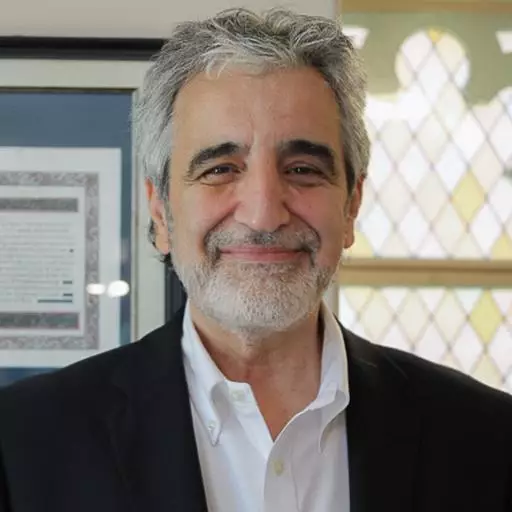
with Messianic Leader J. Isaac Gabizon
https://www.bethariel.ca
https://bethariel.ca/donate/
Guest (Female): Shalom and welcome to Shalom Ariel and to this our 18th sermon in the Gospel of Mark with Messianic leader Jacques Isaac Gabizon. In today's message, we're going to hear about old garments and new wine and how they cannot mix.
But let's for a moment consider garments of a different kind: beautiful garments that speak of love and grace. Consider Ezekiel chapter 16 and how God shared his love for Israel by spreading his garment, his skirt, over her. But before he did that, he had seen Israel in her blood, in her bondage, but he washed her with water while no one else looked on her with pity or compassion.
Though she was there in blood, God said to her, "live." And during her adolescence, he watched over her, and then he brought her into a covenant promise and spread the corner of his garment over her. He covered her, fed her, made her splendor known throughout the earth. Yet as the chapter continues, we read how Israel rebelled against the Lord and sought other lovers.
Yet in Isaiah 61, we read about the garments of praise, that clothing which enables God's people to enjoy a spirit of gladness and thanksgiving. That is what was given to Israel. It's a garment that speaks of the Messianic hope and the reality of the joy that even we as believers today can experience because we have the spirit of Messiah in us. We do not want to mix the old garment with the new wine, but rather we want to dress in the joy of the Lord and in the power of his resurrection. We want to taste the new wine that's his life in us. That's the kind of spirit that brings true gladness to every heart. Be blessed as you listen into today's program and shalom, shalom.
Jacques Isaac Gabizon: Now to all the Sarahs right around, the question is asked: is anything too difficult for the Lord? Be like Noah. By faith, he knew that the flood will come even though it never rained on earth. But God told him, and he said, "I believe it." By faith, he built the ark. Stop arguing about it, as crazy as it might be, by the way. Believe it and enjoy the benefit of that heavenly hope that comes with it. But here, Yeshua had also a message for the Pharisees and to all who are familiar with the scriptures. Here, the Messiah being the bridegroom brings us to yet another much, much significant truth. It brings us to yet another major declaration of the nature of the Messiah.
Israel has been yearning, by the way, to meet her bridegroom, as this is reflected in the Targum interpretation especially of the book of Song of Songs. But the point is that the Targum precedes Jesus. This Song of Songs has long been considered symbolic of the love between God and the Jewish people. They say that in all there are ten songs relating to the history of Israel. The ninth is the book of the Song of Songs, and the tenth is the last song in Isaiah’s song that is in chapter 30, which describes the second coming. Up to today, they have this yearning. This is reflected also through a ceremony in the Jewish wedding.
They say that just as God is the bridegroom who will come forward to receive Israel who is the bride, it became customary for the groom to take his place under the wedding canopy first, so that he can welcome his bride as she walks down to the aisle. But see that in the Hebrew scriptures, who is the bridegroom? It is Jehovah himself. And in our text today, Yeshua declares himself as the bridegroom. By declaring himself the bridegroom, he also reveals his uniform nature with the Father.
As we saw in the previous verses, the announcement of his very nature continues. We saw earlier that only God can forgive sins, yet Yeshua forgave sins and loudly so. He wanted everyone to know that he can do that. We saw earlier that it is through God only that he can read man’s thoughts. Yeshua reads them as well. We read earlier that as the book of Revelation describes the Son of Man and the Ancient of Days as one, so Yeshua claimed that same place of majestic authority and he says that he's the Son of Man.
And we see here Yeshua himself claiming the status and privileges of the bridegroom, a function given only to God in the Hebrew scriptures. Yeshua is the bridegroom of all believers. At the very end, we read that he will come back to wed his bride, who are all believers from Israel and from the nations as well. Revelation 19:7: "Let us rejoice and be glad and give the glory to him for the marriage of the Lamb has come and his bride—us—has made herself ready."
The same promise is given in the Hebrew scriptures where Jehovah is the bridegroom and at the very end, speaking of the establishment of the Messianic times, we read in Isaiah 62:5: "And as the bridegroom rejoices over the bride, so your God, Israel, will rejoice over you." This is when the believers of the Hebrew scriptures, Israel, meet the nation in faith. We are one in Christ. On another note, some have complained and said that it seems that God appears to have two wives: Israel and the church. Have you heard this before? How can God have two wives?
The answer is that there's only one God and there's only one wife. The difficulty comes in when we recognize the sad truth that Israel has always been pushed back into oblivion. But the church was formed by a remnant of Israel. The church was at the beginning completely made of Jewish people. We forget this fact. Afterwards, along with the remnant of Israel, people of all nations came along and were grafted into the olive tree. They joined the Jewish church, so the church is Jewish at its root.
What, have we forgotten this point? This is how the biblical church was and should still be defined. It is made up of the remnant of Israel and the remnant of the Gentiles. As the true Israel is made up of those who know Yeshua, so the true church should not only include but realize that its very roots are founded within the true Israel and both together become the church. The tragedy is that Israel has been kicked out, expelled, has been dismissed from the ecclesia by those who thought that they had the key of the kingdom.
But again, we're back. Jewish and believers and believers, Messianic Jews, are back in history. You see, the nation of Israel has been reborn some 75 years ago, setting the stage for the end-time miracles. And now that the Jew is back in place in the body of the Messiah and in the physical land of Israel, this will hasten all the events leading to the second coming and all those events even prior to the second coming. But let us go back to the theme of the bridegroom and weddings. There's something very nice about biblical Hebrew. When you read biblical Hebrew, it's a little different from modern Hebrew.
The term in there for bridegroom is the same word as for a son-in-law. Now, it's hard to conceive because once married, the bridegroom should be called husband. But the term bridegroom was kept even for a married man. Why? Perhaps to remind them that God is indeed both the husband of Israel and the bridegroom to come. In this way, we see Yeshua and Yahweh as both husband and bridegroom, maintaining that same role to love and to protect and keep his eternal covenant alive with those who are his.
As Paul puts it in 2 Corinthians 11:2: "For I am jealous," he says. "I am jealous to the people he will lead to the Lord." He says, "I am jealous for you with a godly jealousy, for I betrothed you to one husband so that Yeshua—I might present you as a pure virgin." Did you know you have been engaged to be married to one husband? And that the Bible—an engagement that is or a betrothal—is as valid as a marriage. You can't break it. You have to go to court to break actually an engagement.
This is the relationship we have with God, that of the bridegroom and bride. This is, I want to tell you, the strongest bond you can find in there and this is what the Lord brings out. God himself who created marriage said in Genesis 2:24—he gave these powerful words—"Therefore a man shall leave his father and mother and be joined to his wife and they shall become what? One flesh, echad." The word echad is used in the Shema to describe the relationship of God or the unity of God, of God and Yeshua.
So we are engaged to be married and once married we're going to be with God forever and ever. If we grasp this truth, I don't think many things could disturb us in this life. Don't you agree? Have you ever asked yourself how is our relationship with God reflected in our lives, in our desires, in our conversation with others? Let me tell you a story. One day, there was a boy dressed in rags with no shoes looking inside a pastry shop. He was very hungry. So a nice woman noticed him, brought him inside the bakery, and bought him more than he could eat.
Then she brought him to a shoe store and then a clothing store to dress him up. And at some point, the young child looked at the lady and he asked her a question. He said, "Are you God's wife?" The lady who was a believer and she remembered all these verses about the bridegroom and the bride, but while she pondered about these things, the boy said, "I knew it. You must be God's wife because you are so kind." You see, the point is that we're all to be the bride that is of the bridegroom.
The bridegroom himself is Yeshua and he portrays himself in the gospel so kindly, so nice, and we need to dress on or to put on Christ to reflect all that he's done for us. Now, Yeshua's answer to the question concerning fasting was twofold. Let us now look at the second response, which has so much to tell us. Verse 21-22: "No one sews a patch of unshrunk cloth on an old garment; otherwise, the patch pulls away from it, the new from the old, and a worse tear results.
No one puts new wine into an old wineskin; otherwise, the wine will burst the skin and the wine is lost and the skin as well; but one puts new wine into fresh wineskins." The wedding theme keeps its course. At the wedding, you have the bride, you have the bridegroom, you have the nicest garments, and you have the best of wine. But what is the message here? Many tend to think that this is teaching here a distinction between the law and grace, between the Old Testament and the New Testament. This is so far from the truth.
First, there is so much grace found in the Law of Moses and there are many laws found in the New Testament. And both books, the Hebrew scriptures and the New Testament, are one continuous teaching. The difference brought out in these two parables is the one between our life with God and the old life before we met Yeshua. And how we often drag one over the other, actually we don't see anything when we put one on top of the other. There should be a clear cut between the two.
This may be the cause of so many problems, I believe, in a believer's life. Keeping a shadow of the past will prevent actually the Spirit to fully actually bless us. And see to whom these two parables were addressed. They are both addressed to the Pharisees who designed a new religion under the banner of the Torah or the Bible when in fact they are so different from each other. There is nothing as misleading as when a Jew says that he follows the Torah when he's really following Rabbinical Judaism.
And there is nothing as misleading as when one says that he's a Christian when it's hard to perceive where Jesus is in their lives. And to who else was this parable spoken to? The disciples of John, John the Baptist. A new denomination who did not at all get the message of their own teacher and also added elements to create something new. All these are well-designed examples for us because we all have a bit of the disciples of John in us. We often sew a patch here and another there, and as soon as we feel a tear in our lives, we get a little depressed and we cannot understand why we are not happy, why we are not joyful.
But what happens when one sews a new patch of material in an old piece of material? It will not hold for long. It will become very uncomfortable as one will expand and the other not, and it will eventually tear apart. What happens when one puts new wine in an old wineskin? The problem is that the old wineskin will not give room for the new wine to ferment and expand, as if to trap it. But the wine needs to expand and so the disaster occurs because the skin tears and the wine may be lost.
Again, the point is that we cannot mix old belief with new belief in God. Even the language Yeshua uses would remind them of the newness of this new life we have in them. You know that the word tear as when the garment will tear recalls the moment the Spirit of God came at the baptism of Yeshua and the heavens tore apart. Both words, tears, come from the same root. So a good life in the Lord needs us to tear something in the past so that we can receive the blessings.
Now, how does one decide what to include and what not to include in our new life? Paul had this problem, I believe, and also saw it in many believers. And he came back with a great advice for us. Look at 1 Corinthians 6:12: "All things are lawful for me, but not all things are profitable. All things are lawful for me, but I will not be mastered by anything." Simply said, don't overcharge yourself with unnecessary things that do not promote spiritual change and sanctification in your life.
All things are lawful to me, he says, meaning you're allowed to do whatever you want within the law of the Messiah. You are free, but think about it. Are these things profitable? Does it please God or only you, or perhaps somebody you want to please? These are questions we have to ask. And again, Paul repeats the same question in the same verse: "All things are lawful to me." There must have been some people there who tried actually to instill some laws and to the others. And so he says, "I can do all things. I am free to do all things, but I will not be mastered by anything."
My salvation, my faith were given by God and so no other but God should have mastery in our lives. Amen. This argument, this one argument that is brought so many times over, one of my favorite verses, I want to tell you, by the way, it's 2 Corinthians 3:17: "Now the Lord is the Spirit and where the Spirit of the Lord is, there's what? Freedom, liberty." With God, we are free—free from the things of this world. There's great freedom in God and we should add only in God.
And by the way, in the context of 2 Corinthians 3, the spirit was speaking about Moses' ascension on Mount Sinai. When he saw God face to face, there he understood and there he felt actually true freedom. In the same way, we can when we delve on the word of God and see how the Lord will bless us and freeing us from the grip of the old lives. And furthermore, I'm almost finished, furthermore, these two parables brings us to consider not only our lives in Yeshua which began the moment we believe, but also the new life that we will have after this life, that is in heaven with him.
You know that besides reminding us that the new wine and the new cloth are things present at a wedding, these two items were used, by the way, by the prophets of old to speak of the hereafter and must have been familiar to the people then. For instance, when the new heaven and the new earth will be created, you know it will because everything that was seen has to be destroyed. And so when it will be created, see what the book of Hebrews, which quotes Isaiah 51:6, describes it. It says, "they will perish, but you remain and they will become like an old garment.
Old garment and like a mantle you will roll them up. Like a garment, they will also be changed and you are the same and your years will not come to an end," speaking to the Son of God. The old garments will be thrown away and new one will be created. This process had begun already in the life of every believer. As for the wine, it's not only a symbol of joy but of newness. You know, the first time it is mentioned in the Bible, it's after the judgment of the flood.
The first thing that Noah did is to farm and he planted a vineyard, Genesis 9. When the twelve spies came back from the promised land, you know what they brought with them? Huge grapes to show them to the richness of the land. Yeshua’s first miracle, where was it? Cana, when he turned the water into wine, stamping the beginning of his works. As Jesus said it so well and for all of us, "The time is fulfilled and the kingdom of God is at hand." He's coming very soon. Let us then act as if every day is the first day towards our great journey to our eternal abode. Amen. Let's bow our head in prayer.
Abba Father, you are the alpha and the omega, the beginning and the end. You are creator and a counselor guiding us daily to make wise decisions. You are a comforter in sorrow, in pain and distress. And we praise you for drawing near to us when we draw near to you. You are a heavenly father and the father of the fatherless. How great are you and your faithfulness day in and day out. You are holy yet you made a way for us to approach you. And I praise you for being our helper and for your Ruach HaKodesh conviction, correction, and protection in our lives. And all this we pray again in the name of Yeshua Hamashiach. Amen, amen, and amen.
Guest (Female): Welcome to this segment of the Q&A portion of the study. We ask this question: While many empires and wars have been mentioned in the scriptures and prophesied about, such as the Babylonian empire, the Assyrian empire, we hear nothing from scripture concerning the empires during the next 2000 years during the church age. Why might that be? So let's listen in to Messianic leader Jacques Isaac Gabizon as he answers this question for us. Be blessed.
Are there prophecies in the scriptures which specifically address or name empires within the last 2000 years? For example, do we see references or hints made for large and influential empires such as the Muslim empire or the Ottoman empire or the Asian empires? Scriptures name the Assyrian, the Babylonian, the Greek, and the Roman empires, but are there any clues or suggestions for our own days? And what about major wars which took place in different parts of the world during these last 2000 years? Why is the Bible silent when it comes to this long stretch of time?
Jacques Isaac Gabizon: This is a very pertinent question, and the answer is actually no. The Bible does not specifically speak about the events which occur between the first coming of the Messiah’s formation of the ecclesia up to the events surrounding the second coming of the Messiah. It is not because this 2000-year period of time is not important, but there is a very good reason for this silence of sorts. The answer lies first, first in God’s patience in that he desires as many individuals as are willing to come to faith.
And secondly, this long time of 2000 years was given to man to allow him to exercise his free will trying to prove that he could succeed without the help of God. That is something that at the end times will prove to mankind that he’s actually wrong in this. We need God. In order to better understand this point, let us consider the end-time prophecies we have in the Hebrew scriptures. What did they see themselves? The prophets before Yeshua saw was the first coming of the Messiah, his death, his resurrection, and then right after that, they saw the establishment of the Messianic times.
They did not see the church age. They did not see the gap of 2000 years because technically it was not really supposed to exist at all. In fact, back in the first century, Peter addressed this issue and said, "The Lord is not slack concerning his promise." What does he say that's? Because people were asking him the same very question. And so he keeps on, as some count slackness, but God is long-suffering to youward, not wishing that any should perish, but that all should come to repentance, 2 Peter 3:9.
Why is Peter giving them these words of encouragement? Because the believers, again, were rightly expecting the second coming according to the Hebrew scriptures' prophecies in their very day. They could not understand this delay, but the Lord was being patient. Paul himself explains this lapse of time in clear terms when he spoke of the era of the church as a mystery. For to him was given, he says in Ephesians 3:8-9, to bring to light what is the administration of the mystery which for ages has been hidden in God who created all things.
What is this mystery? He explained it in verse 6: to be specific, he says, that the Gentiles also fellow heirs and fellow members of the body and fellow partakers of the promise in Messiah Yeshua through the gospel. The Hebrew prophets had no knowledge of a time when Jews and Gentiles would be one together representing one body of the Messiah. However, soon once the church will be raptured, then the prophecies of the Hebrew scriptures will follow their course.
Now, there is one prophecy which gives us the general direction of the world in between the first and second coming or for the last 2000 years. This was given by Jesus, by Yeshua himself in the famous chapter of prophecy Matthew 24. When the disciple asked him when would the end of the era be, this is what he answered, and Sharon will read the verses 4 to 8 of Matthew 24 for us.
Guest (Female): See to it that no one misleads you. For many will come in my name, saying, "I am the Christ," and will mislead many. You will be hearing of wars and rumors of wars. See that you are not frightened, for these things must take place, but that is not yet the end. For nation will rise against nation and kingdom against kingdom, and in various places there will be famines and earthquakes. But all these things are merely the beginning of birth pangs.
Jacques Isaac Gabizon: You know, those things mentioned in between verses 4 to 7 are the beginning of the birth pangs. Beginning with verse 8, Yeshua then speaks of the tribulation time. What are these things which he said would occur in the last 2000 years? False religions, first he mentioned that, which would mislead many. And we have seen this prophecy fulfilled in the last 2000 years with the dark ages of the church itself.
Second, we see the wars and rumors of wars. Wars were a constant, you know, during the last 2000 years. You know, if you remember these statistics, historian estimated that for the last 5,600 years, there was only 292 years of peace. And along with these wars, there will be famines and natural disturbances and we have also seen a lot of that during the last 2000 years. At this time today, the fig tree is revived, that is Israel. That is when the Jews came back to their land triggering the beginning of the end times.
Now, these things which we see in the last two millennia are further detailed in the prophecy concerning the seven churches where Yeshua gives us a picture of the development of these churches through its history and until the very end. So for now, the answer to the question: the era of the church period was a mystery, hence there was no specific prophecies that could fit the last 2000 years except for war, famine, earthquake, and an attack on the validity of the word of God.
Guest (Male): Shalom Ariel is a daily radio program emphasizing the Jewish perspective of scripture. God is not through dealing with Israel nor will he renege any of the promises he has made to her. Our teacher for this program, Jacques Isaac Gabizon, is a Messianic Jewish believer and Messianic leader at Beth Ariel congregation right here in Montreal. If you've been encouraged by the messages, we'd love to hear from you.
Give us a call at 1-888-685-5902 or you may write us at info@bethariel.ca, that’s B-E-T-H-A-R-I-E-L all one word, .ca. You are also welcome to join us for our Saturday morning services. We are located at 6297 Monkland Boulevard, corner of Madison in NDG. The message is given in English but we do offer simultaneous translation into French and Russian. Services begin at 11:00 AM. We have Shabbat school for children of all ages up to and including teens.
You may also download audio messages from our website at bethariel.ca and enjoy other in-depth teaching from Jacques Isaac. If you would like to sign up for informative newsletters, log on to our website and add your name to our email list. Shalom Ariel is a listener-supported program. If you have it on your heart to donate, it will be a great blessing for the continuing ministry and outreach of Beth Ariel. Thank you and shalom, shalom.
Featured Offer
Prophecies take up about ¼ of the Scriptures so we cannot simply ignore them. Knowing prophecy enables us to give a clear presentation to others of why things unfold the way they do in such areas as politics, morality, technology and global ecological changes. It also helps us to rightly place Israel in God’s prophetic plan.
Past Episodes
- The Armor of God
- The Believers in the End Times
- The Book of Daniel
- The Book of Deuteronomy
- The Book of Ephesians
- The Book of Esther - Purim
- The Book of Exodus
- The Book of Ezekiel
- The Book of Ezra
- The Book of Genesis
- The Book of Hebrews
- The Book of James
- The Book of Jeremiah
- The Book of Joel
- The Book of John
- The Book of Leviticus
- The Book of Numbers
- The Book of Philippians
- The Book of Revelation
- The Book of Romans
- The Book of Ruth
- The Book of Zechariah
- The Feast of Passover
- The Feast of Purim
- The Feast of Shavuot - Pentecost
- The Gospel of Mark
- The Gospel of Matthew
- The Letter to the Galatians
- The Messiah in Isaiah
- The Messiah in the Book of Isaiah
- The Messiah's Prayer
- The Nativity: The Unwrapped Gifts of God
- The Resurrection of the Messiah
- The Sermon on the Mount
- The Tabernacle

Video from Jacques Isaac Gabizon
Featured Offer
Prophecies take up about ¼ of the Scriptures so we cannot simply ignore them. Knowing prophecy enables us to give a clear presentation to others of why things unfold the way they do in such areas as politics, morality, technology and global ecological changes. It also helps us to rightly place Israel in God’s prophetic plan.
About Messianic Viewpoint
About Jacques Isaac Gabizon
Contact Messianic Viewpoint with Jacques Isaac Gabizon
info@bethariel.ca
http://www.bethariel.ca/
Beth Ariel Congregation
CP 46521 CSP Boul. St Jean
Pierrefonds, QC, H9H 5G9
Toll free (888)-685-5902