
The Gospel of Mark, Part 10


The Gospel of Mark, Part 10
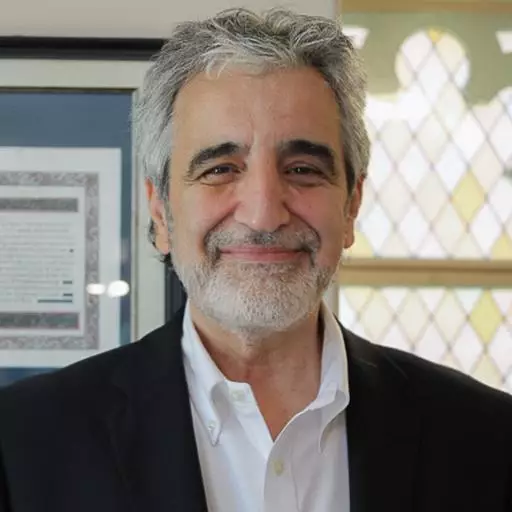
with Messianic Leader J. Isaac Gabizon
https://www.bethariel.ca
https://bethariel.ca/donate/
Guest (Female): Shalom, shalom and welcome to Shalom Ariel and to this our 10th part in our series in the Gospel of Mark. We often marvel, don't we, when a baby first begins to speak? We listen so attentively to what they might be saying. Was it Mama? Was it Dada, Papa? Each of their sounds draws our attention.
Well, first words from grown-ups can also be impressive. Our words give insight into our character and our goals. So what were Yeshua’s first words? In John, it was a probing question. He said, “What are you looking for?” And in Mark, the first words of Jesus answer the question he posed in John.
These were his words: “The time is fulfilled, the kingdom of God is at hand. Repent and believe in the gospel.” From his earliest recorded words to humanity, we see how Yeshua invited all to come and repent and believe and enter into his kingdom, so that he can become the authority in our lives.
Many will say that believing in Yeshua is too exclusive. Not to have other choices fails our democratic system. But the contrary is true. Yeshua is so inclusive that all are invited into the kingdom. And democracy is respected here too. Why? Because entrance is done by way of choice.
These are Yeshua’s first and foundational words to us, and these words have been the same since humanity was in its own infancy. Repent and believe. And what were Yeshua’s second words? “Follow me, and I will make you fishers of men.”
What were our first words to you, Oh Lord, as babes in the spirit? “I repent of my sins and I believe.” So then let us repeat after Yeshua in our second stage of words: “I will follow you and become a fisher of men.” Be blessed as you listen into this program with Messianic leader Jacques Isaac Gabizon, and shalom, shalom.
Jacques Isaac Gabizon: It is with verse 16 that the training of the twelve begins, and so is ours, by the way. Let us remember each of us is the 13th disciple for all was said and done to them is also to us as well. Through his ministry, I just want to remind you when Yeshua answered the Pharisees or when he answers the scribes' question, it was really for us to hear the answer.
He knew the hearts of his opponents. He knew that many of them had made their decision to reject him no matter what, but his answers were for the disciples. They were for our learning. Now, where exactly is this train situated and at what point did the driver decide to slow down?
It seems that as it is going around the Sea of Galilee, he slows down right where four disciples were, right? A set of two brothers. They were fishing or repairing their nets. Now, let’s read these short five verses, verses 16 to 20, and see how these followed Jesus so fast.
As he was going along the Sea of Galilee, he saw Simon and Andrew, the brother of Simon, casting a net in the sea, and they were fishermen. And Jesus said to them, “Follow me, and I will make you become fishers of men.” Immediately they left their nets and followed him. Going a little further, he saw James, the son of Zebedee, and John his brother, who were also in the boat mending their nets. Immediately he called them, and they left their father Zebedee in the boat with the hired servant and went away to follow him.
The first one is Simon, who Jesus later surnamed Peter. It was very good that he did that because there are nine Simons in the New Testament, so we don’t make a mistake. So we read of Simon, the brother of Jesus, Simon the Zealot, the leper, the Pharisee, the magician, the tanner, Simon of Cyrene that is father to Judas Iscariot.
A new name was given to Peter, but not only so that we don’t confuse him with another, but because Peter began a new life. When someone is given a new name in the Bible, it’s often because a new journey was beginning. Abraham’s name was changed to Abraham when the addition of a letter Hei, the fifth letter of the Hebrew alphabet, the number of grace, was added to his name so Abraham will always remember that he was chosen by grace.
Jacob’s name was changed to Israel whose name was given to the nation. Simon’s additional name follows the same idea as his forefathers. Being the head of the new era of Israel, his name is changed to Peter, meaning stone. Same name, almost, like the Messiah, except Peter’s name was Petros meaning a small rock.
However, when Paul speaks of the Messiah as the rock that followed Israel through the wilderness in 1 Corinthians 10, he uses the word Petra, which means a huge rock. So Peter was like the Messiah, just like we are to be called. Our name is also Peter so to speak, right? We represent the Messiah to others.
As for Peter, Petros, it was also because he was a leader of the twelve disciples. Now, the two other disciples, James and John, also with Peter, became a pillar of the first congregation of God. Jesus kept them always close to him for special training during his three-year ministry. Peter, John, and James were specifically selected to be with Yeshua on the Mount of Transfiguration and later in the Garden of Gethsemane.
As for Andrew, he is the quiet evangelist. He’s actually the one who first found the Messiah and then he brought Peter to him. These two sets of brothers gave rise to a new phase of history in Israel, one where the nation finally began to exercise her calling that is a nation of priests to the nations. Afterwards and along the Gentiles came in and they were grafted into the olive tree.
Speaking of nicknames, Jesus later gave another nickname to the other sets of brothers, James and John. Do you remember how he called them? Yes, he called them sons of thunder because one time they were in Samaria, in a village, and the people did not want to receive Jesus. So John and James said in Luke 9:54, “Lord, do you want us to command fire to come down from heaven and consume them, just as Elijah did?” They wanted to burn them. That is really bad evangelism, right?
You don’t kill people because they don’t want to believe. Some did, by the way. The crusaders did and those who attempted to force Catholicism on the Jews did. Now let me ask you a question. If Jesus had to give you a nickname, what do you think it would be? Now, I just wanted to tell you. Let's not be too pessimistic. Don't get down on yourself. Don't.
I am sure and I want to tell you, I am convinced he has a very nice name for each one of us because there's something truly beautiful about Jesus. He always sees the best of us, always. Always. And he already told us that he has a name for us. It’s there. He said that he has a new name that is engraved on a white stone, which no one knows until you receive it. And if the stone is white, it’s because you have been saved and you have been washed. This is in Revelation 2:17.
Now, have you noticed how quickly the disciples followed Jesus? He saw them. They must have glanced at each other. Then, as soon as Yeshua said, “Follow me,” they left everything and they followed him. Actually, let me tell you something. It didn’t happen really this way. We know that they met before.
According to the first chapter of John, a few months before, they met with Peter, Andrew, James, and John. They had come to trust him, actually. So they were well prepared by John the Baptist and having met the Messiah before. Why then did Mark omit this information here and really makes us feel bad that we did not follow Jesus as soon as he called us? Do you remember?
But there may be a good reason why Mark emphasizes the abruptness of their response. Perhaps as a contrast with those in the south. The Pharisees, the Sadducees, the learned ones who did not respond but negatively. Here, the less instructed fishermen who knew nothing responded quickly because this is how the spirit with whom the spirit could work.
Before them, it was the shepherd, if you remember, they responded, and now we have the fishermen, all considered the lower class at that time. But see how Jesus made it so easy for them to follow? He said to them, “Follow me, and I will make you become fishers of men.” You know, that denotes by the way a certain sense of humor, a pleasant personality, which makes it easy to follow.
And this was a known phrase at the time in the Jewish world, in the Greek world. On the Jewish side, the writing of the Dead Sea Scrolls with the Essenes, they spoke of three nets of the devil. And they said that once somebody becomes a believer, in their own term, he would go and fish out these people from their nets and bring them to the net of God.
In the Greco-Roman world, the teachers were called fishers of men. And in this light, Jesus was to make them teachers, and this is what they have become. But while these may not have been educated as those from Judah, they had some experience, experiences that others did not have. Do you know what it is? They had the qualities of being fishermen.
What are these qualities? You know, I went to look at some fishermen’s association website and at some point, I want to tell you, I thought I was reading a commentary on Mark. Requirements for a fisherman are patience, study, and perseverance. It couldn't get better. They emphasize the fact that a fisherman spends more time not fishing than fishing. And in these times, he studies. He searches for ways to improve his fishing.
Also, this fisherman’s organization also brought the word perseverance as the quality of a good fisherman. They even say that the main difference between an average and good fisherman lies in his persistent attitude when fishing. They even say that the persistent one gets bigger fish.
But that is what the Bible tells us as well. To cite one verse, Peter, the fisherman, the fisherman, great fisherman both physical and spiritual realm, has a valuable advice for us that he gives in 1 Peter 3:15. But sanctify the Messiah as Lord where? In your heart. Meditate, think about him, learn about him, always being ready to make a defense to everyone who asks you to give an account for the hope that is in you, yet with gentleness and reverence.
We need to know what we believe. We need to be able to defend our faith. That is what we ought to do before the fishing period begins. Grow in your sanctification so that the Spirit of God will find you ready to fish and he will mightily use you.
So Peter, Andrew, James, and John as fishermen, having been disciples of John, were actually very well prepared for the job. And lastly, to the four disciples, Jesus says what? Follow me. Follow me, how powerful that must have sounded from the mouth of Yeshua. And these words were very important to him, gathering the amount of time Yeshua asks us to follow him in the four gospels, we count 21 times.
From all from his mouth, when he says, “Follow me.” His desire is that each of us follow him all the time, not only once or twice a week. He expected us to follow him. Sometimes he would have said, let's keep in touch. Or call me when you have a minute. Follow me means come with me right now. Live as I live. Learn a way of life and faith from me by watching me and reading my words.
And to close, I want to bring you to a short passage in the epistles where the Spirit really lays down for us what it means to be prepared to become a good fisherman. This is how he explains it to us in Ephesians chapter 4, verses 22 to 24. That you put off concerning your former conduct, the old man which grows corrupt according to the deceitful lusts, and be renewed in the spirit of your mind, and that you put on a new man, which was created according to God in true righteousness and holiness.
Three things. Three things. First, that you put off the old man like an old shirt that you have worn for a long time into which you have grown and very uncomfortable. Take it off. And then he says, be renewed in the spirit of your mind. The word mind is about our understanding. When one becomes a believer, a new understanding of the things of the world is given to him, especially that of sin, that of evil, and of the reality of the power of God, which leads to a true righteousness and holiness.
At salvation, you know, things change. And third, and that you put on the new man. Take off the old, renew your mind, and put on the new man, that is, make that move from the kingdom of the world to a new and wonderful kingdom that is offered to us and that will last forever and ever. Amen.
Let’s pray. I’m going to ask the music team to go forward if… you know, I’m going to pray, I’ll recite the Kaddish, an adaptation of the Kaddish in English. The Kaddish is a term deriving from the Aramaic word Kadosh, meaning holy. It is a prayer of sanctification, okay, that is repeated so often in the synagogue, even every day.
May the great name of the Lord be magnified and sanctified in the world, which he created according to his will. May his kingdom rule and redemption take seed. May he lead his Messiah into our path during our days and through the life of the whole house of Israel and the love of all believers. Doing so quickly and soon, may his name be blessed, praised, made known, exalted, elevated, and honored.
And may the blessed name of the Holy One be above all blessings and hymns, praises and consolation that are given in the world. May it bring us to heaven great peace, help, redemption, abundance, life, fullness, health, consolation, freedom, healing.
Heavenly Father, I pray that you put your hand upon each and every one present here and online. Give them peace, heal them, and bring them closer to you, that you might bless them even more. And to the congregation, the Lord bless you and keep you. The Lord make his face shine upon you and be gracious to you. The Lord lift up his countenance upon you and give you peace. Amen and amen.
Guest (Female): We invite you to keep listening in as we will be addressing Messianic leader Jacques Isaac Gabizon with a question concerning baptism for the dead. Be blessed as you listen into this segment of our program.
The question starts like this: “Shalom, I understand that there are so many interpretations to the verse that’s found in 1 Corinthians 15:29. So I would like to know your opinion concerning it.” The verse reads, “Otherwise, what will they do who are baptized for the dead, if the dead do not rise at all? Why then are they baptized for the dead?”
Jacques Isaac Gabizon: This indeed is a very good question and it is, let me tell you, it is considered by many as one of the most difficult to interpret in the scriptures. As a result, one can count some 200 different interpretations given for this passage alone. But I would like to share one interpretation that takes in consideration the context of the Bible, of history, and of the original language, that is the Greek.
It is true that Paul does not always make things easy for us to understand. For even in his own time, Peter says concerning Paul’s writing that “all his epistles, all his letters, speaking in them of these things in which are some things hard to understand, which untaught and unstable people twist to their own destruction, as they do also the rest of the scriptures,” 2 Peter 3:16.
Paul wrote like the rabbis of his time. At times it is a language in itself. And notice one thing that Peter says here, which is very nice. At the end of the verse, he puts Paul’s writing at the same level as the rest of the scriptures. And so were Peter’s own words because we know that all scriptures from Genesis to Revelation is inspired by God.
However, considering 1 Corinthians 15:29, it is on this type of difficult verse that these cults thrive. But in this case, I think the problem is mainly with the translators rather than our understanding of what Paul wrote. Let us remember one thing to begin, that in the original languages of the Bible, Hebrew and Greek, there were no punctuations, that is no commas or points, which signifies when a sentence ends and another begins.
Nor were there any pauses or indication when a new subject was being dealt with. Furthermore, there were no chapter divisions in the original text. Okay, nor there were titles. Never would you hear Paul or John say, “go to Habakkuk chapter 3, verse 1” or so and so forth, because they were not put there. The punctuations were placed much later on, around the 6th or 7th century.
Now this being said, many of these passages should be understood according to the subject at hand and by its context. Not only biblical context, historical context. And the section of 1 Corinthians 15 we are dealing with is a very important subject. This is the chapter of the resurrection, the resurrection itself.
This, the resurrection, is at the core of our belief. For if there is no resurrection, we’re completely lost. Completely lost. It is first of all the resurrection of Yeshua that differentiates us from all other religions. We know where the tombs of the leaders of those major religions are. They are with us today. But in contrast, Yeshua’s tomb was empty. Why? Because he resurrected. This is what makes the Bible distinct.
The belief in the resurrection is at the core of one's salvation. Paul said in Romans 10:9, “that if you confess with your mouth the Lord Yeshua and believe in your heart what? That God has raised him from the dead, you will be saved.” If you believe that God raised him from the dead, that is if you believe in the resurrection of Jesus, if you believe that he's now alive, you will be saved.
When I pray, I pray to a living God and a living Messiah. It’s interesting how people might argue that the resurrection is something that we learn only with time and that we don’t need to believe right away. Well, consider for a moment the thief on the cross. Yeshua said to him, “today you will see me in paradise.” The thief was called to believe in the resurrection even in those very few moments they had together. He believed the words of Yeshua and you know what? Right now he's there with him.
However, the problem is that already in the first century, and only about 20 years after Jesus resurrected, that some came into the congregations of believers, and you know what? They began to deny the resurrection. Imagine. They were very fast. That got Paul to remove his gentle white gloves and put on his boxing ones instead. And you don't want to fight against Paul. He was short, he wasn't a good speaker as we learn in 2 Corinthians, but his punches are very powerful.
He wrote to this congregation and he said in verse 12 of chapter 15 of 1 Corinthians, “Now if Christ is preached that he has been raised from the dead, how do some among you say that there is no resurrection of the dead?” How could it be? He could not understand how low they stooped down. And here he is not shy, by the way, to scold them.
And then he adds in verse 16, 17, 18, “For if the dead do not rise, then Christ is not risen. And if Christ is not risen, your faith is futile; you are still in your sins. Also those who have fallen asleep,” that is those who died, the believers who died in the Messiah, “they perish completely then.”
And then in a conclusion of his argument, which goes on for a few more verses, he says in verse 29, and our translation says—and this is our verse by the way today— “Otherwise, what will they do who are baptized for the dead, if the dead do not rise at all? Why then are they baptized for the dead?” This is I believe from the New King James version.
By being translated this way, it throws off the whole argument and teaching about baptism and resurrection and this is why it became so complicated. It is as if Paul taught baptism for the dead, something he never did. And besides which, baptism does not save. Why would you want to baptize somebody who died?
And before we look at the original text, what does baptism symbolize? It is linked with the resurrection. What does baptism symbolize? Does it symbolize death or does it symbolize life? Let’s read Colossians chapter 2, verse 12, which clarifies the symbolic action of baptism. It is a statement of faith that we make that we too follow Yeshua into death, burial, and resurrection.
It says, “buried with him,” with Yeshua, “in baptism, in which you also were raised with him through faith in the working of God, who raised him from the dead.” Following Paul’s argument, he's asking one question. What about those who are baptized? Are they baptized for the dead? Or are they baptized unto life and living hope?
The answer is very easy. They’re baptized unto life and living hope. No believer is baptized to death and no dead need to be baptized. This is a strange doctrine which has no biblical foundation. So how are we going to read this verse? Let us read it by being more faithful not only to the context of the whole Bible, but also of the chapter, and also toward the way it is written in the original text, by putting the punctuation and leaving the original words in their spot.
This is what it gives: “Otherwise, what of those who are baptized? Are they baptized for the dead, if the dead are not raised at all? Why are they baptized for the dead?” The answer is absolutely no, for we are baptized unto eternal life. That is the symbol of baptism and those who deny the resurrection are destroying the very doctrine of baptism itself.
You know, Paul would never preach a baptism for the dead. This again would go against the very fiber of the scriptures. And this is why those who do that and preach this need to move away from the scriptures and add another book into their belief, something they did actually, and something that is forbidden in the scriptures. This then is one answer, which I pray will open more doors, more doors, and I’m convinced that there's much more to it if one goes and seeks the meaning of each word in this verse. Amen.
Guest (Female): Shalom Ariel is a daily radio program emphasizing the Jewish perspective of scripture. God is not through dealing with Israel, nor will he renege any of the promises he has made to her. Our teacher for this program, Jacques Isaac Gabizon, is a Messianic Jewish believer and Messianic leader at Beth Ariel congregation right here in Montreal.
If you’ve been encouraged by the messages, we’d love to hear from you. Give us a call at 1-888-685-5902 or you may write us at info@bethariel.ca. You are also welcome to join us for our Saturday morning services. We are located at 6297 Monkland Boulevard, corner of Madison in NDG.
The message is given in English but we do offer simultaneous translation into French and Russian. Services begin at 11:00 AM. We have Shabbat school for children of all ages up to and including teens. You may also download audio messages from our website at bethariel.ca and enjoy other in-depth teaching from Jacques Isaac.
If you would like to sign up for informative newsletters, log on to our website and add your name to our email list. Shalom Ariel is a listener-supported program. If you have it on your heart to donate, it will be a great blessing for the continuing ministry and outreach of Beth Ariel. Thank you and shalom, shalom.
Featured Offer

Prophecies take up about ¼ of the Scriptures so we cannot simply ignore them. Knowing prophecy enables us to give a clear presentation to others of why things unfold the way they do in such areas as politics, morality, technology and global ecological changes. It also helps us to rightly place Israel in God’s prophetic plan.
Past Episodes
- The Armor of God
- The Believers in the End Times
- The Book of Daniel
- The Book of Deuteronomy
- The Book of Ephesians
- The Book of Esther - Purim
- The Book of Exodus
- The Book of Ezekiel
- The Book of Ezra
- The Book of Genesis
- The Book of Hebrews
- The Book of James
- The Book of Jeremiah
- The Book of Joel
- The Book of John
- The Book of Leviticus
- The Book of Numbers
- The Book of Philippians
- The Book of Revelation
- The Book of Romans
- The Book of Ruth
- The Book of Zechariah
- The Feast of Passover
- The Feast of Purim
- The Feast of Shavuot - Pentecost
- The Gospel of Mark
- The Gospel of Matthew
- The Letter to the Galatians
- The Messiah in Isaiah
- The Messiah in the Book of Isaiah
- The Messiah's Prayer
- The Nativity: The Unwrapped Gifts of God
- The Resurrection of the Messiah
- The Sermon on the Mount
- The Tabernacle

Video from Jacques Isaac Gabizon
Featured Offer
Prophecies take up about ¼ of the Scriptures so we cannot simply ignore them. Knowing prophecy enables us to give a clear presentation to others of why things unfold the way they do in such areas as politics, morality, technology and global ecological changes. It also helps us to rightly place Israel in God’s prophetic plan.
About Messianic Viewpoint
About Jacques Isaac Gabizon
Contact Messianic Viewpoint with Jacques Isaac Gabizon
info@bethariel.ca
http://www.bethariel.ca/
Beth Ariel Congregation
CP 46521 CSP Boul. St Jean
Pierrefonds, QC, H9H 5G9
Toll free (888)-685-5902