
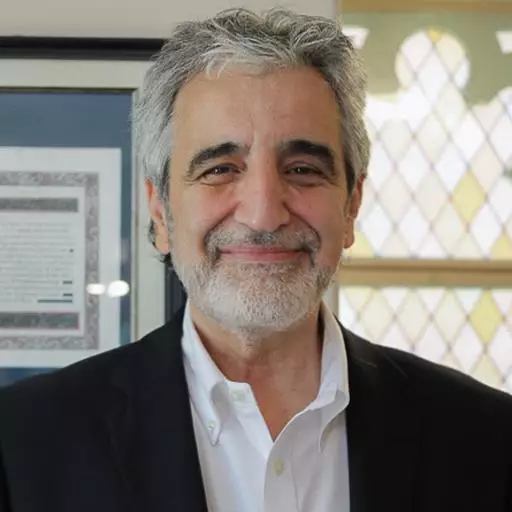
The Book of Revelation, Part 2


We are starting a new section of the Bible, a seasonable one, a book for today, the Book of Revelation. The word Revelation, apocalysis, means the unveiling, the uncovering of something that was hidden and now revealed, and while it is a word that is often associated with chaos or calamities, this is only a part of its scope, The rest of its content reveals to us some great and profound eternal truths unseen anywhere else in Scripture. It will supply great details for us concerning the eternal home of those who’ve trusted their lives to God and His Messiah. This then is what the Book of Revelation is really about; the uncovering of the facets of our God that is so powerful that it will energize us and make us whole and confident. Thank you for joining us in this study.
Guest (Female): When reading the first verse of Revelation chapter 1, we are encouraged and at the same time a bit dumbfounded in how we are to understand these words: "Things which must shortly come to pass."
Now, it's been some 2,000 years since we have had direct revelation from the Holy Spirit, which wrote about these things that are to soon come to pass. For the human being in our lifespan, 2,000 years is a long wait.
So is God slow? God forbid! For anything that breaks the pure moral fiber of our Lord's reputation should be considered anathema. "The Lord is not slow about His promise, as some count slowness," says 2 Peter 3:9, "but is patient towards you, not wishing for any to perish but for all to come to repentance."
What the Lord says is always true. This word of God is continually being fulfilled throughout every generation, for the purpose of the delay is so that many would come to a saving knowledge of Himself, and many would come to be part of the new body that He formed called the Ecclesia.
We have great lessons to learn from our most patient God in all His omniscience. If only we could have just an iota, a taste of that patience, that longsuffering, what a testimony we could be.
Welcome to Shalom Ariel, and welcome to our study in the Book of Revelation with Messianic leader Jacques Isaac Gabizon. Be blessed as you listen in, and shalom.
Jacques Isaac Gabizon: This one, this is one of the many designations of the believers in this book we're going to encounter. Another designation of the believer is also found at the beginning of verse 2: "He who testifies."
You may recognize the Greek word, *martyreo*, where we get our word "martyr." Not very inviting, by the way, right so far? Which one of you wants to be a slave and a martyr? I don't see any hands up, but that's okay.
But wait until we read the description of the Messiah and the great blessing which flow from these titles. Then we would understand that the blessing far outweighs the demands. And after all, we remember Yeshua's words in Matthew, right, when He tells us that no matter what, we are slaves. You're either slave of mammon or God. You're going to serve anyway, might as well serve with God, and you get great rewards.
Someone had remarked the first believers had such great faith in a sense of deep devotion. You know, I read a story from the second century. A believer was brought before a pagan ruler who was told to renounce his faith. This is what the believer was told.
So he was threatened. He said, "If you don't do it, I will banish you." Banish, to be banished into an island, let's say, was one of the worst things. So the man smiled and said, "You can't banish me from my Savior, for He says, 'I will never leave you nor forsake you.'"
To this the king angrily answered, "Then I will confiscate all your property and take all your possessions." Again the man smiled and said, "My treasures are all laid up on high. You cannot get them and not touch them."
So the king became furious and said, "I'm going to kill you!" "Why?" the man answered. "I've been dead for 40 years. I have been dead with the Messiah, dead to the world, and my life is hid with Him in God, and you cannot touch it." In desperation, the king turned to his advisors and said, "What can we do with this fanatic like this?"
With that challenge and excitement in mind, let's zealously turn our attention back to the first chapter and explore in great detail how this revelation is being given to us. After the first words, we're told that God gave the revelation to Jesus, who gave it to John, and John gives it to us.
But there's a third party over there: His angel, God's angel, Jesus' angel. While they do play a role after the exile with Daniel and Zechariah, they were most of the time absent or played such a minor role in the revelation of the Hebrew Scriptures. But why do they have such an important function here in Revelation?
When it comes to the many battles we're going to encounter—the opening of the seals, the blowing of the trumpets, and the pouring of the bowls—angels become the main messenger. Why is that?
I want to tell you, their presence is of utmost importance because the Book of Revelation is the story of the end of evil, which was originally introduced into the world through a fallen angel who became the adversary of God, Satan.
And all the angels of heaven know him very well. They worked under him, for he was the chief cherub, and all may very well have been tempted to follow him. But here in Revelation, the unfallen angels prove their loyalty and full obedience to God. They show that, like man, they can surmount evil and be faithful for eternity.
Revelation will show us how at the end it will be another angel, actually, who will subdue Satan. God did not have to take part of this. We read this in Revelation 12:7. It says, "And war broke out in heaven: Michael and his angels fought against the dragon; and the dragon and his angels fought, but they did not prevail, nor was a place found for them in heaven any longer."
The great dragon, who is he? Verse 9 tells us he's the serpent of old, called the Devil and Satan, who deceived the whole world. It is then another angel who bit the fallen angel, and the good angels in heaven showed their powers and obedience to God in that they also subdued all demons and confined them forever.
And furthermore, at the end of the book, there's something so important. We find one angel speaking words we wished we could have heard them in the Garden of Eden. These are found at the end of the book, a major closing statement, where he says, "Worship God." Angels then play a big part in the book, showing that evil at the end is not even worth considering. That's the message from them.
The first verse also tells us what we're going to learn in Revelation. We're told in the first verse of the things which must soon take place. This is when we need to adjust our conception of time with that of heaven. We don't have the same clock, by the way, and thank God for this.
It seems that this problem for the idea of time is repeated even in verse 3, where it says, "For the time is near." Okay, now what does it mean "soon," the word soon? What does it mean "near"?
By the way, these were penned 2,000 years ago. So what does soon and near mean? First, let me tell you the reason behind the stretch of time of 2,000 years. Believers, even in the first century, by the way, were very edgy about the coming of the Lord. And so they asked their shepherd, teacher, pastor Simon Peter about this.
By the inspiration of the Holy Spirit, Peter answered as he answers us today. "The Lord is not slow about His promise, as some count slowness, but is patient toward you, not wishing that any to perish for all to come to repentance." 2 Peter 3:9. This is the reason of God's patience, right? His love for man.
If someone asks you to define God's love, you can answer it is 2,000 years wide in width, in height, and in depth. It is as far as the east is from the west, two points that don't exist for the east and the west never meet. Even today, as we see the world coming so close to the tribulation times, the Book of Revelation gives us so many details. And I can't wait to get there, by the way.
We are so close to the end that the rapture should have happened a while ago already. But then again, and while I deeply desire to meet the Lord, I rejoice in the fact that the Lord is still seeking open hearts so He can save them. Let us remember that the end times happen at the birth of the Ecclesia, just like you see in the chart behind me. Ecclesia is the congregation of God.
Do you know that there's no time frame for the duration of the church or the Ecclesia? It is as long as God's patience. In fact, as you can see in the chart again, Paul speaks of the church as a mystery. A mystery, right? An unknown lapse of time in the Hebrew Scriptures, and you know what, the prophets didn't even know about it.
John understood this, for he himself in one of his letters said, "Little children, it is the last hour." It is the end time, it starts right now. Again, that was 2,000 years ago. The Lord could have come back right after the resurrection and established His kingdom, but He decided to wait for the sake of those who will come to Him, for our sake today. And I thank God that He waited so long.
This is also when we ought to reconsider an important word: patience. This word comes to us from the French *patience*, which stems from the Latin *patientia*, which is defined as the quality of suffering or enduring. It is submission; this is what patience implies. That is so close to the biblical definition, which is a word often translated in the New Testament as endurance.
In the Hebrew Scriptures, often as hope and expectation. In the Greek, it's *hypomone*. *Hypo* means "by" or "under," and the word *meno* means "to stay under" and "to wait," as if to say, "just wait." By and by, just wait, it's coming soon. Don't get too excited.
Through the centuries, we see this yearning of the end of the ages. I remember back in 1980s, some people got so excited during that time. There was a best-selling book called *88 Reasons Why the Rapture Could Happen in 1988*. I don't know if you remember that book.
The reason behind this is that if Israel became a nation in 1948, then since Jesus said that this generation will see the second coming, then 1988 must be the date of His second coming. It's logical, but it was faulty, faulty exegesis. For a generation in the scriptures is between 40 and 120 years, and it does not always mean a number of years, but a generation that is of people, of kind.
And so since then, 1988 became and went, but the author did not let go. In 1989, he wrote another book, revised edition, and called it *89 Reasons Why Jesus Would Come in 1989*. After all, what's one year? Right? 1989 went by, and so did 1990, and we never heard of him anymore.
And this same type of hype and excitement is also found in the secular world. I remember Y2K. Do you remember that? Y2K is also remembered as the year 2000, right? When there were a lot of questions concerning the change of calendar. They said that computers will not recognize the passage of the year 1999 to 2000 and predicted a crash of all computers and said that the whole world would be shut up.
January 1, 2000 came and went with no problems at all. You know, I kept a book on Y2K in my library in full view, by the way, so that I would always remember not to get too excited, but to be patient.
So practically then, we ought to read these words "soon" and "near," not in terms of a thousand years, but perhaps in terms of our lifetime on earth. How old are you, by the way? How long do you expect to live on this earth? The word of God describes the length of our time like a flower of a grass, if you want, or grass. It says that all flesh is grass, and all its loveliness is like the flower of a field, that's in Isaiah and in 1 Peter.
We are all at the threshold of eternity, and time is that one thing we ought to take hold of and begin to meditate on. And this is especially for the young, by the way. The young, when I was young, I thought I would live forever. It's only when you come to your 50s that you realize, hey, the Lord is near.
A father once decided to have a serious talk with his young son, who was inclined to be lighthearted and irresponsible. He said to him, "John, you are getting to be a big boy and ought to take things more seriously. Just think, if I died suddenly, where would you be?" And John answered. He said, "Me, I would be here. What about you? Where would you be?"
Have you thought about where you would be, perhaps even tomorrow? So the Lord is really coming soon, either on this earth to take us or you to meet Him. One last statement about time and the soon coming of our Lord. Let me tell you about the spiritual and daily experience of the imminency of His return.
If someone gives you an appointment at a certain place and time and he doesn't show up. Afterwards, he apologizes and comes and gives you another appointment, same place and time, and still doesn't show up. And again the same thing happens. Let's say this person never showed up, even after seven chances you gave him. What would you believe after the eighth time?
Even if you wanted to, you could not find it in you to believe that person anymore, right? Now, let me ask you, is it normal that some believers can wait for the Lord every single day for many, many years and never get tired? When it comes to the coming of the Lord, there is a miracle, and I wish and I want you to experience it as well.
A miracle that is daily produced in the heart of the person who desires and yearns to meet the Lord. A miracle that is available again to everyone. The rapture of the Lord is one truth that the scriptures, while it can be perceived as far-fetched, so illogical, it can be and is filling and so rewarding.
And I praise God for this miracle of the imminency and expectation of His daily coming. In my own life, after 44 years of being a believer, I expect His coming every single day. And instead of disillusionment or frustration, this hope miraculously grows and even further reinforced as we witness what is happening in this world. This is the miracle of the imminency of the "soon" and "near" coming of the Lord, which fills our heart with steadfast hope.
So we can say together these last words in Revelation, "Even so, come, Lord Jesus. Amen." We can rejoice and find comfort in God's patience and love, knowing that not one second will ever be lost, but rather used for the benefit of the salvation of a person, perhaps even your neighbor.
And perhaps this is among one of the reasons why such a reward from heaven is promised for anyone who reads and hears and heeds the word contained in this book. Look at verse 3 again. "Blessed is he who reads and those who hear the words of this prophecy, and heed the things which are written in it; for the time is near."
Here we read of blessings. By the way, this is one of the seven blessings we find in Revelation. This is the first. The word "blessed" really means happy. And in Israel and at that time and within the Ecclesia at the time, there was much persecution and opposition. Nevertheless, the scriptures reminds us that no matter what the circumstances are, happiness is found when you are with the Lord.
Originally, the Greek usage of this word described the happiest states of the gods above. Now this privilege is possible for the believers. Now they can reach heaven by abiding in the words of God. This is, by the way, the key to happiness: get close to God. And so we can read these words: "Happy is he who reads and those who hear the words of the prophecy, and heed the things that are written in it; for the time is near."
And it is the first again of the beatitudes in the Book of Revelation, and it is linked with the way we consider actually the word of God. It tells us how to be happy, and this is done through the first set of three things, like a triads, that we have seen before when we studied the book of Thessalonians. And here we're going to see many triads. Happiness is found where? In those who read, hear, heed the words of this prophecy.
When John wrote this letter and sent it to the first congregation, and there in the way the service was set up, there would be one reader. This is why the word "read" is singular. And there would be many others who will hear. This is what the word "hear" is in plural. And they will all heed, plural as well.
Then the letter was transcribed by scribes and then sent to other congregation. They would do this very fast in order to avoid forgery. This is why there exist more than 200 copies of some letters written within a short period of time. And today we all have our Bibles, and sometimes with many different versions, so it becomes clearer.
However, there is a sense, and I want to tell you that into which these words "read," "hear," and "heed"—the way they are written—speak to us today. It goes from singular "read" to plural "hear" and "heed." We find the same pattern of singular to plural in our sanctification as believers.
One must first develop a personal relationship with God. It requires a personal quest between God and the individual. Once this vertical relationship is developed, one on one, singular you and God, then the horizontal ones will be fruitful. Then it becomes plural for together in the body of the Messiah we listen, and we hear together as a community, and then together we heed the word.
The word "heed," *tereo*, it's to keep watch, to protect, to guard like the Roman guards in the New Testament. And so is the body of the Messiah called to guard, to defend the word of God and to proclaim it. To heed is also to do the will of God. It's to do the will of God. Let's be aware that the first two steps can be faked. Not the third one.
We realize that truth when we hear the words of Yeshua in Matthew 7:21, when at the end He says, "Not everyone who says to Me, 'Lord, Lord,' shall enter the kingdom of heaven, but who? The one who does the will of My Father in heaven." Those who do the will of God follow up from what they read and they hear from the scriptures.
However, and sadly so, I am finding that many who live in sin and have no conscience or remorse of changing rationalize even and uplift their sins. They even promote it, and at the end they say they are believers. I want to tell you, cannot be. I'm sure that perhaps this is another sign of the end times, because I see it growing around.
If I had a doubt or even the smallest sense of guilt when continuing in the life of sin, if all these things were not—no doubt, no guilt—then I would seriously reconsider salvation that I thought I had. I never said that before, but it's time to say it because some people are just swimming in sin. There's no time to lose. He's coming soon.
And as the last words of verse 3, "For the time is near." Let's move on unto the next verses, 4 and 5, which constitute a new section. We just have the time to look at one great truth in these two verses.
"John to the seven churches," verse 4, "that are in Asia: Grace to you and peace from Him who is, who was, and who is to come, and from the seven Spirits who are before the throne, His throne; and from Jesus Christ, the faithful witness, the firstborn of the dead, and the ruler of the kings of the earth. To Him who also loves us and released us from our sins by His blood."
Featured Offer
Prophecies take up about ¼ of the Scriptures so we cannot simply ignore them. Knowing prophecy enables us to give a clear presentation to others of why things unfold the way they do in such areas as politics, morality, technology and global ecological changes. It also helps us to rightly place Israel in God’s prophetic plan.
Past Episodes
- The Armor of God
- The Believers in the End Times
- The Book of Daniel
- The Book of Deuteronomy
- The Book of Ephesians
- The Book of Esther - Purim
- The Book of Exodus
- The Book of Ezekiel
- The Book of Ezra
- The Book of Genesis
- The Book of Hebrews
- The Book of James
- The Book of Jeremiah
- The Book of Joel
- The Book of John
- The Book of Leviticus
- The Book of Numbers
- The Book of Philippians
- The Book of Revelation
- The Book of Romans
- The Book of Ruth
- The Book of Zechariah
- The Feast of Passover
- The Feast of Purim
- The Feast of Shavuot - Pentecost
- The Gospel of Mark
- The Gospel of Matthew
- The Letter to the Galatians
- The Messiah in Isaiah
- The Messiah in the Book of Isaiah
- The Messiah's Prayer
- The Nativity: The Unwrapped Gifts of God
- The Resurrection of the Messiah
- The Sermon on the Mount
- The Tabernacle

Video from Jacques Isaac Gabizon
Featured Offer
Prophecies take up about ¼ of the Scriptures so we cannot simply ignore them. Knowing prophecy enables us to give a clear presentation to others of why things unfold the way they do in such areas as politics, morality, technology and global ecological changes. It also helps us to rightly place Israel in God’s prophetic plan.
About Messianic Viewpoint
About Jacques Isaac Gabizon
Contact Messianic Viewpoint with Jacques Isaac Gabizon
info@bethariel.ca
http://www.bethariel.ca/
Beth Ariel Congregation
CP 46521 CSP Boul. St Jean
Pierrefonds, QC, H9H 5G9
Toll free (888)-685-5902