
The Book of Nehemiah - Part 8


The Book of Nehemiah - Part 8
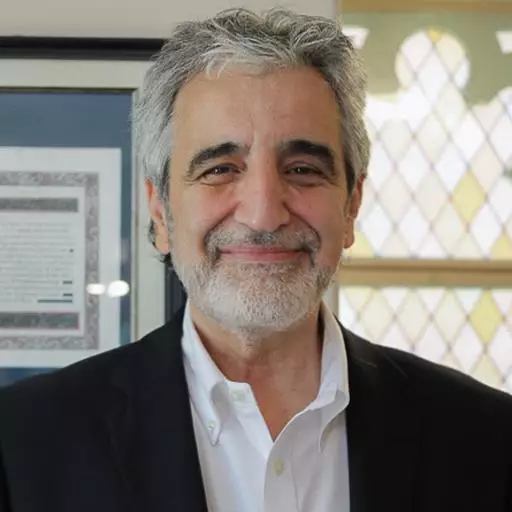
Messianic Leader J. Isaac Gabizon
https://bethariel.ca/
If you would like to support the ongoing work of this teaching ministry, you may log on to: https://bethariel.ca/donate/
Guest (Female): Shalom and welcome to Shalom Ariel, and welcome to this, our eighth sermon from the book of Nehemiah with Messianic leader Jacques Isaac Gabizon. Now many of us have been to music concerts or festivals, but have you ever been to a biblical town festival? There was one that was being held in Nehemiah's day, and this was like a public concert. A special platform was erected just for this celebration.
We know what it means when we have a platform. It's a place which is elevated above everything else. It's a place that takes a central spot so that many who come from all different angles can view the speaker. And do you know who the superstar was at this event? It featured Ezra and the eternal word of God. And instead of cheers of "yeah, yeah" and clapping and stamping of the feet that we normally have at music concerts or other events, here we have the hands raised up with choruses of "Amen" and "Amen."
And what was the benefit of attending this public meeting but for the transformation of the hearts of the people? It was a time to rejoice, a time to celebrate. Many wept, and many said "Amen." What a privilege to have heard the word of God being read, because the word of God is transformational. If we want to be changed, the word of God goes down deep to the depths where we ourselves cannot reach.
Sometimes it's just too hard for us. Sometimes it's just too painful to reach. Sometimes it's the memories, the fear, the guilt, the trauma, or the patterns that are so hard to break. But we call God the great physician because he will cut with utmost precision and remove all that harms. Only he, the Lord, can bring healing and mend what was broken.
So although a platform was constructed to raise the speaker, we too would like to build a platform in our own hearts and have the word of God raised up high above all matters of life. Just as the speaker's voice on the platform is raised higher than all the other voices, we want God's voice to be raised higher than any other. It is only his voice that we want to hear. Be blessed as you listen in to today's message with Messianic leader Jacques Isaac Gabizon, and shalom shalom.
Jacques Isaac Gabizon: Hi, there are many more things to consider in this chapter. Let's see how the text takes us from one event to the next. As the people were gathered in front of the Water Gate, they built a podium. By the way, the word in verse four is actually a high tower. Standing with Ezra were 12 men, six on his right and six on the left. If you count the names as they appear in most English translations, you may end up with 13 names plus Ezra.
But in the Hebrew text, something important becomes clear. Every name is connected with the word "and," "vav," except the last two names, Zechariah and Meshullam. There's no "and" or "vav" between them. That means it is the same man. It makes the whole thing six and six, that is 12. What is most striking is that in the translations, including the New American Standard Bible and the New King James Version, which we usually use, there is no "and" between any of the first names, but they inserted one between Zechariah and Meshullam, thus giving an odd number, 13.
But the context, the correct Hebrew reading, shows 12 men standing with Ezra, a number representing the 12 tribes of Israel. This is important. It perfectly fits the context of national restoration under the word of God as we see in Nehemiah. They were "echad," one, of course, for each tribe of Israel. These people would go and teach the tribes. Furthermore, there's another subtle hint of the nation's unity in this chapter.
In Nehemiah 8:16, we encounter another gate: the Gate of Ephraim, a gate whose exact location, like the Water Gate, is uncertain. What is striking is that this gate is mentioned alongside the Water Gate in this chapter, yet it is absent from the list of the ten restored gates in Nehemiah 3. Why mention this gate? Why highlight the name Ephraim? For centuries, Ephraim and Judah remained in opposition.
After Solomon's reign, the kingdom was divided. The northern tribes were in the north, often called Israel. They were led by Ephraim, while the southern kingdom was Judah. They frequently clashed and made war against each other. But here, in the days of Nehemiah, something remarkable is happening. The 12 tribes had returned and once again they were functioning as one nation. Ephraim and Judah, once divided, were now united under the authority of the word of God.
It is a very nice gesture for the Judeans to name a gate after their enemies—the Gate of Ephraim. Furthermore, this theme of unity is strengthened by the way Israel is described in Nehemiah chapter 8:2 by the word "assembly." This also is striking. The word is "kahal," a deeply significant term. The first time Israel is called a "kahal" is in Exodus chapter 12, verse 6, at the very moment of their birth as a nation in connection with the Passover lamb at the Exodus from Egypt.
So when Nehemiah describes the people as a "kahal," and when we see the 12 men standing with Ezra and the mention of the Gate of Ephraim, we are meant to look back across Israel's entire history. These details remind us that a major turning point was taking place in the days of Ezra and Nehemiah. After all, it is actually the fulfillment of the prophecy of Daniel chapter 9, verses 25 and 26.
Israel was being restored, not only physically, but spiritually and nationally, back into one united people under the word of God. There, they begin to prepare Israel for the coming of the Messiah, for the first coming of Yeshua. Now we come to a crucial revelation in Nehemiah 8, one that not only speaks to the people of Ezra's time but also speaks prophetically about the times we're living in, the end times.
We have already seen where these events took place: at the Water Gate and the Ephraim Gate. Now the text tells us when they occurred. The timing is very significant. In verse two, we read that this happened on the first day of the seventh month. This is the date corresponding exactly to the Feast of Trumpets, Rosh Hashanah, as they call it traditionally today. This was, however, not the New Year.
At that time the rabbis had not yet shifted the New Year to the fall. Biblically, the New Year still began in the spring, at Passover. So why is this detail about these events happening on the first day of the seventh month important? What is the meaning behind the mention of the Feast of Trumpets here? The answer becomes clear when we keep following the flow of the chapter.
As Ezra read from the word, the people actually returned the second day. They loved it. They came back the second day to continue studying the scriptures. It is then, in verses 13 and 14, that they made another important discovery. This is what it says: then on the second day, they found written that the people of Israel were to dwell in booths during the feast of the seventh month. This meant that the Feast of Booths, Sukkot, was only days away.
They had about 13 days to prepare their sukkah, and they did. The people obeyed. They built, and a great rejoicing filled Israel. Only after this, in chapter 12, did they proceed to dedicate the walls of Jerusalem. So this feast had come first, with celebration for the millennium, and then the dedication of Jerusalem will take place. This leads us to a key question: why does Nehemiah 8 mention these two feasts—Trumpets and the Feast of Tabernacles—yet completely skip the feast that lies in between them?
Nehemiah doesn't mention Yom Kippur, the Day of Atonement. This omission is deliberate. It becomes understandable only when we look at the prophetic structure of the seven feasts of Israel as it pertains to the believers. Leviticus 23 is where you have them listed. It is within that prophetic framework that the beauty of this chapter shines forth and its connection to the end times becomes clearer. We remember that the first four feasts in Israel's sacred calendar foreshadowed the first coming of the Messiah.
We've been teaching this for a long time: from his holy and sinless life to his sacrificial death, his resurrection, and the birth of his congregation. Then come the last three feasts, which point prophetically to his second coming. Two of them are mentioned in Nehemiah. The Feast of Trumpets pictures the moment when the Messiah gathers his own. It speaks of the first resurrection following that of the Messiah himself, when all believers, at the sound of the heavenly shofar, will be gathered to him.
It echoes the shofar sounded at the Water Gate in Nehemiah 8. Those who believed God and trusted and understood his word, as those who gathered understood—"bin," in verses two and three—were with the Messiah. Those alive on earth at that moment will experience what we call the rapture. Immediately after the Feast of Trumpets in Nehemiah comes Sukkot, the Feast of Tabernacles, which foreshadows the Messianic kingdom, the time when all believers will dwell with the Messiah, the living word, forever.
Nehemiah mentions precisely those two feasts: Trumpets and Tabernacles. Again, it is not an accident. The return of the Jewish people to Jerusalem, the rebuilding of the city, and their joyful obedience to the word of God, all anticipate the ultimate fulfillment still to come: the time when Israel will again be gathered in great rejoicing to witness Jerusalem in the Messianic times. But this raises an important question: why is Yom Kippur, the Day of Atonement, absent from Nehemiah 8?
A compelling explanation is that Yom Kippur prophetically represents the seven-year tribulation, the time of Jacob's distress, spoken of by Daniel and by John in Revelation. During that period, the body of the Messiah, the ecclesia, will not be present on earth, and so fittingly, the feast is not mentioned in Nehemiah's prophetic picture. In Nehemiah 8, the believers gather at the Water Gate on Yom Teruah, the Feast of Trumpets, the very place where the shofar marked their assembly.
Just as Paul writes in 1 Corinthians 15 and in 1 Thessalonians chapter 4, the trumpet would signal the gathering of God's people. We may even hear it tonight. We may even hear it before the end of this speech. All of this leads us to the beautiful Sukkot. It is the feast that celebrates God's dwelling with his people, a foreshadowing of the joy that climaxes in Nehemiah 12 when they finally dedicate the walls of Jerusalem.
Now, there's also one specific word used by the Lord for the last three of Israel's feasts, one that does not apply to the spring feasts but which strongly highlights their prophetic nature, the feasts of the fall. What we find in the text is that these three are not merely called "Shabbat," but "Shabbaton." Connecting the Feast of Trumpets in Leviticus 23:24, we read: in the seventh month, on the first day of the month, you shall have a Shabbaton. Regarding Sukkot, it is the same thing: again Shabbaton.
The same thing applies to Yom Kippur as well. But this term Shabbaton is never applied to the spring feasts. What does Shabbaton mean? It is the word "Shabbat" with the ending of the letters "vav" and "nun," producing the sound "on," which carries a superlative force in Hebrew. It points to something higher, something greater or further. In this context, it conveys the idea of something later in time, pointing forward to the future.
Thus the word Shabbaton marks these three feasts as prophetic, looking ahead to events still to come. It is in this sense that Nehemiah uses them, drawing our attention to the prophetic fulfillment that lies beyond the historical moment in Ezra and Nehemiah's days. We do not have the time to cover the whole chapter today, but I would like to close with one beautiful passage which also brings us to the powerful prophetic aspect.
When it was time to build the sukkahs—those booths that the Lord asked the Jewish people to live in for seven days to remember their salvation from Egypt—they were also to remember where they are going. Remember the sukkah was to be very flimsy, but we remember that something much more solid is waiting for us up there. To do so, Nehemiah tells them in verse 15 to go and take branches from trees that were readily available at the time.
Two of them are the olive branches, and he adds the wild olive branches. But there's something remarkable about this tree in the scriptures. It is actually an expensive, precious tree. Its wood was highly valued throughout Israel and was especially prized in Solomon's temple. Both cherubim in the Holy of Holies were carved in olive wood, and the doors of the main sanctuary were also made of olive wood.
Furthermore, the olive tree provided oil to the lampstand, for anointing and for healing. And what we learn is that the olive tree wood was never used on the altar for burning. Instead, they brought cedar, oak, fig, and pine trees, woods that burn cleanly and steadily, but never the olive tree. The value and fruits of this tree, and the fact that it was not placed upon the altar, reminds us of the believers themselves.
The altar was a place of substitution, the place where something else died in the place of the guilty. It reminds us that no believers will undergo the fire of the altar or the fire of the judgment, and especially the judgment of the tribulation times, and also the eternal one that Yeshua spoke so much about, which is hell itself. There is one more piece of information about the olive tree that further connects us to Nehemiah.
Believers of both Israel and the church are symbolized by this olive tree. Do you remember Romans 11:17 which says, "But if some of the branches are broken off," speaking of Israel, "and you," speaking of the Gentiles, "being a wild olive tree, were grafted in among them and became partakers with them of the rich root of the olive tree"? In this olive tree, we see both the remnant of Israel and the remnant of the Gentiles as one individual, one "echad."
They are working together and being preserved for a great eternal future. There is no fire for these trees. These branches were to be used for the building of the sukkah, which itself represents the protection of God over the believers. Now to sum up what we've covered today, we've seen the unity of Israel and of the ecclesia in the word "echad." We've seen their love for the word in how they gathered together to hear, to listen, to understand, and to study it.
They did this actually for six hours straight. We've seen that they were in this open square in front of the Water Gate and the Ephraim Gate, both symbolizing a new era and especially emphasizing the importance of the word of God. We've seen how two prophetic feasts, Yom Teruah and Sukkot, are mentioned and how Yom Kippur, speaking of the tribulation, is omitted. We have also seen how the best weapon of offense and defense, as we see in Ephesians 6, is the word of God. Amen.
Let's bow our heads in prayer. Avinu Malkeinu, this morning we praise you and glorify you, for you are the unsearchable God beyond every created being's comprehension. We thank you for all this great and blessed portion of the scriptures. We know that it is true, for you have said that you put your word above your name. We thank you for your spirit of light who dwells in every believer so that we may know you, the true God, and know Yeshua HaMashiach whom you have sent.
Lord, I pray for a special blessing upon each and every one who is present, each and every one who is listening, and upon the congregation. The Lord bless you and keep you. The Lord make his face shine upon you and be gracious to you. The Lord lift up his countenance upon you and give you peace. Amen and Amen.
Guest (Female): Welcome to this segment of our program where we have the Q&A with Messianic leader Jacques Isaac Gabizon. Today the question revolves around the Moabites. We know that Ruth is very closely connected to the Jewish people via her marriage with Boaz and the descendancy of David and Yeshua. But the question comes to us from Isaiah chapter 16. Let's listen in to the question and to the answer. Be blessed.
Guest (Female): Shalom. I just read Isaiah 16. There are obvious parts that are clear to me, but can you explain the connection with Moab? I understand that Ruth was a Moabitess and that Yeshua's lineage is connected to her, but I don't know if this has anything to do with Isaiah 16. I don't have a good grasp on the other names and places in this chapter either. Please, if you have time to explain, or can you direct me to some other reading?
Jacques Isaac Gabizon: Let me begin by giving you some guidelines when reading prophecies in the scripture. This will help us to better appreciate the place and the time of these predictions. The prophecies of the Hebrew Scriptures which deal with a certain people or country will usually have a double reference. Many will remember this graph on the screen. We can see this in what we may call a telescopic view of the prophets.
The concept of double references teaches that for most of the prophets, their eschatology or view of the future was divided into their now and then. Certain prophecies point to the present time of the prophet, and part of them refer to the future. In other words, a prophecy may have a partial fulfillment at the time of the prophet and may find its chief fulfillment in an event far distant, like unto the day of the Lord, the millennium, or the eternal state.
This is the case concerning Moab in Isaiah, and this is why many people cannot put the things together. While the prophecy was a warning for the Moabites about the coming Assyrian invasion—this you can see in Isaiah 16:10-14—the prophecy reaches the event on the day of the Lord. The whole prophecy deals with the millennium when the Davidic line will be established. This we can see later on in Isaiah 16:5. Now the verse says in Isaiah 16:5...
Featured Offer
Prophecies take up about ¼ of the Scriptures so we cannot simply ignore them. Knowing prophecy enables us to give a clear presentation to others of why things unfold the way they do in such areas as politics, morality, technology and global ecological changes. It also helps us to rightly place Israel in God’s prophetic plan.
Past Episodes
- The Armor of God
- The Believers in the End Times
- The Book of Daniel
- The Book of Deuteronomy
- The Book of Ephesians
- The Book of Esther - Purim
- The Book of Exodus
- The Book of Ezekiel
- The Book of Ezra
- The Book of Genesis
- The Book of Hebrews
- The Book of James
- The Book of Jeremiah
- The Book of Joel
- The Book of John
- The Book of Leviticus
- The Book of Numbers
- The Book of Philippians
- The Book of Revelation
- The Book of Romans
- The Book of Ruth
- The Book of Zechariah
- The Feast of Passover
- The Feast of Purim
- The Feast of Shavuot - Pentecost
- The Gospel of Mark
- The Gospel of Matthew
- The Letter to the Galatians
- The Messiah in Isaiah
- The Messiah in the Book of Isaiah
- The Messiah's Prayer
- The Nativity: The Unwrapped Gifts of God
- The Resurrection of the Messiah
- The Sermon on the Mount
- The Tabernacle

Video from Jacques Isaac Gabizon
Featured Offer
Prophecies take up about ¼ of the Scriptures so we cannot simply ignore them. Knowing prophecy enables us to give a clear presentation to others of why things unfold the way they do in such areas as politics, morality, technology and global ecological changes. It also helps us to rightly place Israel in God’s prophetic plan.
About Messianic Viewpoint
About Jacques Isaac Gabizon
Contact Messianic Viewpoint with Jacques Isaac Gabizon
info@bethariel.ca
http://www.bethariel.ca/
Beth Ariel Congregation
CP 46521 CSP Boul. St Jean
Pierrefonds, QC, H9H 5G9
Toll free (888)-685-5902