
The Book of Nehemiah - Part 7


The Book of Nehemiah - Part 7
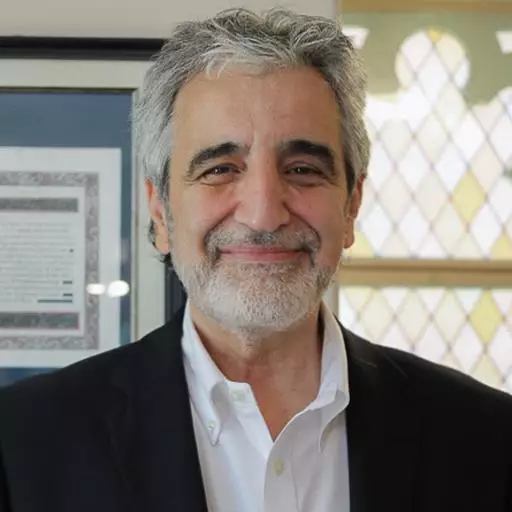
Messianic Leader J. Isaac Gabizon
https://bethariel.ca/
If you would like to support the ongoing work of this teaching ministry, you may log on to: https://bethariel.ca/donate/
Guest (Female): Shalom and welcome to Shalom Ariel and today to our seventh part in our messages on the book of Nehemiah with Messianic leader Jacques Isaac Gabizon. When we are invited to a party, many of us have different reasons for coming. Some come for the free food and cake, some come for the fellowship and the networking, some come out of obligation, and some might simply come just to see who actually shows up at the party.
But in this celebration in chapter eight of Nehemiah, they all came for one reason only: to hear the word of God. And they were all united as one. Don't you just love when everyone gathers for a single purpose with the Lord at the center? Like when we have our Zoom prayer meetings through our congregations on Mondays, or when we come together on Saturdays for our worship. Our founding intention is our unity under the banner of the word of God.
We have other great examples of those coming together for a unified purpose. We think about Esther and her people, gathering together with a single purpose in mind, united in fasting and seeking deliverance from Haman. We think about David; everyone was called, the whole nation as one, aiming to restore the ark in Jerusalem.
But then you think about other circumstances, such as the Sermon on the Mount. You have a gathering of perhaps 15,000 people to hear Yeshua's teaching, but sadly, not everyone came for the right reason. It says that large crowds followed him because of the news of his healings and exorcisms. Were some of them there just to see a miraculous show rather than to see a transformation of the heart?
Why do we gather together with other believers? Do we realize how much we encourage one another when we do show up? Imagine if everyone in the congregation decided, "Ah, I won't come today, I won't be missed." But then you will be missed because each one of us counts. Remember that iron sharpens iron, so we do need each other for growth in our faith.
Coming together means we also have opportunity to pray together and stand together when it comes to spiritual attacks. Gathering together, especially in a congregation platform, helps us exercise our spiritual gifts. Perhaps we just need to think of our coming together as a party, as a time to rejoice. That might encourage us even that much more. Be blessed as you listen in to today's message with Messianic leader Jacques Isaac Gabizon, and shalom, shalom.
Jacques Isaac Gabizon: Let's open our Bibles to the eighth chapter of Nehemiah. What happens when you open the word of God? What we learn in Nehemiah and in other parts of the Bible and in history, when the word of God is read, miracles start to happen, hearts are transformed, lives are renewed, and impossible circumstances give way to God's power.
This is exactly what happens in Nehemiah chapter eight. When Ezra opened the book, the people reacted so strongly. Hearts trembled, tears flowed, and revival broke out. The simple act of bringing out the scriptures transformed a discouraged wayward nation into a people renewed in worship, in conviction, in joy, and obedience. They became actually powerful.
The chapter of Nehemiah eight is deeply rooted and centered around the scriptures. Within these 18 verses, the sacred scriptures are mentioned at least ten times, as if Nehemiah himself was overwhelmed by its power. He speaks of the book of the law of Moses, of the book of the law; three times he simply calls it the Torah, the law; twice the word of the Torah. He refers to it as the book, as the law of God, as the book of the law of God. You understand when you read this that he loved it.
The people heard it. They suddenly rose when they heard it in reverence, their hearts softened, tears flowing as conviction fell. And their worship erupted. They all lifted up their hands and bowed down flat on the earth. This is then when revival happened, bringing unity, bringing transformation, joy, and a renewed walk with God for each person.
In a sense, this is what we witness in the eighth chapter of Nehemiah. It is an exceptionally encouraging portion of the scriptures. My prayer is that each one of us will be blessed as we rediscover the never-ending transforming power of our Bibles, of the word of God. Let us see how the text brings us these things. Let us begin by reading the first two verses of Nehemiah eight.
"And all the people gathered as one man at the square which was in front of the Water Gate, and they asked Ezra the scribe to bring the book of the law of Moses which the Lord had given to Israel. Then Ezra the priest brought the law before the assembly of men, women and all who could listen with understanding on the first day of the seventh month."
These few words alone invite us to reflect on so many truths woven throughout the scriptures. "And the people gathered as one man." Notice the word one, Echad in Hebrew, a word that describes not simple singularity but unity within plurality. It does not mean each for himself, but rather many joined together for one purpose: serving God and serving each other. This is Jesus' desire.
Echad is the very same word that expresses the nature of God in the Shema where it says in Deuteronomy 6:4, "Hear, O Israel, the Lord our God, the Lord is Echad." That single word gathers all the three mentions of divine names in that verse. The Lord, God, the Lord, and so is the congregation that God asks us to be.
Just as Yeshua prayed to the Father in that beautiful chapter of John 17, which is his prayer, he says that they may be one even as we are one. So here in Nehemiah, we see a great example of this saying as the people of Israel united as an Echad. Just like Israel gathered at the Water Gate, the body of the Messiah, the Ecclesia of God, is also an Echad.
We are a unity made of many individuals joined together for one divine purpose. Rabbi Shaul, Paul, described this so clearly when he writes in Romans chapter 12 verses 4 to 5, "For just as we have many members in one body and all the members do not have the same function, so we, who are many, are one body in the Messiah and individually members of one another." This is precisely what is unfolding in the book of Nehemiah chapter eight.
The people stood as one, listened as one, they worshipped as one and responded as one. And it was out of the unity, this Echad, that God began to work in extraordinary ways among them. Furthermore, see how it does mention man and woman. It does, and twice over in verse two and in verse three. This is why we have the word for man is not Adam, but it is Ish, which means individual including everybody, thus emphasizing that the works of God are for everyone and his word is to be studied by everyone.
Now notice where this great event took place. It happened in front of the Water Gate. Why the Water Gate? It must have been really important since it's mentioned three times in this chapter: in verse one, in verse three, and in verse 16. And yet, no one can confirm with certainty where this gate is located. Why mention it? Many locations have been proposed, yet none can be confirmed with certainty.
However, the Talmud, written much closer in time to these events, places the Water Gate on the Temple Mount itself. It was the gate which led toward the Pool of Siloam. It was just in front of it. In front of it was a large area where during the feast of Sukkot or Tabernacles, the priest would carry water from the Pool of Siloam at the bottom up to the altar.
When they reached that gate, they would stop, they would blow the shofar, rejoice with great rejoicing and shouting, and proclaiming the word, and they would read Isaiah 12:3 which says, "Therefore with joy we shall draw waters from the wells of salvation." The waters of Siloam were understood to be waters of salvation. It is no coincidence that this is the exact place where Jesus sent the man born blind at the Pool of Siloam.
After washing the clay from his eyes in the waters of Siloam, he saw for the first time in his life. What an indescribable joy he must have felt. So here in Nehemiah, standing before the Water Gate, the place associated with salvation, rejoicing and the people gathering to hear the Torah, it was the same spot when Jesus told them, "Come to the waters, come to my word, for here is life, here is joy, here is salvation."
There is something very particular about this gate. You know that back in chapter three, the ten gates around Jerusalem were named. The Water Gate stood out from the others. What we notice in Nehemiah chapter three is that every one of the nine gates required repairs except the Water Gate. This immediately stands out because the word chazaq, to repair, appears actually 35 times in this chapter, yet it is never used in connection with the Water Gate.
This is noticeable. Why is this particular gate exempted? Perhaps to attract our attention that in the Hebrew scriptures and in the New Testament, water consistently symbolizes the word of God. It washes, it cleanses, it purifies. Rabbinical commentators also observe this, linking the flowing of water to the life-giving and cleansing power of the scriptures.
And so, it is precisely at this Water Gate that Ezra read the book of the law to the people, that a great revival broke out as hearts were convicted and renewed, that Yeshua later promised the outpouring of the Spirit upon those who come to him, a promise made in the context of the water ceremony during Sukkot. The word of God, symbolized by the Water Gate, needs no repair, for it is perfect and unchanging and eternally sufficient.
Furthermore, there's another place where the power of the word is so emphasized, and it is at this most popular verse in Nehemiah that we've seen before: Nehemiah 4:17. Now this is a striking verse in that many commentators have found it so obscure that they consider it incapable of explanation. Here is how the translation usually renders it: "Those who were rebuilding the wall and those who carried burdens took their loads with one hand doing the work and with the other holding a weapon."
But literally, this is what the Hebrew says: "With one hand doing the work and with the other each his weapon as water." Each his weapon as water. It is this wording that puzzled interpreters for centuries. How can a weapon be as water? What does the expression mean? Some suggest that they kept their weapons even when they were in the water. Maybe. Others simply omit the word water because it is too hard to explain.
But the Spirit of God does not waste words. When the scripture gives us something unusual, it is calling us to pay attention. When we interpret this passage considering the strong symbolism already present in this chapter, especially the Water Gate and the deep Jewish connection of water with the Torah, the word of God, a remarkable insight arises.
The text might be suggesting that what really protected Israel during the rebuilding was not a physical sword but the spiritual weapon of the word of God. In the context of the book, the obscure phrase suddenly becomes luminous. Their true weapon was as water because their true defense was the word of God; they were listening to it, they were hearing it.
This makes Nehemiah 4:17 not only a famous verse but also a prophetic picture of how God builds his people. With work in one hand and the true weapon, the Bible, in the other hand. That's the picture we have here. It is a call to every believer: build with faithfulness and fight with scriptures, not with human strength or earthly force but with the enduring and unstoppable power of God, who is Jesus the Messiah himself.
The New Testament seems to confirm this very interpretation of the sword being the word. The Spirit of God gives us the key of Nehemiah 4:17 when you read Hebrews 4:12, "For the word of God is living and active and sharper than" what? "Any two-edged sword." It is not the soldier's sword that kept Israel safe throughout history and even today; it is the word of God, the Logos, the Memra, that is Yeshua himself.
The text also tells us that as the people were gathered in the square in front of the Water Gate, we're told that they listened to the reading of the word of God for actually quite a long time. We're told in Nehemiah 8:3 that he read it from early morning until midday. The Hebrew does not mention the word morning, boker, but the word or, that is light, which elsewhere is never translated as morning.
So what we learn is that Ezra read from the rising of the sun until midday. This is about six hours, non-stop. This is a long time, and the people listen all the way through. When the scriptures were opened, time seemed to stand still. The sun rose, the day advanced, but the people did not move. It is said that when miners strike gold, they forget the passing of time for their eyes are fixed on the treasure before them.
So it was at the square, Israel had rediscovered her gold, that is the word of God. And it is our prayer that they do it even these days as the Messiah is about to come, as the tribulation is about to come as well. However, while we see a great unity, the text also suggests that many in Israel were missing, they were not there.
Notice the conditions for this gathering. In verse two, we are told that those who came were "all who listen with understanding." Then in verse three, it repeats that those who were present were "those who could understand and be attentive to the book of the law." The Hebrew word for understanding, bin, it's a word that means to discern, to perceive, to grasp the meaning.
This raises an important question: why was the assembly limited in the sense that only those who could understand came? What about everyone else? Just this past week, I spoke with a brother in the faith who wondered why some people who are bright, who are educated and intelligent, seem unable to understand even the simplest teaching of the scriptures.
Some doctrines are deep and really complex, yes, but others are clear and straightforward, and yet some still cannot grasp them. Why is that? I want to tell you, it's not a question of intelligence; it is a question of faith, it is a question of the heart. It is a question of spiritual readiness. Here we find one of the core messages of the scriptures: the word of God can only be understood by those willing to receive it, those who accept first and foremost that this book is God's book, holy, perfect, without error.
That is exactly what the Spirit teaches in 1 Corinthians 2:14, "But the natural man does not accept the things of the Spirit of God, but they are foolishness to him, for he cannot understand them because they are spiritually appraised." Yes, the Bible is freely given to everyone, but until a person approaches God in humility, seeking his truth and comes humbly to ask for his help, that the Lord sends his Spirit to open the mind and the heart of that person.
Understanding scriptures does not only come from the mind alone, but from a heart surrendered to the author of the scriptures. And this disregard of the word for many, despite the outpouring of the Spirit, should not come as a surprise here when we read Nehemiah. In this book, we know that many of them rebelled.
Some married foreign women who brought their own gods into the community of Israel. We're going to meet another one who spied for the Samaritans. Additionally, some wealthy individuals did not want to work in rebuilding the walls. And so, Nehemiah eight, we are told twice of those who came but were limited in number. However, there are many more things to consider in this chapter.
Let's see how the text takes us from one event to the next. As the people were gathered in front of the Water Gate, they built a podium, by the way, the word in verse four is actually a high tower. So standing with Ezra there were 12 men, six on his right and six on the left. If you count the names as they appear in most English translations, you may end up with 13 names plus Ezra.
But in the Hebrew text, something important becomes clear. Every name is connected with the word "and", vav, except the last two names, Zechariah, Meshullam. There's no "and" or a vav appears between them. That means it is the same man makes the whole thing six and six, that is 12. What is most striking is that in the translations, including the New American Standard Bible and the New King James Version, which we usually use, there's no "and" between any of the first names, but they inserted one between Zechariah and Meshullam, thus giving an odd number, 13.
But the correct Hebrew reading shows 12 men standing with Ezra, a number representing the 12 tribes of Israel. This is important. It perfectly fit the context of national restoration under the word of God as we see in Nehemiah. They were Echad, one of course for each tribe of Israel. These people will go and teach the tribes.
And furthermore, there's another subtle hint of the nation's unity in this chapter. In Nehemiah 8:16, we encounter another gate, the gate of Ephraim, a gate whose exact location like the Water Gate is uncertain. What is striking is that this gate is mentioned alongside the Water Gate in this chapter, yet it is absent from the list of the ten restored gates in Nehemiah three.
Why mention this gate? Why highlight the name Ephraim? What do you think? For centuries, Ephraim and Judah remain in opposition. After Solomon's reign, the kingdom was divided. The northern tribes were in the north, often called Israel. They were led by Ephraim, while the southern kingdom was Judah. They frequently clashed. They made war against each other. But here in the days of Nehemiah, something remarkable is happening. The 12 tribes had returned and were united as one nation.
Featured Offer
Prophecies take up about ¼ of the Scriptures so we cannot simply ignore them. Knowing prophecy enables us to give a clear presentation to others of why things unfold the way they do in such areas as politics, morality, technology and global ecological changes. It also helps us to rightly place Israel in God’s prophetic plan.
Past Episodes
- The Armor of God
- The Believers in the End Times
- The Book of Daniel
- The Book of Deuteronomy
- The Book of Ephesians
- The Book of Esther - Purim
- The Book of Exodus
- The Book of Ezekiel
- The Book of Ezra
- The Book of Genesis
- The Book of Hebrews
- The Book of James
- The Book of Jeremiah
- The Book of Joel
- The Book of John
- The Book of Leviticus
- The Book of Numbers
- The Book of Philippians
- The Book of Revelation
- The Book of Romans
- The Book of Ruth
- The Book of Zechariah
- The Feast of Passover
- The Feast of Purim
- The Feast of Shavuot - Pentecost
- The Gospel of Mark
- The Gospel of Matthew
- The Letter to the Galatians
- The Messiah in Isaiah
- The Messiah in the Book of Isaiah
- The Messiah's Prayer
- The Nativity: The Unwrapped Gifts of God
- The Resurrection of the Messiah
- The Sermon on the Mount
- The Tabernacle

Video from Jacques Isaac Gabizon
Featured Offer
Prophecies take up about ¼ of the Scriptures so we cannot simply ignore them. Knowing prophecy enables us to give a clear presentation to others of why things unfold the way they do in such areas as politics, morality, technology and global ecological changes. It also helps us to rightly place Israel in God’s prophetic plan.
About Messianic Viewpoint
About Jacques Isaac Gabizon
Contact Messianic Viewpoint with Jacques Isaac Gabizon
info@bethariel.ca
http://www.bethariel.ca/
Beth Ariel Congregation
CP 46521 CSP Boul. St Jean
Pierrefonds, QC, H9H 5G9
Toll free (888)-685-5902