
The Book of Nehemiah - Part 6


The Book of Nehemiah - Part 6
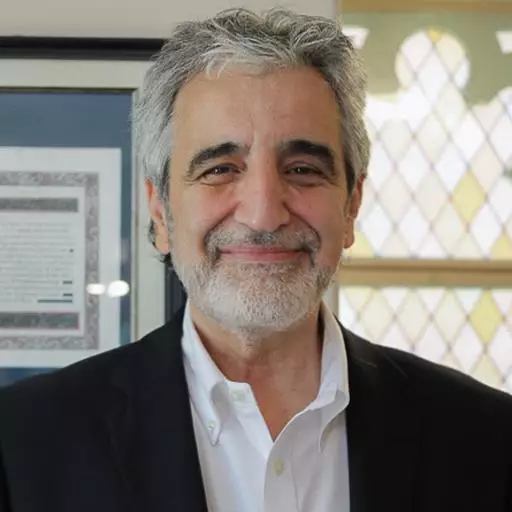
Messianic Leader J. Isaac Gabizon
https://bethariel.ca/
If you would like to support the ongoing work of this teaching ministry, you may log on to: https://bethariel.ca/donate/
Guest (Female): Shalom and welcome to Shalom Ariel and to part six of our study from the book of Nehemiah with Messianic leader Jacques Isaac Gabizon.
Jacques Isaac Gabizon: There is something fascinating about this wall which Nehemiah built. Even though it was only half the height, yet it was completed all around. That's what we're going to learn in today's message. And that means that there were no gaps. It was complete all around. The entire city on every side had some level of protection. Now, even at half height, the enemy lost hope of a surprise attack on Jerusalem, and there was no breach in the wall. There were no gaps where the enemy could secretly enter in. Does this remind us of our own lives?
Do we sometimes feel like a work still in progress? And though we are not fully developed, maybe we are only halfway there, yet as we continue to grow, God continues to protect us all around. And we need to make sure as well that there are no breaches in the wall, no openings where the enemy can find passage into our heart and mind. Another life lesson from today's message has to do with the seeming frustration the returned exiles of Israel must have felt.
Here they come back, and they have to use stones which were burnt and stones that seemed like they wouldn't have the support expected in order to make a wall. Aren't we equally frustrated when things don't seem to be working out and the task at hand appears overwhelming for us? But we can be confident that God does not want us to live in frustration. Frustration is not the fruit of the spirit. And so we ask ourselves, why do we become so frustrated in life?
Is it because we run out of patience? Or is it because we don't see the results that we are expecting? Or is it because we realize that we have no control over the situation? Yes, that's frustrating. Perhaps the best way to handle frustration is to give back to God what is not ours to carry and what is not ours to hold onto. Frustration steals our peace. Let's ask God for His grace, and we pray for the faith that will help us realize that we are never alone in building anything.
Our competence in each of our projects comes as we partner with the Lord. After all, He is the master builder with the master plans. Be blessed as you listen in to today's message with Messianic leader Jacques Isaac Gabizon, and shalom.
All these things remind us again of the body of the Messiah, the ecclesia. If you read the book of Acts and the book of Nehemiah at the same time, you're going to see they are very similar. The book of Nehemiah and the book of Acts share striking similarities. Both describe communities called by God advancing His work amid continual opposition, attacks from without followed by conflict from within.
Consider the early believers in the book of Acts. In chapter two, we read 3,000 Jewish believers came to faith. And by chapter four, another 5,000 Jewish believers came to faith. Yet by the end of that same chapter, the favor they once enjoyed among the people, as we see in Acts 2:47, is gone. As it was in Nehemiah's day, we see the first wave of persecution from the outside when the religious leaders laid hands on Peter and John, trying to silence the word of God.
The next attack is from within. It was as it is with Nehemiah in Acts chapter six, where tension arose between the Hebrews, the local believers, and the Hellenists, those of the diaspora, over the daily distribution of food to the poor. This inner division mirrors precisely what we find in Nehemiah chapter five where the conflict again arose between the rich and the poor among God's people. However, there is again a beautiful ending: the wall was completed.
This is what it says in chapter six, verse 15 to 16: "So the wall was completed on the 25th of the month of Elul and in 52 days. When all our enemies heard of it and all the nations surrounding us saw it, they lost their confidence, for they recognized that this work had been accomplished with the help of our God." This is prophetic. Not only was the wall finished in record time, 52 days, but we're told that the enemies recognized that it was done with the help of God.
The enemies must have worked so hard to stop the Jews. They must have been so convinced that they could stop them and perhaps even annihilate them that they were forced to recognize a divine intervention. Again, this is a prophecy. It reminds us of the Egyptian magicians when they finally confessed, "This is the finger of God." Or when the Babylonian magicians could not figure out what the king's dream was and confessed that only God could do such a thing, and God used Daniel to reveal that dream.
It also reminds us of the fear that fell on all the people of Canaan when they learned that God had opened the Red Sea. It was Rahab who said that in Joshua 2:9. And so the Lord did protect them during the time of Nehemiah. And all the nations, as it is written, saw it and lost their confidence. So it will be at the end when Yeshua will come back. What happens from Nehemiah chapter seven onward may be hard to understand.
There the Lord puts it on Nehemiah's heart to gather all the people together, and this is when he finds the book of genealogy of those who first came up, namely the names of all the people who returned from Persia in 538 BC, 90 years earlier. So he decided to list them all. This list contains 95 distinct names from families, towns, and servants. But why would he do that? Furthermore, this same long list is a virtual duplication of one found in Ezra chapter two.
As one reads on, skipping Nehemiah eight and nine and getting to chapter 10, we have another long list of names of those present who signed a document to follow the Lord. There we find another 84 names listed. Why so many names? Why so many individuals? While we do not know the greater majority of these people inscribed in these lists, the Lord does.
He knows each and every one intimately. Perhaps to reward them for their faithfulness, He decided to have them eternally recorded in His book. These are the ones who left comfortable Persia to come do the work of the Lord. These were the new Abrahams, 50,000 of them who agreed to come to Israel knowing that it was going to be a very difficult journey. These were not chosen because they were well equipped, but because they were available and because they were willing to do the work.
This list reminds us of the Bema seat of the Messiah that is mentioned in the New Testament for the distribution of the rewards. Paul said in Second Corinthians chapter five, verse 10, "For we must all," speaking to all believers today, "we must all appear before the judgment seat of the Messiah so that each one may be recompensed for his deeds in the body according to what he has done, whether good or bad." The basis of this judgment will be the believer's work done in the body since he became a believer. This will occur right after the rapture.
The judgment spoken of here is not the same as the final judgment. Let's not mix them up. The final judgment, which is called the Great White Throne judgment, is reserved for unbelievers and will take place at the end of the millennium. Those who have accepted Yeshua as their personal savior will not stand before this last judgment, for our sins have already been taken away when Yeshua bore them on the Tav, the cross. However, notice what Paul says. He does say what we have done, whether good or bad.
Many believers wonder what the basis of this coming judgment is. What matters will be examined? The answer is not hidden. It is found throughout the words of Yeshua and the writings of the Apostle. This is what is so important: to read and reread the Brit Hadashah. Are we living in His word? Let's consider a few key examples of the things that we may be asked to give reasons for. For instance, how we treat other believers.
The repeated command to love one another reveals how deeply God values unity and compassion within the body of the Messiah. That is very important to God. How we use our time, for instance. We're urged to make the most of our time because the days are evil, Ephesians 5:16. Every moment is a gift, and the Lord calls us to invest it wisely in things of eternal value.
How we discipline our old nature. Paul reminds us that everyone who competes in the games exercises self-control in all things, First Corinthians 9:25. The spiritual life is a race that requires focus, endurance, and self-restraint. It is not easy to be a believer. How eagerly we wait for His return. Paul speaks of a special reward that is a crown of righteousness in Second Timothy 4:8. "A crown of righteousness which the Lord, the righteous judge, will award to me on that day, and not only to me but also on all who love His appearing."
Do you desire the coming of the Lord? You're going to have a crown. Our works will be measured not by their size or visibility, but by the heart behind them, by our love, our faithfulness, our stewardship, and our longing for His soon return. If we live each day with that expectation, then truly the crown is waiting for us. Not one, but many, because we have to have something to give back to Yeshua. Imagine you're invited to a wedding and you have no gifts. We're going to go to our own wedding, and the only thing we're going to have are these crowns.
To conclude, let us return to one remarkable verse in Nehemiah chapter four, verse two. When the enemies of Israel saw that the Jewish people were determined to rebuild Jerusalem, they mocked and questioned them. Yet their taunts contained five questions in that verse that when answered through the lens of scriptures reveal God's enduring plan and Israel's ultimate destiny. Sanballat the leader spoke in the presence of his brothers and the wealthy men of Samaria and said, "What are these feeble Jews doing? Are they going to restore it for themselves? Can they offer sacrifices? Can they finish in a day? Can they revive the stones from the dusty rubble, even the burnt ones?"
The first question: "What are these feeble Jews doing?" To the world, the Jews appear weak, but they were not feeble. They were protected by the Almighty whose strength is made perfect in weakness. The nations of the world will one day realize this truth when Yeshua returns in glory and Israel will be the head and not the tail anymore. Second question: "Are they going to restore it for themselves?" Yes, they are. They will and they did in history. At the end, this restoration will be eternal when Yeshua comes back. He will restore Jerusalem as the capital city of His kingdom.
Third question: "Can they offer sacrifices?" Yes, they did in Nehemiah's days, and they will again in the coming Messianic temple, as foretold by the prophets. Most of all, the final sacrifice, Yeshua, comes from Israel. They offer the sacrifice to the world; they offer Yeshua to the world. Fourth question: "Can they finish in a day?" Indeed, they did. Isaiah gives a divine answer in Isaiah 66:8. "Who has ever heard such a thing? Can a nation be born in a day?"
Yes, Israel was reborn in a day. One day soon, the fullness of that prophecy will be realized in that day when the Messiah comes back. Fifth question: "Can they revive the stones from the dusty rubbles, even the burnt ones?" Yes, they can and yes they will. Jerusalem will rise from the dust and ashes to shine as the city of God, the joy of the whole earth. In the end, every mocking question of the enemy becomes a declaration of God's victory.
For what man calls impossible, God calls already done. In Yeshua, every promise stands fulfilled already. To close, a main reason for this beautiful account in Nehemiah is to remember that the Lord is always with the believer. Do not be discouraged. I read a story of a man who watched a stonecutter hammer away at a rock more than a hundred times without even a crack showing. But on the 101st blow, the stone split in two.
It wasn't that final strike that did it; it was the hundred that came before it. So it is with the work of God. Every prayer, every word, every act of faith counts, even when we see no immediate change. Be patient. Discouragement fades when we remember that persistence builds unseen strength until the breakthrough comes. Amen. Let's bow our heads in prayer.
Now to us from Him who is and who was and who is to come, from Yeshua Mashiah who is the faithful witness, the firstborn from the dead, and the ruler of the kings of the earth. Now may God grant us such as we may say like David, "You are my hiding place. You protect me from all trouble and surround me with songs of deliverance." We thank you, Heavenly Father, for the gift that you've given us all, Your only begotten Son, Yeshua. We're so moved by His power, we're so moved by His presence in us and around us. We see Him act, Heavenly Father.
To the congregation, the Lord bless you and keep you. The Lord make His face shine upon you and be gracious to you. The Lord lift up His countenance upon you and give you peace. Amen and amen. May the Lord bless you all.
Guest (Female): Welcome to this segment of our program where we have the Q&A with Messianic leader Jacques Isaac Gabizon. Today we're going to address a subject of the denials in the end times. Be blessed as you listen in.
Guest (Male): Dear Rabbi Pastor, the Bible speaks of the end times in general, encompassing many aspects such as Israel and the nations of the world. But it also specifically addresses the church in the end times, both the invisible and the visible church. What are the signals and how can we recognize the church of the end times? Thank you and shalom.
Jacques Isaac Gabizon: I just want to begin by telling you that there is a much larger study that was previously made on the end times which is available on our YouTube channel. You can get there by going onto YouTube, Beth Ariel Montreal, all one word, and then by clicking on playlist. There you will find a fuller study on the end time and the church. However, I will summarize the six red flags we should be recognizing as happening around us in these days.
The Bible teaches that slowly but surely the universal church will continue to fall away from God. Yeshua, in his last prophecies, spoke about the condition of the churches in history and his book of the last church in Revelation three, the church of Laodicea, which he spews out of his mouth, for it is a church of non-believers in God like an empty shell. This church will characterize the one in the tribulation, something we see rising in our days.
This final spewing follows numerous warnings found for the church in the epistles. When gathered together, they underline these six red flags which we can call a system of denial, a system which now continues to spill into the evangelical churches at a very fast pace. Originally, back in the 1950s, it was Dwight Pentecost in his great book "Things to Come". He spoke of this system and formulated nine denials. We will sum them up in five major categories and add one more that is very prevalent today.
The first denial is a minimization, a diminution leading to a full rejection of the person and nature of the Messiah, Yeshua. To many today, he is no more the mighty God spoken of by Isaiah. He is no more the first and the last, the beginning and the end. Some demote him to the rank of merely a great man and no more. These statements are not coming from the outside, but actually from inside the church. Peter tells us that there will also be false teachers among you who will secretly introduce destructive heresies, even denying the Master who brought them, Second Peter 2:1.
This is the first and major sign to consider. The second denial is an outward attack on the scriptures, on the scriptures itself. It denies the power of the word of God. This comes about with a departure from the literal interpretation of the scriptures to an allegorization, at which point all becomes a matter of reinterpretation with a shaky foundation. This is when the word of God falls at the mercy of both reason and imagination.
God is clear throughout the scriptures that His word is not to be trampled on. His last warning is found in Revelation 22, verses 18 and 19. "I testify to everyone who hears the words of the prophecy of this book. If anyone adds to them, God will add to him the plagues which are written in this book. And if anyone takes away from the words of the book of this prophecy, God will take away his part from the tree of life and from the holy city which are written in this book."
These two first denials stand at the top of the system. Remove Yeshua and the scriptures, and you have Laodicea. Then you have confusion leading to the third denial, the denial of the faith where some will substitute and replace God's gift of faith with other man-made precepts and religion which will satisfy their craving. Faith never disappears; it is just replaced by something else away from God.
First Timothy 4:1 says, "Now the Spirit expressly says that in the latter times some will depart from the faith." The word "depart" is of the same root as "apostasy" in the Greek, which itself speaks of divorcement. This is when one divorces God as it pertains to those who in unbelief pretended to believe, took advantage of the benefit, but finally left it.
Featured Offer

Prophecies take up about ¼ of the Scriptures so we cannot simply ignore them. Knowing prophecy enables us to give a clear presentation to others of why things unfold the way they do in such areas as politics, morality, technology and global ecological changes. It also helps us to rightly place Israel in God’s prophetic plan.
Past Episodes
- The Armor of God
- The Believers in the End Times
- The Book of Daniel
- The Book of Deuteronomy
- The Book of Ephesians
- The Book of Esther - Purim
- The Book of Exodus
- The Book of Ezekiel
- The Book of Ezra
- The Book of Genesis
- The Book of Hebrews
- The Book of James
- The Book of Jeremiah
- The Book of Joel
- The Book of John
- The Book of Leviticus
- The Book of Numbers
- The Book of Philippians
- The Book of Revelation
- The Book of Romans
- The Book of Ruth
- The Book of Zechariah
- The Feast of Passover
- The Feast of Purim
- The Feast of Shavuot - Pentecost
- The Gospel of Mark
- The Gospel of Matthew
- The Letter to the Galatians
- The Messiah in Isaiah
- The Messiah in the Book of Isaiah
- The Messiah's Prayer
- The Nativity: The Unwrapped Gifts of God
- The Resurrection of the Messiah
- The Sermon on the Mount
- The Tabernacle

Video from Jacques Isaac Gabizon
Featured Offer
Prophecies take up about ¼ of the Scriptures so we cannot simply ignore them. Knowing prophecy enables us to give a clear presentation to others of why things unfold the way they do in such areas as politics, morality, technology and global ecological changes. It also helps us to rightly place Israel in God’s prophetic plan.
About Messianic Viewpoint
About Jacques Isaac Gabizon
Contact Messianic Viewpoint with Jacques Isaac Gabizon
info@bethariel.ca
http://www.bethariel.ca/
Beth Ariel Congregation
CP 46521 CSP Boul. St Jean
Pierrefonds, QC, H9H 5G9
Toll free (888)-685-5902