
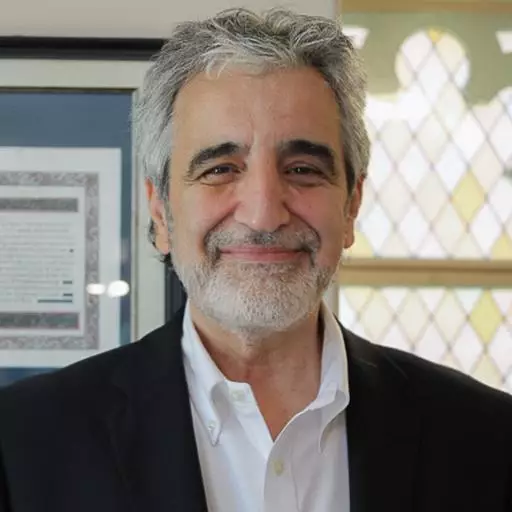
The Book of Genesis Part 31 & 32


Genesis is not a book of science, nor is it a historical book. It is the Book of God. It is a book of faith. While in its entirety the Bible does contains true and important information about many of the sciences, and from a historical context confirms beforehand many of the modern day archeological finds, it must find its primary purpose as the book which affords us the privilege of knowing the Creator Who then created all things. The Hebrew title for Genesis is Bereisheet which means beginning. In the beginning, there we were and as we look at our past and origins, it will give us a great understanding of our present world, and of ourselves. As far back in the past as Genesis was in time, it is still so close to us today; its words are alive and powerful and its truths remain unchanged.
Welcome to Messianic Viewpoint with Jacques Isaac Gabizon and our continuing study in the Book of Genesis. Be blessed as you listen in. Shalom!
Jacques Isaac Gabizon: As Adam and Eve were originally called to populate the Earth, from this point on, we learn the difficulties of rearing children. "In pain, you shall bring forth children." Parents will often identify with this. But while bringing up children may be difficult at times, it is the most rewarding thing, isn't it?
Guest (Male): Haven't we all heard the expression of the silver lining around the cloud or the rainbow that is formed through tears? The Lord inspired James to help us understand what blessings come through tribulation and what better way to have that command live in us, but by the way we work things out in the lives of our very own children.
The ones that we cannot just throw away or get rid of when the trials come. Though difficult the trials they may bring us, we are compelled by an instinct that God gave us to love unconditionally, to understand their needs and then help them understand why they might be going through their own set of trials.
Children test our tempers and they try us, seemingly often without mercy, but don't we do the same to our heavenly Father? And his response is our best example. Set forth rules and consequences that fit the crime. That way, we are fair because like God, our desire is to teach in love.
Though God told us that child-rearing would be hard, he wants us to demonstrate that incredible power we have in us. Because love bears all things, believes all things, endures all things, and hopes all things. So let's show our children that they don't need to be chasing rainbows, but that God has a rainbow for them at the end of every storm. Welcome to Shalom Ariel and welcome to our continuing study in the book of Genesis with Messianic leader Jacques Isaac Gabizon. Be blessed as you listen in and shalom.
Jacques Isaac Gabizon: And see the end of it. How does the Messiah subdue the serpent? He will bruise his head. That is, he will give him the final blow. He will make an end of him. This actually will come later when we read in Revelation that he will be thrown into the lake of fire forever and ever.
But the serpent will bruise his heel. What does that mean? How can we understand this? You see, the word "heel" has two meanings: one positive, one negative. The translators of the Targum saw the positive side. The word is "Aqed," and it means anything that is last, at the rear, like the last days or the times of the Messiah.
They saw in this phrase the bruising of man until the Messiah comes. We will be bruised. We will be overwhelmed because the word "bruise" means also overwhelmed by the devil. They understood the work of the devil, that he will come until the Messiah comes and puts an end to him. But the other meaning of the word "heel" is more in the context.
It also means wickedness. It comes from the word "deceitful," "aqob," and denotes anything that is last or worst. We could translate the part like "and you shall overwhelm the Messiah with deceitfulness." And this is what the serpent did with Jesus from the beginning, and this is what he does with his seed, that is ourselves, all the time he does it.
The truth is that God did repeat this to Cain in Genesis 4:7. He says, "Sin lies at the door and its desire is for you, but you shall rule over it." This is what the verse, I believe, means, that he shall overwhelm us with his deceitfulness until the very end. You see, sin is there always trying to overwhelm the believer. Sin is the cause of our suffering and his desire is to stop the believer. It is at our heels. He wants to bite us. It is there all the time.
I want to share with you an article that I read in the New York Times a few years ago titled "Artist Display Confessions of Passerby on the 44th Street Storefront." The journalist Catherine Schattuck wrote about two performing artists named Lora Barnett and Sandra Spanan, who created an exhibit in Manhattan Street that allowed passersby to alleviate their guilt.
So what did they do? The two women dressed as 19th-century washerwomen and sat in the storefront. One underlined the words on the glass: "Air your dirty laundry, 100% confidential, anonymous, free." So onlookers were encouraged to write their deepest secret on a piece of paper and the washerwoman then collected all the papers and put them on the glass so everybody would see.
The sins and secrets range from slightly humorous to sordid. One of them said, "I threw the hermit crab still alive and I threw it down the trash, so I still feel bad," or "I make fun of my friends who like me so much but I don't love them," or "I haven't yet visited my dead parents' grave," and so on.
Some of the things are not quite fit to be repeated from a pulpit, but Barnett said that the actresses were often overwhelmed by the weight of others' sin. I quote, "We go there," they said, "and the window is empty and we're wearing all white. At the end, the window is full. It's exhausting. Some of those things are really, really sad and afterwards, I need to take a bath," they said. They felt the sin, the overwhelming weight of the sin. Imagine Yeshua, who took actually the sins of all the world.
But this is what our verse in Genesis 3:15 says. Sin is overwhelming. It will always try to take over our lives like it does the lives of so many. But we do not need to go to Manhattan to search for these comedians. What do we have to do?
If we confess our sins, he is faithful and just to forgive us our sins and to cleanse us from all unrighteousness, 1 John 1:9. This is how we unload our sins and guilt and walk free. As we're going to speak about these curses, as we're going to the man and the woman and so on, we don't need to experience these things for the most part because we have Yeshua.
Now we know that the Jews before the time of Jesus understood the passage as messianic. But have you ever wondered how Adam and Eve understood this verse of Genesis 3:15? When I found out what they understood from this verse, it blew my mind up. This is one passage of the Bible that still amazes me over and over. But before we get there, we need to cover at least four verses, difficult ones that are well-positioned so that we can appreciate Adam and Eve, what they understood. Verses 16 to 19. These are the curses.
From verses 16 to 19, we learn that maternity will not be easy. As Adam and Eve were originally called to populate the Earth, from this point on, we learn the difficulties of rearing children. "In pain, you shall bring forth children." Parents will often identify with this. But while bringing up children may be difficult at times, it is the most rewarding thing, isn't it?
This verse reminds me also when we had teenagers at home. Challenging, but at the end also rewarding. You know, I once read the notice to teenager. It goes like this. It says, "If you're tired of being hustled by unreasonable parents, now is the time for action. Leave home and pay for your own while you still know everything."
But the best way to fight this is to raise the children in the Lord. I love to see, by the way, our youth in the congregation and how they are all growing in the word. This is really our pride. This is our pride to see them how they grow.
And as Eve took the lead in this marriage unit, now we're told that her desire shall be for her husband. That is, she will turn to her husband and be dependent on him. From being a helper, she now becomes dependent on him. But this can be turned into a blessing in biblically-based marriages where the man and the woman are partners, both serving the Lord.
One strong antidote of this passage is Proverbs 31, beginning in verse 10, when you see the virtuous woman and the virtuous man. You understand you cannot be virtuous unless the man is behind her making her virtuous as well.
And after Eve, God now turns to Adam. It is the longest address, verses 17 to 19. It is longer because Adam is the leader and there's a lot that is said to him. Let's read verses 17 to 19. There you will understand what it is at times so hard to wake up in the morning to go to work. Why there's so much stress in our lives. It's all there.
Says, "Then to Adam he said, 'Because you have listened to the words, to the voice of your wife, and have eaten from the tree of which I commanded you saying you shall not eat of it, cursed is the ground for your sake. In toil you shall eat of it all the days of your life. Both thorns and thistles it shall bring forth for you, and you shall eat the herb of the field. In the sweat of your face you shall eat bread till you return to the ground, for out of it you were taken, for dust you are and to dust you shall return.'"
Do you see how it begins? "Because you have listened to the voice of your wife" as opposed to having kept the word of God. Because he is the one actually who heard the word firsthand. God and God, what he does is that he repeats the commandment. "You shall not eat of it." Do you remember, Adam, that I said this?
Why the emphasis? We have seen that Satan, how Satan used the word, how he added, subtracted, altered, and changed the word of God. That was his strategy and it was Adam's task to be there to counteract this tactic, but he was not there. And this is the first thing God brings out.
You know, I heard of a pilot, a pilot on a practice flight was suddenly stricken with blindness. Frantically, he contacted the control tower and told of his desperate plight. His commanding officer radioed back, "Don't be afraid. Just do what I tell you," he says.
After being advised to keep circling the field until it was all clear for landing, the blind pilot was instructed to begin losing altitude. As the aircraft approached the runway, the officer's voice called out and encouraged them, "You're coming in right on target," he would say.
And so the pilot, giving unquestioning obedience to his commander, brought the plane down to safety. He succeeded because he believed his commander. We cannot possibly see everything or understand everything around us, but God does. He is omniscient and available to be radioed at any time, 24/7. He is our commander.
And what are the punishments, by the way, for Adam? We can see them in four steps: Cursed is the ground; in toil you shall eat of it; you shall eat the herb of the field; and then physical death. The first two we see men going from the Garden of Eden where he walked with God to the cursed ground. There is the origin of hardship and unfruitful work and stressful work.
But it need not need to be like this for the believer because we can experience the Garden of Eden even now. Do you know that? What is the antidote for this? Psalm 23. "The Lord is my shepherd. I shall not be in want. He makes me lie down," what? "In green pastures," like going back to the Garden of Eden. "He leads me beside still water. He restores my soul." It may not be like this for believers, right? These curses? The curse in Genesis 3 can be alleviated by getting closer to God.
And the third thing is that man will eat the herb of the field. I don't know what he ate before, but this is hardly a punishment, is it? Because I love a salad. Don't you like to eat a salad or cereal? What is the intent of this curse here? These words may indicate to us that from this point on, similarly to Satan, man lost much of his position and was brought this time down to the same level as the lower creatures, animals, and he is seen now eating with them.
Five times in these three verses, eating is mentioned. Adam and Eve's sin consisted of eating the forbidden fruit, and now they will eat of the herb of the field. What is the antidote for this? Remember we said it last week? "Man shall not eat of bread alone but of every word that proceeds out of the mouth of God."
So God takes the eating and brings it back to the spiritual level so that we understand that we need his presence in order to counteract all these curses. And the last one, the harshest one, it speaks of physical death. What then is the antidote for physical death? The resurrection, the rapture, for the Lord himself will come down and will take us up, and we shall be with him forever and ever.
For the believer, death is just a passage. But understand, for every curse, there's a blessing. For the believer in the Yeshua, these curses lose much of their strength.
Guest (Male): Don't go away. We'll be right back with the second half of our program coming up just after this message.
As we wind up for the second part of our program today, we would like to remind our listeners how blessed and privileged we feel to be part of your radio day. We pray that the messages you hear will instruct you, edify you, and encourage you to love the Lord more and follow him into obedience in even greater ways.
We are all changed by the challenges and transformed by the trials of life, and as we walk them together, we keep looking up to him who is mighty to break down the walls of Jericho that stand before us and to hand over to us the spiritual victories in life. Yeshua has broken down the greatest barrier, the greatest wall that has separated us from God the Father.
Thank you, listeners, for joining us in prayer and in financial support for this ministry. If you have it on your heart to give to this ministry, then you can by logging on to our congregation website at bethariel.ca, B-E-T-H-A-R-I-E-L.ca. And if God leads you to contribute from the treasures that God has blessed you with for the continuation of this radio ministry. Shalom, shalom as we begin part two of today's program.
Guest (Female): We often communicate our aspirations and hopes using words, and sometimes we can get our words mangled. Yogi Berra, the famous baseball player and coach, coined phrases in such a way that it was considered a paradoxical contradiction. Speaking about baseball, he once said, "90% of the game is half mental."
Speaking about funerals, he said, "Always go to other people's funerals, otherwise they won't go to yours." And of course, his most famous quote, "It ain't over till it's over." Now, that kind of rhetoric might also be attributed to Eve, the wife of Adam. After the fall and after their eviction from the garden, she gave birth to her first child and said this, quote, "I have acquired or given birth to a man, the Lord."
Now, what kind of rhetoric is that? One gives birth to a baby, not a man. One gives birth to a human, but not God. Was this a contradiction? While her thoughts were biblically sound, her timing was off. We would have to wait at least another 4,000 years before this would literally come to pass with the birth of Messiah Yeshua.
Today we look around us at the state of the world, the rebellion, the evil in man's heart, the destruction of nature, and we might ask ourselves, what is the point? Where is God? But as Yogi Berra said, "It ain't over till it's over." And God has a plan. Eve uttered those early prophetic words, helping us guard a hope in our hearts.
The Messiah did come, he is coming back, and he will put all things right. One day in the eternal order, those who know him will not worry about funerals any longer, for death will then be defeated and life with God will be eternal. Welcome to Shalom Ariel. Welcome to our continuing study in the book of Genesis with Messianic leader Jacques Isaac Gabizon. Be blessed as you listen in and shalom.
Jacques Isaac Gabizon: And see the end of it. How does the Messiah subdue the serpent? He will bruise his head. That is, he will give him the final blow. He will make an end of him. This actually will come later when we read in Revelation that he will be thrown into the lake of fire forever and ever.
But the serpent will bruise his heel. What does that mean? How can we understand this? You see, the word "heel" has two meanings: one positive, one negative. The translators of the Targum saw the positive side. The word is "Aqed," and it means anything that is last, at the rear, like the last days or the times of the Messiah.
They saw in this phrase the bruising of man until the Messiah comes. We will be bruised. We will be overwhelmed because the word "bruise" means also overwhelmed by the devil. They understood the work of the devil, that he will come until the Messiah comes and puts an end to him. But the other meaning of the word "heel" is more in the context.
It also means wickedness. It comes from the word "deceitful," "aqob," and denotes anything that is last or worst. We could translate the part like "and you shall overwhelm the Messiah with deceitfulness." And this is what the serpent did with Jesus from the beginning, and this is what he does with his seed, that is ourselves, all the time he does it.
The truth is that God did repeat this to Cain in Genesis 4:7. He says, "Sin lies at the door and its desire is for you, but you shall rule over it." This is what the verse, I believe, means, that he shall overwhelm us with his deceitfulness until the very end.
You see, sin is there always trying to overwhelm the believer. Sin is the cause of our suffering and his desire is to stop the believer. It is at our heels. He wants to bite us. It is there all the time.
I want to share with you an article that I read in the New York Times a few years ago titled "Artist Display Confessions of Passerby on the 44th Street Storefront." The journalist Catherine Schattuck wrote about two performing artists named Lora Barnett and Sandra Spanan, who created an exhibit in Manhattan Street that allowed passersby to alleviate their guilt.
So what did they do? The two women dressed as 19th-century washerwomen and sat in the storefront. One underlined the words on the glass: "Air your dirty laundry, 100% confidential, anonymous, free." So onlookers were encouraged to write their deepest secret on a piece of paper and the washerwoman then collected all the papers and put them on the glass so everybody would see.
The sins and secrets range from slightly humorous to sordid. One of them said, "I threw the hermit crab still alive and I threw it down the trash, so I still feel bad," or "I make fun of my friends who like me so much but I don't love them," or "I haven't yet visited my dead parents' grave," and so on. Some of the things are not quite fit to be repeated from a pulpit, but Barnett said that the actresses were often overwhelmed by the weight of others' sin.
I quote, "We go there," they said, "and the window is empty and we're wearing all white. At the end, the window is full. It's exhausting. Some of those things are really, really sad and afterwards, I need to take a bath," they said. They felt the sin, the overwhelming weight of the sin. Imagine Yeshua, who took actually the sins of all the world.
But this is what our verse in Genesis 3:15 says. Sin is overwhelming. It will always try to take over our lives like it does the lives of so many. But we do not need to go to Manhattan to search for these comedians. What do we have to do?
If we confess our sins, he is faithful and just to forgive us our sins and to cleanse us from all unrighteousness, 1 John 1:9. This is how we unload our sins and guilt and walk free. As we're going to speak about these curses, as we're going to the man and the woman and so on, we don't need to experience these things for the most part because we have Yeshua.
Now we know that the Jews before the time of Jesus understood the passage as messianic. But have you ever wondered how Adam and Eve understood this verse of Genesis 3:15? When I found out what they understood from this verse, it blew my mind up. This is one passage of the Bible that still amazes me over and over.
Guest (Male): Thank you, listeners, for joining us in prayer and in financial support for this ministry. If you have it on your heart to give to this ministry, then you can by logging on to our congregation website at bethariel.ca, B-E-T-H-A-R-I-E-L.ca. And if God leads you to contribute from the treasures that God has blessed you with for the continuation of this radio ministry. Shalom, shalom as we begin part two of today's program.
Jacques Isaac Gabizon: And do you see how she called her son to be born? She doesn't call him a baby. She calls him "Ish," an individual, a man. But nowhere in the scriptures the word "Ish" here describes a baby boy. She must have known that it was the Messiah himself.
Guest (Female): We often communicate our aspirations and hopes using words, and sometimes we can get our words mangled. Yogi Berra, the famous baseball player and coach, coined phrases in such a way that it was considered a paradoxical contradiction. Speaking about baseball, he once said, "90% of the game is half mental."
Speaking about funerals, he said, "Always go to other people's funerals, otherwise they won't go to yours." And of course, his most famous quote, "It ain't over till it's over." Now, that kind of rhetoric might also be attributed to Eve, the wife of Adam. After the fall and after their eviction from the garden, she gave birth to her first child and said this, quote, "I have acquired or given birth to a man, the Lord."
Now, what kind of rhetoric is that? One gives birth to a baby, not a man. One gives birth to a human, but not God. Was this a contradiction? While her thoughts were biblically sound, her timing was off. We would have to wait at least another 4,000 years before this would literally come to pass with the birth of Messiah Yeshua.
Today we look around us at the state of the world, the rebellion, the evil in man's heart, the destruction of nature, and we might ask ourselves, what is the point? Where is God? But as Yogi Berra said, "It ain't over till it's over." And God has a plan. Eve uttered those early prophetic words, helping us guard a hope in our hearts.
The Messiah did come, he is coming back, and he will put all things right. One day in the eternal order, those who know him will not worry about funerals any longer, for death will then be defeated and life with God will be eternal. Welcome to Shalom Ariel. Welcome to our continuing study in the book of Genesis with Messianic leader Jacques Isaac Gabizon. Be blessed as you listen in and shalom.
Jacques Isaac Gabizon: What is the intent of this curse here? These words may indicate to us that from this point on, similarly to Satan, man lost much of his position and was brought this time down to the same level as the lower creatures, animals, and he is seen now eating with them.
Five times in these three verses, eating is mentioned. Adam and Eve's sin consisted of eating the forbidden fruit, and now they will eat of the herb of the field. What is the antidote for this? Remember we said it last week? "Man shall not eat of bread alone but of every word that proceeds out of the mouth of God."
So God takes the eating and brings it back to the spiritual level so that we understand that we need his presence in order to counteract all these curses. And the last one, the harshest one, it speaks of physical death. What then is the antidote for physical death?
The resurrection, the rapture, for the Lord himself will come down and will take us up, and we shall be with him forever and ever. For the believer, death is just a passage. But understand, for every curse, there's a blessing. For the believer in the Yeshua, these curses lose much of their strength.
Now, let's answer the first question. The first question was: Adam and Eve, how did they understand actually Genesis 3:15? Verse 20, one verse. "And Adam called his wife Eve because she was the mother of all living." Now, don't you find it strange that Adam called his wife Eve, which means life, after he was just cursed to death?
Did you know that several Bible expositors consider this verse misplaced? They made a mistake. It's not supposed to be there. How did he come up with such an optimistic view of the world whose ground is cursed and after learning that in the sweat of his face he shall eat, and even worse after learning that he will die and be like dust?
Do you see the contrast between the two verses? What brought about this change of attitude? What do you think did? The only thing in the context that must have brought this change of attitudes is Genesis 3:15, the promise of God. The seed of the woman that was to come.
This verse falls from the sky right into the midst of the darkness of judgment. It is right after the mention of these often repeated words, "For dust you are and dust you shall return," as if hope defies death and brightens the whole passage. They are right. This verse is so misplaced because the things of God are out of this world.
Like Paul at this point in his life, Adam, he became fool for Christ. Remember, Paul said that in 1 Corinthians 4:10? "We are fools. We are crazy for Christ." See what hope can do to a person? Adam did not get depressed. He did not panic when God told him that. What did he rely on? He relied on the bright side of it, on the promises of God.
I want to tell you, by the way, about a phone call I received this week from Danny, a nice Jewish man from Hamilton, Ontario. He called to encourage us for our radio program, which covers the area. And during our conversation, he told me that actually Jesus spoke to him in such a powerful voice. He said that he had not known a verse, but it came to him before he even read it.
The verse is John 14, when Jesus says, "Let not your heart be troubled. You believe in God, believe also in me. In my Father's house are many mansions. If it were not so, I would not have told you. I go to prepare a place for you." And so I asked him, "When did you get this revelation?" I was surprised to hear that it was 52 years ago when he was 12 years old.
Because the way he related the event, I thought that it happened just a couple of weeks ago, so vivid it was in his mind and so excited he was about this promise. He then proceeded to tell me what actually happened. He began to tell me that at the age of six weeks old, when he was six weeks old, he was given up for adoption.
Later, his adoptive parents put him in a boy school where he lived for a few years. And it was the day he learned that his adoptive father died. It affected him so much that he says that Jesus came to him and revealed to him John 14. It is only when he read it in the scriptures that he gave his life to Jesus. And you know what? After 52 years, he speaks of it as if it happened yesterday.
Today, Danny is almost blind. He cannot work. But if you hear this man speak, it is as if Jesus was sitting next to him. This is what a promise of God can do to human beings. Get hold of his promises. Get hold of his prophecies. Now, what about Eve?
Now, if you think that Adam was crazy, wait till you hear what she says. In fact, her words baffled and still baffle many Bible commentators. And there are so many different interpretations, especially within rabbinical writings. This is what the verse actually says in the Hebrew: "Now Adam knew Eve his wife, and she conceived and bore Cain and said, 'I have acquired a man, the Lord, Et-Jehovah.'"
This is the literal rendering of what she says. "I have acquired the Lord Jehovah." What is she thinking of? Let me tell you first what some well-recognized commentators say about this. The well-known respected World Biblical Commentary, the author said that the last phrase, "Et-Jehovah," is very strange, he says. And the author explains that the natural reading is this, that she thinks she gave birth to Jehovah. How can she think so?
Another very good commentator, a Jewish one, Cassuto interprets Eve's words, and I quote, he says, "As a shout of triumph of putting herself at par with Yahweh the creator." You know, so he could not make sense of these words. But what do you think Eve was really saying here?
Like Adam, she relied on the promise of God in Genesis 3:15. And more than that, she understood the prophecy. She clearly says that the seed will come from a woman, and she believed that she was this woman. And she believed that the seed was the Messiah. And she calls him even Jehovah.
She was so right, but her timing wasn't right. And what is amazing is that she calls the Messiah Jehovah. She had no problem with the divinity of the Messiah as many do today, right? And this is the first time in the Bible where the name of God, his personal name, Yod Heh Vav Heh, is just by itself.
Before, it was always with the other name, Elohim. Now, he is purely the one God of promise, and this is how Yod Heh Vav Heh describes God for us. And here, by pronouncing this name, she spoke of the Messiah. And she knew what she was saying.
And do you see how she called her son to be born? She doesn't call him a baby. She calls him "Ish," an individual, a man. But nowhere in the scriptures the word "Ish" here describes a baby boy. She must have known that it was the Messiah himself.
But how did she know so much? Again, she must have relied on the promise of God, and it is impressive to see how deeply she understood this promise, perhaps after realizing the manner she felt, after realizing the power of the word of God. She took the word of God so seriously and she exceeded in her understanding.
And the Jews of the time, by the way, understood this as well in the Targum of Jonathan. It says, "Adam and Eve, or Adam knew his wife Eve, who conceived the angel of the Lord." They knew that it was the Messiah. The Angel of the Lord in the Hebrew scriptures is the Messiah. They all understood what it meant. They all saw Jesus in there.
So what we've seen in this short section is that amidst the terrible judgment, the words of Adam and Eve shone like a bright light in the darkness. In 3:15, we see the promise. In Genesis 3:20 and 4:1, we see salvation in action, the belief of this promise from 3:15 to 3:20 to 4:1.
This is the road of belief. This is hope. This is true hope. You know, in our English language, the word "hope" may convey something uncertain, right? Like, "I imagine so," "it's likely," or "wishing for something you know would not happen." Biblically, "hope" means that something will happen for sure. This is what it means.
You know, I will conclude with John Milton, the author of "Paradise Lost," who wrote his book back in the 1600s. He said like this. He says, "The mind is its own place and in itself can make a heaven of hell, a hell of heaven." You know, your life can be bad and it can be good, but like Adam and Eve, it is a question really of believing the promises of God.
John Milton wrote his book, "Paradise Lost," after that he read the account of Genesis. He wrote it when he was 47 years old, but did you know that at the age of 43, he became totally blind? And for him also, the promise of God in this passage must have been a great source of strength.
The curse of Genesis was reversed by the promise of God. This is what I wanted to tell you today. Yes, there are curses. Life may be difficult. Turn to God and these curses are going to be alleviated. Let's bow our head in prayer.
Yeah, we thank you, Heavenly Father. We thank you for the first promise, the first prophecy concerning your son, Lord. It is so important for us to get close to you, to listen to you, to follow you, to see how great you are, so to alleviate all these curses, Lord, or this world we live in, all this stress, Lord.
Heavenly Father, be with us. Let your spirit be upon us. Let your word dwell in our heart. Let us share it with our brothers and sisters and with the world outside because they're still waiting to hear your word and we are here for this, Lord. Bless us as we pray in Yeshua's name. Amen.
Guest (Male): Shalom Ariel is a daily radio program emphasizing the Jewish perspective of scripture. God is not through dealing with Israel, nor will he renege any of the promises he has made to her. Our teacher for this program, Jacques Isaac Gabizon, is a messianic Jewish believer and messianic leader at Beth Ariel congregation right here in Montreal.
If you've been encouraged by the messages, we'd love to hear from you. Give us a call at 1-888-685-5902, or you may write us at info@bethariel.ca, B-E-T-H-A-R-I-E-L all one word.ca. You are also welcome to join us for our Saturday morning services. We are located at 6297 Monkland Boulevard, corner of Madison in NDG.
The message is given in English but we do offer simultaneous translation into French and Russian. Services begin at 11 a.m. We have Shabbat school for children of all ages up to and including teens. You may also download audio messages from our website at bethariel.ca and enjoy other in-depth teaching from Jacques Isaac.
If you would like to sign up for informative newsletters, log on to our website and add your name to our email list. Shalom Ariel is a listener-supported program. If you have it on your heart to donate, it will be a great blessing for the continuing ministry and outreach of Beth Ariel. Thank you and shalom, shalom.
Featured Offer

Prophecies take up about ¼ of the Scriptures so we cannot simply ignore them. Knowing prophecy enables us to give a clear presentation to others of why things unfold the way they do in such areas as politics, morality, technology and global ecological changes. It also helps us to rightly place Israel in God’s prophetic plan.
Past Episodes
- The Armor of God
- The Believers in the End Times
- The Book of Daniel
- The Book of Deuteronomy
- The Book of Ephesians
- The Book of Esther - Purim
- The Book of Exodus
- The Book of Ezekiel
- The Book of Ezra
- The Book of Genesis
- The Book of Hebrews
- The Book of James
- The Book of Jeremiah
- The Book of Joel
- The Book of John
- The Book of Leviticus
- The Book of Numbers
- The Book of Philippians
- The Book of Revelation
- The Book of Romans
- The Book of Ruth
- The Book of Zechariah
- The Feast of Passover
- The Feast of Purim
- The Feast of Shavuot - Pentecost
- The Gospel of Mark
- The Gospel of Matthew
- The Letter to the Galatians
- The Messiah in Isaiah
- The Messiah in the Book of Isaiah
- The Messiah's Prayer
- The Nativity: The Unwrapped Gifts of God
- The Resurrection of the Messiah
- The Sermon on the Mount
- The Tabernacle

Video from Jacques Isaac Gabizon
Featured Offer
Prophecies take up about ¼ of the Scriptures so we cannot simply ignore them. Knowing prophecy enables us to give a clear presentation to others of why things unfold the way they do in such areas as politics, morality, technology and global ecological changes. It also helps us to rightly place Israel in God’s prophetic plan.
About Messianic Viewpoint
About Jacques Isaac Gabizon
Contact Messianic Viewpoint with Jacques Isaac Gabizon
info@bethariel.ca
http://www.bethariel.ca/
Beth Ariel Congregation
CP 46521 CSP Boul. St Jean
Pierrefonds, QC, H9H 5G9
Toll free (888)-685-5902