
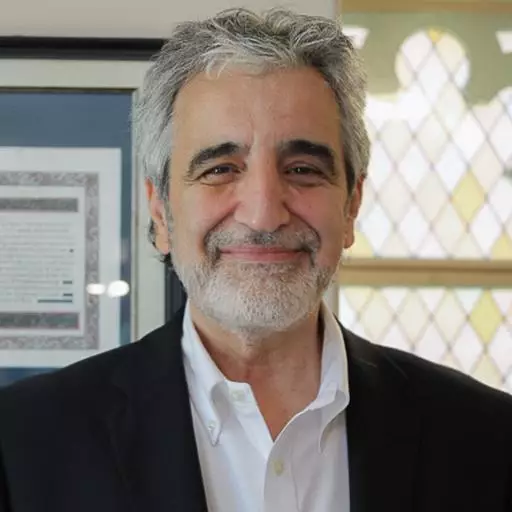
The Book of Daniel, Part 75 & 76


One hundred years ago, many of the prophecies in this book were still obscure. Today as we are approaching the end, they become more understandable just as the angel told the prophet at the end of Daniel, “But you, Daniel, shut up the words and seal the book until the time of the end.” (Daniel 12:2) Daniel’s prophecies provide us with a comprehensive and chronological prophetical view of the broad movement of history, from the Times of the Gentiles to the Messianic Rule of Messiah. It is also thoroughly practical as well. In the harsh environment of the captivity, the faith, prayer life, and the love for God Daniel had still stands today as a great example for us to follow.
Welcome to Shalom Ariel and the continuing study in the Book of Daniel with Messianic leader, Jacques Isaac Gabizon. Be blessed as you listen, shalom.
- Show Name: Messianic Viewpoint
- Episode Title: The Book of Daniel, Part 75 & 76
- Date: 2026-01-02
- Host(s): Jacques Isaac Gabizon
Jacques Isaac Gabizon: The word *Zava* can be translated as well as an army. But this is so fitting with the rest of Daniel where we meet great armies of opposition to the coming of Jesus. And it begins with the most powerful one, the demonic world. This is what Scripture is about to reveal to us.
Guest (Female): Here in chapter 10, we are getting into the conflict of angels and demons, a celestial warfare which we are not given the permission to engage in directly, but we are still given an opportunity to understand that it is taking place. It reminds us of how precious we are in the sight of the Lord and the battle that goes on for the souls of men.
Scripture teaches us that the main objective of demons is to thwart the plan of God and to work against the will of God in the lives of people. We're going to meet some powerful, godly angels in this chapter, and one of them is named Michael, or Michael, which is the Hebrew for "Who is like God?" And what a fitting name that is, for who is like our great and wonderful God?
But consider for a moment how Satan, the former chief cherub, sees God: not as one who is to be adored, exalted, and worshipped, not as one who would humbly question who can be like him, but rather one who says, "I am like him. I am even above him." While fallen angels fight God's angels in the heavenlies for territorial position and dominance, we are also in the midst of this spiritual warfare.
What is our weaponry? The armor of God. And as Daniel was touched directly by the Messiah during one of these visions which he had, so the Lord touches each one of us that we may have the strength to fight the warfare we were designed to fight, always with God by our side. Shalom and welcome to Shalom Ariel as we continue our study in the book of Daniel with Messianic leader Jacques Isaac Gabizon. Be blessed as you listen in, and Shalom.
Jacques Isaac Gabizon: The believers today will not undergo the tribulation or any judgment at all, for Jesus took it all upon himself when he was on the cross. And this may sound complicated, but the message is very simple. It just says that if one accepts Yeshua as his personal Savior, this person will not undergo the judgment. In this sense, Elijah's message is translated into John the Baptist's message. No one needs to go through this seven-year period of time. It won't be a nice time.
These then are the 490 years of Daniel. We are now entering this great chapter of Daniel 10. The first verse, by the way, sets the mood. I will read it from the New American Standard Bible that I put on the screen for you. Look what it says. This is the beginning, by the way, because chapters 10, 11, and 12 are one whole. This is a new vision that he is about to get, and a vision that will tell us a lot about the last seven years that is to come.
It says, "In the third year of Cyrus, king of Persia, a message was revealed to Daniel, who was named Belteshazzar; and the message was true and one of great conflict, but he understood the message and had an understanding of the vision." And so we're here told that Daniel will get yet another message. This message is contained again in the last three chapters of Daniel and one that would be of great conflict.
The Hebrew word *Zava Gadol* has been translated in various ways: "great warfare," "a great task," "a great suffering." Poor Daniel, by the way, he thought the Messianic times were about to be established and he prayed and confessed the sins of Israel at the beginning of chapter 9. But so far, he was told that the Messiah was to die first and the temple was to be destroyed. And now he's told that there will be great conflicts and war to come.
The word *Zava* can be translated as well as an army, like *Jehovah Sebaot*, "army." One rabbinical commentator translated these two words as "the great army." For this is so fitting with the rest of Daniel where we meet great armies of opposition to the coming of Jesus. And it begins with the most powerful one, the demonic world. This is what Scripture is about to reveal to us.
You know, I heard that a few years ago, the Hubble telescope photographed a massive, unseeable star called the Pistol Star. It stands near the center of the Milky Way galaxy. But listen to this: it burns as bright as ten million suns, and they say that its stellar wind is over ten billion times stronger than that of the sun and is as large as the entire space inside the Earth orbit.
However, neither the human eye nor any telescopes can see it because it's shrouded with an impenetrable cloud of cosmic dust. Now the question is raised: where did the scientists get the photograph from? How can they get so close to a bright star which is ten million times that of the sun? In reality, the picture is a computerized generated image based on the measurement of infrared rays, which are not visible to the human eye but are detectable with scientific instruments.
So computers translate these waves into colors and then translate this data to a picture of the biggest star in the galaxy. I just want to tell you, this is what Daniel is about to do for us in the 10th chapter, which is actually our Hubble telescope to the present and to the future. There we will see things that are unseen with the naked eye and with any existing instrument. Science has no idea. Science cannot go there, for it is not even aware of these existences. Only the spirit of God through the Scriptures reveals them to us. Are you ready for a stellar voyage?
Now, before we go into the next verse, there's a strange information in here. We're told that Daniel, whose name was called Belteshazzar—why are we given this information? This is the name that Daniel was given back in chapter 1, in Babylon, over 70 years ago, when he was taken captive. Here he must be 85 years old. But why recall this name since it was long ago and now Daniel is no more under the Babylonian captivity, he's under the Persian captivity?
It's hard to figure out, but there may be a very simple message for us here. First, that he is the one whose name was called Belteshazzar. This forced us to go back in time, and what we consider or discover is that while kingdoms and societies changed, Daniel stayed the same. Maybe that's the message. His faith from the moment of the destruction of the temple in 586 BC and of Jerusalem did not waver at all while he stayed even in captivity.
His situation didn't get worse; it actually improved because we see him grow and grow in faith while the world was getting worse and worse. And second, notice that right after the mention of the name Belteshazzar, we're told that the message was true. The message was true and we can see it in Daniel. No matter what happened—Nebuchadnezzar, Cyrus, Darius, Ahasuerus—they come and go, but God's message remains and so did Daniel's faith. This is why we have the book of Daniel today.
And we need to hear this today. There are so many new theologies in the air and many who leave the faith. Have you noticed that? And as Daniel said, "Forever, O Lord," or David said, "Forever, O Lord, your word is settled in heaven." And he also said, "The entirety of your word is truth, and every one of your righteous judgment endures forever." Psalm 119:160. And when David wrote these things, he did not have the book of Daniel. Imagine if he did. This is one thing we'll ask him in heaven, what he would do. For I don't believe he finished writing the Psalms, by the way.
Let us now read the following verses and try to figure out why Daniel was so sad. I gave you a hint. Let's see what happened. Verse 2 and 3: "So in those days, I, Daniel, was mourning three full weeks. I ate no pleasant food, no meat or wine came to my mouth, nor did I anoint myself at all, till three whole weeks were fulfilled." Why was Daniel mourning? I love this, by the way, because the Bible doesn't tell us. It just states it and you go and figure it out.
The first indication may be found in the first verse. There we are told that it was the third year of Cyrus. And we know by this time the work of rebuilding the temple in Israel had stopped, and this is what must have brought Daniel to mourn. We know that two years before this time, in the first year of Cyrus, the Lord actually moved Cyrus. He even spoke to him to go and rebuild Jerusalem.
We read in Ezra chapter 1: "Now in the first year of Cyrus king of Persia." In verse 2 we read: "Thus says Cyrus king of Persia: All the kingdoms of the earth the Lord God of heaven has given me. And He has commanded me to build Him a house at Jerusalem which is in Judah." See how he recognizes the Lord, which he calls, by the way, by his proper name in the Hebrew. He says that God spoke to him and allowed him so that he can allow the Jews to go back to the land itself.
And in chapter 6 of Ezra, we have a copy of the letter that he issued, even allowing the Jews to take back whatever Nebuchadnezzar has stolen from the temple, and even he ordered the people, the nations to give them money so that they will always have enough for the sacrifices. And then he stopped. What happened? Why did he change his mind so fast? By the way, this is why Daniel mourned. While he had the greatest army in the world, he could not fight the great spiritual battle.
It was too much for him. Later we will read that the demon called the Prince of the Kingdom of Persia—for Cyrus was at the end just a pawn in this war—so he turns against Israel. This sounds so much like the first parable. Remember the first parable of the kingdom given by Jesus? As the seed which represents the word of God is planted, the first one, what happened to it? A bird came, which Jesus identified as the devil. It comes and steals it away before the seed even begins to bear fruits. Has it not happened to you to give the word of God and suddenly the person doesn't remember anymore?
I want to tell you an experience I had. A few months ago, I got a call from an online teacher who's a friend of mine and who had a student who was living in Montreal, for whom he prayed and believed was ready to hear about the Messiah. But his position did not allow him to preach the word or the gospel. He contacted me, and in turn, I contacted this person. In my conversation, I told the person to read Isaiah 53 and to tell me who is the prophet referring to?
After this conversation, I did not hear from this person for many months. Two weeks ago, I got an email. I could not at first figure out who it was, for I'd forgotten. This is what it said. It said to me, "I'm so very busy with my schoolwork and papers. I had no chance to read Isaiah 53. Is it in relation to Messianism that you asked me to read it?" I did not remember, by the way, who it was, but I answered and said that it takes no more than ten minutes to read Isaiah 53 and yes, it's in relation to the Messiah, and this was written 750 years before Jesus came.
Then a day later, I got a phone call, a message telling me that how wonderful this text is and that the person wanted to talk to me. And then I remembered, by the way, who it was. And at the same time, I got an email since I did not take my messages right away. This is what the email says. It says, "Who is the righteous one? Who suffered for our sins? Whose iniquity did he bear?" The person understood the message and was so excited to know about the suffering Messiah.
I answered and explained that this is the Messiah. That the Targum and the Talmud, books that the person was familiar with, also confirms it is the Messiah. And further told the person that I believe it was Yeshua and went on to give more explanation. A day later, I got another email. The person contacted a professor of a certain university who taught that this is not the Messiah of Isaiah 53, but Israel suffering for the sins of the world. And the Messianic Jews were a nuisance to rabbinical Judaism, and that the person didn't want to have anything to do with me. See that this last part happened within 48 hours, from the excitement in discovering a wonderful text of the Bible to a complete shutdown, not only to the Scriptures but also to the Talmud and the Targum who said that this is the Messiah.
Guest (Male): Don't go away. We'll be right back with the second half of our program coming up just after this message.
Guest (Female): As we wind up for the second part of our program today, we would like to remind our listeners how blessed and privileged we feel to be part of your radio day. We pray that the messages you hear will instruct you, edify you, and encourage you to love the Lord more and follow him into obedience in even greater ways. We are all changed by the challenges and transformed by the trials of life, and as we walk them together, we keep looking up to him who is mighty to break down the walls of Jericho that stand before us and to hand over to us the spiritual victories in life.
Yeshua has broken down the greatest barrier, the greatest wall that has separated us from God the Father. Thank you, listeners, for joining us in prayer and in financial support for this ministry. If you have it on your heart to give to this ministry, then you can by logging onto our congregation website at BethAriel.ca. And if God leads you to contribute from the treasures that God has blessed you with for the continuation of this radio ministry, Shalom, Shalom, as we begin part two of today's program.
Jacques Isaac Gabizon: By the way, this is a gift. Daniel needed to see Jesus at this time. It was too much, right? And just before he knew about the demonic world. For here Jesus is no more the prophet, the suffering servant, the baby in the manger. He is the resurrected with all his power.
Guest (Female): If you were to open up an encyclopedia and see the different military uniforms of each country, you would be surprised at the variety, the color, and the camouflage. After all, different countries fight differently. Some ride elephants, some use tanks, some use hard hats, others feather headdresses. Some have swords in their waistbands, others have rifles or machetes. But we do not fight the battle of flesh and blood. We are called to fight in the realm of principalities and powers, and we need God as our defense.
That certain man who appeared before Daniel was the angel of God, the Shekhinah, God's presence, the pre-incarnate Messiah. And look what he wore: linen that the priest would wear. He is, after all, our High Priest. He is our intercessor. And his waist is girded. Yes, he is ready to do service, and his loins are girded with gold. Yes, gold represents a king, wealthy and sovereign, who supplies all our needs. He has the appearance of lightning, and fire is in his eyes. Yes, the omniscience of an all-knowing God will come to our rescue and fight our enemy in advance. His voice is like the multitudes, grand and immense, shattering the enemy's ear but speaking truth to those who love him. This is our Yeshua. He fights our battles and wins our wars. Yeshua is our refuge and strength, a very present help in trouble.
From Psalm 18: "He sent from on high, He took me, He drew me out of many waters. He rescued me from my strong enemy and from those who hated me, for they were too mighty for me. They confronted me in the day of my calamity but the Lord was my support. He brought me out into a broad place; He rescued me because He delighted in me." Welcome to Shalom Ariel and welcome to our continuing study in the book of Daniel with Messianic leader Jacques Isaac Gabizon. Be blessed as you listen in and Shalom.
Jacques Isaac Gabizon: They're understood why Yeshua spoke of this phenomenon right at his first parable of the kingdom. This is what I would call, by the way, the "Cyrus syndrome." He also was very excited that God spoke to him. Did you see this and then change his mind? Jesus says when anyone hears the word of this kingdom and does not understand it, then the wicked one comes and snatches it away and what was sown in his heart. This is he who received the seed by the wayside.
The word "understand," by the way, in the Greek means "to come to agreement," to grab it and to come to agreement. As Jesus says in the same chapter: "Hearing they will hear and understand they will not understand," meaning they didn't want to come to this agreement. And as Jesus spoke of the devil who stole away the word, so the devil's army is uncovered for us in the same chapter, chapter 10 of Daniel.
In fact, the second indication we have to figure out why Daniel was mourning is the period of time of three weeks. Why three weeks? The same amount of time an angel was held by the forces of evil so that the prophecy will not come to Daniel. This is in verse 13. As the angels explain to Daniel why it took time for the prophecy to come. Look at this verse. I'm just going to read it and see it next time more in detail.
It says, "But the prince of the kingdom of Persia withstood me 21 days." That's three weeks. "And behold, Michael, one of the chief princes, came to help me, for I had been left alone there with the king of Persia." You know who's the king of Persia? That was a demon. This verse is out of this world, by the way, and opens up for us a window to the other spiritual dimension out there. But let us follow the text. There is some great information that is given to us before we get to the realm of angels here.
The end of these three weeks is given to us at the beginning of verse 4. Look what it says: "Now on the 24th day of the first month." The first month is that of Nisan, that is and the Passover, by the way, begins on the 14th of Nisan. And it seems that Daniel did not even take part of the Passover, which orders the drinking of wine and having a meal. The pain must have been too great. And while the Passover speaks of the death of the lamb which symbolizes the death of the Messiah, here right at the end of these 21 days of mourning, the resurrected Messiah appears to Daniel. Here Yeshua is no more the Passover, but the Son of Man in all his glory.
Let's read again 4 to 6. It says, "Now on the 24th day of the first month, as I was by the side of the great river, that is the Tigris, I lifted up my eyes and looked and behold, a certain individual clothed in linen, whose waist was girded with gold of Uphaz. His body was like beryl, his face like the appearance of lightning, his eyes like torches of fire, his arms and feet like burnished bronze in color, and the sound of the words like the voice of a multitude."
By the way, this is a gift. Daniel needed to see Jesus at this time. It was too much, right? And just before he knew about the demonic world. In verse 5, we see him dressed in linen of and gold, pure gold. The linen which was worn by the priest reminds us of his priestly office and the gold of his office of king. For here Jesus is no more the prophet, the suffering servant, the baby in the manger. He is the resurrected with all his power.
And how fitting is his appearance at this time. Here his people are under persecution and soon we will read of this demonic world again. But Yeshua is present all the time for his own, especially when they are in conflict. See the description. It's almost, by the way, identical as the one found in Revelation chapter 1, okay, when Jesus appeared to John and also John was going to receive the same type of prophecy as Daniel.
See the chart. Daniel saw the linen and the gold. John saw the Son of Man clothed with a garment down to the feet and girded about the chest with a golden band. As Daniel saw the face like the appearance of lightning, John saw the head and hair were like wool and white as snow. This is, by the way, purity, holiness. This brings us to absolute holiness of the Son of God. Holiness, by the way, is not an attribute of God; it is part of his nature. His holiness is at the forefront of his judgments.
And as Daniel saw the eyes like torches of fire, John saw his eyes like a flame of fire. This is the outflow of holiness, right, as God witnesses of all the evils in this world, and as his patience demands that he waits until sin has reached its completeness. His eyes are nevertheless flaming with fire. Sin, I want to tell you, disturbs him greatly.
As Daniel saw the arms and feet like burnished bronze, John saw the feet like fine brass, as if refined in a furnace. Okay, before we have heard of the blessing of those whose feet bring the good news to the gospel. Here the time of the offer is over, because at some point in time it would stop. And now it is the feet of the one who carries the judgments that is about to enter the Earth.
And as Daniel heard the sound of his words like a voice of a multitude, John heard the voice as the sound of many waters before he gave us the account of the tribulation. Now this is not the Jesus we usually preach, right? Many today are still crucifying Jesus. They're still mistreating Yeshua. But they ought to know that he's not the same today. He's not. Will soon come a time where they will be faced with Yeshua in the way John and Daniel are describing him and maybe, maybe we ought to begin to tell them about who Jesus really looks like.
One last thing about this description. Daniel begins by telling us that his whole body was like beryl. Now that is interesting. What is beryl? Gems from the beryl family come in different colors: the emerald, aquamarine are from the beryl kind. And other stones cover a whole array of colors from red, that is orange, purple, to black and so on. So the translation doesn't tell us anything about the appearance.
The Hebrew word *Tarshish* speaks of one specific color, but we don't know what it is. One reliable source which could tell us the original color is the Midrash Rabbah, a collection of rabbinic commentary on the Torah. As it describes most other colors, but for this one, this is what it says: it says it was like the precious stone which women adorn themselves. I'd love to know which stone was it, right?
However, Pliny, the first-century historian, reports an interesting tradition. He said that *Tarshish* was transparent stone with a brilliance like that of gold. You know, I love this. That fits so well the linen which is white and the gold color. In the overall, the color seems to be white, that of holiness, like the color of purity and with the golden reflection of his kingship.
Now to close, I want to bring you to Daniel's mourning. You know, this is an attribute of a true believer who has reached a high level of sanctification. One who feels the pain of the people he's brought to shepherd or he's brought to teach. Jeremiah, remember, he wept over Jerusalem even though they persecuted him. David says that rivers of tears gush from his eyes, "from my eyes," he says, when he saw that the people he was called to shepherd were not following God.
Paul, remember in Romans 9, he says that, "I wish I could be accursed, anathema, for my people Israel." All these people cried with God and they became his partners. They were so close to him. And by the way, these are not only found in the Scriptures. In history, you find many of these people. To mention only one, you know, I just read it this week. It was Lu-Fook, who was a believer who came to a saving knowledge of Yeshua in China, in Canton, China, in 1861.
You know, he had a fervent heart of compassion for the salvation of the Chinese people who were taken to South America to work in the mines. The problem was how could he find a way to reach them? So he finally found a way. He sold himself into slavery in order to preach the gospel to them. He lived as a slave preaching the Messiah and he worked. He died in a foreign land not until he had won at least 200 souls to Jesus. Isn't that beautiful?
You know, today most of us we don't need to go that far. Look around and see how many do not know Yeshua. Jesus said it, remember, to the disciples: "Behold, I say to you, lift up your eyes and look at the fields, for they are ready white for harvest." Now one last note before we close in prayer. You know yesterday as I finished this study—I didn't want to change it—as I finished this study, I got an email from the same person I told you about before. So this is what that person told me. She says, "I will get back to you next week when I will have time to read the passages. I'm rushing off to my library. Keep well," signed her name.
You know, I want you to pray for her. Pray that the evil one could not and will not remove any blessing that the Lord has placed actually in her heart, because she read Isaiah 53. Isaiah 53 or any part of the gospel cannot leave a person unmoved. And so I'm waiting for her phone call. I will pray a prayer from the Seder Avodah Yisrael, an ancient text recently published. This prayer translates well the great desire of the Jewish people to see their Messiah. Let's bow our heads.
"Avinu Malkeinu, consider our suffering and fight our cause, and redeem us quickly for the sake of thy name. For thou art a powerful Redeemer. Blessed are thou, O Lord, the Redeemer of Israel. Blow the great shofar for our freedom and lift up a banner to gather our exiles and gather us from the four corners of the earth. Blessed are you, O Lord, who gathers the banished of your people. And to Jerusalem, the city, your city, return in compassion and dwell therein as you have spoken and build her soon in our days to stand for all eternity and re-establish in her the throne of David quickly. Blessed are thou, O Lord our God."
And to the congregation, the Lord bless you and keep you. The Lord make his face shine upon you and be gracious to you. The Lord lift up his countenance upon you and give you peace. Amen, amen. May the Lord bless you all.
Guest (Female): Shalom Ariel is a daily radio program emphasizing the Jewish perspective of Scripture. God is not through dealing with Israel, nor will he renege any of the promises he has made to her. Our teacher for this program, Jacques Isaac Gabizon, is a Messianic Jewish believer and Messianic leader at Beth Ariel congregation right here in Montreal. If you've been encouraged by the messages, we'd love to hear from you. Give us a call at 1-888-685-5902 or you may write us at info@bethariel.ca.
You are also welcome to join us for our Saturday morning services. We are located at 6297 Moncland Avenue, corner of Madison in NDG. The message is given in English, but we do offer simultaneous translation into French and Russian. Services begin at 11:00 AM. We have Shabbat school for children of all ages, up to and including teens. You may also download audio messages from our website at bethariel.ca and enjoy other in-depth teaching from Jacques. If you would like to sign up for informative newsletters, log onto our website and add your name to our email list. Shalom Ariel is a listener-supported program. If you have it on your heart to donate, it will be a great blessing for the continuing ministry and outreach of Beth Ariel. Thank you and Shalom, Shalom.
Featured Offer

Prophecies take up about ¼ of the Scriptures so we cannot simply ignore them. Knowing prophecy enables us to give a clear presentation to others of why things unfold the way they do in such areas as politics, morality, technology and global ecological changes. It also helps us to rightly place Israel in God’s prophetic plan.
Past Episodes
- The Armor of God
- The Believers in the End Times
- The Book of Daniel
- The Book of Deuteronomy
- The Book of Ephesians
- The Book of Esther - Purim
- The Book of Exodus
- The Book of Ezekiel
- The Book of Ezra
- The Book of Genesis
- The Book of Hebrews
- The Book of James
- The Book of Jeremiah
- The Book of Joel
- The Book of John
- The Book of Leviticus
- The Book of Numbers
- The Book of Philippians
- The Book of Revelation
- The Book of Romans
- The Book of Ruth
- The Book of Zechariah
- The Feast of Passover
- The Feast of Purim
- The Feast of Shavuot - Pentecost
- The Gospel of Mark
- The Gospel of Matthew
- The Letter to the Galatians
- The Messiah in Isaiah
- The Messiah in the Book of Isaiah
- The Messiah's Prayer
- The Nativity: The Unwrapped Gifts of God
- The Resurrection of the Messiah
- The Sermon on the Mount
- The Tabernacle

Video from Jacques Isaac Gabizon
Featured Offer
Prophecies take up about ¼ of the Scriptures so we cannot simply ignore them. Knowing prophecy enables us to give a clear presentation to others of why things unfold the way they do in such areas as politics, morality, technology and global ecological changes. It also helps us to rightly place Israel in God’s prophetic plan.
About Messianic Viewpoint
About Jacques Isaac Gabizon
Contact Messianic Viewpoint with Jacques Isaac Gabizon
info@bethariel.ca
http://www.bethariel.ca/
Beth Ariel Congregation
CP 46521 CSP Boul. St Jean
Pierrefonds, QC, H9H 5G9
Toll free (888)-685-5902