
Shavuot/ Pentecost, Sermon 2


Shavuot/ Pentecost, Sermon 2
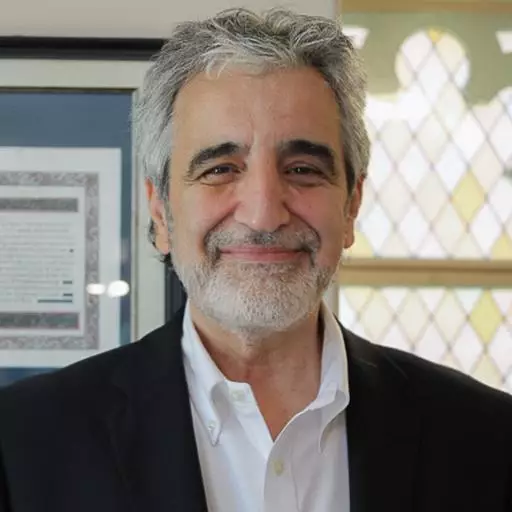
J. Isaac Gabizon
Host (Female): Shalom and welcome to Shalom Ariel, and welcome to the second part of our two-part series on Shavuot with Messianic Leader Jacques Isaac Gabizon. It's quite amazing when we see connections made between what the rabbis have themselves written in the Mishnah or the Talmud and something that comes to pass in the New Testament or the time of the first century.
For example, one of these connections has to do with the crimson tie that was put on the goat and how for centuries at Yom Kippur, this signaled the forgiveness of sin when that ribbon turned white. But as we have heard, the rabbis themselves report in the Mishnah and the Talmud that 40 years before the destruction of the temple, and that brings us back to 30 AD at the time of Yeshua's death and resurrection, that red ribbon stopped turning white.
Can we not say that since the remission and the forgiveness of sins was pointing to Yeshua, the fact that the ribbon did not turn white any longer according to the rabbis should have caused the rabbis and the Jewish people to look elsewhere, or at least to question why such a thing happened at that particular point in time? But there's even more.
We know that at Pentecost in the upper room, there were tongues as a fire that were seen on the disciples, and this caused them to speak in foreign languages. This supernatural gift was meant to evangelize many with the good news. We also know that timewise, Pentecost is very much related back to the time of the giving of the Torah at Sinai.
So we have Sinai and Pentecost around the same time of the year. Now listen to this correlation. Did you know that one of the things that the rabbis note in their writings, and I'm quoting from Rabbi Yochanan from Exodus Rabbah, this is what he teaches, that God's single divine voice divided into 70 distinct languages, one for each of the 70 nations of the world, so that all humanity could understand. He is, of course, speaking of the time of God giving the Torah on Mount Sinai.
Now the sages also link this to Jeremiah 23:29, which says, "Is not my word like fire?" And what we read in the Talmud in Shabbat 88b is that every single word spoken by God at Sinai split into many sparks or languages. Now these sparks give us the picture of sparks of fire. So we see the incredible correlation between Sinai and Acts chapter two.
Now whether this really happened on Sinai we don't know because scripture does not record it. But the fact that these rabbis pictured this event, fire and 70 languages and the fact that all the nations should be hearing this, gives a sure pointing and connection to what happened in Acts chapter two. We often pray for Jewish people to be reading their scriptures to seek the truth about Messiah, but we might also encourage them to look at their own writings as well. Perhaps God has deliberately placed this to be written down so that they would have even more evidence of a connection to Yeshua.
All this to say is that God is so patient and long-suffering. So please keep praying for your Jewish friends and of course for your Gentile friends as well to draw close to the word and to hear his voice above all. Be blessed as you listen to today's message with Messianic Leader Jacques Isaac Gabizon and shalom, shalom.
Jacques Isaac Gabizon: The body of the Messiah, there is a reason behind the significance of Pentecost. That salvation has come into the whole world through the spirit of God who uses men and women to spread his word. Every year then, Shavuot, Pentecost reminds us that the miracle is still continuing. God is still forgiving. God is still filling. God is still sending and God is still using his people to proclaim the good news of redemption in Yeshua the Messiah until he comes back.
This is how wonderfully this feast of Shavuot was fulfilled in Jerusalem, but this is not all at all. For another miracle happened which stamps the works and service of the body of the Messiah. They began to speak with other tongues. The tongues spoken then were known languages, like Italian, Arabic, Spanish, and the reason for this gift was that now the word of God was to be proclaimed again to all the world, over all the world.
This is why the spirit of God takes the time and space in Acts chapter two to list at least 15 different nations from verse nine to 11. Parthians, Medes, the Egyptians, the Romans, people from these places were understanding the language of the believers who were speaking the word of God. This was the revolution of Pentecost. But this was so significant that it was actually the reversal of the curse of Babel.
At the beginning, there was only one language over the whole world, as we read in Genesis chapter 11. But while this should have turned out to be a blessing for all, it proved to be the worst as people began to create new religions to avoid God, the God of the scriptures. This is when they said, "Come, let us build for ourselves a city and a tower whose top will reach the heaven and let us make for ourselves a name."
And this is when they built the tower of Babel. Babel, which means the door of the gods, Bel, the gods they themselves created, not again the God of the Bible himself. And so as an act of grace, God confused their language and they began to speak different languages. And the fact that they did not understand each other saved them for falling together. However, at Pentecost, the curse is removed and they begin to understand each other, for then each one of them was hearing them speak in his own language.
And they were blessed to have experienced the coming of the spirit of God. Today, by the way, this language of redemption continues to reach the world. We do not need to speak every language ourselves, for the word of God, the Bible, has been translated and continues to be translated into countless languages so that people everywhere may read and hear the message of God.
According to the latest reports, the full Bible is available in about 776 languages. That's great. The New Testament in about 1,798 languages and at least some scriptures is available in more than 4,000 languages. Since there are more than 7,000 living languages in the world, we may think there's still so much to do. And the people are hearing it and the Bible is still being translated today to other languages that the people don't know. The work is going on.
And these great wonders at Pentecost also point to a future prophecy given by Jesus himself. This proclamation of the word of God which began at Pentecost will find its most fruitful period during the tribulation time, which is actually very soon. Yeshua said in his end-time prophecies in the book of Matthew chapter 24, verse 14, where he speaks of the condition of the last seven-year tribulation time, that the gospel of the kingdom shall be preached in the whole world as a testimony to all nations, and then the end will come.
There will be a great revival during the tribulation times, so much so that John in Revelation, when he saw the believers who came from the tribulation, in Revelation 7 verse 9, he says, "Behold, a great multitude which no one could count." And so the greatest revival ever in history is about to come, but during the seven-year period with the help, of course, of the 144,000 and the two witnesses. This is to come soon.
Now back in Acts chapter two, see with what excitement this major event is reported to us. In the first 12 verses, we read of four synonyms that tell us how moved and stunned actually the people of Jerusalem were. Verse six, they were bewildered. In Greek, that is they were confused, troubled and filled with perplexity by seeing such wonderful things. Verse seven and 12, we're told that they were amazed. The word is strong. The idea is that they witnessed something out of the ordinary. They were disoriented. This is what it means.
Verse seven, we're also told that they were astonished, from a root word meaning admiration, wonder. And the fourth word in verse 12, we're told that they were perplexed, that is some could not actually believe what they saw. And so to close, one important question naturally arises from the text as you read Acts chapter two, is why were there so many people from different nations gathered at Jerusalem at Pentecost? Why?
Pentecost is one of the three feasts where the Lord ordered every Jew, every Israelite, to be present at the temple. And so at this time, there were hundreds of thousands of people roaming the streets of Jerusalem, and you know the streets in Jerusalem are very narrow. And they were all there. They were coming from all over the Roman Empire. They were following the commandment that is found in Deuteronomy 16:16, where the Lord says, "Three times a year all males shall appear before the Lord your God in the place which he chooses."
In the feast of unleavened bread, the feast of weeks, Pentecost, and the feast of booths, that is Tabernacles. And they shall not appear before the Lord empty-handed. So the Jewish people were commanded to come up to the temple three times a year during the feast of unleavened bread, also called Passover, during Pentecost, and during Tabernacles. But why did God choose these three feasts among the seven feasts of Israel? Why?
First, at the heart of it all is something deeply beautiful. God desires to be with his people all the time. This you see it in the Torah. That's beautiful. Beyond all the theology and symbolism, this has always been one of the great longings of God. Not only to dwell among us, but ultimately to spend eternity with us. This is why he came down to die for our sins.
These feast days were therefore not merely religious obligations, they were sacred moments of fellowship and joy before the Lord. Families would gather together, meals would be shared, and the people would rejoice in the presence of God. In many ways, they were great celebrations in Israel. Even the New Testament practice of the breaking of bread reflects this beautiful pattern. God calling his people to gather together. He wants to be part of your life. He wants to eat with you. He wants to be there. But this still doesn't fully explain why God chose these three particular feasts.
What is remarkable is that these three feasts together point to three major offices and works of the Messiah. At the feast of unleavened bread, Passover, the Messiah came first as a prophet announcing the good news of salvation. Yet like the prophets before him, he was rejected by many, just as Isaiah 53 tells us. But he was the very prophet Moses had spoken when he declared in Deuteronomy 18, "The Lord your God will raise up for you a prophet like me from among you and from your countrymen. You shall listen to him."
And they knew that the coming of the Messiah was called actually a prophet. But both ancient Jewish interpretation and New Testament understood this prophecy to refer to the Messiah. Yeshua fulfilled the prophetic office at his first coming by revealing the word of God and ultimately giving his life for the salvation of humanity. He came as a prophet first.
In the feast of Shavuot, of Pentecost, the Messiah performs his office of high priest. He offered himself as the ultimate sacrifice, the perfect sacrifice after which no others are necessary. After his death and resurrection, he was received up to heaven and sat down at the right hand of God, proving the sacrifice to be perfect and fully accomplished. As explained in many parts of the New Testament, especially in Hebrews chapter one, verse three, when he had by himself purged our sins, he sat down at the right hand of God. This is what he's doing now. He is sitting down at the right hand of God as our lawyer, as our high priest.
And then the feast of Sukkot, of Tabernacle, the last of the seven which symbolizes the messianic times. The Messiah comes back as the King of Kings. This coming very soon, by the way. And especially he's to establish his kingdom on earth. This is the title given him in the second coming in Revelation 17, the lamb who is the Lord of Lords and King of Kings. Amen.
Together, these three dates in Jerusalem for rejoicing with God pointed to the Messiah himself. Furthermore, by the way, one last thing, these three feasts declare to us three major dispensations or eras of time. One is past, one is ongoing, the other one is future. At the feast of Passover, God appeared on Mount Sinai to give the Mosaic law, this time the dispensation of the law.
The feast of Pentecost, what we're doing today actually, his spirit came on the Mount of Olives to establish the dispensation of grace. And at the feast of Tabernacles, the Messiah comes back on the same mountain to establish the kingdom of God itself. One very last thing, I know that my conclusions are very long, but one very last thing. After this great event in Acts two, we read of a great miracle. That 3,000 people actually were baptized that very day. That's a great miracle. Amen.
But there's a beauty in there. Just as the speaking of tongues reversed the confusion of the language of Babel, these 3,000 souls also became a sign of grace. Back in the book of Exodus chapter 32, when the law was given and Israel fell into idolatry with the golden calf, how many people died? 3,000 people.
But now through the Messiah, grace has come. At Sinai, 3,000 perished under judgment. And you know what? When you read rabbinical commentary on this part, they're silent about it. They even jump the passage because it is hard. It is difficult. And so at Sinai, 3,000 perished under judgment. At Pentecost, 3,000 were brought to life through salvation.
What a beautiful picture of the New Testament. The law reveals sin, but the spirit brings new life. And where judgment once fell, grace now overflowed through Yeshua Hamashiach. That's the message of Pentecost. And so as we celebrate Shavuot today, we are reminded that we are part of a story that is greater than ourselves. It's beautiful, by the way.
From Sinai to Jerusalem. From Babel to Pentecost. From Abraham to the Davidic throne. From the upper room to the ends of the earth, God has been unfolding his plan of redemption through Yeshua himself. The spirit who came upon the believers in Acts two still is working today. And if you don't know him, if you don't know Yeshua, accept him as your personal savior and you will feel that great spirit of God, the Ruach Hakodesh, come upon you and you will know that you will have eternal salvation.
So until that day when he comes back, may we continue to walk in the power of the spirit. And so let's bow our head in prayer for now. Heavenly Father, we are so blessed to see how you move so graciously through the feast of Israel to reveal the great grace we have in Yeshua. Allow us to enshrine this teaching in our hearts so we can always remember that you are with us always. Even when we do not see you, your sovereignty is an anchor for us. As King Solomon once said, not even the heaven of the heaven of the heavens can contain you. Yet you listen to the prayers of your servants who pray before you day and night. And so Lord, we at this time bring to your throne all these children of yours who are about to proclaim that Yeshua, that Jehovah actually is the alpha and the omega and that you are the only true God. Bless them and render unto them the action of faith they're about to demonstrate. And to the congregation, the Lord bless you and keep you. The Lord make his face shine upon you and be gracious to you. The Lord lift up his countenance upon you and give you peace. Amen and amen.
Host (Female): Welcome to this segment of our program called Q&A with Messianic Leader Jacques Isaac Gabizon. And today's question is a controversial and deep one. How could God allow the killing of men, women, children, and babes when the order was to go in and destroy the Amalekites? Let's tune in and find out.
Shalom. Can you explain how God could have ordered the Israelites to go and kill women and babies, as we read in the following account in 1 Samuel 15:3, which says, "Now go and attack Amalek and utterly destroy all that they have and do not spare them, but kill both man and woman, infant and nursing child, ox and sheep, camel and donkey."
Jacques Isaac Gabizon: This is indeed a very difficult and disturbing verse from our Bible. Before looking at this passage, let us remember that man has done and still is doing this very thing which continues since the birth of civilization. For instance, when the Nazis bombed London in World War II, they killed infants and nursing children. When in return the British bombed Berlin, they also killed infants and nursing children.
And just this morning, I read of the ongoing war in Ethiopia between faction groups. The headline says that this war is marked by extreme brutality from all sides, brutality against civilians. So while we might say that this type of warfare typifies the secular world's interpretations of the value of life, how can we as God-fearers reconcile doing that same thing?
As for God, let me tell you the Bible is clear in that he does not take pleasure in the death of anyone at all. He says in Ezekiel 33:11, "I have no pleasure in the death of the wicked, but that the wicked turn from his way and live, live, eternally live." We also read that there's no darkness at all in him. So why was he then compelled to give such a harsh command on the Amalekites? How can we understand this?
Our question may indicate that we perhaps have not yet realized the gravity of sin and its consequences. Did God order the annihilation of a people perhaps to remind us that with time sin accumulates to such a degree that he is compelled to wipe it out? In fact, this is what he will do at the end of time in order for sin to be completely eradicated.
The answer may very well lie in the nature of God. He is perfect and just and good, but he cannot let sin go unpunished. And so the biblical perspective brings us to redirect our disgust for sin to ourselves really when we encounter such things, and not to God because he is the righteous judge who is very patient. The Amalekites, along with the other Canaanites, were given 400 years to repent and change, but they did not, and sin reached its point of no return.
And one thing is for sure when we read this account, God means what he says. When he mentions judgment, when he mentions hell, he means it. Eight times in the Bible we read that God is a consuming fire. In Exodus two times, Deuteronomy two times, in Isaiah four times, and also in the New Testament in the book of Hebrews. God is just and holy and very patient, but let us remember he will not tolerate sin for long.
Perhaps it is because we have not emphasized this side of justice that we are offended by the death of so many, when in fact it's not God's fault, but that of evil. We are to turn the mirror around and also look at ourselves. God is just again and holy and very patient, but let us remember he will not again tolerate sin for long.
As for the children, the infants, now this is difficult, but I take refuge in the belief and conviction that all children go to heaven even though we are all born sinners. And I'm not going to let my ignorance of the subjects disturb me, for I trust God. And we can say along with Abraham, before arguing with God concerning Sodom and Gomorrah, this is what he said, "Shall not the judge of all the earth do right?" Genesis 18:25. Yes, he will, for he is a righteous God.
And why the Amalekites and not the others really? In fact, the Israelites did let go many other nations, and others actually did stay with them. First, let us see how the Bible describes the Amalekites. They are shown to be a hardened and incurable ones really, perhaps the most deprived and delinquent group of people in the Bible. A righteous judge cannot tolerate their presence forever, even though God did for a long time.
Furthermore, the scriptures show that there is a great spiritual dimension to the hatred which inhabited these people. While today the Amalekites have disappeared, they are still mentioned to play a major role in the end-time prophecies. They have disappeared, but not their hatred, which is among what God calls the eternal hatred.
David mentions them in Psalm 83:7 as among those who will invade Israel in the end times before the second coming of the Messiah. And among with those are those who are surrounding Israel in the present-day Israel, Edom, Moab, Ammon, which is Jordan and the West Bank, Philistia, which represents the Gaza Strip along with Tyre, Lebanon. It says Tyre, and a special mention of Assyria, which represents Iran.
But from the beginning, we see the Amalekites also attacking Israel on their way to the promised land. From that time up to the end of time, they are present. And when they attacked Israel for the first time, it was for no reason. It wasn't a case of self-defense, of defending their own land, it was driven by evil. And in Bible history, we see them all over the land of Israel. They never had a set territory.
While the other 30 or so nations that were settled in Israel before the Jews came were mostly in one territory, the Amalekites moved all around. We see them in Numbers 13:29 dwelling in the land of the south. They moved up from the wilderness in Egypt. We find them in Numbers 13:29 dwelling in the land of the south, then they moved up from the wilderness of Egypt even higher up and so on and so forth.
The Amalekite reminds us that sin at the end is intolerable to God. While they very much mirror evil, they stand as a warning for all who do not take sin seriously. I will end with a powerful verse seen in John 3:18. We are all familiar with John 3:16 which offers salvation to all who repent and come to God, but see the other side of the coin. It says, "He who believes in him is not judged. He who does not believe has already been judged because he has not believed in the name of the only begotten son of God who is Yeshua." What happened to the Amalekite is really the natural outcome of sin, and this is why Jesus came to save us.
Host (Female): Shalom Ariel is a daily radio program emphasizing the Jewish perspective of scripture. God is not through dealing with Israel, nor will he renege any of the promises he has made to her. Our teacher for this program, Jacques Isaac Gabizon, is a messianic Jewish believer and messianic leader at Beth Ariel congregation right here in Montreal.
If you've been encouraged by the messages, we'd love to hear from you. Give us a call at 1-888-685-5902 or you may write us at info@bethariel.ca, B-E-T-H-A-R-I-E-L all one word, .ca. You are also welcome to join us for our Saturday morning services. We are located at 6297 Monland Boulevard, corner of Madison in NDG. The message is given in English, but we do offer simultaneous translation into French. Services begin at 11:00 AM. We have Shabbat school for children of all ages up to and including teens. You may also download audio messages from our website at bethariel.ca and enjoy other in-depth teaching from Jacques Isaac.
If you would like to sign up for informative newsletters, log on to our website and add your name to our email list. Shalom Ariel is a listener-supported program. If you have it on your heart to donate, it will be a great blessing for the continuing ministry and outreach of Beth Ariel. Thank you and shalom, shalom.
Featured Offer

Prophecies take up about ¼ of the Scriptures so we cannot simply ignore them. Knowing prophecy enables us to give a clear presentation to others of why things unfold the way they do in such areas as politics, morality, technology and global ecological changes. It also helps us to rightly place Israel in God’s prophetic plan.
Past Episodes
- The Armor of God
- The Believers in the End Times
- The Book of Daniel
- The Book of Deuteronomy
- The Book of Ephesians
- The Book of Esther - Purim
- The Book of Exodus
- The Book of Ezekiel
- The Book of Ezra
- The Book of Genesis
- The Book of Hebrews
- The Book of James
- The Book of Jeremiah
- The Book of Joel
- The Book of John
- The Book of Leviticus
- The Book of Numbers
- The Book of Philippians
- The Book of Revelation
- The Book of Romans
- The Book of Ruth
- The Book of Zechariah
- The Feast of Passover
- The Feast of Purim
- The Feast of Shavuot - Pentecost
- The Gospel of Mark
- The Gospel of Matthew
- The Letter to the Galatians
- The Messiah in Isaiah
- The Messiah in the Book of Isaiah
- The Messiah's Prayer
- The Nativity: The Unwrapped Gifts of God
- The Resurrection of the Messiah
- The Sermon on the Mount
- The Tabernacle

Video from Jacques Isaac Gabizon
Featured Offer
Prophecies take up about ¼ of the Scriptures so we cannot simply ignore them. Knowing prophecy enables us to give a clear presentation to others of why things unfold the way they do in such areas as politics, morality, technology and global ecological changes. It also helps us to rightly place Israel in God’s prophetic plan.
About Messianic Viewpoint
About Jacques Isaac Gabizon
Contact Messianic Viewpoint with Jacques Isaac Gabizon
info@bethariel.ca
http://www.bethariel.ca/
Beth Ariel Congregation
CP 46521 CSP Boul. St Jean
Pierrefonds, QC, H9H 5G9
Toll free (888)-685-5902