
Shavuot/ Pentecost, Sermon 1


Shavuot/ Pentecost, Sermon 1
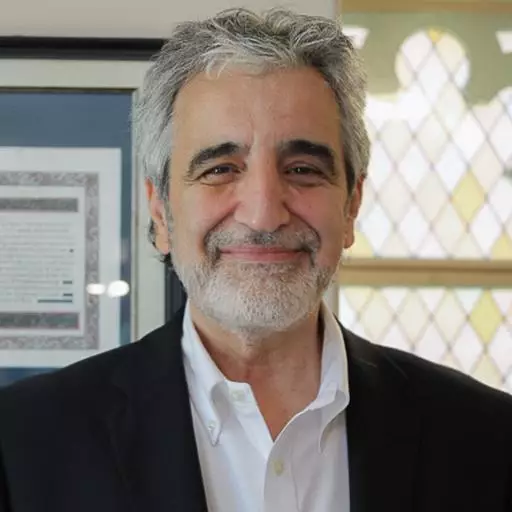
J. Isaac Gabizon
Guest (Female): Shalom and welcome to Shalom Ariel and welcome to this special two-part series on the biblical feast of Shavuot, also known as Feast of Weeks or Pentecost. Shavuot falls out 50 days after the start of Passover, and this year, it fell out on the eve of May 21st, which was Thursday night, and it ended Saturday evening, some 48 hours later.
And since this holiday is associated with Pentecost, and since Pentecost is the birth of the Church of Messiah, we can in fact have wished each other happy birthday on that day. Not to one special person, but to a people all belonging to the Messiah, and there must be millions of us in the world today. So happy birthday, Church of Messiah.
In today's message, we're going to hear about what happened in that upper room some 2,000 years ago. We are going to celebrate Yeshua's prophecy that after he leaves the disciples, the Spirit would come and indwell them. That was the promise.
In John 14, Yeshua says he and the Father will make their home in anyone who loves and keeps his word. Something amazing is happening here. We see a real shift in the relationship between God and his people.
You see, in the Tanakh, God's presence is identified with a physical building such as a tabernacle or the temple. But now that the Spirit indwells us, we have become the living habitation of God.
And what we see here is God's heart and his desire to dwell intimately and permanently among his own. But we need to keep the temple clean, don't we? Pursue holiness and allow the radiance of God to shine through us so as to give others a chance to see God's love and grace.
We need to let the Word of Messiah dwell in us richly, as the scriptures say. We need to make the Lord the center of our lives, the heartbeat of our temple. Remember, we are no longer just sitting spectators in a sanctuary, but now we have become the sanctuary itself.
We are the body of the Messiah, and each one of us is like a bone in the body. If the bones don't cooperate with each other, the body cannot move. So how do we build and maintain the body? We make every effort to keep the unity of the Spirit in the bond of peace.
Jews in the body stay Jewish. Gentiles remain gentiles, and neither group is allowed to claim superiority over the other. We cannot afford that kind of division.
So let's overcome traditional and cultural barriers that have kept us apart. We all stand before him by grace. Let's learn to love one another and show the world that God's united kingdom is greater than any human division. Be blessed as you listen into today's message, the first of our two-part series on Shavuot with Messianic leader Jacques Isaac Gabizon. Shalom, shalom.
Jacques Isaac Gabizon: So Chag Sameach everyone, and in a very real sense, happy birthday everyone. Every birthday marks a beginning, but today we're not celebrating the birth of one person in particular. We're celebrating the birth of a people, a spirit-filled people born through the risen Messiah and sent into the world to carry God's blessings to the nation.
Today we are celebrating Shavuot, also known as Pentecost, the birthday of the body of the Messiah, that is the birthday of the church, the birthday of the congregation of God. And how fitting that on this special day we will crown our service with baptisms, for Shavuot is about life, new life, dedicated life, transformed life, and spirit-filled life.
Now, how did Shavuot happen? You know that nearly 2,000 years ago in Jerusalem, about 120 Jewish believers in Yeshua, including the twelve apostles, gathered together when God's promise came upon them. On that day, the Ruach HaKodesh, that is the Holy Spirit, was poured out and the body of the Messiah was born.
And this was not an isolated event. It was the fulfillment of a promise of God that he made long ago to Abraham in Genesis chapter 12, where he says, "In you all the families of the earth shall be blessed." On Shavuot, that promise began to move outward with new power from Israel through the Messiah and by the Spirit. The blessing of God began to reach all the nations of the world.
And on that day, God formed something new, a unique community of men, women, and children united in the Messiah. It was unlike anything seen before. This new congregation would cross borders, cultures, languages, and nations. It would transform lives, bless neighbors, care for the poor, forgive enemies, and proclaim salvation in Jesus, in Yeshua HaMashiach.
From this very beginning, the body of the Messiah actually amazed the world. Even one of Christianity's early critics, Lucian of Samosata, writing in the second century, could not ignore the remarkable love among believers. Though he wrote with sarcasm, he admitted, "It is incredible to see the fervor with which the people of that religion help each other. They spare nothing. Their first legislator has put it into their heads that they are brothers."
That is quite a compliment from someone who did not believe in Yeshua. What made it possible? It was not merely human kindness. It was not a new philosophy. It was not a social program. It was the Spirit of God, the Spirit of love, dwelling permanently in believers just as the prophets had promised. And this was one of Shavuot's great wonders.
God was no longer seen indwelling only in one city or in one temple or one sacred place. From that moment on, his presence will be seen in the lives of the people, men and women from every nation who are covered by the atoning death of the Messiah whom they follow. And the miracle I want to tell you is still unfolding.
And the best part of this, again, is that the celebration is not over. The body of the Messiah is still thriving, the Spirit is still working, the gospel is still going forth. And you and I are part of it. This is the beauty of it. That is what Pentecost, Shavuot, is. It is the outcome of the death and resurrection of the Messiah.
If you see a chart, Pentecost is the fourth feast, the last of the spring feasts, and points us to the first coming of the Messiah. Passover speaks of the death of the Messiah, the Lamb of God. Unleavened Bread speaks of his burial and holiness because he had no sin, like Isaiah 53 tells us. Firstfruits speaks of his resurrection, and Shavuot shows us the result of that resurrection, that is the birth of a spirit-filled people.
So the body of the Messiah is in a very real sense the firstfruits of the risen Messiah, the living evidence that he is alive and his Spirit has come and his work continues through his people today. And now today, even now by the way, in synagogues around the world, they're celebrating this feast with great joy.
They decorate their synagogues with greeneries and flowers just like we have today because they believe the Mosaic law was given on that day. Many spend an entire night studying the Torah as the tradition called the Night of the Reading of the Scriptures. And this, by the way, happened last Thursday. You know, the Jewish people stayed in the synagogue and read the Talmud especially the whole night.
During the temple period at Shavuot, Jews came from all over the world to offer the best of their firstfruits and crops to God. At this season of the year, they especially offered wheat, wheat considered the finest grain. This is why the feast is also called the Firstfruits of the Wheat Harvest in the book of Exodus.
In the scriptures, wheat became a symbol of believers. The Hebrew word for wheat is Chittah, related to the root meaning to mature, to grow. As the grain develops and ripens from an ear to wheat, so wheat therefore pictures the believer who is continually growing and maturing spiritually.
And in the book of Song of Songs, the bridegroom says to his beloved, "Your waist is a heap of wheat fenced about with lilies." Today, this is not the kind of compliment a husband should give to his wife. If he compared her to a heap of wheat, he might quickly find himself in trouble. But in the ancient world, this was actually a beautiful compliment.
Wheat symbolized abundance, symbolized beauty, nourishment, and blessing. Ancient rabbis even saw the heap of wheat as a picture of the words that we have in our Bible, in the Torah. And with this fulfillment of Pentecost, this heap of wheat also came to symbolize believers spreading, speaking, reflecting the Word of God to the nations, to the people around us.
Yeshua, Jesus, used the same imagery in the parable of the wheat and the tares, where the wheat represents believers called to receive, share, and proclaim the Word of God among the nations. In the parable, Yeshua is the one who sows the good seed in the field in Matthew 13:24. He is also the one who watches over the wheat and in the end gathers it into his barn.
Just as God viewed the faithful remnant of Israel as a heap of wheat gathered into his treasury, so Yeshua will gather all true believers from all nations into his barn when he comes back. So Pentecost celebrates the coming of another group who would join Israel in spreading the Word of God. By the way, this is new in the scriptures: the remnant from the Gentiles, from the nations of the world.
We also remember a unique offering presented in the temple during Shavuot: two loaves of bread, just like we have it right here, with leaven. So the high priest will take the bread and will wave it before or above the altar. This was the only feast of the Lord in which leaven actually was accepted as a wave offering.
So Pentecost is the outcome of Passover. And if leaven—the leaven, by the way, in the scripture is a symbol of sin—if leaven is accepted, it points to the Messiah who bore sin, died and rose, so that believers may now be accepted before the throne of God in the name of Yeshua.
These two loaves also lead us to consider the two main groups again that form the body of the Messiah, and this is important: Jews and Gentiles, just like we are here at Beth Ariel, Jews and Gentiles together worshiping one God. Pentecost celebrates this union, bringing together these Jews and Gentiles, once divided, into one spirit-filled body in Yeshua as we are today.
So the two loaves actually beautifully illustrate what Paul says in the in Ephesians chapter 2, and he explains it: verses 11 to 16 when describing the true church of God. There, speaking to the Gentile, he says, "Therefore remember that you, once Gentile in the flesh, that at one time you were without Christ, being alien from the commonwealth of Israel and strangers from the covenants of promise, having no hope and without God in the world."
This is the moment when a remnant of the nations came to join the remnant of Israel to compose the church, the true church of God as we have it in the scriptures. It is in this letter that this union of all people under Yeshua brought Paul to speak of a strong bond of unity between the people and the ekklesia, that is the ekklesia of God, with God of course.
This is what he says. I want to read this together, Ephesians chapter 4, 4 to 6: "There is one body, one spirit, just as you were called in one hope of your calling, one Lord, one faith, one baptism, one God, one and Father of our all, who is above all and through all and in you all." Notice the seven elements here. Seven, we remember, is the number of spiritual perfection and completeness. And this is attained in the love and unity of believers as they reflect the Messiah.
We can see this in the form of a menorah, just like you have it right here. The menorah at the temple was fed by oil, a symbol of the Holy Spirit who now resides in the believers. And for the believer, the menorah speaks of our work and service that we render back to God, that is our part in the deal, as we are all under one Lord, one God, one Spirit which keeps us in one body through one baptism and which gives us one faith and one hope.
This is what Shavuot is in seven steps. Salvation then is free. If you accept the Lord Yeshua as your personal savior, you have eternal salvation. But when we possess it, its power will drive us to want to share it with others. And something, I want to tell you something truly extraordinary happened in Jerusalem in the first century at the time of Shavuot.
It was then that this feast was fulfilled for the first time. The account is found in Acts chapter 2. You can open up your scriptures there or just follow through the screen because we're going to read some very crucial verses that would explain actually our position in the world. See how extraordinary the events of Shavuot are in Acts 2 verses 1 to 4.
It says, "When the day of Pentecost had fully come, they were all with one accord in one place." Notice the Greek word indicating the full realization of the feast of Shavuot. The words "when the day of Pentecost had fully come." The word "had fully come" is just one word in Greek. It means fully accomplished.
This was the moment when Shavuot, first given through Moses 1,500 years earlier, was finally fulfilled in its fullness so to speak. "And suddenly," the word says, "there came a sound from heaven as of a rushing mighty wind and it filled the whole house where they were sitting. Then there appeared to them divided tongues as of fire, and one sat upon each one of them. And they were all filled with the Holy Spirit and began to speak with other tongues as the Spirit gave them utterance."
But what were these tongues of fire that came upon each believer there in Acts 2? And what meaning might they have carried for the Jewish people actually gathered in Jerusalem? What did they understand from that? There is a beautiful truth behind these tongues of fire. To us the phrase may sound unusual, but to many Jews at that time, the image of a tongue is connected with atonement, with forgiveness, with the coming of the Holy Spirit.
In the rabbinic writings concerning another feast called the Day of Atonement, Yom Kippur, we read about the crimson strip of wool called Lashon Shel Zehorit, literally a crimson tongue. The word Lashon means tongue actually. So this crimson strip was tied at the head of a scapegoat sent into the wilderness on the Day of Atonement, the feast of Yom Kippur.
And when the goat reached the wilderness, the thread turned white, symbolizing the removal of Israel's sin based on Isaiah 1:18 where God said, "Though your sin are like scarlet, they shall be as white as snow." This tradition, by the way, appears in the book of Yoma. This, by the way, is from them. It's not from us. This is recorded in their own Talmud.
The image was powerful: a crimson tongue connected with sin, atonement, forgiveness, and freedom. The red strip represented guilt and sin. When it turned white, it became a sign of cleansing and acceptance before God. And then the Talmud—and listen to this—also records something remarkable.
It says that during 40 years, at the time of 40 years before the destruction of the temple, the crimson strip no longer turned white. But 40 years before the destruction of the temple brings us to 30 AD, the year associated with the death and resurrection of Jesus Christ of Nazareth. The timing is striking.
As we learn in Acts 2, that same year at Pentecost, in the year that Yeshua died and resurrected, we read this powerful sign: the tongues of fire coming to rest on the people. Same name, same appellation, the same red ribbon. This time, not a crimson tongue tied to a goat, not a strip attached at the temple door—because this is what they used to do as well—but tongues of fire resting upon the believers themselves.
This is how they describe the coming of the Holy Spirit of God to mark a new dispensation. This is deeply significant. On the Day of Atonement, the crimson tongue pointed to humanity's need for forgiveness. At Pentecost, the tongues of fire pointed to the coming of the Ruach HaKodesh. It signified that redemption has been accomplished in the Messiah and that God was forming a new body, the body of the Messiah.
There is the reason behind the significance of Pentecost: that salvation has come unto the whole world through the Spirit of God who uses men and women to spread his word. Every year then, Shavuot, Pentecost, reminds us that the miracle is still continuing. God is still forgiving. God is still filling. God is still sending and God is still using his people to proclaim the good news of redemption in Yeshua the Messiah until he comes back.
This is how wonderfully this feast of Shavuot was fulfilled in Jerusalem. But this is not all at all. For another miracle happened which stems the works and service of the body of the Messiah: they began to speak with other tongues. The tongues spoken then were known languages like Italian, Arabic, Spanish.
And the reason for this gift was that now the Word of God was to be proclaimed again to all the world, over all the world. This is why the Spirit of God takes the time and space in Acts chapter 2 to list at least 15 different nations from verse 9 to 11: Parthians, Medes, the Egyptian, the Romans. People from these places were understanding the language of the believers who were speaking the Word of God.
This was the revolution of Pentecost. But this was so significance that it was actually the reversal of the curse of Babel. At the beginning, there was only one language over the whole world as we read in Genesis chapter 11. But while this should have turned out to be a blessing for all, it proved to be the worst as people began to create new religions to avoid God, the God of the scriptures.
This is when they said, "Come, let us build for ourselves a city and a tower whose top will reach the heaven and let us make for ourselves a name." And this is when they built the Tower of Babel. Babel, which means the door of the gods, Bab-El. The gods they themselves created, not again the God of the Bible himself.
And so as an act of grace, God confused their language and they began to speak different languages. And the fact that they did not understand each other saved them from falling together. However, at Pentecost, the curse is removed and they begin to understand each other, for then each one of them was hearing them speak in his own language.
And they were blessed to have experienced the coming of the Spirit of God. Today, by the way, this language of redemption continues to reach the world. We do not need to speak every language ourselves, for the Word of God, the Bible, has been translated and continues to be translated into countless languages so that people everywhere may read and hear the message of God.
You know, according to the latest reports, the full Bible is available in about 776 languages. That's great. The New Testament in about 1,798 languages. And at least some scripture is available in more than 4,000 languages. Since there are more than 7,000 living languages in the world, we may think there's still so much to do.
And the people are hearing it, and the Bible is still being translated today to other languages that the people don't know. The work is going on. And these great wonders at Pentecost also point to a future prophecy given by Jesus himself. This proclamation of the Word of God which began at Pentecost will find its most fruitful period during the tribulation time, which is actually very soon.
Yeshua said in his end-time prophecies in the book of Matthew chapter 24 verse 14, where he speaks of the condition of the last seven-year tribulation time, that "the gospel of the kingdom shall be preached in the whole world as a testimony to all nations and then the end will come." There will be a great revival during the tribulation times.
So much so that John in Revelation, when he saw the believers, by the way, who came from the tribulation in Revelation 7 verse 9, he says, "Behold a great multitude which no one could count." And so the greatest revival ever in history is about to come, but during the seven-year period with the help of course of the 144,000 and the two witnesses. This is to come soon.
Now back in Acts chapter 2. See with what excitement this major event is reported to us. In the first 12 verses, we read of four synonyms that tell us how moved and stunned actually the people of Jerusalem were. Verse 6: they were bewildered. In Greek, that is they're confused, troubled, and filled with perplexity by seeing such wonderful things.
Verse 7 and 12: we're told that they were amazed. The word is strong. The idea is that they witness something out of the ordinary. They were disoriented. This is what it means. Verse 7: we're also told that they were astonished, from a root word meaning admiration, wonder. And the fourth word in verse 12: we're told that they were perplexed, right? That is, some could not actually believe what they saw.
And so to close, one important question naturally arises from the text as you read Acts chapter 2: is why were there so many people from different nation gathered in Jerusalem at Pentecost? Why? Pentecost is one of the three feasts where the Lord ordered every Jew, every Israelite, to be present at the temple.
And so at this time, there were hundreds of thousands of people roaming the streets of Jerusalem—and you know the streets in Jerusalem are very narrow—and they were all there. They're coming from all over the Roman Empire. They were following the commandment that is found in Deuteronomy 16:16, where the Lord says, "Three times a year all male shall appear before the Lord your God in the place which he chooses: in the Feast of Unleavened Bread, the Feast of Weeks, Pentecost, and the Feast of Booth, that is Tabernacle, and they shall not appear before the Lord empty-handed."
So the Jewish people were commanded to come up to the temple three times a year during the Feast of Unleavened Bread, also called Passover, during Pentecost, and during Tabernacles. But why did God choose these three feasts among the seven feasts of Israel? Why?
Guest (Male): Shalom Ariel is a daily radio program emphasizing the Jewish perspective of Scripture. God is not through dealing with Israel, nor will he renege any of the promises he has made to her. Our teacher for this program, Jacques Isaac Gabizon, is a Messianic Jewish believer and Messianic leader at Beth Ariel congregation right here in Montreal.
If you've been encouraged by the messages, we'd love to hear from you. Give us a call at 1-888-685-5902 or you may write us at info@bethariel.ca. You are also welcome to join us for our Saturday morning services. We are located at 6297 Monkland Boulevard, corner of Madison in NDG.
The message is given in English, but we do offer simultaneous translation into French. Services begin at 11:00 AM. We have Shabbat school for children of all ages up to and including teens. You may also download audio messages from our website at bethariel.ca and enjoy other in-depth teaching from Jacques Isaac.
If you would like to sign up for informative newsletters, log on to our website and add your name to our email list. Shalom Ariel is a listener-supported program. If you have it on your heart to donate, it will be a great blessing for the continuing ministry and outreach of Beth Ariel. Thank you and shalom, shalom.
Featured Offer
Prophecies take up about ¼ of the Scriptures so we cannot simply ignore them. Knowing prophecy enables us to give a clear presentation to others of why things unfold the way they do in such areas as politics, morality, technology and global ecological changes. It also helps us to rightly place Israel in God’s prophetic plan.
Past Episodes
- The Armor of God
- The Believers in the End Times
- The Book of Daniel
- The Book of Deuteronomy
- The Book of Ephesians
- The Book of Esther - Purim
- The Book of Exodus
- The Book of Ezekiel
- The Book of Ezra
- The Book of Genesis
- The Book of Hebrews
- The Book of James
- The Book of Jeremiah
- The Book of Joel
- The Book of John
- The Book of Leviticus
- The Book of Numbers
- The Book of Philippians
- The Book of Revelation
- The Book of Romans
- The Book of Ruth
- The Book of Zechariah
- The Feast of Passover
- The Feast of Purim
- The Feast of Shavuot - Pentecost
- The Gospel of Mark
- The Gospel of Matthew
- The Letter to the Galatians
- The Messiah in Isaiah
- The Messiah in the Book of Isaiah
- The Messiah's Prayer
- The Nativity: The Unwrapped Gifts of God
- The Resurrection of the Messiah
- The Sermon on the Mount
- The Tabernacle

Video from Jacques Isaac Gabizon
Featured Offer
Prophecies take up about ¼ of the Scriptures so we cannot simply ignore them. Knowing prophecy enables us to give a clear presentation to others of why things unfold the way they do in such areas as politics, morality, technology and global ecological changes. It also helps us to rightly place Israel in God’s prophetic plan.
About Messianic Viewpoint
About Jacques Isaac Gabizon
Contact Messianic Viewpoint with Jacques Isaac Gabizon
info@bethariel.ca
http://www.bethariel.ca/
Beth Ariel Congregation
CP 46521 CSP Boul. St Jean
Pierrefonds, QC, H9H 5G9
Toll free (888)-685-5902