
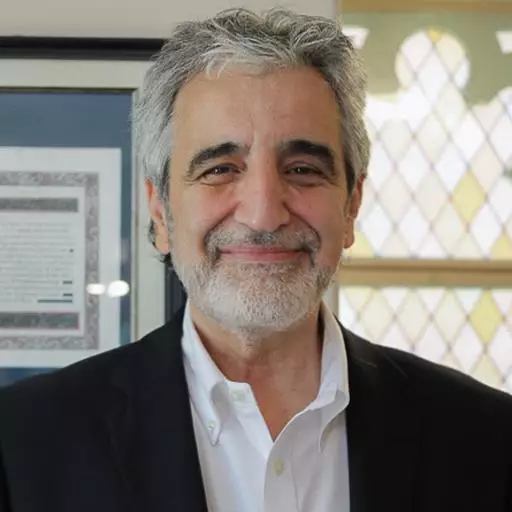
Letter to the Hebrews - Part 9


Letter to the Hebrews - Part 9
with Messianic Leader J. Isaac Gabizon
https://bethariel.ca/
Guest (Male): And it is right after this verse where the spirit speaks of rebellion, of unbelief which closes the door to the rest in God. Both cannot exist. Here is lesson number one: Unbelief leads to rebellion, which makes our rest impossible.
We live in a fast-paced world, and there often seems to be little time to rest. While some of us are blessed to be able to take a two or three-week vacation in the course of a year, the kind of rest which God is inviting us into stretches over a lifetime and includes all times of our lives, every day, not just holiday weeks.
Some of us have paid dearly to get some kind of rest through prescription medication, through psychiatry or psychology, through the many self-help books which apparently direct us toward a realm of rest. But no matter how much we pay and sometimes how much we pray for it, we still don't get it. What then is the solution?
First, let's realize that this kind of rest is being offered every day. The book of Hebrews says, "Oh today, if you will listen to what He speaks." Secondly, you need to enter into this rest by faith, not by works, not by wages. You cannot earn this rest. This source of rest is God Himself.
God Himself rested from His work of repairing the world that was plagued by Tohu va-Vohu, darkness and void. Actually, it was a fallen world He was repairing. Then God rested on the seventh day. When we rest in Him, we rest in His reparations in our lives. We rest in His restoration in our life, His peace, His renewing us. We rest from sin and we enter into the rest He provided through Yeshua's work.
We rest from our works and often futile works of labor into the greatest labor of love provided for us: Yeshua's sacrifice, which gives us eternal rest. Welcome to Shalom Ariel and welcome to our continuing study in the book of Hebrews with Messianic leader Jacques Isaac Gabizon. Be blessed as you listen in and Shalom.
Jacques Isaac Gabizon: Welcome to Beth Ariel Messianic congregation. It's always nice to come up here and to share the Word of God with you. Let's open up our scriptures to Hebrews chapter three. The subject is about those who backslid, those who are backsliding, and about God's grace and persistence in following them wherever they are. This is what we're going to see today.
There's one theme that the book of Hebrews is going to bring out today for us: that of rest, that of Shabbat, which is there for us to grab. Do you find yourself overstressed? Are you always on the run and is your schedule overloaded? Let me ask you: Do you allow yourself periods of rest during the day? Do you give yourself one day a week to rest in the Lord and to refill?
And if and when you rest, are you taking full advantage of these things? They say that even when we give ourselves some time off, many do not know how to enjoy it. They have this urge to do and to go to and fro. They find it difficult to just stop and enjoy the moment. They do not know how to let go. How then can we take hold and enjoy these precious moments of rest? And where can we find the true sense of the meaning of the Shabbat in our lives?
I want to tell you that the Bible speaks so much about this concept and it understands well this need in our lives. Right at the beginning, in the Mosaic Law, one of the Ten Commandments is the Shabbat, which is a commandment to rest. "You have to rest," God told them. If a commandment and if among the ten, then it must be vital for us. What were the people to do or not to do on the Shabbat? How were they to rest? The scriptures tell us all about it.
And even before this, we read that God Himself rested on the seventh day. What did He rest from? And does God need to rest, really? Or is there something for us to look into? The Bible also speaks of one particular rest, one we can find in and with God. His rest, He calls it. And He gives it to His people to enjoy. This is what we want to grab.
It is in our section of Hebrews today where we can find this rest. There is the anatomy of the Shabbat in chapters three and four of Hebrews. In this section, it comes right after a description of who Jesus is and it follows it; it flows from it. True rest is from Him, comes from Him. It is possible when we get to know Yeshua that we can get that rest. This is why it flows so well after a description of who Jesus is.
From the beginning of the book, we have been told so much about Him: about His divinity, His humbleness, His suffering, and love, and grace. Here we see the results of knowing Him: rest, Shabbat, true Shabbat. Here we are told how Yeshua becomes our Emmanuel. Yeshua, which is Jesus' Hebrew name and which means salvation, after one acquires this salvation, which is free, we need to get hold of Him.
We need to work out our rest and then He becomes our Emmanuel. This is God with us. It is then when we can experience this great and only genuine Shabbat. Now let's go to the text and see how the writer of Hebrews speaks about God's rest. It is my prayer today that we will all get hold of this rest. It is joy, it is therapy, it is one thing we're looking for, and where is it found? In Yeshua and in His book.
Hebrews chapter three, let's read verses seven to 11. This is where we left off last week. This section begins by showing us how some missed out on the rest in God. It says, "Therefore, as the Holy Spirit says, 'Today, if you will hear His voice, do not harden your hearts as in the rebellion, in the day of trial in the wilderness, where your fathers tested Me, tried Me, and saw My works forty years. Therefore, I was angry with that generation and said, "They always go astray in their heart and they have not known My ways." So I swore in My wrath, "They shall not enter My rest."'"
The text begins with the words, "Therefore, as the Holy Spirit says." This is a quotation from Psalm 95. It is a confirmation of the inerrancy of the whole scriptures, Old and New Testament. It is all inspired by the Holy Spirit, every word of it. And this truth will be expanded in the next chapter because the truth of the Shabbat according to the Spirit in the book of Hebrews is linked with the revealed Word of God.
And why didn't the writer give us the verse and the chapter? Why didn't he say, "Therefore, as the Holy Spirit says in Psalm 95, verse 11"? Simply because he didn't have them. These things were inserted much later in history. The chapter and verse subdivisions that we have in our Bibles did not exist in the original text. They were inserted in the 15th century along with titles, italics, capital letters, and so on.
While these divisions and changes may at times be deficient, in the overall, they help us to better study the Bible. The first-century believers did not have them, so we have our Bibles made easy for us. And it is right after this verse where the Spirit speaks of rebellion, of unbelief which closes the door to the rest in God. Both cannot exist. Here is lesson number one: Unbelief leads to rebellion, which makes our rest impossible.
The context, as we have begun to see last week, brings us back to the events of the Exodus. After leaving Egypt, the Israelites traveled to Mount Sinai where they spent 11 months. There they received the Ten Commandments and most of the Mosaic Law. After this, they were ready to enter the land of milk and honey. It was only an 11-day journey to the land and there they were at the door of the land. They just had to enter it and begin a great life. What happened?
They rebelled. Because of unbelief, they could not enter this journey into the land. and it took forty years to go around and around before they entered it. And if these events are brought back to us, it is because the life of Israel out of Egypt, into the wilderness, on their way to the Promised Land, is a type of the life of peace and quiet the believer is looking for. The New Testament often draws similarities between our journeys and Israel's journey, even for baptisms.
When Israel went through the Red Sea, it says that they were baptized into Moses, just like we're baptized into Yeshua because we're identified with Yeshua. We identify with His life and the salvation He gave us. Remember the rock which gave fresh and pure water to Israel so they could stay alive? Paul says the rock is Christ for you. And as believers, we're in the dry wilderness. So many believers today are still in there.
Do you see where Kadesh Barnea is? Right at the door of the Promised Land. This is the place of the backsliding believers. They're on the fence. How many believers begin so well, so excited about their faith, and then we see a slow lack of faith, a hardness of the heart creeping in? When these things set in, rest and Shabbat become impossible. They cannot be happy without the Lord. But I want to tell you, even in these times, God is still striving with them.
First, we can see the grace of God in their lives in the name of the place, Kadesh Barnea. What does it mean? Kadesh means sanctified. Sanctified, like a place, a place where people are separated from God. This begins to tell us that even backsliding people are under God's protection. Bar, for Barnea, bar means son because even in their rebellion, they're still sons of God. And Noa means wander. Together, we have a sanctified place in the wandering of the wandering son.
Even in rebellion, God was with them and prepared this place for them so that He can bring them back into the place of blessing, which was typified by the land of Israel. Again, that speaks directly to us. See that God will never leave His own by themselves. His immense love and grace demand that He be with us, even in our unbelief, to bring us back to Him. Now how many of us can testify of God's presence in our own lives, even though we were wandering away from Him?
We all have had our Kadesh Barnea. Many of us may be still in there at this time. And it was not, I want to tell you, it was not always a good place. Some of the worst things in the history of Israel happened there. It is there where we find Korah, Dathan, and Abiram, those who rebelled against God and Moses and asked that Israel should go back to Egypt. This is where they lived. It was in the same place where the sweet waters of God became bitter because they did not believe, so they couldn't drink anymore.
It was the place of the water of Meribah or Marah of strife. But even then, God was graceful. Do you remember how the water became drinkable and enjoyable? God asked Moses to take a tree and cast it into the waters and then lo and behold, the waters became sweet again. Why the tree? Why the tree? The tree was later taken as a symbol of the cross by Peter. The message is the same here in Hebrews. When he says He Himself bore our sins in His own body, he doesn't say the cross, he says the tree.
All of these things are there to tell us that we can have a great life in Yeshua and that God will always be with us. You know, the driver of a truck once saw an old man who was carrying a heavy load on his shoulder. Taking compassion on him, the driver invited the old man to ride in the back of the truck. Gracefully, the old man accepted. After a few minutes, the driver wanted to see how the man was doing.
So he looked through his mirror and to his surprise, he found him still carrying the heavy weight for he had not taken the burden off his shoulders. Does it make sense to you? What should he have done? Take off the burden off his shoulder. Does it make sense to you that when Jesus tells us that He died for our sins and freed us from it, that we're still carrying the weight and the guilt of the sin? True rest will come where this great truth is realized in our lives.
God calls it "My rest" in verse 13. We need to go and get this rest. Don't go away, we'll be right back with the second half of our program coming up just after this message.
Guest (Male): As we wind up for the second part of our program today, we would like to remind our listeners how blessed and privileged we feel to be part of your radio day. We pray that the messages you hear will instruct you, edify you, and encourage you to love the Lord more and follow Him into obedience in even greater ways. We are all changed by the challenges and transformed by the trials of life.
And as we walk them together, we keep looking up to Him who is mighty to break down the walls of Jericho that stand before us and to hand over to us the spiritual victories in life. Yeshua has broken down the greatest barrier, the greatest wall that has separated us from God the Father. Thank you, listeners, for joining us in prayer and in financial support for this ministry. If you have it on your heart to give to this ministry, then you can by logging on to our congregation website at bethariel.ca.
And if God leads you to contribute from the treasures that God has blessed you with for the continuation of this radio ministry, Shalom Shalom as we begin part two of today's program.
Jacques Isaac Gabizon: You know, there's a healthy fear we should keep. We should keep a healthy fear, a respectful fear we need to develop towards God. This is something the writer would remind us until the very end. In fact, in chapter 10, he says, "It is a fearful thing to fall into the hands of the living God," and he's talking to believers.
Guest (Male): We have all heard of the expression "walking by faith and not by sight." Though we can't see what's ahead, we believe our lives are already entrusted into the invisible but very personal God, who, of course, is after our best interest. But have we also considered the other side of faith? Fear. And do we realize that with fear, we have a very similar situation set up? For we have a choice: Do we walk by sight or by fear of the unknown?
We fear a future operation, we fear how we will do on an exam, we fear losing a job. We're not sure what the future of these events will bring us, and so we're left with the choice: Do we walk into the future by faith or do we walk by fear? To say that we don't live by both fear and faith would be unfair. David himself is quoted as saying in Psalm 56, "When I am afraid, I trust in you. In you I boast. What can mere man do to me?"
And that is the all-important word: trust. Trust in whom? Not in chance or in fate, but in Yahweh, the Great I Am, the God who names himself over 500 times in the Hebrew scriptures. He is the God of our future because to the God who is omnipotent, omniscient, and omnipresent, there is no such thing as the unknown. Fear not because God has redeemed you and has even called you, summoned you by your name. In the God who is light, there is no darkness at all. Let us therefore choose to walk by faith and not by fear.
Welcome to Shalom Ariel. Welcome to our continuing study in the book of Hebrews with Messianic leader Jacques Isaac Gabizon. Be blessed as you listen in and Shalom.
Jacques Isaac Gabizon: Now let us see how the writer of the book of Hebrews speaks of this concept of the rest and Shabbat and how he links it to a separation from sin and to a life of faith in obedience through the Word of God. Here in Hebrews chapter three, verse 11 is the first of 10 mentions of the word rest that we find especially and only in chapters three and four.
God said, "They shall not enter My rest." And this is a quotation of Psalm 95. But again, you ask yourself: Why Psalm 95? Why did the writer of the book of Hebrews go and pick up Psalm 95? There's always a reason, and here there's a very good one. In fact, this psalm is cited three times in chapters three and four: here, in chapter three, 15, and in chapter four, verse five. So what's so special about Psalm 95? It was a Shabbat psalm.
At the time, it was a psalm that was read every Shabbat. It was the first of a series of psalms from Psalm 95 to 99, plus Psalm 29, that was used in liturgy in their Shabbat synagogue. The writer was primarily speaking to Jewish believers and begins his treaty on the significance of the Shabbat with something they were familiar with. And you know how important the Shabbat was for them. And now he brings them to see the reality, the biblical reality of the Shabbat.
And even today, by the way, they follow the reading of these psalms. The first seven verses of Psalm 95 is a call to worship. It is called the psalm of song for the day of Shabbat. And this psalm gave rise to a belief that still persists today. You probably heard of this idea which says that if all Israel respects only one Shabbat, the Messiah will come. This is from the Talmud, which inspired itself from actually this psalm, Psalm 95.
We read in the Jerusalem Talmud, I'll quote for you, it says, "What is the scriptural basis? Oh that today you would harken to His voice," this is from Psalm 95:7. So one rabbi says, "If Israel would keep one single Shabbat in the proper way, forthwith the son of David," that is the Messiah, "would come." And they also had an expression at the time: Aaron Aaron Haviv. You know what that means?
The very last is the dearest, which means that we save the best for the last. They say that all of us do this when we save the sweets for desserts, right? Adults often remind children, "Eat your meal so that you can have dessert," just as we tell the adults, "Leave room for the dessert." Always be ready for the Shabbat. For us, always be ready for the coming of Yeshua where we're going to have our Shabbat, our eternal Shabbat with Him.
Featured Offer
Prophecies take up about ¼ of the Scriptures so we cannot simply ignore them. Knowing prophecy enables us to give a clear presentation to others of why things unfold the way they do in such areas as politics, morality, technology and global ecological changes. It also helps us to rightly place Israel in God’s prophetic plan.
Past Episodes
- The Armor of God
- The Believers in the End Times
- The Book of Daniel
- The Book of Deuteronomy
- The Book of Ephesians
- The Book of Esther - Purim
- The Book of Exodus
- The Book of Ezekiel
- The Book of Ezra
- The Book of Genesis
- The Book of Hebrews
- The Book of James
- The Book of Jeremiah
- The Book of Joel
- The Book of John
- The Book of Leviticus
- The Book of Numbers
- The Book of Philippians
- The Book of Revelation
- The Book of Romans
- The Book of Ruth
- The Book of Zechariah
- The Feast of Passover
- The Feast of Purim
- The Feast of Shavuot - Pentecost
- The Gospel of Mark
- The Gospel of Matthew
- The Letter to the Galatians
- The Messiah in Isaiah
- The Messiah in the Book of Isaiah
- The Messiah's Prayer
- The Nativity: The Unwrapped Gifts of God
- The Resurrection of the Messiah
- The Sermon on the Mount
- The Tabernacle

Video from Jacques Isaac Gabizon
Featured Offer
Prophecies take up about ¼ of the Scriptures so we cannot simply ignore them. Knowing prophecy enables us to give a clear presentation to others of why things unfold the way they do in such areas as politics, morality, technology and global ecological changes. It also helps us to rightly place Israel in God’s prophetic plan.
About Messianic Viewpoint
About Jacques Isaac Gabizon
Contact Messianic Viewpoint with Jacques Isaac Gabizon
info@bethariel.ca
http://www.bethariel.ca/
Beth Ariel Congregation
CP 46521 CSP Boul. St Jean
Pierrefonds, QC, H9H 5G9
Toll free (888)-685-5902