
Letter to the Hebrews - Part 20


Letter to the Hebrews - Part 20
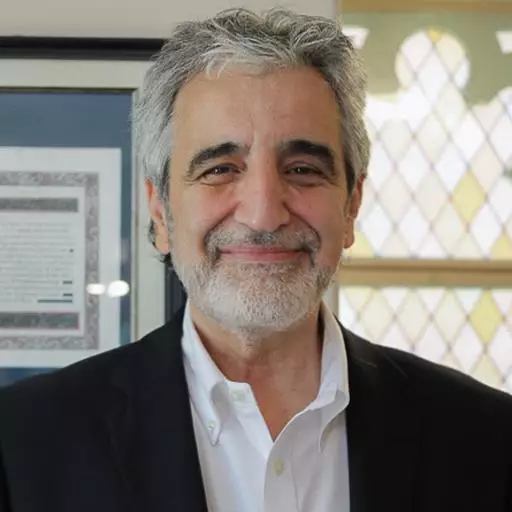
with Messianic Leader J. Isaac Gabizon
https://bethariel.ca/
Jacques Isaac Gabizon: You know there's a certain finality about these words here. Yeshua stands at the end of all worlds. There's nothing after him. And all decisions about him must be made in this life, not afterwards. There's nothing afterwards; afterwards there's a judgment. This is what the Bible says.
Guest (Female): For some of us, we see it as God’s mercy. For others, there’s a deep fear when facing it. And for others, it’s a hope for a better place. For all of us, it is our final departure from this earth. Now we will all experience this unless we are first raptured. It is death, or the final passing of the soul from this existence to the next one. This is our final call home.
Guest (Male): But our question is this: where is home? Ask a Catholic, they will say purgatory helps decide it. Ask a Jewish person, and they will say Kaddish builds the ladder to a higher spiritual level.
In Catholic theology and in Orthodox Judaism, purgatory is a place that a person's soul goes to after death to be cleansed of the sins that had not been fully confessed and erased during their life.
The question is, can our prayers here from earth possibly help the departed soul to rise from a lower to a spiritually higher state when the scriptures tell us that Yeshua paid the full penalty for our sins?
To say that we must atone for the sins of others through our prayers and petitions is to diminish the sufficiency of the atoning power of Yeshua's sacrifice. We are what Adam ate, and sin is something not to be taken lightly. That is why Yeshua's death on our behalf is so meaningful.
There is only one high priest who can today atone for our sins, who could advocate on our behalf, who could wash our sins thoroughly. Why doesn't the Bible speak about purgatory? Because there isn't anything about purgatory in the Bible.
I wouldn't want to depend on anyone's prayers for me after I've departed. My salvation came by a personal invitation and with that invitation, it is he alone, Yeshua, who will raise me up on this earth when I am low and up into heaven directly. For to be absent from the body means to be present with the Lord.
Welcome to Shalom Ariel, welcome to our continuing study in the book of Hebrews with Messianic leader Jacques Isaac Gabizon. Be blessed as you listen in and Shalom.
Jacques Isaac Gabizon: It is beginning in verse seven of chapter 10. You can look with me where he quotes actually a beautiful Psalm, Psalm 40. But he changes a couple of words; after all he's the Holy Spirit, inspired by the Holy Spirit. Holy Spirit can do that. Look at verses five to seven. This is Yeshua by the way who's speaking.
"Sacrifice and offering you have not desired, but a body you have prepared for me. In whole burnt offerings and sacrifices for sin you have taken no pleasure. Then I said, 'Behold, I have come in the scroll of the book that is written of me, to do your will, O God.'"
This is the Messiah speaking, who says that all these sacrifices God did not really take pleasure in them. And so he says that he's coming down to dwell in a body so he can die on the cross for us. But see the original quote and here we're going to see something beautiful because it's not exactly how Psalm 40 is written.
Psalm 40, verse six says sacrifice and meal offerings you have not desired; my ears you have pierced. Burnt offering and sin offering you have not required. Then I said, "Behold, I come in the scroll of the book that is written of me." Why the change? Instead of a body you have prepared, here it's my ears you have pierced. How can we understand this?
There's one passage in the Torah which speaks of a servant who after serving for a period of seven years, he decides then to dedicate the rest of his life to his master. And how this is done, let me read to you Exodus 21:6. It says, "And his master shall bring him to the judges. He shall also bring him to the door or to the doorpost of his master's shall pierce his ear with an awl and he shall serve him forever."
The piercing of the ear was used to stamp the servanthood for the life or the servant. Here the servant fully dedicated his life to serve in the same way that Yeshua, who actually is the servant of Jehovah, here speaks and says behold, I come in a body that you have prepared for me.
The ultimate servant of Jehovah is found in Isaiah 53:11. This is before he came down; he had his ear pierced in a sense that he gave completely his life for us to do the work of God. He says, "My righteous servant shall justify many for he shall bear their iniquity. My righteous Tsadik will make others Tsadik."
This is the only place where we see in Isaiah 53:11 where we see that someone can become righteous only by the blood of Yeshua. And this word in Psalm 40, the word pierced, it's the same one that is used in Psalm 22:16 when David used the same word "kara" and he says they shall pierce my hand and my feet, speaking of the crucifixion itself.
Notice the four sacrifices mentioned in verse six: sacrifice, meal offering, burnt offerings, sin offerings. These four actually are found in the book of Leviticus, the four into which all the sacrifices were placed into. All is found in Yeshua; this is the message he wants to tell us. There's nothing else but Jesus.
This is why the Holy of Holies was empty. Yeshua becomes our Holy of Holies. He is all this, the priest and the sacrifice. It was not easy for our Lord to come and to suffer, not easy at all and this is what he tells us, especially look at verse 23 of chapter nine. The word sacrifice there is in plural.
9:23 says, "Therefore it was necessary that the copies of the things in the heaven should be purified by these, but the heavenly things themselves with better sacrifices than these." Did not Yeshua die only once? Which sacrifice is he speaking about?
I believe these sacrifices began right at the beginning, even before time when we read in John 1:1. In the beginning was the Word and the Word was with God and the Word was God. There was a sacrifice here as the Son prepared himself to go down to die.
At the end of the book of Isaiah, it says that in all their affliction he was afflicted. That was a continual sacrifice and I believe even today he still suffers when we suffer. People ask where is God when we suffer? He's crying with you. He is crying with you.
Anyway, we understand as well in our text that the whole Trinity is involved. Look at chapter nine, verse 14 here. Try to spot the Trinity. "The blood of Christ who through the eternal Spirit offered himself without blemish to God, cleanse your conscience from dead works to serve the living God."
You have Christ, the blood of Christ, and the eternal Spirit and the living God. This is how important salvation of any human being is, that the whole of the Trinity is involved in salvation. Now let us read this famous and often cited passage, Hebrews 9:27 and 28.
It says it is appointed for man to die once but after this the judgment. So Christ was offered once to bear the sins of many. This in a way is a conclusion. You know there's a certain finality about these words here. Yeshua stands at the end of all worlds. There's nothing after him.
And all decisions about him must be made in this life, not afterwards. Afterwards there's a judgment; this is what the Bible says. It is in this life that the decision, a choice, a verdict about the person, the person of the Messiah should be made. And no decision is a refusal, of course.
One of the most treacherous and unforgiving doctrine that I've heard of is the doctrine of purgatory, which annuls the works of Christ and tells you that you have time. Purgatory, which you find taught in Judaism and in many factions of Christianity, speaks of a place of confinement where it's neither heaven nor hell but a place where one has to be refined before going to heaven. It does not exist.
With this teaching you do not need the Lord Jesus Christ. You will be saved anyway, right? Don't worry, be happy, you will be refined, right? But not according to Hebrews 9:27. It is appointed for man to die once and after this the judgment. There's no intermediate state nowhere in the scriptures.
The idea of purgatory was devised at about the same time, did you know, when Jesus came? As if to counteract salvation. It was an idea found with two schools of thoughts, which from rabbinical Judaism, that of Shammai.
It taught that those whose virtues and sins counterbalance one another shall go down to Gehenna, that is hell, and float up, up and down until they rise purified. That's a fallacy. The other school of thought is that of Hillel, also guarantees heaven freely without the Messiah. And the Talmud even gives us the time of the floating: 12 months. 12 months and then you're good, right?
How did they come up with this? The famous book of Enoch also taught this idea. There it is written all men will pass into the melted metal and be pure; to the righteous it will seem as though he walks through warm milk. Who needs the Messiah after this?
Then the church fathers loved the idea and implemented the ignis purgatories, a cleansing state between death and resurrection. The idea was developed by Origen, Ambrose, Tertullian, Jerome and the Great Augustine. It's not in the scriptures.
See how religion can be misleading when you leave the pure teaching of the word of God. We're talking about salvation here; we're talking about an eternity. And this verse tells us that there's no such thing of course as reincarnation. The idea is purely the fruit of the imagination, a fruit which numbs the mind.
Reincarnation preys on the people's fear of death. Both purgatory and reincarnation are the anesthesia doctrines. They tell you that you have all the time in the world. The Bible says you don't. Now is the day of your salvation. You don't even know if tomorrow you'll be able to accept the Lord Jesus Christ.
If you see him, that means the Lord speaks to you; accept him right now. We may not understand all the truth behind this great salvation that is offered to us in the scriptures. No one really understands how God could become man and how could he die, how his death could be the basis of our forgiveness and how he could give a new life.
But if I don't understand electricity, I'm not going to sit around in the dark until I do. If I don't understand the thermodynamics of internal combustion and hydraulics of an automatic transmission, which I understand nothing at all, I'm just not going to use my car.
The truth is that I don't understand a great deal of the things that are part of my everyday life, but I make them part of my everyday life anyway. The same is true of salvation. If you hear the word of God, if you understand that God speaks to you, you will recognize because God says that every man knows God. You will recognize your creator. Grab it. This is the best deal ever because he's coming soon.
Remember in Luke 16, the rich man who was on the other side of Hades. That's not a parable by the way, that's a true story that Jesus says; he gives names. After death he realized the finality of his state and asked Abraham, whom he saw beyond the great gulf.
He said, "I beg you, therefore, father, that you would send to my father's house, send someone to my father's house for I have five brothers. Let this person testify to them." You know what Abraham answered? "If they do not hear Moses and the prophets, that is if they do not hear the word of God, neither will they be persuaded through one rises from the dead."
They won't. Miracles won't bring you; you have to have that faith. Faith in God. The word today says it is appointed for man to die once but after this the judgment. Here also we see the finality of the work of the Messiah. In Hebrews 10:19, after all that was said even from the very first chapter, here the writer asks us a very pertinent question. We went through all the doctrine, going through all the passages.
The question is now that you know all this, what are you going to do with this knowledge?
Guest (Male): Don't go away, we'll be right back with the second half of our program coming up just after this message. As we wind up for the second part of our program today, we would like to remind our listeners how blessed and privileged we feel to be part of your radio day.
We pray that the messages you hear will instruct you, edify you, and encourage you to love the Lord more and follow him into obedience in even greater ways. We are all changed by the challenges and transformed by the trials of life.
As we walk them together, we keep looking up to him who is mighty to break down the walls of Jericho that stand before us and to hand over to us the spiritual victories in life. Yeshua has broken down the greatest barrier, the greatest wall that has separated us from God the Father.
Thank you, listeners, for joining us in prayer and in financial support for this ministry. If you have it on your heart to give to this ministry, then you can by logging onto our congregation website at bethariel.ca. And if God leads you to contribute from the treasures that God has blessed you with for the continuation of this radio ministry. Shalom, Shalom, as we begin part two of today's program.
Let our hope be immersed in faith. Hope is human. Faith is divine. It is given by God. When we join our hope to the faith from God, we will not waver. We will become strong pillars in the congregation of God.
Guest (Female): We have all been trained up to humanly hope. From that first time that we can remember getting that birthday gift we always wanted, that was human hope. And when we received what we asked for, human hope was reinforced and encouraged until our next request.
Human hope is fundamental to our pursuing greater goals and higher expectations. However, human hope is limited to natural boundaries of science and reason. But as believers, what should our hope look like? Divine hope.
First Corinthians 2:9 says that eye has not seen nor ear heard what God has in store for those who love him. To live in divine hope, we need to understand how God answers that hope. He answers divine hope with our studying the word of God, with our understanding the word of God, with our believing the word of God, and our acting upon the word of God.
Human hope is like a swing or a seesaw; it's up one minute, it's down the next because we are basing it on people or products. But divine hope rests in knowing that God wants to help us and that he is omnipotent. He encourages us to come boldly to the throne of grace. He wants us to call on him with that divine hope that we are expecting him to honor his word in our life.
When we hope for what seems unreasonable or insurmountable, we need to seek the scriptures to find out through his word what solutions lay there for us. Our hope is in the word of God. Our hope is in the word made flesh who now resides in us. Our hope is in the spirit of God who teaches us and transforms us.
Our hope lies in the wisdom that God will give us for a solution. Finally, as we develop love for others, that love, true agape love, will be the basis for our hope because love believes all things, it bears all things, and it hopes all things. Love conquers hopelessness and his divine living in us builds that divine hope.
Guest (Male): Welcome to Shalom Ariel and welcome to our continuing study in the book of Hebrews with Messianic leader Jacques Isaac Gabizon. Be blessed as you listen in and Shalom.
Jacques Isaac Gabizon: The word today says it is appointed for man to die once, but after this the judgment. Here also we see the finality of the work of the Messiah. And he is in Hebrews 10:19. After all that was said even from the very first chapter, here the writer asks us a very pertinent question.
We went through all the doctrines, going through all the passages. The question is, now that you know all this, what are you going to do with this knowledge? How is this translating in your everyday life? This is where he starts the practical aspect, starting in 10:19.
Let us read this conclusion found in verses 19 to 25. It's only the beginning. "Therefore, brethren, having boldness to enter the holiest by the blood of Jesus, by a new and living way which he consecrated for us through the veil, that is his flesh, and having a high priest over the house of God, let us draw near with a true heart in full assurance of faith, having our hearts sprinkled from an evil conscience and our bodies washed with pure water.
Let us hold fast the confession of our hope without wavering, for he who promised is faithful. And let us consider one another in order to stir up love and good works, not forsaking the assembling of ourselves together, as is the manner of some, but exhorting one another and so much the more as you see the day approaching."
And so the text begins with the word therefore, so, consequently, accordingly. Now that you know all these things, now that we know that the access to the throne of God is open now, let us do something about it. Salvation is by faith, but once you have the faith, this is when you can do something. And notice, there are three "let us" here. He cuts it in three. Just briefly going to see it this week and go deeper next week.
The first one: let us draw near. This is a constant drawing because there's no point in life where a believer can say I'm close enough to God. There's no point in life where a believer can say I read my Bible. The closer you get, the more amazed you are like these angels who constantly say holy, holy, holy because they are constantly growing in the word.
And the writer adds this, the prerequisite of this spiritual evolution: true heart in full assurance of faith. A sincere heart, a heart without wax. This is what the word sincere means. They used wax to hide defects on a beautiful and expensive vase, but all our defects are our sins. We're poured in prayer to God. By the way, the wax was only visible if you put it through the sun. This is why it's important to have this relationship with the Lord.
And the second one: let us hold fast the confession of our hope without wavering. Let our hope be immersed in faith. Hope is human. Faith is divine; it is given by God. When we join our hope to the faith from God, we will not waver. We will become strong pillars in the congregation of God. For he adds, "He who promised is faithful." Whatever God said, he's going to do it.
And the third one, important: let us consider one another in order. And he adds such an important advice for all: do not forsake the assembly of yourselves. What does that mean? It means that our faith is a community. It's not an isolation. Biblical Christianity or pure biblical Judaism is a body where each member is vital for the functioning of the whole.
Here the writer links all this great truth about the Messiah down to the very congregation of God. And the sad thing is that some believers were already beginning to forsake the assembly of God. Yet this is the place where he empowers the believers. And how important is the congregation of God to Jesus? So important that Jesus said this is my bride.
Featured Offer
Prophecies take up about ¼ of the Scriptures so we cannot simply ignore them. Knowing prophecy enables us to give a clear presentation to others of why things unfold the way they do in such areas as politics, morality, technology and global ecological changes. It also helps us to rightly place Israel in God’s prophetic plan.
Past Episodes
- The Armor of God
- The Believers in the End Times
- The Book of Daniel
- The Book of Deuteronomy
- The Book of Ephesians
- The Book of Esther - Purim
- The Book of Exodus
- The Book of Ezekiel
- The Book of Ezra
- The Book of Genesis
- The Book of Hebrews
- The Book of James
- The Book of Jeremiah
- The Book of Joel
- The Book of John
- The Book of Leviticus
- The Book of Numbers
- The Book of Philippians
- The Book of Revelation
- The Book of Romans
- The Book of Ruth
- The Book of Zechariah
- The Feast of Passover
- The Feast of Purim
- The Feast of Shavuot - Pentecost
- The Gospel of Mark
- The Gospel of Matthew
- The Letter to the Galatians
- The Messiah in Isaiah
- The Messiah in the Book of Isaiah
- The Messiah's Prayer
- The Nativity: The Unwrapped Gifts of God
- The Resurrection of the Messiah
- The Sermon on the Mount
- The Tabernacle

Video from Jacques Isaac Gabizon
Featured Offer
Prophecies take up about ¼ of the Scriptures so we cannot simply ignore them. Knowing prophecy enables us to give a clear presentation to others of why things unfold the way they do in such areas as politics, morality, technology and global ecological changes. It also helps us to rightly place Israel in God’s prophetic plan.
About Messianic Viewpoint
About Jacques Isaac Gabizon
Contact Messianic Viewpoint with Jacques Isaac Gabizon
info@bethariel.ca
http://www.bethariel.ca/
Beth Ariel Congregation
CP 46521 CSP Boul. St Jean
Pierrefonds, QC, H9H 5G9
Toll free (888)-685-5902