
Letter to the Hebrews - Part 19


Letter to the Hebrews - Part 19
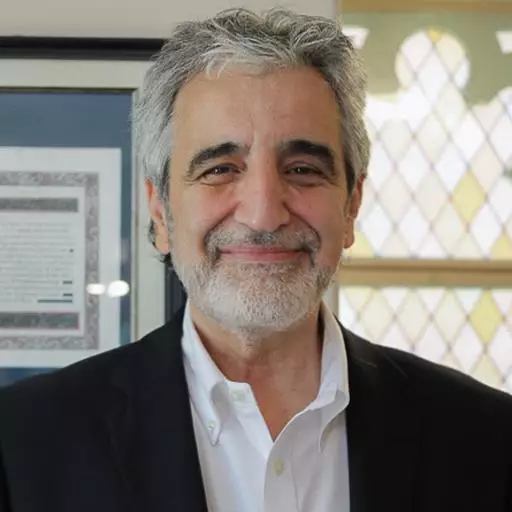
with Messianic Leader J. Isaac Gabizon
https://bethariel.ca/
Jacques Isaac Gabizon: Then we see the tablets of the covenant. This represents the stipulation of the contracts on which the Mosaic law, the Mosaic covenant rested. The Ten Commandments, through which flow the other 613 commandments, were engraved with the finger of God.
Guest (Female): When you consider one of your most precious items that you possess and you think about losing it, anything other than your Bible, of course, how does that make you feel? Lost? Empty? Sad? Imagine the magnificent temple as it stood out, and the important role it played in your social and religious life back in the first century.
Imagine you were told how temporary this structure now is, and that you were to look at this in a more symbolic way. How could the members of the congregation of Hebrews so simply believe that it would become a non-essential for them? Part of what was in that temple behind the veil leading to the Holy of Holies was the stone tablets, the tablets of the covenant.
While these tablets affirmed the ties with God made back in the days of Moses, it was now pressing for them to see its temporality, for this temple would soon be destroyed. More important, the Hebrews needed to understand the conditional aspect of this covenant. Had they been obedient to it, they would have been greatly blessed by it and not be under Roman domination with a temple soon to fall.
They needed to understand that these 613 commandments were impossible to fully adhere to and, therefore, one was needed—the God-man—to be able to fulfill this Torah. It pointed to the fact that all things in life are temporary and that we must look to the more eternal matters. No matter how glamorous or elaborate an object is that we possess, we need to be careful that our possessions do not possess us.
Possessions cannot fulfill deep inner needs, but the Lord can. Sometimes letting go is difficult. How can we begin to let go? By letting go in a godly fashion. We do that by giving and sharing our possessions with others. Then we begin an important exercise in letting go and, at the same time, blessing others by that. Welcome to Shalom Ariel and welcome to our continuing study in the book of Hebrews with Messianic leader Jacques Isaac Gabizon. Be blessed as you listen in. Shalom.
Jacques Isaac Gabizon: The passage we are going to study today in the book of Hebrews, if you have your Bible with you, is in chapter 9. The subject is about the body of the Messiah, about faith, and about how much Yeshua Jesus loves his flock. At the time the book of Hebrews was written, the temple was still standing. It was actually functional, and it was one of the most beautiful structures on earth. It was majestic and magnificent.
In the Gospels, the disciples noticed its beauty while walking with Jesus. They said, "Teacher, see what manner of stones and what buildings are here." Jesus also recognized it was adorned with beautiful stones and offerings. This temple was called the House of the Great God in the book of Ezra. It was called by his name. It was the glory and the joy of Israel. It was also called the beauty of his holiness. Anyone walking around it or in it would be in awe and surely filled with a sense of permanency and security when considering its size and long history.
How could anyone easily detach himself from this imposing structure? How could the members of the congregation in the book of Hebrews easily believe that it has become non-essential overnight? The writer of this letter had the difficult task of showing that this structure, while physically standing, was spiritually void and empty by then.
In chapters 9 and 10, while always stressing the superiority of the Messiah, the author of Hebrews encourages his flock by speaking about the other temple in heaven—the real one, the permanent one, the one where they were going. It was difficult for the listeners to make the switch from what they saw to what is promised and believed by faith.
He would tell them in Hebrews 10:1, "For the law, which was housed in the temple, having a shadow of the good things to come, and not the very image of the things." What you see, he was telling them, is not real anymore. It is devoid of any spiritual worth. Again, in chapter 9, he said that the Messiah came as High Priest of the good things to come, with the greater and more perfect tabernacle not made with hands—that is, not of this creation.
He came not of this world or the things you see with your eyes, but he came for these things you see with the eyes of your heart through your faith. In many ways, he tries to bring illustrations from what is physical to what is spiritual, true, and permanent. The writer had the same task as Nahum the prophet. The whole book of Nahum is to show the futility of the great and imposing city of Nineveh.
Nineveh was a city that stood for over 4,000 years. It had history on its side. It represented an icon of power which threatened the existence of Israel. It appeared immovable and steadfast—so the Assyrians thought. But God told them through Nahum that it was only a lie. As the prophet walked around its three-mile-wide and eight-mile-long walls, he prophesied and said, "Your name shall be perpetuated no longer, for you are vile."
The writer of Hebrews had a much more difficult task speaking of the futility of the temple because previously God himself had said that this was his dwelling. But he moved out of it. He was not there anymore, and this is the message of Hebrews. God is not confined to one place anymore. As Isaiah said, God lives in two places: in heaven and in the heart of the humble and the contrite spirit.
He wants to tell us that you have become the temple of the Holy Spirit. Everything we see will one day disappear. This is what first Peter tells us. There is another world, the beautiful one and everlasting one. How can I know these things? How can I be sure of these things? This is where the writer prepares us to understand what faith is. With chapter 9 begins this section of faith in Hebrews. Slowly, the writer will lift up our spirit to see the things from above.
It is in chapter 11 where he names so many men and women of God in the Bible who succeeded in going from the physical to the spiritual by journeying through their faith. We are going to see that these people suffered. They never saw the promises of God, yet by faith, they knew that he would bless them. It is my prayer that this whole section will bring us to see the other world, heaven, through the eyes of faith.
Now, we have begun to look at the first verses of chapter 9. The writer goes back to the tabernacle itself, the original movable structure in the wilderness, and describes for us what was in there. It is important to know why he is going back to the tabernacle because the Holy of Holies at the time of the book of Hebrews was completely empty. Nothing was there.
Let us read verses 4 and 5. Speaking of the tabernacle, it had six important items that still speak to us. They were there, but their significance is still there. It says, "The golden censer and the ark of the covenant overlaid on all sides with gold, in which were the golden pot that had the manna, Aaron's rod that budded, and the tablets of the covenant; and above it were the cherubim of glory overshadowing the mercy seat."
We have already seen that the golden censer, which represents our prayer, and the altar of incense, which originally was outside of the Holy of Holies, was moved inside for the writer. He just took it out, but he brings the prayer and the incense right inside the Holy of Holies. As he said in Hebrews 10:19, "Therefore, brethren, having boldness to enter the Holiest by the blood of Jesus."
When Yeshua died, the veil tore, the wall of partition broke down, and now we, Jews and Gentiles, have free access to God by the blood of the Messiah. Then we see the tablets of the covenant. This represents the stipulation of the contract on which the Mosaic law rested. The Ten Commandments, through which flow the other 613 commandments, were engraved with the finger of God.
The presence of these tablets reminded the Israelites of the conditional aspect of this covenant because their well-being and the enjoyment of their blessings depended on the obedience of all 613 commandments. Of course, they could never enjoy these blessings, and this is what the writer told us in Hebrews 7. This is why Jesus came. He became that word, the word of God who became flesh.
Then you have Aaron's rod. In Numbers 16 and 17, we read of an incident where some questioned the authority of Aaron. So, God asked each of the 12 tribes to send a representative, each holding a rod with his own name written on it. He asked them to place the rods in the tabernacle, and the one rod whom he chooses will blossom. Only Aaron's rod blossomed. This was God's choice and this put an end to the rebellion.
Since then, Aaron's rod was placed in the Holy of Holies. Even though it was a dark room, we read that it budded. But it was not really Aaron's authority that the people questioned. It was really God's authority and his own choice of priesthood. However, by the time of Hebrews, the rod was not there anymore. The order of Aaron, which was temporary, has gone as well. It was replaced by another priesthood, the eternal priesthood according to Melchizedek, the eternal priesthood of the Messiah. This is what Aaron's rod actually pointed to.
Another item was the pot of manna. It symbolized God's provision for his own—not only physical provision but mainly spiritual provision. In John 6, Jesus said, "Most assuredly, I say to you, Moses did not give you the bread from heaven, but my Father gives you the true bread from heaven." He was speaking of himself.
In sum, the tablets of the law spoke of the word of God that we need. Man shall not live by bread alone but by every word that proceeds out of the mouth of God. Aaron's rod spoke of the everlasting covenant, and the manna of God's provision. All of these things speak about Yeshua himself. It is interesting and sad to notice that each of these three items just mentioned is connected with rebellion.
The tablets of the law are connected with the making of the golden calf. While God wrote the covenant, the people were already breaking the first covenant in making the likeness of God. Had not Moses graciously broken the covenant itself, God would have wiped out the nation according to the judgment contained in it. Aaron's rod was connected with the rebellion of Korah. The manna is connected with Israel's many complaints and rebellion. In Numbers 11, they complained and said, "There is nothing except manna," but that was God-given to them.
Israel is an example of who we are. We find ourselves in there. Now, the other item is the Ark of the Covenant itself—the most important item in the most important place. We hear so much about this ark today and many are looking for it. In this present time, with the temple in Jerusalem coming closer to its construction, many are fascinated with the whereabouts of the Ark of the Covenant.
It really began in and around the time of Jesus, where people were expecting the Messianic times and they were asking where the Ark of the Covenant is. In the apocryphal book of Second Baruch, it says that it was removed and hidden by an angel. According to the Talmud, they say that it is hidden somewhere in the temple compound, and some rabbis have seen it. In Second Maccabees, it says that Jeremiah himself hid it somewhere. No one really knows, but what we know is that since the destruction of the temple in 586 BC, we do not hear of it anymore. By the time of the writing of Hebrews, the Ark of the Covenant was not in the temple, and this is the very point of the writer: the room is completely empty.
Guest (Female): Don't go away. We'll be right back with the second half of our program coming up just after this message. As we wind up for the second part of our program today, we would like to remind our listeners how blessed and privileged we feel to be part of your radio day. We pray that the messages you hear will instruct you, edify you, and encourage you to love the Lord more and follow him into obedience in even greater ways.
We are all changed by the challenges and transformed by the trials of life. As we walk them together, we keep looking up to him who is mighty to break down the walls of Jericho that stand before us and to hand over to us the spiritual victories in life. Yeshua has broken down the greatest barrier, the greatest wall that has separated us from God the Father.
Thank you, listeners, for joining us in prayer and in financial support for this ministry. If you have it on your heart to give to this ministry, then you can by logging on to our congregation website at BethAriel.ca. And if God leads you to contribute from the treasures that God has blessed you with for the continuation of this radio ministry, shalom, shalom as we begin part two of today's program.
Jacques Isaac Gabizon: Our bodies are the temple of God. God moved out from the Holy of Holies to make his abode with you, with us. We have become the keeper of the law of Christ, and this is such a tremendous blessing and such a tremendous responsibility. Wherever we go, we bring the spirit with us. Have you ever realized this?
Guest (Female): While the letter of the law is important, one must never forget the spirit of the law lying behind it. So, how can we unite both the letter and the spirit of the law? Well, by realizing that we are now the temple of the Holy Spirit and, like Paul says, we have become living letters. Now, the scriptures have called believers many things. We have been called branches, we have been compared to salt, we have been compared to light, and for you animal lovers, we have also been called sheep.
But have you ever thought of yourself as a letter, a letter that carries a message? When Paul called the believers at Corinth living letters, he was stating that their faith and their changed lives proved that the spirit of God was working in them. For Paul, this was very significant. You see, many were after Paul, claiming that he was not teaching right doctrine.
But Paul chose no other letters of recommendation to authenticate his work other than the changed lives of these believers. They proved his work was valid. We are living letters to the world out there, and so what message are we conveying in our letter to the world? A report from Christianity Today back in 2007 showed that many Muslims came to faith, their main attraction being the lifestyle of the believer.
We want our lives to boast not of ourselves but the glory of God in us, the spirit of God in us, for we are the temple of the Holy Spirit. And so we, as living letters, must communicate this. We must communicate that God receives all glory. We cannot remain neutral. We must take every opportunity to glorify God in all times, all places, and circumstances. We are a letter authenticating his work, a letter of love from a God so great. Thank you, Lord, for letting us be a letter for your glory. Welcome to Shalom Ariel and welcome to our continuing study in the book of Hebrews with Messianic leader Jacques Isaac Gabizon. Be blessed as you listen in and shalom.
Jacques Isaac Gabizon: The presence of these tablets reminded the Israelites of the conditional aspect of this covenant because their well-being and the enjoyment of their blessings depended on the obedience of all 613 commandments—all of them. And of course, they could never enjoy these blessings, and this is what the writer told us in Hebrews 7. This is why Jesus came. He became that word, the word of God who became flesh. This is to him, it is to him that we should go.
Then you have Aaron's rod. What was this rod doing there? In Numbers 16 and 17, we read of an incident where some questioned the authority of Aaron. So, God asked each of the 12 tribes to send a representative, each holding a rod with his own name written on it. He asked them to place the rods in the tabernacle, and the one rod whom he chooses will blossom. Only Aaron's rod blossomed. This was God's choice and this put an end to the rebellion.
Since then, Aaron's rod was placed in the Holy of Holies. Even though it was a dark room, we read that it budded. But it was not really Aaron's authority that the people questioned. It was really God's authority and his own choice of priesthood. However, by the time of Hebrews, the rod was not there anymore. The order of Aaron, which was temporary, has gone as well. It was replaced by another priesthood, the eternal priesthood according to Melchizedek, the eternal priesthood of the Messiah. This is why Aaron's rod actually pointed to.
Another item was the pot of manna. It symbolized God's provision for his own—not only physical provision but mainly spiritual provision. In John 6, Jesus said, "Most assuredly, I say to you, Moses did not give you the bread from heaven, but my Father gives you the true bread from heaven." He was speaking of himself.
In sum, the tablets of the law spoke of the word of God that we need. Man shall not live by bread alone but by every word that proceeds out of the mouth of God. Aaron's rod spoke of the everlasting covenant, and the manna of God's provision. All of these things speak about Yeshua himself. One will find it interesting and sad to notice that each of these three items just mentioned is connected with rebellion.
The tablets of the law are connected with the making of the golden calf. While God wrote the covenant, the people were already breaking the first covenant in making the likeness of God. Had not Moses graciously broken the covenant itself, God would have wiped out the nation according to the judgment contained in it. Aaron's rod, as we have seen, was connected with the rebellion of Korah. The manna is connected with Israel's many complaints and rebellion. In Numbers 11, they complained and said, "There is nothing except manna," but that was God-given to them.
As we mentioned, Israel speaks of us. Israel is an example of who we are. Now, the other item is the Ark of the Covenant itself—the most important place, the most important item in the most important place. We hear so much about this ark today and many are looking for it. In this present time, with the temple in Jerusalem coming closer to its construction, many are the more fascinated with the whereabouts of the Ark of the Covenant.
It really began in and around the time of Jesus, where people were expecting the Messianic times and they were asking where the Ark of the Covenant is. In the apocryphal book of Second Baruch, it says that it was removed and hidden by an angel. According to the Talmud, they say that it is hidden somewhere in the temple compound, and they say that some rabbis have seen it. In Second Maccabees, it says that Jeremiah himself hid it somewhere. No one really knows, but what we know is that since the destruction of the temple in 586 BC, we do not hear of it anymore. By the time of the writing of Hebrews, the Ark of the Covenant was not in the temple, and this is the very point of the writer: the room is completely empty.
Featured Offer
Prophecies take up about ¼ of the Scriptures so we cannot simply ignore them. Knowing prophecy enables us to give a clear presentation to others of why things unfold the way they do in such areas as politics, morality, technology and global ecological changes. It also helps us to rightly place Israel in God’s prophetic plan.
Past Episodes
- The Armor of God
- The Believers in the End Times
- The Book of Daniel
- The Book of Deuteronomy
- The Book of Ephesians
- The Book of Esther - Purim
- The Book of Exodus
- The Book of Ezekiel
- The Book of Ezra
- The Book of Genesis
- The Book of Hebrews
- The Book of James
- The Book of Jeremiah
- The Book of Joel
- The Book of John
- The Book of Leviticus
- The Book of Numbers
- The Book of Philippians
- The Book of Revelation
- The Book of Romans
- The Book of Ruth
- The Book of Zechariah
- The Feast of Passover
- The Feast of Purim
- The Feast of Shavuot - Pentecost
- The Gospel of Mark
- The Gospel of Matthew
- The Letter to the Galatians
- The Messiah in Isaiah
- The Messiah in the Book of Isaiah
- The Messiah's Prayer
- The Nativity: The Unwrapped Gifts of God
- The Resurrection of the Messiah
- The Sermon on the Mount
- The Tabernacle

Video from Jacques Isaac Gabizon
Featured Offer
Prophecies take up about ¼ of the Scriptures so we cannot simply ignore them. Knowing prophecy enables us to give a clear presentation to others of why things unfold the way they do in such areas as politics, morality, technology and global ecological changes. It also helps us to rightly place Israel in God’s prophetic plan.
About Messianic Viewpoint
About Jacques Isaac Gabizon
Contact Messianic Viewpoint with Jacques Isaac Gabizon
info@bethariel.ca
http://www.bethariel.ca/
Beth Ariel Congregation
CP 46521 CSP Boul. St Jean
Pierrefonds, QC, H9H 5G9
Toll free (888)-685-5902