
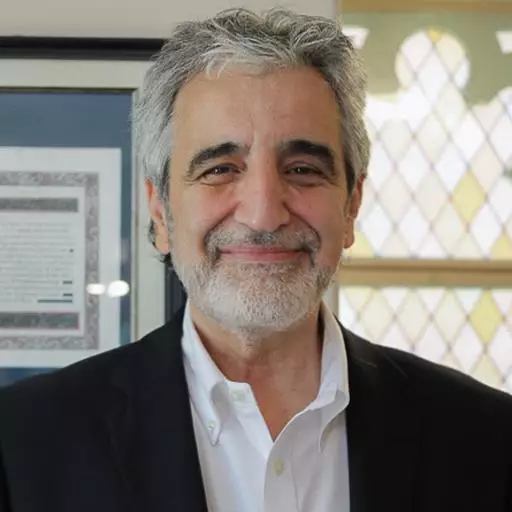
The Book of Revelation, Part 32


We are starting a new section of the Bible, a seasonable one, a book for today, the Book of Revelation. The word Revelation, apocalysis, means the unveiling, the uncovering of something that was hidden and now revealed, and while it is a word that is often associated with chaos or calamities, this is only a part of its scope, The rest of its content reveals to us some great and profound eternal truths unseen anywhere else in Scripture. It will supply great details for us concerning the eternal home of those who’ve trusted their lives to God and His Messiah. This then is what the Book of Revelation is really about; the uncovering of the facets of our God that is so powerful that it will energize us and make us whole and confident. Thank you for joining us in this study.
Announcer: Welcome to Shalom Arielle and to our continuing study in the book of Revelation with Messianic leader Jacques Isaac Gabizon. We are still in heaven's room where there is one half hour of silence. And what else can heaven do but stand in overwhelming awe as they watch God's justice being poured out? It is like when we are in deep despair and we don't have the words to address one another, but only words to God. And so they are silent in prayer. Lord, save many souls. Strengthen the persecuted believers. May your will be done on earth as it is in heaven, O Lord, that your righteousness would soon prevail.
Yes, heaven stays in silent prayer as they wait with anticipation when once again worship of the Lord will resume. When in Revelation 19, we will hear the 24 elders, the 4 beasts falling down and worshiping God and saying amen and hallelujah. While sign language might seem silent, the communication is not impaired. What is beautiful about silent prayer is that it proves that we don't need words to communicate with God, for he transcends our consciousness, and he is one with us in spirit, as are the groanings he produces in us, as we trust him to lead us and guide us in prayer that his will be done.
We are so blessed to be that silent prayer partner, as that means we will spend more time listening, and then we can sign everything over to him so that he alone, the Lord, receives all the glory. Be blessed as you listen into today's program, and shalom, shalom.
Jacques Isaac Gabizon: Let's look at them again. They're very similar. We start off with the first amen and read blessings. They praise God for the profound blessings of happiness he provides and will provide for the believers. And then glory, the glory of God is reflected actually through all his creation and in his actions of grace over grace, and especially in the greatest miracle ever, that of salvation. And wisdom, the wisdom of God is also everywhere in creation, from the complex inner workings of the human body to the immense universe, all held by those natural laws that he continually sustains by his sovereignty.
That's his wisdom. Thanksgiving. This is the outcome of realizing that who our God is. It is the outpouring of our heart to God when we realize actually who he is. Honor. This attribute gives worth to God, and we can honor God when we follow his word. Power. We praise God for his power to act. Might. We thank God for his presence in the past history and in current events. And then it closes with the word amen. Amen. You know, the seventh attribute is framed with Amen. The word Amen, if you remember, is from the Hebrew word emet, which is truth, means truth, and emet comes from the word aman, which means sure, permanent, true, eternal when it comes to our God.
Amen is the name of the Messiah himself. If you remember in Revelation 3:14, he says, this thing says the amen, the faithful and true witness the beginning of the creation of God, and this will be the time when all creation will recognize their mighty creator. And furthermore, there's a great gem to unearth in this account of the martyrs, another paradox where the dead are alive. The dead are alive. When a believer leaves this earth, he or she is right away in the presence of God. This is such a wonderful truth to ponder on. Death is a passage into this other wonderful world. And how I wish that this book actually would end here, and even better that we jump from chapter 7 right to chapter 21, 22, where we have the description of heaven, but not just yet.
There are things that still need to be said and to be shared as well. Also, there are many paradoxes, by the way, in this text. You know, I love these paradoxes for they call us to stop and ponder on what is being taught here. You know, back in chapter 6, for instance, we remember the words the wrath of the lamb. How can we think of wrath when the lamb is such a peaceful animal, right? That just tells us that Jesus, Yeshua, is always ready to impart salvation at any time before the end. Another paradox we encounter is found in verse 17, where it says that the lamb is the center of the throne and will be their shepherds.
Here the lamb is the shepherd. Usually the lamb needs a shepherd, but is not himself the shepherd. Another strong paradox is found in verse 14, where it says that the martyrs have washed their robes and made them white with the blood of the lamb. Have you ever tried to remove blood stains from a fabric? It is a whole lengthy operation. Here, the blood of the lamb has this particularity of whitening, whitening and cleansing as never seen before. Along with these paradoxes, there is one more thing which attracts our attention, and this one is in the form of an unusual question, but an important one.
There's an interesting conversation between one of the elders and John, right in the middle of the text, one which will bring out the great grace of God. After that, the whole of heaven rejoices. We read of this conversation in verse 13 and 14. See what happens. Then one of the elders answered, saying to me, these are clothed in the white robes, these who are clothed, that is, in the white robe, who are they, and where have they come from? And I said to them, my Lord, you know. And he said to me, these are the ones who come out of the great tribulation, and they have washed their robes and made them white in the blood of the Lamb.
You know, it is noteworthy to see that it is not an angel, but an elder who approaches John, one of the 24 elders who represent the church or the body of the Messiah. He comes and tells John that these who are dressed in white or holding the palm branches actually come out of the great tribulation. That was his point. In the Greek, the expression is stronger. Literally, it could be translated, these are who came out of the tribulation, the great one. But it is in this, in the way the question is asked, where we can perceive one powerful message. The way it is asked really attracts our attention.
He asks John, who are these who are dressed in white? How in the world would John ever know how to answer something that the elders who was already living there would seemingly not know? Like the time when I remember I was walking in the streets of Vancouver, discovering the city as a tourist. I didn't really know where I was, and one person stopped me to ask me for direction. Wrong person, I told them, right? The elder's question is a rhetorical question often used in the New Testament and in rabbinical writings, for these carry a great teaching with them. What could be the message behind this question?
There's another part of the Bible where the same question and answers are found. We find the other instance when God asked Ezekiel about the survival of the nation of Israel. See the similarities. This is when Ezekiel was brought to the valley and was asked by God in verse 3, chapter 37, Son of man, can these bones live? So he answered, O Lord God, you know. The same answer as that of John in Revelation 7:2, Lord, you know. What could be the relationship between these two texts? These bones in Ezekiel represents the house of Israel, and it was in such a ruin, it was impossible to conceive that Israel would one day become a nation, but it did, even against all odds.
In the same way, during the tribulation times, the world would be in such disarray that it would seem impossible to conceive that anyone would be able to come out of it successfully. In both instances, we see the grace of God. Yet here again, we see these martyrs ripped by the 144,000 of the children of Israel, who against all odds succeeded in bringing so many to a saving knowledge of the Messiah. And perhaps the two instances reminds us that Israel will again go through the very, even the most difficult time in her history. And we can hear God's question one more time. Can these bones live?
Of course they can. Of course they can, because Israel, as believers, will rise above all this chaos of the tribulation. And these questions and their answers are so timely and even necessary to know, because in chapter 8 of Revelation, the next one we come to, we have some of the most graphic descriptions of cataclysm and disasters, ones we do not find anywhere else in the scriptures. Descriptions of devastation never seen on earth since the history began and are here mentioned. Yet under the controlled hand of God, the earth will survive. It will rise again. The flood and Sodom and Gomorrah do not come close to these catastrophes prophesied here.
These tribulations, disasters go from ecological breakdowns with the greatest loss of life ever described to an invasion of demons that seem to have been locked up until this very time and then released actually, and all of this because of sin. This is when we enter chapter 8, and even here I want to tell you, even here it begins so graciously, for we are not brought right away into this conflicts. Let's see what it says. Let's read just verses 1 to 3 for now, as time is flying away. And there's one major point I want to make about these three, something in these three verses. It says, when the Lamb broke the seventh seal, there was silence in heaven about half an hour, and I saw the seventh angel who stand before God, and seven trumpets were given to them.
Another angel came and stood at the altar holding a golden censer, and much incense was given to him so that he might add, added that is to the prayers of all the saints on the golden altar which was before the throne of God. It all begins with a long silence of half an hour in heaven. And this silence must have had such an impact. You know that just before we read of so much singing and noise in heaven, beginning with the time when John entered heaven. He heard in chapter 4 sounds of trumpets, and then we heard he heard sounds of peals of thunders, and he heard four angels saying without ceasing, Holy, holy, holy is the Lord God, the Almighty, who was and who is and who is to come.
And then he heard the 24 elders falling, saying, Worthy are you, O Lord and our God, to receive glory and honor and power. And as we move on, we have the martyrs of the tribulation, so many of them joining in the worship and acclamation, and then suddenly there's a deafening silence just before the seventh seal is opened, just before the first trumpet is blown. If there is a place I want to tell you where the expression silence before the storm takes its full meaning, it is right here at the start of chapter 8 of Revelation, because it is after this silence and pause in heaven that the seventh seal opens up, as we will see, and great catastrophes fall upon this earth.
And the first question we ask is, what is the meaning of the half hour in heaven? Why only half hour, and why such a short period of time? What significance would it have in heaven, and what is the necessity of this period of time? This is when we're about to see something, I want to tell you, really beautiful and great. Half an hour in the Greek is one word, and a rare word used only here in the New Testament, not used in the Septuagint, and not found in major texts of secular Greek. It seems that it was, that this word was created for this very occasion. This word is made up of two well-known words.
The first one is the Greek hemesu, which means half, and the other one is aura, which is translated as an hour or a moment or a time or a while. In secular Greek, aura is used to even designate part of the year, like a season. How can we understand it in the context of Revelation and the tribulation? Perhaps we could translate this word as half a time, half a time. This will fall well with the context of the prophecies, for at this point we are in the middle of the tribulation, even when trumpets begin to sound. We remember that Daniel divided the seven-year period of the tribulation into two halves, and he spoke of the reign of the Antichrist, and he says he will make a covenant, a firm covenant with the many for 7 years, and in the middle of the 7 years, this is it, he will put a stop to sacrifice and grain offering.
This half time is spoken of by John as being exactly 42 months or 1260 days, and it is very possible that it is when this time will begins. The second half of the tribulation, there is then a silence in heaven for three and a half years. But if this is so, why a silence in heaven for three and a half years? The text relates it to prayers, for the next verse brings us right to the altar of incense, which symbolizes prayer. These three and a half years in heaven could very well be a time of silent prayers for all those in heaven during the last half of the tribulation time, and they would pray for the people in the tribulation.
We often wonder what would the believers do in heaven during the tribulation. This passage may very well teach us that we will pray. We will pray for all this time. And the prayer is spoken of in powerful ways here. See that right at the moment this half time begins, we reach of the burning of the incense over the golden altar, which speaks again of prayer. This altar was the last element before entering the place of God in the Holy of Holies. Furthermore, this silence connected with prayers, these silent prayers is something that the Jewish people are very familiar with and also connected with the time of the burning of incense.
First, we know that all the work of the priests done in the holy place and the very holy place were always performed, always in silence. With all the verses taken together dealing with the holy place, we never encounter any word ever spoken, never a psalm concerning the work that is brought there. But there are so many psalms that speak of the sacrifices done outside. While the animal sacrifices in the other courts were accompanied with trumpet sound and the like, the work inside the holy place was always done in silence. And there is a Jewish tradition brought out by Alfred Edersheim in the late 1800 and about 150 years before his time by John Lightfoot.
This tradition brings us right in the feast of Yom Kippur on the Day of Atonement, which symbolizes the tribulation and the burning of incense was done at that time in complete silence, not only by the priests, but by all the people who were in the other courts. This silence lasted for the time the high priest burned the incense inside and then came out and recited the Shema, the Shema by pronouncing the name of God in front of the crowd who was waiting for this moment. The tradition then explains that during the time he was inside the holy place, the people outside prayed silently. A similar situation we find in Revelation 8, with this silence and the burning of incense.
Perhaps this commandment was among those given to Moses and David as they received the plans of the temple from God. And this is very significant, for the feast of Yom Kippur finds its fulfillment in the tribulation times. at the end of it, when Israel will look upon the one they have pierced and recognize that Yeshua is the Jewish Messiah. Looking at the chart, we can see how the second set of the feasts of Israel give us a chronology of the end times. The end begins with the feast of trumpet, the trumpet of God, who calls all the believers home. This corresponds to the first resurrection of believers, followed by the rapture, that is.
Then Yom Kippur, which corresponds to the seven-year tribulation, and then Sukkot, the feast of Tabernacles, which symbolizes the Messianic times. And furthermore, we can see traces of silent prayer even in Jewish people's prayer today, called the Amidah. The Amidah, meaning standing, it actually is done standing, and is referred to in the Talmud that Ha tefilah, that is the prayer. It is composed of 19 benedictions of praises, petition, and thanksgiving, but this prayer is recited in silent devotion and without any interruption. This is what they do every day. They say that it should be loud enough to hear it oneself, but not so that it is audible to others and disturbs their concentration.
This prayer, along with the Shema, are considered to form the core of Jewish worship by the Mishnah, or Jewish oral law, and these were done in silence. While it says in Judaism that the origin of this prayer is shrouded in mystery, the silence and recitation of the Shema probably finds its origin in the silent prayer during the two times the incense were offered in the temple in on Yom Kippur. It is then very possible that before the harsh accounts of the tribulation time, all present in heaven at that time will pray silently, but they will pray during the last three and a half years. There is, by the way, so much more in this text we will see next time, but there is one very practical thing we can draw from it.
Silent prayers. Silent prayers are so beneficial for every believer. These are the prayers we need to cultivate because they bring us so close to God. When one prays silently, one learns to acknowledge God's omniscience even to the depth of our souls. God knows our thoughts. He hears our inner voice and knows our inner desire, inmost inner desires, and praying in silence is to acknowledge and realize his power and presence, and it will bring us to always honor God in our thoughts and in our words and in action. Silent prayers will bring us to slowly see and say amen to our creators, whose glory, wisdom, thanksgiving, honor, power, and might belongs to him, and we will be blessed.
You know, there are, I will close with giving you a few examples of people who prayed silently in the scriptures and were so blessed. I will mention two of them. The first one was so very surprised, by the way, by the power of silent prayer. He could not believe how fast the Lord answered him. His name is Eleazar, and he was Abraham's faithful servant. We join the story when Abraham sent his servant to Ur, some 800 kilometers away, to fetch a wife for Isaac. Once Eleazar gets there, he finds a well, and he knew that young women come to the well to draw water, so he thought maybe Isaac's wife will be among these young women, and so that will make his task very easy, pick it up and go home.
And so we read in Genesis 24:14, he says the silent, actually silent prayer that he prayed. He says, now let it be that the young woman to whom I say, please let down your pitcher that I may drink, and she says, drink, and I will also give your camels a drink, let her be the one you have appointed for your servant Isaac. And by this I will know that you, Lord, have shown kindness to my master. By the way, these are very specific demands, but God answered him and right away, for it happened exactly as he asked. Not only that, as he was praying, the prayer was beginning to be fulfilled. It says in the next verse, and it happened before he had finished the prayer.
See how beautiful it is? But is, it was too much, by the way, for these men to take. So we read in verse 21, as the prayer was being fulfilled in front of his eyes, he says, and the men wondering at her remained silent so as to know whether the God had made his journey, the Lord had made his journey prosperous or not. He could not yet believe it. He was still wondering, just like many of us, by the way. How many times has God answered our prayers so quickly, but we just don't believe it? Can it really be, right? Maybe it was an accident, a coincidence. If we would only keep a journal and remember how fast God does answer our request, our faith would be unwavering.
But after a long contemplation, Eliezer finally realized the hand of God upon the situation, and a new phase of the history begins. This is when he meets Rebecca's parents and explain all that happened and then takes the young woman to Isaac. We learn from this account the Lord knows our thoughts, our needs, and he is ever present even when we pray silently. He heard Eliezer's prayer and he answered it in every details. The second one of is about this great woman of faith, Hannah. Hannah, who had such a strong relationship with the Lord. She understood, she knew that the Lord hears even silent prayers, and she was so rewarded.
Not only were her prayers fulfilled, but the fruit of her prayers blessed all of Israel. See how the scriptures relates these prayers. Verses 13 to 15 of 1 Samuel chapter 1. Now Hannah spoke in her heart, only her lips moved, but her voice was not heard. Therefore Eli thought she was drunk, and Hannah answered and said, and see what he says, No, my Lord, I am a woman of sorrowful spirit. I have drunk neither wine nor intoxicating drink, but I have poured out my soul before the Lord. This you can do. You can do by yourself. By yourself in the place where Jesus says, go to the inner room, a room without windows, and there pray to the Lord.
Silent prayers are heard by the Lord. It is written in Ecclesiastes 9:17. The words of the wise are heard in quietness. I love the way the Targum translates this. It says, the word of the silent prayer of the sages are accepted by the master of the world. Silent prayer should then be the believer's priority to develop, so he'll get closer and closer to God. Let us bow our head in prayer. Now, Heavenly Father, we thank you for all those prophecies you have in your word. Thank you for telling us things in advance so that we know and understand that you are the sovereign and all-knowing God who knows the future and who also knows our inner thoughts.
And as David prayed on Psalm 62, truly my soul silently waits for God. From him comes my salvation. He only is my rock and my salvation. He is my defense. I shall not be greatly moved. My soul waits silently for God alone, for my expectation is from him and from him alone. And to the congregation and all those who are listening, the Lord bless you and keep you. The Lord makes his face shine upon you and be gracious to you. The Lord lift up his countenance on you and give you peace. Amen and amen.
Announcer: Shalom Ariel is a daily radio program emphasizing the Jewish perspective of scripture. God is not through dealing with Israel, nor will he renege any of the promises he has made to her. Our teacher for this program, Jacques Isaac Gabizon, is a Messianic Jewish believer and Messianic leader at Beth Ariel Congregation right here in Montreal. If you've been encouraged by the messages, we'd love to hear from you. Give us a call at 1-888-685-5902, or you may write us at info@bethariel, B-E-T-H-A-R-I-E-L, all one word, dot CA. You are also welcome to join us for our Saturday morning services. We are located at 6297 Monkland Boulevard, corner of Madison in NDG.
The message is given in English, but we do offer simultaneous translation into French and Russian. Services begin at 11:00 AM. We have Shabbat school for children of all ages, up to and including teens. You may also download audio messages from our website at bethariel.ca and enjoy other in-depth teaching from Jacques Isaac. If you would like to sign up for informative newsletters, log on to our website and add your name to our email list. Shalom Ariel is a listener supported program. If you have it on your heart to donate, it will be a great blessing for the continuing ministry and outreach of Beth Ariel.
Thank you and shalom, shalom.
Guest (Female): Search me, oh God, and know my heart. Try me and know my thoughts, and see if any wicked way be in me, and lead me in the everlasting way I've sought. O Lord, you have searched me, you know me, from afar you understand my thoughts. With all my ways you are acquainted. You know it all, my Lord, and I did know it not.
Chok reini e v'dale vavi. bhaneni veda serapan. Ure im derech otsev bi, unakheni bederch olam. Adonai fakartani bateda, banta lereyi merakhok, vehekol drakhai izkanta, hine kula, Adonai, yedata.
Featured Offer

Prophecies take up about ¼ of the Scriptures so we cannot simply ignore them. Knowing prophecy enables us to give a clear presentation to others of why things unfold the way they do in such areas as politics, morality, technology and global ecological changes. It also helps us to rightly place Israel in God’s prophetic plan.
Past Episodes
- The Armor of God
- The Believers in the End Times
- The Book of Daniel
- The Book of Deuteronomy
- The Book of Ephesians
- The Book of Esther - Purim
- The Book of Exodus
- The Book of Ezekiel
- The Book of Ezra
- The Book of Genesis
- The Book of Hebrews
- The Book of James
- The Book of Jeremiah
- The Book of Joel
- The Book of John
- The Book of Leviticus
- The Book of Numbers
- The Book of Philippians
- The Book of Revelation
- The Book of Romans
- The Book of Ruth
- The Book of Zechariah
- The Feast of Passover
- The Feast of Purim
- The Feast of Shavuot - Pentecost
- The Gospel of Mark
- The Gospel of Matthew
- The Letter to the Galatians
- The Messiah in Isaiah
- The Messiah in the Book of Isaiah
- The Messiah's Prayer
- The Nativity: The Unwrapped Gifts of God
- The Resurrection of the Messiah
- The Sermon on the Mount
- The Tabernacle

Video from Jacques Isaac Gabizon
Featured Offer
Prophecies take up about ¼ of the Scriptures so we cannot simply ignore them. Knowing prophecy enables us to give a clear presentation to others of why things unfold the way they do in such areas as politics, morality, technology and global ecological changes. It also helps us to rightly place Israel in God’s prophetic plan.
About Messianic Viewpoint
About Jacques Isaac Gabizon
Contact Messianic Viewpoint with Jacques Isaac Gabizon
info@bethariel.ca
http://www.bethariel.ca/
Beth Ariel Congregation
CP 46521 CSP Boul. St Jean
Pierrefonds, QC, H9H 5G9
Toll free (888)-685-5902