
The Book of Zephaniah - Part 6 - The Eclipse of Mercy - Part 2


The Book of Zephaniah - Part 6
The Eclipse of Mercy - Part 2
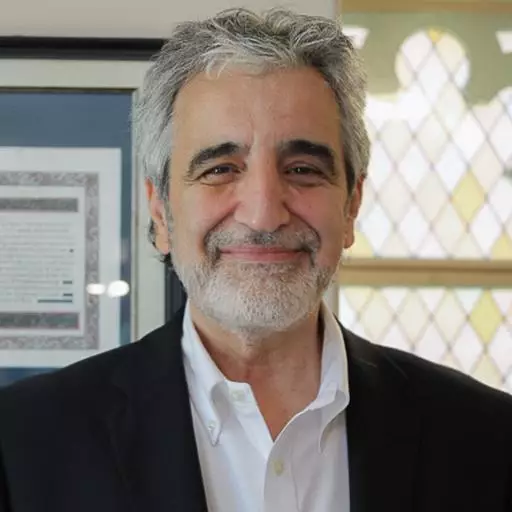
Messianic Leader J. Isaac Gabizon
Guest (Male): Shalom and welcome to Shalom Ariel and to the sixth message in our study on Zephaniah with Messianic leader Jacques Isaac Gabizon. Despite the great calamities of the Day of the Lord that we hear in Zephaniah, we are drawn as well to God's lovingkindness in such passages as Hosea 2:19-20, which points to the beautiful covenant of marriage that God has with His people.
This is something that we need to hear as well when we feel so far removed from the lovingkindness of God. Sometimes we feel this distance because of our own sin. Sometimes it's our apathy and sometimes it's our complacency. But then we look at Israel. And though she was an unfaithful wife, the Lord is here making a tender appeal.
He is making her an intimate promise of His unfailing love and His Rachamim. That's Hebrew for His compassion. And He says that He will betroth her as He betroths us through Yeshua, and that promise is ours forever, Le'olam. The greatest outcome of this betrothal is this: you shall know the Lord.
You shall understand His mercy and enjoy His grace, and those blessings are given to us just because He loves us. Those two verses say, "I will betroth you to Me forever; I will betroth you in righteousness and justice, and in love and compassion. I will betroth you in faithfulness, and you will acknowledge the Lord." That is the beautiful silver lining even on the darkest clouds of our lives. Be blessed as you listen in to today's message with Messianic leader Jacques Isaac Gabizon and Shalom Shalom.
Jacques Isaac Gabizon: There also was a time of silence, if you remember, before the most severe part of the Day of the Lord is poured on earth. We read in Revelation chapter 8, verse 1, just before the seventh seal is opened and the seven trumpets along with the seven bowls actually are poured on the earth, and there was silence in heaven for about half an hour.
In previous chapters of Revelation, we read of the elders in heaven and the martyrs of the tribulations and all the angels of God, they were loudly praising our God and singing in unison, but suddenly, there's a deafening silence. If there's a place where the expression "silence before the storm" takes on its full meaning, it is right here in chapter 8 of Revelation and in Zephaniah chapter 1, verse 7.
It is after this silence imposed in eternity that the sixth seal opens up and the seven trumpets begin, one by one, to be blown. The silence reminds us of being in a courtroom. Imagine you've been watching a long trial—witnesses testifying, lawyers arguing, evidence being laid out—then the moment comes.
The judge is handed the final verdict, and suddenly the room falls completely silent. No whisper, no movement, not even a cough. The silence doesn't mean that nothing is happening; it means that everything is about to happen. The weight of justice, of final decisions, of consequences, all hangs in the air. That is the kind of situation Zephaniah chapter 1, verse 7 brings us to.
Why this silence? Perhaps to bring heaven and the reader to pray. It also gives us a sense of the severity of the coming time. Jesus Himself describes this moment. Just listen to what He says in Matthew 24:21. He says, "For then there will be a great tribulation, such as has not occurred since the beginning of the world until now, nor ever will."
This is when He comes back. That is an incredibly powerful statement, so profound that it commands solemnity and causes heaven itself to pause and to pray. Now let us dig a little deeper and see what the Bible says about the day, for these themes of the Day of the Lord run through the 66 books of the Scriptures.
The Day of the Lord must be one of the most recalled and repeated moments in Bible history. The term "the Day of the Lord" itself is used some 19 times among many of the prophets—Isaiah, Ezekiel, Joel, Amos. But in addition to this term, the phrase "that day," "the day," "the great day," and similar titles occur more than 75 times throughout the Scriptures, spoken of practically by almost all the 16 writing prophets. It is often followed by a description of the final wars.
We can go back as far as with Adam and Eve. They were the first recipients of the first Messianic prophecy in Genesis 3:15, which speaks of the crushing of the head of the serpent. For this is what the Day of the Lord is about. Then Enoch—he found comfort from the widespread corruption of his time, which was already present on earth. In the prophecy of the Second Coming, he says, "Behold, the Lord came with many thousands of His holy ones to execute judgment upon all." He saw it.
Then came the prophet Jeremiah. He uses very strong terms, calling it the "time of Jacob's trouble." The word trouble, tzarah, is equivalent to tribulation. It means affliction, anguish, distress. We can feel this already happening. Another prophet, Joel, has this theme as his whole book: the Day of the Lord.
This book brings out the severity of the time when Joel says in chapter 1, verse 15, "Alas, for the day! For the Day of the Lord is at hand, it shall come as a destruction from the Almighty." Amos as well, at a time when Israel was flourishing and the people were under the impression that the Messianic times were soon to be established, Amos comes to them and he tells them, "Woe to you who desire the Day of the Lord! For what good is the Day of the Lord? It will be darkness and not light."
Then comes Zephaniah. Here the description is highly detailed. Here the word day, yom, is used to describe this era, mentioned 20 times in just a short book. Verse 7 of chapter 1 is just an introduction, but once you reach verses 15 to 16, we encounter a series of ten synonyms, all preceded by the word "a day of," mentioned six times.
A day of wrath, a day of trouble, a day of destruction and desolation, a day of darkness and gloom, a day of clouds and thick darkness, a day of battle cry—that is of the shofar. This verse is surely among the most difficult in all Scripture to read. It is in this description where we find the word Shoah twice: yom Shoah u-meshovah.
It is the third term, a day of destruction and desolation. The rabbis interpreted this passage as the calamities which fell on Israel on the ninth of Av or Tisha B'Av. The destruction of the first temple in 586 BC and the destruction of the second temple in 70 AD fell on the same date.
The expulsion of the Jews from Spain in 1492 is reported to also have fallen on the same day. Today they link the Holocaust to this day, which is named Yom HaShoah. But the Day of the Lord is not only for Israel. It begins with Israel but extends to all nations and every individual living at that time.
The Day of the Lord is also mentioned and affirmed more than a few times in the New Testament. The first believers and a few through history lived with a deep awareness of this reality. Right at the heart of the New Testament, in 1 Thessalonians, Paul comforts the believers in Yeshua by affirming that this day is not for those who accepted the Messiah as their personal Savior.
He begins by saying in chapter 5, verse 2, "For you yourselves know full well that the Day of the Lord will come just like a thief in the night." The Spirit of God who inspired these words assumes that we are all aware of this day so that we are not surprised if a thief enters our home in the middle of the night, especially today as we see our world changing and nations preparing for this day.
But he says, "But you, brethren, are not in darkness that the day would overtake you like a thief. Don't be scared of it." However, Paul also makes sure to remind us that the body of the Messiah will not go through this period of judgment, for we have been graced by believing in the death and resurrection of Yeshua.
He says in verses 9 and 10, "For God has not destined us for wrath, but for obtaining salvation through our Lord Yeshua the Messiah, who died for us, so that whether we are awake or asleep, we will live together with Him." Amen. This is a beautiful thought. It is another important teaching of the Scriptures that even though we learn about these things, we will not go through them.
However, if we're told about these things, if we're still on earth at this time, why? So that we can tell the others, so that we can warn them, so that we can start praying as well. You know that today very few within the visible church, visible Christianity, speak of the Day of the Lord.
Some do not even know what it is, though it is written throughout the prophets with clarity, urgency, and divine authority. But this spiritual neglect is not limited to the church; it is also evident in modern Judaism. At a time when they need it the most, they don't actually consider it.
Ask the average Jewish person about the Day of the Lord and most will look back at you in confusion. It is unfamiliar, yet it is in their own prophets in these scrolls that are read for generations in their synagogues week after week. Yet in ancient Judaism, like in the Talmud and in different ancient commentaries and translations, even up to the Middle Ages, this Day of the Lord was well known, but today it is not taught at all.
It is just neglected. They need to know. The Talmud speaks of this dire time before the coming of the Messiah and has many expressions for it. They call it the birth pangs of the Messiah, the footsteps of the Messiah. Another term in the Mishneh Torah of a most revered rabbi in Judaism, the Rambam, Maimonides—he speaks of the days of the Messiah and explains what it's like. Another term is the world to come, Olam Ha-Ba.
But all of this is barely known today in modern Judaism, for today most of them think that the Messiah will come only to establish the kingdom. And the abandonment of these Jewish prophets in modern Judaism is reflected by the change of the weekly reading of the Hebrew Scriptures in the synagogues.
Today the parashah is a one-year cycle where the first five books of the Torah are read along with some passages of the prophet called the Haftarah. However, in the first century up to about the third century, the cycle was not one year but was three years. Within these three years, they read much of the prophets and, would you believe, even Isaiah 53.
The problem is that the reading of the prophets was cut down about 66%, and so today when I mention the names of different prophets like Zephaniah, Obadiah, Habakkuk, they do not know what I'm talking about. It is time that the prophets be revived not only for Israel, but also for the churches, I believe. Amen.
Now let us go back to the text of Zephaniah and see the information the Lord gives us on this day. Let's read again Zephaniah 1:7. Powerful verse. "Be silent before the Lord God! For the Day of the Lord is near, for the Lord has prepared a sacrifice, He has consecrated His guests." Now notice the profound irony here in the use of the word sacrifice and guests.
It is as if a feast was being prepared. As for the word for sacrifice, it is zevaḥ. It is used for communal sacrifices and often connected with peace offerings. Zevaḥ is often a shorthand for zevaḥ shelamim, that is peace offering, and used for an offering of joy, as when Jacob met his brother Esau after an absence of 20 years.
So he made a zevaḥ. But why use this type of sacrifice? Who is actually joyful here? It seems that the joy is with the nations who are gathered. As we have mentioned in the introduction, they are so joyful because they are so sure and even convinced they will put an end to Israel because this is where they gather.
But little do they realize that it is the Lord who regulates all of these things. Here in Zephaniah, we read that He consecrated them. The word is from the root Kadosh, which means He made them holy, so to speak. He sanctifies them as if God was preparing them for the sacrifice.
But who actually gathers them for this sacrifice, and where exactly are they going to meet in Israel? We have to go to the book of Revelation. It is in Revelation 16 where we are given the answers as the Apostle John sees demons looking like frogs coming out of the mouth of the Antichrist and the false prophet.
He says in verse 14, "For they are spirits of demons, performing signs which go out to the kings of the whole world, to gather them together for the war of the great day of God, the Almighty... And they gathered them together in the place which is called in Hebrew Har-Magedon." This word "gather," by the way, is the Greek for sunagó.
It could describe any kind of gathering, but it also often describes a joyful gathering and invitation to a feast and even a religious one, for this is where we get the word synagogue, by the way. And all these nations are brought to northern Israel in the valley called Armageddon.
The background picture, by the way, is one taken in one of our trips of the valley of Armageddon, a part of the valley—it's huge, by the way. The rejoicing of the nation and their assurance reminds us of the many wars that were waged against Israel in the last 80 years, and especially the shortest one, the Six-Day War in 1967.
Some of you may remember. Just before this, there was much joy and overconfidence of victory with some of these countries who came against Israel. In the Middle East media, especially from Egypt and Syria, they read headlines like "The hour of destiny has arrived. We shall annihilate Israel."
And there were even reports of commemorative coins minted and marches planned to celebrate victory over Israel right there in Jerusalem. This is when, in 1967, Egypt lined up 80,000 men, Syria 40,000, Jordan 40,000 men, Saudi Arabia 20,000 men, Iraq sent 5,000 troops to help Syria.
And they were not alone. While the war was in progress, 30 other nations of the world were giving military and financial support to these nations. Soviet advisers were active in both Syria and Egypt, and 30 North Korean pilots were flying in combat, that is, in the Egyptian Air Force.
The nations had begun to gather against Israel as Zechariah actually tells us. They lost because God was there. Amen. At the end of this war, the Arabs actually called for a ceasefire. So in one week's time, Israel's land increased from 8,000 to 34,000 square miles, or four times its original territory.
But it is a similar thing that we read will happen at the end time, but in a much bigger proportion. It is too bad that they do not remember history and run to Yeshua for salvation. And it is right after this where Zephaniah gives us some details of the attack.
While his prophecies have a double reference, speaking of the Babylonian invasion, it also points to the end times, as many of these places he mentions in Jerusalem are still there, actually. We have mentioned them before, but now see the actual verse in Zephaniah 1:10-11.
It says, "'On that day,' declares the Lord, 'there will be the sound of a cry from the Fish Gate, a wail from the Second Quarter, and a loud crash from the hills. Wail, O inhabitants of the Mortar!'" First notice the words "a cry." The root means to call out for help under great distress.
"A wail," yelalah in Hebrew, a word only occurring in the prophets related to anxiety, sorrows, and distress. "A loud crash," gadol shever, a breach, a ruin, from shavar, which means to break, to break in pieces. It's like a crescendo, by the way. And notice these three places.
Fish Gate—this is north of Jerusalem, today it is the Damascus Gate leading to the Muslim part of the city. From there, from the Fish Gate, the Mishneh. This one leads to the Jewish quarters, the old city of Jerusalem. You can see it even in the picture. And then the great crashing of the hills surrounding Jerusalem.
It's so vivid. But to wrap up this message, there is yet another title that is given to the Day of the Lord in ancient Judaism, but this one is well known today. The Talmud also speaks of Kibbutz Galuyot, that is the ingathering of the exiles. This teaches that when the Messiah comes, all the Jewish people of the world will be brought back to the land.
And today, because of the increased antisemitism, many Jews are thinking, even contemplating, immigrating to Israel. We hear this more and more often. However, while I understand that it is a great thing to immigrate to Israel, the Bible warns the inhabitants of the country that when these prophecies begin to happen, to actually leave the country, and then afterwards the Messiah will come and will bring them back to the country.
I want to share three important verses, and I wish they would hear, know these verses. The first one is in Zechariah chapter 14, verse 2. It says, "For I will gather," this is God speaking, "I will gather all the nations against Jerusalem to battle, and the city will be captured, the houses plundered, the women ravished, and half of the city exiled, but the rest of the people will not be cut off from the city."
These are the words that are difficult to read, by the way. It is a situation hard to imagine, but this is what Zechariah tells us will happen just before the second coming of Jesus. But Yeshua also warned the Jewish people to leave that city and even all of Judea when these things begin to happen.
He says it in Luke 21:20-21, "But when you see Jerusalem surrounded by armies, then know that its desolation is near. Then let those who are in Judea flee to the mountains, let those who are in the midst of her depart, and let not those who are in the country enter her."
And just before the nations enter Jerusalem, and as soon as they see those nations surrounding Jerusalem and preparing for the invasion, at this time, they are asked to leave Israel. But this is not the only passage; another one is found in Matthew 24:15-16.
I want to read for you, "Therefore when you see the abomination of desolation which was spoken of through Daniel the prophet, standing in the holy place (let the reader understand), then let those who are in Judea flee to the mountains." When the abomination of desolation is set up in the third temple, that is when the Antichrist sets up his image there, this is the time to leave Jerusalem.
The mountains—I believe he mentions the mountains of Judea to lead to Petra. These signs are given to the people who will be present during the tribulation times and will reside in Israel. And these signs, the Bible says after that the wrath of God will pour on the earth for three and a half years, 42 months, 1,260 days—this is how John describes them in the book of Revelation.
Yeshua alone along with Zechariah and Zephaniah are giving the Jewish people some very precious information. And in these three sections of Matthew, Zechariah, and Zephaniah, these things are immediately followed by the second coming.
But as always, after all prophecies are given, there's always a good word from the Lord, a word where He says, "I'm coming back for you." For this, I want to bring you to Zephaniah chapter 3, where it speaks of quiet love. And I want to close with this. This is when all will be re-established during the Messianic times, as we read in verses 16 to 17.
"In that day it shall be said to Jerusalem: 'Do not fear, O Zion; let not your hands be weak. The Lord your God is in your midst, the Mighty One will save; He will rejoice over you with gladness, He will be quiet in His love, He will rejoice over you with singing.'" It is here where we read of the quiet love, like a father who quietly enjoys seeing his children playing.
I will close with this story. There was once a young man who, after years of living away from home, returned to visit his aging father. As they sat on the porch, the son said, "Dad, I don't remember you ever saying I love you when I was a kid." So the father paused, looked at the horizon, and said, "Every morning before work, I woke up at 5:00 AM to warm up the house so you wouldn't be cold.
I packed up your lunch and made sure you had clean clothes. I fixed your bike when it broke and stayed up late helping with your homework. I did not always say it, but I showed it every day." That's quiet love. Amen. Let's bow our heads in prayer.
Heavenly Father, as we contemplate all that we've learned from this great book of Zephaniah so far, today we ask that You teach us Your ways, show us Your path, for Your ways are good ways and all Your paths are wise. Teach us common sense, Lord, as You define it. Give us Your wisdom for solving our problems, for investing our time, and for establishing our priorities.
And Lord our God, deliver us from all that is fearful and despairing, all that is vain and defiant, and even all of our unbelief and superstition. Help us to see life in light of eternity and see You in the light of Your word, that we might always be as the oil, the shemen, strong and valiant, and as wise as serpents and harmless as doves.
And to the congregation, the Lord bless you and keep you, the Lord make His face shine upon you and be gracious to you, the Lord lift up His countenance upon you and give you peace. Amen and amen. May the Lord greatly bless you all.
Guest (Male): Shalom Ariel is a daily radio program emphasizing the Jewish perspective of Scripture. God is not through dealing with Israel, nor will He renege any of the promises He has made to her. Our teacher for this program, Jacques Isaac Gabizon, is a Messianic Jewish believer and Messianic leader at Beth Ariel congregation right here in Montreal.
If you've been encouraged by the messages, we'd love to hear from you. Give us a call at 1-888-685-5902, or you may write us at info@bethariel.ca. You are also welcome to join us for our Saturday morning services. We are located at 6297 Monkland Boulevard, corner of Madison in NDG.
The message is given in English, but we do offer simultaneous translation into French. Services begin at 11:00 AM. We have Shabbat school for children of all ages up to and including teens. You may also download audio messages from our website at bethariel.ca and enjoy other in-depth teaching from Jacques Isaac.
If you would like to sign up for informative newsletters, log on to our website and add your name to our email list. Shalom Ariel is a listener-supported program. If you have it on your heart to donate, it will be a great blessing for the continuing ministry and outreach of Beth Ariel. Thank you and Shalom Shalom.
Featured Offer

Prophecies take up about ¼ of the Scriptures so we cannot simply ignore them. Knowing prophecy enables us to give a clear presentation to others of why things unfold the way they do in such areas as politics, morality, technology and global ecological changes. It also helps us to rightly place Israel in God’s prophetic plan.
Past Episodes
- The Armor of God
- The Believers in the End Times
- The Book of Daniel
- The Book of Deuteronomy
- The Book of Ephesians
- The Book of Esther - Purim
- The Book of Exodus
- The Book of Ezekiel
- The Book of Genesis
- The Book of Hebrews
- The Book of James
- The Book of Jeremiah
- The Book of John
- The Book of Leviticus
- The Book of Numbers
- The Book of Philippians
- The Book of Revelation
- The Book of Romans
- The Book of Ruth
- The Book of Zechariah
- The Feast of Passover
- The Feast of Purim
- The Feast of Shavuot - Pentecost
- The Gospel of Matthew
- The Letter to the Galatians
- The Messiah in Isaiah
- The Messiah in the Book of Isaiah
- The Messiah's Prayer
- The Nativity: The Unwrapped Gifts of God
- The Resurrection of the Messiah
- The Sermon on the Mount
- The Tabernacle

Video from Jacques Isaac Gabizon
Featured Offer
Prophecies take up about ¼ of the Scriptures so we cannot simply ignore them. Knowing prophecy enables us to give a clear presentation to others of why things unfold the way they do in such areas as politics, morality, technology and global ecological changes. It also helps us to rightly place Israel in God’s prophetic plan.
About Messianic Viewpoint
About Jacques Isaac Gabizon
Contact Messianic Viewpoint with Jacques Isaac Gabizon
info@bethariel.ca
http://www.bethariel.ca/
Beth Ariel Congregation
CP 46521 CSP Boul. St Jean
Pierrefonds, QC, H9H 5G9
Toll free (888)-685-5902