


Did Solomon or Jesus Fulfill God’s Promise to David?


Text ASK to 90398 to ask Pastor Mike a Bible Question.
Text GOLIVE to 90398 to be notified when ASK Pastor Mike is LIVE.
Find more ways to learn your Bible at https://focalpointministries.org/
Have a Bible Question? Ask Pastor Mike! https://askpastormike.live/
Pastor Mike: You're on the air with Pastor Mike. How can I help?
Laura: Hi, Pastor Mike. I'm wondering how we should approach interpreting biblical prophecies, particularly the one in 2 Samuel chapter 7, verses 8 through 16. Initially, it seems like it's referring to Jesus due to the promise of an everlasting throne, but then God mentions disciplining David's son in the prophecy, which obviously doesn't fit Jesus because He was sinless.
Then it led me to think that it was referring to Solomon, but then again, the everlasting throne—so, this conundrum. I've heard of the idea of a lesser and immediate fulfillment and a greater fulfillment in Jesus. How do we determine this? Is there a scripture supporting this approach? How can we even address a skeptic who might see this as convenient?
Pastor Mike: It's helpful. In all these biblical prophecies—all that I would say are legitimate biblical prophecies—there is often a near-field and a far-field fulfillment. A skeptic might say they don't appreciate that, but the reality is you cannot, in many of these passages, say this only applies to the near-field focus because they don't.
Think about even the child that was to be born in Isaiah. You start calling Him Mighty God, Wonderful Counselor, Everlasting Father. How in the world can you jive that with the reality of a human baby? You can't. Now when Christ comes on the scene and He starts pulling all these things to Himself, He talks about Himself being the bread of life. The showbread was to represent something, and He says, "I am that."
On the day that they're pouring out water in the ceremonies as they are going through all that they do at the Feast of Tabernacles, He says, "I'm the living water. If you drink from me, you'll never be thirsty." He keeps making the connections of biblical analogy and biblical symbolism and applies it to Himself.
When you look at 2 Samuel 7 or Ezekiel 28 and Isaiah 14, these are statements about Satan, but they start out talking about the Prince of Tyre or some figure that has a historical precedent. You can read that and say the Prince of Tyre is a mess. But He's not calling him the king, but he was the king.
Now we're going to talk about the king who stands behind the prince that was described as human in the first 10 verses. In the next 10 verses, we're talking about how he was in Eden, the garden of God, and he was a cherub on the holy mountain. How is he covering the Prince of Tyre? You could write a biography on him if you were there in Ezekiel's day.
You've got something that's impossible to read if you're going to take the words literally. You have that in the Davidic Covenant, that you can't just read it all and look at it as Solomon because it doesn't fit. It's a lot like what you have in all of the late prophecies at the end of the timeframe of Judah.
Everything before 586, when Nebuchadnezzar destroyed Jerusalem and took them away in three deportations, you could see all these promises of reassembling. They did reassemble under Zerubbabel, Ezra, and Nehemiah, but never to the extent that He talked about. Jerusalem would be the head, and the whole world would be its tail. Everyone would bring their riches into Jerusalem, every king of every nation. That has not happened.
Jesus gives us this precedent, not only in saying all these things are talking about me, but He even takes some like in Daniel 9 about the abomination of desolation. If you read that in that day and then you lived from the time of Daniel in the 5th century BC to the 2nd century BC when Antiochus Epiphanes did exactly that, everyone understood that as the abomination of desolation.
Jesus comes and says in Matthew 24 there's going to be another one when you see the abomination of desolation that Daniel spoke about in the prophecy. Jesus is giving us the key to the fact that there are near-field and far-field fulfillments. We often call them the ultimate fulfillments.
If you read everything literally and carefully, you'll have to say Solomon could not have fulfilled everything spoken of in the Davidic Covenant, just like everything in the Palestinian Covenant in Deuteronomy was not fulfilled at any time in Joshua's day or any time even in David's day. The world did not bow to David. Surrounding nations did, but the world didn't.
When is that going to be fulfilled? That's where in the New Testament Jesus says there's more to come. He says one day you're going to see the Son of Man coming on clouds in glory, and all eyes will see it. Every nation will be subject to me. He'll separate the peoples as a shepherd.
You've got to get everything in view. You can dive into a passage like the Davidic Covenant in 2 Samuel and say it sounds like He's talking about Solomon. He certainly is because He's talking about someone who's going to commit sin, and they've got to be disciplined. Jesus didn't sin, and we know that.
The rest of it, though, like a never-ending reign? We didn't even finish the Old Testament without knowing we don't have a king. There's no king in Israel by the time we get to the end of the Old Testament in the time of Haggai, Zechariah, and Malachi. Where's this eternal king?
Now we have the prophecies in the New Testament. Here they come through Zechariah. They come through the angel. Now there's the one being born where the government's going to rest on His shoulders. All the quotes now go back to the prophets who spoke toward the demise of the end of the time of Judah there in the 5th and 6th century BC.
Now the New Testament picks it up and says it's going to happen. We're going to start with the birth of the king, and He's going to bring in justice, and a light's going to dawn among the Gentiles. All of those are statements about the Old Testament promises. We thought they were fulfilled when Zerubbabel came back after the Babylonian captivity, but it didn't.
It did not fully, though it kind of did. There are hints throughout the Old Testament. Even when Ezekiel is talking about the temple that's going to be rebuilt, he gives very specific measurements for all of it. You can lay those out. All of them are known. They are there. You can say this is what we're going to build. This is what God is going to have built.
It wasn't built. Zerubbabel built a temple that was smaller than Solomon's temple. It said the people that were old enough to live through the Babylonian captivity saw it and they wept because of how small it was. The others were rejoicing because they finally had a temple. He says you couldn't hear the difference between the wailing and crying of the old men and the cheers of the young men.
They knew this wasn't the temple. God didn't do what He said He was going to do. It's not the temple of Ezekiel. Then there must be a temple that's yet to be built. That's why we have to take the Old Testament seriously. Some of it was fulfilled in the first coming of Christ. There was a son of David that sat on the throne, and Luke and Matthew were careful to trace His lineage both through Mary and through Joseph back to David to say here He is.
He was called that, the Son of David. That's who He was. I guess that's a fulfillment of 2 Samuel 7. It's a fulfillment of everything that spoke of the eternal prince. He left and said He's going to rule the world. He said, "I'm going to leave you and come back the way you saw me."
Zechariah 14 says He's going to come back, and when He comes back, He's going to come back as a victor, as Jesus says in the book of Matthew especially. "I'm going to come back and rule the world." We tie all these prophecies together and say some was fulfilled, like in 2 Samuel's case in Solomon's life, and some is yet to be fulfilled.
Same thing with Ezekiel in saying Tyre and the leaders of Damascus were enemies of God, but they were not the enemy, the ultimate enemy that walked around in the Garden of Eden. Some of it applies and some of it doesn't. This is the nature of Middle Eastern prophecy.
Here we are as Westerners thinking in a Western way. There are some good commentaries being written today that try to help us look at all of scripture through the eyes and the lens of Easterners. I think that does help us to not treat it like we would read the New York Times or the Wall Street Journal and say why doesn't it just say this?
That's not the literature we're reading. When we're reading 2 Samuel, think about it. You're reading something that is 3,000 years old. It was written 3,000 years ago. Even the nature of prophecy as a literary genre is going to be different than what we might expect if we're reading something today that Jean Dixon predicts. She's going to write differently than what we have.
That's why understanding the literature of the Bible, looking at everything and knowing that God is communicating what He means, and at the end of the day, some of it applies to the near field, some of it applies to the ultimate, and we make that distinction. Honest scholars don't have a problem with that. We recognize that. Someone can dive into one passage and say no, but take it all, look at it all and recognize that everything that was promised about David's son was not fulfilled in Solomon.
Laura: Sometimes it's a little hard to hear, but I guess what it sounds like is Jesus is the one who points to prophecies being in this nature because He talks about it in Matthew 24 about the abomination of desolation. That helps us go, "Okay, so there are these two different near and the far, or the ultimate fulfillment of prophecy." That was my other thing. How do we even know that that's how we're supposed to approach it? But you're right. Jesus does say that in Matthew 24.
Pastor Mike: Correct. Think about everything that was promised, and this is why I'm a premillennial Christian, because I see everything that was promised for the reassembling of Israel with the northern tribes and the southern tribes. Think of the dry bones prophecy of Jeremiah. They're going to come together and joining together the north and the south and two sticks and they become one in His hand.
It didn't happen with the coming of the church. Then we get an ending book to the New Testament called the book of Revelation. By the time we get to chapter 7, we learn about the 144,000 from the 12 tribes of Israel. Everything that we saw in the book of Jeremiah looks like it's still yet to come.
We didn't see clearly that the coming of Christ would come in two installments, but we're stuck with that because we live in the interim. As He left, He promised He's coming back, and then all of those promises are going to be fulfilled to Israel, including 12 tribes in the land leading the world.
That's why we expect a millennial kingdom because it says six times in Revelation 20 it's going to be a thousand-year period where all of this is going to be played out. It's all about assembling all the promises, laying them out, systematically figuring out which ones have been fulfilled and which ones haven't.
Then you look at Christ's teachings and He said precisely that. Some have and some haven't. He didn't come to rule the world with a rod of iron yet, but He says, "I'm coming back to do that." He says His wrath is going to be kindled and He's coming. He didn't do it on His first coming. He's coming again to fulfill all that's not yet fulfilled. I hope that helps, Laura. Good question.
Laura: It did. Thank you.
Pastor Mike: Okay.
Featured Offer
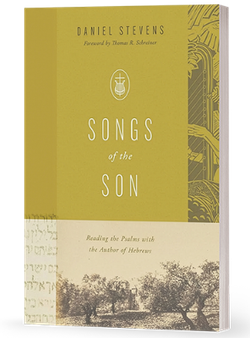
Jesus isn't just a New Testament figure. He appears prominently throughout the Old Testament...and you can see it most poignantly in the ancient song book of Israel: The Psalms. Explore and appreciate the connections in the Psalms to the Messiah in the New Testament that point to his supremacy.
If you want to gain a profound understanding of the Messiah in the Old Testament, be sure to request the book Songs of the Son by Daniel Stevens.
Past Episodes
This ministry does not have any series.
Featured Offer
Jesus isn't just a New Testament figure. He appears prominently throughout the Old Testament...and you can see it most poignantly in the ancient song book of Israel: The Psalms. Explore and appreciate the connections in the Psalms to the Messiah in the New Testament that point to his supremacy.
If you want to gain a profound understanding of the Messiah in the Old Testament, be sure to request the book Songs of the Son by Daniel Stevens.
About Ask Pastor Mike Live
Join us each Friday as Pastor Mike tackles hard-hitting questions Christians face in the modern world. Arm yourself for your next challenging conversation by getting relevant, biblical answers on hot topics of the day.
About Focal Point Ministries
Contact Ask Pastor Mike Live with Focal Point Ministries
info@fpr.info
https://askpastormike.live/
Telephone:
1-888-320-5885
Mailing Address:
Focal Point
P.O. Box 2850
Laguna Hills, CA 92654