

The Holy Spirit 5: Fullness of the Holy Spirit


Drawing from Ephesians 5, Reverend Alexander unpacks the command to be filled with the Spirit, a directive for all believers that is both imperative and continuous. This episode sheds light on how being filled with the Spirit leads to a transformed life that glorifies Christ. Join us in asking ourselves the question: Are we living in the fullness of the Spirit? on Hear the Word of God.
Guest (Male): Welcome to "Hear the Word of God," the online and broadcast teaching ministry of the Reverend Eric Alexander.
Eric Alexander: For a number of recent Sunday evenings, we've been concentrating on the theme of the person and work of the Holy Spirit. That is, on the Sunday evenings when I have been leading our worship. We began by looking generally at the person and work of the Holy Spirit in terms of the Bible's teaching on His personality and divinity, His work to regenerate the sinner, to baptize us into Christ whereby He unites us to Him and makes us part of His body, to inspire and write Holy Scripture, to transform the believer into the likeness of Jesus. There, in a very rough summary form, you have the person and work of the Holy Spirit.
Then we considered the whole issue of the gifts of the Holy Spirit in 1 Corinthians 12 and 14, in Ephesians 4, and Romans 12. Last time, we took up the subject of the fruit of the Holy Spirit and thought a little about that. This evening, I want to conclude this series by turning with you to think about the fullness of the Holy Spirit. For that, we would naturally turn to Ephesians 5:18 and to that verse that we read where Paul exhorts the Ephesian believers, "Do not get drunk with wine, for that is debauchery, but be filled with the Spirit."
Now, we need to clarify the terminology we use when we are thinking of the Holy Spirit's ministry. Particularly, there are three things that we need to be clear about, three words that we need to understand and discriminate between. One is the baptism of the Holy Spirit, the second is the sealing of the Holy Spirit, and the third is the filling of the Holy Spirit.
1 Corinthians 12:13 tells us that we are all baptized by the one Spirit into the one body, that is into Christ. Thereby, we are joined or united to the Lord Jesus, so that the baptism of the Holy Spirit is a once-for-all experience of all Christians at conversion. So, if you are a believer this evening, you have, according to 1 Corinthians 12:13, been baptized by the one Spirit into the body of Christ.
Ephesians 1:13 and Ephesians 4:30 tell us that we are sealed by the Holy Spirit at the same time in the process of our salvation. The Holy Spirit has sealed us or marked us out as being truly God's for the day of redemption. Ephesians 4:30 says, "Do not grieve the Holy Spirit of God in whom you were sealed for the day of redemption." Now, the significance of that is that at the beginning of our Christian experience, God seals us by His Spirit to assure us that we are truly His and that we will be kept His until the consummation of our redemption when Christ returns again in glory and our salvation is complete.
So, the sealing of the Holy Spirit belongs also to the initial experience of the work of grace. Now, the third word, filling, refers to our present experience of the ministry of the Holy Spirit. There is one baptism, there is one sealing of the Spirit, so we are never commanded to be baptized by the Holy Spirit. You will never find in Scripture a commandment, "Be baptized in the Holy Spirit," nor will you ever find a commandment to be sealed with the Holy Spirit for the simple reason that both of these things have happened to you when you became a Christian.
But we are commanded to be filled with the Holy Spirit and to be so continuously. At this point, I think we need to look fairly carefully at the grammar of this exhortation in Ephesians 5:18. There are three things that I want you to notice with me about it. First of all, it is in the imperative mood. "Do not get drunk with wine, for that is debauchery, but be filled with the Spirit." That is, it is a commandment and distinguished, therefore, from the baptism of the Holy Spirit which, as I said a moment ago, is something we are never commanded to be because we already are.
But it also means this whole concept of the filling of the Holy Spirit being imperative and a commandment means that it is not an experience for which you pray primarily. It is an exhortation which you obey. Now, that is an important distinction. There are many people who go around seeking the fullness or the blessing or whatever. Many of them go to places where there are conventions seeking and praying that the fullness may come upon them. What they have in mind, I know from talking to many of them, is a kind of divine afflatus which they believe will come down upon them in answer to prayer and they will be lifted into a new dimension of Christian living.
Now, the biblical view of the fullness of the Holy Spirit is that it is not an experience for which you pray and wait for God. It is an exhortation which you obey. That is an important thing for us to grasp. Let me quote Dr. Martin Lloyd-Jones to you in this connection. "I deduce," he says, speaking of the filling of the Holy Spirit, "that this is not something which happens to us. This is something we control and we determine. As a man decides and controls whether he is going to be filled with wine or not, so it is he himself who controls and decides whether he is going to be controlled by the Spirit or not. Here we have a commandment, an injunction, an exhortation."
Now, if we are not clear in this area of the teaching about the filling of the Holy Spirit, then we are going to be confused everywhere. The second thing that is important, simply in passing, is that not only is this in the imperative mood, it is also in the plural form. In other words, it is addressed to the whole Christian community. What he is saying addressing them in the plural is, "Do not get drunk with wine, for that is debauchery, but be filled," and it is plural, "with the Holy Spirit." The fullness of the Spirit is, therefore, not an elitist privilege of the few. It is something God intends for all of His people. It is, in other words, normal Christian experience.
When Paul is speaking about what the fullness of the Holy Spirit will mean, he is speaking about normal Christian experience. He is not speaking about an honors stage which a few seek and less achieve. It is normal Christian living that Paul is speaking about here. Being filled with the Spirit is normal Christian living and behavior.
So, it is in the imperative mood, it is in the plural form, and the commandment is also in the present tense. There are two ways in the Greek language in which it is possible to issue commands or give an imperative exhortation. One is in the aorist, which means simply that you are describing one action which is done once and never repeated. The other is in the present, describing a continuous action. Thus, Jesus at the wedding at Cana gives an aorist imperative, "Fill the jars with water," and that imperative applies to something that's going to happen once. It is not something they are doing all the time.
But here, when Paul says, "Be filled with the Spirit," he uses a present imperative meaning that we are to go on being filled with the Spirit. For the fullness of the Spirit is not a once-for-all experience. It is not even an injection that you get on an annual basis at a conference or convention, nor is it a weekly thing that happens to you when you come to worship. It is a continuous, ongoing, unceasing experience. "Go on being filled with the Spirit." That's what he's saying. It is present imperative.
Now, we need to go on from there to ask, what does the commandment mean? Well, you will notice that Paul actually gives us two commands, one negative and the other positive. Clearly, he intends the one to have a comparison of some sort with the other. The negative commandment is, "Be not drunk with wine," and the positive, "but rather be filled with the Spirit." Now, I think it's important for us to see that there is here both a comparison and a contrast. If we examine this together, it will help us to understand what Paul means by being filled with the Spirit.
First of all, the comparison. The comparison derives obviously from the whole idea of control. The person who is filled with wine is, as we say, under the influence. They have deliberately put themselves under the influence of alcohol, and you know what that does to people. They talk differently, they walk differently, they think differently. Their priorities, for example, are destroyed so often. Their brain is depressed and their discernment is affected. Their thinking is all confused. Things that would normally be of primary importance to them, they have altogether forgotten about.
I knew a man once in the area of Ayrshire, from which some of our friends who are here this evening come, who had gotten himself under the influence of alcohol to such an extent that all his thinking was distorted. He landed in the village of Hurlford having walked from Newmilns and found a lorry there, and he thumbed a lift. He lived in Newmilns; his family were waiting for him to go home. The driver opened the window and said, "Where are you going?" "Anywhere," he said. "Well," he said, "I'm going to Coventry." "So am I," he said. His thinking, you see, had been totally distorted. His normal discretion and discrimination and understanding had been affected. It's this sort of thing; it's a lack of control. Indeed, in Scotland, we use the word "full" to describe this condition. What we are speaking about is a lack of control because the control has been taken over by alcohol. It is really very incredible how utterly stupid so many people make themselves under that influence.
Now, the man who is being filled with the Holy Spirit has, by comparison, surrendered himself and his faculties to the Holy Spirit's influence and control. Since the Holy Spirit's great concern is to glorify and honor the Lord Jesus, if I surrender myself in every part of my being to His control, then the control He will exercise over my mind is to make it think with the mind of Christ. The control He will exercise over my speech is to make me speak with the grace of the Lord Jesus. The control He will exercise over my heart is to fire it with a new love for the Lord Jesus. The control He will exercise over my decisions will be to make Jesus' priorities my priorities. Particularly, He will control my self-interest and self-centeredness because the Holy Spirit has only one interest, and that is to glorify Christ.
Now, that is what it will mean, therefore, to be filled with the Holy Spirit, and that is the comparison. It's a very important comparison. When we are talking about being filled with the Holy Spirit, we are speaking about handing over our faculties, giving every area of our life, surrendering it to the absolute control of the Spirit of God whose office it is in the lives of God's children to glorify the Lord Jesus. Now, I say to you again, that is a deliberate decision. It is a responsible obedience which we make to a commandment of God. It is not something that we wait suddenly to descend upon us from heaven. It is a matter of straightforward obedience.
Now, the contrast that is implied in this negative and positive. The contrast is of great significance because you see in the case of the person who is under the influence of alcohol, "be not drunk with wine," he loses control of himself. That without question is what is happening when you drink, and it is happening generally speaking from the first drink. There is something that happens in your brain to begin to make you lose self-control.
Now, it is a serious mistake to imagine that to be filled with the Holy Spirit is a kind of spiritual inebriation and intoxication in which we lose control of ourselves. Yet, there are many people who imagine that when the Holy Spirit comes and fills a man, he somehow or other is losing self-control and goes into a state of some kind of almost subconscious ecstasy. Now, there are multitudes of movements that have arisen in the Christian world which have made this very error.
By contrast, self-control is the ultimate fruit of the Holy Spirit. In Galatians 5:23, the fruit of the Spirit, the final fruit of the Spirit, is self-control. Under the influence of the Holy Spirit, we do not lose self-control. We gain it. He does not suppress our control of self. He stimulates it into a new direction and into a new goal and aim, namely to glorify Christ.
The contrast is indeed that while alcohol is a depressant, the Holy Spirit is a stimulant. Now, I need some medical support at this point, not in the sense that you may be thinking, but I mean verbally. Let me, therefore, quote to you from Dr. Martin Lloyd-Jones, who was a Harley Street physician before he became a minister of the gospel, and I'm quoting from somebody who quotes from him, but it's put together here in a way that's easier to understand.
He says, "Alcohol, pharmacologically speaking, is not a stimulant. It is a depressant. Take up any book on pharmacology and look up alcohol, and you will find always that it is classified among the depressants. It is not a stimulant. It depresses first and foremost the highest centers of all in the brain. They control everything that gives a man self-control, wisdom, understanding, discrimination, judgment, balance, the power to assess everything. In other words, everything that makes a man behave at his very best and highest."
"But," he goes on, "if it were possible to put the Holy Spirit into a textbook of pharmacology, I would put Him under the stimulants, for that is where He belongs. He really does stimulate. He stimulates our faculties. He stimulates our mind, our intellect, our heart, our will, to honor and please and glorify the Lord Jesus."
Now, that's a very important principle. You will notice how Paul emphasizes the contrast. The result of drunkenness, he says in verse 18, is debauchery. "Do not get drunk with wine, for that is debauchery." That is a total lack of control. It's the behavior of animals rather than of humans. But by contrast, the result of being filled with the Spirit is that our control of self is brought into such a form that there are certain patterns that develop out of our lives when we are under the control of the Holy Spirit.
From verse 19 to verse 21, Paul describes them for us really in four words, four participles that we need to notice. Verse 19, "addressing one another" in psalms and hymns and spiritual songs. Halfway through verse 19, "singing and making melody" to the Lord with all your heart. Third, in verse 20, "always and for everything giving thanks" in the name of our Lord Jesus Christ. Finally, in verse 21, "be subject," and that also is a participle, "being subject to one another" out of reverence for Christ.
Now, you see what Paul is saying. He is saying that when we are under the control of the Holy Spirit, these are the things that are going to follow in our lives. So, the evidence of the fullness of the Holy Spirit is described in these terms. You notice the first of them is what we might describe as fellowship. Verse 19, "addressing one another" in psalms and hymns and spiritual songs, singing and making melody to the Lord with all your heart. But the first of them, addressing one another. Now, the Holy Spirit clearly stimulates us to call upon one another to praise God.
The context probably is public worship, but the emphasis is on the fellowship that we have with each other in worship because, as you will know, there are psalms and hymns in which we do not address God. It's wrong, you see, for us to say that all hymns only address God. Somebody was telling me that there was a new hymnbook that was being produced where all hymns that did not address God had been kept out. Well, you know you would need to cut out some of the psalms if you were to do that because some of the psalms make us speak to one another.
In Psalms, "O come, let us worship and bow down," the Psalmist says. Who is he addressing? He is addressing his brothers and sisters. "O come, let us sing to the Lord; let us make a joyful noise to the rock of our salvation." That's the Psalmist. Now, what is he doing? Well, under the inspiration and control of the Holy Spirit, he longs that men might praise God. He has a hunger in his soul that there might rise up to God praise and thankfulness and worship. He is addressing his brothers in Christ and saying to them, "Come and let us draw near to the Lord. Let us go up into the hill of God together."
You see, there is this concern that we have for one another, not a concern that merely stops at our physical well-being, although it will not exclude that, but primarily a concern for our spiritual health. Oh, my dear friends, are you filled with the Holy Spirit in this sense this evening? Do you look around this company of God's people and say, "Oh, that men would praise the Lord for all His goodness towards them"? "Oh, that we might come into His holy hill and go into His presence together and worship Him." Do you find this in your soul, to encourage your brethren that they might draw near to God? Is that the greatest desire you have for anybody that you really love?
Well, I tell you, you go out into the world this evening and you ask men and women who have no thought of God and no work of grace in their lives, "Do you have this longing? Do you have this desire that other men and women in this city might worship God and bring honor and praise to Him and exalt the Lord Jesus?" and they will say, "What in the world are you blethering about?" But that's what happens when you're filled with the Holy Spirit.
We were singing hymns about that this evening. So many of our hymns do this, you know. "O worship the King, all glorious above, O gratefully sing His power and His love." That's addressed to each other, you see. Now, we need to remember this in worship. This is what we are doing. "Let us with a gladsome mind praise the Lord for He is kind." So, we are saying to one another, "Let us do it. Let us come and worship Him like this." Sometimes we want to encourage one another and we sing, and perhaps it would be excusable if we fixed one another in the eye and said, "Put thou thy trust in God, in duty's path go on." Or if we looked at one another and said, "How firm a foundation, ye saints of the Lord, is laid for your faith in His excellent Word." This is the fellowship that God the Holy Spirit creates.
But you notice that it also leads on to worship, which is its context, and pure worship because the second half of the verse speaks of "singing and making melody" to the Lord with all your heart. That is to the Lord. It is to Him now. It is worship in all its beauty that the Holy Spirit creates, and what the Holy Spirit stimulates here, He is as the great stimulant, you see. What the Holy Spirit stimulates in us is a desire, a simple desire for the exaltation of the Lord Jesus. Whatever that may mean in my own life, in our common life together, He stimulates a desire for the exaltation and worship of the Lord Jesus.
That's why I often say that worship is the one Christian activity that the world cannot understand. The world can understand perfectly well, you see, when you go out in Christian activity to care for the needy. Indeed, it will blame you if you don't do it. The world can perfectly well understand in relation to yourself that you should live a consistent life, and it will blame you if you don't do it. But the one area of Christian activity the world cannot begin to fathom is when you are all taken up with God. And I tell you, it's the Holy Spirit who stimulates that.
Fellowship, worship, thankfulness. In verse 20, "always and for everything giving thanks in the name of our Lord Jesus Christ to God the Father." Now, there is another thing that the Holy Spirit stimulates, you see, a spirit of thankfulness, a sense of being able to look into our lives and recognize the bounteous goodness of God. The Holy Spirit stimulates in us this spirit of thanksgiving, that no matter in what condition we are, we recognize that God is to be praised and we have cause to thank Him.
The fourth mark of the filling of the Holy Spirit is submissiveness. In verse 21, "be subject." Now, that really in the RSV is a new paragraph, but it shouldn't be, properly speaking, because it belongs to the same grouping and is another participle, "be being subject to one another out of reverence for Christ." And the Holy Spirit stimulates this submissiveness. The opposite, of course, is self-assertiveness.
And this is perhaps the principal change that the Holy Spirit stimulates within us, and it touches every area of our life. Do you notice that it's ultimately a submission to Christ? He says, "be subject to one another out of reverence for Christ." And, of course, the fact is that it is only as we have submitted ourselves to Christ that we are able to submit ourselves to one another. And this ramifies out into every area of life. Do you notice Paul then goes on to speak about our domestic life with relationships between husbands and wives and parents and children, and into our commercial life in the areas where we're dealing with other people? He is speaking about this mutual submission. But it comes, this servant spirit, because that's what he's talking about. It comes from a primary submission of ourselves to Christ.
And that, in a sense, is the ultimate evidence of being filled with the Holy Spirit. It is a desire to lay before the Lord Jesus all that I am and have and submit my life, my future, my plans, my hopes, my priorities, my home, my family, my business, every day of my life, to Him that He might control it, do you see, for the glory of the Lord Jesus. Now, let me tell you this evening, you will never be able to live every moment of your life and have every area of it submitted to the Lord Jesus apart from the work of the Holy Spirit. And this is why the Holy Spirit comes to indwell you. The glorious good news of God's grace is that He has not only commanded us, He enables us by His indwelling Spirit that every area of our life might be submitted to Him.
So, really, what the Apostle is speaking about is a choice that is open to us. And that, I'm sure, is one of the reasons for the negative and the positive. The pattern of life in the ancient world contained a great deal of drunkenness and of abandonment to the influence of alcohol. But ultimately, it is a case of submitting to the Holy Spirit that He may control my life for the glory of the Lord Jesus, or submitting to self-will and self-interest whereby I will find myself on the path to disintegration and what Paul calls debauchery.
Now, debauchery is not always the ugly thing that we think of. Debauchery simply means the disintegration of life, the disappearance of everything that makes it integrated, which is God's perfect will. And therefore, I'm bound to ask you this evening: are you being filled with the Spirit tonight? Oh, I'm not really interested in whether you've been filled with the Spirit in the past. What I'm talking about is are you being filled with the Spirit this evening? Do you want to be filled with the Spirit this evening? Because when my desire matches His purpose, then there will be no question that He will fill us with His Spirit in that He will take control of what we gladly yield to Him. It really all boils down to this: really and truly, apart from all the professions that we make or the reputation we may have, who's running your life this evening? The Holy Spirit, or you? I pray God we may have the wisdom to tell Him that we know where the right choice lies, and by His grace, we will make it. Let's pray together.
Father, there are just so many areas in our lives where we greatly need to come and bow before You this evening and cry to You that You would fill us with Your Spirit, that You would take control of every part of our life, that Jesus may be honored and glorified in it. And so we open our hearts to You and ask that You will give us grace to obey Your Word and to be filled with Your Spirit. We ask it for Jesus' sake and glory. Amen.
Mark Daniels: You're listening to "Hear the Word of God" with the Reverend Eric Alexander, a minister in the Church of Scotland for over 50 years. To access more Bible teaching from Reverend Alexander, visit hearthewordofgod.org, where your generous contribution will help us sustain and grow this ministry. That's hearthewordofgod.org. You could choose instead to mail a check to this address: 600 Eden Road, Lancaster, Pennsylvania 17601. Or call 1-800-488-1888. This program is a presentation of the Alliance of Confessing Evangelicals. I'm Mark Daniels, thank you for listening. Please join us again next time for Eric Alexander and "Hear the Word of God."
Featured Offer
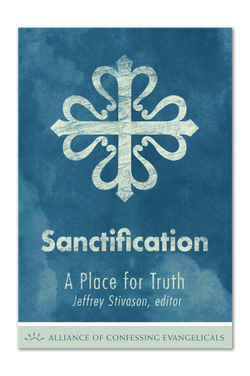
Those who are in Christ have been justified before God. But salvation means much more; it means that we are sanctified, that God actually leads us into holiness. As Michael Allen and company explain, our holiness is carried out in the present work of our sovereign, loving God. In Christ we are given life, not simply in name, but in fact. Praise the Lord, who delivers His children through every weakness. Though you struggle with sin, do not be discouraged; it is God who works in you, "both to will and to work for his good pleasure" (Phil. 2:13).
Past Episodes

Featured Offer
Those who are in Christ have been justified before God. But salvation means much more; it means that we are sanctified, that God actually leads us into holiness. As Michael Allen and company explain, our holiness is carried out in the present work of our sovereign, loving God. In Christ we are given life, not simply in name, but in fact. Praise the Lord, who delivers His children through every weakness. Though you struggle with sin, do not be discouraged; it is God who works in you, "both to will and to work for his good pleasure" (Phil. 2:13).
About Alliance of Confessing Evangelicals
The Alliance of Confessing Evangelicals exists to call the twenty-first century church to a modern reformation that recovers clarity and conviction about the great evangelical truths of the gospel and that then seeks to proclaim these truths powerfully in our contemporary context.
About Alliance of Confessing Evangelicals, Inc
The Alliance of Confessing Evangelicals is a broadcasting, events, and publishing ministry that exists to call the twenty-first century church to a modern reformation. Our broadcasts/podcasts include
The Bible Study Hour
with James Boice,
Every Last Word
featuring Philip Ryken,
Mortification of Spin
with Carl Trueman and Todd Pruitt,
Theology on the Go
with Jonathan Master and James Dolezal,
and Dr. Barnhouse & the Bible
with Donald Barnhouse.
These broadcasts air daily and weekly on stations in the United States and Canada and on the Internet. Event audio includes the Philadelphia Conference on Reformed Theology, the Reformed Bible Conference, and many others.
Contact Alliance of Confessing Evangelicals with Alliance of Confessing Evangelicals, Inc
Alliance@AllianceNet.org
http://www.alliancenet.org/
Alliance Of Confessing Evangelicals
600 Eden Road
Lancaster, PA 17601
1-800-956-2644