Oneplace.com

The Coming of the Holy Spirit 1: The Fulfilment

June 24, 2026
00:00

Reverend Eric Alexander reflects on Pentecost, the final saving act of Jesus before His return in glory. Join us as we seek to understand its profound significance as a day of fulfillment. Embrace the Holy Spirit’s ministry to equip and transform you for His glory on Hear the Word of God.

Mark Daniels: Welcome to Hear the Word of God, the online and broadcast teaching ministry of the Reverend Eric Alexander.

Eric Alexander: Today is what we often call in the calendar Whit Sunday, or as Christians would describe it, Pentecost Sunday—the day when Christians all over the world will be thanking God for the coming of the Holy Spirit in the manner in which we read in Acts chapter 2 this morning. It is to Acts chapter 2 that I invite you to turn with me in your Bible. The day of Pentecost is, of course, the final saving act of the Lord Jesus Christ before His return in glory.

The background of it is that there are a number of public events by which Jesus accomplishes our salvation. The first of them is by His birth in Bethlehem, where He took our nature. The second is by His obedient life, whereby He demonstrated Himself to be the perfect offering for sin. The third is His atoning death on the cross, whereby He offered Himself up as a sin-bearer to take our sin. The fourth is the resurrection of Jesus from the grave, by which He triumphed over sin and death and Satan.

The fifth is His ascension to the right hand of the Father to signify that all His work was ended in this world. The sixth is the sending of the Holy Spirit on the day of Pentecost. And the last will be His return at the end of the age in power and great glory, when He will finally give to us not only redeemed souls but new bodies in which to serve and worship God. Pentecost is, therefore, in the truest sense, a saving event in that, by the coming of the Holy Spirit in power, God was bringing to us the application of everything Christ had accomplished for us. The Holy Spirit's ministry was to make personal within our own lives the glory of what Christ had accomplished for us on the cross.

The occasion itself of the day of Pentecost must have been one of high drama for those who were present, as you would recognize in our reading this morning. They were probably gathered for prayer in Jerusalem, and the suggestion we have in Acts 1:15 is that there would have been around 120 of them. Suddenly, three extraordinary phenomena broke in upon the stillness of their gathering. The first was a sound, the second was a sight, and the third was speech.

The sound was a sound from heaven like the howling of a violent wind, Luke tells us. The second was the sight of what seemed to be tongues of fire that separated and came to rest on each of them. And the third was the phenomenon of speech, as everybody in this multilingual gathering of people who were around them began to hear them speak in his own language. All of these phenomena were natural: wind, fire, and speech. But in another sense, they are supernatural, because Luke tells us that it was a sound like a howling gale of wind. It was what seemed to be like tongues of fire resting upon each of them.

The languages were not natural languages; they were obviously a supernatural gift of language. At least two of the phenomena were closely related to the Holy Spirit. You will possibly know that both in Hebrew, the language of the Old Testament, and Greek, the language of the New Testament, the word for wind and the word for spirit are the same. The howling of the wind and the coming of the Spirit are associated together so as to be inseparable in this sense. Fire is also a phenomenon of the Holy Spirit. "You will be baptized," John the Baptist told them, "with the Holy Spirit and with fire."

Now, the speech which they were given was very obviously recognizable, understandable foreign languages. What happened when they began to speak was that they magnified the wonderful works of God, and everybody from all over the world in this company of people—which was a company that was international and interracial, and looking at it from the point of view of where they were, it was worldwide—began to hear them speak in their own language the wonderful works of God.

Not surprisingly, they began to ask what this meant. In verse 7, for example, they were utterly amazed and asked, "Are not all these men who are speaking Galileans? Then how is it that each of us hears them in his own native language?" In verse 11, "We hear them declaring the wonders of God in our own tongues." The gift of tongues on the day of Pentecost is, therefore, beyond any question, the gift of speaking a foreign language which people already recognized and understood. How we interpret 1 Corinthians 12 and the foreign languages or tongues that are there is another matter which doesn't concern us this morning, but in Acts 2, there is no question whatsoever that they were foreign languages.

It is the kind of gift that people like Ralph Martin serving in Japan would have been wonderfully grateful for if it had been given to the students he was struggling to teach Japanese to when he was there. They heard them speak immediately in their own language. We need to ask the same question that the crowd asked when, amazed and perplexed, they said, "What does this mean?" I want us to seek the answer to the question in the one word which seems to me to gather together the key to how we understand the day of Pentecost and its significance, and the one word is the word "fulfillment."

Because there is no question that the day of Pentecost is a day of fulfillment. That is what Peter says when he stands up to give an answer to the question of the crowd and to reply to the chiding that they were probably suffering from intoxication. He said, "This is that which was spoken by the prophet Joel." So, he is describing it as fulfillment. And there is no doubt that it is fulfillment in the sense of a fulfillment of what the prophet spoke, but it is fulfillment also in two other senses. It is about these three things, therefore, that I want to speak to you this morning: not only the fulfillment of Joel's prophecy in Joel chapter 2 but also the fulfillment of the feast itself in the Old Testament.

Because the day of Pentecost is an Old Testament phenomenon. It is a feast that Jews had been celebrating all down through the centuries, and it is a fulfillment of that. It is also a fulfillment of the promises of Jesus, which were given no further back than Acts 1:8, but also in John chapters 14 and 16. This day of Pentecost, if we ask what do these things mean, the answer is they mean fulfillment—fulfillment of the Old Testament feast, fulfillment of the prophecy of Joel in chapter 2 of the book of Joel, and fulfillment of the promises of Jesus that He had made just so recently, ten days ago, before His ascension.

You will remember the ascension is 40 days after the crucifixion, and Pentecost is ten days after the ascension. So first, it was the fulfillment of the Old Testament feast. Pentecost was known not so much by the name Pentecost, which is, of course, the New Testament term, but the word Pentecost simply means 50th. That is, it was 50 days after the Passover. The title that the Jews gave to it, therefore, was the Feast of Weeks—that is, seven weeks of seven days, which comes to 49 days, and the 50th day was the day of Pentecost.

So, it was related to the events of the Passover. Very significant, you see, that our God in His timing of the events of our redemption timed the event of Jesus' atoning death to coincide with the Passover because it was the fulfillment of the Passover. We cannot understand the death of Jesus fully apart from the Passover, which it fulfilled, and that redemption by blood by which the people of Israel were taken out of Egypt. But in the same sense, our God in His wisdom timed the coming of the Holy Spirit to coincide with Pentecost, with the Feast of Weeks.

He did so for a particular and important reason. The day of Pentecost, or the Feast of Weeks, was also called the Feast of Harvest or Firstfruits, as you will find in Exodus 23:16. The firstfruit was, of course, part of the harvest and a guarantee of its full gathering. One of the things that Pentecost declares to us, of course, is that this is God's work in the sending of His Holy Spirit, not only to gather in a harvest into that little company of believers in Acts chapter 2—and the harvest numbered, we read, 3,000 souls; there were 3,000 people added to the church on that day.

But that was just the firstfruit of a harvest that is still being gathered all over the world from every nation and tribe and tongue and is continuing to this day and will do until the end of the age when the Lord Jesus Christ returns in glory. So, Pentecost is a missionary event. It is describing to us the beginnings of this gospel harvest whereby God is gathering in a people who in heaven this morning are beyond numbering, of every tribe and nation and tongue. Pentecost is the firstfruits of that, so it is a missionary event.

But the other way in which, certainly by the first century AD, the Jews thought of the day of Pentecost was of an anniversary of the giving of the law. Now, you will know that some of the phenomena that surrounded the giving of the law in Exodus were similar to the phenomena that surrounded the day of Pentecost. But certainly, there was a link being made at that time in Judaism between the giving of the law and the celebration of Pentecost. You can understand the reason for that. What was it that God promised when He promised that He would send His Spirit?

In the prophecy of Ezekiel, for example, He promises, "I will put my spirit within you." This was God's purpose: not just to come and anoint one here and another there, but to put His Spirit within His people. The promise in Ezekiel 36 is closely allied and was always linked to Jeremiah 31: "I will write my law in their hearts." Now, that, of course, was the great problem that the people of God faced in relation to the law of God and the will of God and the purpose of God for their lives—it was external to them. And that's the problem you and I face regularly, is it not?

In relation to the law of God and the will of God and His purpose for us, it is external to us. But the promise that Jeremiah gave was this: "The law that was written on tables of stone," He says, "I will write in their hearts." Now, how does God do that? He does it by sending the Holy Spirit to inhabit the life of the believer so that the law of God may be fulfilled through the ministry of the Spirit of God in the life of the child of God. That's exactly, of course, what Paul is writing to the Romans when he encourages us with this great word about no condemnation in Christ Jesus.

Listen to what he says: "Through Christ Jesus the law of the Spirit of life set me free from the law of sin and death. For what the law was powerless to do in that it was weakened by the sinful nature, God did by sending his own Son in the likeness of sinful man to be a sin offering, in order that the righteous requirements of the law might be fully met in us, who do not live according to the sinful nature but according to the Spirit." Now, what's God's purpose, therefore, in sending His Holy Spirit? It is not only a missionary purpose that the harvest might be gathered; it is a moral purpose that the will and law of God might be inscribed in our hearts and obeyed in our daily lives.

That's God's purpose in sending His Spirit. Now, my dear friends, let me say to you: you must never allow man or demon to divert you from that basic purpose of the Holy Spirit's coming. The Holy Spirit is not given to give the believer some kind of thrill or ecstatic experience or whatever. If He gives us that, we thank Him for it, if it's glorifying to God. But His primary purpose in coming is to effect the moral transformation of our lives. Pentecost, in this sense, is a moral event. What happened to these believers was that they were morally changed.

So, Pentecost is a missionary event, and Pentecost is a moral event. It is the fulfillment of the feast. But it's also a fulfillment of Joel's prophecy, and we need to look for a moment more closely at that in verse 16. You notice what Peter is saying: "This is what was spoken by the prophet Joel," or in the Authorized Version, "This is that." And that was Joel's prophecy about God's purpose in the last days. Now, the last days have been inaugurated by the coming of Jesus Christ and by all that He has done for our salvation, including the sending of the Holy Spirit.

And you will notice that he describes certain things from verse 17, quoting from Joel 2, which will take place inaugurating the last days, the period, in other words, between Christ's first coming and His second coming. Joel describes the second coming as the other pole in verse 20: "The sun will be turned to darkness and the moon to blood before the coming of the great and glorious day of the Lord." Now, the great and glorious day of the Lord is, of course, the day of Christ's return. The first and main theme of Joel's statement in this quotation is that God is going to pour out His Spirit upon all flesh, or as the NIV puts it, all people.

Now, that, of course, is not upon all people without any exception. He is not saying that every single individual who lives in the world is going to be the recipient of the Holy Spirit. What he is saying is God is now going to pour out His Spirit upon all people without distinction. And that he goes on to demonstrate: He will do it for all nations and races, for both sexes, for all ages, and all classes. "I will pour out my Spirit on all people. Your sons and daughters will prophesy, your young men will see visions, your old men will dream dreams. Even on my servants, both men and women, I will pour out my Spirit in these days, and they will prophesy."

Now, the whole point of this, you see, is that in the Old Testament hitherto, the Holy Spirit had anointed three classes of people: prophets, priests, and kings. And the anointing of the Spirit was for these particular classes and groups of people who had a particular office to fulfill. But the glorious reality of what has happened in the new covenant is that all God's people are priests, that all God's people are constituted kings, and all God's people can prophesy. Now, this is the main emphasis that Joel is making. He is saying that all of God's people will receive this outpouring of the Holy Spirit without discrimination.

And of course, Paul puts that into theological form when he says, "If any man does not have the Spirit of Christ, he is none of his." So, the Holy Spirit is given to every Christian believer regenerated by God's grace and redeemed by Christ's blood, and he possesses and she possesses the gift of the Holy Spirit. Now, many people have asked what does Joel mean, and what is Peter thinking of when he quotes him by prophesying: "Your sons and daughters will prophesy," and "I will pour out my Spirit in these days and they will prophesy."

It has been the clear and unanimous view of the Reformers, illustrated by Luther's comment, that what they are speaking of is the fulfillment of the promise that was made by Jesus in chapter 1, verse 8: that they would be witnesses in Jerusalem and in all Judea and Samaria—that is, that they would testify to the wonderful works of God. And this they clearly did. There is a sense, you see, in which as we declare the glories of our redemption with the authority and power of the Holy Spirit for witness, we are ourselves prophets of the glorious grace and gospel of God. That era has therefore been ushered in by the coming of the King of glory and will come to a close with His final appearance in this world at the end of time.

So, Pentecost is a fulfillment of the Old Testament feast. It is a fulfillment in the second place of Joel's prophecy. And it is a fulfillment, finally, of Jesus' promises, of that promise in Acts 1, verse 8, where Jesus says, "You will receive power when the Holy Spirit comes on you; and you will be my witnesses in Jerusalem, and in all Judea and Samaria, and to the ends of the earth." And the fulfillment was a fulfillment to them. That's a very important thing for us, I think, to grasp this: that the primary fulfillment of the promises of Jesus about the Holy Spirit is a fulfillment to the apostles.

There is a secondary sense in which we ourselves are the fulfillment of these promises in that we receive power from God, that we receive equipment for service. But when you examine the promises of Jesus, the primary fulfillment of these promises, which you find in John 14, 15, and 16, is to the apostles themselves. If you take a moment to turn back to John chapter 14, you will see how this becomes the fulfillment of which we read in Acts chapter 2. Verse 15 of John 14: "If you love me," Jesus says, "you will obey what I command. And I will ask the Father, and he will give you another counselor to be with you forever—the Spirit of truth."

Now, that is fulfilled, of course, on the day of Pentecost. The Holy Spirit who comes is, therefore, another counselor or advocate or paraclete, however we want to try to translate a difficult word to put into adequate English. But the Holy Spirit comes as the one who, as it were, replaces Jesus, who in the flesh has left us and gone to heaven. He will be another in the sense of another of the same kind. But the difference is He will not just be with you; He will be in you.

Now, His ministry, Jesus says in verse 26 of chapter 15, is that He will testify about me. He will not speak of Himself; He will say what is given to Him, and He will testify about me. So, you discover that being fulfilled in the book of Acts. Do you remember when Peter stands up to preach? What is it that he preaches about? What is he given power to testify to? He scarcely mentions the Holy Spirit, but he testifies to the Lord Jesus. And this is one of the great ministries of the Holy Spirit and His great purpose in coming into the world.

Dr. Packer has perfectly put it in the illustration of a floodlight. He says the Holy Spirit's ministry is a floodlighting ministry. Now, we know all about that in Glasgow, don't we? What happens when you go through Glasgow in a winter night is that you see the beautiful Victorian architecture of some of these buildings like the City Chambers, and they are aflame with floodlighting. You see things in the Mitchell Library that you would never have seen before; they are floodlit. Now, when people walk along the road, they do not say, "My, what beautiful floodlights. Aren't these amazing floodlights that they've put up there?" They say, "What a glorious building that is. What astonishing beauty that we have not seen before."

Now, that's exactly the ministry of the Holy Spirit. What He does is not to draw attention to Himself, but to floodlight the glory of the Lord Jesus Christ. And whenever it is claimed that the Holy Spirit is at work anywhere, my dear friends, this is how you test it: Does He floodlight the glory of the Lord Jesus? Because that is His great ministry; He will testify of me. And also, He says in chapter 14 of John, verse 25, "The Counselor, whom the Father will send in my name, will teach you all things and remind you of everything I have said to you."

Now, this teaching ministry of the Holy Spirit, which He goes on to describe in greater detail in chapter 16 of John, verse 12—but I don't take time to read it to you—it is a ministry which has two parts to it. One, He reminds the apostles of everything the Lord Jesus has taught and said. He brings it to their recollection—that's the first part of the promise. The second part of the promise is that there are many things Jesus had still to say to them which He did not say when He was here on earth, but He says, "The Spirit will guide you into all truth. He will tell you what is yet to come."

Now, these two promises were fulfilled in the apostles, not in us. Now, you can understand why they were not fulfilled in us, can't you? Because we didn't listen ourselves to the teaching of the Lord Jesus so that He would recall it to us. We do not receive direct inspiration of new truth from the Holy Spirit. We are in a different position from the apostles. Let me put it to you this way: The Holy Spirit inspired the apostles to write Scripture. That's where we discover this recollecting and revelatory ministry. The Holy Spirit inspires us to understand and obey Scripture—not to add to it, but to understand it and to obey it.

And that brings us back to the things that we've been saying, which are the cardinal things about the day of Pentecost. It is a moral event. God has sent the Holy Spirit in order that living within us as the indwelling Christ, He may enable us to do the Father's will. It is a missionary event in that He equips and enables us to do the very thing that the Lord Jesus Christ said the Holy Spirit would do, and that is to floodlight Jesus. Now, my dear friends, you and I can test our lives—I can test mine clearly by this: Are these the things the Holy Spirit is doing in me today? Is He morally transforming my life so that the beauty of Jesus begins in some small measure to shine out of it? Is He enabling me by my witness to floodlight the Lord Jesus Christ so that people stand back and say, "How glorious is this Savior"?

The one thing the Holy Spirit does not do is to draw attention to Himself, and the other thing the Holy Spirit does not do is to draw attention to you. So, if you become the one to whom people's eyes are drawn rather than Jesus, I can simply tell you without being a prophet or a prophet's son that it's not the Holy Spirit who does that. Are you knowing the grace and power of the Holy Spirit in your life? God grant us that we may know it. Let's pray together.

Heavenly Father, we bow to worship You that You have sent the Holy Spirit to dwell in the heart of every single believer without exception. We thank You for His ministry glorifying the Lord Jesus Christ, and we pray that that ministry may increase in our own lives and in our fellowship for the glory and praise of Your great name. Amen.

Mark Daniels: You're listening to Hear the Word of God with the Reverend Eric Alexander, a minister in the Church of Scotland for over 50 years. To access more Bible teaching from Reverend Alexander, visit hearthewordofgod.org where your generous contribution will help us sustain and grow this ministry. That's hearthewordofgod.org. You could choose instead to mail a check to this address: 600 Eden Road, Lancaster, Pennsylvania, 17601. Or call 1-800-488-1888. This program is a presentation of the Alliance of Confessing Evangelicals. I'm Mark Daniels. Thank you for listening. Please join us again next time for Eric Alexander and Hear the Word of God.

This transcript is provided as a written companion to the original message and may contain inaccuracies or transcription errors. For complete context and clarity, please refer to the original audio recording. Time-sensitive references or promotional details may be outdated. This material is intended for personal use and informational purposes only.

Featured Offer

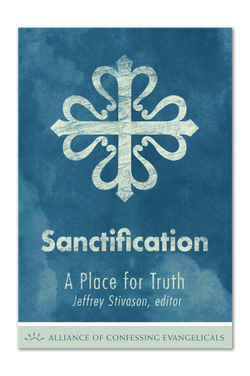
Sanctification (PDF Download)

Those who are in Christ have been justified before God. But salvation means much more; it means that we are sanctified, that God actually leads us into holiness. As Michael Allen and company explain, our holiness is carried out in the present work of our sovereign, loving God. In Christ we are given life, not simply in name, but in fact. Praise the Lord, who delivers His children through every weakness. Though you struggle with sin, do not be discouraged; it is God who works in you, "both to will and to work for his good pleasure" (Phil. 2:13).

About Alliance of Confessing Evangelicals

The Alliance of Confessing Evangelicals exists to call the twenty-first century church to a modern reformation that recovers clarity and conviction about the great evangelical truths of the gospel and that then seeks to proclaim these truths powerfully in our contemporary context.

About Alliance of Confessing Evangelicals, Inc

The Alliance of Confessing Evangelicals is a broadcasting, events, and publishing ministry that exists to call the twenty-first century church to a modern reformation. Our broadcasts/podcasts include

The Bible Study Hour

with James Boice,

Every Last Word

featuring Philip Ryken,

Mortification of Spin

with Carl Trueman and Todd Pruitt,

Theology on the Go

with Jonathan Master and James Dolezal,

and Dr. Barnhouse & the Bible

with Donald Barnhouse.

These broadcasts air daily and weekly on stations in the United States and Canada and on the Internet. Event audio includes the Philadelphia Conference on Reformed Theology, the Reformed Bible Conference, and many others.

Contact Alliance of Confessing Evangelicals with Alliance of Confessing Evangelicals, Inc

Mailing Address
Alliance Of Confessing Evangelicals 
600 Eden Road
Lancaster, PA 17601 
Telephone
1-800-956-2644