

The Paradigm of Church Revitalization


Dr. Harry Reeder brings the message from the 2014 Faithful Shepherd Conference.
Alliance of Confessing Evangelicals: Welcome. The following message is a ministry of the Alliance of Confessing Evangelicals. The Alliance is known for ministries such as the Philadelphia Conference on Reformed Theology, as well as nationally syndicated radio programs like The Bible Study Hour, Every Last Word, and Dr. Barnhouse and the Bible. Our purpose is to promote a biblical understanding and worldview. Thank you for listening.
Guest (Male): If you'll have your Bibles, turn with me to Acts chapter 20. We're kind of hanging in Acts in these four talks on church revitalization. Acts chapter 20. After the service, after the time last night, I had the privilege to meet some of you. One of them from one of my ethnic lines. I'm kind of mongrelized from English and Scots and Scots-Irish background. So I had the chance to meet one of my Belfast Scots brothers.
Having been accused last night of being less than kind to my Baptist brethren, I want to be an equal opportunity offender. A fellow walked up to the manse in Belfast and he knocked on the door. The pastor came to the door and he said, "Pastor McGillicuddy, would you do me a favor?" He said, "What is that, Paddy my boy?" He said, "Would you do a funeral for me?" He said, "A funeral? I'd be glad to help you. I'm your pastor, son. Who died?" He said, "My dog died."
"Your dog died?" he said. "I'm a Presbyterian pastor. We don't do dog funerals. Now, the Baptist pastor, he's down the road a piece. He'll probably do the dog funeral for you." He said, "Pastor McGillicuddy, I think I've offended you. Would you forgive me? But before I go see the Baptist pastor, do you think $40,000 will cover the service?" And he said, "Paddy my boy, now why didn't you tell me your wee dog was a Presbyterian?"
The ministry is full of challenges. Last night, I was hoping to give you some encouragement out of the practical necessity of church revitalization. If I can be even more specific, 88% to 91% of the churches in North America are stagnant, plateaued, or declining. I've often wondered why we wait for conferences like this to talk about church revitalization. In reality, in our seminaries, we ought to be thinking about it even more profoundly than perhaps we do.
I speak this to my chagrin because I'm on the board of two seminaries and teaching in three. I wonder why we don't face this more up front. If there's 88% to 91% of the churches that are stagnant and declining—and that number is probably increasing—Tom Rainer has raised his estimate of the net loss of 3,500 churches a year in North America. He believes that in the next five years, it will rise to 5,000 churches per year.
If that's the case, then why is it that we do not prepare people more pointedly for that? Because if you're coming out of seminary, guess what kind of church you're going to get? It's going to be one that is in need of revitalization. I shared with you my personal story and how I encountered that in my life. As I encountered that in my life, I saw the church growth material being well-meaning, highly insightful, but basically being drawn from at best forays into general revelation of sociology and psychology and demographical analysis.
Certain principles certainly worked to get statistical growth. My problem was twofold. Number one is that it didn't start with scripture. They would do things and then check the Bible to make sure you weren't going against it, but it didn't start with scripture. Believing in the inerrancy and sufficiency of the scripture, I did not believe that this matter of church revitalization would be something that would take the Lord by surprise. Sure enough, as I went through the book of Acts, I found out that church revitalization is in the Bible.
It did not take the Lord by surprise. He had already provided the direction for us. I came up last night with three things for you. Let me review those and then start into today's next step. What is the paradigm or the road map of church revitalization? What we said last night was three things. Number one is that church revitalization is not simply a practical necessity, it is a biblical strategy to shake the world for Christ.
Church revitalization is not just a practical necessity. We need to do this because our presbyteries are diminishing, or our denomination is diminishing. That may be the case, and that may be a practical necessity, but actually, it was designed as an apostolic strategy. A biblical strategy as the apostle Paul instituted it, not on the first missionary journey—which you wouldn't have had any churches to revitalize—but on the second missionary journey, he went back through the area of the first missionary journey.
The churches he had planted were in need of revitalization. So he added a fifth dimension to his ministry. The first one was, of course, that everywhere he went in the first missionary journey, he did gospel evangelism and discipleship. Then he did gospel church planting, and then he did gospel deeds of love, mercy, and justice. Fourthly, he either developed or left behind from the team gospel leaders, multiplied and mobilized, because churches don't go beyond their leadership.
Remember we noted that God uses leaders, uses churches, and uses protracted, persistent intercessory prayer. He would engage in those activities, and then when he went back on the second missionary journey, he did the same thing, but he added, "Let's go strengthen the churches." The second thing that we noted was that the objective in church revitalization is not church growth, it is church health and church vitality. I gave you a little development from the scripture that spiritual vitality is the root that leads to the functional trunk, and that leads to statistical growth.
Statistical growth, new believers, new disciple makers, new missionaries, new pastors, reproducing comes from vitality. When your body is aged, you no longer can reproduce. What we want to see is a revitalization of the church so that the church can reproduce believers and missionaries and pastors and new churches, instead of subdividing dying churches as the effort to reproduce. We want healthy churches so we're closing less, and we've actually got in place now more churches that can reproduce.
That would then get us back to Acts 17:6, "These people have turned the world upside down." That brought us to the third thing that we were looking at. The objective is not church growth but church health. By the way, let me not leave that just yet. I made the point, and I want to review it just again. If you believe big is good and small is bad, it's just a matter of time until you compromise your message, compromise your ministry, or compromise the mission in order to get the numbers.
Methods always ultimately affect message. Always, ultimately. Methods are not amoral in and of themselves ultimately. They always affect the message eventually. It is not that the end determines the means, the means will ultimately determine the end in the final analysis. The shortcut to church growth, of course, is that we begin to put cultural steroids into the church.
I grew up in an era where I played basketball and baseball and football in high school and tried to go and play a little bit in college. The football player I used to love to watch, an Oakland Raiders guy, his name was Lyle Alzado. You have to go look him up in books; you're too young to even know who he was. But he's notable because one day Lyle Alzado, who was already an excellent football player, showed up and he had muscles on his eyelids. You didn't even recognize him.
He was just a different person. What Lyle Alzado realized is if I get bigger, stronger, and faster, I can make more money and be more famous. That is exactly what he did. He went home and he got bigger, stronger, and faster. How'd he do it? He put the needle in. The needle went in, and he got bigger, stronger, faster, made money, got famous, made all-pro, did all that stuff. He also died nine years later.
A lot of us, in order to get the numbers, we put the cultural steroids in so worship becomes entertainment. The message is no longer the gospel message that brings people to the helplessness and hopelessness of their sin and identifies it and then points them that when there was no way, God made a way, and that way is his Son Jesus, who is the way, the truth, and the life. We then make Christianity something more. It's a prosperity gospel, it's a therapy gospel, it's a coach-up gospel for life, it's a coping-with-life message.
Actually, it's a message that this is life, and the life is in Christ, and Christ is your life. We begin to turn gospel evangelism and discipleship into something that's not. All of that is done because the numbers become our metric in terms of what is the successful ministry, instead of spiritual vitality and health. By the way, of course, we don't want to get into the opposite of that, which is what? It's not big's good and small's bad, it's small's good and big's bad.
We don't want to be five miles wide, one inch deep, and we don't want to be one inch wide, five miles deep. Asking the Lord, "Lord, whatever the DNA is in the body of Christ that I pastor represented in my local church, then make it five miles wide and five miles deep so that we've got breadth and depth in and for Jesus Christ." That means I, like a parent, can't bring revival. Only the Lord can bring revival. I preach for it, I pray for it, but I can't bring it.
But I can bring God's people to the means of grace for spiritual health and vitality. I can do that, just like my child's health is ultimately in the hands of the Lord, but I am going to parent them. I'm going to feed them and exercise them and make sure they get rest in what God has called me to do. That's what the fathers and mothers of the church ought to be doing in terms of their life-giving ministry that God works through them into those congregations.
If I'm convinced then that church revitalization is actually an apostolic-modeled and a biblical-mandate strategy; secondly, the objective is not church health, it is church growth; thirdly, what we want is a world-shaking, nation-shaking movement of the gospel with Christ-centered, gospel-saturated, Holy Spirit-empowered, Bible-shaped, God-glorifying churches, then where do I get started and how do I move forward?
At Pinelands, I was sitting there, I couldn't even get credit at the office supply store. I had 14 men in the congregation, no children in the congregation. Where do we get started? What do we do? How do we get about this? The first thing, just intuitively, to get time to get started, I went to where I needed to stay focused anyway through the advice and mentorship of those that were around me, and that is: okay, just aim at the gospel.
The Lord brought in a marvelous and glorious work of the gospel that got us moving forward even in the first or second week of my ministry there. So where would we go from that point? I went again back to the book of Acts. I've grown to love the book of Acts. As I went through the book of Acts, I noticed that every time Paul went to a city, I've already given you the five things that he would do: gospel evangelism, discipleship, church planting, church revitalization, gospel deeds of love, mercy, and justice, and gospel leaders, multiplied and mobilized.
I also noticed something else. Every time he went to a city, he had immediate success. The second thing is what? The evil empire strikes back every single time. Every city, this happened. Immediate success, measured, but success. Secondly, the evil empire strikes back. Remember I gave you the two ways the evil empire strikes back: persecution of leadership and membership, or penetration of leadership and membership.
Number three, God would deliver, either miraculously or what we might call special acts of providence if it doesn't quite fit the definition of a miracle. God would intervene. God would show up. Fourthly, he'd go back and start all over again. There he is, left for dead, stoned, and the Lord raises him up. What does he do? Goes right back in and starts all over again. Fifthly, more success. effectiveness increases and the word continues to grow, and the number of the disciples begins to increase.
Those five things would begin to happen. As the gospel moves in Jerusalem, you've got this powerful church with Peter as the leader surrounded by other leaders. Then you go to Antioch, and then you've got Judea and Samaria, and you've got this epicenter gospel church sending out gospel tremors all over the place. There's where they first start calling us little Christ because of the spiritual growth of the believers. They meant it as a term of derision, but it was actually a compliment to us that we're starting to model Christ.
Now you've got two sets of leaders: you've got Paul and Peter rising up in Judea and Samaria. Then you've got the focus on Paul and his team as the gospel goes to the world, and the key church is Ephesus. When he wants to go to Spain, the key church is going to be Rome. To expand the kingdom, God puts the colony of the kingdom into a place, and that's the church of Jesus Christ where the equipping for extending the kingdom is taking place. We are multiplying churches and multiplying believers out of these gospel healthy churches.
Again, Satan is always going to strike, and he loves to strike whenever there's a void of leadership. Leaders are going to step up. By the way, leadership always works. Bad leadership works. Blind lead the blind, what happens? Both fall in the pit. It's not where you want it to go, but it works. Good leadership, normally good results. When all is said and done, the pupil becomes like the teacher, the servant like the master.
Leadership works. What happens is Paul spends more time at one church than any other church. What church did Paul spend more time at than any other church? Ephesus. He spent approximately three years there. Now he's getting ready to leave them and he brings them together and he gives them this charge. The charge has encouragement and admonition. There's a deep relationship; it's obvious they all end up hugging each other at the end and kissing each other.
It's really a big moment. When the Apostle Paul gets ready to leave, he reminds them that he has been with them in the large group, he's been with them house to house in small group disciple-making. He has wept over them. He had the tropical eyes of a pastor who wept over his people and all that they faced. He had even faced wild beasts at Ephesus. I don't know whether he was referring to animals in the arena or elders, but he had faced wild beasts.
Now he's going away and he gives them this interesting warning. I want you to look in Acts chapter 20 and slip down to verse 26. "Therefore I testify to you this day that I am innocent of the blood of all of you, for I did not shrink from declaring to you the whole counsel of God. Pay careful attention..." By the way, can I just stop there? This is a little burden of mine. There's two mistakes I see as pastors we make.
One is we take secondary doctrines and make them primary doctrines. You don't realize this is primary, this is secondary. Church government, I love it. It's important. All scriptural doctrines are important, but some are of more importance. That's why Paul said, "I delivered to you what is of first importance: the gospel." In other words, there's some things of first importance. That doesn't mean other things aren't important; just means they're secondary importance.
Baptism is secondary importance. You can get that wrong and still get to heaven, but you can't get the gospel wrong and get to heaven. You've got to learn to do that. But that is not an excuse to say, "Well, my ministry's just going to major on the majors because the minors aren't important." No, the minors may be minor, but they're not unimportant. In fact, a lot of times what people do in their interpretation of the scripture to get a secondary doctrine wrong is going to make the primary doctrines wrong in the next generation.
Paul says, "I'm innocent of your blood because I declared to you the whole counsel of God." Now I understood what's primary and what's secondary, but that didn't mean I cut everything off that was secondary. Jesus said, "Teaching them to observe all that I've commanded you." So the Apostle Paul said, "I've discharged my responsibility. I haven't compromised the message just to get the numbers that are here. I have given you the whole message."
Then he says, "So I'm innocent of your blood. Pay careful attention to yourselves." Who is he talking to? Verse 17: he called to himself the elders of the church. So he's got the elders of the church there at Ephesus and he says to them, "I want you to pay close attention to yourselves and to all the flock in which the Holy Spirit has made you overseers to care for the church of God, which he obtained with his own blood. I know that after my departure, fierce wolves will come in among you."
There's always two things you have to watch out for in ministry. One is you've got sheep that get wolf's clothing on them, and you've got to help them see that's inconsistent. The other problem, though, are wolves that come in sheep's clothing. Now he warns them, he says Satan is going to attack this session of this church. He's going to attack you, because he knows if I can strike down shepherds, what's going to happen to the sheep? They're going to scatter.
If we can somehow dilute, distract, or disease the leadership, then I can get to the fellowship and the membership. Savage wolves are going to come in among you, not sparing the flock. They're coming in among you to get to the flock. From among your own selves, will arise men speaking twisted things to draw away the disciples after themselves. He says he is going to penetrate the leadership and as he penetrates it, he's going to attempt to put false teachers and false leaders.
These are false teachers who take the Bible—their sermons have Bible addresses, but they're twisted. Out of context, out of direction, wrong intent, wrong everything, but they are twisting the scriptures. Their leadership is not designed to bring people to Christ but to bring people to themselves. He warns them that this is going to happen when he leaves. Why did Paul know it was going to happen when he left?
One, because it was probably happening while he was there and he had been part of his ministry is the proper session in its character, content, and competency. The second thing is he knows that his movement, he understands—Paul cast a pretty big shadow. So when he steps out, apostolic leadership, Satan's going to see this as an opportunity. That always happens. At good church situations, pastoral change, Satan loves to take well-meaning people and misdirect them right then because there is a void that everybody wants to be filled.
Satan is going to attempt to get this void with false teachers and false leaders. How did they handle that? They didn't handle that very well because the church began to go into demise. Paul went on to Jerusalem, he got arrested, he's in prison in Jerusalem, then he's in prison in Caesarea, and then he got sent on to Rome. He wanted to do a missions journey and he wanted the state to pay for it. He insisted on going to Rome and they gave him free travel, boarding, housing, everything.
He started a prison ministry in Rome that reached all the way into Caesar's household. It was an amazing opportunity that he knew the Lord had called him to. Then he gets out of the first Roman imprisonment, what does he find out? Ephesus is in trouble. So what does he do? He takes his best man, Timothy. Proven worth, the Bible says. He sends him on a ministry of church revitalization. Then he gives him a handbook on church revitalization for the church at Ephesus. It's called 1st Timothy.
Normally when we talk about the epistles, we talk about 1st, 2nd Timothy and Titus as the pastoral epistles. It's my humble, considered opinion that with $1.85, you can get a cup of coffee at McDonald's—a senior's coffee at McDonald's. It's my opinion that actually there's only one pastoral epistle, that's 2nd Timothy. That's where Paul is putting the mantle on Timothy with his last word and letter to get him ready for the ministry. 1st Timothy and Titus are both very similar in content because both men were being sent on the same mission.
Take your Bibles and turn to 1st Timothy chapter 1. Where is Timothy being sent? You'll find out that the Apostle Paul, now out of prison, now with Timothy, is now sending him from his presence to Ephesus. Look at verse 1: "Paul, an apostle of Christ Jesus by command of God our Savior and of Christ Jesus our hope, to Timothy, my true child in the faith: Grace, mercy, and peace from God the Father and Christ Jesus our Lord. As I urged you when I was going to Macedonia, I urged you remain at Ephesus so that you may charge certain persons not to teach any different doctrine."
The church at Ephesus has got false teachers and false leaders. So he sends Timothy back on a ministry of church revitalization. He does the same thing with Titus. Titus is sent to Crete with instruction to set in order what remains. He sent him on church revitalization. That's why these epistles are so similar. When he goes, what does he do? He says, "Here's what ought to be taught. Get rid of the false teachers."
Chapter 1 deals with what ought to be taught. Then it goes to the essential of prayer. Then it goes to the qualifications for true leaders in 1st Timothy chapter 3. He gives him a handbook on church revitalization that Timothy takes and implements. It is my speculation, informed speculation, that he was successful. The reason why I know he was successful is 55 years later, the church comes under both admonition and commendation.
But it's also 55 years later in need of revitalization again. They've got a new pastor now, his name is John. How would you like to be called to a church and they take you into the session room that contains the portraits of the previous pastors? Paul, Timothy, and John. What a lineup of pastors. I'm sure there were some people that we can see noteworthy between Timothy and John. But John is now there, and John is doing ministry.
Go to Revelation chapter 2. When you get to Revelation chapter 2, I wish there was some way I could explain to you the excitement that I was getting in my threatened situation at Pinelands as I began to work my way through there. You've got the seven churches and he starts off with the mother church. This is very clearly an important church. For instance, Paul, when he writes about the church and the people of God and Christ's preeminence in the church, he sends an epistle to the church at Ephesus.
Why? Because that was the mother church that it starts with and then it gets circulated to the other churches. Well, what Paul did, John's doing. John is writing a letter, led by the Holy Spirit through the vision of Christ, and he's sending it to the mother church first, Ephesus. Then it works its way down the trade route to the other churches. There were approximately 13 to 14 churches that had been daughtered by this church.
But again, this church is now in need of revitalization or it won't even be in existence; the lampstand's going to be removed. What does he tell them? He gives them commendation. Look at verse 2. "I know your works, your toil and your patient endurance, and how you cannot bear with those who are evil, but you've tested those who call themselves to be apostles and are not." In other words, they test those who are said to be sent as teachers.
"I know you're enduring patiently and bearing up for my name's sake and you've not grown weary. But I have this against you, that you have abandoned the love you had at first. You've lost your first love." I believe what he's saying is the love of Christ that constrains and compels is no longer the constraining and compelling motivation. You've lost it. Now, what do you do at that point? Here's what the Apostle Paul says.
"I want you to remember from where you've fallen." Verse 5: "Remember therefore from where you have fallen; repent, and do the works you did at first." Remember, repent, and recover the first things. There's the road map back to revitalization. This isn't coming from even a well-meaning church consultant. This is coming from the head of the church, Jesus. This is what he is doing to a very important epicenter church that is now in need of revitalization again.
He sends the message and he gives the outline. Here's what you do with the church: remember, repent, and recover the things you did at first. I want to give you the ten strategies from mostly from the books of 1st Timothy and Titus, but from other parts of the epistles, ten strategies to implement this road map of remember, repent, and recover. But that's the next time that we're together.
Right now, I just want you to think of the road map: mile one, remember; mile two, repent; mile three, the journey forward, recover the first things. That's what Jesus designs for the church in revitalization. But when you stop and think about it, that's really not all that new. In the Old Testament, there are two signs and seals of the old covenant: the initiatory sign for the believer in the household and the renewal sign.
What was the initiatory sign in the old covenant? Circumcision. What is the renewal sign? The Passover, done every year to renew covenant with the Lord. The Lord knows we get off course. The Lord knows our message gets diluted. The Lord knows we need renewal. We need revival. The Lord instituted a means to bring us back on focus, recalibrate us, revive us. He sets these up as everlasting memorials.
None of us circumcise anymore for a religious rite anymore. Every once in a while, every new pastor's class, I always get somebody who comes up to me and says, "You know, Pastor, I'm just so excited about Jesus now. I'd just like to get re-baptized again." I always stop and think, you know, sometimes I wish we still did circumcision. That question would never come up again. "You know, Pastor, I know we, but my first circumcision wasn't that meaningful to me. I'd really like to do that again."
So we don't keep circumcising. That's been fulfilled in Christ. Christ is our circumcision. It's everlastingly existing in Christ who cuts away our old heart, nails it to the cross, cuts away our record of sin, nails it to the cross. Now he institutes a new covenant sign, the bloody sign declaring there's no hope in generation upon the male organ of generation, then that there needs death because we need justification, a substitutionary sacrifice, that's circumcision.
Now fulfilled in Christ who is our circumcision, he now gives a new covenant sign that's bloodless, the one pointing to him at the cross, the other points back to him and the work he did on the cross. It is baptism. Then you've got the old covenant meal, the Passover, again bloody. A lamb is slain. Again, now, not like circumcision where you're passive—it's something done to you—this you now participate in.
You clean out leaven, you do this and you do that, but there's a definite pattern. Remember: I delivered you from Egypt. I delivered you from bondage. Remember because of the blood of the lamb, I passed over you. It wasn't going to be that lamb but another lamb. Your firstborn lived because my firstborn has been given for you. So this Passover you remember, clean out the leaven. Leaven representing our sin.
Then when you finish the meal, take your staff, get back to life and the basics. Remember, repent, and recover as you're recalibrated. Well, that is all fulfilled in Christ who is our Passover. Now we have a new covenant meal that's bloodless because it points back to our Lord. Our Lord instituted it. He gave the last supper of the Passover, the first supper of the Lord's supper, then said, "You will partake of me, but you will not partake with me until you get to the great supper."
That's the supper we will go to at the marriage feast with the Lord. Until then, I won't be a participant with you. You will partake of me spiritually as you feast upon me. What will you do in that Lord's supper? 1st Corinthians 11: remember the body and blood of the Lord. Examine yourself, repent, clean out the leaven of sin. You see, first you've got to remember the Lord, because if you don't remember what the Lord did at the cross, you won't examine yourself.
My granddad used to tell me all the time, "Son, you're going to sin. You're going to have two choices: you're either going to cover up or fess up." That's what you'll do. You'll either cover it up or you'll fess it up. What is it that gives people the freedom to confess? It's the gospel. If I'm working my way to heaven, I can't be honest about my sin, can I? I've got to cover it up. I've got to make myself some biological gene in my life that caused this, or it's some disease in my life that caused this.
Environment influences us, but we sin. When you hear the gospel, now you're free to confess your sins. Now you're free to confess them. So you examine yourself. Then what? Preach the gospel until he comes again. You proclaim the Lord's death until he comes. You're back to the basics. You recover the basics. I was given a little joke about my ancestry of the Scots-Irish and the Lord kept visiting the Scots with revival after revival.
There are some marvelous books to read on the revivals. I was reading through some of these revivals in Scotland and I was struck by something: that all the revivals, they all broke out on Saturday. Then I realized why. You see, they used to have communion a couple of times a year, but they did not believe that it was the regularity of communion—you can disagree with them, feel free to—it was the regularity of communion, but the intentionality that brought the value of communion.
When they have communion, they didn't just tack it onto a service; everything was built around it. More than a service, they'd build three or four days around it. They had what they called the communion season. We get a whole movement in our country from that called the camp meetings, where people would go and live in little camps for a week with preaching every morning and every night. That was born because people would come from all over Scotland and they would just camp out.
They would have preaching. After the preaching on Wednesday and Thursday, they had to go meet with their elders to get examined for communion on the Lord's day. Then they would get examined, and to come to communion, you had to have a token because you have come in a manner—not that you're worthy, but you've come in a manner worthy so that you come together for the better, not for the worse. If I can get better through the means of grace, that tells me I'm not perfect.
Communion's not for the perfect, it's for sinners who want to grow in grace. He gives them the Lord's supper that they might grow in grace. The next thing you know, in so many times at the end of that communion season, revival started breaking out. Communion was their revival meeting week. We do communion ten times a year. Could we get one of them and just do a communion season with preaching focused to prepare us on a Wednesday and a Thursday and a Friday, and then come to the table on the Lord's day, having examined ourselves?
I don't think I'm going to go the route of the token, but I do understand why they did it. These revivals kept breaking out, and then the church was—the people went back into their churches and they were on track again. Remember, repent, and recover. It's just built right into the sacrament itself. Remember from where you've fallen, repent of your sins, and recover the first things. Get back on track with the Lord and what God's called you to do.
In your relationship with him, the foundation has been put back in place at the cross where I first saw the light and the burdens of my sin rolled away. Now I am able to confess my sins and agree with God about sin and its sinfulness. Now, instead of falling back into that old pattern life of falling short of the glory of God, instead of assassinating God's glory, I can assassinate my sin. Before I would assassinate God's glory and exalt me, now I can humble myself and exalt the glory of God and get back to the basics.
Remember, repent, and recover. I believe it is something that is just drawn right out of the warp and woof of what Christianity had become over these thousands of years revealed in the word of God. Where if remember, repent, and recover—I'll give you the ten strategies of that in the next session—but where do you end up? And that's where I'll end up with you this morning. Would you turn with me to Acts chapter 2. Let's look at an example of it by looking at the first church.
When God's people stay focused on the first things—remember, repent, and recover—what does church health look like? Look with me in Acts 2, and I'll begin at verse 37. "Now when they heard this, that is the preaching of Peter, they were cut to the heart, and they said to Peter and the rest of the apostles, 'Brothers, what should we do?' Peter said to them, 'Repent, and be baptized, every one of you, in the name of Jesus Christ for the forgiveness of your sins, and you will receive the gift of the Holy Spirit.'"
"For the promise is for you and for your children and for all who are far off"—that's code language for the Gentiles—"even everyone whom the Lord our God calls to himself." With many other words he bore witness and continued to exhort them, saying, "Save yourselves from this crooked generation." So those who had received his word were baptized, and there were added that day about 3,000 souls. Here the church is remembering the gospel, repenting of their sins, and they're being established.
What does this church look like? The profile is now given for us in the following verses. "They devoted themselves to the apostles' teaching and the fellowship, to the breaking of bread and the prayers. And awe came upon every soul, and many wonders and signs were being done through the apostles. And all who believed were together and had all things in common. And they were selling their possessions and belongings and distributing the proceeds to all, as any had need."
"And day by day, attending the temple together and breaking bread in their homes, they received their food with glad and generous hearts, praising God and having favor with all the people. And the Lord added to their number day by day those who were being saved." We don't have time to do this, but in the Embers to a Flame conference, we get people in their small groups to just pick out the symptoms of life. You know the symptoms of death in a church, don't you?
Criticism. Prayerlessness. No Bible, no study of scripture, no hunger for God's word. Laziness, apathy. No prayer meeting because there's no prayer. Or if there is a prayer meeting, it's more like an organ recital. Pray for somebody's kidney and heart and everything else. By the way, I know we can pray about those things. I'm not saying not to pray about everything. Misplaced priorities. No money, no new converts.
Can we just get enough money to keep the budget where it was? Can we get enough people to keep the membership roll where it was? In other words, there's a maintenance movement to keep the monument in place. A maintenance strategy to keep the monument in place where the church when it was probably started was a movement, not a maintenance. It's become more of a museum to be tended to than a movement to shake the world.
Then I ask people to go to this and look at this that initiated a world-shaking movement that in less than 25 years in Europe they're going to say, "These people have turned the world upside down." We had one group where a pastor brought his elders and they came up with 27 signs of life in that text that I just read. Do not look there and try to pick them out. I'm just going to give you four headings of it.
They gathered with one mind in the temple, praising God. Worship. The church was a church of worship with lives of worship and gathered worship sets the thermostat for daily life worship. Then they did what? People are being added every day. Evangelism. Then they gave a great description of their love for one another. They would even sell their possessions and their property, taking care. They loved one another.
They worshipped with authenticity. They evangelized with purpose. They loved one another with sacrifice. And then they learned intentionally. They were devoting themselves to the apostles' teaching. They learned with intentionality. So you can see what I've just done. I've just described for you church health with an acronym of the WELL church. The WELL church worships (W) with authenticity, evangelizes (E) with intention, loves (L) with purpose and sacrifice, and learns (L) with consistency and conviction.
There's where the road map leads us to: the WELL church. The statistics, the new members, the new churches reproduced, that's the fruit of the WELL church. But that's the focus of the WELL church. By the way, do you think perchance that this would match up with what Jesus had just given them before all of this happened? The Great Commission. He said to the disciples, "I want you to meet me at the mountain," and when they saw him at the mountain it said they worshipped him (Matthew 28:16).
When they saw him, they worshipped him. Don't you love the honesty of the scripture? "But some doubted." I just love the scripture, so honest. That's why one of the reasons I believe it's the word of God. If I'm writing this thing, I'd have written, "Some of them doubted, but not me. It wasn't until after the resurrection that they understood." I just love the honesty of the scriptures here. Jesus said, "All authority has been given to me in heaven and on earth. Go therefore and make disciples of all the nations, baptizing them in the name of the Father, the Son, and the Holy Spirit, and teaching them to observe all that I've commanded you, and lo, I am with you always, even to the end of the age."
I grew up, my dad was in minor league baseball, I went to 11 schools in 12 years. So there's a lot of month at the end of the money in minor league baseball, believe me. We didn't have much, but my dad and mom were believers and they drugged me to church every Sunday morning, every Sunday night, every Wednesday night. Most of the time we went to a Christian Missionary Alliance church. They are really committed to mission. Growing up, I heard the Great Commission preached many times.
Every visiting missionary speaker did not think we had ever heard that text before, and so they would preach. Almost every single one of them, when they would preach on the Great Commission, they all said the most important word in the Great Commission is "go." I had one guy say, "Go! Go is Christianity! Take the 'go' out of gospel, you got spell! Take the 'go' out of good, you got odd! Take the 'go' out of God, you got D!" I was just wondering how long he'd keep this up.
This was pretty good. It worked for me to remember it. Then of course I go to Westminster Seminary and I find out in the Greek that "go" is not "go," it's "as you're going," and it's one of three participles and actually positioned as the weakest of the three participles. The imperative is actually "make disciples." But look at what it's saying: make disciples. That's what we do in the church. We make disciples who extend the kingdom. How do you make disciples? Going.
What's that? Evangelism. Then what? Baptizing them. There's the next participle. What is that? Enfolding them into the body of Christ where we love one another. Then what do you do? Teach them to observe all that I've commanded you. That presumes that disciples are learners. What's the end result? You evangelize, you enfold, you equip, and they worship. They exalt the Lord. There's your WELL right in the Great Commission itself.
That's what we're headed for. It's not a numerical target in church revitalization. It's spiritual health and vitality that shakes the world. I was excited to come to New Jersey. My niece is over at Princeton and she and her husband work there, and one of my members from Christ Covenant teaches history there. While my major area of focus in history was 19th-century history in general and the Civil War in particular, I do have an affinity to read about the founding of this country.
If I was in Virginia, there's battlefields I could visit everywhere for the Civil War. Here, there's battlefields and everything I could visit all over the place for the War of Independence. When they wrote that American Declaration of Independence and it went across the Atlantic and it was read in Parliament, do you know what they said in Parliament? A man stood up in Parliament and said, "Cousin Virginia has just run off with the Presbyterian parson."
I'd settle for a Baptist parson right now. We might run off with some parson that loves Jesus. Now they were referring to a general assessment of what gave rise out of the Great Awakening to the birth of this country. I think three people are responsible: John Calvin, George Whitefield, and then ultimately George Washington took it home. But when that was read over in Parliament, they were also speaking very specifically. That parliamentarian was talking about John Witherspoon right over here at Princeton.
In that Continental Congress, 13 of those signers had been mentored, educated, or discipled by him. He was there also. While we certainly understand the basic principle of the Reformation of the separation of church and state, one of the reasons why is so the church would speak to the state. So you've got John Witherspoon. Look at his discipleship of James Madison who was the architect for the Constitution.
Look at the effect of John Adams to keep Thomas Jefferson from leading us into the French Revolution and harnessing that brilliance that he had for the Declaration and other documents. Look at the effect of John Witherspoon on George Mason. Look at the effect of Samuel Davies, the great Presbyterian evangelist and preacher, on almost all of those men, including Patrick Henry, who gave birth to and insisted on the Bill of Rights. All of these very imperfect people, but notice the impact.
The answer doesn't come from Pennsylvania Avenue, and I don't think the answer comes from Hollywood Boulevard, Market Street, Main Street, Wall Street. I think the answer comes from Church Street. We ended up fighting a war that was revolving around many issues, but one of them was slavery. I believe one of the reasons we fought it was because the best preachers were Presbyterian preachers and they were in the South. For various reasons, they became co-opted by the culture and didn't speak to the evil of man-stealing.
If they had done what they should have done, I think 700,000 lives might have been saved. Like England, where you got William Wilberforce. What a statesman. 28 years, but slavery gets eradicated without war and without the stupidity of the reconstruction policies that were here. As it gets eradicated, they don't have the leftovers that we have. He stayed the course for 28 years, but don't look at William Wilberforce without looking at John Newton who shepherded him, discipled him, guided him, and directed him.
When you do look over here in that conflagration of the Civil War, you see the unbelievable impact of what happened in the life of an Abraham Lincoln. When he gets into office, he is a pragmatic politician but then affected by the gospel from a Presbyterian minister back at Springfield when his oldest son had died of typhoid. He wasn't a Christian yet, but he'd been affected. Then a Christian woman from New York who came down and visited him said, "I've never met any woman or any Christian with no guile as this woman."
Anytime she came, he let her come in. She would come visit him every month and pray with him and talk to him about Jesus. Or the African-American woman who nursed Willie as he was dying of typhoid in 1862, his son. How she kept talking to him about Jesus and how Willie had come to trust Jesus. But whatever you do, go over to New York Avenue Presbyterian Church. There's been a rebirth of interest in Lincoln. Movies and books are all silent about this issue that's documented in journals all over the place.
Go to New York Avenue Presbyterian and look at the couch that he sat in on Wednesday nights and Sunday nights, after which he would spend hours talking with the pastor of that church, Dr. Phineas Gurley, about Christ. "How do I address the issue of slavery? How do we bring these states back into the Union?" Hours upon hours. The movies just portray him strictly as a pragmatic manipulating politician and they don't document the spiritual growth.
If you want to see it documented, go read his first inaugural address, and then go read the meditations upon the divine will that he wrote during the death of his son in 1862. Look at the difference in this pragmatic politician speech and the meditations upon the divine will. Then go read the Gettysburg Address and look at the evangelical language: new birth under God. Then go read what I think is the second greatest presidential address that's ever been given, his second inaugural address.
Tell me what happened to the man. It's God's grace through a church and a pastor. World-shaking, nation-shaking takes place with gospel awakenings, and they come out of Christ-centered, gospel-saturated, spirit-filled, Bible-shaped, God-glorifying churches. That's what God has called us to pastor. Father, thank you for the moments we could be together. Thank you for the Lord Jesus, his redeeming work, his saving work. Thank you for what he has done to establish his church and to prepare her as his bride.
You have entrusted the bride of your Son to us to care for her, to nurture her, to wash her for Christ with the word, by the spirit, bathed in prayer. So, Father, if we have a testimony of the bride of Christ under our care, the ultimate issue is not our reputation or whether we're going to lose a job. It's the job we've been called to do: to lead her to health and vitality of a gospel-driven relationship, drenched by the love of Christ.
Lord, I know in this room are men and women with extraordinary gifts, talents, and insights. I pray that they would marshal them, but always framed with the road map you've given to us: remember, repent, and recover the first things. I pray in Jesus' name, the head and savior of his church. Amen.
Alliance of Confessing Evangelicals: You've been listening to a production of the Alliance of Confessing Evangelicals. The Alliance exists to promote a biblical understanding and worldview. Drawing upon the insight and wisdom of reformed theologians from decades, even centuries gone by, we seek to provide contemporary Christian teaching that will equip believers to understand and meet the challenges and opportunities of our time and place.
The Alliance ministry also includes The Bible Study Hour, featuring Dr. James Montgomery Boice, Every Last Word with Bible teacher Dr. Philip Ryken, and Dr. Barnhouse and the Bible, featuring Donald Grey Barnhouse. For a full list of radio stations carrying our programs, please visit our website: www.alliancenet.org.
For more information on the Alliance or to make a contribution, please contact us by calling toll-free 1-800-488-1888. Again, that's 1-800-488-1888. You can also write the Alliance at Box 2000, Philadelphia, Pennsylvania, 19103. Or you can visit us online at www.alliancenet.org. Ask for your free resource catalog featuring books, audio teachings, commentaries, booklets, videos, and a wealth of other materials from outstanding reformed teachers and theologians. Again, thank you for your continued support.
Featured Offer
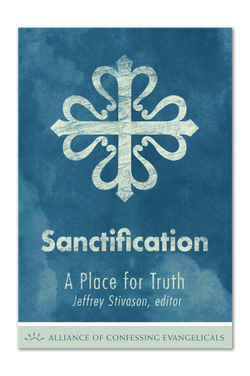
Those who are in Christ have been justified before God. But salvation means much more; it means that we are sanctified, that God actually leads us into holiness. As Michael Allen and company explain, our holiness is carried out in the present work of our sovereign, loving God. In Christ we are given life, not simply in name, but in fact. Praise the Lord, who delivers His children through every weakness. Though you struggle with sin, do not be discouraged; it is God who works in you, "both to will and to work for his good pleasure" (Phil. 2:13).
Past Episodes

Featured Offer
Those who are in Christ have been justified before God. But salvation means much more; it means that we are sanctified, that God actually leads us into holiness. As Michael Allen and company explain, our holiness is carried out in the present work of our sovereign, loving God. In Christ we are given life, not simply in name, but in fact. Praise the Lord, who delivers His children through every weakness. Though you struggle with sin, do not be discouraged; it is God who works in you, "both to will and to work for his good pleasure" (Phil. 2:13).
About Alliance of Confessing Evangelicals
The Alliance of Confessing Evangelicals exists to call the twenty-first century church to a modern reformation that recovers clarity and conviction about the great evangelical truths of the gospel and that then seeks to proclaim these truths powerfully in our contemporary context.
About Alliance of Confessing Evangelicals, Inc
The Alliance of Confessing Evangelicals is a broadcasting, events, and publishing ministry that exists to call the twenty-first century church to a modern reformation. Our broadcasts/podcasts include
The Bible Study Hour
with James Boice,
Every Last Word
featuring Philip Ryken,
Mortification of Spin
with Carl Trueman and Todd Pruitt,
Theology on the Go
with Jonathan Master and James Dolezal,
and Dr. Barnhouse & the Bible
with Donald Barnhouse.
These broadcasts air daily and weekly on stations in the United States and Canada and on the Internet. Event audio includes the Philadelphia Conference on Reformed Theology, the Reformed Bible Conference, and many others.
Contact Alliance of Confessing Evangelicals with Alliance of Confessing Evangelicals, Inc
Alliance@AllianceNet.org
http://www.alliancenet.org/
Alliance Of Confessing Evangelicals
600 Eden Road
Lancaster, PA 17601
1-800-956-2644