

The Greatest Thing in the World


A Scottish evangelist, Henry Drummond, preached a famous sermon entitled “The Greatest Thing in the World.” It was about love, and--if indeed--love IS the greatest thing in the world, then the 13th chapter of First Corinthians has to be one of the greatest chapters of the Bible. Join Dr. James Boice on The Bible Study Hour as he explains why love is superior to hope and even to our faith.
Announcer: When the Apostle Paul told the Corinthians that he would show them a more excellent way, what he would show them stood in stark contrast to the so-called spiritual gifts, which so preoccupied his audience.
Mark Daniels: Welcome to the Bible Study Hour, a radio and internet broadcast with Dr. James Boice, preparing you to think and act biblically. What Paul was explaining is that the Corinthian church could have knowledge, do good works, and possess the most exciting and coveted of the spiritual gifts, but without love, they profited nothing. Listen now as Dr. Boice explains the meaning of the kind of love Paul spoke of and its vital importance in the life of a true believer.
Dr. James Boice: Sometime during the last half of the 19th century, a Scottish author and evangelist by the name of Henry Drummond wrote a classical sermon called "The Greatest Thing in the World." Most people know that sermon; many have read it. It was about love, as I'm sure you know, and it was based on 1 Corinthians 13, which, if love is the greatest thing in the world, is certainly one of the greatest chapters in the Bible.
If people know anything at all about the book of 1 Corinthians, this is probably the chapter that comes most to their mind. In any collection of great chapters, this is one that must necessarily be included. This chapter teaches in a way which perhaps is surprising to many of us that love is greater than faith, that love is greater than hope. If that is the case, then 1 Corinthians 13 is greater perhaps than that magnificent 11th chapter of Hebrews that talks about faith at such length or greater than that magnificent 8th chapter of Romans that expresses the Christian hope.
Not every theologian thinks this. I was reading in Charles Hodge in his great commentary on 1 Corinthians, and he was very concerned at this point of his exposition to defend Romans 8. He said, "This is a great chapter, this 1 Corinthians 13, but it's not like Romans 8, which has the great sweep of God's redemptive plan in history." I think he was approaching it as a theologian and maybe rightly so, but by any measure, this chapter to which we've come in our exposition of 1 Corinthians is magnificent.
Whenever I think of this and particularly that verse with which the chapter ends ("And now abideth these three: faith, hope, and love, but the greatest of these is love"), I think of another sermon that the Swiss theologian Emil Brunner preached some years ago. Brunner lived in Zurich, Switzerland. He preached often in the Fraumünster church there in the city, and stories of his sermons would circulate in Switzerland through the newspapers and in other ways and were often talked about in Basel, some short distance away, where I spent a period of three years.
One of these sermons that Brunner preached was on this text: faith, hope, and love. His outline went like this: He said all of us have a variety of problems with which we deal, and among those problems, the chief are these three. We have a problem in our past, and the problem in our past is sin. We're sinners. And the question is, how do we get rid of the sin or the punishment that is due us for the sin?
And then all of us have a problem in the future, and the problem that we have facing us in the future is death. All of us must die. How do we deal with that? And then finally, he said all of us also have a problem in the present, and the problem in the present is how do we live with one another? We don't get on very well. We have difficulties in our relationships. Life is filled with estrangements. How do we deal with these three problems: the problem in the past, the problem in the future, and the problem in the present?
And then he turned to this text and he says, "This is God's answer." God's answer to the problem in the past, that problem of our sin, is faith. It's faith in the work of Jesus Christ who died for our sin in order that our guilt might be removed. And the answer of God to the problem in the future, our problem of death, is hope—the Christian hope—that though we die, yet through the power of Jesus Christ, we shall live again. And then finally, he said God's answer to the problem that we have in the present, the problem of alienation and estrangement, is love—the love of the Lord Jesus Christ that works through us.
I suppose it's because of that that this chapter has been so popular in the church. We have a problem in the past, but it's easy not to be concerned about the past. We forget about that. And we have a problem in the future, but we tend to push future problems from our minds. But we can't do that with the present because we live in the present. Every day, in everything we do, where we go, to whom we speak, what we're trying to accomplish, what we fail to accomplish, everyone we meet with and try to work with brings this problem freshly to our minds.
And so Christian people down through the ages have turned back to this great chapter of the Apostle Paul and have read it as an inspired expression of the kind of life that we should each exemplify and that should be seen in a dramatic way in the church of Jesus Christ. Now, it's not a hard chapter to analyze. I think it's a hard chapter to preach on simply because it's so profound, but it's not hard to analyze.
There's a preface in the New International Version. It's carried over from the last chapter and printed properly with this one where Paul says, "Now I'm going to show you a more excellent way." That's his introduction. Then he has three points, and in my Bible, it's the three paragraphs—very easy to follow. He talks about the importance of love. That's what you have in verses one to three. He talks secondly about love's nature. That's what you have in verses four through seven. And then finally, he talks about love's permanence. That's what you have in verses eight through twelve. And then he wraps it all up, the summary, the coda, which is the verse that I've already mentioned and which is so popular: faith, hope, and love, but the greatest of these is love.
When he talks about the importance of love, his first point, it's evident and it should be evident to us because we've been studying this in the context of the entire book, that he is setting love over against the kind of things about which the Corinthians were so preoccupied and which they obviously thought were most important. You see, he contrasts love with these so-called supernatural gifts: the gifts of tongues, speaking in tongues, or prophecy. That's perhaps part of it—being able to stand up and declare in some special way something that they believed had come from God.
He contrasts it with that. And he contrasts it with this knowledge of the mysteries of God, this idea of wisdom which we saw early in the book. Because these people in Corinth thought they possessed unusual degrees of wisdom, and they were dividing up in the church over their supposed wisdom. Paul had to knock that down in the first chapter and say the only wisdom that counts at all is the wisdom of God, and it's not a wisdom that expresses itself the way you have been expressing it. He contrasts love with that.
And then in the end, verse three, he contrasts it with the doing of good deeds, even to the point, he says, of surrendering our body to the flames, actually being a martyr for the sake of something good. And he says, "You see, you can have each of those other things. You can have the supernatural gifts. You can have knowledge to an eminent degree. You can be noted all over the city and among your friends for somebody who does extraordinary good works, but if you have not love, it does not profit you anything."
You say, "Oh, well, that doesn't sound right." I mean, certainly it's important to have knowledge. We believe in that. It's good to have knowledge of spiritual things. We spend a lot of our time reading books, studying the Bible, going to church, listening to lectures in order that we might know these things. And Paul is not saying that knowledge is unimportant. Of course he isn't. Paul is writing a whole book filled with it for us to learn. He's not saying it's unimportant, but he says if you have that without love, it doesn't count for anything.
And somebody else will say, "Yeah, well, what about these supernatural things? What about tongues and prophecies and healings and all these things that they were so concerned about?" As I read these chapters, I think Paul is not even saying that these are unimportant. But you see, he is saying that you can have those things which appear to be evidence of the supernatural work of the Holy Spirit in your life, but if you don't have love, you don't actually have the Holy Spirit in your life and therefore it counts for nothing.
Or you come to the end and you say, "Well, isn't it important to do charitable things? Isn't it important to do good works?" Yes, it is. If you don't do good works, which the Bible says you're ordained by God to do if you're a Christian, if you don't do those good works, you're not born again. But you see, there's a difference here. Paul says it is possible to do those things and not be born again. And therefore he's right when he says if you have not love, if you don't have the love that comes from the presence of the Holy Spirit in your life, you can do all those things and it counts you absolutely nothing at all.
During the Puritan age in America, the Puritans were very strong in trying to disabuse men and women of any kind of false confidence that they might have in spiritual things. From my perspective, and of course I'm formed by my own culture and by those who have trained me, I look back and read that material that the Puritans have left behind, and it seems to me that it's over-one-sided, that it's overdone. It didn't seem that way to them. They lived in a culture where people were perhaps the same as our culture—all too ready to believe that things were right between them and God, them and the Almighty.
And so the Puritans spent much of their time disabusing their listeners of the idea that just because they knew certain things, just because they could recite the creed, just because they could be models of piety, that therefore, ipso facto, without any question, they were in a right relationship to God. They spent all their time disabusing them of that and say you can do all those things, you can be a model in your community, and still be lost and go to hell.
And somebody would say at that point, "Well, if it is possible to know all mysteries so that when I speak, I sound like the Apostle Paul himself, and if it is possible to stand up and speak in tongues and even do miracles like the early apostles did, and if it is possible to be so noteworthy for good deeds that under certain circumstances I might even be willing to die for my faith, if it is possible to do all of that and still be lost, how can I know that I am not lost but that I'm saved?"
The answer, which is certainly consistent with what the Apostle Paul is saying in this chapter, is that you can know you're saved if the love of Jesus Christ is found within your heart. You can look down in your heart and say, "Regardless of my sin, regardless of my failure to understand spiritual things properly, regardless of my failure in the area of charity, I nevertheless really love Jesus and I want to serve Jesus. And by His grace, I find that I'm also able to love the brethren, those in the church and also those outside of the church." Then you can know that God has done something supernatural in you and you're saved.
In the Apostle John's writings, the first of his letters, he deals with this. He dealt with a group of people in that day who were unsettled by these things. People had come into their midst who, as I read the book, seem probably to have been more worldly-wise than they were. And they said, "Oh, the things that you've believed so far are just rudimentary. You have to go on from that to a greater knowledge." They were probably Gnostics, or at least they were in that stream of tradition that gave rise to Gnosticism later in the church.
And these Christians said, "Well, maybe that's true. Maybe we haven't understood things perfectly enough. Maybe we're still outside the kingdom. Maybe we need to go a little further, delve a little deeper into knowledge in order that we might enter in." The Apostle John wrote to reassure people like that. He gave them three tests by which they could know they were Christians: by whether they believed the right things about Christ, because if you don't believe that Jesus is the Son of God and the Lord, you're no Christian; and by whether you're obeying His commandments—He said, "If you love Me, you'll keep My commandments"—and John said, "Are you doing that? Are you striving to obey the commands of Jesus Christ?"
And then finally and preeminently, by love. John says, "Do you really love the Lord? And because you love the Lord, do you really love the brethren?" This is what the Apostle Paul is saying here as well. When I read these different things that he talks about in dealing with the importance of love, it strikes me that they correspond to three kinds of Christianity we have in our day. The first of these are the supernatural gifts: prophecy and healing and that sort of thing. And that corresponds roughly to the charismatic people in our day.
And the second thing is this knowledge of the mysteries of God, this doctrinaire theological kind of approach. And that corresponds to people like us in the Presbyterian traditions, those who think they really know the mysteries of God and can expound them perfectly to the charismatics. And then there's the third area, this idea of good deeds, and that corresponds to the social gospel churches, which is what most of the main denominations are.
If that's a fair analysis, and I think it is up to a point, wouldn't Paul say to Christians in America, divided up among these different factions of the church as we have them, "Look, you can be as charismatic as you please and go to hell. You can be as theologically knowledgeable as you please and go to hell. You can be as social- gospel oriented as you please and go to hell. What you need is the love of Jesus Christ." And would he not also say that if the love of Jesus Christ, by the work of the Holy Spirit and regeneration, is in our hearts so that this is what matters and we really do say that this is the most important thing, then would he not also say that some of these divisions we have would appear far less important in our eyes and we'd find ourselves able to bridge those chasms and fellowship in a constructive way with those who perhaps don't just see things the way we do?
Well, in the second paragraph, he talks about love's nature. I think this is the hardest thing to talk about. It's easy to analyze. He uses the word *agape*. You know that. It's the great word for love that's used in the Bible of divine love. Love of which we're capable by the grace of God, but nevertheless, knowledge, love that has its source in God. You know there are a number of words for love in the Greek language. The best known are *eros*, which gives us our word erotic; it refers to sexual love. And *phileo*, which is an intense love between people, a family love, relational type love. And then *agape*, which is from God.
It's an interesting thing that the only word that the Bible and Greek culture had in common was *phileo*. Now, it's not that the Bible writers didn't know the other words. Certainly the Bible writers knew that word *eros*—it gives us our word erotic—but it doesn't appear in the Bible. And the reason for that is that it had become so debased in the Greek culture of the day that it's almost as if God was saying, "I don't want a word that's as tainted as that word is in My Bible." Of course, sexual relationships are described quite explicitly in the Bible. It's not a question of that. It was that it had become so corrupt in the Greek culture.
And so as if God said, "I didn't even want that in My Bible." So the Greek word, the word that most formed the Greek ideas about what love was, is not even in the Bible. And then on the other hand, there's the Bible's word *agape*, which you don't find in the Greek culture. The only common ground is *phileo* because everybody knew that. And what the Bible is saying in effect when it uses this word is that these other loves have their place and God will bless them in their places, but they will have their proper places only when that first love is established—that relationship between the individual and God.
You get that right and then the other things take their place. The Greeks would have said, "Oh, you can't have any love unless it's sexual." And God says that's important in its place, but you can have great love, deep love, without that. And above all, you can have the love of God, which to have in this personal way is salvation. When Paul talks about the nature of love in these verses, he gives a couple of negatives, he gives a couple of positives, he talks about actions. It breaks down like this: First of all, two positive things: Love is patient and love is kind.
You know the list of the fruit of the Spirit that you have in the fifth chapter of Galatians? You know those two words are there. So this is the fruit of the Spirit. It's an expression. Love is also there. Love expresses itself in this way: in patience and kindness. And then there are these negatives. There are eight of those: It does not envy, it does not boast, and it is not proud. It is not rude, it is not self-seeking, it is not easily angered, it keeps no record of wrongs, it does not delight itself in evil but rejoices with the truth.
Eight negatives. And then there are these final items, four of them, that show love expressing itself in action: Love protects, love trusts, love hopes, and love perseveres. When I read that, I'm inclined to ask whether we know anybody like that. Sometimes I read that and I answer in a very negative way. I say we don't know anybody that measures up to that description. I think maybe that's not quite fair. When I look at it in another light, I say yes, you do see those things in Christian people.
Talk about patience, and you see many people who are patient because of the presence of Jesus Christ in their lives. I'm surrounded by people like that. As a matter of fact, they're the only people that can manage to hang around me. They're the ones that are very, very patient, and so I can vouch for that personally. Love is kind. As I look around the Christian church, I see Christian people who are eminent for their kindness. I'm delighted that they're kind. They show great kindness to other people, especially people that need it.
They take them in, they comfort them, they minister to them in a personal way because they're kind. They don't deal with them harshly, even though they brought terrible things upon themselves because of the way they live. Christian people are able to do that. And so I read this and I say, yes, there are people like this. There are those who don't envy, those who don't boast, those who are not proud. That's true. But the difficulty, you see, is in getting all of these things together.
I know people who are patient, but they don't persevere. They're just so laid back, nothing really gets to them, you know? Not even the job. Or people who are kind, but they're really not very hopeful. They say, "Well, we must be nice to so-and-so, but you know, it's too bad no good's ever going to come of that." The problem is getting them all together. And when you begin to say is there anybody like that, anybody—you know, that's a common term with us, "getting it all together," right?—and you talk about that spiritually, is there anybody who's really got it all together?
I think at that point, we begin to say no, there's a standard from which we all fall short, except for Jesus Christ. Isn't this a portrait of Christ? Take out the word love and put in the name of Christ, and it reads as a perfect description of His character. It's why He's so lovely; it's why we love Him. Look, Jesus Christ is patient. Oh, Jesus Christ is so patient. He's patient with us. You know what we're like. We produce anything but patience in the reaction of other people, and yet Jesus Christ is so, so patient with us.
He doesn't give up when we do the same thing over and over again, when we sin again and again, when we fall again and again, when we're so thick to learn a spiritual lesson. Oh, how patient He is. Jesus Christ is kind. Haven't you found Jesus Christ to be kind? You know, if there's anyone who knows your heart, if there's anyone who can expose what you really are, if there's anybody who can point the finger and say, "Ah, look at that sin," it's Jesus Christ.
You know, I've had people do that with me, and even though it hurts, I thank myself internally that they only see the surface. Jesus Christ sees below the surface, and yet He doesn't do that. Does Jesus Christ point the finger at you? Does He mock you? Does He say, "Oh, look at that, look at that"? He doesn't do that. Carefully, He works with us. It says in scripture, "A bruised reed He will not break, and a smoking flax He will not quench," but He works with what you are, kindly, to bring out the character which He Himself has placed within.
Jesus Christ does not envy. Jesus Christ does not boast. Jesus Christ is not proud. Jesus Christ is not rude. Jesus Christ is not self-seeking. Jesus Christ is not easily angered. He keeps no record of wrongs—aren't you glad of that? Jesus Christ does not delight in evil but rejoices with the truth. Jesus always protects. Jesus always trusts. Jesus always hopes. Jesus always perseveres.
I think that's absolutely marvelous. And you see, it's the recognition that our God is like that, our Savior is like that. It's the knowledge of that, that this is the nature of reality, this was what life is about. Everything else—the envy, the boasting, the pride, the rudeness—all of that is an aberration. That's not what God intended; that's not what life is all about. Reality is this: the character of Christ. It's a knowledge of that that draws us on to be like Him by His grace.
You know, Henry Drummond, whom I mentioned earlier, and I re-read his sermon just to see what he said—that's something I shouldn't have done; it's very discouraging because it's so good. It's the problem with reading a classic; you just can't match it. But Henry Drummond has a great line here. He looks at all those things; he analyzes them very carefully. This is a long sermon. And we get to the end, he says this, "This is really worth the sermon all by itself." He says, "Get these ingredients into your life; then everything that you do is eternal."
How about that? You see, if love is going to abide, if love is not going to die, if love is not going to fade by the way, then these things which are the expression of love are not going to die either. And so if what you do is characterized by patience, if what you do is characterized by kindness, if what you do, flowing from love, protects, trusts, hopes, and perseveres, then what you do not only matters but endures, and endures for all eternity. Why is it then that we spend so much time trying to do the opposite?
You know, here's this matter of knowledge. It's what we Presbyterians are so proud of. We spend so much time acquiring knowledge because we want to be thought wise. We want people to say, "Oh, he certainly knows the Bible. You ought to hear his explanation of irresistible grace." That's really marvelous. And we say when someone praises us for that, "Ah, I have made my mark. I'll be remembered." Paul says it's going to pass away. Or you say, "Oh, you know, I'm not much the theological type. I don't have a great mind, but oh, I want to do something supernatural.
I want to be able to speak in tongues. I want to be able to be endowed by God with the gift of healing. Oh, if I can only do that. Oh, then I'd be remembered on and on. That would matter. That would be significant." Paul says that'll pass away. I don't know that people are used by God in healings today. I suppose it's possible; I've not seen it. But you know, even if you are, the person you heal is going to die. Or you say, "Well, how about these good deeds? I want to be known as somebody who is so good in dealing with other people, that I am so good people will remember me after I'm gone."
And Paul says that too will pass away. But you see, if what you do is characterized by patience and kindness and not by rudeness or self-seeking or any of these things, then what remains remains and it remains eternally because it's the work of God. If we could just see that, I suppose that one thing alone would so radically transform us and our churches that the world would actually sit up and take notice and say, "There is something which really is supernatural and that the world doesn't have."
That leads to the last point, of course, because that's exactly where Paul himself is going. He's talked about the importance of love and the nature of love, and he says if you understand the importance of love and the nature of love, it follows, does it not, that love never fails. All these other things are going to fail: prophecies will cease, tongues will be stilled, knowledge will pass away because all these things are partial. But where there's love, love will not pass away.
When he sums it up, he puts faith, hope, and love together, and he says these three remain. I guess he means they remain through life and they remain through eternity. But I can think of at least one situation in the Bible where faith which was genuine and hope which was also genuine died, at least for a time, and love alone remained. I referred to it before often when I've been preaching at Easter time because it grows out of the Easter story. At the time of the crucifixion of Jesus Christ, those who had gathered around Him began to scatter because, well, first of all, they had had faith in Him.
Peter had expressed his faith ("Thou art the Christ, the Son of God"); Thomas had expressed his faith; John, all the other apostles. Thomas especially indicates the death of faith. They thought Jesus was the Son of God, the Messiah, and they had a certain idea of how that Son of God and Messiah was going to function. And when Jesus died on the cross, that just didn't fit their idea. And so faith died. And when the disciples came to Thomas after they had seen the resurrected Lord and he had not, and they said, "The Lord is risen," Thomas said, "I just don't believe it."
What clearer expression of the death of faith could you have? "I just don't believe it," he said, "and I'm not going to believe it unless I can see him and actually put my hand into the wound in his side and my fingers into the print of the nails in his hand." Faith died in them when Jesus died. And hope died too. My favorite example of that is the example of the Emmaus disciples who were on their way home after the crucifixion and for that matter after the resurrection, about which they had heard reports. They didn't have any hope in those things.
He had died, and dead men don't come back. And so when the Lord Himself came to them along the way and said, "What is it? What's been going on? Why are you so sad?" they told him all the story about Jesus and then they said, "We had hoped that it was He who should have redeemed Israel." "We had hoped" once upon a time we had it, but no more. Hope was gone. Hope died when Jesus died. And yet one thing didn't die, and that was love. They still loved Him. Mary is the great example of that. She had no doubt that he was dead; all she had in mind as she went to the tomb on that Easter Sunday morning was the body.
She didn't expect to see Jesus alive. She just wanted to minister to the body because she loved Him. And she didn't have any hope that there was going to be anything like a resurrection. She doesn't once breathe any idea of that. When Jesus appeared first and she thought He was the gardener, the only thing she could ask Him was, "Tell me where you've put him"—that is his body—"and I'll bear it away." She was offering to do the impossible. It was a body of a full-grown man, and he had been wrapped up in a hundred pounds of spices. She couldn't have moved that body no matter how hard she had tried.
But she wasn't thinking about that. She loved Him. And that's all she was thinking about, the fact that she loved Him. Love did not die. And so when Jesus spoke her name and she recognized her name from the lips of Him she loved, the other things just came along: hope revived and faith revived. And as the story of the resurrection passed through the company of the disciples, all of them came alive in these other ways. But it was chiefly because of love.
So I close by asking whether you really know anything of that love. Have you experienced something of the love of Jesus Christ? Can you say, "I love Him"? Years ago, a preacher was preaching on love for Christ, and afterwards, a little girl in the congregation came up to him and said, "I don't know that I really can say that I love Jesus. How can I love Him?" And he had very wise words. He said, "When you go home, I just want you to keep repeating over and over, 'Jesus loves me.' You know that, don't you? You know that little song, 'Jesus Loves Me, This I Know'?" She said yes, she did.
Well, he said, "You keep repeating that over and over and you keep thinking about that and you keep singing about that: 'Jesus loves me, this I know. Jesus loves me, this I know.'" And so the little girl did that. And next week when she came back, this was her testimony. She said, "You know, I went home and I kept saying that over and over again, 'Jesus loves me, Jesus loves me.' And you know, the first thing I discovered—that I had begun to love Him."
You see, that's the way God commends His love toward us. God commends His love toward us in that while we were yet sinners, Christ Jesus died for us. Jesus loves you. And it's by understanding that—that Jesus loves you like this—that makes you begin to love Him. And where that has happened, salvation has crashed into your heart, and you've been made alive in faith and hope and love forevermore. Let us pray.
Our Father, we read a chapter like this, and we confess—we have to confess—we know so little about it. We talk about love; everybody talks about love, and it's glib with us. We understand so little about it. But our Father, we believe that by the grace of Jesus Christ and through the channel of His love for us, we do know something of this love. And we want to grow in it.
We do ask that You would so change our perspective about things that we'll no longer find ourselves thinking primarily as the world thinks, looking for importance in the world's terms, and instead might learn to love, and in learning to love, express patience and kindness and hope and perseverance and all these other things, and thus do that which by Your grace endures everlastingly to the praise of the glory of Him who gave Himself for us. Amen.
Mark Daniels: You're listening to the Bible Study Hour featuring the teaching of Dr. James Boice. If God so loved us, we also ought to love one another. Sadly, we don't always see that love manifested even in the church. Discover the most important key to loving others in our free CD offer entitled "The New Commandment." It's also by Dr. Boice. This free CD offer is our gift to you. To receive it, call 1-800-488-1888. We'll be pleased to send you a copy of "The New Commandment." That number again is 1-800-488-1888.
Listeners like you make it possible for us to continue broadcasting our beloved Bible teacher's profound and insightful message. You can make a one-time contribution or even a monthly pledge by calling us directly at 1-800-488-1888, and that mailing address if you prefer: 600 Eden Road, Lancaster, Pennsylvania, 17601. The message you just heard, as well as audiobooks and more from Dr. Boice and many other reformed teachers, authors, and speakers, is available at reformedresources.org. That's reformedresources.org.
I'm Mark Daniels. Thank you for listening today. While every part of the Bible is relevant, some parts speak to contemporary issues more directly than others, and the 14th chapter of 1 Corinthians is one of them. Join Dr. James Boice as he reveals why the danger of people within the church doing what they want to do is both an ancient and contemporary problem and presents Paul's remedy for it. That's next time on the Bible Study Hour, preparing you to think and act biblically.
Featured Offer
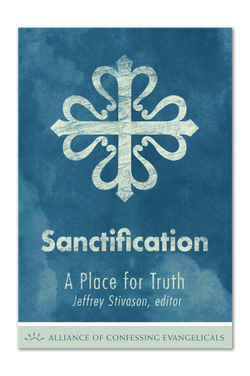
Those who are in Christ have been justified before God. But salvation means much more; it means that we are sanctified, that God actually leads us into holiness. As Michael Allen and company explain, our holiness is carried out in the present work of our sovereign, loving God. In Christ we are given life, not simply in name, but in fact. Praise the Lord, who delivers His children through every weakness. Though you struggle with sin, do not be discouraged; it is God who works in you, "both to will and to work for his good pleasure" (Phil. 2:13).

Featured Offer
Those who are in Christ have been justified before God. But salvation means much more; it means that we are sanctified, that God actually leads us into holiness. As Michael Allen and company explain, our holiness is carried out in the present work of our sovereign, loving God. In Christ we are given life, not simply in name, but in fact. Praise the Lord, who delivers His children through every weakness. Though you struggle with sin, do not be discouraged; it is God who works in you, "both to will and to work for his good pleasure" (Phil. 2:13).
About Alliance of Confessing Evangelicals
The Alliance of Confessing Evangelicals exists to call the twenty-first century church to a modern reformation that recovers clarity and conviction about the great evangelical truths of the gospel and that then seeks to proclaim these truths powerfully in our contemporary context.
About Alliance of Confessing Evangelicals, Inc
The Alliance of Confessing Evangelicals is a broadcasting, events, and publishing ministry that exists to call the twenty-first century church to a modern reformation. Our broadcasts/podcasts include
The Bible Study Hour
with James Boice,
Every Last Word
featuring Philip Ryken,
Mortification of Spin
with Carl Trueman and Todd Pruitt,
Theology on the Go
with Jonathan Master and James Dolezal,
and Dr. Barnhouse & the Bible
with Donald Barnhouse.
These broadcasts air daily and weekly on stations in the United States and Canada and on the Internet. Event audio includes the Philadelphia Conference on Reformed Theology, the Reformed Bible Conference, and many others.
Contact Alliance of Confessing Evangelicals with Alliance of Confessing Evangelicals, Inc
Alliance@AllianceNet.org
http://www.alliancenet.org/
Alliance Of Confessing Evangelicals
600 Eden Road
Lancaster, PA 17601
1-800-956-2644