

The Cock-a-Doodle Denial


First Jesus was betrayed by Judas, and then denied by Peter. What could cause them to do such a horrible thing? To learn about the situation surrounding the Peters denial, tune in this week to Every Last Word.
Guest (Male): First, Christ was betrayed by Judas and then denied by Peter. What could cause Peter to deny his Lord? Turn in your Bible to the Gospel of Luke as we prepare to listen to Dr. Philip Ryken's message on the ultimate denial by Peter.
Welcome to Every Last Word, a radio and internet program with Dr. Philip Ryken, teaching the whole Bible to change your whole life. As we continue our study in the Gospel of Luke, we'll spend the next few minutes learning about the love that Jesus has for us even when we sin.
Mark: Phil, we all know that Peter made a mistake when he denied Christ, but where did that mistake actually begin?
Dr. Philip Ryken: Mark, I think it began back in the Garden of Gethsemane. It's really striking to me that Peter fell into temptation after a time when Christ had called him to pray, and yet Peter had basically fallen asleep instead. So here's Peter, he really thinks that he can withstand anything and stand with Christ to the very end. A very presumptuous attitude, but at the same time, he's completely prayerless, and it's not surprising that he falls into this sin.
Mark: Can we ever get so far from God that we can't be called back to him?
Dr. Philip Ryken: You know, it's a good question to ask in connection with Peter, Mark, because here's a man who walked with Christ and yet denied him. And here's the grace of Jesus for him, that he was called back to ministry. In fact, even before he fell, Jesus said that he would turn back and strengthen his brothers.
And also, Jesus prayed for Peter that his faith would not fail. And that's the love and the grace that Jesus has for us, Mark. He's praying for us right now, interceding before the Father so that even if we do fall, he can call us back.
Mark: All right, thank you, Phil. Let's turn in our Bibles now to Luke chapter 22, verses 54 through 62, and listen together to Dr. Ryken.
Dr. Philip Ryken: Please turn in your Bible to the Gospel of Luke, chapter 22, where we have considered the betrayal and arrest of Jesus Christ and now consider what happened next. Judas had given his fatal kiss. Jesus had declared that this was the hour of the power of darkness, and then they seized him. We read in verse 54, "and led him away, bringing him into the high priest's house, and Peter was following at a distance."
And when we see the name Peter, we're reminded that there is a loose thread in this story. There is a dramatic tension that still needs to be resolved. For Jesus had prophesied that this leading disciple would deny the very Christ he had once confessed and that he would do it three times and that he would do it, furthermore, before the first light of morning.
And we have heard Peter protest, this was back in verse 33, that he would follow Jesus all the way to prison, if necessary, and even unto death. And so we are waiting to see what will happen in the rest of that part of this larger story. Now, even apart from the prophecy that Jesus made, I think we have pretty good reason to doubt whether Peter will ever be able to keep himself from falling.
His boast itself is cause for concern because we know that pride always goes before a fall. And then we have seen Peter neglect his prayers all through the long night that Jesus was in Gethsemane. And there is no telling what sin people might commit once they stop praying for God to deliver them from evil. I think really Peter here was in about as vulnerable a position as anyone can ever get: prayerless and yet at the same time full of presumption.
This is Peter's situation as he makes his way down the Mount of Olives and passes back through the city gates and then into the courtyard of the high priest where Jesus would undergo the first of several trials that night. Apparently, the evening air was chill because someone had gathered some wood and people were gathered around the fire, and we read in verse 55 that Peter sat down among them.
Now, I think we could say so far, so good. The rest of the disciples by this point had all scattered. And yet here was Peter and one other disciple, we know this from the Gospel of John, and they are still following after Jesus. They want to see, Matthew tells us, what would happen to Jesus by the end of the evening. And I wonder if perhaps Peter also wanted to see if he could make good on his boast.
Yes, the others had fallen away, but he would go to prison with Jesus, maybe even die with him. And here he was trying to prove it by following Jesus all the way to the high priest. In fact, follow is just the word to use. That's the word that Luke uses. You see it there in verse 54: Peter is following Jesus. And this is what a disciple simply is, a follower of Christ.
Now, it has to be said that Peter was following at a distance, but at least he was still following, which most of the disciples weren't at this point. The others had gone into hiding, but Peter was the bravest of all the disciples, wasn't he? And so here he was, following Jesus the way a good disciple should. I think really to this point, it's one of Peter's best moments, right up there with walking on water, however briefly, and with confessing Jesus as the Christ.
Peter wanted to go farther than anyone down the road that Jesus walked to the cross. And yet all it took was one little challenge from this little servant girl for Peter to say that he didn't even know Jesus. And within a matter of hours, he had denied his Lord not once or twice but three times. Denials spread out over the course of the ebb and flow of conversation in that courtyard that evening.
Luke gives us a very tight account, sparing any of the other details to focus on the denials, beginning in verse 56. "Then a servant girl, seeing him as he sat in the light and looking closely at him, said, 'This man also was with him.' But he denied it, saying, 'Woman, I do not know him.' And a little later someone else saw him and said, 'You also are one of them.' But Peter said, 'Man, I am not.'"
"And after an interval of about an hour, still another insisted, saying, 'Certainly this man also was with him, for he too is a Galilean.' But Peter said, 'Man, I do not know what you are talking about.'" Now, how shall we describe this triple denial? What are some of the words we could use by way of description? Well, I would say Peter denied Jesus immediately, without apparently the slightest hesitation.
As soon as anyone said that he was a follower of Christ, he claimed that he wasn't. This from the man who just hours before had said that he would even die for Jesus. Peter denied Jesus timidly. That's another word you could use to describe it. Maybe he could sense how badly this trial would go for Jesus. Maybe he was fearful for his own life.
But let me say that this servant girl was hardly a threat to Peter. The consequences of saying that he was a follower of Jesus were mainly social. They were not legal or judicial. In fact, Peter probably didn't even know the people accusing him, nor was he likely to see them again, and yet he gave in to this social pressure and timidly he said that he didn't know Jesus.
I would also say that Peter denied Jesus unconvincingly. Because when people got a good look at Peter, seeing his face there illuminated in the firelight, they knew that they had seen him hanging around with Jesus. He had a reputation for being a disciple, and in a way, he had earned it because he was always with Jesus and people noticed that. Apparently, even his accent gave him away.
Once he opened his mouth, people knew that he was a Galilean, and most of the disciples were Galileans. It wasn't just the way Peter looked that identified him as a disciple; it was the way that he talked. And then Peter denied Jesus comprehensively. Not just once or twice but three times. Not just in front of men but also in front of women, and he said it several different ways.
He first says in verse 57 that he doesn't even know Jesus. Then in verse 58, he disavows completely that he is a disciple. He's not one of them as people were trying to say that he was, meaning one of the disciples. And then the third time, he pretended he didn't even know what people were talking about at all. You know, afterwards Peter would never be able to say that this has at all been some sort of misunderstanding, that he hadn't really denied Jesus.
No, it wasn't like that at all. Peter denied the Christ just about as thoroughly as anyone could. And may I say that this was a very great sin? He denied Jesus iniquitously, you might say. Indeed, it was one of the first signs that this hour was coming under the power of darkness, as Jesus had prophesied in verse 53. Here was one of Jesus' own beloved disciples, Peter of all people, the one upon whose confession Jesus would build his church.
And yet he denies even knowing who Jesus is. He does this after many warnings not to fall away, after tasting the holy sacrament of the Lord's Supper. He does it after repeated exhortations from Jesus himself to watch and to pray. And Peter did this against Jesus Christ, the Son of God, the infinitely worthy second person of the Trinity.
Surely, unless this great sin was confessed and atoned for, this triple denial would be a damnable sin, for Peter denied the only God who could possibly save him. And yet how wonderful it is to see, at the very moment Peter was making his third denial, committing this very great sin, the sovereign God was calling him back to his senses. The scripture says that immediately, while he was still speaking, the rooster crowed.
"And the Lord turned and looked at Peter, and Peter remembered the saying of the Lord, how he said to him, 'Before the rooster crows today, you will deny me three times.' And he went out and wept bitterly." Now let's consider together what we might learn from Peter and his cock-a-doodle denial. I want to share with you three important lessons about sin and grace and repentance and a life of humble obedience to God.
And the first lesson is this: that the true test of discipleship is our witness to the world and not just the promises we make to God. The true test of our discipleship is our witness to the world and not just the promises we make to God. Now, Peter's promise back in verse 33 was made very presumptuously. Notice again what he said: "Lord, I am ready to go with you, both to prison and to death."
Now, it's a very bold statement. It stirs the heart to see somebody make that kind of commitment to Christ. And Peter was known for making very bold statements. He was the one who confessed that Jesus was the Christ, that he was the Son of the living God. Peter was the one who said, "Lord, to whom shall we go? You have the words of eternal life." You see, Peter was the one who knew the right thing to say at the right time and to say it very boldly.
And on this night that Jesus was betrayed, he made this bold promise to follow Jesus to the very death. But you notice that all of those were things that Peter said in private, not in public. They were things Peter said to Jesus when he was safely inside the community of faith but not, apparently, things he was ready to say in front of the whole world. No, when he was out in the courtyard, he had almost nothing to say for himself and certainly nothing at all to say for Jesus.
How strange it is: here's the most verbose of all of the disciples and he's total at a loss for words. The only thing he can really say is that he doesn't know Jesus. Well, what is the true test of our discipleship? Is it not what we say in the world and not simply what we say when we are alone with God? I wonder, does your discipleship pass this test? Does mine?
You see, many people will make all kinds of promises to God when they are alone with him: promises about living a better life, about spending more time in prayer, about reading the Word of God, about giving more money to charity—all kinds of promises. But the real test of our discipleship is what we say and what we do when we are under pressure to take a stand for Christ. What will we do then? What will we say then?
I think really, unless we speak up for what we believe, then we become the deniers of Christ, just like Peter became the denier of Christ. What are some of the times when we might be tempted to deny Christ? Well, I deny Christ when I talk to my friends about being involved in church but I do not really talk to them about what it means to know Jesus. Is that not a denial of Jesus?
I deny Christ when there is so little that is really distinctive about the way that I live that people at work or at school or in my neighborhood don't even really know that I'm a Christian, or at least don't know what kind of Christian I am. I deny Christ when I am so afraid about what people think that I do not speak plainly and clearly to the controversial issues of the day like abortion or homosexuality or the unique claims of Jesus Christ as the only Savior.
I deny Christ when I say something a Christian shouldn't say or do something a Christian shouldn't do just because I want to be popular and have fun with my friends. But if I can't speak up and say something for Jesus, then what kind of disciple am I anyway? See, that's the question we have to ask about Peter as we see him on this night of betrayal and denial.
And I think it's particularly telling what is said in verse 59. Here is an opportunity for Peter to stand up and tell the truth because what somebody says to him is this: "In truth, this man also was with him." That's the idea behind this word "certainly." And so what was the truth? Was Peter really a disciple of Jesus or not?
The real test was not what he said when they were alone in the garden but what he did when he was out talking to people who didn't know Jesus. And on this occasion, Peter failed that test. I think partly because he was so proudly confident of his faithful discipleship that he didn't even think he needed to pray for God's help. And how vulnerable we will be to all kinds of social pressure at school or at work or in the neighborhood or wherever we go if we don't ask God to make us courageous for Christ as we bear his name in the world.
I think J.C. Ryle was wise when he said that the best and highest saint is a poor weak creature even at his best times. There is no enormity of sin into which he may not run if he does not watch and pray and if the grace of God does not hold him up. And so when we read about the fall of Peter, we are only reading what might possibly befall any of ourselves. Let us never presume. Let us never indulge in high thoughts about our own strength.
Now, those are wise words. We should never presume or think high thoughts about our own godliness. We should recognize our weakness that we could end up in as bad a situation as Peter, if not worse. And recognizing our weakness, we should then ask Jesus for the grace to be a bolder witness so that we can actually pass this test of discipleship, not in our own strength but only by the grace of God.
Well, I dare say many of us would have to admit and confess that we have sometimes, too often, failed in that kind of test of discipleship. And so we will need to draw comfort from a second lesson that Peter learned: that Jesus knows our weakness and, even before we fall, has a plan to lift us back up. Jesus knows our weakness and even before we fall, he has a plan to lift us back up.
Now, I think it's important to see Peter's triple denial in the context of the prophecies that Jesus gave him. They were very specific prophecies. Look again back at verse 34. "I tell you, Peter, the rooster will not crow this day until you deny three times that you know me." You see, Jesus is telling Peter when he would deny him and how many times and even virtually the language he would use to do it.
Jesus knew all about Peter's weakness. He knew how he would fall into sin. And he knew this, it must be said, at the very time when he himself was already suffering the consequences for that sin. When he was already bearing the shame and the pain and the suffering and difficulty that would carry him to the cross. And not only did Jesus know that Peter would fall into sin, but he also knew what he would do to prevent his disciple from falling completely away.
I think James Boyce gave his message on the denial of Peter a good title when he called it "The Temporary Fall of Peter." It was a temporary fall from the beginning. Jesus knew that it would be only a temporary fall because he had prayed that Peter's faith would not fail. He also gave him a command that really assumed that he would restore Peter and bring him back to repentance. Notice what he says in verse 32: "When you have turned again, strengthen your brothers."
You see, Jesus knew that Peter's faith would not fail, that he would come back to repentance, and repentance is the word to use because that's what it means to turn again. It means to turn back away from sinful denial and back to the path of obedience to Christ. And in Peter's case, his restoration would be so complete that he would again find a place of leadership in ministry. And forever after, it would be his particular calling to help other sinners turn back to Jesus and follow him.
And you see the grace of Jesus in knowing all of this in advance and, even for all of it, loving Peter even in his weakness and sin. I think this helps to explain that famous look that Jesus gave to Peter. Oh, wouldn't you love to have seen just this one moment in the Gospels? To see what was expressed on the very face of Jesus as he looked to his disciple. Luke tells us that at the very moment that the rooster crowed, the Lord turned and looked at Peter.
Oh, who could explain what Jesus communicated simply by making eye contact with Peter? A look of love and compassion and mercy and forgiveness and encouragement and exhortation and reminder—it must have been all of those things. For whatever look was on the lovely face of Jesus Christ, it reminded Peter of what Jesus had said. And may I say how remarkable it was that Jesus was even thinking of Peter at all at this point?
Remember the great suffering that had begun for Jesus, his own greatest trial. He was in those hours of taunting and insult and mockery and accusation and charge, everything involved in that legal trial—those bloodthirsty enemies seeking to put him to death. And yet even at that time, he is thinking kindly of poor Peter. Reminded me a little bit as I thought of what it must have been like for Jesus to have a concern for Peter at that time, a little bit of the way that the parents of young children will try to carry on a conversation with another adult in a crowded room.
And yet, at the same time, even though that's the focus of things, they are also seeking to be aware of what that child is doing somewhere in the room—looking to see if there is any trouble, any intervention that is needed. And you see, Jesus is thinking of Peter with that same kind of care and concern. When you see Jesus giving Peter this look, it's almost as if he has been waiting all night just to hear Peter's rooster, as if that was the important thing he should be concerned about. That's how much love and concern and care he had for Peter.
Now, I don't know exactly where Jesus was when he gave Peter this look. He may have been still in the high priest's house, maybe somewhere near the doorway, maybe already being led out of the house and on to his next trial that night. But wherever he was, as soon as Jesus heard the rooster, he looked straight to Peter. His heart went out to that fallen and falling disciple. And at the very moment that Peter was busy sinning, Jesus was busy loving him and calling him back to repentance.
I think the wording of verse 61 may be significant as well. Peter remembers there the saying of the Lord, or you could even say the word of the Lord. That's what Peter remembered. That's what brought him back to repentance. Jesus was looking at Peter to remind him of what he had said, not just about the rooster but really the whole conversation. Everything Jesus had said about praying for Peter's faith and about restoring him through repentance back into ministry.
You see, Jesus knew the man's weakness and even before he fell into sin, he had a plan for his restoration, and he gave him the word that would lead to his repentance. And do I need to make the application to your own case? That Jesus knows your weakness as well as he knew the weakness of Peter and that he has a plan for your redemption. It's the whole plan of salvation he's been working out in Jesus Christ.
It's the reason why Jesus came into the world in the first place, to die for your sins. It's the reason Jesus has given you this Gospel that tells you about his salvation and calls you to repent and believe in him. It's the reason Jesus has sent his Holy Spirit out into the world. Really, the Holy Spirit is the one that gives you the look that Jesus gave to Peter. The Spirit is the one that reminds your conscience that you have a Savior and a Lord.
And if one look is all it took for Peter to repent, may it be the case for us that one little reminder from the Holy Spirit in the conscience is all it takes to call us back to our faith in Jesus and back to our path of discipleship and back, if we need it, to repentance for our sin. Oh, if we love Jesus, one reminder is all it should take. And we should never think that we need to hide our sin.
I think even those of us who have been Christians for a long time are sometimes tempted to think that God will not really love us again until we deserve to be loved. But do you see that it is right now that Jesus is looking to you in love? It's right now, even in the midst of all your sin. It's right now, even if you've done all that you can to deny him. It's right now that Jesus is looking to you in love, not sometime later when you supposedly will get your life back together.
No, we have a Savior who knows our weakness, who has always known it, and who even when we sin is looking to remind us of his word and call us to saving repentance. You know, people will sometimes say as a reminder to be careful not to sin: "You know God is always watching everything you do." It's a kind of thing, I suppose, a parent might say to a child as a kind of deterrent from the pathway of sin: "Even if I'm not there to watch you, God is always watching you."
But is it not even more important to understand that God is watching us in this way? In the way of mercy and of love so that we recognize, even when we are caught up in sin, that even at that point, Jesus is looking to us in love and longing for us to come back to him. Oh, when you understand the love that Jesus has for sinners, you will not think that you have to drag yourself back to God through repentance. No, you will see that you can always come running back, running back to the love that is always looking to bring you back to the grace of God.
I think this is why Christians have found this story to be full of so much hope. Oh, on the one hand, it's always heart-wrenching to see Peter fall into sin. I mean, don't you feel a little bit of the lump in your own throat as you imagine Peter seeing that look from Jesus and the way that it must have cut him to the very heart? Can't you almost taste the salty tears of Peter's bitter weeping? But not just those things do we experience as we read the story.
At the same time, hope is rising within us. We know if there's hope for Peter, who denied Jesus on the very night of his betrayal, then there must also be hope for us. Now, I have been trying to say from the beginning of our study in the Gospel of Luke that this is the Gospel of knowing for sure. And this is one of the main things we need to know for sure. Luke wanted to make sure that we knew it, that there is hope and grace and mercy for anyone who comes to Jesus in faith.
No matter how much we fall into temptation—maybe as bad as Peter, maybe even worse than that, if you can imagine it—Jesus knows your weakness and in his loving mercy, he will lift us up again to salvation. Now may I share one third and final lesson? And that is this: that true repentance means more than feeling sorry for sin; it also means turning back again and living for Jesus. True repentance means more than simply feeling sorry for our sins, but it also means turning back again and living for Jesus.
Now, it's true in this case that the first thing Peter did when he recognized his sin was to go out and weep bitter tears. Here Luke uses a word for intense emotion. It's the word for weeping you would use on the occasion of a funeral, in fact, for grieving the dead. And he doesn't specify exactly why these tears were so bitter. It's not hard for us to imagine the possibilities, though, is it? These were tears of disappointment.
Peter had promised to follow Jesus and he had failed to do that. How disappointed he was, disappointed to the point of tears. They were tears of shame, no doubt, as Peter remembered his disloyalty and that penetrating look from Jesus. Maybe tears of sorrow as he grieved what was happening to Jesus, what would happen to him as he thought that night of the loss of all of the things he had experienced in his joy with Jesus.
All of these things were caught up in this bitter weeping, and maybe you can relate to Peter's experience. I wonder, have you ever gone out to weep bitter tears of disappointment and shame and sorrow and loss and all of the disappointment and sense of failure that Peter experienced? Well, let me say that the really important thing is not just those tears and experiencing the grace and comfort of Jesus in that time of sorrow, but what is really important is what happens afterwards.
That's always the crucial question, isn't it? I mean, sooner or later, most people feel sorry for something that they have done, or at least we feel sorry about the consequences of what we've done. We for sure feel sorry about that. But not everyone repents in the biblical sense of the word, and biblical repentance is more than just feeling sorry about something. It is a change of direction away from sin and back to God.
And therefore, tears alone will not prove Peter's or anyone else's repentance. No, what matters more is what we do after those tears have been dried away. And I think here we see clearly the difference between repentance and remorse. Now, remorse has its place, even in the process of repentance. Remorse is that feeling of regret for what has happened or what we have done, and remorse often leads to many tears. But mere remorse never makes a lasting difference in anyone's life.
Repentance is different from that. It may well lead to many tears, but it doesn't stop there. It includes that whole life of humble obedience that we lead after we have cried over our sins. And surely this was the difference, the primary difference, between Peter and Judas, who, as you may know, also regretted what he had done. Now, there were some important differences between the sins of these two men.
We could talk about that at greater length, I suppose. Judas committed a very deliberate sin; very intentionally, he was planning to do it. Peter's sin was really more a sin of weakness that came in a time of sudden temptation. It happened because he wasn't planning to depend on God. It was a different kind of planning that was involved there. I suppose the sin of Judas, you would have to say, was much more damaging as well.
But don't you think really the most important difference between these two men was that Peter actually repented of his sin, which Judas sadly never did? Rather than praying for mercy and turning back to Jesus, Judas died in utter despair, taking his own life. You see, the saving response to sin is repentance, not just remorse. It's the Peter response, not just the Judas response. Oh, remorse can make you feel very miserable.
It made Judas feel miserable, but it didn't lead him back to God. It didn't save his soul. But repentance is different; it does lead back to God. Here is how J.C. Ryle describes it. He said, "Repentance makes a man's heart soft and his conscience tender and shows itself in real turning to a Father in heaven." And Ryle goes on to say that the falls of a graceless person, that is a person who does not believe in the mercy of Christ—such falls are falls from which there is no rising again.
But the fall of a true saint always ends in deep contrition, self-abasement, and amendment of life. Now, that is a good description of what real repentance is like. As we consider our own sins, we should be looking for some of those signs of repentance. Is my heart soft about my sin? Is my conscience tender towards God? Do I have a sense of his fatherly mercy and grace that is leading me to say how sorry I am for my sins?
Do I have this, at some level, deep contrition and self-abasement? Well, we certainly see that in the example of Peter, don't we, and in his bitter tears? But we also must see this: what Ryle described as amendment of life. And you know, you certainly see that in Peter as well. Was ever a man's life amended more effectively than the life of Peter after his temporary fall? You see his amendment of life in virtually everything he did afterwards.
What's the first thing that Peter does? I suppose most of us, if we had been guilty of this kind of sin, wouldn't want to face anyone ever again. We certainly wouldn't want to face anyone from our own spiritual community. We would go off some other place and hide in isolation, but that's not what Peter does. He immediately goes to the other disciples. We find him, even in the days when Jesus is in the tomb, meeting with John and the other disciples for prayer.
He goes back to the community of the people of God. He knows he needs those relationships in his time of discouragement. He is the first disciple you'll remember to enter the empty tomb. That took a certain kind of boldness and initiative, didn't it? He was one of the first to believe that through the crucifixion and through the resurrection, his own sins had been forgiven. You see how true it was that Peter's faith did not fail. He was bold in his faith.
And after that, bold in his witness, wasn't he? One of the boldest apostles. Here we are on the night when Jesus was betrayed and Peter can't even stand up to a servant girl in the courtyard. But you know, in just a few weeks, he was out preaching in the streets of Jerusalem. He was telling the whole city that he was a follower of Jesus and more than that, he was telling them that they ought to be followers of Jesus, too.
He was the boldest of preachers. Not even getting thrown into prison and threatened with further violence silenced Peter. No, he said to his enemies, "We cannot but speak of what we have seen and heard." You see, he said, "We cannot help but be witnesses." It's not just something we can keep in our own private relationship to God; we are compelled to speak about these things to the world.
And Peter kept on witnessing for Christ right up until his own death by crucifixion, as prophesied in the Gospel of John and confirmed in the histories of the church. You know, you could almost say that Peter made good on his promise. He had promised to go with Jesus to prison and then on to death. And in a way, by the grace of God, he was given the privilege to do those very things.
But not in his own strength, not out of his own bravado. He was able to do those things because God had given him the gift of repentance—true repentance, which means turning away from sin and back to God. Not just feeling sorry for sin, although that too is part of our mourning in repentance. No, in Peter we see the complete and the full repentance, and what hope his story gives to any fallen sinner.
To anyone who has been caught up in spiritual failure. To anyone, even, who has denied Jesus altogether. I think you will pretty well find that often the very boldest believers are the ones who have been the biggest sinners. And what an encouragement it is to see Peter, for all his failings, turning back again and being used by God. I wonder if this wasn't one of the reasons why God allowed Peter to see how far his own strength could take him.
Why God allowed Satan to sift Peter like wheat, as Satan had desired to do. You see, it was only by knowing his own weakness that Peter would stop boasting in himself and find full strength in the power of God. And in his mercy, God often helps us to make the same discovery. He lets us fail in our own strength so that we will see when we fall how much we need his grace.
And then like Peter, we'll be able to give a testimony of God's work in our lives. We'll be able to say, "Yes, I understand that you've fallen into a great sin. I myself know what it means to fall into that kind of great sin, but let me tell you about the grace of God. Let me tell you how much Jesus loves you, is looking to call you back to repentance. Let me tell you what he can still do in your life. It's not all wasted."
No, even these things can be used for the greater glory of God. And if you have fallen into serious sin, if you are wrestling with the consequences of that sin, know that Jesus is looking to you and for you and calling you back by his grace. What will you do after the tears? That is the question. Will you repent in the biblical way? Well, I think J.C. Ryle was right when he said, "If we fall as Peter fell, we must repent as Peter repented, or else we shall never be safe."
That is surely true, isn't it? That we must repent of our sins. The Bible tells us that everywhere: if we fall as Peter fell, we must repent as Peter repented. But we should also know this: that Jesus loves us as much as he ever loved Peter and he has a plan for our repentance and restoration and our fruitful service. Maybe he will even use us to let other fallen sinners know how much grace God has for them.
Father, we pray that this will be so. That you will do this work of grace in us. Helping us to see our sin but not to despair of our sin because we see how much love and grace you have for us in Jesus. Father, may you restore us and may you use us in the restoration of others, for Jesus' sake. Amen.
Guest (Male): You're listening to Every Last Word with Bible teacher Dr. Philip Ryken, a listener-supported ministry of the Alliance of Confessing Evangelicals. The Alliance exists to promote a biblical understanding and worldview. Drawing upon the insight and wisdom of reformed theologians from decades and even centuries gone by, we seek to provide Christian teaching that will equip believers to understand and meet the challenges and opportunities of our time and place.
Alliance broadcasting includes The Bible Study Hour with Dr. James Boyce, Every Last Word with Bible teacher Dr. Philip Ryken, God's Living Word with Pastor the Reverend Richard Phillips, and Dr. Barnhouse and the Bible featuring Donald Barnhouse.
For more information on the Alliance, including a free introductory package for first-time callers or to make a contribution, please call toll-free 1-800-488-1888. Again, that's 1-800-488-1888. You can also write the Alliance at Box 2000, Philadelphia, PA 19103. Or you can visit us online at alliancenet.org. Ask for your free resource catalog featuring books, audio, commentaries, booklets, videos, and a wealth of other materials from outstanding reformed teachers and theologians. Thank you again for your continued support of this ministry.
Featured Offer
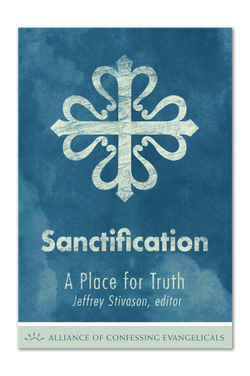
Those who are in Christ have been justified before God. But salvation means much more; it means that we are sanctified, that God actually leads us into holiness. As Michael Allen and company explain, our holiness is carried out in the present work of our sovereign, loving God. In Christ we are given life, not simply in name, but in fact. Praise the Lord, who delivers His children through every weakness. Though you struggle with sin, do not be discouraged; it is God who works in you, "both to will and to work for his good pleasure" (Phil. 2:13).

Featured Offer
Those who are in Christ have been justified before God. But salvation means much more; it means that we are sanctified, that God actually leads us into holiness. As Michael Allen and company explain, our holiness is carried out in the present work of our sovereign, loving God. In Christ we are given life, not simply in name, but in fact. Praise the Lord, who delivers His children through every weakness. Though you struggle with sin, do not be discouraged; it is God who works in you, "both to will and to work for his good pleasure" (Phil. 2:13).
About Alliance of Confessing Evangelicals
The Alliance of Confessing Evangelicals exists to call the twenty-first century church to a modern reformation that recovers clarity and conviction about the great evangelical truths of the gospel and that then seeks to proclaim these truths powerfully in our contemporary context.
About Alliance of Confessing Evangelicals, Inc
The Alliance of Confessing Evangelicals is a broadcasting, events, and publishing ministry that exists to call the twenty-first century church to a modern reformation. Our broadcasts/podcasts include
The Bible Study Hour
with James Boice,
Every Last Word
featuring Philip Ryken,
Mortification of Spin
with Carl Trueman and Todd Pruitt,
Theology on the Go
with Jonathan Master and James Dolezal,
and Dr. Barnhouse & the Bible
with Donald Barnhouse.
These broadcasts air daily and weekly on stations in the United States and Canada and on the Internet. Event audio includes the Philadelphia Conference on Reformed Theology, the Reformed Bible Conference, and many others.
Contact Alliance of Confessing Evangelicals with Alliance of Confessing Evangelicals, Inc
Alliance@AllianceNet.org
http://www.alliancenet.org/
Alliance Of Confessing Evangelicals
600 Eden Road
Lancaster, PA 17601
1-800-956-2644