

Spiritual Warfare 1: Part 1


Join us as we delve into the subject of spiritual warfare, the attacks and onslaughts of the evil one. Reverend Alexander addresses the reality of the conflict every Christian faces, the nature of this warfare, and the divine resources available to equip us for battle. Be strong in the Lord and in the strength of His might, that you might engage in this battle with confidence, on Hear the Word of God.
Mark Daniels: Welcome to Hear the Word of God, the online and broadcast teaching ministry of the Reverend Eric Alexander.
Eric Alexander: Christians who are mature in years and experience have been going through this kind of spiritual battle of which the apostle Paul here speaks. I want us to address ourselves to this teaching this evening that we may grasp something of how it is that we are to face spiritual warfare, the attacks and onslaughts of the evil one.
The subject is, of course, so vast that it's almost impertinent to try to deal with it on one occasion, and it might even be that we would have to return to it on another Sunday evening. Margaret Brown, who looks after our recording system so well, is always asking me how much of the tape or whether it's just going to be one tape that this will take and it's a very great act of faith for me to be able to tell her, as you will realize. We may indeed have to come back on another Sunday evening to this.
In the 17th century, an old Puritan called William Gurnall wrote an exposition of Ephesians chapter 6 from verse 10 to 18. It goes to three volumes and 1,400 pages, and towards the end of it, he bemoans the fact that he has dealt with the subject so scantily. What I hope to do this evening is just to gather together the main elements in this tremendously important part of Scripture. Let me say to you that for the general business of day-to-day Christian living, I think there is nothing more significant, nothing more important for us than to have a close acquaintance with this teaching: Christian warfare then, and how it is to be waged.
Let me suggest to you two, at least, possibly three important books that I think it's good for us to get hold of. I suggested at the communion last Sunday that you ought to get hold of Professor Finlayson's book, The Cross in the Experience of Our Lord. I had at least one bookseller phoning up asking me what am I to do with this queue of people asking for a book that's out of print? I'm afraid it is out of print and it's impossible to get it new.
But these are in print and I suggest that if you want to explore this theme further, you might be wise to get hold of a book called The Christian's Warfare and Armor by James Philip, which is published, I think now, by Victory Press. There are two considerable volumes by Dr. Martin Lloyd-Jones on the Christian soldier and the Christian warfare, which the Banner of Truth Trust have published. These are expositions of this part of Scripture and would be splendid holiday reading for you, and I get no commission on the sale of any of them, I assure you.
Let me first of all, as we look at verses 10 to 13, say something to you about four things. First, the fact of this conflict or warfare in which Christians, all Christian people, are engaged. Secondly, I want to say something about the sphere in which it is waged. Thirdly, about the nature of this warfare. Fourthly, I want to say something about the resources God has provided us with for waging it.
It's not unnecessary to draw attention to this first theme of the very fact of the Christian warfare that there is a conflict in Christian experience in which every true Christian discovers himself sooner or later to be engaged. Paul is sounding an alarm at the beginning of this passage, issuing a battle call to believers and he says, my brethren, in verse 12, we are not contending against flesh and blood, but against principalities and powers, against the world rulers of this present darkness, against the spiritual hosts of wickedness in the heavenly places.
And what Paul is doing, if you set this teaching against the background of the rest of Ephesians, is having expounded the riches of God's mercy in the gospel, having then urged upon them the need to walk worthy of this calling with which they've been called, he is now saying to them, but this life, this Christian life to which God is calling you, has to be lived out in the teeth of the fiercest opposition. Now, that's the basic truth. If you are seeking to live a true biblical Christian life, you will live it in the teeth of the fiercest opposition.
And that opposition is engaging the powers of darkness as Paul calls them, the devil and all his might and subtlety and cunning, and it's against that background and in that context that the Christian life has to be lived out. This is how Paul describes his own life towards the end of it in 2 Timothy: "I have fought the good fight," he says. That's been the nature of his life: "I have fought the good fight."
The simple reason that we find this kind of conflict to be our experience is that a work of grace has been performed in our lives. There is a sense, you see, in which engaging with the powers of darkness, finding the devil letting loose an assault upon you, is really the result of a work of grace that God has performed in your life. Because the same grace which reconciles you to God, from whom previously you were alienated, antagonizes you to Satan, with whom you were previously reconciled.
And this is the basic reason that Christian warfare is a reality. When God comes to you in Jesus Christ, the grace that reconciles you to God antagonizes you to Satan. Or to put it in a different way, a man who is not a Christian is Satan's prisoner. He has him precisely where he wants him, whether he feels that he is a free man or not doesn't matter. If you are not a Christian this evening and you imagine that you are living a life that's free, mastered by yourself, you are under a delusion because you are living under the dominion of the evil one. That's what Jesus taught us, and it's so evident in so many different ways in life.
But when someone becomes a Christian, Satan views that man as an escaped prisoner because he has been translated out of the kingdom of darkness into the kingdom of God's grace. Satan looks upon him as someone who has escaped out of his clutches, and he seeks to pursue him in ways that are fierce in the Bible's description: like a roaring lion, like some fierce dragon, the mythical creature whose horror is beyond words is what the picture means.
And the Bible tells us that this is how the evil one seeks to pursue those who have been delivered out of his clutches and he manipulates his two main instruments, the world and the flesh, in order to trip us up and draw us back into his grasp again. And this is the root, ultimately, of all that makes the Christian life difficult. It really is an important thing for us to come to terms with this fact. If we don't, I want to suggest to you that we are not going to get anywhere in our Christian experience.
Scripture tells us that we are not to be ignorant of Satan's devices. You see, there are many Christians who are led to believe that the Christian life is all bubbles and joy, that it is one long experience of spiritual effervescence and that nothing ever comes to get you down or bring you into the place where you are under attack and assaulted and downcast and the powers of Satan are breaking in as it seems upon your soul.
But I want to say to you this evening, my Christian friends, that if you have truly been brought to Christ, then you will discover that the powers of hell will be let loose against you. You will find that there is a battle to be fought. You will discover that as you seek to live the Christian life, it will be in the teeth of fierce opposition. Now, the reason it's so important to grasp this is that many young Christians, I discover, immediately they find this attack of the devil begin to conclude: I can't be a Christian at all because I believed that everything was going to go swimmingly, there would never be any problems, never be any battles after I became a Christian, and I can't be then, can I?
And indeed, of course, it may well be the very reverse: that the battle is an evidence of grace rather than a denial of it. That's the first thing I want to say then. Paul says we wrestle. That's the very fact of the warfare. What about the sphere in which it is waged? Let me point out two things to you here. In verse 12, the apostle says that it is waged, this warfare, in the heavenly places.
We are not contending against flesh and blood, but against principalities, powers, world rulers of this present darkness, against the spiritual hosts of wickedness in the heavenly places. But if you look back to chapter 1, verse 3 of Ephesians, you'll discover that that phrase recurs here and is precisely the place into which God has placed us when He blessed us with every spiritual blessing in Christ Jesus. He has blessed us in Christ with every spiritual blessing in the heavenly places.
So the description Paul is giving of the sphere into which God has brought us in Christ is the very description of the place where the warfare is at its fiercest. And the point really is, you see, that when we are in the midst of fierce temptation, it is a sign that we are living in that area where God has brought us in Christ as His redeemed people and where the devil is most actively at work. It is there that the battle is fought, you see.
And the simple fact is that if you discover the evil one to be assaulting you fiercely, it may well simply be that you are living at the front line, so to speak, where God and the evil one do battle. It is a very significant thing that if you read the lives of the great saints all down through the ages, it was men and women of God whose lives told for God who knew most of the spiritual warfare. It is fought in the heavenly places.
There are many worldly Christians, may I say to you in love this evening, but I need to because it's true, there are many worldly Christians who are living a very superficial Christian life who are very little troubled by the powers of the evil one and know very little of this kind of thing. But those who are really serious in going on with God, they will discover the reality of it. This is what the apostle is urging upon us.
Let me tell you the other sphere in which this warfare is waged. It is from the context of the epistle in our daily human relationships. That's a very important thing. Paul has just been speaking about the relationship between husbands and wives, children and parents, employers and employees, as we would probably interpret the last of these groups that he deals with in chapter 6. Now, the important thing is, you see, that the place where this spiritual warfare is really fought out is in the ordinary daily relationships of our daily life.
It's not fought out in some sort of distant ethereal context. The place where we wage real spiritual warfare is in the home, in our home circumstances, in our personal relationships. That's where your Christian life is most tested and put under scrutiny, and that's where the real battle is waged: in terms of the kind of husband I am, the kind of father I am, the kind of child I am to my parents, the kind of relationships I have with other people at home, at work, in ordinary friendships and so on. This is where the Christian warfare is fought, and for many of us, it's the most acute area of testing.
The sphere of this warfare then is the sphere into which God has raised us in Christ and the sphere of our ordinary daily relationships. Thirdly, let me say a word to you about the nature of this conflict. You look at the description Paul gives us in verse 12. He is speaking about something which is fierce. We wrestle, he says, not against flesh and blood, but against principalities and powers and the world rulers of this present darkness and so on.
Now, wrestling, of course, is a personal and individual thing. That is why the metaphor suits his purpose, and he is speaking about something which takes place within our own souls, very often in the loneliness of our own hearts. It's there that we find ourselves wrestling with the powers of darkness. But it's not only within our own personal individual lives. It is a common general conflict engaged so often by a whole fellowship of God's people.
And it's a very significant thing, I think, that most interpreters regard the pronoun 'we' at the beginning of verse 12 as signifying that this is the whole church of God, not just the individual, but a whole fellowship. This so often happens in experience: that a whole fellowship of God's people can so often be under assault from the evil one. And you begin to discover, as I discover in pastoral relationships with people, that one here and another there and there and there is beginning to experience the powers of darkness pressing in upon them, so often all at the same time and in many different ways, but the pressures of the devil beginning to break upon a fellowship.
Now, that's a very real thing, this wrestling not just in an isolated and individual sense, but in a communal sense of a whole fellowship of God's people. And of course, the reason for that is that the evil one is out to despoil the work of God. You see, we ought not really to be surprised at this and yet because we have not really come face to face with this kind of teaching, so often we are, but we ought not to be because if God is moving in a situation, you can expect the evil one to let loose his forces upon them.
And it is precisely where the living God is doing something living and real that you will discover the powers of darkness in a counter-attack. Now, that of course is something you find illustrated all through the book of Acts from the very beginning of the Day of Pentecost. If you study the book of Acts, which I hope we will do sometime soon, you will find that there is a movement from an outpouring of the Spirit of God to an attack of the evil one, then God is moving again and the evil one pours out his wrath upon this again, and it is a movement from one to another.
And this is something that so many of God's people have known ever since: that there is a communal experience of the powers of darkness and the assault of Satan in a fellowship. Now, if you look at the nature of the enemy as Paul describes him, there is a collection of words again in verse 12, which of one thing in common. They all point to the fact that this enemy has great and unusual power: principalities (the word really means one having authority and eminence), powers, world rulers, spiritual hosts of wickedness in the heavenly places.
Now, do you see what the apostle is saying? Satan is pictured here as a great prince. Jesus describes him in John 14:30 as the prince of this world, and in Revelation 2:13 we are told that he sits upon a throne. And he has great power and we must never underestimate the power, the sinister power, of the devil once he begins to turn his attentions upon people, upon situations, upon a fellowship. We must never underestimate the power of the devil.
Jesus describes him in Luke 11:21 as the strong man, and we need to grasp this. The power of Satan is a moral power, which can lead men into captivity. Listen to the apostle in 2 Timothy 2 and verse 26. He speaks of those who may escape from the snare of the devil after being captured by him to do his will. The power of the devil is a moral power; he brings people into his bondage.
Now, you don't need to be very long in the center of the city of Glasgow to discover people who are captivated in bondage, in moral bondage, to the devil, who are totally unaware of it, of course, probably. But it doesn't take a very discerning eye to see that what has happened to them is that they have been brought under a most sinister and appalling bondage, and they cannot release themselves from it.
It's not only a moral power, this power of Satan; it's an intellectual power. Paul says in 2 Corinthians 4: "The god of this world has blinded the minds of them that believe not, lest the light of the knowledge of the glory of God in the face of Jesus Christ should dawn or shine upon them." He has blinded their minds. Now, that is, of course, exactly what happens when people will say to you, one man, for example, sits and listens to the Word of God and finds it something that exalts and ennobles his soul and feeds his spirit and is the very answer of God to his greatest need and he glories and rejoices in it.
And the other man says, "I can't understand what that's all about. Double Dutch to me, means absolutely nothing to me." And the power of Satan is an intellectual power; he blinds the mind. Jesus says he is the father of lies and a deceiver from the beginning. It's also a spiritual power. We are not wrestling, says Paul, against flesh and blood, but dealing with the sort of opposition which is invisible and immaterial and supernatural and spiritual, the spiritual hosts of wickedness, and there is a supernatural realm of satanic power of which the apostle is here speaking and we need to come to terms with it.
It's also, of course, a subtle power. He seldom appears in his true guise. So the wiles of the devil are what Paul speaks about. "Stand," he says, "put on the whole armor of God," verse 11, "that you may be able to stand against the wiles of the devil." The reason, of course, is that he needs to use wiles in order to captivate men and draw them because if he came naked in all the ghastly horror of his evil nature, even we in our fallen state would see through him.
I wonder if in this connection you have ever thought about how difficult it is for us to conceptualize Satan as total unmixed evil. And the reason is, you see, the same reason that we find it difficult to conceptualize a personal God: because He is total unmixed holiness and righteousness and truth and goodness and justice and beauty, and none of us is that, and so we find it difficult to conceptualize what a personal holy God is like.
But by the same token, none of us is altogether unmixed quintessence of evil and blackness. And so we find it difficult to conceptualize a personage who is motivated by nothing else but the very quintessence and distillation of evil. And that's why you find figures like C.S. Lewis rather baffled by this. You will have read his Screwtape Letters; if you haven't, you ought to. But in Screwtape Letters, Screwtape, who is Lewis's figure of the devil, is the kind of figure who has a certain good humor about him at certain times and he finds it difficult to etch in the characteristics of somebody who is totally and utterly evil.
In the same way, Milton finds that in picturing Satan, he sometimes gives him a certain nobility, you know. And it's because we find it difficult to conceptualize the sheer unadulterated darkness of his person. Now, that's the nature of the opposition, of the enemy, of this conflict in which we are engaged. Let me say just a word this evening about the resources for waging this warfare because that's the most important thing of all.
Paul summarizes this for us in verse 10: "Be strong in the Lord," he says, "and in the strength of his might." Now, that's the summary of everything else that he is going to speak about in terms of the Christian armor because the important thing about this warfare is that God has provided for us most gloriously and absolutely in order that we might wage it victoriously. He doesn't mean to bring us face to face, you see, with this dark picture of the powers of darkness and then to discourage us and to make us feel that we could never face this. His purpose is that we might be more than conquerors through him that loved us.
That we might go against the foe, standing in the armor and panoply of God, and emerge victors in the end of the day. So that as He summons us to the fight, it is not merely to be overwhelmed by the sheer evil of the enemy, but to be overwhelmed most of all by the sheer wonder of what God has provided for us in Jesus Christ so that we might triumph.
You see, if there is one thing that is more dangerous than being ignorant of the devil's devices, it is this: it is that we might become more Satan-conscious than God-conscious. And that's the extreme that some people have gone to, and it's a very interesting thing, I have no doubt whatsoever that the devil has pushed them to that extreme. But it is a vital thing in Christian experience and warfare that we should be supremely God-conscious rather than Satan-conscious, that our mind and spirit, our heart and being should be filled with the glory and wonder of what God has wrought for us in Jesus Christ, of how He has put Satan under His feet and made him a defeated foe and given in His ascended glory to the church the armor of God in which we are able to defeat him.
Now, this is what the apostle is saying to these Christians. It is not a call of weakness; it is a call to glory and to triumph. "Be strong in the Lord," he says, "and in the strength of his might." Now, these resources are all the riches of the salvation that God has brought us in Jesus Christ. He has provided us with the perfect armor for standing our ground against the devil.
And you will notice how in verses 14 to 18 the apostle outlines the details of this armor for us. "Take the armor of God," he says. This is the secret of this conflict into which you are launched against the devil, if you're a child of God: take the armor of God. And what it means simply is to stand upon God's promised grace, to rest upon what He has done and to trust in His power to make us overcomers.
Now, before we would be able to look at the details of the armor, it's an important thing for us to see that this is not just armor that God has provided for us as believers. It is actually something much more significant than that. The proper background for studying this armor is not, I think, the Roman soldier to whom Paul was probably chained. You would notice at the end of our passage this evening he asks them to pray for him in verse 20 as an ambassador in chains.
And many people have thought that the key to understanding this armor is that the apostle is lying there in prison and he sees this Roman soldier beside him and it probably is the pattern of the Roman soldier's armor that Paul is taking as he urges them to take the armor of God. But I think if you understand the way in which the apostle Paul is immersed in the Old Testament Scripture, it becomes much more likely that the true background of this armor is in the Old Testament.
Because you see, this armor is not so much the armor of the Roman soldier as the armor of the Messiah, clad in which he went to battle against the powers of darkness and trod them down and broke their power and brought us victory. Now, that's what I'm sure the apostle is thinking of. If you look back with me, for example, to Isaiah chapter 59, and here in this messianic passage where the prophet is speaking to us about the Messiah who saw there was no man and wondered that there was no one to intervene, this is Isaiah 59 and verse 16.
Then His own arm brought him victory and His righteousness upheld him. Now, listen to this: He put on righteousness as a breastplate and a helmet of salvation upon His head; He put on garments of vengeance for clothing and wrapped Himself in fury as a mantle. Now, that is the picture, you see, of the Messiah clad in the armor of God, righteousness as a breastplate, a helmet of salvation upon His head.
And back in Isaiah 11, verse 5, you discover the loins of the Messiah girded about for battle with truth or faithfulness. The point of all this, you see, is that it is clearly the armor of the Messiah that Paul is speaking of. And if you think of it, that's a really very wonderful thing for us to grasp: that as God sends us into this battle with the evil one, we are clad in the very armor in which Christ was clad when He gained the victory for us.
And this is a wonderful assurance for the believer: that even as Christ was clad with this armor and went to battle against the powers of darkness and triumphed so gloriously, we may be clad with the same armor because we are to be strong in the Lord and in the strength of His might. And when Paul says elsewhere, "Put ye on the Lord Jesus Christ," it is precisely this he means, you see, beloved. We are not to go to this warfare in our own armor or in our own strength or resources or subtlety; we are to go clad in the armor of God.
He has provided every piece of it. And by His grace, because we are clad in Christ, we shall prevail. Because you see, the ultimate thing about the evil one, the ultimate truth that we need to rest on, is not his fierce evil nature, nor his subtle devices, nor his mighty power. The ultimate truth about the devil is that our Lord Jesus has taken him from his throne and has put him, as it were, under His foot, waiting until the day of His coming to cast him out forever. He has broken his power.
And that is why in Christ you may be more than conqueror. It doesn't matter who you are this evening. It doesn't matter whether you are a young child of God recently brought to Christ. It doesn't matter whether you think of yourself as a weakling or not. I speak gladly again this evening to weaklings: there is power in the Lord Jesus to enable you to say our Lord Christ is risen, our great foe is baffled, the tempter is foiled.
You see, Jesus by His death and resurrection has not only dealt with sin and with death; He has dealt with Satan. And there is an element in that mighty work He accomplished on the cross, which not only invades sin's domain, but breaks the power of the evil one. Now, that means, you see, that when he comes to you and you find yourself wrestling with him, what you need to do is to take the whole armor of God.
We will go into the details of it on another Sunday evening, but you need to take the whole armor of God, which means taking the Lord Jesus Christ, resting in Him, hiding in Him, being protected by all that He is. And you will be victorious. The weakest child of God can experience this. Let me just take one of these pieces of armor. It's the most significant one probably because it's the central one in the list in verse 16.
Besides all these or above all these other pieces of armor, take the shield of faith with which you can quench all the flaming darts of the evil one. Now, what's the shield of faith? Well, the shield of faith is of great significance, of course, because it was the largest piece of armor. The idea of the shield of faith is really not that little shield we sometimes think of with which people ward off the odd blow.
The shield was a huge piece of armor, bigger than the man often. The word sometimes was used to mean a door, and that's really what it was; it was like a door. And the man stood behind it, and when the enemy came, no matter how his fiery darts came upon him, he would be able to hold it and stand against him. Now, the shield of faith has this significance: that faith centers upon its object. Faith reckons on and trusts in all that God is to the believer.
All that God has done in Christ for the believer; that's the protection that faith lays hold of in order to victory. Now, do you remember when Abraham was in the midst of this experience of spiritual warfare? And he really was, like all the saints of God down the ages, he knew what this spiritual warfare was. And God came to him on one occasion and He said to him, "Fear not, Abraham. Don't be afraid," He said.
Now, the powers of darkness were making him tremble, and he wondered because he was a man who had known weakness in his past; he wondered if he was going to be able to stand. And God said to him, "Fear not, Abraham. Here is a shield." No, no, He said, "I am thy shield." What does that mean? Well, it meant, you see, that between the devil, the enemy, and the believer, God placed Himself.
And what God is saying to Abraham is, "Nothing can get past me. If you are sheltering in all that I am to my children, nothing can get past me to you, and he cannot harm you." I was telling some group of people a little while ago about an occasion I was driving through Glasgow, not very far away from here, and there was a scene on the pavement that you often see in Glasgow: of a number of little boys fighting. And as I made my way to the next traffic lights, one of them was being chased.
I saw what he had done, the little rascal; he had been pitching stones at some of these little boys, but he was running as fast as he could round the corner and they were making up on him. But out of a close there came one of the biggest, broadest men I've ever seen, just with a singlet and a pair of trousers on. And the wee boy called, and how I prayed that these lights wouldn't change because I wanted to see the end of this! And he called out, "Daddy!"
And he got down behind this huge man's trousers and he held on, took the odd peek out of one side and then out of another, and they turned away. And I thought, trivial though the occasion was, it was a picture to me of the believer hiding in Christ. That's what God means when He says, "I am your shield." Oh, my friends, there is a glorious victory to be obtained when you are resting in what God is to His children. Nothing can stand against him.
Therefore, I say to you, stand. Be strong in the Lord and in the strength of His might, that having done all, you may stand. Let us pray.
Our gracious God, we thank Thee that Thou hast wrought so mightily in Christ Jesus for our salvation. We thank Thee that Thou hast taught us about the warfare and the enemy in Thy holy Word. And we pray that we may be equipped with all the resources Thou hast supplied for us, that we may be strong in the Lord and in the strength of His might and do battle gloriously through Him. We ask it for Christ our Savior's sake. Amen.
Mark Daniels: You're listening to Hear the Word of God with the Reverend Eric Alexander, a minister in the Church of Scotland for over 50 years. To access more Bible teaching from Reverend Alexander, visit hearthewordofgod.org where your generous contribution will help us sustain and grow this ministry. That's hearthewordofgod.org. You could choose instead to mail a check to this address: 600 Eden Road, Lancaster, Pennsylvania, 17601. Or call 1-800-488-1888. This program is a presentation of the Alliance of Confessing Evangelicals. I'm Mark Daniels. Thank you for listening. Please join us again next time for Eric Alexander and Hear the Word of God.
Featured Offer
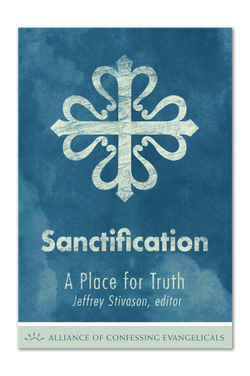
Those who are in Christ have been justified before God. But salvation means much more; it means that we are sanctified, that God actually leads us into holiness. As Michael Allen and company explain, our holiness is carried out in the present work of our sovereign, loving God. In Christ we are given life, not simply in name, but in fact. Praise the Lord, who delivers His children through every weakness. Though you struggle with sin, do not be discouraged; it is God who works in you, "both to will and to work for his good pleasure" (Phil. 2:13).
Past Episodes

Featured Offer
Those who are in Christ have been justified before God. But salvation means much more; it means that we are sanctified, that God actually leads us into holiness. As Michael Allen and company explain, our holiness is carried out in the present work of our sovereign, loving God. In Christ we are given life, not simply in name, but in fact. Praise the Lord, who delivers His children through every weakness. Though you struggle with sin, do not be discouraged; it is God who works in you, "both to will and to work for his good pleasure" (Phil. 2:13).
About Alliance of Confessing Evangelicals
The Alliance of Confessing Evangelicals exists to call the twenty-first century church to a modern reformation that recovers clarity and conviction about the great evangelical truths of the gospel and that then seeks to proclaim these truths powerfully in our contemporary context.
About Alliance of Confessing Evangelicals, Inc
The Alliance of Confessing Evangelicals is a broadcasting, events, and publishing ministry that exists to call the twenty-first century church to a modern reformation. Our broadcasts/podcasts include
The Bible Study Hour
with James Boice,
Every Last Word
featuring Philip Ryken,
Mortification of Spin
with Carl Trueman and Todd Pruitt,
Theology on the Go
with Jonathan Master and James Dolezal,
and Dr. Barnhouse & the Bible
with Donald Barnhouse.
These broadcasts air daily and weekly on stations in the United States and Canada and on the Internet. Event audio includes the Philadelphia Conference on Reformed Theology, the Reformed Bible Conference, and many others.
Contact Alliance of Confessing Evangelicals with Alliance of Confessing Evangelicals, Inc
Alliance@AllianceNet.org
http://www.alliancenet.org/
Alliance Of Confessing Evangelicals
600 Eden Road
Lancaster, PA 17601
1-800-956-2644