

Presuppositional Biblical Approach To Evangelism


Presuppositional Biblical Approach To Evangelism is the message from Sye Ten Bruggencate.
Alliance of Confessing Evangelicals, Inc.: Welcome, the following message is a ministry of the Alliance of Confessing Evangelicals. The Alliance is known for ministries such as the Philadelphia Conference on Reformed Theology, as well as nationally syndicated radio programs like the Bible Study Hour, Every Last Word, and Dr. Barnhouse and the Bible. Our purpose is to promote a biblical understanding and worldview. Thank you for listening.
Sye Ten Bruggencate: Let's have a brief word of prayer. Lord God, we thank you for this wonderful new day. We thank you that we might be a part of it. Please Lord God, give me the words to speak into the hearts of the people that are gathered here today. Please give them the ears to hear those things which are true, which are honoring unto you.
Lord God, please help us to leave here better equipped to serve you and make us serve you better. We pray this all in Jesus' most precious name. Amen.
That's my website, proofthatgodexists.org, and that's me. I was in the debate when I was at Eric Hovind's ministry. My name, as I said yesterday, is Sye Ten Bruggencate. I don't have a title or anything. I'm just your average person out here, and that's what I like to comfort people with is that I'm you up here.
Actually, I wasn't totally accurate. I am a DWAW. For those who aren't familiar with that degree, I'm a dude with a website. That's my claim to fame here. That's the website, proofthatgodexists.org. Now, I offer a rational proof that God exists on this website, not to have the unbeliever as a judge over God, but just to show that there is a rational proof.
Pastor Earl said yesterday that you can't prove that God exists. If he was here this morning, he'd see that you can. You can prove that God exists, but the thing is, people that you prove that God exists to don't want proof. They want persuasion. Proof does not equal persuasion. You can give a logical, rational proof that God exists, but if they hate him, they're going to examine that according to their presuppositions, and they're going to reject that offhand.
I'm a dude with a website and that's my website. Thankfully, last year we came out with a film, *How to Answer the Fool*. It was reviewed by the Dove Foundation and it got five doves. The Dove Foundation, if you're ever going to watch a film, you can see it rates things on stuff like language, violence, nudity, and things like that. We were under the bar on all of them. In retrospect, I'm actually glad that they removed my nude scenes.
Now I'm a dude with a website and a film. Like I say, I spent most of my life, most of my career working in a boiler room. For those of you who aren't familiar with boiler rooms, that's where all the bad stuff happens in movies. Freddy Krueger was a boiler operator. So you're learning apologetics today from Freddy Krueger.
Apologetics is a difficult word, but actually, apologetics is easy. Apologetics is easy, and I give you two basic steps: Read your Bible, believe what it says. You can do apologetics. It's just that the world has duped us into rejecting what God has said. But if you read your Bible, believe what it says, do what it says, and don't do what it says not to do, then you can defend your faith.
What does the Bible say? "The fear of the Lord is the beginning of knowledge." "In Christ are hidden all the treasures of wisdom and knowledge." If you read those verses, believe them and understand them, you can defend your faith with anybody. I have people that come up to me and they say, how do I defend my faith? I read these two verses to them.
I say that's all you need to know. They want to know all the intricacies of the argument. I say if you understand those two verses, you can't know anything without God, go forth. You can see at the beginning of the film, I'm talking to the fellow and the very first thing that I said to this fellow was "the fear of the Lord is the beginning of knowledge."
After six hours, the light went on and he says, "I get it. The person can't know anything unless they start with God." I said, "Man, this is the first thing I told you." You notice in the film, a lot of people don't realize that, but I was chuckling with the fellow that I was talking to. I was talking to the director of the film, and the reason that I was chuckling is because the person that I was talking to is the person I was talking about. He was the one that I talked to for six hours and the light finally went on.
Apologetics is easy. Read your Bible, believe it. Apologetics is a branch of theology concerned with defending the truth of Christianity. I used to not define the word apologetics because I thought that everybody understood it. They've been to so many of these conferences. There's a fellow who was related to somebody from my church at a Christmas party. He came up to me and said, "Does that mean that we go around apologizing to people?" I said, "No, it's a rational, reasoned defense of your faith."
If you were accused of a crime in ancient times, you gave your apologia. You gave a reasoned defense of your faith. That's what apologetics is. My qualification is not that I'm Dutch, because like they say, arguing with a Dutchman is like wrestling with a pig in mud. After a while, you realize he likes it. Believe it or not, I don't like to argue.
I would prefer if everybody on the face of this earth agreed with me, but they don't. I don't like to start arguments, but by the grace of God, I've been allowed to finish a few of them. What are my qualifications for teaching you today? Most of my life I was doing it wrong. Now why is that a qualification? If you want somebody to teach you how to get off drugs, you want somebody who used to be on drugs.
You want somebody to teach you how to quit smoking, you want somebody who used to smoke. You want somebody to teach you how to get off alcohol, you want somebody that used to drink. I used to do apologetics wrong, and that really is my only qualification because the person who quit smoking is the most ardent anti-smoker. The person who does apologetics wrong most of their lives and are by the grace of God shown a biblical apologetic, I think they're the most on fire for doing it the right way. Thankfully, I'm just as excited teaching this today as I was when I started six years ago.
Why am I here teaching you? Most Christians are doing it wrong, too, or they're not doing it at all. I run into people who aren't interested in this apologetic at all, and I realize why that is. It's because they never defend their faith. What was I doing wrong? What do we do when a person says they don't believe in God? Well, what did I do? I gave them evidence.
We talked a little bit about that yesterday. I told you that I'm more of an audio-visual learner, and I could give you some examples of people doing apologetics the wrong way, but I thought it was probably better if I just looked online to find a video. A video of an example of people defending their faith the wrong way, the typical way, and I searched high and low and I finally found what I thought was a decent example of people defending their faith the wrong way. This would be a video of typical apologetics.
Guest (Male): Maybe it doesn't get physical, but that's what it is. Here's some evidence, here's some counter-evidence. Here's some evidence, here's some counter-evidence. It's a slap fight.
Sye Ten Bruggencate: Thankfully, by the grace of God, I was introduced to a fellow named Jorgen Hook-Loki. He's a Norwegian philosopher and I don't know exactly how you pronounce that last name. Norwegian actually sounds a lot like Dutch, but I think you have to hold your face and go "Hook-Loki." I was introduced to the Hook-Loki method.
Again, I searched the internet for an example of the Hook-Loki method in use. It took me quite a while. I looked in libraries and couldn't find it. So I finally found this example of the Hook-Loki method, which might help you better understand the proper defense of the faith.
Guest (Male): Enough! You, all of you beneath me! I am a god, you dull creature, and I will not be bullied by...
Guest (Male): Puny god.
Sye Ten Bruggencate: Okay, there is no Jorgen Hook-Loki. That's the Incredible Hulk versus Loki in the movie *The Avengers*. We just ragdolled him. If you defend your faith the biblical way, you will intellectually ragdoll your opponent. That's why we're commanded to do this with gentleness and respect.
What did Jesus say? "For I will give you words and wisdom that none of your adversaries will be able to resist or contradict." That's a powerful apologetic. "I will give you words that none of your adversaries will be able to resist or contradict."
Now, what did Jesus Christ say in John 10:27? "My sheep hear Sye's really good argument." That's not what he said. He said, "My sheep hear my voice." Brothers and sisters, that is the power of our apologetic. When Jesus' disciples were leaving him in John chapter six and Jesus said to them, "Are you going to leave me too?" what did the disciples say? "To whom shall we go? You have such a good argument." No. "To whom shall we go? You have the words of eternal life."
Brothers and sisters, that is what closes mouths. I had a fellow come up to me, it was Nate actually. I just realized it was Nate Steuer. I don't know how you say his last name, but it was at a conference and he came up to me and said, "Sye, I hear you're a really good apologist. I want you to teach me. All I ever do is answer with Scripture." I said, "Don't listen to a word I say." I said, "If you can answer every argument with Scripture, do it."
That is our presupposition, that's our foundation: the authority of God's word. People are embarrassed to do that. They go out on the street and they say, "I'm not going to say this because my Bible says a donkey talked." It says a man who's dead for three days came back to life. "I'm going to be made fun of." Brothers and sisters, I've been on the streets. Scripture closes mouths. Scripture closes mouths. Don't be afraid to quote Scripture because that's the power of God unto salvation. It's the power of the gospel, God's word. Don't be afraid. That's where the power of our apologetic lies: in Scripture.
Imagine that somebody came up to you and said, "I don't believe in words." Would you pull out a dictionary and give them evidence that there's words? Or would you think he was a fool? Would you give him one of these? You'd think he was a fool. Who made words? "For from him, through him, and to him are all things." God made words. Why, when somebody says they don't believe in God, do we give them evidence? We believe them and we don't think they're a fool when the Bible calls them fools.
Like I say in the film, something has gone wrong. That's my dream, that when somebody comes up to you and says "I don't believe in God," we have the same reaction as if somebody just came up to you and said "I don't believe in words." Say, "What? You don't believe in God?" It would be absurd. That's what we need to get back to.
The Scriptures say, "The brilliant mathematician says in his heart there is no God." Psalm 14:1. That's not what it says. It's actually "The scholarly scientist says in his heart there is no God." No, that's not what it is either. It's "The amazing atheist who says in his heart there is no God." No, brothers and sisters, it's the fool that says in his heart there is no God.
We revere these people. We're afraid to engage them because we think they're brilliant. Scripture calls them fools. It calls them fools for a reason. If you go to my multimedia page and you see some of the interactions I have with these brilliant people, lots smarter than I am, you can see they're made to look like fools. Not because of my intelligence, but hopefully because I argue from a biblical position.
A fool is somebody who's willfully ignorant. It's not an intellectual charge, it's a moral charge. I give the example of my father. He worked in an electronics firm, and they were doing some work for China. This is before the Iron Curtain came down. The Russian delegation came to check out the work. They were from backwoods Russia. They were from, I don't know, like way in the middle of Russia somewhere.
They went to have a break in the break room, and one of the Russian fellows wanted some tea. My father got him some boiling water and got him a tea bag. The Russian fellow went to tear the tea bag and pour it into his tea. My father said, "No, no, you throw the whole thing in." He looked at my father kind of weird because I guess there they have those metal containers you see them in where you put the little leaves in. He didn't know, so he put the tea bag in there.
The fellow wanted some sugar for his tea, so my father gave him a sugar bag. He threw it in his tea. My father said, "No, no, you rip it open and you pour it in." The guy looked at my father like he had two heads. He said, "You guys are crazy." Now was that fellow a fool? No, he didn't know any better. A fool is somebody who knows better, somebody who's willfully ignorant.
Who did Jesus call the fool? The man who built his house on the sand. You think that guy didn't know better? It was foolish to build your house on the sand. He knew it would crash down in any storm. That's who Scripture calls the fool. What was I doing wrong? I was giving evidence. What's one problem with evidence? You have to be brilliant.
Let's say you study rock layers and you know rock layers backwards and forwards. You're out in the street or somebody in your family comes up to you and you wipe the floor with them with rock layers. What's he going to do when he gets home? Google rock layers so he can learn more than you. You want him to repent and put his trust in Jesus Christ, and he's Googling rock layers. Congratulations.
Here's the problem. You have to be brilliant, and there's always somebody smarter than you. He might find somebody on Google. He might find a local professor of geology, and he's going to haul him out in the street the next day, and he's going to wipe the floor with you. That's one problem with evidence.
The other problem we talked about yesterday is where do you hear evidence most often out in the world? In the court of law. If you give evidence to the unbeliever to prove the existence of God, which seat does God take in that courtroom? Not the judge's chair. He's in the criminal's box. That's what we've been doing most of our lives, putting the unbeliever in the judge's chair and putting God in the criminal's box.
We're the defense attorney for God in that blasphemous courtroom. You know what the problem with that is? We can win that court case. We can acquit God. We have wonderful evidence from God. Evidence is a wonderful gift from God to declare his majesty and his glory. We can win that court case.
But let's say we win that court case and acquit God. Who's the judge? The unbeliever is still the judge. You might have him say, "Yes, okay, yes, God exists. I believe that you've met my burden of proof. You've given me sufficient evidence to prove that God exists." The next day, they back over their three-year-old kid who's playing in their driveway, killed them. Now all of a sudden they have evidence there's no God. They're weighing the evidence, the scales going back and forth.
They say, "I'm not so sure anymore." Then they see one of your Christian videos, and "Now I'm a Christian again." The scale's going back and forth. But who's holding the scale? The unbeliever. They've never submitted and bowed the knee to Jesus Christ. Now I'm not saying that God has not brought people to saving faith through evidence. Maybe many of you in this room, because most people do apologetics wrong.
God could strike a straight blow with a bent stick. If you come to a saving knowledge of him, you repent and put your trust in Jesus Christ after being convinced. But brothers and sisters, just because some people have been saved doing it wrong does not mean we should honor that method of defending the faith.
You can use evidence as an apologetic, you can do it, but just don't use it in a way that puts God on trial. I want to encourage you that there's a difference between defending your faith and sharing your faith. If you're sharing your faith, give all the evidence you want, even to your unbelieving friends. "I went for a walk last night, looked up at the stars, and the heavens declare the glory of God. It's beautiful. The intricacy of the human body." Sure, give them evidence.
But if they say you're crazy for what you believe, now you're not in sharing mode anymore. Now you're in defending mode. What is our ultimate authority? The ultimate authority of the Christian is God and his word. Is that how we're taught to defend our faith, with the authority of the word of God? One thing you're going to find out once you learn how to defend the faith properly, biblically, is that you're going to watch apologists online and they're going to make you sick to your stomach.
We have to be gracious to them because if you looked at me ten years ago, I was doing exactly the same thing. We have to be gracious to them. The reason that I show clips of people doing it the wrong way is because I don't want people to go from an apologetics conference and say, "Oh, I love apologetics. I love defending my faith," go online, watch one of these videos and eat it up and start doing it that way. I want people to see a contrast.
What can you not use to prove that the Bible is true? I saw this fellow ask that at a conference. You can see the reaction here.
Guest (Male): But you notice something odd about this? If you want to know if the Bible's true, what can you not use to prove that the Bible's true? The Bible!
Sye Ten Bruggencate: What can you not use to prove that the Bible's true? The Bible! At an apologetics conference. What if I told you I was the strongest man in the world? What can I not use to prove that I'm the strongest man in the world? My strength? I mean, that would be absurd, wouldn't it? What must you use to prove that you're the strongest man in the world? You must use your strength.
All ultimate claims must be self-authenticating. I went online recently and I found this substance. It's the strongest substance known to man. It will dissolve absolutely anything on contact. Anything. Now, I'm not a rich apologist, so I could only afford this much, but I want to bring it to you to show you. The strongest substance in the world will dissolve anything on contact. How do you know I'm lying to you? It's in a jar. If that was the strongest substance in the world, I couldn't contain it in this jar.
That's what we're trying to do with the Bible. It's the most powerful thing on earth and we're going to prove it with something else. "This archaeologist, this geologist says that the Bible's true because of that paper fragment he found." Next week, he digs up another paper fragment and says, "Well, maybe I'm not so sure that the Bible's true anymore." Who's your ultimate authority? Not Scripture. That guy. Imagine if I said I had the fastest truck in the world, and I was going to prove it by towing it down the racetrack. You'd say to me, "That tow truck's faster."
That's what we're doing with Scripture. Scripture must prove itself, and it does. Our claim is not only that the Bible says it's true, therefore it's true. The Bible says it's true, and denial of that claim reduces your worldview to absurdity. What must you use to prove that the Bible is true? You must use the Bible to prove that it's true. Then you get apologists, son of a famous apologist, goes to a crowd. "What can you not use to prove the Bible's true? The Bible." We're giving up our authority.
Guest (Male): But we're going to show through two scientific arguments and one philosophical argument that there's a spaceless, timeless, immaterial, powerful, moral, personal, intelligent creator out there. We're not going to use the Bible to show you that evidence. We're just going to give you evidence and let you see where it leads.
Sye Ten Bruggencate: This fellow teaches at universities, teaches apologetics, and we're not going to use the Bible. Our ultimate authority, we're not going to use it. We're going to make you the judge. Brothers and sisters, please be aware of this. Who's the best-known apologist out there? Strikes fear into the hearts of Richard Dawkins, who won't debate him. William Lane Craig.
I used to eat up his debates. I hope he's a brother in Christ, I don't know. The more you scratch the surface of the apologetic, I used to share his debates. The more you see the difficulties with it. This is a clip of him at some college campus somewhere.
Guest (Male): Why do you have a morality for this Christian God and not any other god which would have less disgusting morals?
Guest (Male): If you weren't so emotionally wrapped up in this, you would notice that my argument tonight was not for the Christian God.
Guest (Male): But you did mention over and over again Jesus and Christian salvation.
Guest (Male): In answer to questions. But my talk tonight had nothing to do with the Bible. I gave you personally as someone who is smart and done this, the argument that I gave tonight for theism.ism is a generic argument for a set of personal supreme being that's consistent with Judaism, Islam, Christianity, certain forms of Hinduism, deism. I haven't used an argument, a moral argument for Christianity or even for the God of the Bible. So you ought to rejoice in my argument tonight and just say "I have an idea of theism but I'm not going to be biblical today."
Sye Ten Bruggencate: That fellow ought to rejoice in his argument because he's not arguing for the God I believe in. The God I believe in is not some generic theistic being. The God I believe in is the God who's declared himself certainly in Scripture. He's the best-known Christian debater, he's not debating for the God of Christianity.
That's sad. You cannot defend Christianity by giving up Christianity. Brothers and sisters, it's not about the evidence. We're not trying to reason somebody to the existence of God with the evidence. Do me a favor: when a person asks you for the evidence, evidence for the existence of God, ask them this: "If I could give you sufficient evidence to prove that God exists, would you worship him?" You might be surprised at the answer you get.
Guest (Male): If you could prove to my satisfaction that God does exist, the God of the Bible exists, would I worship him? No.
Guest (Male): Why not?
Guest (Male): Because he's kind of a jerk.
Guest (Male): If I believed that God existed and I believed that it was the Bible God that existed, I would not worship it because it is a criminal thing. Now, if a better God existed than the one in the Bible, I still would not worship it, but at least it would be worthy of respect.
Guest (Male): You're talking about the God of the Bible as an absolutely all-powerful sort of deity. I don't know whether I agree with that person that just because they have power that I would worship them. I would have to really see them in action to see if I agree with it ethically on my terms.
Guest (Male): Let me sum it up with this just because this is something I'm really curious about when I speak with atheists and, again, I really appreciate you guys talking and I hope we can have another discussion. Let me ask this question to both Jim and Alex. Jim, I'll ask you first and then Alex I'll ask you. Jim, if it could be demonstrated to your satisfaction that the God of the Bible exists, would you worship him?
Guest (Male): No.
Guest (Male): Alex, if it could be proved to your satisfaction that the God of the Bible exists, would you worship him?
Guest (Male): If the God of the Bible as presented in the Bible? Yes. Absolutely not because he's a psychopath.
Sye Ten Bruggencate: We're giving evidence to these people. Even if you could convince them, they wouldn't worship him. These guys would not let me back on their podcast unless they discussed evidence with them. How absurd is that? And there's Christians doing that. Ask your family member, "Would you worship God if I convinced you with the evidence that you demand?"
Then I ask them, how much evidence would it take you to believe in the God that says you have enough evidence? No evidence could do that, but somebody might say yes. What if they say yes? "If you could give me enough evidence, yeah, I'd worship him." When you ask a question, you always have to be ready for either answer.
If they say yes, I say, "You know what? You probably would because it wouldn't be the God of the Bible. No God of Scripture requires me to give evidence for you to believe in him." That would be an idol of your own creation, of course you would worship him.
Now, here's a question: do we believe in a probable God or a certain God? Romans 8:39, "For I am convinced that neither death nor life, neither angels nor demons, neither the present nor the future nor any powers, neither height nor depth nor anything else in all creation will be able to separate us from the love of God that is in Christ Jesus our Lord."
In church we say, "Nothing can separate us from the love of the Father," tears streaming down our face. What a beautiful verse. Nothing can separate me from the love of the Father. That's what we say in church on Sunday. On Monday, we go to work and we say, "You know, I could be wrong, but if I'm wrong, I die, rot in the ground, worms eat my body. If I'm right, I get to go to heaven forever. If you're right, you die, rot in the ground, worms eat your body. If you're wrong, you go to hell. What have you got to lose?"
We reduce God to a bet. The day before in church we're talking about the certainty of God's existence. If God is a bet, you cannot say "nothing can separate me from the love of the Father." We talk about a different God, a God that does not exist when we defend our faith out in the world.
God is not a probability. He's a certainty. The God we believe in certainly exists and has certainly revealed himself. If you're not defending your faith in that God, you're doing it wrong. I mean, after all, that's what the Bible says, doesn't it? Every building needs a builder. People go out from my conferences and I hear them on the street. Every building needs a builder. "You don't believe in God? Every building needs a builder." I mean, that's what the Bible says, isn't it?
The heavens declare the glory of a builder. The skies proclaim the work of his hands. The heavens declare the glory of God. We don't talk about some generic being when we're in church. We talk about the God who saved us, who certainly exists. God is not a builder. God is the builder. They know it and they're without excuse for their sin against him. I want that to ring in your heads. God is not a builder. He's the builder.
What about faith? If God certainly exists, what about faith? Aren't we supposed to have faith that God exists? Brothers and sisters, faith does not take over where reason leaves off. Faith is the foundation of all reason. Hebrews 11:1, I like this translation the best from the NIV: "Now faith is being sure of what we hope for and certain of what we do not see."
Faith in God is the foundation of all reasoning, even the reasoning of the unbeliever. It exposes that they do know that God exists. What if I told you that I have a wonderful loving relationship with my wife, I'm just not certain she exists? You would have every right to question my relationship, let alone my sanity.
You get people on the street. "I'm not certain that God exists. How's your relationship with Jesus Christ? Oh, great. And you could be wrong about him?" God has revealed himself certainly. All Christians know that. The problem is that we elevate the unbeliever to the position of judge. Look at the books we have out there: *The Case for a Creator*, *Evidence for God*, *Evidence that Demands a Verdict*.
Who's the judge in those books? The unbeliever. Not the Lord of glory. People say, "Well, you know, we really don't do that. We wouldn't put Jesus on trial. Try Jesus? We would never do that, right? We would never try Jesus." Except on our bumper stickers, our church signs, our T-shirts: Try Jesus.
Scripture says to not put the Lord your God to the test. We're out there telling people to try Jesus. But surely that's just some innocent mistake that we make until we're more aware of it. Surely a mega-church pastor would not go on national television and tell people to try Jesus. That would never happen, would it?
Guest (Male): What does it say for all those people who do not accept Christ as their personal savior?
Guest (Male): I'm saying that this is the perfect time to open their life to give it a chance. I'd say, give him a 60-day trial.
Guest (Male): A 60-day trial. Sounds like the book of the month club.
Guest (Male): See if he'll change your life. I dare you to try Jesus.
Sye Ten Bruggencate: I dare you to try Jesus. Who in Scripture tried Jesus? Pontius Pilate. If he didn't repent, he's in hell. He only tried him for a few hours and you have a mega-church pastor telling you to try him for 60 days. People say that's an equivocation. I don't think so. Do not put the Lord your God to the test. We don't try the Lord of glory, we submit to him.
Again, apologetics is a branch of theology concerned with defending the truth of Christianity. I'm going to start racing because I see I'm running out of time. Here's William Lane Craig in Australia talking about apologetics, addressing the audience.
Guest (Male): I was asked to share some thoughts this evening on helping Christians to become everyday apologists. The Bible commands us always be ready to give a defense to anyone who asks you the reason for the hope that is in you. And so every Christian is to have an apologetic case or defense ready to give when called upon to do so.
Sye Ten Bruggencate: That sounds good, doesn't it? He quoted Scripture: "Always be prepared to give an answer to anyone to give the reason of the hope that you have, but do this with gentleness and respect." Isn't that exactly what he said? I won't play it again because we're running out of time, but that's exactly what he said, isn't it? Always be prepared to give an answer.
But notice I left a little blank at the top of that screen, the top of that slide. People forget about the beginning of that verse. You hear these apologists talk about defending the faith, but in your hearts set apart Christ as Lord. Always be prepared to give a defense. You forget that and you wonder why your apologetic is messed up.
We start with the lordship of Jesus Christ. God is not a conclusion to the argument, he's a necessary starting point. God is not a God that you can reason to, he's the God that you can't reason without. From him, through him, and to him are all things, even our ability to reason. We don't reason to God.
The Bible says the fear of the Lord is the beginning of knowledge. In Christ are hidden all the treasures of wisdom and knowledge. That's a tough verse, isn't it? In Christ are hidden all the treasures of wisdom and knowledge. Why didn't Paul explain that to us? Wouldn't it be nice if after every verse in the Bible, Paul could say, "Well, the reason I told you this..."? Too bad he doesn't do that in Colossians. When he says in Christ are hidden all the treasures of wisdom and knowledge, too bad he doesn't explain that verse in the very next verse.
"I tell you this so that no one may deceive you by fine-sounding arguments." In Christ are hidden all the treasures of wisdom and knowledge. I tell you this so that no one may deceive you by fine-sounding arguments. And what do we get? Fine-sounding arguments. Maybe Jonah was swallowed by a big grouper that had a big enough mouth to swallow a man. In the first stomach there's no acid in it, so maybe a man could survive in a stomach for three days.
We're trying to prove miracles to unbelievers. We're trying to make it as though God's not necessary for miracles. We take out paper fragments to prove that a donkey talked. You could have a leather-bound original of the Bible and present it to an unbeliever and say you just found the original of a fairy tale.
Now do I like paper fragments? Of course, because I'm a Christian. I love seeing the manuscript evidence. I love it. But you try and use that for somebody who hates God? Won't make one bit of difference. And we've got books in defense of miracles, trying to prove miracles to unbelievers. We're trying to give unbelievers evidence so that they'll come to know the truth and repent. I mean, if I said that at the beginning, you'd say, "Yeah, that's what we do. We try to give evidence so that they come to know the truth and repent."
Is that what the Bible says? "Opponents must be gently instructed in the hope that God will grant them repentance, leading to a knowledge of the truth." They must repent of their sin against the God they know exists before they can see the truth. I cannot convince somebody that a donkey talked or that a man was in a fish for three days. They must repent for their sin against the God they know exists for any of that to make sense.
If you start with God, of course that makes sense. If you reject God, it's absurd. I'm not going to try and prove the absurd to somebody. Point out the fact you need to repent of your sin against the God you know exists. Who needs evidence that God exists? I'm just going to go through this list quickly.
How do you determine who needs evidence that God exists? Do we think about it? Arm wrestle? I really hope that's Photoshopped. Do we take a vote? Take a survey? Have a discussion group? Canvas a neighborhood? Or do we look in God's word? That's the right answer. It's always going to be the right answer.
Romans 1, starting at verse 18: "For the wrath of God is being revealed from heaven against all the godlessness and wickedness of men who suppress the truth by their wickedness. Since what may be known about God is plain to them, for God has made it plain to them. For since the creation of the world, God's invisible qualities—his eternal power and divine nature—have been clearly seen, being understood from what has been made, so that men are without excuse. For although they knew God, they neither glorified him as God nor gave thanks to him, but their thinking became futile and their foolish hearts were darkened. Although they claimed to be wise, they became fools."
According to that verse, who needs proof that God exists? Nobody. Why not? Because they already know. If you remember nothing else about this talk, remember that everyone knows that God exists. People are not sent to hell for denying what they don't know, but for their sin against the God that they do know. It'll change the way you defend your faith if that's all you remember from this, that everyone knows that God exists.
The atheist can't find God for the same reason that a thief can't find a policeman: they're not looking. They're running from him. Evidence is a wonderful gift from God to declare his majesty, but do not use it to put God on trial. Do not use it to make the unbeliever the judge over God.
I'm not an evidentialist, I'm a presuppositionalist. I'll explain that very quickly with a story about a man who thought he was dead. This man thought he was dead, loafing around the house, and his family was really upset by this. They thought we got to do something about this. Using all the evidence, all the arguments to try and convince him that he wasn't dead, and nothing worked.
They thought for a minute and they said, "Well, we'll take him to a medical doctor. A medical doctor will be able to prove that this man is not dead." So they go to a medical doctor and the doctor thinks for a minute. He says, "Do dead men bleed?" The guy thinks. He says, "No, no, dead men don't bleed. Their hearts aren't pumping, no blood going through their veins. No, of course dead men don't bleed." Doctor takes out a pin, sticks him in the finger. Blood starts to come out. He looks at his finger and he says, "Well, what do you know? Dead men do bleed."
People will examine things according to their presuppositions, according to their foundational beliefs, what they already believe. It makes no sense to examine evidence when people examine it according to what they already believe. So rather than examine the evidence, which is what most Christians do, I examine the beliefs they take to the evidence. I say unless you start with God, you cannot make sense of examining evidence.
That's the look that they get on their face when you undermine their worldview. How do we defend our faith with people who know for certain that God exists? I'll tell you a quick story. This is a fellow. He was on Newport Beach in California. I was with a bunch of open-air preachers, about fifty of us.
I don't like crowds, so I got away from the bus and this guy comes up to me and says, "What's going on over there?" I said, "Oh, a bunch of crazy Christians preaching or something. I don't know." The guy goes, "Oh, no." I said, "Yeah, I'm one of them." This fellow said to me, he started laughing at first, we had a good chuckle over it. He said, "Two of my brothers committed suicide." He said, "I swore at God. I hated God. I shook my fist at God." He said, "No God would take my brothers. I don't believe in God."
He had a little basket on his bicycle. He had a book on Hinduism he picked up at the dollar store a few days before, underlined, dog-eared. He says, "I like this. I could get into this Hinduism. What do you think about Hinduism?" Now, I can refute Hinduism because I've studied it. I didn't have to. I said, "Tell me, is that the God you're mad at when your brothers committed suicide?"
What did this fellow say to me? Nothing. He started to cry. Everyone knows that God exists. I was having dinner with a really good friend of mine and he said, "Sye, the thing that I hate most about you is how certain you are that God exists." That's the kind of friends I have. "How are you so certain that God exists?" I didn't pull out the complexity of the eye, I didn't pull out all these evidences. I looked him in the eye and I said, "You know how I'm so certain that God exists? The same way you are, but I'm following him and you're not."
My friend got up from the table, he looked at his hands, he walked to the restroom. We'd been to the restroom five minutes earlier. Why's he walking to the restroom? I looked up in his eyes and he was crying. Confront people with the truth of what Scripture says they know: that God exists.
I was explaining this at the Reason Rally. A few days later, he sent me an email. He was out on the street and this woman said, "How are you so sure that God exists?" And he said, "Same way you are, ma'am, but I'm following him and you're not." She got all misty-eyed and they had a wonderful conversation with her afterwards. It's that easy.
This woman I've been teaching in Lancaster, she's out on the street now and then and it's happened to her twice. Atheists come up to her. "I'm an atheist." She says, "No, you're not." "Yeah." You can have a six-hour conversation with them, confront them with the truth of what the Bible says.
As Christians, what are some of our presuppositions? That God exists and that the Bible is true. That's what the Great Commission says, doesn't it? "Go therefore and make disciples of all nations." If there's a "therefore" in the sentence, you've got to look at "what for." What's the "what for" in the "go therefore"? "All authority in heaven and on earth has been given to me. Go therefore and make disciples of all nations."
We try to argue for the authority of Jesus Christ, but we give up his authority when we do it. Don't let them steal your authority. What does it look like when you give up your authority? I know for the people who've heard this story millions of times, one cop town is a story I came up with a while ago that I try to help people explain the apologetic to them.
Imagine that you're a police officer in a small town. It's such a small town that you're the only police officer. The police station disappears once in a while. Friday night you get a call from the local pub. Bob the drunk is drunk again. Sure enough, you drive down to the pub, there he is, he's dropped down sloppy drunk. You pour him into your cruiser and you take him to your one-cell jail cell overnight to sleep it off.
You take your cruiser home for the night because that's your tradition. The next morning, you go back to the station to let him out because he's sobered up. On the way to the station, you stop at the dry cleaner, pick up some uniforms, neatly cleaned and pressed, hang them in the back of your cruiser. Sure enough, Bob has sobered up, you let him out for the day, sign his paperwork, promise to appear. You do it every week.
Then you go up to the station upstairs to do some paperwork because you're all the way back at the station. About noon you're done for the day and you go outside to go home and your cruiser is missing. But it's such a small town you think, oh, it's those Baker boys, those rascals. They've stolen my cruise. They're going to bring it back. You don't think that much of it. You don't call it in.
But you're an avid cyclist, so you have a bicycle at the station. You get on your yellow spandex outfit, your helmet with the little mirror on it, and you get on your bike and you start going home down the highway. As you're going down the highway, you hear a siren and you look over your shoulder and there's a cruiser pulling you over. Your cruiser. Out steps Bob the drunk wearing your neatly cleaned and pressed uniform and he says, "You were speeding."
Now how do some Christians answer? They throw down their bike and they run into the woods. "I don't like talking to the police." Or they say, "Oh, that's a really nice outfit you're wearing today. Would you like to come to our pizza social Friday night?" Or they give them evidence. "No, there's no way I could have been speeding. Look at my skinny legs. I mean, the land speed record for this type of bicycle on a flat surface with this much headwind is 40 miles an hour and the speed on this road is 55. No way I could have been speeding. Look at the gearing ratio."
"I know a lot about the radar in that cruiser, it can't even pick up bicycles. There's not enough metal in them." You're arguing evidence with this guy who's standing there in your uniform next to your cruiser and you win the argument. What does Bob say? "You're right. There's no way you could have been speeding. I'm so sorry. Have a nice day." Gets back in your cruiser and drives off.
What's the problem? It's not your cruiser. It's not your uniform. Belongs to the government. Monday morning, the district chief shows up and he's not looking like that. He's not a fireman. "Where's your cruiser?" "Oh, Bob pulled me over on Saturday but I won the argument." "Where is your cruiser?" What's your boss going to say? Neglect of duty.
Brothers and sisters, when an unbeliever comes up to you and they want evidence for God, they're stealing your authority. Jesus Christ is the foundation of logic and science and morality, and we're giving it to the unbeliever. Neglect of duty. Sure, I did it wrong for most of my life, and I know that Jesus Christ paid the price for my sin. But please, no longer neglect your duty. No longer give up your authority.
I've got a little clip, my shortest debate ever, is with those two fellows who only would debate evidence with me after they said that if they had enough evidence, they wouldn't believe in God. They would only debate evidence with me. And there was a presuppositionalist that was on their podcast. He didn't do a very good job, and they went online, these two atheists, and they were saying, "Your argument is dead, Sye. It's finished. It's over." I debated them three times. So they just were trying to get back at me. I said, "Well, fine, I'll go back on your show. Let's see if that argument is dead." As they're introducing me, they say as long as you do not use the argument you've been using in the past. This is what happened.
Guest (Male): We're joined by Sye Ten Bruggencate. He is on the explicit understanding that he doesn't use the same arguments that he's used before this podcast will be over before it's even begun.
Sye Ten Bruggencate: Well, then it's over right now, Jim. It was nice talking to you.
Guest (Male): See you later then, Sye. Bye.
Guest (Male): See you later, Jim.
Sye Ten Bruggencate: People were amazed I wouldn't debate these guys. I'm not going to give up my ultimate authority: the word of God. I'm not going to do that, and I urge you people don't do that either. They won't give up their ultimate authority, which is their own ability to reason. They won't give it up. Don't let them give up yours.
How do you answer somebody who knows for certain that God exists? Show them that unless you start with God, you cannot know anything. People always ask me for a methodology for defending the faith. I say well, if you want a methodology, I'll give you the two-move checkmate.
"That's not what the Bible says." "Oh, I don't believe in Noah's Ark." "That's not what the Bible says. Bible says it happened." "Oh, I don't believe that Jesus ever walked the earth." "That's not what the Bible says. Bible says it happened." "Oh, I don't believe in this miracle, that miracle." "That's not what the Bible says."
"You believe in a dusty old book written by goat herders? Bronze Age goat herders? You guys got to be kidding me. That dusty old book, you believe in that?" "Yes, I do." "You don't?" "Of course I don't." "So you don't think it's true?" "No, I don't."
"Where do you get truth without God? Where do you get truth without God?" Two steps. That's why this drives you back to Scripture. That's not what the Bible says. That's my authority. You don't believe it's true? No. Where do you get truth without God? You believe in an evolutionary worldview, right? It's like getting a bottle of Mountain Dew and a bottle of Dr. Pepper. Doug Wilson came up with this thought experiment.
He said, if you took a bottle of Mountain Dew and a bottle of Dr. Pepper and you shook them and you opened them, they start to fizz. That would be the byproduct of a chemical reaction. I say, if you believe in evolution, then you believe that your brain is an evolved meat machine and your thoughts are just the byproduct of the chemical reactions in your evolved brain. You're thinking, you're fizzing atheistically, I'm fizzing theistically. Which of those fizzes in that situation would be true? Neither. It's just fizz. That's what you believe our thoughts are.
Without God, you don't get truth, you get brain barf. You're going to try and say my Bible's not true? Where do you get truth without God? Anybody can do that. Know that they know that God exists. I'm at the college campuses. Person says, "I don't believe in God." "That's not what the Bible says. Bible says you do." I would prefer that than an hour-long discussion about evidence. "Bible says you do, sir."
"I didn't miss. I didn't miss." "I really don't believe in God. I really don't." "Bible says you do." "Sir, sorry, I really don't believe in God." "Bible says you do." "No, I don't." "Well, then you're fine. Have a nice day." You should see the look you get. You're not going to argue evidence with me for hours? No. As they're walking away, I make sure to say, "The Bible says you do," because you know what? They are not good to go. They're under the sin of Adam and the Bible says they know that God exists.
When they're putting their head on their pillow seventy yards down the path, I didn't miss. Rather than make them the judge, expose that God is the judge. It is that easy. It's the fool that has said in his heart there is no God. I'm just going to whip through these things here. The thing is, once you see this in Scripture, you can't un-see it. Once you see that everyone knows that God exists and that you must start with God for your argumentation, it's like the FedEx symbol, believe it or not.
A lot of people don't realize that between the E and the X of the FedEx symbol, there's an arrow. I never saw that before when I saw the FedEx symbol. Now I can't look at that symbol without seeing that arrow. I never saw presuppositional apologetics in Scripture before, that you start with the authority of God's word. Now I can't look at Scripture without seeing it.
The proof that God exists, as it says on my website too, is that without him, you can't prove anything. You need truth for proof. You can't get truth without God. Do unbelievers know anything? Of course they know things, but they suppress the truth in unrighteousness. What kind of knowledge does the unbeliever have? As it says in Colossians 2, they have knowledge that's according to human tradition, according to the elemental spirits of this world, and not according to Christ.
That's the type of knowledge the unbeliever has: viciously circular nonsense. "I reason that my reasoning's valid." That's the kind of knowledge that the unbeliever has. Too bad that Paul never warned us against reasoning with the unbeliever on that scale. Too bad Paul never warned us, right?
Timothy, guard the deposit entrusted to you. Avoid the irreverent babble and contradictions of what is falsely called knowledge. This is not new, brothers and sisters. This is not new. Paul warned Timothy, don't argue on their terms, giving up knowledge to the unbeliever. The fear of the Lord is the beginning of knowledge. All the treasures of wisdom and knowledge are hidden in Jesus Christ. When you argue with them on that term, you're saying that the Bible is false.
Don't believe the unbeliever when they claim not to know that God exists. Rest on the authority of God's word when it says that they do. That's the power of our apologetic, the word of God. Apologetics is easy, brothers and sisters. Believe your Bible. Do what it says. Let's close with a word of prayer.
Lord God, I thank you for this opportunity to share with this group today. Lord God, help us to go forth to know that apologetics is easy. Lord God, we just have to talk about you, the Lord who saved us, Lord God, and not to talk about the so-called god that the world wants us to talk about, that the world has duped us into professing.
Help us to speak of your glory, Lord God, and not compromise, no matter the reaction we get, Lord God. Help us to speak the words of life, Lord God, your word. Help us to share the gospel with people, Lord God, and expose the fact that they're in need of you.
Lord God, we thank you for this time together. Please bless the rest of the day and watch over us. Help us to seek to serve you, Lord God, in all that we say and do and think and are. We pray this in Jesus' most precious name. Amen.
Alliance of Confessing Evangelicals, Inc.: You've been listening to a production of the Alliance of Confessing Evangelicals. The Alliance exists to promote a biblical understanding and worldview. Drawing upon the insight and wisdom of reformed theologians from decades, even centuries gone by, we seek to provide contemporary Christian teaching that will equip believers to understand and meet the challenges and opportunities of our time and place.
The Alliance ministry also includes the Bible Study Hour featuring Dr. James Montgomery Boice, Every Last Word with Bible teacher Dr. Philip Ryken, and Dr. Barnhouse and the Bible featuring Donald Grey Barnhouse. For a full list of radio stations carrying our programs, please visit our website, www.alliancenet.org.
For more information on the Alliance or to make a contribution, please contact us by calling toll-free 1-800-488-1888. Again, that's 1-800-488-1888. Or you can visit us online at www.alliancenet.org. Ask for your free resource catalog featuring books, audio teaching, commentaries, booklets, videos, and a wealth of other materials from outstanding reformed teachers and theologians. Again, thank you for your continued support.
Featured Offer
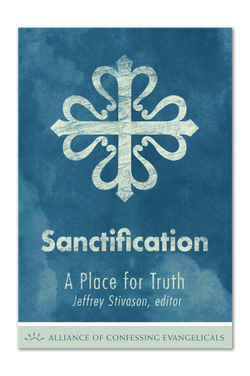
Those who are in Christ have been justified before God. But salvation means much more; it means that we are sanctified, that God actually leads us into holiness. As Michael Allen and company explain, our holiness is carried out in the present work of our sovereign, loving God. In Christ we are given life, not simply in name, but in fact. Praise the Lord, who delivers His children through every weakness. Though you struggle with sin, do not be discouraged; it is God who works in you, "both to will and to work for his good pleasure" (Phil. 2:13).

Featured Offer
Those who are in Christ have been justified before God. But salvation means much more; it means that we are sanctified, that God actually leads us into holiness. As Michael Allen and company explain, our holiness is carried out in the present work of our sovereign, loving God. In Christ we are given life, not simply in name, but in fact. Praise the Lord, who delivers His children through every weakness. Though you struggle with sin, do not be discouraged; it is God who works in you, "both to will and to work for his good pleasure" (Phil. 2:13).
About Alliance of Confessing Evangelicals
The Alliance of Confessing Evangelicals exists to call the twenty-first century church to a modern reformation that recovers clarity and conviction about the great evangelical truths of the gospel and that then seeks to proclaim these truths powerfully in our contemporary context.
About Alliance of Confessing Evangelicals, Inc
The Alliance of Confessing Evangelicals is a broadcasting, events, and publishing ministry that exists to call the twenty-first century church to a modern reformation. Our broadcasts/podcasts include
The Bible Study Hour
with James Boice,
Every Last Word
featuring Philip Ryken,
Mortification of Spin
with Carl Trueman and Todd Pruitt,
Theology on the Go
with Jonathan Master and James Dolezal,
and Dr. Barnhouse & the Bible
with Donald Barnhouse.
These broadcasts air daily and weekly on stations in the United States and Canada and on the Internet. Event audio includes the Philadelphia Conference on Reformed Theology, the Reformed Bible Conference, and many others.
Contact Alliance of Confessing Evangelicals with Alliance of Confessing Evangelicals, Inc
Alliance@AllianceNet.org
http://www.alliancenet.org/
Alliance Of Confessing Evangelicals
600 Eden Road
Lancaster, PA 17601
1-800-956-2644