

"Paul! Apollos! Cephas!"


While the unity of believers is stressed throughout the New Testament, division has often stymied the growth of the church and the fellowship of Christians, and the beginning verses of I Corinthians chapter three tell us of two areas that fueled those divisions. Join Dr. James Boice next time on The Bible Study Hour as he looks at carnal Christianity and whether some believers are “more saved” than others.
Dr. James Boice: Are there degrees of salvation? Can we be saved but only by the skin of our teeth, so to speak?
Dr. James Boice: And can the fruit of our salvation be consumed by fire as opposed to being of lasting value?
Alliance of Confessing Evangelicals, Inc: Welcome to The Bible Study Hour, a radio and internet broadcast with Dr. James Boice, preparing you to think and act biblically.
Dr. James Boice: The Christians in Corinth were acting much like the culture in which they lived. They were acting as carnal Christians. And part of that worldliness involved choosing which minister they chose to follow.
Alliance of Confessing Evangelicals, Inc: Stay with us now as Dr. Boice leads us through the Corinthian Christian state of mind, and answers the question, are there really two kinds of Christians?
Dr. James Boice: In my Bible, which is the New International Version, there's a very appropriate section heading to First Corinthians 3. It's called On Divisions in the Church. It's against divisions, and yet it's a funny thing as I read this chapter, that the chapter which is probably the greatest statement in all the Bible against divisions in the Church of Jesus Christ is actually been the cause of at least two more of them.
Dr. James Boice: I say that because there are two themes in this chapter that have divided Christians. One is this matter of the carnal Christian, or as this translation has it, the worldly Christian. And the first section of the chapter, and the other is this matter of being saved yet so as by fire.
Dr. James Boice: In both of those passages, there are significant divisions, and some have grown almost into orthodox, or which may well be the case, heterodox theologies.
Dr. James Boice: Now, the chapter as a whole is in four parts. There's this first part that deals with the worldliness of these Corinthian Christians, and describes why they were worldly. We want to see what that means.
Dr. James Boice: There's a second section, beginning in verse 5, that deals with the Christian ministry, and that's very significant because that is really the context in which all of this occurs. And there's a third section, verse 12 through 17, which has to do with the subject of being saved, yet so as by fire, and we want to see what that means.
Dr. James Boice: And then finally, verse 18 to the end, there's a conclusion, which is an important one, sort of a wrap-up of this section, and in a certain sense, a wrap-up of everything we've looked at in the book so far.
Dr. James Boice: Now, what is this problem with the carnal or the worldly Christian? The real issue is whether there are two types of Christians or not. We know that there's a big difference in the world between those who are not Christians and those who are. The one are unregenerate. The others are born again.
Dr. James Boice: In Christians, the life of God exists. The question arises, is it possible to speak properly within that second set of people, those who really are born again, and those who are going on with God and who are spiritual, and on the other hand, those who are not going on with God and are carnal?
Dr. James Boice: Now, I say there are two theologies about this, and these are represented in two works among students. I suppose we might as well hit that head on and say what they are. I do because some of the student workers have been talking to me about it this past week, knowing it was coming up. They were saying, I hope you're not going to take InterVarsity's side against Campus Crusade. And conversely, I hope you're not going to defend Campus Crusade and not stick by InterVarsity.
Dr. James Boice: The point is that in Campus Crusade, the answer to my question is yes, they say there are two types of Christians. There are carnal Christians, and then there are spiritual Christians. And on InterVarsity's side, the emphasis is against that, and they say no, there are only Christians and then there are unbelievers.
Dr. James Boice: Well, this is one of those issues where in my judgment, there's a lot more smoke than fire. And it's one of those subjects you just have to think through clearly. Often, in a division of this nature, people are talking across purposes. What each one is saying is true, but they're using language to say it that means something different in the other camp. Now, let's look at it that way.
Dr. James Boice: First of all, what can you say on the side of Campus Crusade, where you're talking about the carnal Christian? Well, one thing you can say quite positively is this, that language here in First Corinthians 3 certainly suggests it.
Dr. James Boice: And if a Crusade worker at that point would say, well, I'm just being biblical because look, verse one, brothers, he's talking to Christians, brothers, I couldn't address you as spiritual, but as worldly, mere infants in Christ, are you not acting like mere men?
Dr. James Boice: We'd have to say, yes, you're certainly being biblical at that point. Paul certainly does use the word in that context.
Dr. James Boice: And moreover, we'd have to acknowledge that there's a certain neatness about that. Because when we look at Christians, we say, well, certainly ones that don't seem to be going on with the Lord, it's kind of nice to be able to put them in a certain category. And say, well, they're carnal Christians, and what they need to do is get out of their worldliness and begin to get serious about the Lordship of Jesus Christ.
Dr. James Boice: On the other hand, I want to criticize what flows out of that position. And what comes out of that position is this, a certain smugness, I think, unintentional perhaps, a kind of smugness on the one hand, which says, well, you can live in a worldly way and still be a Christian, it's okay, because after all, Paul speaks of carnal Christians.
Dr. James Boice: And a smugness on the other hand, which says, yes, they are carnal. And of course, if they're carnal, I'm not, I'm spiritual, and therefore I don't have to worry about worldliness in my life.
Dr. James Boice: That's what I think are the strengths and the weaknesses of that position. Now you go over to the other side. Here's InterVarsity. InterVarsity says, no, you can't distinguish between Christians in that fashion. Because if you're born again, you must be going on with the Lord, you must acknowledge the Lordship of Jesus Christ. Christ is no savior if Christ is not the Lord.
Dr. James Boice: And at that point, I speak positively to InterVarsity. I say, that is absolutely right. You're a Christian, you're regenerate. It's impossible to think of a regenerate person not going on with the Lord in some fashion. Beginning to grow, beginning to hunger and thirst after righteousness. If those things aren't present in your life, you're not saved.
Dr. James Boice: You're not saved just because you give mental assent to something. You're saved because you have the life of Christ within, and the life of Christ, because it is the life of Christ, hungers and thirsts after righteousness. And so there must be discipleship.
Dr. James Boice: And yet I suppose there is a certain sense in which there can be smugness here too. And the smugness perhaps is along these lines. Here's somebody who makes profession of faith, but who is living in what is apparently a non-Christian way. We can be very superior at that point and say, well, they're just not saved.
Dr. James Boice: But in point of fact, they may be, and what they need is Christian fellowship and help and nurture and so forth, that they might grow and perhaps enjoy the kind of spiritual advantages that we ourselves have.
Dr. James Boice: When you put that in the context of what Paul is saying, this is not all that difficult. What Paul is saying is that these Christians in Corinth were acting like unbelievers. And I ask the question, don't you ever know of Christians who act like unbelievers? Of course you do.
Dr. James Boice: Well, they're worldly, they're acting in a carnal way. That doesn't mean that there's a second separate category of Christians, just Christians acting the way they shouldn't be acting. What they have to do is get out of that. They do have to change, and if they are really born again, they will change.
Dr. James Boice: And you say, well, in what way are they acting like unbelievers? Paul spells it out. He says there are different things that they're doing. They have shallow teaching, that is they think the world's wisdom is great. And they don't know any of the deep things of God.
Dr. James Boice: And he says they have divisions in the church, which grow out of their own pride, and that's bad, and they're acting like the world in that respect. And they are very, very proud of what they know.
Dr. James Boice: I would say that characterizes much of the modern church. You want to talk about the modern church, and I don't mean the modern liberal church, I mean the modern evangelical church. It characterizes much of the modern evangelical church: shallow, doctrinal teaching, divisions, based on rivalries among men and parties, and pride in the world's wisdom.
Dr. James Boice: And perhaps that's why the church is so weak, that's why the church has been failing to make a stronger impact upon the world. Isn't it proper to say that the evangelical church today is a worldly church in many, many ways? And yet it is a true church of Jesus Christ, and the kind of things that Paul says in the first chapter of First Corinthians can certainly be said about it.
Dr. James Boice: It doesn't do any good, you see, to say, well, it's not a true church. What you have to say is, come on, those of you who are really believers, start acting like believers and stop acting like the world, and of course, that's precisely what Paul is writing the letter to get them to do.
Dr. James Boice: Now he goes on in the second section to talk about the Christian ministry. The reason he talks about the ministry, and he's going to do it more in the next chapter, is that part of their worldliness has been seen in their dividing up of loyalties within their church in terms of whether they preferred Paul and his teaching and methods, or Apollos, and his teaching and methods, or perhaps Peter, Cephas, for his teaching and his methods.
Dr. James Boice: I guess if we looked at what these men taught so very clearly, we could say that there were certain differences among them. Paul himself acknowledges certain differences, saying that he came to lay a foundation, and Apollos came to build on the foundation. That has something to do with the doctrines that are taught, building foundations as opposed to foundational foundations.
Dr. James Boice: But you see, the point Paul is making here when he talks about the Christian ministry is that the ministry is one.
Dr. James Boice: The first thing he says about ministers is that ministers are servants. Harry Ironside in his discussion of this passage says that that alone should rebuke the Corinthians and rebuke anybody today that divides up among loyalties to different teachers or pastors or leaders within the church.
Dr. James Boice: He says, imagine a family, a large family that has a lot of servants. And the family is all divided because some of them prefer one servant, and others prefer another servant. He said, that's just ludicrous. That's all backwards. And yet that's what happens in the church when men and women line up over against one teacher and in favor of another.
Dr. James Boice: In the history of the church, there have been various approaches to this matter of ministers and their relationship to congregations. John Stott discusses that very carefully in one of his books called One People. He says, it's gone like this, there is an error on the one side that he terms clericalism. It's where the ministers run the show. It's their church. They do what they want.
Dr. James Boice: That has historical roots. Probably grew out of a tendency in the early church to try and pattern the Christian ministry on the Old Testament priestly system. Certainly that's where the Roman Catholic Church got its ideas of the priesthood, because in the Old Testament system, the priests alone had the right to offer the sacrifices, and in Catholicism, it was assumed by a carryover that the priests alone had the right to offer the mass, conceived as a sacrifice.
Dr. James Boice: And so the priests took that to themselves, and because they could dispense the mass, they could dispense salvation, and a whole body of theology grew up to support this kind of clerical approach.
Dr. James Boice: Then there have been reactions against that, and the reactions against that have been what John Stott calls anti-clericalism. That is, if the clergy are that bad or messing things up as they do when they try to take over in a way they shouldn't take over, then the proper thing to do is get rid of the clergy.
Dr. James Boice: And so there have been movements in the church that have done that. They've said, we don't want to have ministers, that's not biblical, ministers get in the way, ministers are no good, all of us are ministers. Let's get rid of the clergy. And that isn't any good either because the Bible has established the clergy for certain roles.
Dr. James Boice: Well, then people have come along and said, well, if we've got to have both, if we have to have clergy and laity, let's at least divide it up. Let's say, look, you've got your job here, and this is your defined role, and you've got your job here, and this is your defined role. You stay off my turf, and I'll stay off your turf, and that's how we'll have harmony in the Church of Jesus Christ. That's dualism. That's not the biblical pattern either.
Dr. James Boice: What is the biblical pattern? Well, Paul says it, verse 5, what after all is Apollos? And what is Paul? Only servants, through whom you came to believe. That's his emphasis.
Dr. James Boice: The ministers in the Church of Jesus Christ are servants, and the role that we sustain one another is that of servant, even as Jesus Christ himself, who came not to be ministered unto, but to serve and to give his life a ransom for many.
Dr. James Boice: Now, the second thing he says about the ministry is its unity. It's what I mentioned a moment ago. Servants, yes, but servants for the same end. Here he brings in two interesting images. One is an image of farming. He uses it elsewhere.
Dr. James Boice: He says, look, it's true that there are different functions in the ministry, some are called to do one thing and some another. Some come and plant. I suppose if he had elaborated it, he could have said some come and break up the soil before the planting even is done.
Dr. James Boice: Some do those jobs, and then once the planting takes place, there are others who come along, and they reap, and some who come along and water, which is what Apollos did. But he says, who is it that makes it grow? Is it Paul who makes the seed grow? No. Is it Apollos who makes the seed grow? No. Apollos can't make it grow any more than I can. Who makes the seed grow? God makes it grow.
Dr. James Boice: And so, not only are we servants of the church, we are servants of God, and we serve the same purpose, namely, to see a harvest. And we all bring whatever gifts God has given us, and whatever assignments that he has assigned to us in order that that might happen. The second image he uses is the image of building.
Dr. James Boice: He gets into it briefly in verse 9, sort of a carryover. One image spilling over on another. We are God's fellow workers, you are God's field. Comma, he says, God's building. And now he goes on to talk about the building because his mind is often in that direction. He says, you know, when you put up a building, there are architects, there are people who lay foundations, and there are those who build upon that.
Dr. James Boice: And he says, well, that's all it is, that's all that happens in the church. Those whom God gives as servants of the church in the ministry simply take those different parts.
Dr. James Boice: Now I come to the third section, and this is the second area in this chapter where people have been so divided. Here we're talking about people being saved and as the old King James Bible said, saved though as by fire. And the question is, can anybody be saved that way, that is without any good works whatsoever?
Dr. James Boice: This is the way that passage has normally been taken. I want to suggest that that's a wrong interpretation of it, but let me explain how it is taken because many people approach it that way. I was in a discussion a year or so ago with the president of a major seminary out on the West Coast, the president of the seminary on the West Coast.
Dr. James Boice: We were talking about regeneration and what it ought to mean, and I think we got into the discussion because we were talking about the Lordship of Christ. And I was saying, you can't have Christ as savior unless he's Lord. If you believe in a Christ who is not Lord, you're believing in a false Christ. You can't have salvation without discipleship.
Dr. James Boice: And he was opposing that. He was saying that that is salvation by works, you're saying that you're saved by what you do. And in support of his position, namely, that you could be saved without showing any smidgen whatsoever of the evidence of the grace of Christ in your life, merely by believing that Jesus is the savior, he quoted this passage.
Dr. James Boice: He said, look, here is Paul talking about the Christian, and he's saying, he does so in emphatic language, that it's possible to spend a whole life building a worldly building and have it all perish in the final judgment. So you don't have a single thing to show for a lifetime of what you pretended was Christian service. You're saved, but so as by fire. You get into heaven by even less than the skin of your teeth.
Dr. James Boice: You get in there leaving absolutely everything behind. And I was appalled. To have anybody suggest that. I was appalled theologically. Because regeneration has to mean that you're different. You know, it's true, we're justified by grace through faith, but nobody is justified who is not regenerate. Jesus said, you must be born again.
Dr. James Boice: If you're born again, there must be differences. The very fact that you're born again is a difference, and certain things have to flow from that new life of Christ. Even the thief on the cross, though he was saved at the last extremity, showed a difference in his life. It would be interesting to study what that thief said and point to the evidences of the grace, the fruit of the Spirit there in his life, even in the last few minutes before he died.
Dr. James Boice: But I looked at this again, and I said, now, if that theology is right, what is Paul talking about when he talks about a person building on this foundation, in the one case, building something of gold, silver, and precious stones, it's going to last, and the other case, building wood, hay, and stubble, all of which is going to be burned up in the judgment.
Dr. James Boice: And then I read it carefully, and I read it in the context of what Paul is saying, and I discovered that Paul is not talking about personal salvation, he's not talking about an individual in good works and all of that. Paul is talking about the Christian ministry.
Dr. James Boice: He's not talking about a minister who, for the sake of argument, shows absolutely no evidence of the grace of God in his life. Nobody is saved who doesn't have evidence of the grace of God in his life. He's not talking about that at all.
Dr. James Boice: He's talking about a man in the ministry who builds improperly in his responsibility for building the Church of Jesus Christ. In other words, who conducts his ministry on a worldly basis. And what's going to be the result of that? The work is not going to last.
Dr. James Boice: I say to you, you know anybody who builds like that? I don't want to name names, but I can think of many people who do that. They look at the task of ministering the word within the context of a particular church, and they say, oh, this isn't moving fast enough for me. They look at the world that put such a premium on success and growth, and they say, oh, we've got to see better results than this, faster results than this. So they say, what can we do to get the people in?
Dr. James Boice: And so they begin to think of the world's ways in doing it. They say, well, you know, people are interested in concerts today, rock music and such, let's have concerts in the church. So they give Sunday night over to the concerts, and then they get people for a while that come for concerts and fade away.
Dr. James Boice: And then they say, well, that isn't quick enough. Let's do something else. And so they look out to the world and they say, well, let's try this. That seems to work, and so they put on a big show. And it works for a while. But you know, it doesn't last.
Dr. James Boice: I've observed churches go downhill that way. Sometimes churches that have been hallmarks of godliness and pillars of theological and spiritual strength in past years. They get somebody in who, well, I would say, doesn't quite have it, at least not the way the men that preceded him did. He doesn't know the word well enough to preach it well, and he doesn't know the theology well enough to really communicate it to his people, and so he goes after these other things, the world's methods.
Dr. James Boice: And oh, he maintains a certain level of excitement in this way, but the spiritual content and strength of the church shifts, and the godly fade away, and others come in to take their places. And then pretty soon he goes, and the thing falls off, and they bring somebody else in at a lower level, and within two or three generations of ministers, the church is gone. It doesn't have anything anymore. He's built, he's built with wood, hay, and stubble, but it's all been burned up, you see, in the world.
Dr. James Boice: That's what Paul's talking about. And he's saying, look, if you have any responsibility as a minister, as a teacher, as a parent, be careful to build well. You don't have to build in a flashy manner, but you do have to build with solid material. You have to take time to do it. A person can throw up a straw building in a hurry. There it is. Then the big bad wolf comes along and he huffs and puffs, and it all blows down. It takes much more time to lay bricks and to do it well.
Dr. James Boice: But Paul says that's what you ought to do. You ought to realize that you're not building for one year, or two years, or six months, or even 10 years, you're building for eternity. What you're trying to do is build the theology of the word of God, the dynamic of the Gospel into individuals who are eternal souls. So you don't have to see it right away.
Dr. James Boice: You just build it right. You take your time, you teach it carefully. You share it. You lay that brick by brick. Then you allow God to bring the increase in his own time, and God will do that. This is the way I'm convinced the churches have to be built. What's important is not how fast we do it, but whether we do it right, and if we do it right, God does bless it.
Dr. James Boice: Over the years, there's growth, and it's solid growth, and the people who are trained and grow within that context go out to influence people far beyond any expectation that you might have had. That's what Paul's talking about, and that's what we want to do.
Dr. James Boice: Well, I come to the very end, and this is the conclusion. And Paul brings it back to this matter of divisions again, and to the world's wisdom, and to the unity of the church. It's all wrapped up here in what is really a very brilliant paragraph. And he's saying, look, I leave you with this. Think how foolish these divisions are.
Dr. James Boice: First of all, they're based upon the world's way of doing things, and the world's way of doing things is folly in the sight of God. You don't want to be like that, he says. He says, you want to follow after God. Look, God catches the wise in their craftiness. He turns the wisdom of the world to self-evident foolishness before everybody.
Dr. James Boice: And so these divisions are part of that. He says, you don't want to be part of that. And then he says, secondly, when you choose in the church between one man and another man or one thing and another thing. He says, what you're really doing is opting for a part rather than for the whole.
Dr. James Boice: Because if Paul is a true minister of Jesus Christ, and if Apollos is a true minister of Jesus Christ, and Peter, and whoever else it may be, is ministering at that particular time, then they are all yours. The gifts God has given are all yours, and you're richer by having all of them and poorer by merely choosing one.
Dr. James Boice: And then, lest we look at that merely on the human, earthly level, he wraps it all up in the Godhead. Saying, look then, don't boast about men. Why? Because everything is yours, whether Paul or Apollos or Cephas, or the world, or life, or death, or the present, or the future, all are yours, and you are of Christ, and Christ is of God.
Dr. James Boice: And there are no greater riches than that, or no greater destiny than that. And there's no greater cure for the kind of divisions that harm our church and discredit our ministry.
Dr. James Boice: Let us pray. Our Father, we thank you for this teaching about the necessary unity we need within the body of Christ. Our Father, grant that it might not be true of us, that we divide over one thing or another, and so fail to see the gifts that have been given to various ones of your ministers.
Dr. James Boice: But rather, our Father, grant that we might grow, each part supplying that which it has been sent by you to supply, and that together we might see the grain ripen in the field and come to a great harvest. And together we might see the building grow, a great temple in which Jesus Christ is worshipped and honored, and so exist here on earth, even in our imperfect state, as a testimony to your great grace. Where we pray in the name of Jesus, our Lord and our Savior. Amen.
Alliance of Confessing Evangelicals, Inc: You're listening to The Bible Study Hour, featuring the teaching of Dr. James Boice. Fellowship is related to what we do in common, sharing our experiences with one another. And we must work together to establish that kind of unity among believers.
Alliance of Confessing Evangelicals, Inc: Learn more with this week's CD offer entitled The Fifth Mark of the Church: Unity. We're offering this free CD as our way of saying thanks for listening. To receive yours, call 1-800-488-1888. We'll be honored to send you a copy of The Fifth Mark of the Church: Unity. That number again is 1-800-488-1888.
Alliance of Confessing Evangelicals, Inc: As Christians, we're known by our fruit. And part of that fruit is the ministries we support with our prayers and giving. May we ask you to consider supporting The Bible Study Hour as part of your offering? Make a single contribution or become a monthly supporter by visiting our website at TheBibleStudyHour.org.
Alliance of Confessing Evangelicals, Inc: You might choose instead to call us at 1-800-488-1888, or send a check to 600 Eden Road, Lancaster, Pennsylvania 17601.
Alliance of Confessing Evangelicals, Inc: The message you just heard, as well as audio, books, and more from Dr. Boice and many other reformed teachers, authors, and speakers, is available at ReformedResources.org. That's ReformedResources.org.
Alliance of Confessing Evangelicals, Inc: I'm Mark Daniels. The Apostle Paul called himself the servant of Christ, but in his day, there really were no servants, only slaves. The Greek word Paul used is better translated as underrower. That's the slave who occupied the lowest position in the galley of a ship powered by the sweat of men.
Alliance of Confessing Evangelicals, Inc: Join Dr. James Boice as he examines Paul's evaluation of himself as a minister of Christ. That's next time on The Bible Study Hour, preparing you to think and act biblically.
Featured Offer
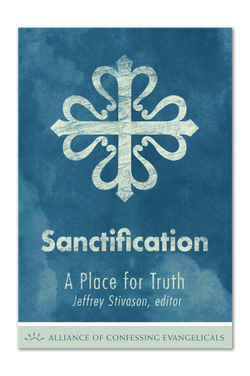
Those who are in Christ have been justified before God. But salvation means much more; it means that we are sanctified, that God actually leads us into holiness. As Michael Allen and company explain, our holiness is carried out in the present work of our sovereign, loving God. In Christ we are given life, not simply in name, but in fact. Praise the Lord, who delivers His children through every weakness. Though you struggle with sin, do not be discouraged; it is God who works in you, "both to will and to work for his good pleasure" (Phil. 2:13).
Past Episodes

Featured Offer
Those who are in Christ have been justified before God. But salvation means much more; it means that we are sanctified, that God actually leads us into holiness. As Michael Allen and company explain, our holiness is carried out in the present work of our sovereign, loving God. In Christ we are given life, not simply in name, but in fact. Praise the Lord, who delivers His children through every weakness. Though you struggle with sin, do not be discouraged; it is God who works in you, "both to will and to work for his good pleasure" (Phil. 2:13).
About Alliance of Confessing Evangelicals
The Alliance of Confessing Evangelicals exists to call the twenty-first century church to a modern reformation that recovers clarity and conviction about the great evangelical truths of the gospel and that then seeks to proclaim these truths powerfully in our contemporary context.
About Alliance of Confessing Evangelicals, Inc
The Alliance of Confessing Evangelicals is a broadcasting, events, and publishing ministry that exists to call the twenty-first century church to a modern reformation. Our broadcasts/podcasts include
The Bible Study Hour
with James Boice,
Every Last Word
featuring Philip Ryken,
Mortification of Spin
with Carl Trueman and Todd Pruitt,
Theology on the Go
with Jonathan Master and James Dolezal,
and Dr. Barnhouse & the Bible
with Donald Barnhouse.
These broadcasts air daily and weekly on stations in the United States and Canada and on the Internet. Event audio includes the Philadelphia Conference on Reformed Theology, the Reformed Bible Conference, and many others.
Contact Alliance of Confessing Evangelicals with Alliance of Confessing Evangelicals, Inc
Alliance@AllianceNet.org
http://www.alliancenet.org/
Alliance Of Confessing Evangelicals
600 Eden Road
Lancaster, PA 17601
1-800-956-2644