

Life in the Spirit 2: Walking


Reverend Alexander discusses the idea of walking in the Spirit from Paul’s words in Romans 8. Learn what it means to live in accordance with the Holy Spirit, emphasizing the five marks of the Spirit-filled Christian. Set your mind upon Him, the Spirit of God who enables and equips, on Hear the Word of God.
Mark Daniels: Welcome to Hear the Word of God, the online and broadcast teaching ministry of the Reverend Eric Alexander.
Reverend Eric Alexander: Our theme on these three Sunday mornings, of which this is the second, is life in the Spirit, or in Paul's words in Romans 8, living in accordance with the Spirit. We began last Sunday morning with the theme "Worshiping in the Spirit" from John's Gospel, Chapter 4. Next Sunday, we will be thinking about the theme of "Witnessing in the Spirit" from 1 Corinthians, Chapter 2. But this morning, our theme is "Walking in the Spirit," or as the modern translations put it, living in the Spirit, or living in accordance with the Spirit.
I suggested last week that in these three occasions of these three mornings, we were really examining the life of the Spirit-filled believer in the three main areas of relationships into which we enter. First, our relation to God in worship. Secondly, our relation to ourselves in our daily walk. And thirdly, our relation to others and to the world in general in our witness. In Romans chapter 8 from verse 5, Paul is really describing two kinds of people. It's quite obvious that they are those who are true Christians and those who are not.
He gives us several recognizable marks by which they may be known. You can see them clearly if you look at your Bible. First, they are known by whether or not they have the Holy Spirit living in them. In verses 9 and 10, if the Spirit of God lives in you, you are controlled not by the sinful nature but by the Spirit. And if anyone does not have the Spirit of Christ, he does not belong to Christ. So, you recognize a Christian by whether or not they have the Holy Spirit living within them.
Secondly, they are known by their attitude to God and His law and will and desires. Verse 7: the sinful mind is hostile to God. It does not submit to God's law, nor can it do so. Now, the mind of the Spirit, that is the mind of the Christian, is quite contrary to that. It is submitted to God's law. It is at peace with God, for the mind controlled by the Spirit is life and peace.
Thirdly, they are known by what they live for. Verse 5: those who live according to the sinful nature have their minds set on what that nature desires. That's where their ambition focuses. But those who live in accordance with the Spirit have their minds set on what the Spirit desires. So, you can recognize the Christian or the non-Christian in these terms.
Fourthly, they are known by the direction in which their lives are moving and the destiny to which they are moving. Verse 6: the mind of sinful man is death, but the mind controlled by the Spirit is life and peace. Now, what we are really interested in this morning, and what we will concentrate upon, is the positive side of that teaching. And what we need, therefore, to ask as we seek to explore what it means to walk in the Spirit, what we need to ask of this passage and of the apostle, is what are the recognizable marks of the man or woman who is living in accordance with the Holy Spirit?
That is, what is the mark of the Christian who is filled with the Holy Spirit? There are five marks of such a life which Paul gives to us in this passage, and I want us to look at them this morning. The man or woman who walks by the Spirit is, first of all, indwelt by the Spirit. If anyone does not have the Spirit of Christ, verse 9, he does not belong to Christ. Secondly, he is resurrected by the Spirit. Verse 11: if the Spirit of Him who raised Jesus from the dead is living in you, He who raised Christ from the dead will also give life to your mortal bodies through His Spirit.
Thirdly, he is controlled by the Spirit. You, however, verse 9, are not controlled by the sinful nature, but by the Spirit. Fourthly, he is indebted to the Spirit. Verse 12: therefore, brothers, we have an obligation, but it is not to the sinful nature to live according to it. And if Paul had continued and completed his sentence, he would have said it is rather to the Spirit to live unto Him. And fifthly and finally, he is enabled by the Spirit. Verse 13: if you live according to the sinful nature, you will die, but if by the Spirit you put to death the deeds of the body, you will live.
I hope we may be able to grasp something of the apostle's teaching about each of these five vital areas this morning. First of all, the first recognizable mark of the man or woman who is living in accordance with the Holy Spirit is that he or she is indwelt by the Spirit. That's in some ways the central and essential truth that the apostle is setting before us. In verse 9, for example, he says in the second half of the verse, if the Spirit of God lives in you, then you are controlled not by the sinful nature but by the Spirit. And if anyone does not have the Spirit of Christ, that is living in him, he does not belong to Christ.
Thus, the fundamental thing that you have to say about any Christian, the elementary truth about a true believer, is that he is inhabited or indwelt by the Holy Spirit. And so eager is the apostle to press this truth upon us that he piles one expression upon another. You would have noticed as we read, to assure us of the indwelling of the Godhead in the believer. Just look at these expressions. In verse 9, he tells us the Spirit of God lives in you. In the second half of verse 9, he speaks of the Spirit of Christ living in you. In verse 10, he speaks of Christ in you. So, the Spirit of God, the Spirit of Christ, and Christ in you are all the same. And then in verse 11, he has yet another expression: if the Spirit of Him who raised Jesus from the dead is living in you.
What he is saying is that the fundamental truth about every believer is that the full glory and majesty of the whole Godhead inhabits and dwells in every believer, and this is the primary truth about them which makes them distinctive. Now, that's not a new idea. It is indeed something which is at the very foundation of the Old Testament's teaching about God's redemption, because there is a principle that you find in the Old Testament's teaching about redemption which can be put this way: that when God redeems, He redeems in order to inhabit.
Listen to Exodus Chapter 29 and verse 45, and what God says there. He says, "Then I will dwell among the Israelites and be their God. They will know that I am the Lord their God, who brought them up out of the land of Egypt so that I might dwell among them." Now, what is God saying? He is saying the purpose of redeeming a people out of the land of bondage was so that He might inhabit them, dwell amongst them in His glory. Now, that saying comes from the period when God is instructing His people about the building of the tabernacle, or tent, as the modern translations call it, which was built in Israel when they were a nomadic people, in order that in the midst of the people there might be this evidence of God dwelling in the midst of His people.
The tabernacle stood for this: that the God who had saved them dwelt amongst them. And then when they became a settled people and lived in Jerusalem, God permitted them to build a temple in Jerusalem. And the significance of the temple was the same: that the God who had redeemed them dwelt amongst His people. Now, when you move out of the Old Testament into the New, and out of the old covenant into the new, and discover that the emphasis is not so much on the outward and physical as on the inward and spiritual, and when you ask, "Where is the temple of God now? In the new covenant, where is the temple of God in which He dwells in the midst of His people?" Paul's answer is, "Do you not know? You are the temple of God, and the Spirit of God dwells within you."
It is this fundamental truth that Paul is emphasizing for the Christians at Rome here in Romans chapter 8, that God dwells in the midst of His people. Thus, this indwelling of the Holy Spirit is not a subsequent experience of some Christians after conversion; it is the initial experience of all Christians at conversion. And the primary distinctive feature of the new birth is the indwelling of the Holy Spirit. If anyone does not have the Spirit of Christ, he does not belong to Christ.
The second thing Paul tells us about the life that is lived according to the Spirit is it's inhabited or indwelt by the Spirit. Secondly, it is a life that experiences resurrection by the Spirit. Now, this is one of the reasons that the indwelling of the Holy Spirit is an initial and universal experience. It is by the presence and power of the Holy Spirit that we are raised into newness of life as God's children. We receive spiritual life when the Holy Spirit comes to dwell within us. Paul describes it indeed in this passage that we read this morning as a double resurrection, because the Holy Spirit is, in verse 11, the Spirit of Him who raised Jesus from the dead, and He is living in you.
That double resurrection has these two parts. The first resurrection is a spiritual resurrection. And in verse 10, Paul says if Christ is in you, your body is dead because of sin—that is, it has all the propensities for death within it and your body will die—but your spirit is alive because of righteousness. So, the first resurrection is the resurrection of the spirit whereby we are made spiritually alive. That is, when you are a child of God, you are no longer spiritually dead because the Holy Spirit has raised you into newness of life.
But there is another resurrection, and in the second half of verse 11, Paul speaks of it: "If the Spirit of Him who raised up Jesus from the dead is living in you, He who raised Christ from the dead will also give life to your mortal bodies through His Spirit who lives in you." Now, that of course is why he is described in Ephesians Chapter 1 as the earnest, or deposit, or first installment of our inheritance. What God has done when He sends His Holy Spirit into our lives is to raise us from spiritual death into spiritual life. And that, I want to press upon you, is as great a miracle as the resurrection of Jesus from the grave on the third day.
There is not just an historic resurrection for the Christian, you see. There is a contemporary resurrection whereby what has happened to us is nothing less than this: that we have been resurrected into newness of life in Christ. But it is not only the third day and the present day; it is on the last day that there is to be a resurrection. And the guarantee of that resurrection of our body, of which Paul speaks, is that we have had a spiritual resurrection here and now. If the Spirit of Him who raised up Jesus lives in you, then that same Spirit will raise your mortal bodies on the last day.
And the Holy Spirit, therefore, is the Spirit of resurrection. Now, you should be able to see all the evidences of new spiritual life when somebody is inhabited by the Holy Spirit. And you should be able to recognize the evidence of the earnest of the Spirit there, waiting for the day when He will resurrect our bodies as well as our spirits, that in them we may perfectly love and serve the Lord Jesus Christ.
So, we are indwelt by the Holy Spirit. We are resurrected in this double sense by the Holy Spirit. Thirdly, we come more to the present experience of the Christian in verse 9: we are controlled by the Holy Spirit. In verse 9, that you will notice is another way that Paul describes the Christian. The distinctive feature of his life is that he is controlled by the Holy Spirit. You, however, are controlled not by the sinful nature but by the Spirit. Now, the distinction between the Christian and the non-Christian is really that a different controlling principle directs the whole of life.
It is no longer the principle of pleasing and indulging the old self-centered, sinful nature. The mark of the life that is lived according to the Spirit is that it is controlled by the Holy Spirit. Look at how Paul contrasts this in verse 7 with the sinful mind, that is the mind controlled by the sinful nature as he describes it in verse 8. Verse 7: the sinful mind is hostile to God. It does not submit to God's law, nor can it do so. Those controlled by the sinful nature cannot please God. You, however, are controlled not by the sinful nature but by the Spirit.
What is the mark of those who are controlled by the Spirit? It is that they are the opposite of those who are controlled by the sinful nature. That is, they are not hostile to God; they are submitted to God. They are not rebellious against God's law; they have yielded themselves to God's law. And the whole of their life is distinctive in this: that they do not seek their own pleasure, they seek His. Now, that's the distinctive mark of the person who is living in the Spirit.
May I just say to you that there is something that seems to me contemporary to be of immense importance in this sphere, in much of our thinking about the Holy Spirit's ministry? Many people are deeply concerned to know the dynamic of the Holy Spirit in their lives. I suppose if there is one thing that people come to speak to me about more than any other, it is a lack of dynamic, a lack of the power of God in their lives. Somebody who was visiting Glasgow from another place very recently said to me, "I know what it is to reflect in my own life this whole idea of having the form of godliness without the power of it, and I long for the power of God in my life."
Many people are drawn in various ways to various kinds of teaching because they long for power. Let me say to you this morning, you can never, never divorce the dynamic of the Holy Spirit from the dominion of the Holy Spirit. It is the life that is lived under the dominion of the Spirit that experiences the dynamic of the Spirit. And this is why Paul emphasizes so much the great distinction, the gulf that exists between the non-Christian whose life is controlled by the old self-centered sinful nature and the child of God whose life is controlled by the Holy Spirit.
Of course, you would expect to see that change where the Holy Spirit has brought a new nature and regenerated and resurrected someone into newness of life. Because the Holy Spirit's characteristic desire is to honor and exalt and glorify the Lord Jesus Christ. His purpose is to take the law of God and fulfill it in our lives. And that's why you can tell the presence of the Holy Spirit, and how you can tell when a profession of the Holy Spirit is fake. Because someone who is professing to be filled with the Holy Spirit and is breaking the law of God and continuing to live for the old selfish, sinful nature does not have the Holy Spirit as the Bible describes Him. And that's a very important thing for us to grasp. Those who live in accordance with the Spirit have their minds set, says Paul at the end of verse 5, on what the Spirit desires.
Fourthly, we are not only indwelt by the Spirit, resurrected by the Spirit, and controlled by the Spirit; we are indebted to the Spirit. Look at verse 12, where Paul is drawing the conclusion which needs to be drawn from all that he is saying. "Therefore, brothers," he says, "we have an obligation." Now, it is important, you will see, not only to understand the truths of the Gospel from the Bible. It's also of cardinal importance for us to draw the right conclusions that the Bible draws from these truths. For example, it's possible for us to learn that the Holy Spirit indwells us, that He has raised us into newness of life, and that it is He who changes us in our life and character into the image of Jesus, and then to believe that there was nothing for us left to do.
The conclusion could so easily be: we need to sit back and allow the Holy Spirit to do everything to change us. But that would not be a biblical conclusion. It is never a conclusion that scripture draws. When, for example, Paul in Philippians 2 is urging us that God dwells in us to will and to work for His good pleasure, His conclusion is not, "So you sit back and let Him." His conclusion is, "Work out your own salvation, therefore, with fear and trembling, because it is God who is at work in you." Now, precisely the same is true here. What the apostle is saying to us here in Romans 8:12 is God has placed us under an obligation to live a certain kind of life. "So then we are debtors, brethren," some of the translations have it. That is, we are obligated by what God has done in His Son and by His Spirit. Not to the flesh, that is the old sinful order, but we are under obligation to live in the Spirit.
Put simply, that means that we have to live as those who have a debt, an obligation to God. And this idea of indebtedness seems to me to be a centrally important one, especially in these days. For example, our Lord Jesus Christ uses it Himself. You will remember when He is being asked about paying tribute to Caesar. Jesus asks for a coin and says to the disciples, "Whose image and superscription is this?" and they say, "Caesar's." And He says, "Render, therefore, to Caesar the things that are Caesar's." That is, pay your debt to Caesar.
What that means simply is there's no question about this issue; there is an obligation. There is an indebtedness that you have to give to Caesar what belongs to Caesar. Therefore, you do not go and pay your taxes because you feel emotionally disposed towards the Inland Revenue. You do not go out and work in your daily work because you feel like it in the morning. You don't get up at 7 o'clock in the morning and say, "Now, do I feel disposed emotionally towards my employer today so that I will go out and work for him, or shall I work four hours instead of eight because I feel a little bit weary today?" Of course you don't, because your employer has bought your time. Your time doesn't belong to yourself; your employer has bought it from you. And it's his, and you're robbing him if you don't give it gladly to him. You are indebted, you see. And the same is true because of the law of the land, to the state.
But you know, we often forget the other half of Jesus' word when He said, "Render to Caesar the things that are Caesar's." And then Jesus goes on to say, "And to God the things that are God's." In other words, there is an obligation of exactly the same kind that we owe to God, which we have to Caesar. We do not, therefore, obey God, we do not live according to the Spirit because we have some emotional afflatus that has overcome us. We do it because we are indebted to God. We owe it to Him because of all that He has done for us. It is, in other words, a plain and evident matter of duty. Now, the apostle presses this upon people when he says, "Do you not know that you are bought with a price?" It's not just your time or your energy that God has bought; He has bought you with a price. Therefore, says the apostle, "Glorify God in your body and in your spirit, which belong to God."
And not to do so means that you are robbing God of what belongs to Him. Now, that consideration is a very important one for us. Clearly, there will be times in our spiritual lives when we will feel drawn out in our souls to God, when our hearts will be moved towards Him. There are many occasions when we will discover that we can scarcely keep ourselves from living this way. But there are other times when it will not be so, and then we need to challenge our souls with this question of where our obligation lies. We are indebted, says the apostle.
What are we under obligation to do? We are under obligation, he says in verse 13, to put to death the misdeeds of the body. That is, to mortify them. We are to be ruthless with everything which is going to turn us away from God. We are to reject and refuse it. Now, that leads me to the fifth and final thing. We are indwelt by the Spirit, resurrected by the Spirit, controlled by the Spirit, indebted to the Spirit, and finally, we are enabled by the Spirit. How are we to discharge this obligation to God? Well, says Paul in verse 13, not by some mere human resolve or energy, but by the Spirit. "If you live according to the sinful nature, you will die, but if by the Spirit you put to death the misdeeds of the body, you will live."
What he is saying is that not only has God laid upon us the charge to live differently, what he is saying is that there is no need for you to go on living the same old way if you are a child of God and if the Holy Spirit lives within you. We do not only have a new responsibility; because the Spirit is in us, we have a new capability. And that's what he means when he says "by the Spirit" mortify the deeds of the body. Now, that new capability or power Paul describes in verses 14 and 15 as being led by the Spirit of God. That is, being under His gracious government and provision and direction and protection as our heavenly Father. He has given to us a new nature, a new power, a new capability to live for Him.
So that if our lives are not showing the evidence of walking in the Spirit, it is not because there are not enough resources for it. It is because we are not giving ourselves to set our minds on living for the Spirit. Whenever we begin to do that, we discover that there is adequate grace from God, there is sufficiency in the power of the Holy Spirit to enable us to live to please Him. But the great issue really is, what have I set my mind on? That is my ambitions, my whole concern, my motivation, my whole being. What is it set on? When it is set upon Him, the Spirit of God enables and equips me to live in accordance with the Spirit with a mind controlled by the Spirit of God. May God more and more make us such a people for His name's sake.
Mark Daniels: You're listening to Hear the Word of God, with the Reverend Eric Alexander, a minister in the Church of Scotland for over 50 years. To access more Bible teaching from Reverend Alexander, visit hearthewordofgod.org, where your generous contribution will help us sustain and grow this ministry. That's hearthewordofgod.org. You could choose instead to mail a check to this address: 600 Eden Road, Lancaster, Pennsylvania, 17601. Or call 1-800-488-1888. This program is a presentation of the Alliance of Confessing Evangelicals. I'm Mark Daniels. Thank you for listening. Please join us again next time for Eric Alexander and Hear the Word of God.
Featured Offer
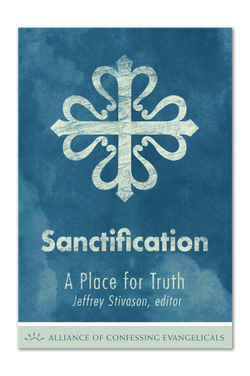
Those who are in Christ have been justified before God. But salvation means much more; it means that we are sanctified, that God actually leads us into holiness. As Michael Allen and company explain, our holiness is carried out in the present work of our sovereign, loving God. In Christ we are given life, not simply in name, but in fact. Praise the Lord, who delivers His children through every weakness. Though you struggle with sin, do not be discouraged; it is God who works in you, "both to will and to work for his good pleasure" (Phil. 2:13).
Past Episodes

Featured Offer
Those who are in Christ have been justified before God. But salvation means much more; it means that we are sanctified, that God actually leads us into holiness. As Michael Allen and company explain, our holiness is carried out in the present work of our sovereign, loving God. In Christ we are given life, not simply in name, but in fact. Praise the Lord, who delivers His children through every weakness. Though you struggle with sin, do not be discouraged; it is God who works in you, "both to will and to work for his good pleasure" (Phil. 2:13).
About Alliance of Confessing Evangelicals
The Alliance of Confessing Evangelicals exists to call the twenty-first century church to a modern reformation that recovers clarity and conviction about the great evangelical truths of the gospel and that then seeks to proclaim these truths powerfully in our contemporary context.
About Alliance of Confessing Evangelicals, Inc
The Alliance of Confessing Evangelicals is a broadcasting, events, and publishing ministry that exists to call the twenty-first century church to a modern reformation. Our broadcasts/podcasts include
The Bible Study Hour
with James Boice,
Every Last Word
featuring Philip Ryken,
Mortification of Spin
with Carl Trueman and Todd Pruitt,
Theology on the Go
with Jonathan Master and James Dolezal,
and Dr. Barnhouse & the Bible
with Donald Barnhouse.
These broadcasts air daily and weekly on stations in the United States and Canada and on the Internet. Event audio includes the Philadelphia Conference on Reformed Theology, the Reformed Bible Conference, and many others.
Contact Alliance of Confessing Evangelicals with Alliance of Confessing Evangelicals, Inc
Alliance@AllianceNet.org
http://www.alliancenet.org/
Alliance Of Confessing Evangelicals
600 Eden Road
Lancaster, PA 17601
1-800-956-2644