

King David & Biblical Evangelism (part 2)


A message from The Doctrines of Grace.
Alliance of Confessing Evangelicals, Inc: Welcome. The following message is a ministry of the Alliance of Confessing Evangelicals. The Alliance is known for ministries such as the Philadelphia Conference on Reformed Theology, as well as nationally syndicated radio programs like The Bible Study Hour, Every Last Word, and Dr. Barnhouse and the Bible. Our purpose is to promote a biblical understanding and worldview. Thank you for listening.
Guest (Male): I'm very drawn to historical events, whether it's just reading church history or just war history or biblical history, the great battles and the saints. At a very young age, I've been held captive by heroes of the past. Once I became a Christian and really started studying and researching men of old who have paved the way before us, it's really worked tremendously on inspiring the call that God has laid upon my life.
I realize that in a day that we live in, sad to say—and I don't say this to be condemning in any way, shape, or form—but sad to say there's not a lot of heroes today that are really worthy to be followed. Sometimes we have to go to the past to find men such as the reformers, the martyrs, and many men that fought for the faith. Now, I'm not saying there are obviously some godly men in our day, some right in here today that are worthy to be followed. As Paul says, "Follow me as I follow Christ." Don't get me wrong.
But I've always found a great resource in going to the past and digging up these treasures and digging up these people of the past and reflecting on their lives and seeing how God had used them powerfully in ways that just so encourage me. Because what we do as a ministry, it takes a lot of encouragement. And let me tell you, we don't get—I'm not having a pity party up here—but we don't get a lot of encouragement for what we do. We really don't. It's a hard road to follow.
Now that we're Calvinistic, reformational street preachers, it's pioneering a whole new work. It's like having to redig a whole new hole in our nation. It's turning away from all the Arminianism, all the Pelagian nonsense out there and going this way opposite and saying we really see an amazing thing that the Lord is doing. We know that God will do it for His own sake, for His own glory.
When you look at men as the Scripture says in Psalm 119, let Your precepts become my counselors. Almost like these men of the past become your counsel, and you begin to look at their lives and their bravery and their courage and their ferociousness, and it just gets all over you. You're able to keep yourself erect and walk forward in a world gone mad and keep your chin up and be bold and honest when it seems like there's just so much corruption all around you.
Let me just say this much: I have been infected by things and taken to this way and to that way, but by God's grace, He pulls you right back in and keeps you on the straight and narrow. And I thank God for it. Turn your Bibles, if you would please, to 1 Samuel chapter 21. 1 Samuel chapter 21. I want to start in chapter 21 verse 1, read verse 1, then I'm going to go down to verse 8 and then finish with verse 9.
Verse 1: "Then came David to Nob to Ahimelech the priest. And Ahimelech was afraid at the meeting of David and said unto him, Why art thou alone and no man with thee?" Verse 2: "And David said unto Ahimelech the priest, The king hath commanded me a business and hath said unto me, Let no man know anything of the business whereabout I send thee and what I have commanded thee. And I have appointed my servants to such and such a place."
Going down to verse 8: "And David said unto Ahimelech, And is there not here under thine hand spear or sword? For I have neither brought my sword nor my weapons with me because the king's business required haste. And the priest said, The sword of Goliath the Philistine, whom thou slewest in the valley of Elah, behold, it is here wrapped in a cloth behind the ephod. If thou wilt take that, take it, for there is none other save that here. And David said, There is none like it. Give it to me."
I want to deal with the reality that there's none like it. In the reality of the Word of God and how God transforms His servant and His servants as they grow in the many valleys of life and how the Word of God applies to all the different arenas and facets of life by which God takes us. During this time in history, it was the closing of the time of the judges. We see Samuel getting old, and the last of the judges of Israel. His two sons were wicked and rejected by the people. The people no longer wanted a judge but wanting a king like all the other nations around them.
So all the elders gathered together and chose for themselves a king. They chose Saul. Saul, who was a man of the people, ended up disobeying God, ends up in madness, resorts to witches, and then to suicide. The crown rolls from the head of Saul to a shepherd boy by the name of David, the son of Jesse. David, who is anointed king in the midst of his brothers, soon comes to the rescue of his people while running a food errand for his father.
He was bringing supplies to his brothers who were found cowering under the oppressive onslaught of a Philistine giant who not only taunts and harasses the army of Israel but speaks against the living God. David, by the guiding hand of God, learned the ways of a warrior during his years as a shepherd boy, defending his sheep from the mouth of lions and bears. David cries out, "Blessed be the Lord my rock who trains my hands for war and my fingers for battle."
David admonishes his brothers by exclaiming, "Is there not a cause?" as he removes the reproach of Israel by lodging a stone from his sling into the forehead of Goliath. Then standing upon this giant, takes his head off using the enemy's own sword, beheading him in the presence of both armies. Providence had brought David face to face with the stronghold of his nation, the harassment and ridicule against God and His people. Showing here what seems like a hopeless situation for the people of God turns out to be the beginning and hope for Israel and a new beginning for the future king of Israel.
One moment David is playing his harp and calming demons in the king's palace, and then in the next moment, a few chapters later, he's scrambling for his life. Here we are confronted with a picture of David after fleeing from his enemies. David in exile by the hand of God is brought to a place not only of refuge but a place of destiny. The prophet Samuel could not protect him. Jonathan the prince could not protect him. His recourse would be to the Tabernacle of God, now pitched at Nob, supposed to be the city in the tribe of Benjamin.
David says in Psalm 142:4, "I looked on my right hand and beheld, but there was no man that would know me. Refuge failed me, for no man careth for my soul." Many times in the life of God's children, many times in the process in the ways that God sanctifies us and grows us and prepares us and challenges us and pushes us out, many times all those refuges, all those things that we have placed confidence in, all those people that we looked for for comfort, all those false comforts in life, God begins to slam the door.
All those confidences and all those things that we have leaned on for so many years and all those people we have gone to and we've trusted—it may have been our family members, it may have been personal acquaintances, it may be friends, it may have been pastors, it may have been the church, it may have been the world—but whatever it was, God slams the door and leaves His servant alone. All refuge had failed him, for no man would know him, for no one seemed to care for his soul. And there he was alone.
In his despair and in his exile, David comes near to the only place that can bring true satisfaction, and that is the Tabernacle, the dwelling place of the highest God. The only place that can bring true satisfaction for the child of God is the Tabernacle of God. We know ultimately it represents a type of Christ, but also we've got to remember it was a place that he went to where the people of God were. It's where the people of God were. It was where the priest was. He went to his only recourse, which was to go to the people of God.
Many times in our lives when things begin to crash all around us and a lot of our securities and a lot of those things that we have held so dearly to begin to crumble, our only recourse should be to the people of God, to the church of Jesus Christ. We should want to be around the people of God. We should want to meet our pastors face to face. We should want to be surrounded in fellowship with other believers because there and only there can you find the true comfort by which God has put into this world for His people.
This is where we see David. I can almost see him in my mind as he's just dashing for his life, living in these caves and all these different places and holes in the ground and who knows where. But his heart beat for the Tabernacle of God. His heart beat for God's people. When we get right with the Lord, we'll stop devouring each other and we'll begin to find the pleasure of being around God's people. And the world will lose its taste.
Psalm 90 verse 1 says, "Lord, thou hast been our dwelling place in all generations." The providence of God would not only bring David back to the sword of Goliath and the Tabernacle of God, but we see God's hand all over David's life prior to this encounter, which led up to this encounter, which is another encounter: the one that took place in the Vale of Elah. 1 Samuel 17:3 says, "And the Philistines stood on a mountain on the one side, and Israel stood on the mountain on the other side."
First, I believe that the valley represents life and all of life's situations. The Bible talks of many valleys and many meanings. We have the Valley of Siddim, which means the Valley of Slime Pits. The Valley of Eshcol, which means the Valley of Decision. The Valley of Kidron, which means the Valley of Suffering. The Valley of Achor, which means the Valley of Punishment. The Valley of Gehenna, which is the Valley of Death. And the Valley of Elah, which means the Valley of the Oak.
Which stands ultimately, the oak is represented as the believer. The Valley of the Oak trees, as many see this as a representation of God's people as the book of Isaiah in verse 3 calls them "the trees of righteousness." After it follows the words, "to proclaim liberty to the captives and the opening of the prison to them that are bound, to proclaim the acceptable year of the Lord and the day of vengeance of our God that they might be called the trees of righteousness."
Then we see the opposite in terms of the ungodly in Isaiah 57 where it says that they inflamed themselves with idols under every green tree or among the oaks, slaying the children in the valleys under the cliffs of the rocks. But this would not be the valley of idolatry and innocent bloodshed, but a place where God would show His power among the trees of righteousness. The Word of God reaches every aspect of life and every valley.
The valley of your hearts, the valley of your marriages, the valleys of your homes, the valleys of our churches, the valleys of the world. It encompasses all of life. The Word of God, there is none like it anywhere. Here we see in God's Word a dividing line between two worlds. There they stood in the Vale of Elah. On one side stands God's people, the army of Israel, and on the other side stands God's enemies, the world.
More specifically, says one writer, God will do this through the arrival of the ultimate King of Israel, the descendant of David Himself, often referred to as the son of Jesse prophesied in Isaiah. That is the King of kings, the Lord Jesus Christ. Jesus Christ is the Word, the dividing line. Even Paul recognized this when preaching Christ in 1 Corinthians 1. He says, "Where is the wise? Where is the scribe? Where is the disputer of this world? Hath not God made foolish the wisdom of this world?"
"For after that in the wisdom of God the world by wisdom knew not God, it pleased God by the foolishness of preaching to save them that believe." These types and these shadows and this battle that's about ready to take place represents a type of Christ coming against the sin, the tyranny of sin. Christ coming in as the King of kings and setting the captives free.
John Gill states, "And the Apostle sense is: Where is the wise? He's talking about the man that boast of his superior wisdom and knowledge in the things of nature, whether among the Jews or Gentiles. Where is the scribe, the letter learned man who takes upon him to give the literal sense of the law?" The wisdom of God was demonstrated there upon the cross of Calvary, which to them that perish is foolishness, but unto us which are saved, it is the power of God. The word itself means canon, which means standard or rule. It is the list of authoritative and inspired Scriptures.
Luke 3:4 says, "But every valley and every mountain and every hill shall be brought low," cries out John the Baptist. "The crooked shall be made straight and the rough ways made smooth." Luke 3:6 says, "And all flesh shall see the salvation of God." Psalm 71:19 says, "Your righteousness, O God, reaches to the highest heavens. You have done such wonderful things. Who can compare with you, O God?"
And the Philistines stood on a mountain on one side, and Israel stood on the mountain on the other side, and there was a valley between them. Then we see David coming on the scene providentially by the hand of God. Winning the affections of the king by his godly character and manner, he became Saul's armor-bearer and played the harp to calm the king's demons. David leaves to go and tend to his sheep while Goliath comes on the scene and continually harasses and oppresses the people of God by his display of blasphemy and defiance towards God and His people for 40 long days.
Goliath here seems to portray the embodiment of evil, an evil oppressive power over God's people. And the sword in hand also adds a certain element of tyrannical authority. We see this when Jesus said, "Verily, verily, I say unto you, whosoever committeth sin is a servant of sin." Then He goes on to say, "If the Son therefore shall make you free, you shall be free indeed."
Romans 6:16: "Know ye not to whom you yield yourselves servants to obey, his servants ye are to whom ye obey, whether of sin unto death or obedience unto righteousness? For sin shall not have dominion over you." Israel being preached to for 40 days and for 40 nights by an uncircumcised Philistine must have been painful. In verse 11 it says that when Saul and all of Israel heard those words of the Philistine, they were dismayed and greatly afraid.
As we look and we really study and look over this scene as it's played out in Scripture, you can really sense the overwhelming grief of the reality of the people of God subjecting themselves for 40 days and for 40 nights to a Philistine blaspheming the God above all gods. And subjecting themselves to this was an indifference of the armies of Israel. It wasn't so much the giant himself standing there taunting the people of God, but how they could sit there and allow this enemy of God to blaspheme the name of God and do absolutely nothing.
Can I tell you this much: David doesn't represent us; he represents Christ. All the cowards that were around him that wouldn't go out and fight, when they said they were greatly afraid, that's us. That's us. We're not little King Davids running around. We're the ones on the outskirts watching our King David defeat death, hell, and the grave on behalf of His people.
So before we go pointing our finger at all the cowardly men who stood there and trembled, remember, that was you. That was us. And our King and our Lord Jesus Christ went out on our behalf and prevailed over the enemy and tyrant of sin once and for all. And the Scripture said that He died and He was buried, and three days later He rose again, defeating death, hell, and the grave. This is our King and Lord.
This is who David was representing. Because a lot of times we like to look at David and say, "Well, I'm King David. I want to be like King David." Well, I know we all want to be like King David, but without the true King of kings and without His enablement, we are all cowards. This is why we need the boldness and courage of another: our Lord and Jesus Christ and the power of His resurrection.
At this time, the Philistines were the most feared people in the land. They were giants and ruthless giants. At another occasion in Judges 15:15, we see where Samson went into battle against the Philistines, who were Israel's most feared enemies, by the way, and killed a thousand warriors all by himself using nothing but the jawbone of a donkey. While David meant to suggest in talking about the Philistines that they were literally people, foreigners on the outside of the commonwealth of Israel.
In verse 21 it says, "For Israel and the Philistines had put to battle array army against army." It says that the army of Israel took off running after seeing the man Goliath. Proverbs 25:26 says, "A righteous man falling down before the wicked is as a troubled fountain and a corrupt spring." The worst of all sins is indifference towards the evil that not only lurks within us but the evil that lurks all around us in our world.
We're the salt and the light into the world. We're to go into this world, into this dark world, with the light of the Gospel of Jesus Christ and proclaim the Gospel, which is the only power to redeem a person and make them right with God. We're commanded to go into all the world and to proclaim the Gospel to all people. This is a command of Christ. Many people say, "Well, I don't know if I'm called." You're not called; you're commanded to go. He says, "Go." It's not an opinion; it's not good counseling; it's a commandment of the Lord God Almighty.
It doesn't necessarily mean that we all got to go out and be street preachers because we know that's not true. But we do need to be an influence wherever God puts us. We need to be a light to all those whom God puts us in contact with. We need to proclaim the truth of Jesus Christ and proclaim His name above every other name. Christianity is not safe. It's a battle, a war fought until Christ returns. We are not on a pleasure cruise but on a battleship stationed at the very gates of hell. Anything else is moving backwards, and there's no such thing as neutrality.
Listen, if you're not going to stand up against the world, preach the Word to the world, someone else will, and it won't be the Word of God. We can sit in our comfortable little churches—which I love comfortable little churches, don't get me wrong. We can sit there day in, day out, years go by, we can read all of our Christian books, study our Bibles inside and out, while the world all around us takes advantage and blasphemes the name of our Lord.
We are the people of the living God. We are called and commanded to go into this world. We have got everything that we need to triumph over the enemy. This is a commandment of God, and we must take it seriously in the day, especially in the days that we live in. There's clamoring voices all around us that demand our attention, that are jealous. You ever notice when you're starting to make some changes and God's starting to cut away some things in your life, it seems like those voices that you walked away from are almost jealous for your attention.
They're almost jealous of your affection for Christ. They almost just claw and nag at you to come back because they want your attention; they want your affection. But when we turn our hearts over to the Lord Jesus Christ, we're able to walk and put those things to death once and for all. It's not just continually repenting over and over and over again of the same sin; it's putting those sins to death once and for all.
We must ask ourselves this question: Are we even really in the battle? I ask myself that question all the time. Am I really in the battle, or am I like Paul, just shadow boxing, swinging at my own shadow, not hitting anything? Expending all of this energy and movement and craziness, but not doing a lick of good. Not even hitting the target.
We want to make sure that our energy and our time, the utilization of our time and our energy, are spent in the right places. Wherever God has called you, you want to make sure that when you're hitting, you want to be connecting. You want to be hitting the target. You don't want to be missing the target and just waste a bunch of time doing a bunch of things that have nothing to do, no bearing upon what God's called you to do. We must ask ourselves, are we even in the battle?
Martin Luther said, "If I profess with the loudest voice and the clearest exposition every portion of the truth of God except that little point which the world and the devil are at that moment attacking, I'm not confessing Christ, however boldly I may be professing Christ. Where the battle rages, there the loyalty of the soldier is proved. And to be steady on all the battlefields besides is mere flight and disgrace if he flinches at one point."
I don't want to flinch. I get tired of flinching. I get tired of making excuses. I get tired of making excuses for other people's excuses. I'm talking about myself. It's not hard to look outside our front doors and see a world gone mad, and we know what the remedy is: it's the Gospel. We know that. But we cannot do everything. No one person can do everything. But we must know what God has called us to do and together we can do great things by the power of God. We must do it.
David's first response was to God's people after hearing the giant of despair's endless harassment. He says, "What shall be done to the man that killeth the Philistine and taketh away the reproach of Israel?" "What shall be done?" should be the first question asked to one another when the enemy is at hand. By the Spirit of the Lord Jesus Christ being born again, born from above, God takes out your old stony heart and gives you a new heart.
He breathes life in you. He causes you to walk in His ways, to love the things that He loves and to hate the things that He hates. You're no longer a slave to your sin but a slave to righteousness. You take on a whole new life that the Spirit of God dwells in us. He's the prime object of our affection, and everything else is a byproduct of the prime product. We shouldn't have to sit there and ask ourselves a million questions whether we should do this or do that when evil is at hand. We shouldn't have to ask that question.
By nature of the living God who dwells within His servants has already answered that question and it should move upon us. We should automatically act in response to evil. It's the Kingdom of Light crashing into the Kingdom of Darkness. I shouldn't have to ask myself, "Should I go and confront the evil of abortion?" That shouldn't even be a question we have to ask ourselves. They're taking life; they're killing and slaying children. Do I really have to say, "Am I really called to that?"
It's become a national crisis. It's beyond a calling; it goes into a national crisis. Then we see people all around us perishing and dying and going to hell. We go into Camden three times a week and, boy, we see some things there that make your hair curl. I mean, obviously every place needs the Gospel preached, don't get me wrong. But that looks like a third-world country after it's been bombed. It's the most dangerous city in the entire United States.
You can tell when you're there you can just feel the oppression and the hopelessness. You can see it. On our way home, I remember I just talked to David and said, "Man, I just feel gross. I feel like a glazed donut. I feel like I got Camden all over me." I feel like I got to go home and I come through the door my wife just looks at me she goes, "Go right to the shower." Because all of the things that we come in contact with out there.
If we don't have the true Gospel and if we're not preaching the pure Gospel of Jesus Christ, we're in trouble. If we're out there preaching some fake Gospel or some cheap form of the Word of God, we'll get destroyed. We can't go out there and stand with a counterfeit. It's the real thing out there. Our Gospel begins to make sense when we step into an atmosphere in by which God calls us to be the people of God. When evil is present, there the Gospel makes sense.
How do we make sense out of it if we're locked up inside all the time or around a bunch of yes-men agreeing with everything that we agree with? Go into a world that doesn't agree with you, that hates your guts. Go into a world that hates everything about you and hates your God, hates your message, and wants nothing more than to see you destroyed. Then you see your Gospel come to life. Then the reality of your Christianity becomes true and real. You see things take place that would baffle anyone that was out there that truly wasn't of God.
You see things that break your heart. You see little children in their strollers as their parents are roaming back and forth trying to get their fix. They're all cranky and jonesing and coming down from their drugs. They're mad and they're angry and they're going back and forth, pacing back and forth how drug addicts do. The kids are crying because they've been out there all day long and they're screaming at their kids to shut up because they're little children. They don't want to go and sit on the sidewalk all day.
Then the parents finally get all drugged up and they're all in their stupor drooling all over everything and then they're nice to their kids. And it breaks my heart. I see minivans' doors open and the minivans are just crammed with little children as these men are hanging out by their vans getting drugs and doing all these things. It breaks my heart. It breaks my heart because sometimes really in the reality of things, I don't know what to do.
I saw a man cooking on the sidewalk. Not cooking food, he was cooking. He was laying there all sprawled out, his shirt up to his chest, all stretched out, burning under the sun. He must have been my age. What do I tell the guy? He's so incoherent, his eyes are rolling back in his head. What do I tell the guy? "Repent and believe in the Gospel." What do you say? What do you do?
These things don't become real until we're exposed to evil. When evil comes to us, the reality of these giants in our lives causes to move either backwards or forward. But there is no neutrality. These kinds of things that we need to expose ourselves to. We got to stop being the boy in the bubble and worried about catching every little disease and every little infection with the little bacterial soap or whatever we put on our hands all the time because we're worried about getting a little germ. Give me a break.
What shall be done? What shall be done? For who is this uncircumcised Philistine that he should defy the armies of the living God? The Christian should be well acquainted with warfare dealing with these types of situations and challenges when they arise. Many of God's people will stand in word against the enemy but will never take action in confronting the enemy. Many will shout to one another in their hatred towards evil but do nothing in the way of preventing it or confronting it.
Many will say, "Well, I hate the giant of abortion," but will do little or anything to confront abortion. Many will say, "I'm against the giant of homosexuality," but will do nothing to fight against it. We should biblically know how to recognize a situation and provide the solution, whether it's dealing with our own wicked hearts at times or with just preaching the Gospel. Whatever it may be, but we must be the people of God. What else is there? If God didn't plan on using us on this earth, why doesn't He just take us all home? He's left us here. We're the body of Christ. It's exciting stuff.
The Word of God teaches and strengthens the soldier for battle. The Bible says all Scripture is given by inspiration of God and is profitable for doctrine, for reproof, for correction, for instruction in righteousness, that the man of God may be perfect, thoroughly furnished unto all good works. David is first taken back by the provocation of Goliath and then by his own brothers while everyone else is running away in fear. David was stunned that nothing was being done. God always uses the small and insignificant things of this world to bring down the strong, the foolish to confound the wise.
Is there not a cause? The power of God's Word declares to us the heart of God and the cause of Christ. The next thing that he says to his brothers that mock him and chide him and work him over for coming out there saying, "What'd you come out here to do? To watch us? You want to just watch us and be entertained?" but in reality, they end up watching him and being entertained as he took out the giant.
Is there not a cause? he says. And ultimately that lays the very foundation of who we are as a people of God. Is there not a cause? Because if there's no cause, you're going to get inactivity, you're going to get idleness, you're going to get indifference. That's the response when there's no cause. But if there is a cause and the cause is great, you're going to move. You're going to move like Noah; you're going to move with fear. Even if it takes us 120 years or longer.
Psalm 5:5 says, "The foolish shall not stand in thy sight; thou hatest all workers of iniquity. Thou shalt destroy them that speak leasing; the Lord will abhor the bloody and deceitful man." The third thing David says: "Thy servant will go and fight." Your servant will go. Not just going to go and watch, but your servant will go and fight. Here we see the heart of a servant whose fear of God overrides the fear of man.
David said to Saul, "Let no man's heart fail because of him; thy servant will go and fight with the Philistine." We should be instructed and guided by principle regardless of what many in the church or the world would have to say to us. It says and Eliab, his oldest brother, hearing what David said to the men, was moved to wrath against David and said, "Why have you come here and into whose care have you given the little flock of sheep in the wasteland? I have knowledge of your pride and the evil of your heart. You have come down to see the fight."
He didn't come down to see the fight; he come down to do the fighting. By the providence of God, the next thing that he says while they say to David, "For you are just a youth," judging by appearance, judged him by what he looked like. But the Bible says that God has chosen the foolish things of the world to confound the wise and God has chosen the weak things of the world to confound the things which are mighty and base things of the world, vile things of the world and the things which are despised God has chosen, yea, and things which are not to bring to naught the things that are. That no flesh, no flesh shall glory in the presence of God.
This Goliath character was no longer going to glory in the flesh in the presence of our God. The fear of man was overcome. The Bible says which is highly esteemed among men is an abomination among God. David instills confidence in Saul by rehearsing past events where he has given heavenly help in subduing and annihilating his enemies. He says in 1 Samuel 17:36, "Thy servant slew both the lion and the bear, and this uncircumcised Philistine shall be as one of them, seeing he hath"—here's the cause—"seeing that he hath defied the armies of the living God."
Now his son Solomon must have reflected on this first when he wrote Proverbs 28:15. He says, "As a roaring lion and as a raging bear, so is a wicked ruler over the poor people." The next point we see here is "go." David coming under authority. David said, "Moreover the Lord that delivered me out of the paw of the lion and out of the paw of the bear, He will deliver me out of the hand of the Philistine." And Saul said unto David, "Go and the Lord be with thee."
Even though the Spirit had departed from Saul and now resided upon David, David still being a man of God submits to his authority regardless of Saul's wicked heart. David not only goes to Saul before attacking Goliath but is also sent by Saul into battle. How many preachers today of those of professing believers come under submission of the local church? How many today are being sent into battle by their local church? How many of us are being raised up and sent out into the field, into the harvest field today?
Then we look here at the choosing of his armor. It says that David tried on Saul's armor but it didn't fit. He tried to put on the clothes of another and tried to go do battle in someone else's armor, but the clothes that was put upon him didn't fit. It was clumsy and awkward and it hadn't been tried; he hadn't used it; he hadn't practiced with it. But the Bible says that we are clothed with the armor of God.
I thoroughly believe that here is what was represented in this verse: that David went out and slew Goliath by the same armor that we put on today. And it's the full and total armor of God; it's the armor of light. Where our faith is, we take up the shield of faith. We take up the sword, put on the helmet of salvation, the belt of truth, and we go into battle. I believe that it was by faith in the living God in which David professes which brought down the enemy.
I believe today it's that same faith in the Lord Jesus Christ that not only brings down the enemy of our own sinful lives but the faith in Jesus Christ to give His servants the strength and the enablement to go out into a ferocious world that hates God and to prevail over the darkness with a Gospel of light.
Horatius Bonar writes: "The humbled Jesus found no favor with them. The bruised heel they could not away with. The very mark which God set upon Him as Messiah was that on account of which Israel rejected Him. It is He whom we follow and His bruised heel we engrave upon our banner as our most honorable badge. Shall the soldiers of the last days be ashamed to wear the uniform which the army of the saints has gloried in for six thousand years? Vain philosophy can never drop giants and certainly cannot remove the heads of our enemies."
Then we see the proclamation of the Word of God in the open air. Jesus said in Matthew 10:32, "Whosoever therefore shall confess Me before men, him will I confess also before My Father which is in heaven. But whosoever shall deny Me before men, him also will I deny before My Father which is in heaven. Think not that I have come to send peace on earth; I came not to send peace but a sword."
When entering into the battle, the law says, "And the officers shall speak further unto the people and shall say, What man is there that is fearful and fainthearted? Let him go and go let him return and go home, lest his brethren's heart faint as well as his heart." The Bible says in Isaiah 8:13, "Sanctify the Lord of hosts Himself and let Him be your fear, let Him be your dread."
You see, it's interesting if we're going to spend all of our energy fearing, why not fear the Lord? If we're going to dread, why not dread God in respect, I'm speaking in respect and reverence? If we're going to take that energy and worry about what everybody else thinks about us and all that time and be consumed about what the world thinks about us, what everyone else thinks about us, and we place that fear upon the Lord and we allow that fear and reverence of God to override our fear of man and cause us to go out into the world with great compassion and great power under God's great grace and tackle and confront the issues of our day.
It reminds me of a story I love to tell my children. It's the story about a man who's named the Black Douglas. To his friends and his family he was known as the good James Douglas, but to his enemies he was called the Black Douglas. At age 10 during the Scottish Wars of Independence in the 13th century, Berwick where he lived was sacked by Edward I and totally unraveled and massacres took place and the blood flowed and his father, young James's father, was held captive and taken to prison and all of his lands were confiscated and given over to his enemies. Oppression loomed and slavery was ever present.
Young James was put in the care of those who taught him the Word of God and to fight. He became an expert in warfare and developed a keen sense to the heart of God and to his earthly king, King Robert the Bruce. He fought so brilliantly and magnificently on the battlefield that he was the first to be knighted as high knight and first lieutenant on the field of battle. He became the most feared man during the Scottish Wars of Independence.
The English were terrified of him because his father ended up dying in prison. He would attack in small guerrilla groups. He was so feared that the mothers would tell their crying children that they must be quiet. They said, "Hush now, hush now, or the Black Douglas will come and get thee." To quiet their kids, they would threaten them and tell them stories about the Black Douglas. He was so feared among the English he took on that title, the Black Douglas.
He was known to be quite a jolly and somewhat of a shy man around his friends. But before his entrance upon the battlefield, it was said that his countenance would change. He would become charged with thoughts of freedom and regaining the inheritance of his father's land back and his father's reputation. He became fumed and overtaken with a desire to see his people and his king once again have dominion over the land. He now grew up and became the king's right-hand man and eventually won the battle of Bannockburn where Scotland in 1314 won its independence and freedom.
Robert the Bruce was there lying on his deathbed many years later. He was laying there with his last breaths. The king, there he was. They asked the king, "Who do you wish to see?" He said, "I want to see James. I want to see James Douglas." So they brought James to him. James being younger than Robert the Bruce knelt down at his side and he told James, "Listen, when I die, I want you to take my heart and I want you to bury my heart in the Holy Lands. Will you promise me that you will do this after I die?"
He knew because of the faithfulness of James that he would do it. They knew that he wouldn't let his king down even if it cost him his death. He said he would do it. So they took the king's heart after he died and they embalmed it and they put it in a small casket of gold with a chain and he put it over his neck. It was said that he made the journey into the Holy Lands and he joined up with another king and they were going through the deserts and they came in contact with the Moors, which is the Saracens, which is the Muslims, the Muslim army, which met them and a great battle took place.
They all began to retreat and pull back because the Moors surrounded them. It got really crazy and really violent and terrifying and everyone started to back away and everyone started to retreat. Douglas turned as well but he looked back and he noticed one of his friends was surrounded and he thought there for a minute. He had a choice to make. I can either run and retreat to save my life, or I can go behind enemy lines, go into an area where it doesn't look too promising and give up my life.
So there he stood or there he was upon his horse, drew his sword out, held his sword up and he said these words: "Ever before me, brave heart, wherever you go, my king, I will follow." Pulled the chain off from his head, swung it around and threw it into the very heart of the enemy and went in to fight for his friend.
Months later, Douglas never returned, never came home. It was said by historians that many of those who were under the king at the time went and looked for their valiant hero. When they came to the place where the heat of the battle took place, they looked down upon the ground and there laid the good James Douglas sprawled out on the ground and dead. As they drew closer, they kneeled down and they rolled away his body and underneath his body, there laid the heart of his king.
He ended up through his life he won his inheritance back, won his lands back after the Bannockburn battle and independence. But the most important battle he fought in his lifetime was the heart of his king. He was willing to go behind enemy lines because he loved his king and he bore the heart of his king. We too, as the people of God, must not be ashamed to take the heart of our King, which is the Gospel of Jesus Christ, behind enemy lines, even though it may cost you your life.
It was said that the moment David's feet made contact with the field of battle, the line was drawn in the sand. He not only recovered the dignity of his people but restored the name of God among the righteous and the heathen. David openly proclaims his victory publicly before his enemies and before the army of Israel. He said, "Thou comest to me with the sword and a spear and with the shield, but I come to thee in the name of the Lord of hosts, the God of the armies of Israel, whom you have defied.
This day will the Lord deliver thee into my hand, and I will smite thee and take thy head from thee, and I will give the carcasses of the host of the Philistines this day unto the fowls of the air and to the wild beasts of the earth, that all the earth may know that there is a God in Israel." Andrew Fuller says when proclaiming the Gospel: "You'll have to do with the wicked as well as with the righteous, and you must not flatter them. It is at your peril to say anything soothing to the wicked. It will be very painful to keep them at a distance and to exhibit to them the threatenings of God's Word against them.
Their hearts may rise against you; they may be displeased with your preaching, but you must not desist. Then beware of softening matters either with the unconverted or the backslider. Beware of giving up the authority of God over the heart. You must, my brother, side with God against an ungodly world. You must follow the windings of their evil hearts, you must detect them in all their refuges of lies that they may flee to the only refuge set before them in the Gospel.
However it may pain you or offend your hearers, if you would preach the Gospel as you ought to preach it, you must be faithful. If you preach the Gospel as you ought to preach it, the approbation of God must be your main object. What if you were to lose your friends and diminish your income? Nay, what if you were to lose your liberty or even your life? What would this all be compared with the loss of the favor and friendship of God? Woe unto us if we should shun to declare any part of the counsel of God.
He that is afraid or ashamed to preach the whole of the Gospel in all its implications and bearings, let him stand aside. He is utterly unworthy of being a soldier of Jesus Christ. Sometimes if you would speak the whole truth, you may be reproached as unsound and heterodox, but you must not yield to popular clamor. If you have truth on your side, stand firm against all opposition." Charles Spurgeon said a holy minister is an awful weapon in the hand of God. If God is for us, who can be against us?
Therefore David ran, it says, "He prevailed over the Philistine with a sling and with a stone and smote the Philistine and slew him, but there was no sword in the hand of David. Therefore David ran and stood upon the Philistine and took his sword and drew it out of the sheath thereof and slew him and cut off his head therewith. And when the Philistines saw their champion was dead, they fled."
The famous motto of the Scottish Covenanters would say, "Arise, O Lord, and let your enemies be scattered." Reverend John Kerr states: "It was the stern and tremendous theology of John Calvin which gave birth to the Covenanters, and perhaps no other theology could have been of any service in an iron age like theirs. What they learned from it was an awesome sense of the sovereignty of God, a passion for righteousness and liberty, a sense of the vast issues of human destiny, and above all, a resoluteness and certainty of faith which made them like the glittering sword of God amid the demoralization of their times. Boom!"
And then the men of Israel and Judah arose and shouted and pursued the Philistines until they come to the valley and the gates of Ekron. And the wounded of the Philistines fell down by the way of Shaaraim, even unto Gath and unto Ekron. And the children of Israel returned from chasing after the Philistines and they spoiled their tents. And David took the head of the Philistine and brought it to Jerusalem, but he put his armor in his tent. Then three chapters later we find David not only confronted with his past, but the future as a king.
End of the first half of this message. Let us pray. Father, I thank You for this time together. Lord, I truly and sincerely see this as a time of worship, a time of glorifying Your holy name, a time of exalting Your holy name, Lord. How grateful and how thankful I am to the Word of God. Thank You, Lord God, for being our David, Jesus, Thou son of David. Have mercy on us. And this is what we heard come into our own lives as God had changed us and saved us and made us into new people. God, we're so thankful. Let us be a thankful and grateful people, and let us move with fear as we enter into the battlefields of life. In Jesus' name, Amen.
Alliance of Confessing Evangelicals, Inc: You've been listening to a production of the Alliance of Confessing Evangelicals. The Alliance exists to promote a biblical understanding and worldview. Drawing upon the insight and wisdom of Reformed theologians from decades, even centuries gone by, we seek to provide contemporary Christian teaching that will equip believers to understand and meet the challenges and opportunities of our time and place.
The Alliance ministry also includes The Bible Study Hour, featuring Dr. James Montgomery Boice; Every Last Word, with Bible teacher Dr. Philip Ryken; and Dr. Barnhouse and the Bible, featuring Donald Grey Barnhouse. For a full list of radio stations carrying our programs, please visit our website, www.alliancenet.org.
For more information on the Alliance or to make a contribution, please contact us by calling toll-free, 1-800-488-1888. Again, that's 1-800-488-1888. Or you can visit us online at www.alliancenet.org. Ask for your free resource catalog featuring books, audio teachings, commentaries, booklets, videos, and a wealth of other materials from outstanding Reformed teachers and theologians. Again, thank you for your continued support.
Featured Offer
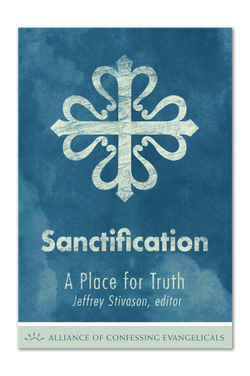
Those who are in Christ have been justified before God. But salvation means much more; it means that we are sanctified, that God actually leads us into holiness. As Michael Allen and company explain, our holiness is carried out in the present work of our sovereign, loving God. In Christ we are given life, not simply in name, but in fact. Praise the Lord, who delivers His children through every weakness. Though you struggle with sin, do not be discouraged; it is God who works in you, "both to will and to work for his good pleasure" (Phil. 2:13).

Featured Offer
Those who are in Christ have been justified before God. But salvation means much more; it means that we are sanctified, that God actually leads us into holiness. As Michael Allen and company explain, our holiness is carried out in the present work of our sovereign, loving God. In Christ we are given life, not simply in name, but in fact. Praise the Lord, who delivers His children through every weakness. Though you struggle with sin, do not be discouraged; it is God who works in you, "both to will and to work for his good pleasure" (Phil. 2:13).
About Alliance of Confessing Evangelicals
The Alliance of Confessing Evangelicals exists to call the twenty-first century church to a modern reformation that recovers clarity and conviction about the great evangelical truths of the gospel and that then seeks to proclaim these truths powerfully in our contemporary context.
About Alliance of Confessing Evangelicals, Inc
The Alliance of Confessing Evangelicals is a broadcasting, events, and publishing ministry that exists to call the twenty-first century church to a modern reformation. Our broadcasts/podcasts include
The Bible Study Hour
with James Boice,
Every Last Word
featuring Philip Ryken,
Mortification of Spin
with Carl Trueman and Todd Pruitt,
Theology on the Go
with Jonathan Master and James Dolezal,
and Dr. Barnhouse & the Bible
with Donald Barnhouse.
These broadcasts air daily and weekly on stations in the United States and Canada and on the Internet. Event audio includes the Philadelphia Conference on Reformed Theology, the Reformed Bible Conference, and many others.
Contact Alliance of Confessing Evangelicals with Alliance of Confessing Evangelicals, Inc
Alliance@AllianceNet.org
http://www.alliancenet.org/
Alliance Of Confessing Evangelicals
600 Eden Road
Lancaster, PA 17601
1-800-956-2644