

Free To Do What?


When we talk about freedom, most people have in mind the ability to do anything they want, and if there are restrictions in any area, then they’re not really free. God’s view of freedom on the other hand is something quite different. Join Dr. James Boice next time on The Bible Study Hour as he explains the biblical concept that true freedom is the fulfilling of the destiny to which God has called us.
Narrator (Male): Freedom means different things to different people. To an American, it may be the ability to do whatever he wants. To the slave, it would be having no master. And to the Christian, it's, well, what should freedom mean to a follower of Christ?
Announcer (Male): Welcome to the Bible Study Hour, a radio and Internet broadcast with Dr. James Boice, preparing you to think and act biblically.
What freedom is not is the ability to do whatever we want, whenever we want to do it. Freedom in Christ is a much weightier matter. Stay with us now as Dr. Boice ties a believer's freedom in Christ to his testimony as a Christian and the destiny for which he has been created.
Dr. James Boice: Whenever we talk about freedom or use the word freedom, it's obvious that we strike a responsive note in the human heart.
Whether that word is our English word freedom or the German word Freiheit or the French liberté or the word often used in African nations, uhuru, whatever the particular word may be, that idea of freedom is something that each member of the human race senses he or she is destined for.
We celebrate freedom nationally. This country, we observe the birthday of our national freedom on July the 4th. In Switzerland, August 1st is the day. In France, it's the 14th of August, Bastille Day, and so on throughout the world. Any nation who, through the course of history, has come to the point where it has been able to declare itself free from whatever oppressive power may have been over it in the past, remembers that day and it becomes a national holiday.
The difficulty with freedom, of course, is that when we try to define it, we discover it's not such an easy thing to do.
Most people when they talk about freedom, probably have in mind the ability to do anything we want to do. If I have freedom, I should be able to do anything I want to do. If in some area that's restricted so I can't do what I want to do, then in that area at least I'm not free.
The difficulty with that, of course, is that life is filled with things just like that. If I take it into my head to sit down in the first seat of the third pew on the right-hand side of the church, and somebody else at the same moment takes it into their head to sit in the first seat of the third pew on the right-hand side of the church, one of us is not going to have freedom where that particular desire is concerned, if freedom means being free or having the ability to do anything I want to do.
When we begin to talk along those lines, people often say, well, freedom, yes, but always limited by the desire of the other person. Somebody has said the freedom to swing my arm ends at the point at which your nose begins.
But you see, if if that's the case, then it makes nonsense of our definition because as soon as you begin to talk about restrictions, a restriction where your nose begins or a restriction where somebody else's desire overlaps with my desire, you no longer have freedom in that original sense of the word. And even apart from other people, it's obvious that we don't have freedom.
Many of us would like to be free to be a lot smarter than we are, but we're just not. Some who engage in athletic events would like to have the freedom to do considerably better than they do, but they just don't have that ability and so they don't have the freedom either. If we're going to talk about freedom in any meaningful sense, and above all, in any spiritual sense, quite evident that we've got to have another definition of it.
Some years ago, in one of the Philadelphia conferences on Reformed theology, Roger Nicole had the subject of freedom and law. And in connection with that particular address, this great theologian defined freedom in this way. It is the ability to attain our destiny or it's the ability to live up to that which God has created us to do.
Now, as soon as you begin to think in those terms, you begin to think not in terms of any desire that may flit through our mind, but rather that which has already passed through the mind of God. And that naturally concerns the desires of God, which concerns the law of God, which concerns the will of God.
Roger Nicole, in that particular address, used a number of illustrations to show what happens when something that has been created for one purpose takes it upon itself to exercise supposed freedom in another area. He said, "Take the example of a locomotive or a train."
He said, "For the purpose of the illustration, we'll allow the locomotive to speak." And the locomotive speaks and says, "You know, I've been spending many years running down these tracks up and down the eastern seaboard between Boston and Washington D.C., and as I do that, I find my existence to be rather confining. I pass through the same old cities. In fact, I pass through the same old decrepit area of those cities, and from time to time as I go through the countryside, I notice beautiful meadows stretching out into the distance. I want to be free."
And so the locomotive says, "Well, what I would really like to do is leave the tracks and roam about the meadow."
And as Roger Nicole explained, using the illustration, what happens, assuming that a locomotive is able to do that, is that you cease to have freedom and instead you have a derailment. At that moment, the locomotive ceases to have any motion at all.
He used the illustration of a fish that says, "Well, some people may think that water is delightful, at least in the middle of the summer when it's hot, and they go down to the shore and swim about, but after all, I spend all my life swimming around in the water. And I see the same old things all the time. From time to time, as I poke my head out, I notice that there's another world, there's land and there are things to see on land, and there are other animals. I'd like to come out of the water and be free to explore these things for myself."
But as soon as the fish does that, the fish dies. Nicole had a number of other illustrations like that, and his point was that as creatures made in the image of God and made for the purposes of God, freedom is to be found for us not in doing whatever we may like to do, particularly in our sinful state, because when we do that, we produce in ourselves something that is similar to the derailment or the death of the fish.
But rather, our freedom is to be found in fulfilling the destiny for which God has created us, which, as we say in the first question of the Westminster Shorter Catechism, is to glorify God and enjoy him forever.
Now, I give that illustration to the passage to which we come now, because here is a place in Paul's letter to the Corinthians where he picks up this matter of doubtful things once again.
It's interesting that in this portion of the letter, Paul comes back to these subjects more than once. He's already dealt with the essential question of this food that's been offered to idols in chapter 8. He dealt with it rather comprehensively there. And yet, when we come to this latter portion of chapter 10, we find him picking it up again. I suppose, in one sense, that's because so many of the problems we have as Christians are found in this area.
There are certainly things in the Word of God that are explicit where the Word of God speaks clearly. And the question there is not what we should do, but whether we're going to do it.
We can never approach Christianity as if because we are set free in Christ, we're free to do absolutely anything at all. Anything that is contrary to the revealed law of God, the moral law of God, is just intolerable in Christianity and in the sight of God. We just can't do that. We can't live in sin openly and willfully and call ourselves Christians.
Yet there are areas where we are legitimately confused. And again and again, these problems come back to haunt us in the Christian life. We think at one period in our lives that we've solved them. We say, "Well, there's something I have wrestled with and I have come out on this side, and I've decided that that's what I'm going to do."
And yet later on in our life, circumstances change, and because this is not an area that is spoken of clearly in the law of God, we find ourselves wondering if that was really right. And maybe because of the different circumstances, we should approach it in another way. And it's perhaps because of that, I don't know, but that may be one of the reasons. It's perhaps because of that that Paul deals with this again and again.
Now, when we deal with these doubtful areas, it's very clear to recognize that we're not dealing with law. As I said, there are areas where we are dealing with law. I heard of a man who is a professing Christian, who's living with a woman to whom he's not married. And when he was confronted by this, by one of the elders of the church, replied by quoting 1 Corinthians 10:23, "Everything is permissible."
It's obviously not what the text is teaching. That sort of thing is fornication. It's condemned elsewhere in the Word of God. It is inconsistent behavior for the Christian. But as I say, there are areas that are doubtful, and when Paul begins to talk about these areas, he makes very clear that in these areas, we are not dealing with the revealed moral law of God.
You can't go back to the Ten Commandments and say, "Well, here is a law that pertains to that particular situation, and regardless of how I feel about it, regardless of the circumstances, because that law stands written in the Word of God, that's the answer to my problem, and I must do it." When we deal in these areas, says Paul, "We must not begin by setting down a list of moral standards which are going to be required by Christians concerning the conduct of other Christians in all places." That's what he means when he says in verse 23, "Everything is permissible."
If this is not something that violates the moral law of God, the conscience of the individual must not be bound in this area. We saw when we talked about this matter of food, how Paul dealt with it. He said, "It's a matter of indifference because what you eat is not what defiles you. It's what comes out of the heart of man." It's what the Lord Jesus Christ said.
And an idol is nothing, and therefore, when food is offered to an idol, and then is offered for sale again, this is just a matter of indifference, so far as the life of a Christian is concerned. You can eat or you can not eat, it just doesn't matter. Everything in this area is permissible.
And yet, as we saw, he goes on to develop a second principle. And the second principle begins to narrow it down a little bit. Paul says, "Everything is permissible," that is, everything that is not explicit in the law of God, "But," he says, "not everything is beneficial."
And he's thinking primarily about the individual himself when he says that. "Oh, there are many things you can do," Paul says. Nothing in the Word of God that says you can't, but that doesn't mean that everything you can do is going to help you, either physically or intellectually or in your spiritual life.
I don't know anything in the Word of God that sets a limit on how much you can eat at dinner. But you know perfectly well that if you eat and eat and eat and eat at dinner, and you keep that up for very long, pretty soon you're going to destroy your health. And the same thing is true in other areas. So Paul says, "While it is true, as long as we're dealing in this area, that all things are permissible, let's remember that not everything is going to benefit you."
So if you have that in mind, here is a point at which some of the options that you may have legally begin to narrow down. Then he says, "Thirdly," and this is the same thing he said earlier in chapter 8, and repeats now in the 23rd verse of 1 Corinthians 10, "Not everything is constructive." And here he has in mind the other person.
Not everything is beneficial for me, but not everything is constructive for the other person either. Very clear that's what he's talking about here because he follows it by saying, "Nobody should seek his own good, but the good of others." In other words, there's lots of things I can do that God does not condemn. And many of those things that God does not condemn, do not necessarily hurt me.
But, says Paul, sometimes some of those things that you're otherwise free to do, hurt another person. And at that point you have to say, "What am I around here for? Am I here simply to indulge myself, to do everything that's all right for me, or am I here with a certain spiritual responsibility to those who are my brothers and my sisters in the Lord?"
Now I don't think that means that an individual Christian has to be bound by every silly thing that might pass through some other Christian's head. A lot of silly things have passed through Christians' heads down through the course of the centuries, and there are a lot of silly Christians around today.
A woman from the West Coast who spent many years doing work with young people came east. And in those days, she came east with some of the flamboyant habits that were more common in California. Her particular flamboyance was to wear large hats. And they were very large hats, and very fancy hats. And she did that because that's what she was used to. And she began to hear from Christians in the churches in which she was working that she was obviously very unspiritual for dressing like that. "Why does she have to dress so flamboyantly?" they say. "That's no way for a Christian to dress."
So she took it to heart. She said, "If this is hurting the ministry, well, I better stop wearing large hats." So she got rid of the large hats. She toned herself down a little bit. And a little while later, other rumors began to get back to her. They said, "Why does she have to look so drab? She'd be much more effective if she fancied herself up a bit."
So she learned that things like that don't matter. But, you see, not everything fits that category. There are things that you may be able to do, and which may not harm you, but may be very harmful in the life of someone else. Someone that God has put you in contact with, or what is even more serious, someone for whom God has given you a particular responsibility. There are things that parents ought not to do for the sake of their children.
There are things that officers in the church ought not to do for the sake of those who are in the church and so on. And so Paul says, "When you talk about freedom, you have to begin to understand it in spiritual terms, and you must recognize that our freedom, while it is true freedom to function in these areas, is restricted somewhat for the sake of our own well-being and also that of others."
Now, all of that he said before. It's interesting, and I'm sure for that very reason, that he treats those points in a very summary fashion here in chapter 10. Just in one or two verses, he picks up on what he said before and then rehearses it. He goes on and spells it out a little bit again in terms of food, the sacrificed to idols. But then having done that, at the very end of this chapter, he gives his fourth and final principle, which is a principle I suggested earlier when we were talking about chapter 8, but which Paul did not develop in chapter 8 and holds till now.
And it's that principle that's found in verse 31. Paul gets through all of these guidelines for the conduct of Christians in doubtful things, and as he gets to the end, he sums it up saying, "So, whether you eat or drink, or whatever you do," and he would say also, "whether you don't eat and don't drink, or whatever you don't do, do it all for the glory of God."
And then he ties it into what he said before, because he says, "If you do that, you're not going to cause anyone else to stumble." That brings me back to the point of my introduction. When I said, "What are we destined to do? How do we find our freedom in terms of our ability to do that for which God has created us?" That which God has created us to do is to glorify him and to enjoy him forever. And so our freedom comes in the ultimate analysis, in that fourth point that Paul states so brilliantly. Whatever you do, it doesn't make any difference what it is. Whatever you do, make sure you do it for the glory of God.
And if you do it for the glory of God, then it follows, as the Westminster Shorter Catechism says, that you will enjoy God and all the joys that he imparts to men and women.
Now I suppose, at that point, there are people who would suppose that Paul makes an entire break in his thought. Because in the 11th chapter, which follows this, he begins to talk about the relationship of men to women within the church of Jesus Christ, and also in marriage. He introduces a number of puzzling things. And people would say, "Well, that's just something different entirely." I don't think it is.
I think Paul, although he is certainly responding to concerns that had been brought to him by the Christians in Corinth, is nevertheless linking these two. Because he's saying that in the relationships of life, in relationships in particular between men and women in the church and in marriage, there are the same kind of restrictions that apply in this area of our freedom.
You could put it like this, "Before God and in spiritual things, men are created equal in all respects, so that it is absolutely the case that no woman has to submit to any man." But if within marriage she becomes the wife of a certain man, then there is an area of submission to which she willingly commits herself, which is, as Paul spells it out here, a reflection of that order that we find in the universe.
What Paul is talking about here is spiritual order. Because in the third verse, as he introduces the whole subject, he says, "I want you to realize that the head of every man is Christ, and the head of the woman is the man, and the head of Christ is God." In other words, Jesus, the Son, is submitted in the economy of salvation to God the Father, which does not make him unequal to the Father.
Christian theology speaks of the Trinity in which each member of the Trinity is equal to the other, entitled to equal honor and equal glory. And yet within the functioning of the Trinity, there is what theologians call a functional submission of Christ to the Father and the Holy Spirit to both the Father and the Son. Paul says, "Within that analogy, there is something similar to the relationship of men and women within the church of Jesus Christ."
Now, this is a puzzling section. Charles Hodge, a great Princeton theologian, the one that did the masterful three-volume theology and has what I consider today to be still the best commentary on 1 Corinthians, comes to this point and says with unusual humility, "This is certainly a puzzling matter upon which the theologians are not entirely agreed."
I don't think things have changed since that time. When Paul talks, as he does in the first large paragraph of chapter 11, about women covering their head, and if they fail to cover their head, especially in worship, they dishonor their head and so forth. That is puzzling.
And when he talks in the second paragraph of the length of women's hair and the fact that it should be long, and that men's hair should be short, that is puzzling. But then I want you to notice that just in case those two items by themselves are not puzzling enough, the Apostle Paul puts this into a context in which he says not, "As I speak these things, I speak them to you as an apostle of Jesus Christ, therefore with divine authority, and therefore whether you understand them or not, they're in the law of God, they're something to be obeyed." Paul says quite the contrary.
Paul doesn't say, "I'm speaking these things to you by revelation, and you may not understand them because certain things belong to us, but the hidden things to our God, and this is one of those hidden things." Paul doesn't say that at all. Paul says in verse 14, "Doesn't even nature teach you that this is the way things ought to be?"
In other words, he says, "You don't need an apostle, you don't need a preacher, you don't need a Bible. All you have to do is look around about you to see that this is true." And as I say, if the first two aren't puzzling enough, that certainly increases the difficulty.
Well, let me explain what I think is going on here. When Paul talks about head coverings, he's talking about a recognition of authority. And when he talks about that being true in nature, I think he's pointing to something which in a strange way we do recognize. I realize as I say this that there are people who would challenge it, people who would say, "Well, natural perhaps, but not universally so. What is true for us in our culture might well be different somewhere else." And I recognize that that is true.
Many of the so-called differences between men and women that we say perhaps are natural are not necessarily natural, but may very well be cultural. And therefore, in many cases, ought to be challenged. But what Paul is saying here is that although there are cultural differences, there are nevertheless built-in differences so that men are not women, and women are not men, and that's a good thing, because that's the way God made it. And then he refers to this matter of hair coverings, which is puzzling, and also the matter of hair.
Now, I don't know if this is a full answer to this, but I had this on my mind this week. As I was puzzling over this matter of covering your hair, women generally don't cover their hair in church anymore. And I was just wondering if there's ever any situations in which this really is as self-evident as Paul seems to indicate it is. As I say, on the West Coast, first of all, in San Francisco, and then in Portland for a graduation.
And I was sitting there in the platform in the midst of the graduation, all of us in our academic regalia, and all of the graduates sitting out there in front of me, the graduation of Multnomah School of the Bible. And suddenly, I noticed something which I had never noticed in this context before in any graduation ceremony. Everybody comes in with their head covered, wearing their academic regalia and their academic caps, tassels swinging in the breeze.
And then there comes a point in the service as the graduation ceremony begins, and somebody takes their position before the pulpit and says, "Let us pray." What happens when the words are spoken? All the men take off their hats, and all the women keep their hats on.
Now, I don't know whether that is 100% cultural. It may well be. But it is a fact, that is the way we do it. And it may in a certain sense illustrate the kind of thing which Paul obviously observed to a much greater extent in the culture of his day. He was saying that there is a certain sense in which intrinsically we recognize in different ways the authority that God has set over us within the church of Jesus Christ.
The second thing he talks about is this matter of hair, and this too has been puzzling. One of the things that is done in the classical utopias, especially those in modern times, and which we see also widely spread in our culture, is attempting to eliminate the differences between men and women. Paul says that it is a disgrace for a man's hair to be long, and it is a disgrace for a woman's hair to be short.
And he began to talk about that in terms of the struggle that many parents, especially in recent years, have had with their children, especially the boys. "Get your hair cut!" The father tells his son. Son says, "I don't want to get my hair cut." "Why not?" "Because everyone's wearing it long." "Why should you have a badge of conformity?" "Well, I want to do it." "I don't care," says the father, "Get it cut." "I had it cut two months ago, and I don't want to get it cut for another month." "Get it cut!" and so forth. So you have these great battles over the length of hair.
Children who are really smart at that point reply when they are reminded by biblically oriented parents that the Bible says that a man's hair should be short. Children who are wise at that point reply, "And how short is short?" And the point that R.C. Sproul makes in this particular study, an obvious point, is that length and shortness are relative terms. You say, "A man's hair should be short." The question is, "Short in relationship to what?"
In relationship to Abraham Lincoln? His hair was pretty long. In relationship to the Beatles? Their hair was long. Is that what the reference point of scripture is when Paul speaks as he does in this passage? Well, obviously, that's not the case. When Paul says that a man's hair should be short, he's saying that it should be short in relationship to what? To the length of women's hair.
And when he says that a woman's hair should be long, he's saying that a woman's hair should be long in relationship to what? To man's hair. And then he made this point. He said, "Have you noticed that back in the '60s when the men were growing their hair real long, it's hanging down to their shoulders? Did you notice," he said, "what happened to women's hair?"
Well, women's hair got longer. If the men were going to grow their hair down to their shoulders, the women were going to grow their hair down to their hips. And he said, "Do you notice what happened back in the decade before that, when Audrey Hepburn was so popular as an actress, and introduced the Audrey Hepburn look, where the hair was cropped real short to the head? What happened back then to the style of men's hair?" Well, men's hair got even shorter. That was the age of the crew cut for men.
Again, I say, I'm not sure that this is absolutely the final answer to what Paul is talking about in these verses, but in the sense in which he is appealing to nature, "Does not the very nature of things teach you?" I think this is somewhat on the track. What Paul is saying is this, "There are times in which in culture, people will try to deny the distinctions that God has built into things."
But try as they like, there are differences, and they are from God. And because they are from God and are therefore good, they are differences that should be maintained. Nobody can say on the basis of this, "Well, then, we don't have any need for one another." Because Paul says, "No, no, quite the contrary is the case."
"In the Lord," he says, "woman is not independent of man, nor is man independent of woman." Then he spells it out using little illustration, again from nature, the way things happen, "For as woman came from man," he's referring to the creation, Eve being made from Adam, "So also man is born of woman," he's referring to the natural process of birth. He's saying, "You see, again, in the nature of things, God, though he does teach differences, which have their reflection in the matter of authority within the church of Jesus Christ, God nevertheless also teaches a mutual interdependence."
And what he's saying there is equally important, namely that women need men and men need women. And it's a sad case, it's a falling away from what God intends when a woman says, "Well, I have had it with men." She might say that quite justly, of course, men behaving the way they do, "But I won't have anything to do with them anymore." That's an unfortunate thing. And if a man says, "Well, I don't have anything to do with women, I'm just going to hang around with the boys." That's an unfortunate thing too. Because God has made us in such a way that we need each other.
I come back to this theme of freedom as I close, and I ask, "What does all of this have to do with freedom?" Well, simply this. Freedom, as I said at the beginning, is the ability to live in a way that fulfills our destiny, that for which God made us. And the problem, you see, is that in ourselves, none of us have that ability.
The problem is that we're sinners. And sin keeps us from doing what we ought to do, and which apart from sin, we would be able to do. And so that which within the sexes should be a matter of mutual harmony and beauty, becomes what we call the battle of the sexes. And that which in the area of eating and drinking and dealing with doubtful things should be an area in which we are able willingly and joyously to glorify God, instead becomes an area in which Christians wrestle miserably with how much they can get away with without at some point, perhaps, somehow transgressing God's moral law.
And you see, Jesus spoke of himself as the one who gives freedom. It's the freedom that comes in the Gospel. And he spoke of the word of God as that which gives freedom. He said to the people of his day, "You shall know the truth, and the truth shall make you free."
The truth of God is what we find in passages like these. Passages that tell us that we'll be free not when we say to ourselves, "I must be able to do what I want to do and do it now and at all times." But instead, in which we say, "I want above all things to have God glorified in my life." Let us pray.
Father, we confess that we are not above these problems, but we wrestle with them many times. We wrestle with them daily. We confess the difficulty that we have in working our way through. And not only in glorifying you, but even in wanting to glorify you in many of these areas. Forgive us for our sin, set us free by the truth which we have in Christ. And grant that we may be able to live by his grace to your glory. For we pray it in his name. Amen.
Announcer (Male): You're listening to the Bible Study Hour, featuring the teaching of Dr. James Boice. Service is an important theme throughout the Bible. We will either serve God or someone else, and to that someone else or God, we will be a slave. We can either be a slave to sin and its penalties or a slave to righteousness. Find out more about this important topic through today's CD offer, entitled "Who's slave are you?" It's another message by Dr. Boice. Give us a call at 1-800-488-1888, and we'll be happy to send you a copy of "Who's slave are you?" That number again for your free CD is 1-800-488-1888.
Would you help us to continue to broadcast Dr. Boice's messages by making a generous donation online today at thebiblestudyhour.org? You could also call us at 1-800-488-1888. And our mailing address is 600 Eden Road, Lancaster, Pennsylvania, 17601. Thanks for your support, and please pray for Dr. Boice's ongoing ministry, that hearts may be changed through the teaching of God's Word.
Reformation 21 and a place for truth are websites of the Alliance of Confessing Evangelicals. Featuring articles from today's most influential reformed thinkers, our purpose is to proclaim biblical doctrine to foster a reformed awakening in today's church. Connect to the blogs, podcasts and more at thebiblestudyhour.org.
Mark Daniels: I'm Mark Daniels. Thanks for listening in.
Announcer (Male): It's hard to fathom that something as solemn and moving as the Lord's Supper could draw controversy. Yet in Paul's day, it did just that. And in our day, through differing interpretations of its meaning and purposes, the table still draws dissension. Join Dr. James Boice as he takes a deeper look into the meaning and purpose of this foundational institution of our faith. That's next time on the Bible Study Hour, preparing you to think and act biblically.
Featured Offer
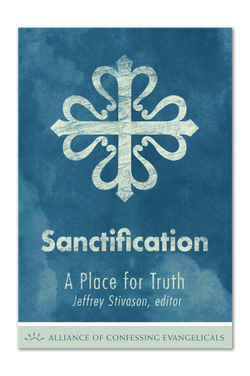
Those who are in Christ have been justified before God. But salvation means much more; it means that we are sanctified, that God actually leads us into holiness. As Michael Allen and company explain, our holiness is carried out in the present work of our sovereign, loving God. In Christ we are given life, not simply in name, but in fact. Praise the Lord, who delivers His children through every weakness. Though you struggle with sin, do not be discouraged; it is God who works in you, "both to will and to work for his good pleasure" (Phil. 2:13).
Past Episodes

Featured Offer
Those who are in Christ have been justified before God. But salvation means much more; it means that we are sanctified, that God actually leads us into holiness. As Michael Allen and company explain, our holiness is carried out in the present work of our sovereign, loving God. In Christ we are given life, not simply in name, but in fact. Praise the Lord, who delivers His children through every weakness. Though you struggle with sin, do not be discouraged; it is God who works in you, "both to will and to work for his good pleasure" (Phil. 2:13).
About Alliance of Confessing Evangelicals
The Alliance of Confessing Evangelicals exists to call the twenty-first century church to a modern reformation that recovers clarity and conviction about the great evangelical truths of the gospel and that then seeks to proclaim these truths powerfully in our contemporary context.
About Alliance of Confessing Evangelicals, Inc
The Alliance of Confessing Evangelicals is a broadcasting, events, and publishing ministry that exists to call the twenty-first century church to a modern reformation. Our broadcasts/podcasts include
The Bible Study Hour
with James Boice,
Every Last Word
featuring Philip Ryken,
Mortification of Spin
with Carl Trueman and Todd Pruitt,
Theology on the Go
with Jonathan Master and James Dolezal,
and Dr. Barnhouse & the Bible
with Donald Barnhouse.
These broadcasts air daily and weekly on stations in the United States and Canada and on the Internet. Event audio includes the Philadelphia Conference on Reformed Theology, the Reformed Bible Conference, and many others.
Contact Alliance of Confessing Evangelicals with Alliance of Confessing Evangelicals, Inc
Alliance@AllianceNet.org
http://www.alliancenet.org/
Alliance Of Confessing Evangelicals
600 Eden Road
Lancaster, PA 17601
1-800-956-2644