
Everybody's Doing It


It’s sad but true that the modern-day evangelical church is compromising some of the foundational standards of the Word of God...questioning biblical authority, sexual morality and God’s sovereignty. But these compromises are nothing new. Join Dr. Boice on The Bible Study Hour as he examines Paul’s admonition concerning the compromise in the church at Corinth that still apply to us today.
Host (Male): The modern day evangelical church leans more and more toward the world's philosophy. It questions biblical authority, embraces some of the new sexual morality, and even promotes man's autonomy over God's sovereignty.
Welcome to The Bible Study Hour, a radio and internet broadcast with Dr. James Boice, preparing you to think and act biblically. While it seems like questioning God's standards is solely a curse of these modern times in which we live, it's really nothing new. It was a major issue in the Apostle Paul's time as well. Stay with us now as Dr. Boice examines the underlying motives that cause a man to think he knows better than God, and the three specific standards most often challenged in both the ancient and modern church.
Dr. James Boice: A very significant book by Francis Schaeffer is called *The Great Evangelical Disaster*. I was very interested in reading that. In this past week, I saw a copy and began to read it. It was equally disturbing because what Francis Schaeffer is saying in that book is something which, if we're honest—and we aren't always—but if we're honest and look about us in the evangelical world, we are all too aware of. And that is that evangelicals in our time, unfortunately and sometimes unconsciously, but nonetheless tragically, are compromising some of the great standards of the Word of God.
The word Francis Schaeffer uses for it in this book is accommodation. It's the theme of the book, mentioned in several places in it where he repeats the word three times. It's like the scriptures: holy, holy, holy. Only Francis Schaeffer is saying, "Accommodation, accommodation, accommodation."
In what areas? Well, he talks first of all about biblical authority, something that I've been concerned about for a long time, and the other members of the International Council on Biblical Inerrancy are equally concerned about. Not the fact that the liberals deny that the Bible is the Word of God—so what's new? They've been doing that for a long time. The problem is that this same spirit of putting the mind of man over the mind of God, the intellect and the knowledge of the scholar over the scriptures, is permeating evangelicalism.
So those who a generation or two ago would never have questioned scripture are now in many evangelical, so-called evangelical institutions, beginning to compromise what is found here. They say, "Well, it's true in a certain sense that this Bible is the Word of God, but you have to understand that it is also the word of man." Or, "If it is the Word of God, it at least comes to us in a way which means that it's not always absolutely accurate, and we have to sift through it with our own intellect to see what we can believe and follow." He says, and I believe rightly, that if evangelicalism keeps up on that pattern of accommodation, the foundations of the church and therefore, eventually, the evangelical church itself will crumble.
Then he talks about the right to life issue. That is something also that we're concerned about. It's somewhat different at the present moment because there has been a revival of interest in this and, I think, a quickening of the evangelical conscience. But Francis Schaeffer points out in that book that when he and Dr. C. Everett Koop produced the film series *Whatever Happened to the Human Race?* and scheduled the seminars around the country that were meant to launch that film series and the related publications, they did not get strong support from the evangelical institutions.
As a matter of fact, they were in some cities where the well-known evangelical schools, the colleges in particular, wouldn't advertise it. "Why not?" they said. "Why not at least put up our posters?" All they said was, "Our faculty is divided on that matter." Imagine, divided on the right to life, the importance of life. And yet that was sadly the case.
Again, he talks in that book about ecumenism, the desire to get all Christians together under the same umbrella whether or not they hold to the cardinal doctrines of Christianity. And yet strikingly, there were so-called evangelicals present at the World Council who wrote favorably about it and published articles, one in *Christianity Today*, saying, "This really isn't so bad. These men are really godly. They really want to do the right thing," and calling upon all the evangelicals to get together in that godless assembly.
Toward the end of the book, he talks about the theme which is in our passage in 1 Corinthians 6 and also in the following chapter, this matter of sexual morality or, which unfortunately is increasingly the case, sexual immorality. Francis Schaeffer bemoans the breakdown of standards in that area within the evangelical church. Now, you don't have to know a lot about World Council of Churches ecumenism or the details concerning biblical inspiration to know that at least in this area, the churches have a problem.
That which for years and years, centuries within the believing church in the Western world, without any question had been considered a disgrace, an obvious breaking of the moral law of God, a tragedy of epic proportions, is in an increasing number of evangelical churches accepted as something, well, you know, we're all human. What can you expect? After all, we must be loving and therefore it must be all right.
That's disturbing enough just to be able to talk about a situation in those terms, but I want to say that if there is anything which is even more disturbing than the situation that Francis Schaeffer describes, it is the reaction in the evangelical churches to the description of the situation.
I was at a meeting not long ago of some key evangelical leaders, men whose names you would know. The name of Francis Schaeffer came up because he's written this book. The people who were there at the meeting said, "Well, you know, Francis Schaeffer, he's getting old and getting kind of narrow, kind of brittle, kind of legalistic in his old age."
When Frankie Schaeffer gave the condensed version of that book in a speech at the National Religious Broadcasters, the reaction that I had heard was the reaction, "Well, Frankie, you know, he's certainly an angry young man." It was interesting that at the end of that tape, the thing that Frankie Schaeffer finished by saying—and I think it wasn't in the script, I think he was just adding it—what he said as he came to the end of it is, "Don't say now when I'm done, 'Well, I don't like Frankie Schaeffer,' or, 'I don't like the appearance of his father.' That's not the issue. The issue is: am I speaking the truth? And if I am speaking the truth, what are you going to do about it?"
Now the Apostle Paul would have understood that, except that it was not as bad in his day. It was bad because it was there in the world, this accommodating spirit. But I say it wasn't as bad in his day because it wasn't in the church. You see, the world doesn't have any objective standard. The world doesn't know that there is a God who has given a moral law which is embodied in the scriptures. So it's no wonder if the world drifts. But what is a tragedy is when the Church of Jesus Christ, the professing Church of Jesus Christ who knows there is a God who has revealed himself in the scriptures and who does have a moral standard, when that church drifts.
To understand what has happened, we have to understand that in the Western world, there has been an enormous change that has come in with what we sometimes call modernism, or a modernistic spirit, or which we sometimes call secular humanism, or which, if we're speaking in more technical terms, we call Hegelianism or by one of the names of the other philosophers that preceded him or came afterward.
You have to understand that what has happened is that we have had a remarkable change in recent memory and in recent history. It's in at least these areas. One thing that has happened in the thinking of the modern world is that the intellectual community has moved from belief in an open system where God, though invisible, is nevertheless acknowledged to exist, to what you have to call today a closed system in which all we see is all there is. That is, the only thing that exists is the matter in the universe of which we are a part. There is no spiritual dimension.
In the past, you see, there was the idea of God, and from God came nature because nature was made by God, and the laws of nature which were there because they reflect in some manner the nature of God. And therefore, man fit within that pattern. There wasn't an infinite amount of flexibility. There was room for growth and so on, but there was an established order in the universe because it went back to a God who had established the universe.
And then as God began to be removed, as he was, people fell back on the idea of the laws of nature. But because there was no absolute anymore, if God was denied, even the laws of nature became questionable. Instead of talking about the laws of nature or natural law, which you have even in the legal sphere, people began simply to reflect upon nature. What before had been an attempt to examine things to find out what the eternal and abiding principles were, became now merely a reflection upon things as they are. Whatever things happen became the norm. We've had that enormous change.
Then we've had a change in man's look at himself. Before this, even in countries where most certainly not everyone was a Christian, there was at least something of a Christian ethos. Within the sphere of the Christian ethos, man was seen as the creation of God made in God's image. That is, made by God, and therefore responsible to God and unable to exist properly and function properly without some relationship to the one who had made him.
But when God got pushed out of the picture, as he was in the thinking of most people, man became self-sufficient, a law unto himself, able to establish his own righteousness and do his own deeds and defend them without reference to anybody else. The idea that came into the moral world through the concept of evolution entered, and the theory was that man in such a system was therefore infinitely perfectible. So quite contrary to the scriptures, human beings were no longer seen as those who have fallen from what God made them, but rather as those who are on their way to become all that they were meant to be. Only it's man who gives the meaning.
And then there's a third change, and that's in the area of autonomy. This has to do with man as well. You see, before this, when there was a God in the universe, the character and the law of this God was the law of man as well. We may not like it, we may fight against it, but that law stands, and we are not autonomous when there's a moral law in the universe.
But you see, you push God out, and you not only have a different view of man, you have a different view of man in relationship to law. The standard for law comes therefore not from God or from nature, but from man himself. Whatever I want to do becomes the standard. So we talk today about the "me" generation. It's just a way of saying in popular language what has happened philosophically: man is the center of all things, and perhaps even to go further than that, man is all things, or to go even further than that, I am all things, and I am responsible to nobody else. You know, we have a great expression of that in our time in the self-development movements, the human potential movements of our time. That is the exact expression of that secular spirit.
Now, I say that's the background to this. I want to talk about these issues of morality and marriage because Chapter 7 goes on to talk about marriage. But I give this background because we can't understand properly what's happening in the church unless we understand that the church is simply at this point reflecting the culture around us. Jesus said of the church, "You are to be salt and light in the world." But at the very time he said it, he acknowledged the possibility that the salt can lose its saltiness or the light can be hidden. And that is what has happened as the church has reflected the world's values. Let me say that the reflection of the world's values is not Christianity. This passage explicitly, as well as other passages in the Word of God, stands over against any spirit of accommodation.
I want you to see how. Remember the points I've just given, points that have come into the secular worldview as a result of the Enlightenment and all of those things that happened a century or so ago? Now, number one, we have a closed universe. Number two, man becomes self-sufficient and perfectible. And number three, we desire and boast of our autonomy.
Look here, Paul begins to talk about sexual immorality, and look what he says. Verse 12: "Everything is permissible, but not everything is beneficial." What's he saying there? He's saying that if we break the law of God, we do so at our peril. Or to put it in other terms, breaking the law of God hurts. It's harmful. And you see, that's the direct antithesis of point number three, that I'm autonomous, that I'm a law unto myself, that I can do what I want and therefore what I do is right and good, and I'm the one to determine that.
Paul says that is not true. I'm not sure that it would even be true if we did live in a closed universe without a God, but it is most certainly not true if we live in an open universe in which there is a God. So you see, in a universe like this, where God for his own reasons permits sin and evil and all sorts of things, you can break God's law. You break God's law in this area of sexuality; there is no angel standing there with a flaming sword to keep you from doing it. You can do it. But God says, "Listen, it is harmful." It's harmful to you, and if you don't believe it, you do it. You'll find out as time goes on. And it is harmful to society, which is only to say it's harmful for other people too.
And then in the same verse, he makes another point, he repeats himself: "Everything is permissible for me," he said. It's not beneficial. "Everything is permissible for me," he says, "but number two, I will not be mastered by anything." What's he talking about there? He's saying, "Look, if you break the laws of God, not only is it harmful, it's enslaving. You get mastered by it."
That's the trouble with sin. You see, we think we want to sin, and we say it's not going to hurt. That's the first thing we do. And then the second thing we say is, "Well, you know, even if it hurts a little, it's my choice. If I want to get hurt a little bit and I think it's worth it, that's all right. And when the pain gets too great, or if the consequences are too elaborate, I'll simply quit." Paul says you can't do that.
Sin is like an octopus, and you get within the tentacle and you find there's another tentacle, and that's followed by another tentacle, and pretty soon you're caught and you can't get free. That's why we need a deliverer. That's why we need Jesus Christ the Redeemer to break the fetters of our sin. Any Christian ought to know that. If you've come to Jesus Christ as Savior, you know that you're a sinner and not only do you know you need the forgiveness of sins, you need deliverance from your sin.
Then how, Paul says, can one who has known Jesus Christ as the Redeemer, the deliverer from sin, enter lightly once again into sin's clutches? You see the point I'm making; that is the opposite of characteristic number two, the characteristic that says man is self-sufficient and perfectible. Not in a sinful world, not apart from the power and the grace of God in Jesus Christ.
And then he says a third thing. He begins to relate this not just in what we would call pragmatic terms to other people as is it helpful or harmful, not only in terms of myself, "Am I set free by sin or does sin enslave me?", but to God. You see, who is the ultimate point of reference. Paul says at that point, "Listen, the body is not meant for sexual immorality, but for the Lord."
At that point, he brings God in, and that is the direct antithesis of point number one. It is not a closed universe. God is in the universe. It is God's universe, and we are responsible to him. I am impressed as I read that with the way in which he brings in the full Trinity. He talks about God first of all. He mentions the Lord, that is the Lord Jesus Christ, and down toward the end, Verse 13, he talks about the Holy Spirit, saying, "Do you not know that your body is the temple of the Holy Spirit, who is in you, whom you have received from God?"
You see, the question Paul is asking is the question that the so-called church must ask itself in every generation, and those who are members of it must in the deepest and most soul-searching way ask themselves. The question is this: what spirit are you of? Are you of the spirit of this world, the spirit of this passing age, the secular spirit that says there is no God, therefore I am a law unto myself? Or are you of the spirit of Jesus Christ who came to reveal the true God and say you are not a law unto yourself, and that happiness and fulfillment is to be found in obeying what the true God says?
If you're of that latter spirit, then you have to do what Paul says as he concludes the chapter. First of all, you have to flee sexual immorality, Verse 18. You don't have a choice. If you're of the world, well then, be immoral. That's all right. That's what the world does. And go to hell. But if you're of the spirit of Jesus Christ, you must flee it.
And then secondly, and that's the positive side, you must honor God with your body, because that body is given to you from God. It's yours, but it is also his, and you must honor him with what you do with it. Are we worried about our country? Are we worried about the moral slide? I think we are. But before we talk about the moral slide in the secular world, we'd better come to terms with the moral slide in so-called Christianity and in our own lives. Let us pray.
Our Father, there are passages of the Bible that are very hard for us to read, at least to read with understanding. And this is such a one. We ask, our Father, that by your grace, because there's no strength in us, but by your grace, we might be enabled to live in a way that honors Jesus Christ. Because it's not just a matter of our words, but it's a matter of what we do in all areas, but especially in this area of sexual morality, which is such a problem in our time. We ask it in the name of Jesus our Savior, Amen.
Host (Male): You're listening to The Bible Study Hour featuring the teaching of Dr. James Boice. Prior to the Reformation, sex was seen as a necessary evil, and sexual passion was viewed as a sin. Priests counseled couples to abstain, and there was to be no sex on certain church holidays. The Reformation restored sexual sanity by celebrating lovemaking within marriage. Find out more about this often misunderstood topic in our free CD offer entitled *The Seventh Commandment: The Joy of Sex* by author and teacher Philip Ryken. This free CD offer is our gift to you. Simply call 1-800-488-1888. We'll be honored to send you a copy of *The Seventh Commandment: The Joy of Sex*. That number again is 1-800-488-1888.
While the world and the church drift farther from the truths of God's Word, Dr. Boice's messages uphold the inerrancy of scripture in a world of compromise. Would you become a partner to The Bible Study Hour and support Dr. Boice's ministry through both prayer and giving? You can make a tax-deductible donation online today at thebiblestudyhour.org. You can also call us directly at 1-800-488-1888. Our mailing address is 600 Eden Road, Lancaster, Pennsylvania, 17601.
We all love how Dr. Boice's sermons always put life in a biblical perspective. It's often impossible, though, to include every biblical reference in detail in a 26-minute broadcast. You can purchase complete preached messages at reformedresources.org. That's reformedresources.org. I'm Mark Daniels, glad you listened in. The world tells us that while we are not perfect, we are on our way. To reach that goal effectively, restraints should be dismissed. This worldview excludes God, excludes spiritual realities, and excludes our ultimate responsibility for our lives and destiny. Join Dr. James Boice as he demonstrates how man's worldview has especially influenced our perspectives on the sacred covenant of marriage. That's next time on The Bible Study Hour, preparing you to think and act biblically.
Featured Offer
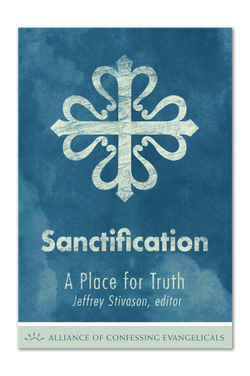
Those who are in Christ have been justified before God. But salvation means much more; it means that we are sanctified, that God actually leads us into holiness. As Michael Allen and company explain, our holiness is carried out in the present work of our sovereign, loving God. In Christ we are given life, not simply in name, but in fact. Praise the Lord, who delivers His children through every weakness. Though you struggle with sin, do not be discouraged; it is God who works in you, "both to will and to work for his good pleasure" (Phil. 2:13).
Past Episodes

Featured Offer
Those who are in Christ have been justified before God. But salvation means much more; it means that we are sanctified, that God actually leads us into holiness. As Michael Allen and company explain, our holiness is carried out in the present work of our sovereign, loving God. In Christ we are given life, not simply in name, but in fact. Praise the Lord, who delivers His children through every weakness. Though you struggle with sin, do not be discouraged; it is God who works in you, "both to will and to work for his good pleasure" (Phil. 2:13).
About Alliance of Confessing Evangelicals
The Alliance of Confessing Evangelicals exists to call the twenty-first century church to a modern reformation that recovers clarity and conviction about the great evangelical truths of the gospel and that then seeks to proclaim these truths powerfully in our contemporary context.
About Alliance of Confessing Evangelicals, Inc
The Alliance of Confessing Evangelicals is a broadcasting, events, and publishing ministry that exists to call the twenty-first century church to a modern reformation. Our broadcasts/podcasts include
The Bible Study Hour
with James Boice,
Every Last Word
featuring Philip Ryken,
Mortification of Spin
with Carl Trueman and Todd Pruitt,
Theology on the Go
with Jonathan Master and James Dolezal,
and Dr. Barnhouse & the Bible
with Donald Barnhouse.
These broadcasts air daily and weekly on stations in the United States and Canada and on the Internet. Event audio includes the Philadelphia Conference on Reformed Theology, the Reformed Bible Conference, and many others.
Contact Alliance of Confessing Evangelicals with Alliance of Confessing Evangelicals, Inc
Alliance@AllianceNet.org
http://www.alliancenet.org/
Alliance Of Confessing Evangelicals
600 Eden Road
Lancaster, PA 17601
1-800-956-2644