

Church Discipline


Church discipline. In many churches it has fallen out of favor and practice as we conform more and more to the world’s standards. The Apostle Paul, however, faced the problem head on and left us timeless advice for this necessary practice. Join Dr. James Boice on The Bible Study Hour as he explores Paul’s commands for dealing with sin in the church.
Alliance of Confessing Evangelicals, Inc: Discipline within the body of believers is a hard subject for the church to face and even harder to put into practice in today's world of tolerance. Yet the Apostle Paul faced the issue of sin in the church head-on and left us with some unambiguous instruction.
Welcome to The Bible Study Hour, a radio and internet broadcast with Dr. James Boice, preparing you to think and act biblically. There's only one clear example of dealing with spiritual discipline in the New Testament, and it's contained in Paul's first letter to the Corinthians, where the apostle leaves no question unanswered as to why discipline must be carried out and how it's to be done. Join Dr. Boice as he outlines the steps Paul provides for this rather unpopular subject and explains why church discipline is still important today.
Dr. James Boice: We’re using these times together to study Paul’s great first letter to the Corinthians. Our study of this book has taken us through four chapters, bringing us to chapter five and, therefore, to a section of the book that deals with Christian discipline. This is a hard subject. It’s a hard subject for churches to face. It’s a hard subject to put into practice.
Yet one of the effects of systematic teaching through books of the Bible such as this is that we do come to such passages and, therefore, need to deal with them. We are faced with two problems in this matter of Christian discipline in our time. One is the disposition to take it too lightly. The other is the disposition to overdo it, which, unfortunately, is also true in some Christian circles, and we need God’s wisdom in each case.
Out in Oklahoma, in a town called Collinsville, there has been a lawsuit that has developed in a local Church of Christ. A member of that denomination, in this form—a woman in the church by the name of Marian Guinn, a 36-year-old divorcee with four children—was becoming involved with another divorcee in town and was examined by the leadership of the church as to this relationship. She confessed in the examination that there had been fornication, the two of them not being married at the time.
The church proceeded to require her to confess the sin—to do it publicly in this particular case, a procedure which, as I look at it, seems to have been unnecessary since she was admitting the wrong and it hadn’t proceeded further than that. Nevertheless, this was the decision of the church. The result of it was that Ms. Guinn sued the church for the action that they had taken. It went to trial. A jury heard the case, and she had asked for $1.3 million in damages and, as a result of the jury trial, was awarded $390,000.
So far as I know, that’s the first decision in all of the history of American law of this nature. I tell it not so much because of the significance of the decision—I hope it’s one of those things that will be appealed—but because of a statement Ms. Guinn made at the close of the proceedings. She felt as she was quizzed by the reporters afterwards that justice had been done, and then she said this: "I was guilty, but it was none of their business."
That’s the part that troubles me. Certainly, it’s troublesome to live in a society that seems to think that the only recourse in any situation is to go to court. But the most troublesome thing was the statement by Ms. Guinn which, I presume, would be the kind of thing in the minds of perhaps the vast majority of churchgoers in our time; namely, that morality, even for Christians, is a private thing and that what we do as Christians is none of the business of the church of Jesus Christ.
If we’re inclined to think that way, and I suspect that many of us are, we need to read this chapter because Paul, in dealing with a particularly scandalous case at Corinth, says quite the opposite. Paul says it is the business of the church, and moreover, it reflects more on the church than it does on the individual if the church fails to deal with the immorality. So that’s one error.
On the other hand, I want to say that, in my judgment, there is a mistake often made in the other direction. I think it’s well-intentioned. The argument goes, and it’s particularly strong in Reformed churches, that there are three marks of the true church: one is the preaching of the Word, the second is the observance of the sacraments, and the third is church discipline. I think discipline’s important. I’m not sure I would put it up with the other two as a necessary mark of a true church.
Nevertheless, discipline is important, and this particular view takes that and, therefore, if discipline is good and important, it should be exercised a great deal. What often happens in certain settings is that the leadership of the church takes on a great deal of involvement into the particular affairs of the members and sometimes exercises what I would regard as an unbiblical oversight over the membership.
I have in mind a case that lies relatively close at hand in which a session was examining a girl in the church who had been having an affair. She became pregnant as the result of that, had the child, and was utterly repentant of the sin and was trying to live in the fellowship of God’s people and establish a home for the child. She was in the process of counseling. Those who were involved with her case were being very helpful and wise, in my judgment.
Yet there was a difficulty with the father of the child, who was pursuing her in what the counselors felt was an unfortunate way. He wanted to marry her. She didn’t feel he was the one to marry, that he really was the kind that could be—that one wrong was not going to be corrected by another wrong. But this particular session, in counsel with her, advised that she was to do certain things in terms of her relationship to the father of the child, which she didn’t think was wise and which the counselors agreed was not wise and, therefore, didn’t do.
As a result of that, this session exercised discipline in her case, barred her from the sacraments, and although she wasn’t even attending the church at the time, wrote to another church that she was attending and asked them to honor their discipline and bar her from the sacraments in that church as well. I think that is utterly out of hand. That’s a scandal that that sort of thing should be done.
We don’t solve the one problem by falling over immediately into the other extreme, but rather by searching out the principles that we have in Scripture, some of which Paul articulates in 1 Corinthians. This is a most important chapter, and it’s an important chapter for this reason: it is the only significant and clear example of a case of spiritual discipline in the New Testament. I want to acknowledge that there are other passages in the New Testament that deal with spiritual discipline, and that’s important. This is not just a freak passage.
One of the key texts is the 18th chapter of Matthew, about verses 15 through 17, in which the Lord Jesus Christ says the procedure to be followed in the company of His people if a brother commits a wrong. If a brother has done something that’s wrong, the procedure is to go to him and admonish him. If he won’t hear you, which means if he won’t acknowledge the offense—and I presume that also means turn from it, repent of it, seek reconciliation—then the individual is to take two or three witnesses and go and confront him with the offense in order that in the mouth of two or three witnesses, it’s the Old Testament principle, a legal principle, every word might be established.
Then, says our Lord, if even with that kind of a confrontation there is no response, then it is to be told to the church, and if there’s no repentance at that point, the offending one is to be treated as an outsider. The words our Lord uses is "as a tax collector" or some other sinner. So there’s that text. Then there are what are probably examples of discipline in one stage or another elsewhere in the New Testament, alluded to though not described in full.
In 3 John, for example, the Apostle John is writing about a man whose name is Diotrephes, who’s misbehaving in a particularly offensive way. John says he’s going to deal with this case when he comes. He doesn’t do it in the letter; it’s not a full example of how it was handled, but it is an allusion to what seems to have been a case of discipline, or at least something that would have become a case of discipline in due time.
In 1 Timothy, the first chapter, the 20th verse, Paul writes obliquely of a case: Hymenaeus and Alexander, he says, whom he delivered unto Satan in order that they might learn not to blaspheme. We don’t know anything more about it than that, but Paul does use the same language in that book, "deliver unto Satan," that he uses here in 1 Corinthians 5, so there’s a clear parallel.
It might be that some would also want to bring forward what seems to be a case of direct divine discipline in the case of Ananias and Sapphira. This was not so much a case that went through careful procedures within the church, though Peter certainly confronted Ananias and Sapphira for their hypocrisy, but nevertheless, it’s one in which God intervened immediately, and in the case of these two, resulted in their death.
As I say, there are other passages in the New Testament that deal with discipline, making us well aware that this is not an isolated passage, something that we would say is, well, a quirk of Paul’s, something that doesn’t have to be taken seriously. Yet all that being said, it is still significant that this is the only clear case of procedure involving discipline in the New Testament churches.
Weren’t there problems in the New Testament churches? Of course there were. This is not the only problem, even in the church of Corinth. As we read the other books, we find that the other churches had a variety of problems as well. Yet we don’t find examples of Paul proceeding in a wild fashion in discipline in those cases. That at least tells us that this is something to be exercised with great care, and certainly it was here in Paul’s case, as we can tell.
Now, Paul describes the offense, and it’s important to look at this carefully. First of all, we notice that it was a major, significant transgression. What it actually involved was a sexual sin in which, as Paul says, a man has his father’s wife. He doesn’t use "mother" there. He says "his father’s wife," and that’s generally interpreted, I think rightly, to mean that a man was living with his stepmother. It doesn’t even say whether his father was living or a divorcee or what the particular circumstances were, but it’s nevertheless an offense.
It’s against the law of God, and as Paul says in the passage, even against the proper understanding of morality among the pagans. If you turn to the law of God, it’s a violation of the Ten Commandments, the commandment against adultery, which is rightly understood to include a variety of sexual offenses. It’s explicitly a transgression of the laws concerning the control of marriage between related persons that you find in the 18th chapter of the book of Leviticus.
On the Jewish and Christian side based upon the Old Testament Scriptures, it was an offense, and in the mind of the pagans of the day, it was also an offense. Paul says, as he analyzes this, that it is such a thing that the pagans wouldn’t even tolerate. So that’s the first thing we notice about it. The second thing he talks about is the fact that it was public. It wasn’t even something that had happened in a quiet way, which perhaps you might say could be dealt with in a quiet way.
I think there’s a good principle there, that if a wrong can be made right quietly without broadcasting it abroad in a great big way, that is certainly the procedure to be followed. But in this case, that was not possible. This was something that apparently, to judge from Paul’s language, was well-known in Corinth. Everybody said, "Oh, the Christians, you know. They’re supposed to be followers of Jesus Christ and to have this high standard of morality."
"They’re always going around talking about it and talking about righteousness and all of that. Well, do you know what’s going on down there? They’re doing the sort of things that we wouldn’t even tolerate here in Corinth." And everybody knows how bad Corinth is. Not only was it known in Corinth, apparently it had spread to some extent throughout the Roman world because Paul, perhaps writing this letter from Ephesus, heard about it over there.
They were saying, "Look what is going on in the church of Corinth." So that’s a second factor: it was a major offense, clear violation of the moral law of God, and it was public in nature. Moreover, as Paul begins to analyze this, it was an offense that was having an evil effect upon the church. Paul seems indeed to be more concerned with that than with the offender. After all, he is writing here to the church, and he’s dealing with problems in the church.
He’s just dealt with a number of them in the early chapters of this book. Here’s another. He says, "Look, the problem here is that this public, obvious scandal exists, and not only are you not offended by it and refuse to mourn for this obvious imperfection and sin in your midst, why," Paul says, "you’re even proud about it. You boast," he says, verse two. Now you say, when you read that, how in the world could they boast? It’s hard to conceive, isn’t it?
Here is a sin in the church, and Paul says they’re proud. How in the world could they be proud of a sin? Paul doesn’t explain. I suppose that would mean that they were proud of what we would call their tolerance or their broad-mindedness where moral matters are concerned. When we begin to look at it that way, we begin to have an uneasy sense that we’re describing a lot of what goes on in the Christian church today.
Oh, it may not be this particular offense. Certainly, there are clear, public, significant violations of the moral law of God, and in many churches, there is a tendency to say, "Well, you mustn’t be judgmental. After all, you mustn’t hang out the dirty laundry for everybody to see. After all, you must be loving." So no action is taken, and the holiness of the church is called in question and the Gospel of Jesus Christ is slandered.
I suspect what Paul has in mind also is that, as he seems to suggest by the image of the leaven, this is the kind of thing that spreads. Leaven is a symbol of evil in the Bible. It’s yeast, what you put into dough, and you leave it overnight, and it doesn’t take very long before it spreads through the whole dough and the whole thing is affected. Everyone who read that would understand it would be a common image of the day. Paul is saying, I believe, that is what’s happening, or if it hasn’t happened yet, it’s likely to.
Here you are tolerating this offense. Well, it’s the same spirit that’s going to allow you to tolerate something else and then something else and then something else, and pretty soon, there’s not going to be anything unique about the church in Corinth at all. It’s just going to be the Christian country club of the city of Corinth; that’s all. It’s going to have the same values, the same morality, the same standards, the same priorities. Paul says that would be a terrible thing indeed. So he begins to deal with it.
It’s important that we understand what he says. Not because it’s so difficult, but in order that we might really understand what he says. He says it in two places, and the second one, I suppose, is meant to explain the first lest we miss what he’s saying the first time around. Notice how he gets into it: "Even though I am not physically present," he says in verse three, "I am with you in spirit, and I have already passed judgment on the one who did this, just as if I were present."
"When you are assembled in the name of our Lord Jesus and I am with you in spirit and the power of our Lord is present, hand this man over to Satan so that the sinful nature may be destroyed and his spirit saved on the day of the Lord." Those are strong words: "Hand that man over to Satan," he says, so literally his flesh may be destroyed, but his spirit saved on the day of the Lord. Then, lest we misunderstand what he’s saying, at the very end of the chapter, he brings his judgment in again and makes quite clear what he’s talking about.
The end, he says, "Expel the wicked man from among you." Now, he has a purpose in this. What he’s talking about is some form of excommunication, as generally what it’s called in Christian theology. It may have operated in a slightly different way than we do today because, again, he’s not spelling out all the details of how this happens. But he is saying, and he is saying very clearly, that Christians must not associate with one who calls himself or herself a believer in Jesus Christ, a follower of the Lord, and who nevertheless in an open way lives contrary to Christ’s commands because such a thing is a scandal and a denial of the Gospel.
Now he explains why. He says this is for two reasons. The first reason is for the good of the individual involved. We find it hard to understand that because our ideas of discipline in our day are so lax that we think, well, certainly the worst possible thing you could do to somebody is embarrass them or put them on the spot or make a judgment that perhaps they’re doing something wrong. That’s the last thing you want to do. You mustn’t do that.
But Paul says no, that isn’t true. Where there is open and flagrant sin, the flagrant sin must be confronted and must be done so in the name of the good of the individual involved. And so he says, "I want you to hand this man over to Satan so that the sinful nature may be destroyed and his spirit saved on the day of the Lord." There’s some difference of interpretation among commentators as to what that means. I think the New International Version has chosen the right one.
The word, as I mentioned a moment ago, is "flesh," translated here "the sinful nature." Some have said that when Paul said, "Hand him over to Satan so the flesh may be destroyed," that this means at the very least some horrible disease that might come upon him or perhaps physical death. There’s some justification for that because in the case of Ananias and Sapphira, we know the judgment was death. There are other examples that might be cited.
Yet he doesn’t say "body" here. He says "flesh," and "flesh" often refers to the sinful nature, and I think that is what Paul has in mind. He’s not talking about inflicting some kind of physical judgment on the man, but rather the kind of handing over to the outworkings of sin in his own life that he might, by the grace of God, discover what sin does and, by that same grace of God, turn from it and be saved. That’s a hard thing to want to see in the life of someone else—to see someone so turned over to sin and its consequences, to disobedience and its consequences, to rebellion and its consequences, that they might actually find lived out in their flesh the results of their transgressions.
By the grace of God, that has been used in the lives of many people to turn them back from sin to Jesus Christ once again. That’s what Paul is saying. He says that must be done for the good of the person. If you overlook the sin, if you say it’s all right to be a Christian and do those things too, well, then one lives the kind of life which is such a denial of the Gospel that when they perish at the end in sin, there is grave question whether they were really born again in the first place, and perhaps it’s right to say they never were.
Don’t cover up. Don’t pretend that it’s all right to profess the name of Christ and live sinfully. It is not, and the good of the person demands it. That’s the first reason. The second thing he has in mind is the good of the church. In the context of the book, it’s this that he’s primarily concerned about. He’s concerned about the individual too. We’re going to see that he refers to it again.
But here he’s concerned about the church, and he doesn’t want this church in Corinth to go the way of all flesh. They’re in great danger of doing it. They already have the mentality of the world so far as wisdom is concerned. They think the way to get ahead is to be smart in the philosophical sense and not to seek out the wisdom of the Gospel found in Christ. That’s bad enough. And here, apparently, they’re in danger of doing the same thing morally.
Paul says you have to deal with that as well. You have to be purified unto God, separated unto Christ. When he refers to the leaven and Christ the Passover Lamb and he brings in all the Jewish imagery, which as any Jew who read that would understand that on the Passover the yeast which symbolizes sin was put out of the house, so he is saying if you’re going to serve Christ, you must make every effort to get rid of the sin that contaminates.
As you do this, you begin to grow, as he says, in grace. Now, he makes two qualifications here, and I want to bring them in. One qualification is that what he’s saying here about dissociating from a believer who is living in open sin does not apply to the world and the people of the world in general because, he says, if you do that, where could you live? He said you’d have to go out of the world if you’re going to live that way.
He makes very clear in verse nine and following that he’s not talking about that kind of separatism. It’s not a question of never rubbing shoulders with anyone who’s a sinner. Why, my goodness, he says, it’s impossible. That’s what you have in mind. But you see, what he’s concerned about is the purity of the Gospel and the reputation of the church. That’s the issue. And so he says the problem is a believer who lives that way, or an alleged believer who lives that way, and that must not be tolerated.
He makes that qualification. Then secondly, he makes a qualification which works the other way, in which he says even though I’m saying that this should not be applied to the people who are in the world, I am saying that it is to be applied to professing Christians not only in this area but in other areas as well. He lists a number of things that mustn’t be tolerated: anyone who is sexually immoral or greedy, an idolater or a slanderer, a drunkard or a swindler.
All, you see, open sins that are contrary to the Gospel. And he is saying, isn’t he—how could he not be saying this—that discipline must be practiced in those cases as well. Now I want to end on this note. I said a moment ago that this is not the only place Paul speaks of this problem. He speaks about it again in 2 Corinthians in the second chapter, verse five and following.
The significant thing of his introducing the subject again at this point is that here time has passed. The purpose for which Paul had the church deliver this offender to Satan, expel the wicked brother, to use his own language, has been accomplished. The man has realized the loss. He’s been pained by separation from the body of Christ. He has sorrowed and repented of his sin.
And now, says Paul in these verses written some time later, "I want you to forgive him and bring him back and restore him to your fellowship once again." As we read that second passage, we recognize the joy and compassion of the Apostle Paul in this situation for the man as much as we recognize his anguish in the first situation for the church that has failed to maintain its purity. This, of course, is the goal of church discipline.
Most books of discipline, and all churches have them though they don’t always use them, spell out the goal of discipline as being remedial. The chief object in discipline, it says, is the restoration of the offender, and that’s the direction in which all such discipline should lead. You say, well, doesn’t work much? No, I think it does work generally when it is properly practiced. Sometimes when ministers are together, as I often am in connection with various conferences, we talk about problems of this nature.
That’s something that ministers regardless of the church in which they serve face. I have another number of fellow ministers in California, and believe me, they face it in California. All kinds of problems. Cases of people, men who feel their wives are unfaithful getting guns, they’re going off to kill the other man, and they had to deal with that. I want to tell this story, however.
One of my friends on the West Coast tells of a story in which a man who had been a leader in the church fell into immorality. When he was confronted with it, he refused to repent. He said, "Well, it’s none of your business. What I do is my business. At any rate, it’s between me and the Lord, and you shouldn’t have anything to do with it." Pretty soon he went off and he went from one sin to another, and the course of that man, as is the course of all who go against the law of God, was downhill.
He just went from one horrible situation to the other. He made a mess of his life. He became an alcoholic, he got on drugs. Naturally, the family was destroyed. He couldn’t stay even with the woman for whom he had left his wife, and he just made an utter wreck of his life. Years went by—in the nature of 15 years or so—and they remembered that, of course, because it had been such a painful experience.
The time came, years later, when this man appeared on the scene again, and this time he was a changed man. He came back to my friend and told what had happened. He explained how, as he had sunk further and further into sin and therefore farther and farther from the Lord, he had come to the utter end of himself, and God used his own degeneracy to show what it was to go away from Christ.
By the grace of God, he turned from that. He repented of the sin. He was on his way back. And he had returned to the church for restoration. They worked with him. They weren’t quick to do that. They wanted to be sure that the change was there. They gave him counseling. They worked to help him get a new job and get established on his feet again. They did all of that. He was most cooperative.
The time came when he was to be received back into the membership of the church again. They said to him, "Well, there’s one more thing you have to do. The session’s meeting at 6 o’clock this particular week, Tuesday night, Wednesday night, something like that." They said, "You have to appear before the session once more." He said, "Do I really have to do it once more? I thought I’d done everything I have to do."
"No," they said, "you have to do it once more." So he said, "All right, I’ll be there." 6 o’clock came that evening and he arrived. The session meeting was taking place at the home of the pastor. He didn’t know what to expect. When he came and knocked on the door, they greeted him and they took him out back into the backyard. What he discovered is that they were having a party.
It was a barbecue. You get the idea when I tell you what they did. They had a coat for him, and they put on the coat. They had a gold ring for his finger, and they put that on, and the barbecue—you guessed it—was a fatted calf. Oh, there is joy in heaven over a sinner who returns, and that should be our desire, and at the same time, it should be our desire not to overlook sin. Let us pray.
Our Father, we read a passage like this and we search our hearts, and we know that we must say, which of us is without sin? Not one. If it’s the case in our lives that we have been kept from flagrant sin, presumptuous sin, to use King David’s phrase, it’s by Your grace, not because of any strength that is in us. So we read about the procedures to be followed in the case of those involved in flagrant sin.
We pray, O Lord, keep us from that. Save us from presumptuous sin. Draw close to us in order that we might draw close to You because except for the grace of God, there we go like others. At the same time, we pray for wisdom in the case of those whose lives are so contaminated. We would pray for them, and we would ask for the wisdom to deal properly, firmly where necessary, but in love and for the sake of restoration as You make that possible.
This is in order that the sinner might be recalled from his sin and the church of Jesus Christ made strong and glory and honor given to Yourself as the Savior of sinners. For we pray in Jesus' name. Amen.
Alliance of Confessing Evangelicals, Inc: You’re listening to The Bible Study Hour featuring the teaching of Dr. James Boice. Church discipline has a negative connotation in many people's minds, but it's meant for the positive purpose of restoration. Find out more about this often misunderstood concept in our free CD offer entitled The Parable of the Unmerciful Servant. It's another message by Dr. Boice.
This free CD is our gift to you. To receive it, call 1-800-488-1888. We’ll be happy to send you a copy of The Parable of the Unmerciful Servant. That number again is 1-800-488-1888. Would you help us to keep Dr. Boice's insightful messages from the Word of God on the air and on the internet by supporting The Bible Study Hour through your prayers and gifts?
You could make a contribution or even become a monthly supporter by visiting our website at thebiblestudyhour.org. You can call us directly if you wish at 1-800-488-1888. Our mailing address is 600 Eden Road, Lancaster, Pennsylvania, 17601. If you are listening in Canada, you can reach The Bible Study Hour at PO Box 24087, RPO Josephine, North Bay, Ontario, P1B 0C7.
We are grateful that you listen to The Bible Study Hour. When you reach out to us, please mention the call letters or dial position of the radio station you're hearing or, if you listen online, take note of the website address. Knowing how you connect with The Bible Study Hour will help us serve you better. I’m Mark Daniels.
It seems there was a time when men settled their differences face to face, man to man, and unlike today, going to court was usually a final option. It might surprise you then to learn that in the Corinthian church, Christians were taking their disputes to court to let the world decide the outcome. Join Dr. James Boice as he dissects Paul's third admonition to the church at Corinth. That's next time on The Bible Study Hour, preparing you to think and act biblically.
Featured Offer
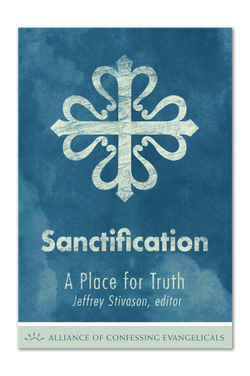
Those who are in Christ have been justified before God. But salvation means much more; it means that we are sanctified, that God actually leads us into holiness. As Michael Allen and company explain, our holiness is carried out in the present work of our sovereign, loving God. In Christ we are given life, not simply in name, but in fact. Praise the Lord, who delivers His children through every weakness. Though you struggle with sin, do not be discouraged; it is God who works in you, "both to will and to work for his good pleasure" (Phil. 2:13).
Past Episodes

Featured Offer
Those who are in Christ have been justified before God. But salvation means much more; it means that we are sanctified, that God actually leads us into holiness. As Michael Allen and company explain, our holiness is carried out in the present work of our sovereign, loving God. In Christ we are given life, not simply in name, but in fact. Praise the Lord, who delivers His children through every weakness. Though you struggle with sin, do not be discouraged; it is God who works in you, "both to will and to work for his good pleasure" (Phil. 2:13).
About Alliance of Confessing Evangelicals
The Alliance of Confessing Evangelicals exists to call the twenty-first century church to a modern reformation that recovers clarity and conviction about the great evangelical truths of the gospel and that then seeks to proclaim these truths powerfully in our contemporary context.
About Alliance of Confessing Evangelicals, Inc
The Alliance of Confessing Evangelicals is a broadcasting, events, and publishing ministry that exists to call the twenty-first century church to a modern reformation. Our broadcasts/podcasts include
The Bible Study Hour
with James Boice,
Every Last Word
featuring Philip Ryken,
Mortification of Spin
with Carl Trueman and Todd Pruitt,
Theology on the Go
with Jonathan Master and James Dolezal,
and Dr. Barnhouse & the Bible
with Donald Barnhouse.
These broadcasts air daily and weekly on stations in the United States and Canada and on the Internet. Event audio includes the Philadelphia Conference on Reformed Theology, the Reformed Bible Conference, and many others.
Contact Alliance of Confessing Evangelicals with Alliance of Confessing Evangelicals, Inc
Alliance@AllianceNet.org
http://www.alliancenet.org/
Alliance Of Confessing Evangelicals
600 Eden Road
Lancaster, PA 17601
1-800-956-2644