

Christianity is Christ


Many people assume that the teachings of Jesus Chrits form the basis of Christianity. But this is a serious error. Christianity is not merely a set of teachings and principles- it is a person. The essence of Christianity is Jesus Christ himself and his redemptive work on behalf of needy sinners. Is Christ at the center of your Christianity?
Dr. Donald Grey Barnhouse: Christ, giving himself to us through his death on the cross, becomes the seed from which the whole plant of Christian living must grow. The mercies of God are all found in Christ. There are no mercies of God outside of Jesus Christ. When we have Christ, we have the mercies of God, and these are the mercies which must exercise such an effect upon us that we turn our hearts back to him and earnestly desire to live to his glory and unto him.
Alliance of Confessing Evangelicals, Inc: God's word is good for holy gain, to teach, rebuke, correct, and train. Equipped by him, we then pursue the work God has for us to do. God's word is all the Christian needs to grow in grace and do good deeds.
Over a half a century ago, the late Dr. Donald Grey Barnhouse, then pastor of Tenth Presbyterian Church in Philadelphia, saw the need to spread God's word beyond the hearing of his local congregation. He started the radio ministry which has become known as Dr. Barnhouse and the Bible.
The application of God's word as taught by Dr. Barnhouse is as relevant today as when he first taught over the radio airwaves decades ago. The message we will be featuring on today's edition of Dr. Barnhouse and the Bible is entitled Christianity is Christ.
Many people assume that the teachings of Jesus Christ form the basis of Christianity, but this is a serious error. Christianity is not merely a set of teachings and principles; it is a person. The essence of Christianity is Jesus Christ himself and his redemptive work on behalf of needy sinners. Is Christ at the center of your Christianity?
The scripture text for this edition of Dr. Barnhouse and the Bible is Romans chapter 12, verse 1. Here again is Dr. Donald Grey Barnhouse with a message entitled Christianity is Christ.
Dr. Donald Grey Barnhouse: Through the Lord Jesus Christ we come unto thee, our Father and our God, and in the Holy Spirit. Thou hast bought us and paid for us by thy cruel death upon the cross, and thou didst thus buy us in order that thou mightest live in us. How tender and how terrible that thou hast to come and ask us for the possession of that which belongs to thee.
May we be broken down before thee as we consider the wonders of thy mercies toward us and learn to live lives that will show to all that we are truly thy property. Bless thy word as it goes forth in this hour and use it in the hearts of many. We ask it in the name and for the sake of thy dear Son, our Lord Jesus Christ. Amen.
We continue our study today in the 12th chapter of Romans. "I beseech you, therefore, by the mercies of God." This is a call to the life which is the life of Christ. Christianity is a person, the Lord Jesus Christ. Christianity is a life, his life lived in those who have trusted in him as Savior and Lord. This life must be lived in this world, and therefore it is a practical thing which concerns the 24 hours in each day, the 60 minutes in each hour, and the 60 seconds in each minute.
The last five chapters of Romans are concerned with the living of this life by the individual Christian in the sphere of life in which God has placed him. We shall be looking at practical living for some months to come as we consider these chapters, if the Lord will. If we are not to be led astray, we must have our foundation well established.
The life that the Christian is to live here on earth is dependent upon Christ living in us, and Christ's life within us comes through the great redemption which God has provided for us in his death upon the cross. "I beseech you, therefore." The apostle appeals to these Christians at Rome. The "therefore" goes back to the 11 chapters which precede, in which we find the two great truths: man's complete ruin in sin and God's perfect remedy in Christ.
Now, having discussed man's ruin in our last study, we turn our attention to the remedy which God has provided. Man could not do anything for himself, so God stepped in and has done everything for man that needs to be done. All that man can do is believe God's word about what he says is done, and the great act of redemption is then immediately transferred out of the theoretical into the living, practical life of Christ within the heart of the believer.
Because of the sinfulness that dwells naturally in mankind, many are inclined to think that man has something to do with earning his salvation. This is the most serious of all errors. The heart of Christianity is that God has done everything that needs to be done. There are those who talk to individuals who are under conviction and tell them that they must pray or do something, that they must, for example, pray the publican's prayer: "God be merciful to me a sinner."
If we examine this, we can see the error in such a proceeding and can find the true nature of grace. For a man to ask God for mercy is about the same as a husband to go home to his wife to whom he has been married for many years and ask her if she will marry him. "It is done," she'll say, "and it can't be done again."
Two men went up to the temple to pray, the story begins as it fell from the lips of Jesus, the one a Pharisee and the other a publican. It must be understood that this was the temple in Jerusalem and that the time was before Christ died and rose again from the dead. The whole of the story must be seen in its Jewish religious setup before Christ died and before the temple worship was abolished by God's act of sending an earthquake at the moment of the crucifixion, tearing the hiding veil away from the holy of holies and thus announcing that he was through with temple worship and with all buildings as a place of residence.
The first of the two men is described by our Lord as a Pharisee. He paraded before God and announced that he had kept to the law and proudly stated that he thanked God that he was not like a poor publican who stood nearby. But the publican did not so much as lift up his eyes to heaven and smote upon his breast with his fist, crying, "God be mercy-seated to me a sinner." You will note that I have corrected the utterly false translation of the older version.
What the Pharisee was saying, in effect, was, "God, I'm not so bad when I measure myself against your law. I think I'm doing rather well. Certainly, I am not like this flagrant sinner, this publican." But the publican, today we'd call him a tavern keeper or, in those days, a tax gatherer and a tavern keeper both, he said in effect, "Lord, let's not even talk about the Ten Commandments. I make no claim to have kept any of them. Do not deal with me on the basis of the law. Deal with me on the basis of the shedding of the blood of the sacrificial lamb." For that is the true meaning of this story: "God be mercy-seated to me a sinner."
And our Lord added, "This is the man who went down to his house justified rather than the other." The mercy seat was the center of the worship of God in the Old Testament. And it was this word that the publican, the tax gatherer, the Jew that was working for the Romans, used when he said, "God be mercy-seated to me a sinner." He had spiritual understanding of God's methods of dealing with men. He knew that salvation was not by Moses, but by God through Aaron and Levi. And he knew that Moses had been saved by having Aaron kill a lamb for his sin. He knew that salvation was not by law, but by God through the lamb.
Now, when Jesus Christ died on the cross, all of the work of God for man's salvation passed out of the realm of prophecy and type and became historical fact. God has now had mercy upon us. For anyone to pray, "God have mercy on me," is the equivalent of asking him to repeat the sacrifice of Christ. All the mercy that God ever will have on man, he has already had when Christ died. This is the totality of mercy. There could not be any more. The fountain is now opened and flowing, and it flows freely. We look back to Calvary and we sing, "Mercy there was great and grace was free. Pardon there was multiplied to me. There my burdened soul found liberty at Calvary."
Now, the third chapter of Romans contains one of the greatest paragraphs in all the Bible. It shows that the mercy of God was planned by him and that in the fullness of time, that mercy flowed out in Christ's death for us. The important thing for us to realize is that God the Father put the Lord Jesus Christ to death for us. God tells us through Isaiah, "It pleased Jehovah to bruise him. He hath put him to grief."
And then this thought is repeated on the lips of Peter as God spoke through him on the day of Pentecost. "Ye men of Israel, hear these words," said Peter. "Jesus of Nazareth, a man approved of God among you by miracle and wonders and signs which God did by him in the midst of you, as ye yourselves also know. Him being delivered by the determinate counsel and foreknowledge of God, you have taken and by wicked hands have crucified and slain. Whom God has raised up, having loosed the pains of death because it was not possible that he should be held by it."
Bruised by God the Father, delivered up to death by the determinate counsel and foreknowledge of God, the lamb slain from the foundation of the world. All of these verses reveal to us that God had planned the death of Jesus Christ, planned it even before he created the heavens and the earth. All that God has done is for the revelation of his grace in Jesus Christ and to draw an innumerable company of believers into himself, whom he can form into the likeness of Christ, reproducing Christ a million millionfold.
In the fourth and fifth chapters of Romans, the argument is carried along another step. The mercies of God have been provided by God without any work on the part of man. What God has done for man is above and beyond any religious rites or ceremonies. This truth is taught by emphasizing the time element in the history of Abraham. God called Abraham by grace and saved him through faith. God made certain promises to Abraham and Abraham believed them. They were promises that involved a belief that God was able to bring life out of death.
This faith was exercised on at least two different occasions by Abraham. When he was a hundred years old and naturally sterile, he did not consider his own body and its sterility, neither the deadness of Sarah's womb, we read, but believed that God was able to fulfill the promise that had been made. Thus it was that Isaac was born, a child of promise, a miracle child. Isaac was the proof that God can bring life out of death.
Later on, God told Abraham that Isaac was to live and to have children. And when Abraham believed this, God told him to take Isaac and sacrifice him upon an altar. Abraham did a little calculating. Now, if this son has no children now, and if God says he is to live and to have children, and if God now tells me to offer him up in sacrifice, well then, God will have to raise Isaac from the dead in order to fulfill his promise.
And this process of thinking, the epistle to the Hebrews announces, was Abraham accounting that God was able to raise him up from the dead. So, both in the birth of the child and in the sacrifice of the child, Abraham demonstrated the kind of faith that God wants a human being to have: faith that God can bring life out of death. When I believe that God raised Jesus Christ from the dead, I am exercising exactly the same faith that Abraham exercised when he believed the same principle 2,000 years before Christ.
And all of this argument is set forth in the central portion of Romans. A further point is added when the chronology is emphasized to show that Abraham's original faith in God took place before, long before, he was circumcised. When Abraham had first obeyed God and had left his homeland to travel to Palestine, not knowing where he was going but believing the word of God, his faith, the Bible tells us, his faith was counted unto him instead of righteousness.
And this, Paul takes great care to remind us, took place before God instituted the rite of circumcision. Therefore, it must be seen that true faith is independent of formal religion. The faith that God wants in us is not a faith that is occupied with such things as baptism, church joining, the taking of communion and the like. Now, these things may come afterwards as fruits of our obedience, but they have no part in our salvation. They are indeed nothing other than the fruits of obedience and are not factors in saving faith.
The mercies of God, then, include the provision of salvation in Christ and the communication of life to us through Christ, apart from religious acts. It is by these mercies that God implores us to live Christian lives. Now, the next of the mercies, for our text, you see, is "I beseech you by the mercies of God." The next of the mercies in Romans is set forth in the sixth chapter where God tells us that he has joined every believer to Christ and that everything that is Christ's becomes ours in him.
The comparison that God uses is one that concerns Adam. When God created the first man, all the rest of the human race was in him. Adam was even married to a wife who was within him at the beginning and was taken from his side by the power of God and transformed into the wife that he needed. Everything that has ever appeared in any member of the human race was already in Adam. And in his sin, the whole of the human race was separated from God.
Now, says God, in the same way that all the race was seen to be in Adam, so all believers are seen to be in Christ. What Christ did on the cross, God sees to have been done by every believer in Christ. When Christ died under the wrath of God, every human being who trusts in Christ as Savior is also seen by God to have died under that wrath. When Jesus Christ was raised from the dead, God counted every believer in him to have been raised from the dead also.
Everything that God thinks about the Lord Jesus Christ, his beloved Son, he also thinks about all believers in Christ. A man may be as low as the Philippian jailer described in the book of Acts, ready to take his own life in suicide. And such a man, as I say, on the point of suicide at one moment, is baptized and received into the body of true believers the next moment and is accepted by God as being justified, as perfect as Christ in the sight of God.
Now, this mercy of God is so great that it's almost inconceivable, and there are many Christians who believe, but who do not know all that happened to them when they trusted in the Savior. Not understanding the breadth of God's mercy, they still linger in doubt. They see in themselves that they are not perfect in their thinking and doing, and they find it hard to understand that they are, nevertheless, perfect in the sight of God who looks at them through Jesus Christ.
Not perfect in their condition, but they are perfect in their position. And thus, the eighth chapter of Romans, considered by many to be the greatest chapter in all the Bible, begins by saying that there is, therefore, now no condemnation for those who are in Christ Jesus. Oh, what a mercy this is. It is totally impossible for God to bring any condemnation, any judgment, to a believer because all of God's condemnation was poured out on the Lord Jesus Christ.
And this being the case, the whole triumph of our position is seen. God is for us, and if God is for us, who can be against us? God did not spare his own Son but delivered him up for us all. This being the case, is God going to stop short of fullness of blessing? The obvious answer is that he will not stop blessing us. He will not withhold anything from us.
And this is the reason why we can know that we, who separated ourselves from God by sin, we have been sought by him, brought back by him, joined to Christ by him, justified by him. We now have the right to know that there is no possible condemnation against us and no possible separation from him. We have been made as near to God the Father as is his beloved Son our Lord.
Therefore, we can sing with triumph, "I am persuaded that neither death, nor life, nor angels, nor principalities, nor powers, nor things present, nor things to come, nor height, nor depth, nor any other creation shall be able to separate us from the love of God which is in Jesus Christ our Lord." These, then, are the mercies of God by which God appeals to us to live as those who are alive from the dead. On the ground of his mercies, he now implores us to present ourselves to him.
The whole of Christian living must grow out of our relationship to Christ. Christ, giving himself to us through his death on the cross, becomes the seed from which the whole plant of Christian living must grow. The mercies of God are all found in Christ. There are no mercies of God outside of Jesus Christ. When we have Christ, we have the mercies of God, and these are the mercies which must exercise such an effect upon us that we turn our hearts back to him and earnestly desire to live to his glory and unto him. And all this shall develop further in our future studies. Our God and Father, bless this to each listening heart. We ask it in the name and for the sake of our Lord Jesus. Amen.
Alliance of Confessing Evangelicals, Inc: Guide me, oh thou great Jehovah, pilgrim through this barren land. I am weak but thou art mighty, hold me with thy powerful hand. Bread of heaven, bread of heaven, feed me till I want no more. Feed me till I want no more.
Open now the crystal fountain, whence the healing waters flow. Let the fiery cloudy pillar, lead me all my journey through. Strong deliverer, strong deliverer, be thou still my strength and shield. Be thou still my strength and shield.
Christianity does not merely consist of moral teachings and life principles. It is nothing less than the Lord Jesus Christ himself and his complete work of salvation on our behalf. You have been listening to Dr. Barnhouse and the Bible, a ministry of the Alliance of Confessing Evangelicals. We hope you've benefited from today's message entitled Christianity is Christ.
To listen to more Bible teaching by Dr. Barnhouse, tune in anytime, anywhere around the globe via the internet by visiting alliancenet.org. An audio copy of today's teaching is also available by calling us toll-free 1-800-488-1888. Today's message again is entitled Christianity is Christ, or simply request message number R12-2.
We would also like to make available to you a free copy of our booklet entitled Sex, Marriage, and Divorce. God designed the marriage relationship to be a picture of our eternal union with Jesus Christ. And yet, Christian marriage has often fallen short of this lofty ideal. This free booklet shines biblical truth upon this vital subject. Chapter titles include Lust and Christian Marriage, Marriage and the Home, Divorce and Remarriage, and For Time and Eternity. Ask for your free copy of Sex, Marriage, and Divorce when you call or write.
Dr. Barnhouse and the Bible is a radio outreach of the Alliance of Confessing Evangelicals, headquartered in Philadelphia, Pennsylvania. We exist to promote a biblical understanding and worldview. Drawing upon the insight and wisdom of Reformation theologians from decades and even centuries gone by, we seek to provide contemporary Christian teaching which will equip believers to understand and meet the challenges and opportunities of our time and place.
The Alliance also produces the broadcast The Bible Study Hour, featuring the teachings of the late Dr. James Montgomery Boice, and Every Last Word, featuring the Bible teaching of Dr. Philip Graham Ryken. For a full list of radio stations carrying our programs, please visit our website at alliancenet.org.
Dr. Barnhouse and the Bible comes to you through the generous gifts of listeners like you. If you have benefited from the broadcast and would like it to continue, please prayerfully consider a donation to help us keep this ministry on the air. For more information or to make a contribution to help further our work, contact us by calling toll-free 1-800-488-1888. That's 1-800-488-1888. You may also write us at Alliance of Confessing Evangelicals, Box 2000, Philadelphia, Pennsylvania 19103.
You may visit us online at alliancenet.org. Don't forget to request your free resource catalog featuring books, audio teachings, commentaries, booklets, videos, and a wealth of other materials from outstanding reformed teachers and theologians, including Donald Grey Barnhouse, James Montgomery Boice, Martyn Lloyd-Jones, and Philip Graham Ryken. Thanks for listening. Join us again next time for more classic teaching on Dr. Barnhouse and the Bible.
The Bible has commanded words, to do God's saving work on earth. It draws our souls from death to life and rescues us from needless strife. Amazing gift, on earth so hard, the life-imparting word of God.
Featured Offer
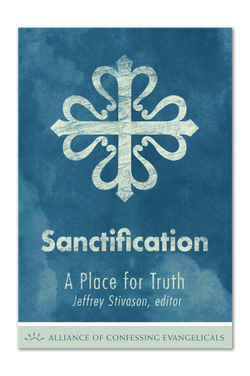
Those who are in Christ have been justified before God. But salvation means much more; it means that we are sanctified, that God actually leads us into holiness. As Michael Allen and company explain, our holiness is carried out in the present work of our sovereign, loving God. In Christ we are given life, not simply in name, but in fact. Praise the Lord, who delivers His children through every weakness. Though you struggle with sin, do not be discouraged; it is God who works in you, "both to will and to work for his good pleasure" (Phil. 2:13).
Past Episodes

Featured Offer
Those who are in Christ have been justified before God. But salvation means much more; it means that we are sanctified, that God actually leads us into holiness. As Michael Allen and company explain, our holiness is carried out in the present work of our sovereign, loving God. In Christ we are given life, not simply in name, but in fact. Praise the Lord, who delivers His children through every weakness. Though you struggle with sin, do not be discouraged; it is God who works in you, "both to will and to work for his good pleasure" (Phil. 2:13).
About Alliance of Confessing Evangelicals
The Alliance of Confessing Evangelicals exists to call the twenty-first century church to a modern reformation that recovers clarity and conviction about the great evangelical truths of the gospel and that then seeks to proclaim these truths powerfully in our contemporary context.
About Alliance of Confessing Evangelicals, Inc
The Alliance of Confessing Evangelicals is a broadcasting, events, and publishing ministry that exists to call the twenty-first century church to a modern reformation. Our broadcasts/podcasts include
The Bible Study Hour
with James Boice,
Every Last Word
featuring Philip Ryken,
Mortification of Spin
with Carl Trueman and Todd Pruitt,
Theology on the Go
with Jonathan Master and James Dolezal,
and Dr. Barnhouse & the Bible
with Donald Barnhouse.
These broadcasts air daily and weekly on stations in the United States and Canada and on the Internet. Event audio includes the Philadelphia Conference on Reformed Theology, the Reformed Bible Conference, and many others.
Contact Alliance of Confessing Evangelicals with Alliance of Confessing Evangelicals, Inc
Alliance@AllianceNet.org
http://www.alliancenet.org/
Alliance Of Confessing Evangelicals
600 Eden Road
Lancaster, PA 17601
1-800-956-2644