

By Faith, Not by Works


In chapter 3, Paul addresses the Galatians’ departure from the gospel. He asks them to consider their own spiritual experience, roots, and destiny, having begun by the Spirit yet trying to progress by human effort. Reverend Alexander urges us to keep our eyes on the crucified Savior who bore our sin on Hear the Word of God.
Mark Daniels: Welcome to Hear the Word of God, the online and broadcast teaching ministry of the Reverend Eric Alexander.
Eric Alexander: Now, because what we are going to do now is to seek to understand the message of the passage we read together earlier. It would help you greatly to have your Bible open at Galatians chapter 3 and at the first 14 verses. And as we have it open, we bow for a moment in prayer, seeking God's light and wisdom. Let's pray together.
Heavenly Father, we acknowledge that our eyes are blind unless you touch them and open them and give us sight. Our hearts are hard, except you come and breathe upon us by your spirit and melt our hearts and give us grace, that we may readily heed your word. Our wills are stubborn and sluggish, except you come and lay your hand upon us and subdue our wills for the glory of your name, that we may be not only hearers, but doers of your word also. We ask your blessing upon us in these moments, in Jesus' name. Amen.
Sometime ago, I sat down with a couple who came from another part of the world, who were greatly troubled and grieved over one of their family, who once, as we would say, was a thoroughly committed Christian and an eager follower of Christ, participating in various forms of Christian service. But more recently, he had lost all interest and become grossly confused about the truth and set out on a lifestyle which really had very few moral restraints. The father said to me, it really has not been a rational process that he has gone through. You would indeed almost think that he had been under a spell, mesmerized or something of the kind.
It's quite sinister in some ways, said his mother, and frightening to see. It's rather like watching someone in a trance walking towards a precipice, and no matter how you call, they won't come back.
I immediately thought about the first verse of our Bible reading this morning, when we were talking in Galatians chapter 3, because it's exactly that sort of thing that Paul is speaking about. He has seen the Galatians enticed away from the gospel and from the truth of the gospel, and most of all from Christ.
And in verse 1, he expresses himself in a way that would almost seem insulting. You foolish Galatians, he says, how stupid you have been.
And then he says, but it's scarcely stupidity. It can hardly just be that you haven't been thinking. He says, who has bewitched you?
Who has mesmerized you? Who has brought you in some sense under their spell?
You see, what they have been doing is abandoning the gospel of the free grace and love of God in Jesus Christ.
And they have been adopting what Paul tells them in chapter 1, is no gospel. That is, they have tried to seek salvation and acceptance with God by performing the requirements of the law of Moses.
And Paul says, is it not true in verse 1 that Jesus Christ in all his glory was placarded before your eyes? It wasn't that you didn't know the truth. It wasn't that you didn't see it. Jesus Christ crucified was placarded before you.
And yet you have exchanged Christ crucified for this tawdry man-made substitute of keeping the ceremonial law of Judaism. It's like exchanging gold for plastic.
And Paul says, you foolish Galatians. Do you remember, of course, that he is actually just repeating the words of his master, because on the road to Emmaus, when Jesus was puzzled at the fact that these disciples who had listened to him and been taught by him were in turn turning away from the gospel, he says, oh fools and slow of heart to believe what the prophets have spoken.
Now, Paul finds it so incredible, as I say, that he says, you must have been bewitched. You really must have been under a spell. I wonder if you've ever seen that.
I tell you when it happens. It happens when there is possibly some moral reason for not believing the truth of the gospel or the truth of scripture, and you discover that people come under what is almost like a spell. You know how a snake mesmerizes its victim before it kills it, do you?
You would think I was an expert in snakes, wouldn't you?
But that's what it does, and it mesmerizes them until they become almost willing victims. And Paul says, that's what's happened, I guess.
And so he begins to interrogate them from verse 2, and all that he has to say from now on in the rest of this highly significant passage we read, is really dealing with the major question. That is, what is the true way of Christian salvation?
How are people like ourselves made acceptable to God? What is the message of the Christian gospel?
Now, in this third chapter of Galatians, Paul lays down that there are but two possibilities. He asks the Galatians to consider them, and they're summarized in verse 2 towards the end. Did you receive the Spirit? Now, here are the two possibilities: by observing the law or by believing what you heard.
These are the two possible roots that people may seek to take. One, the observing of the ceremonial law of Judaism, the other, believing the message and promise of God in the gospel.
Now, these, Paul tells the Galatians, are irreconcilable opposites. The first means putting your confidence in your own achievements. That is, trusting in something you can do or achieve in your own human flesh and capacity as a man or woman, part altogether from God.
The other means putting your trust exclusively in Christ and his achievement on the cross.
Now, these two are not different emphases in the same gospel. They are not two ways of looking at Christianity, your way and my way.
They are contradictory. One, as Paul is, the gospel of Jesus Christ, that is, resting all my confidence in time and eternity on the achievement of Jesus Christ on the cross, nothing else, nothing other, nothing less.
And that's the Christian gospel. And anything else, says Paul, is not a gospel and is not the Christian faith.
Now, because they appear to be foolish and mesmerized, Paul urges them to think about three things in the three paragraphs of this passage. If you've got a New International Version of the Bible, you'll see that it divides into three paragraphs, and it's printed that way. The paragraphs begin at verse 1, verse 6, and verse 10. And the first paragraph, Paul is saying, consider your own spiritual experience.
How did your own Christian life begin? How did you come into the knowledge of Jesus Christ? That's the first thing to consider. Consider your own spiritual experience. Verse 2, I would like to learn just one thing from you: did you receive the Spirit by observing the law, or by believing what you heard? That's the first subject.
The second, verses 6 to 9. He says, consider your spiritual roots.
Verse 6, consider Abraham. And he begins to explore the spiritual roots of every true believer which are found in Abraham.
Then verses 10 to 14, consider your spiritual destiny. Consider where what you believe is leading you.
Verse 10, all who rely on observing the law are under a curse. Verse 14, he redeemed us in order that the blessing given to Abraham might come to the Gentiles through Christ Jesus.
So he begins, consider your own spiritual experience.
Now what Paul is very simply challenging the Galatians to think back to in verse 2, is how their own Christian life began, how they became Christians.
He describes that event, interestingly enough, as the time when they received the Spirit. I would like to learn just one thing from you. Did you receive the Spirit by observing the law or by believing what you heard?
Now, we know that he's talking about their Christian beginnings because he goes on to say in verse 3, are you so foolish after beginning with the Spirit? So here he is speaking about their Christian beginnings. And when you were converted, he says, what happened was, you received the Holy Spirit.
Now that couldn't be clearer. Obviously, receiving the Holy Spirit was not some subsequent experience of some Christians after conversion. It was the mark of all Christians at conversion. They all received the Holy Spirit. That's how they began. Now he says, think.
When you received the Holy Spirit, did you receive the Holy Spirit as a reward for trying to keep the moral or ceremonial law of God as best you could, and like a kind of end-of-term prize, God gave you the Holy Spirit? Is that how it happened in your experience?
Now think back, he says. Now, let's think back ourselves this morning.
How did your Christian experience begin? Did it begin by your seeking to please God by keeping his ceremonial and moral law, and then as a prize, God gave you the Holy Spirit?
Or did it begin when you believed on the Lord Jesus Christ, and God in his mercy came to you and saved you and brought the Holy Spirit into your heart?
It doesn't need too much consideration for a true Christian to know that, does it?
Apart from anything else, of course, Paul's question contains a bit of a master stroke, because the majority of these Galatian Christians were Gentiles. They didn't even know the law.
So it wasn't the keeping of the law that brought the Holy Spirit to them. But it's true of everybody, no matter who we are. How did your Christian experience begin?
It began when you believed in the Lord Jesus Christ, is that not so?
But what settles it is in verse 5. Paul asks, does God give you his Spirit? That is, the Holy Spirit, whom we have as the author of our spiritual life. Does God give you his Spirit because you observe the law, or because you believe what you heard?
Now, Paul's answer is, of course, faith receives the gift of God. And that's all. And that's how our spiritual beginnings are. We begin our Christian experience, by saving faith which receives and rests on the Lord Jesus Christ as the crucified and risen Savior, and we embrace him and say, my hope is built on nothing less than Jesus' blood and righteousness. That's how we begin our Christian experience. But there is another thing embedded in verse 3, which we ought not to pass over. And it's this. What some of these false teachers were saying was this, you see.
They would say, oh, well, yes, of course, you began by faith. You began in simple faith, receiving the Lord Jesus Christ, but you do want to grow, don't you? You want to grow and go on. You want to mature and enter into the fullness of what it means to be a child of God. Yes, they would say. Well, then, they said, you need to keep the ceremonial law of God. You need to put your confidence in this if you are going to continue and grow up.
Now, notice what Paul says in verse 3. You'd better look at it with me. Are you so foolish? After beginning with the Spirit, are you now trying to attain your goal by human effort?
He says, can you possibly be so stupid as to think this? That having begun with the gift of God's Holy Spirit to live within you, you are now going to enter into Christian maturity by what you do? What an insult to God. What an insult even to your own intelligence. Can you be so foolish, he says?
But let me pause for a moment, because there is a great temptation for many of us to be precisely as foolish as this. And to imagine that we began our Christian life by saving faith in Jesus Christ and resting on what he was for our justification and acceptance with God. But as we go on in our Christian experience, we can easily imagine that it all depends on ourselves, and on what we can do and what we can achieve.
Now, Paul is anxious to cut the roots from that, and he says, are you so foolish? Having begun with the Holy Spirit whom you received by faith, are you now going to go on trusting in the works of the flesh?
What does he mean? Well, he means exactly what he says in the previous chapter, verse 20, when he says, I live, yet not I, it is Christ who lives in me, and the life I now live in the flesh, I live by faith in the Son of God, who loved me and gave himself for me. How do I become a Christian? By saving faith in Jesus Christ, through which the grace of God comes to me.
How do I grow as a Christian? How do I stay as a Christian? By saving faith in Jesus Christ. By the grace of God, and that alone, says Paul to the Corinthians, by the grace of God, I am what I am. The life I now live, I live by faith in the Son of God.
Now, my dear friends, we dare not think we've learned that one.
Because there are so many people who imagine that they begin their Christian experience by trusting Jesus Christ and him alone for the beginning of it, and then think that they progress by some other means. And I tell you, it is a fatal trap, because to the end of the day, you will go on and persevere and be able to live as a child of God and grow in Christ by trusting moment by moment in him.
By knowing the Holy Spirit bringing everything that there is of Jesus into your inmost being, and allowing him to live out his life through you.
Now that's the secret of Christian living. And Paul says, it's absolutely basic.
Jesus Christ for me is the key to my justification. Jesus Christ in me is the key to my Christian growth and progress. But it is Jesus Christ from beginning to end.
And so Paul says to the Philippians, he who began a good work in you will just leave you and let you get on with it until it finishes. No, no, no, no, no. He who began a good work in you will go on to complete it until the day of Jesus Christ.
So when you come to the end of your Christian life, and you're in the presence of God and glory, you will say it was grace. From beginning to end, it was grace that drew me to Christ and kept me for Christ every moment of every day, and you need to spend these moments looking to him, trusting him, keeping your eyes, as Hebrews 12 says, on Jesus.
Consider your spiritual roots, as the second thing, verses 6 to 9. That is, consider Abraham.
Now, the Judaizers, of course, were pointing to Moses. They would constantly remind the Galatians of Moses and the law. But Paul says, well, let's not just go back to Moses. Let's go right back to Abraham, Abraham, who is the father of all who believe. How was Abraham justified before God?
Well, in verse 6, Paul quotes from Genesis 15:6. He believed God, and it was credited to him for righteousness.
In Genesis 15:6, Abraham is an old man, and God has promised him a son. And he took him one day out into the back garden. Well, that's probably an exaggeration, they maybe didn't have back gardens. He took him out of his tent and said to him, look up into the sky and count the stars. Your descendants will be as numerous as the stars in the sky. And he gave that promise to Abraham.
Now, what did Abraham do? Well, verse 6 quotes Genesis 15: he believed God, and it was credited to him for righteousness. That is, he was justified, he was accepted as righteous in the presence of God. Now, you see the whole point of Paul's quotation of Abraham.
Abraham could not possibly have been justified by the law, because he lived before the law was given. The law wasn't given until Exodus 20. We are talking about Genesis 15.
Abraham couldn't possibly have been justified by circumcision, because circumcision wasn't installed as a rule until Genesis chapter 17.
He was justified solely, purely, and simply by faith in God's promise. And says Paul, the way for Abraham to be justified is the way for all of us to be justified.
Understand then, verse 7, that those who believe are children of Abraham. That is, they bear the characteristics of Abraham. Verse 8, the scripture foresaw that God would justify the Gentiles the way he justified Abraham, by faith, and he announced the gospel in advance to Abraham: all nations will be blessed through you. So those who have faith are blessed along with Abraham, the man of faith.
So consider your spiritual beginnings. Consider your spiritual roots which are in Abraham.
And here's the last thing. And it's in the last paragraph, 10 to 14, consider your spiritual destiny.
The ultimate question, of course, is where are my beliefs leading me to? That's what matters more than anything else, doesn't it? Where are my beliefs leading me to?
That's why it's so wrong for people to say in the modern world, well, you believe your thing, I'll believe my thing, it's true for you, it's not true for me, we'll believe what we like. The real question is, where are your beliefs leading you to? And especially, where are they leading you to when you die? That's the question.
And that's the issue Paul takes up in verses 10 to 14. Now there are only two starkly contrasting possibilities for human destiny.
One is in verse 10, and it's cursing. All who rely on observing the law are under a curse. The other is blessing, verse 14. He redeemed us in order that the blessing given to Abraham might come to the Gentiles through Christ Jesus.
Now, the man or woman who relies on their own achievement in whatever tiny measure, is under God's curse for a particular reason. Do you notice it in verse 10?
All who rely on observing the law are under a curse, for it is written, and he quotes Deuteronomy 27:26, cursed is everyone who does not continue to do everything written in the book of the law.
So when someone comes and says, well, I'm going to find my own way to heaven, and it consists in doing as best I can, trying to please God and keep the Ten Commandments and live by the Sermon on the Mount, and I hope one day I will be accepted by God, you need to read to them Deuteronomy chapter 27:26, which says, cursed is everyone who does not continue in everything written in the book of the law to do them. Have you done that? Have you meticulously kept every single commandment of God? Have you obeyed everything that God has taught us in his word, that he wants men and women to do and to be? Have you obeyed all of these, and do you continue to do it consistently right through your life?
Now the clear answer is, of course, no.
And Paul says, well, there is no point in beating around the bush, any more than Jesus beat around the bush when he said, there is a straight and narrow way that leads to that leads to life, and there is a broad way that leads to destruction. That's exactly what Paul is speaking about. And it's where your beliefs lead you that really matters.
But the man or woman who relies on Jesus Christ and him crucified, discovers that the destiny God has for him or her is blessing beyond measure and beyond fathoming. And the way it works is this, you see.
It's not just that God says, cursed is everyone who does not continue in the works of the law to do them, and that he forgets all about it in the case of those who exercise faith in Christ. It is that Jesus Christ, the Son of God, having come into the world, set his face steadfastly to go to Jerusalem, and on the cross on Calvary, what he did was not to die a martyr's death, or to show us how much God loved us, or anything else of that dimension. He came to bear the very curse of God upon a broken law for transgressors like me and like you. In order that the curse of that broken law might be lifted from us and laid on him, and that the blessing of Abraham might rest upon the likes of me. Can you imagine it?
That's why Paul says, really, somebody must have mesmerized you. You must have been under a spell to turn from the pure gold of that gospel, and deal in the tawdry trash of a man-made substitute.
God help us that the spell will be broken. If it's there for some of us this very morning. Let's pray.
Father, we bless you for the glory of the gospel of a crucified Savior, who bore our sin and took our place. Help us that we may be delivered from everything that would keep us from the truth and from Christ, and rest in him today for his name's sake. Amen.
Mark Daniels: You are listening to Hear the Word of God with the Reverend Eric Alexander, a minister in the Church of Scotland for over 50 years. To access more Bible teaching from Reverend Alexander, visit hearthewordofgod.org, where your generous contribution will help us sustain and grow this ministry. That's hearthewordofgod.org. You could choose instead to mail a check to this address: 600 Eden Road, Lancaster, Pennsylvania, 17601. Or call 1-800-488-1888. This program is a presentation of the Alliance of Confessing Evangelicals. I'm Mark Daniels. Thank you for listening. Please join us again next time for Eric Alexander and Hear the Word of God.
Featured Offer
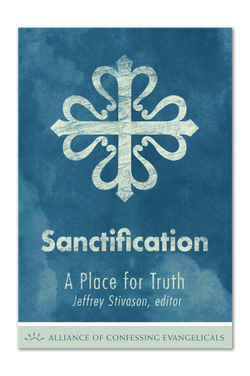
Those who are in Christ have been justified before God. But salvation means much more; it means that we are sanctified, that God actually leads us into holiness. As Michael Allen and company explain, our holiness is carried out in the present work of our sovereign, loving God. In Christ we are given life, not simply in name, but in fact. Praise the Lord, who delivers His children through every weakness. Though you struggle with sin, do not be discouraged; it is God who works in you, "both to will and to work for his good pleasure" (Phil. 2:13).
Past Episodes

Featured Offer
Those who are in Christ have been justified before God. But salvation means much more; it means that we are sanctified, that God actually leads us into holiness. As Michael Allen and company explain, our holiness is carried out in the present work of our sovereign, loving God. In Christ we are given life, not simply in name, but in fact. Praise the Lord, who delivers His children through every weakness. Though you struggle with sin, do not be discouraged; it is God who works in you, "both to will and to work for his good pleasure" (Phil. 2:13).
About Alliance of Confessing Evangelicals
The Alliance of Confessing Evangelicals exists to call the twenty-first century church to a modern reformation that recovers clarity and conviction about the great evangelical truths of the gospel and that then seeks to proclaim these truths powerfully in our contemporary context.
About Alliance of Confessing Evangelicals, Inc
The Alliance of Confessing Evangelicals is a broadcasting, events, and publishing ministry that exists to call the twenty-first century church to a modern reformation. Our broadcasts/podcasts include
The Bible Study Hour
with James Boice,
Every Last Word
featuring Philip Ryken,
Mortification of Spin
with Carl Trueman and Todd Pruitt,
Theology on the Go
with Jonathan Master and James Dolezal,
and Dr. Barnhouse & the Bible
with Donald Barnhouse.
These broadcasts air daily and weekly on stations in the United States and Canada and on the Internet. Event audio includes the Philadelphia Conference on Reformed Theology, the Reformed Bible Conference, and many others.
Contact Alliance of Confessing Evangelicals with Alliance of Confessing Evangelicals, Inc
Alliance@AllianceNet.org
http://www.alliancenet.org/
Alliance Of Confessing Evangelicals
600 Eden Road
Lancaster, PA 17601
1-800-956-2644