
Actions Speak Louder Than Words


In Matthew 21, Jesus challenges the religious leaders and uses the parable of two sons to reveal that true obedience is shown in actions, not empty promises. Resentment holds us captive until we recognize it, regret it, repent of it, and release it. Saying “yes” to God requires courage, honesty, and consistency. Our obedience declares His preeminence in our lives and demonstrates that faith is not merely spoken but lived. Actions, not words, become the evidence of a heart surrendered to Christ.
Announcer (Male): Now, from New Covenant Fellowship Church. All things are possible. At New Covenant, we show and grow people in Christ and glorify God. It's what we believe.
To say it another way, if you're looking to worship in a place without having to worry about what to wear or a plate being passed for money, come to New Covenant. Every Sunday morning at 10:30, you'll enjoy great music and solid teaching from the Bible.
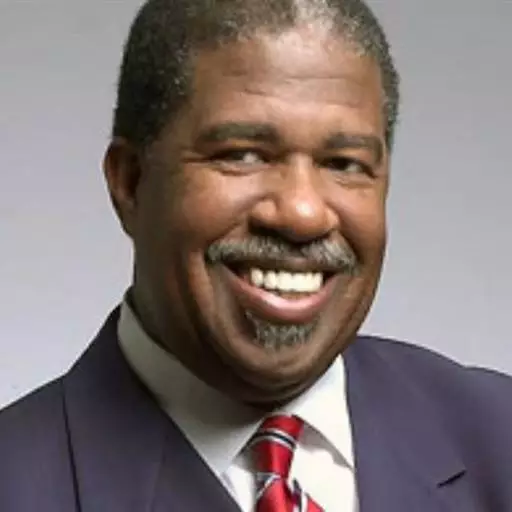
You'll find us on Northmore Road in Chattanooga with directions right to our door at NCF.church. New Covenant Fellowship Church. We are a place for every race. And here's Pastor Bernie Miller.
Dr. Bernie Miller: The other day I was watching the YouTube, and I saw the senators asking one particular person who was being considered for a position. And they asked them to answer yes or no to the question. And this person took a circuitous route. They went all around the barn. And they still haven't answered the question. I was waiting for almost 20 minutes. They kept asking it, just yes or no. And they, they, they just couldn't answer yes or no.
Have you, have you noticed that about people? Have you, have you noticed how criminals and politicians are when giving answers to a straightforward yes or no question from a reporter are evasive? It seems like, you know, it's just simple. Yes or no. Now, I'm not putting the criminals and politicians in the same bag.
Or in the same category. I'm just noticing the similarities of the two. Why do some people say yes when they really mean no in relationships?
You guys have been there, I'm sure. There are some times you really shouldn't have said yes.
Guest (Male): Alright.
Dr. Bernie Miller: You should have said no. And by your saying yes, you got yourself in some trouble. In fact, you're still living with that trouble.
Guest (Multiple): [Laughter]
Dr. Bernie Miller: Why do some people say yes when they really mean no? Because some people are more interested in pleasing other people than they are in pleasing God. They are people pleasers. They fear rejection or they want to avoid conflict.
But Jesus said we are to let our yes be yes and our no, no. Believers ought to be known as truthful people without having to make oaths or swearing by God. In fact, the Bible forbids us to do that. In James 5, it says, "Do not swear by heaven or by earth or by anything else because we will be judged when we do." Meaning, we'll be judged and lose a reward if we do that knowingly.
Now that I've told you and you heard it, you are now accountable. Today, we're going to focus on three things today: the fear of resentment, the courage to say no, and the power of actions over words.
And we're going to be in the parable of the two sons, but I'm going to set it up for you. Our faith in God can and will overcome all fear, the Bible says. In fact, in 1 John 5, it says, "For whoever is born of God overcomes the world." It says, "And this is the victory that has overcome the world." It says, "Our faith." So if I have faith the size of a mustard seed, I can say no when people want me to say yes, because I know that if I'm straight up, then I'm going to be fine.
So let me ask you, did you say yes when you really meant no?
Guest (Male): No.
Dr. Bernie Miller: In Matthew 21, Jesus put some religious leaders in the same category as tax collectors and prostitutes because they couldn't say yes to what Jesus needed them to say yes to. So I ask you again, is your yes, yes or is your answer really no?
Most people evade questions, as I said, with circuitous responses. They, they circle the barn without ever opening the door of truth. When prosecutors ask witnesses on the stand questions, they already know the answer. They just want to see if you're going to be upfront and honest about it.
Like parents who ask their kids if they did something wrong. Some kids will deny it, and others will blame it on their other siblings. I had a hard problem with that, because I'm the only child. So I didn't have anybody to point the finger at or nobody else to blame.
Guest (Multiple): [Laughter]
Dr. Bernie Miller: Because when I was pointing my finger at myself in the mirror, there were three other fingers pointing back at me, and so I, I didn't even have me to blame. I mean, you know, I didn't have nobody I could blame but me. I had no one else to point the finger at, because I'm an only child. Well, some of those times I wish I wasn't an only child, you know, so I could blame it on the other sibling.
The parable of the two sons comes after Jesus had cast out those who were buying and selling in the temple. As he was in the temple, children were, were, were shouting praises to Jesus. They were blessing his name and shouting blessings to his name. But the chief priests and the scribes and the Pharisees, they were indignant about it. They didn't like the fact that the children were praising Jesus because they didn't particularly care for Jesus.
After leaving the temple, he wanted to have a snack, and so they walked by this fig tree. It had green leaves on it. It had the appearance of having some fruit. But when he went over to investigate it, the tree had no figs on it. And so he cursed the fig tree. And you're saying, well, Pastor, what does that have to do with the message? It has a whole lot to do with it. The fig tree was symbolic of Israel, who had leaves but no fruit. Leaves symbolize their religious activity, but no fruit of repentance was on the tree.
In fact, they didn't even obey God as Jesus wanted them to. So Jesus called them hypocrites. Now, when Jesus re-entered the temple, the chief priests and the elders, they thought they would put him on the witness stand and question him. So he answered their questions with a question using two parables. We're only going to look at one of them today.
The first was about the prostitutes and the tax collectors who repented, and they would be the ones who would enter the kingdom of heaven because of that, before the self-righteous people who had not repented and who didn't believe. The second confronted him for rejecting God's prophets and his son. And he sent them about, he sent them about looking for the, he sent them, and he told them to, to, to find the fruit of righteousness, which was really in a message that John the Baptist was giving out. But they missed the whole message of John the Baptist, and they didn't understand the fruit of repentance, and so they, they didn't understand that they needed to repent in order to have fruit.
Now, we're going to look at the first parable where the fear of resentment lies. In Matthew 21, it says, "When he entered the temple, the chief priests and the elders of the people came to him while he was teaching and said, 'By what authority are you doing these things?'" Then turning over the tables and all this stuff, you didn't cause no confusion in here. You just a commotion. "And, and, and who gave you this authority?"
You can imagine them talking to Jesus, talking to God, who created them. Jesus said to them, "I will ask you one thing, which if you, which if you tell me, I will also tell you by what authority I do these things. The baptism of John was it from what source? From heaven or from men?" And they began reasoning among themselves saying, "If we say from heaven, he will say to us, 'Then why did you not believe him, John the Baptist?' But if we say from men, 'We fear the people, for they all regard John as a prophet.'"
Jesus boxed him in. And answering Jesus said, "We do not know." They said, answering Jesus, they said, "We do not know." He also said to them, "Neither will I tell you by what authority I do these things."
Guest (Male): Alright.
Dr. Bernie Miller: You know, when you try to put Jesus in a corner, you're going to find yourself cornered. Because remember now, he is the master. He's the one who created language. He's the one that put everything together in reasoning and all that. You know, you can't put him in a box, but he can sure box us in.
Guest (Multiple): Right.
Dr. Bernie Miller: They discussed it, meaning they had an intense debate about it. The religious leaders were afraid to answer because if they said John the Baptist, Jesus would say to them, "Why didn't you believe John the Baptist and repent?" They were afraid the people would resent them if they said from men. So they were really boxed in a corner. So, do you fear resentment?
Are you boxed in a corner this morning? You, you found yourself in the middle of something. You can't get out of it, and whatever answer you give, it ain't going to be the right one because you started out on the wrong foot. Our actions reflect what we believe and think about God. The Bible says, "As a man thinks, what? So is he." That's why it's critical for us to let our minds think on those things that are true, honorable, and right. And if there's anything worthy of praise, we are to let our minds dwell on those things.
Why is that important? Because as a man thinks, so is he. So if you're dwelling on lies, then your whole life is going to be centered around lies. So let your mind dwell on those things. What does that come from? Philippians 4:8. You all know I use that often. Because when I'm in need of some truth, I let my mind think on those things that are true, honorable, and right. And if there's anything worthy of praise, I let my mind dwell on those things.
And that has taken me through so many situations. I want to look at the, the parable of the two sons. One son had the courage to say no. The other one did not. Matthew 21 and verse 28, it says, "But what do you think? A man had two sons. And he came to the first and said, 'Son, go work today in the vineyard.'" And he answered, "I will not." But afterward, he regretted it and went. The man came to the second and said the same thing. And he answered, "I will, sir." Not Dad, but sir. But he did not go.
"Which one of the two did the will of the father?" And they said, "The first." And Jesus said to them, "Truly, I say to you, that the tax collectors and prostitutes will get into heaven, into the kingdom of God before you. For John came to you in the way of righteousness, and you did not believe him. But the tax collectors and prostitutes did believe him. And you, seeing this, did not even feel remorse afterward, so as to believe him."
Now, when I read that, I, I thought about that. The word regretted means a change of mind and a feeling of genuine remorse. That's what happens when we, when we repent. When we genuinely repent, we have remorse. We're sorry about what we have done. We're sorry about the sin that we've committed that Jesus had to die for.
But did you notice the son who promised to go but didn't showed no regret for not doing what he promised his father he do? The Greek definition for did means the actual doing of what was asked. So actions really speak louder than words.
The two sons represent two responses to God's will. The first son symbolizes repentant sinners, and the second son pictures the religious hypocrites. Some people feel obligated to say yes, even when they want to say no. The fear of resentment is a powerful emotion. It, it can consume us if it's left unchecked. It starts with a small-sized mustard seed of annoyance and irritation. But then it escalates into a grudge the size of Mount Everest.
Just like the air is thinner at higher altitudes, our resentment, our bitterness, our anger, our hatred reaches its peak also in our attitude. So how is your attitude? When you walked in here today, did you have an attitude the size, as high as Mount Everest? That's the highest. Mount Everest is, you know.
If you can, you have the faith the size of a mustard seed. And you can say to your Mount Everest, "Be removed and be cast into the sea!" You don't have to walk out of here the same way you walked in here. If you have faith in the Lord Jesus Christ, you can say to this mountain, this Mount Everest of, look, hatred and bitterness, you can say, "Be removed." You don't have to go up to where the air is thin and you can hardly breathe because of your resentment.
Because of your patience that's running thin. And because of your love that's also thin as well. Not only your love for others but also for your love of God. It's been thinning over the, over the, the time that you've allowed yourself to, to have this resentment and hatred and bitterness. It's through our deeds that faith becomes visible and viable.
This connects to the theme of the repentance and obedience that that's found in the parable of the Prodigal Son in Luke 15. Now you know about these two sons. Here's one who decides, you know what, I don't want to wait for my father to die. I want my inheritance right now.
Now, you know, there are some kids right now that probably want their parents to die. Believe it or not, there are some kids whose families are filthy rich, who have them on an allowance for their own good. But they wish they would die so they can inherit the money and just go bonkers with it. Just spend every last dime on everything they've ever wanted to spend money on. But you know the dangerous thing is?
It's kind of like a man who's dehydrated on, on the desert. The worst thing you can give him is too much water. And the worst thing you can give kids is too much of anything they want.
You give them too much of it, man, the only thing you can not give them too much of is love. But when it comes to, I want this, and you go out there and you buy it. I want this, you go out there and you buy it. You know, I got, I, I had to get to the point where I have to say no to, to my grandchildren.
Granddad, I need. No.
Guest (Multiple): [Laughter]
Dr. Bernie Miller: Now, I know you all are probably saying, "Oh, that is so wrong."
Guest (Multiple): [Laughter]
Dr. Bernie Miller: Well, give me your number. And I will tell them to give you a call. And then you can take over for Granddad. Since I don't want to do it, you can do it. But you know, there comes a time when you got to say, "No."
Guest (Multiple): [Affirmative sounds]
Dr. Bernie Miller: Now, you know, sometimes it hurts. But I know it's best for them to say no, because if they feel like life is just a free ride. You, you know, I mean, I didn't get where I got on no free ride. Man, I worked hard to get where we are. It wasn't given to me. Nothing was given to me. I mean, I worked hard and people, people helped me along the way. They pulled me up by my bootstraps, so to speak, and, and, and they showed me how to navigate through this world. But you know what?
It wasn't easy even when they gave me the answers to the questions. I mean, well, how do I do it? Well, this is how you do it. But they didn't tell me that I was going to have to suffer in order to get there. They left that part out. And even if they told me, I probably wouldn't have believed them and, you know, oh, that ain't going to happen. And then, you know, when I went to them, I say, "You know what? I was doing this and this happened." He said, "Yeah, I wanted to tell you what would happen, but I wanted you to experience it for yourself."
Guest (Multiple): [Affirmative sounds]
Dr. Bernie Miller: Obedience, by the way, to a father was to be highly valued. It's commanded in the Old Testament and the New Testament. I, I was, I was, I was talking to someone and, and they were telling me how much they hated their father. And I said, "You really got to deal with that." "I can't." I said, "Please, before you die, deal with that." "No." And I said, "Well, why did you ask me for my advice if you're not going to do anything?" That's why I don't, you know, counsel people. They ain't going to do what I tell them. So, so right now, right to this very day, this is just like 10 years ago.
Featured Offer

"How can I sleep peacefully at night with all that a pastor, husband, and dad has to face?" In this energetic volume, Bernie Miller answers this question that so many family and spiritual leaders face. Our best rest comes when we understand why God identifies Himself to His children as Jehovah Raah ("the Lord is my Shepherd") and Jehovah Jireh ("the Lord is my Provider"). Through a deep and delightful analysis of God's holy names, Miller plumbs the depths of all that the Good Shepherd promises—and proves—to be for His sheep. Looking for comfort and confidence grounded in eternal truth? Enjoy this encouraging study of God's manifestations to His children!
Past Episodes


Featured Offer
"How can I sleep peacefully at night with all that a pastor, husband, and dad has to face?" In this energetic volume, Bernie Miller answers this question that so many family and spiritual leaders face. Our best rest comes when we understand why God identifies Himself to His children as Jehovah Raah ("the Lord is my Shepherd") and Jehovah Jireh ("the Lord is my Provider"). Through a deep and delightful analysis of God's holy names, Miller plumbs the depths of all that the Good Shepherd promises—and proves—to be for His sheep. Looking for comfort and confidence grounded in eternal truth? Enjoy this encouraging study of God's manifestations to His children!
About All Things Are Possible
Dr. Miller's messages are centered on how to faithfully live an effective Christian life. The Bible says in Colosians 2:6 "Therefore as you have received Christ Jesus the Lord, so walk in Him." It's only when we walk in obedience to God that we discover "All Things Are Possible."
About Dr. Bernie Miller
Dr. Bernie Miller received Christ as his Savior in 1988 while vice president of artist and repertoire for SONY/EPIC Records in New York. He worked with 52 artist including Michael Jackson, The Jacksons and Luther Vandross.
As a songwriter, he has written several songs, for which he has received both gold and platinum record awards. One of his songs, "I Can't Stand the Rain," (recorded by Tina Turner and Missy Elliott), was one of John Lennon's favorite songs, according to Yoko Ono, Billboard Magazine and a book by May Pang.
Dr. Miller is heavily involved in the community. He's vice-chairman of the Chattanooga Housing Authority; serves on the boards of the Blood Assurance Foundation, UTC's College of Medicine Institutional Review Board and the Hamilton County Regional Health Council. He has received numerous awards from the Mayor, Hamilton County Commissioners and the State Senate. He is an ordained Baptist minister and a graduate of Covington Theological Seminary. He was formerly the senior announcer for Moody radio's WMBW for seven years. While working with Moody, he hosted "Gospel Praise," a nationally syndicated program that was heard on the Moody Broadcasting Network. Dr. Miller and his wife Madelene have a son named Zachary.
NCF was formed in June 1996 by God and founded by twenty-five born again believers from various cultures and denominations. We have steadily grown since then which is why we built our new 700 seat worship center situated on an 18 acre campus at 1326 N. Moore Rd.
Our purpose originates from Ephes. 2:8-10 "For by grace you have been saved through faith; and that not of yourselves, it is the gift of God; not as a result of works, that no one should boast. For we are His workmanship, created in Christ Jesus for good works, which God prepared beforehand, that we should walk in them."
Individuals are invited to enter into a relationship with Jesus that is both real and personal and is characterized by faith, obedience, and commitment. The result of this relationship is "good works." God prepared a plan for each of us in advance. The surest way to know if we are walking in that plan is to study the Bible.
Contact All Things Are Possible with Dr. Bernie Miller
http://www.ncf.church/
New Covenant Fellowship Church
1326 N. Moore Rd.
Chattanooga, TN 37411
1-423-899-8001