
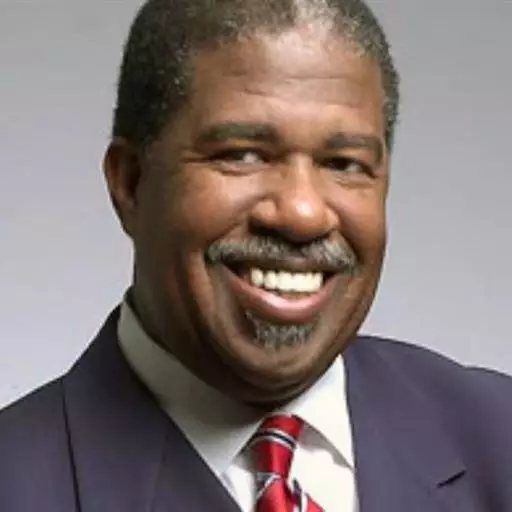
The Great Mystery: Christ and the Church
Ephesians 5 reveals that marriage is not the final destination; it is an illustration of Christ and the church. Before Christ can rule our homes, He must rule our hearts. The deeper question is not only what kind of spouse we are, but what kind of relationship we have with Jesus.
Dr. Bernie Miller: There is no way anything or anyone can separate you from the love of God. There's nothing that you can do to separate yourself from the love of God. It is a done deal, it's sealed by the Holy Spirit of God, and we are sealed until the day of redemption.
New Covenant Fellowship Church in-person worship, Sunday mornings at 10:30, 1326 North Moore Road in Chattanooga. New Covenant Fellowship Church, a place for every race. All things are possible with Jesus.
From New Covenant Fellowship Church, this is All Things Are Possible. Worship with us on Sunday mornings at 10:30, where you'll enjoy great music and solid teaching from the Bible. We're on North Moore Road in Chattanooga. Directions and details are at ncf.church. We are a place for every race. Now, here's this week's message.
A little boy came to his dad after church and said, "Daddy," and his dad said, "What?" The boy said, "What does it mean when a pastor takes off his watch and puts it on the pulpit?" He said, "Absolutely nothing. It's just a prop, it's not a promise."
A preacher's watch isn't a promise, it's just a prop. People have spent centuries trying to find and trying to solve some great mysteries, like who built Stonehenge? Where is Atlantis? Why is there one Tupperware lid with no matching bowl?
And the other thing that's the most mysterious in our house is the missing sock. It disappears in the dryer. I don't know if there must be a giant sucking sound in that dryer that just gets my socks. My wife has to go looking for it and she says, "Honey, I think I know where it is. It's down in that dryer." And sure enough, it sucked it in, and she gets it out.
But Paul says there's a mystery greater than all of those, not because it can't be found, but because it could never have been discovered without God revealing it to us. The great and greatest mystery isn't about pyramids, isn't about UFOs, it's not about Stonehenge, it's not about Atlantis, and it's not about Tupperware or the missing sock.
No, the greatest mystery isn't that or even about why your spouse says, "I'm fine," when you know that means they are not fine. I don't know how many of you all understand that by now. Oh, you all don't want to tell on yourselves. Okay, that's all right.
Well, I'm going to raise my hand and I'm telling. You know, "How you doing, honey?" "I'm fine," and I know, wait a minute, I've done something. I get into trouble every now and then, but she gives me grace and mercy, and I thank God for that. Over 33 years! We're getting ready to celebrate again in August. August the 15th, that's our anniversary.
And the Chicago Mass Choir happened to be coming to town. What about that? They only had a couple of dates and they had that date and they had another date the next day after that. And I said we want that date because we don't want them having to come here on Sunday because I know when you all get out of here on Sunday, you all are gone. So I said we may be able to catch them here on Saturday, you know, that would be fine on the 15th.
But the great mystery is marriage isn't the destination. Marriage is an illustration of Christ and the church. And the Bible talks about that in verse 32. It talks about the great mystery. I'm going to get to that at the end, but in Paul's message to the Ephesians, he's revealing a mystery of Christ and his church.
Marriage is the earthly picture of the mystery. Christ and his church are the heavenly reality of it. And when you hear me talking about husbands and wives and church and all that, you need to take it not literally in some cases. He's just using it as an illustration to show you the connection between Christ and his church, not necessarily the marriages that we are involved with.
So Christ and his church is really a heavenly reality. And so today, we're going to look at three things: the call, the covering, and also the church. I'm going to spend a little bit more time with the church at the end simply because a lot of folks don't understand how most churches operate or how the Bible says most churches ought to operate.
And some of them are democratic in nature. They ask for people to vote. I haven't seen that in the Bible anywhere. So we don't vote about anything here. We have a consensus among the elders and the deacons, and we normally get together about things, and if there's unanimity of spirit, then if there's something that I need to present to the congregation, I will.
But if there is one particular deacon or elder that has a check in their spirit, I don't bring it to you because I know that there would be that percentage of people in the congregation that probably won't go along with it either. And so rather than causing a division, I wait until there's unanimity of spirit. When there's unanimity of spirit, then I will bring certain things to the church.
But Paul, he starts out with the call in Ephesians 5:22. He says, "Wives, be subject to your own husbands as to the Lord." Now, when you see that word "subject," you know, immediately you have a negative connotation, and it's not negative at all. To be subject means to arrange under voluntarily, placing oneself under authority, the authority of someone, and to cooperate with God's established order.
God has established a order, and this is the order that he has established in his church. And it doesn't mean inferiority, not at all. Ephesians says believers are to be subject to one another. So I'm subject to the deacons and to the elders and also to each one of you.
I mean, because if you hear something about me negative in the street and I'm going over here, you know, "I saw your pastor, he was coming out of the bar and he was drinking and stuff, sloppy drunk too." "Is that your pastor?" "No, he ain't my pastor." I'd say no too, you know. But I don't put myself in those compromising positions and I try to keep away from foolishness.
But the word "submission" is coupled with "as to the Lord." So "as to the Lord," it's an act of worship toward Jesus before it's toward your husband. It's toward Jesus first. You bow to him, you surrender to him. That's who you're surrendering to. You're doing whatever you do, wives, for your husbands, you're doing it as if you're doing it to Christ and as if you're doing it for Christ.
And guys, I've got to tell you something. If you want your prayers answered, you've got to treat them in the right way. Because if not, the Bible says don't even come to pray. God says, "Because I'm not hearing it because you are not living with your wife in an understanding way."
The church obeys Christ because he's Lord. Marriage reflects our relationship. At first, reading that verse of scripture, you think this verse is just about marriage, but verse 32 says Paul writes, "No, he reveals the greatest mystery of all." And we'll look at it in a minute.
But marriage is the earthly picture, Christ and his church are the heavenly reality of it. Marriage reflects Christ and his church. Before Christ can rule our homes, however, he has to rule our hearts. And if he's not ruling our hearts, there's no way he's going to rule the home because a home, husband's not listening to God, the wife's not listening to God, kids are not listening to God and not even listening to their parents because they see their parents are not listening to God.
And so the whole family is just confused. It's just confusion everywhere. But when Christ comes into someone's heart, things are put in order. The marriage reflects Christ and his church. And before Christ can do anything, he's got to rule our hearts.
Every believer has been called into submission to Christ. Now, submission isn't weakness. When we submit to Christ, do you know what that means? It means that I'm worshipping God. That's what it means. I'm worshipping him. When I submit to him, I'm really submitting to him because I'm worshipping him. It's an attitude of worship because I recognize that he's greater than I am and I recognize his authority over me as a child of God.
Next, the covering. Ephesians 5:23. It says, "For the husband is the head of the wife as Christ also is the head of the church, He Himself being the Savior of the body." Now, immediately when you see that word "head of the wife," "Ain't no man going to be the head of me, I am the head."
You know, let me explain to you what the head means. It means authority, it means responsibility. As the pastor of the church here, yes, I'm the head man of the church so to speak, God is head of me. But it means authority and responsibility.
So I have a responsibility. Paul doesn't mean dictatorship. He means leadership. He's describing the sacrifice of Christ who died for the church to be the Savior of the body and the head of man. Now here is what Corinthians says. It says that Christ is the head of man, man is the head of woman, but then God is the head of Christ.
"Whoa, wait a minute. God is the head of Christ?" Yeah, read it in Ephesians chapter 11, first Corinthians 11:3. There's a divine order. And when the divine order is disordered in any kind of way, people are not doing what they're supposed to be doing, then there's chaos.
You can see chaos now. I mean, it's all over the place. People just want to do their thing and not be submitted to God and his authority as head. He's head over everything. You say, "Well, you know, what about sinners?" He's head of them too. But they're not in the church. No, but he's head over all.
He's head over everything that's living. All things come into submission to Christ Jesus as head over all things. The word "head" is authority and responsibility. And so I'm glad that Christ is the head of man, and I'm glad that God is the head of Christ because it gives me a divine order. It's not something that you should say "I ain't." No, don't have that kind of attitude.
Because if you have that attitude, then what you're saying to God is "You ain't going to be my head." Well, then who's going to? You know, let me tell you what head meant in the New Testament. It means a covering of protection.
In other words, I'm going to take a bullet for my wife. Now, some of you guys may be ain't that strong in love, but I'm in love with that woman there. And anybody going to hurt her, they've got to come through me first. And God is saying to us, "If anybody comes after you, you are my bride. They've got to come through me before they get to you, but they ain't going to get to you if they've got to come through me because I'm not going to let them get to you."
And so, you know, when you think about a head, you think about a covering and in the Old Testament, in the New Testament rather, it talked about women covering their heads. And people take that all out of context. What was happening was prostitutes would shave their heads.
And what Paul was saying, "Women, cover your heads so that no one will know that you were a prostitute." So he had all the women cover their heads. It was basically trying to keep them in a safe space. But a lot of people take that out of context and they start preaching some nonsense. "Oh yeah, you've got to have your head covered and put stuff over your head when you walk into the church." Oh no.
My wife's coming any kind of way she wants to, but she honors God. You know, if she wants to wear a covering over her head, that's her, she can do that. But she'll ask me first before she walks out the door, "How I look, honey?" And if I don't give her the right answer, she ain't walking out of the house like that.
Same thing for me. I say, "Hey honey, what do you think?" "Mmm-mmm." "What about this?" "Mmm-mmm." "What about?" "Mmm-mmm." Then she'll go in and then she'll pull something and she'll say, "Well, what about?" "Oh, well, that's a great idea, honey. I mean, I love that, that's great." I do what she likes, and do what I like, you know, because if she doesn't like it, what am I doing it for?
A divine order is what God is talking about. There's a balance between authority and sacrifice. Jesus didn't become head by demanding his rights. He became head by sacrificing his life. The cross defines biblical leadership. Christ's covering is never oppressive. It is always protective. He covers us with grace, righteousness, forgiveness, security, and love.
You know, it's just like parents. I remember when Zach was younger and when it was raining or something, you know what Madeleine would do? If I didn't have anything available, she'd find something to make sure Zach didn't get wet.
And parents do that for their kids. They take off something if there's rain, they cover them so that they'll get wet so that they won't have to get wet. And so that's kind of a picture of what Christ does for us. We take off our own coat to cover our child and walk in the rain getting soaked so that they don't have to. Why? Because of our protective love.
Protective love makes sacrifices. That's what Jesus did. He took the storm of sin so that God could cover us under his protective wings of refuge and grace so that we don't have to face the storm of our sin. The head never tells the body to do something the head isn't willing to endure. Jesus endured the crown of thorns before he asked us to pick up our cross and carry it daily.
Next, the church. Ephesians 5:24. "But as the church is subject to Christ, so also the wives ought to be to their husbands in everything." Now, I don't know how things go in your house, but you know, we know how to get order. It's very simple. I die to myself.
What? Yeah. I do a lot of that. You know why I do a lot of dying? Because I know when there's a death, there's a resurrection. So whenever I die to something, God's going to raise something out of that. When there is humility, you know what God's going to do? He said, "Humble yourself under God's mighty hand and he will exalt you at the proper time."
But see, sometimes folks they want to exalt themselves and it's not the proper time. You need to die to yourself and let God lift you up when he wants to lift you up. Don't try to make yourself, "Yeah, I'm the boss." No, God is the head of man. That means Christ is your head.
And you submit to all things to make him look good. I mean, you know, there are times and I want to say something different, but then the Holy Spirit says, "You better not say that. You crazy? You trying to get silence and it's going to be chilly if you say that now. So I want you to know it's going to be real chilly in here. You won't need no air conditioning in the heat because it's going to be chilly in your house without air."
Because Mama's going to be so chilled that, you know, you're going to feel it. And then you won't think about the heat outside, it's going to be chilly in your house. And so I try my best to honor what God has asked me to do.
But the church means the called-out ones. It's not a building but redeemed people who have been called out of darkness into his marvelous light. And so Paul reminds us that the church exists because Christ chose us, Christ cleansed us, and then Christ called us into the family.
Subject to Christ means we joyfully follow Christ because we know his heart. Obedience grows from relationship. You don't obey your boss just because he's your boss, but you obey your boss because of the relationship. He has a relationship with the owner or his manager or whatever and you know that if you don't have a good relationship with them, your day may not be a good day.
And so you think about that. Wait a minute, you've got this paycheck coming in and you want to say that to that boss? Do you really want to do that? And you know, I had to zip my lip a lot of times when I was working and doing some things and really zip my lip in relationship with my wife because you know, it's all going to mess up stuff.
And I just, you know, things are worth dying for. I just go to my knees and die for that because number one, I ask myself, "Is this really worth this?" And the answer normally is, "No, it's not."
You know, it's like this guy. He saw this skunk jumping over his dog, playing with his dog, jumping over him and everything. He said, "Man, why don't you do something about that skunk jumping over on your dog?" He said, "It ain't worth the stink." And there's some things it just ain't worth the stink. "Sorry, it just ain't worth the stink."
The church obeys God because the church belongs to God in Christ. The church is Christ's visible testimony on earth. Every time believers gather, the world should see a glimpse of Jesus in us. All will know we're his church by our love that we have for one another.
Now, let me jump into verse 32, the great mystery. It's great. But what is he talking about? He says he's talking with reference to Christ and the church. And I thought about that and I looked at the other cross-references: 1 Peter 2 and also another in Acts 2.
1 Peter 2 describes who the church is. Acts 2 demonstrates what the church does. Peter gives the church its identity and in Acts, Luke basically gives the church its activity.
So a man visited a church because of the sign that was outside and the sign said, "We're a friendly church." And he was looking for a friendly church. And so he went into what he thought was a friendly church. But when he walked in, nobody shook his hand, nobody spoke with him, nobody even smiled at him.
I don't know anybody walking in this place doesn't get a handshake, a hug, or a smile because you're going to get that before you even walk through the door because they're going to see you and be smiling and glad that you got in here, glad that you pulled into the driveway, I mean parked in the parking lot, and they're glad to see you.
But the guy was shocked and he said, "I hate to see an unfriendly church if this is a friendly church." Sometimes people think the church is a building or an hour on Sunday morning. The church isn't defined by its steeple, it's defined by its people.
And I was going to have a steeple on our building until I asked the architect, "How much is it going to cost?" He said, "It's going to cost you $30,000, and that's not for the labor to put it up there." I said, "We don't need a steeple."
And so my wife said, "Honey, why don't you put a cross on the front of the church?" I said, "Okay." I went to the superintendent who was overseeing the building and I said, "My wife wants a cross on the front of the church and I do too, because it's cheaper."
We got it up there. And I tell you, I didn't spend $32,000 for no steeple because you've got to get up and clean that thing after a while. No, I ain't doing it. Not at all.
Luke answers the question and what activities did the first church do? And so Luke kind of gives us the answer to that question in Acts chapter 2, verse 42. It says, "They were continually devoting themselves to the apostles' teaching and to fellowship and to the breaking of bread and prayer."
And I love that verse of scripture because people wonder, "Well, why do you give them free fellowship meals?" and it comes straight out of scripture. Because this is what they did with the early church. And there was something about the breaking of bread and people coming together and eating together and that kind of thing because you can talk with one another, talk to one another, and discover something about another person when you're sitting at the round table.
And that's what I love about those round tables is because you can look at everyone that's sitting at the table and exchange conversations with them and we love that fellowship time because the fellowship meal, people discover things about themselves.
But one of the things that it says here is they devoted themselves to the apostles' teaching, meaning they persisted, they refused to quit doing that. This wasn't an occasional CME attendance. Christmas, Mother's Day, Easter. That's the CME for the uninitiated.
It wasn't that kind of occasional attendance, although I love the people that come for Christmas and Mother's Day and Easter. Come back! It was a continual commitment to do this. They devoted themselves to four things: one, the apostles' teaching and the doctrine that they taught was first.
Some people spend hours watching YouTube videos about five secrets that some doctor says that we want to know and I really don't think I really need to know that because if he tells me this, then I'm going to think, "Do I have something?" So I just don't go with what the doctor's secrets say, I just go to my doctor. I've got to, every six months I go to her and say, "Am I okay?" "Yeah." I go to my other doctor, "Am I okay?" "Yeah, you're okay."
The truth is this: a healthy church is built on biblical truth. The word "breaking of bread," the word "fellowship" is where we get our word "koinonia," the Greek word "koinonia," and they used to have a ministers' group called the Koinonia, and it means fellowship and it means sharing life's burdens, sharing resources, and it means sharing Christ as well. It means all of that.
January, I've discovered, is full of devoted gym memberships. February is full of empty treadmills. How many of you all know that? I know you all have got a gym membership and, "I'm going to lose these pounds if it's the last thing I do." Look, don't worry about it.
Before you spend your money, ask God, "God, am I going to be faithful in this? Or am I just blowing money?" You know, my wife, when we used to take the kids out or grandkids and Zach on trips and things, we took them down to Disney, something or other down there in Florida. I don't like to plug them, but anyway, this is for the sake of the illustration.
And we took them there and man, those young'uns, we made them sit down as we went through this guy telling us about how we could have a timeshare. And they said if you sit here for the timeshare, we'll give you tickets and yeah.
And so the kids were squirming after hour one, you know. "Granddad," "Yeah," "Mama," "Yeah," "Can we go?" "Wait a minute." And so they're trying to coerce us into doing something and we know we don't want to do that.
And so we said finally, my wife after the third person came, she said, "So are you the closer?" Because she said no to two other people and she said, "Are you the closer?" And so the guy laughed and so he finally just left and the first guy came back and they said, "Here's your stuff to get into Disney or whatever to do the rides and all that stuff."
But for us as believers, we are committed to one another, and commitment is easy until life gets busy. And people want to make us do stuff we don't want to do. And you know what, don't let nobody make you do anything that your spirit tells you you don't need to do.
The early church wasn't interested in convenience. They were devoted to the breaking of bread. Meals created fellowships. That included meals together and also the Lord's Supper as well. Communion remembers our redemption.
And the other thing it says there is prayer. They prayed together. Prayer wasn't optional, it was essential. And before, many of you know this, before COVID, we would always have an altar call during the prayer time. We'd all come down here to the altar and pray.
And then COVID came and then we all started separating because they said, "Now you've got to have that safe distance," and I'm thinking, "Well, we all breathing the stuff in the sanctuary," but we have these filters still that filter the air in here, thank God we still have that. So any contaminants that come through here, it's being filtered and filtering the air and getting it all clean for us, which I appreciate.
But I missed that. And when Steve was talking about praying, you know, I almost had the urge to get up and say, "Wait, just come down here now, let's pray." And you know, I think I'm going to do that after this message because we need to pray together. Because some of you have some things, not that you've got to tell somebody about it, but to come and link hands and knowing that we're being prayed for and prayed with.
I mean, it's amazing what prayer does. I've seen things happen in my life personally and my wife's life and the church's life that I knew the only way it happened was because of prayer. "Somebody prayed for me," and I'm glad that someone prayed for me. Prayer was essential.
Next, verse 43. It says, "Everyone kept feeling a sense of awe, and many wonders and signs were taking place through the apostles. And all those who had believed were together and had all things in common; and they began selling their property and possessions and were sharing them with all as anyone might have need."
Let me break some things down to you. "Awe" means reverence of God's presence. "Together" is unity, not uniformity. "All things in common" meaning they had a shared purpose. This wasn't communism or forced socialism, but common-ism. They had something in common with one another, and we have something in common with each other. We belong to Jesus Christ, so we have a common-ism, not communism and not socialism.
We help our members. We help those who give. If you give to our church and you have a history of giving and you need something, we will help you out. If you are not a giver and you are an attender, sometimes we will help you out.
But it has to be something that we pray about, and I have a one-time gift that I can give out because I have the authority to give a one-time blessing to someone who is in need. And I don't give it out frivolously. I mean, it better be important. Because before I use the church's funds, I'll find my own pocket empty before I do that.
And so, we have a way of meeting needs in our church and I love it when people have a need. A lot of churches, they have these committees, benevolence committee, and then they come before the church at the church monthly meeting. We don't have no monthly meetings. We don't have no quarterly meetings. We don't have any meetings.
We come and meet on Sunday, we meet when you all come to eat on the first Sunday. None of those meetings ever worked out well for me. It just seemed to be one of those kinds of things when people want to gripe. And it became a griping session. And I'm thinking, "Well, why aren't you praying? Why you bringing that here? You haven't prayed about that?"
And so we don't have those meetings because there's nothing in the Bible that says that the church met quarterly or monthly. And when I was at one church, they would have to sit before everybody, would have to hear the business because they would have to take the business records and put it in a little log there. "Oh, we gave so-and-so x amount of dollars to pay their rent."
Really? You want to put everybody's business out in the street? And that's pretty much what they did. And I felt embarrassed for some people. I'm thinking, "I'm not going to do that like that." So we have, you don't know who the people are on the benevolence committee. And that's great because I'm not the one.
Some people give me a, "Pastor, thank you for that." I said, "I'm not the one." "Oh, you're not?" "No. Well, I saw your name on the check." "Well, yeah, I'm the one that signed the checks, but I'm not the one that makes the decisions."
That's the benevolence committee, and they pray about everybody that asks for something. And if they think that they need to take care of it, then they will. And I love that fact. But there was awe and reverence among them. And they didn't have no government coercion. If there were some needs, they had a generous church. The church was generous, and I think our church is very generous in a lot of ways.
Some of you don't know this, but we extend grace to Child Evangelism Fellowship. They meet here every year, they've been meeting here for the last couple of years. And we feed their kids who are going out and they're witnessing in the neighborhood and they're going to the schools down the street and also the elementary.
And here's what happened this past time: 52 kids gave their lives to Christ because of them. And all we did was feed the kids and gave them a place to operate out of. And that's what we're here for. This is why we operate. We operate to help other people because other people helped us when we needed help.
And am I going to turn my back on other ministries that they need? No, I'm not going to do that. And just so happen those kids got saved because they had a place where they could operate out of. And I heard a lot of talking and chatter and Faye came by my office door when I was here and she said, "Pastor, you want a hamburger?" Man, she tempted me, but I said, "No Faye, I think Madeleine is fixing me something at the house."
I didn't tell her all that, but I'm telling her now that's why I didn't want to turn you down because I didn't want any, I just wanted to go home and eat with my woman. But I smelled them burgers cooking, man, and I tell you, my stomach started to growl and I said, "Now shut up down there."
Just imagine this: telling somebody in church, a struggling brother or sister, "Take whatever is in my garage." Someone asked, "Even the fishing boat?" "Now let's not get carried away," the guy said.
The early church held possessions loosely, though, because they held Christ tightly. They weren't compelled by law, they were moved by love. Their love for one another replaced selfishness. That's what happens when two people marry. Our love for God transforms our hearts to serve one another because of the spirit of Christ who's in us.
Verse 46. It says, "Day by day continuing with one mind in the temple, and breaking bread from house to house, they were taking their meals together with gladness and sincerity of heart, praising God and having favor with all the people. And the Lord was adding to their number day by day those who were being saved."
Day by day. Christianity wasn't confined to Sunday. Their worship was daily, either in the temple or in other people's homes, either a large public display of worship or a small private worship and fellowship. Church fellowship isn't just standing by the coffee table out front.
Flo asked me for that, I guess about five or seven years ago. She says, "Pastor, we need to have some coffee at the church. I think we need to have some coffee." And I said no. And she said, "Oh, okay."
Well, you know, I was thinking to myself at the time, I'm thinking, "So who's going to make the coffee every Sunday? Somebody's going to have to labor to do that." In my mind, because I'm an administrator-type mind, I'm trying to put the pieces together and I'm thinking, "Well, who's going to make this coffee? Flo?" You was. See, and I knew you were.
And see, Flo's on the prayer team, she takes care of the prayer for us. But I wanted it to be done in an easier way. And so seven years later, I'm at my doctor's office and in Dr. Kopperman's office, there was the machine there and I got me some coffee and I said, "Oh, this is pretty nice. I like that."
And so I came home and I looked up that coffee maker and I ordered it. I said, "Here's the deal, now we can do this because nobody has to worry about fixing the coffee. You can get as much as you want or as little as you want, and it's free." I know you all like that part of it. And I like it too. Why not? Some people like to have that shot of coffee and I don't mind that, I just didn't want a lot of people having to fool around with it.
And so we cut out all your labor, and thank God for my main man Carlos, he takes care of that and make sure the water's in there or the Keurig, he'll make sure that there's water in there for the coffee.
But it's fellowship around a common something. And that's where I see a lot of people stop. They get the coffee and they start chatting, but you know, let's go deeper than that. "Oh, I love your attire, that's a nice tie," or "Where'd you get that blouse? I like that blouse."
Let's ask some things like, "You need prayer? How's everything going with you? Is everything okay? Can I pray for you about anything?" Have we asked those kinds of personal questions to see what's happening other than, "Oh, you know, it's hot outside"?
But biblical worship is laughing together, praying together, and asking questions about another person and seeing if they need prayer. It's carrying one another's burdens as you stand by the coffee maker. "Gladness" means overflowing joy. "Sincerity of heart" means purity and no hidden motives.
"Having favor with all the people." Well, what a line to know that the people were fascinated with the church. And you know what those folks will be doing that we fed this week? They'll be talking about our church. They'll be telling people that they come in contact with, "You know, that church over there, New Covenant, they fed us some juicy hamburgers, man. It was nice, it was good, had all the fixings with it, and the lady was so nice, she came and helped us."
They talk about that because we fed them and because we do the small things that God asks us to do. Which reminds me of why, in the Old Testament, things went haywire certainly because the people who were affluent and who could, they were cheap. They wouldn't help poor people.
And God told them, "Help the poor people in your community, in your fellowship," and they wouldn't. You know what happened? Sodom and Gomorrah happened. Because if you are disobedient in one area where God gives you a command, then you're going to be disobedient in every other area that God has commanded you.
Because if you are disobedient in this little thing, you'll be disobedient in much. Because you'll start making excuses as to why you won't do that. "Well, nothing happened to me the last time I didn't follow God, I'm not going to do this now." Well, yeah, then the next time you find yourself over in Erlanger or Memorial or Parkridge, hoping that somebody comes over and visits you.
And God says, "Oh, I've got your attention now? Yeah." Well, if you read Corinthians, Paul said this is why some of you all are sick because they were taking the Lord's Supper in an unworthy manner. And they weren't praying, they weren't getting cleansed before they did that.
And Paul says you've got all this foolishness going on around you, you all are biting at one another and all these egos and what have you. And so God says that's why some of you all are sick and that's why some of you all are dead.
Folks, day by day, they were fellowshipping together, carrying one another's burdens as they stood by one another, eating together. Praising God was a lifestyle. What happened when we do the ministry that God wants us to do? The Lord adds to the church daily.
It's the Lord that builds the house, it's not us, it's not any programs. Do you know how GriefShare started? It started because some member needed to have some closure in their grief and they discovered GriefShare. And so once I realized that an embryo had been born, I'm thinking, "Well, how we going to feed this embryo?" Because you know, embryos, babies when they're at birth, they want to eat.
And so I wanted to find out, all I needed to find out about GriefShare, "Well, what do we need to have? We need to have workbooks?" Okay, let's go further than that. "Why don't we, people that are coming from other churches, they're getting this so they came up with the bright idea, 'Well, Pastor, let's train them on how to lead at their church.'"
Brilliant! I said, "Okay, well, what we need? Oh, we need to buy the books." But you know what? We've never charged anyone for a book. And those books are expensive. But you know what happened? Someone had a heart for that ministry and gave us resources, and they still give us a little something.
And resources come in. I look at who they're giving to, and people give to GriefShare. They drop a little something in an envelope even to me when they are giving me a thank-you card and some of them, all of them are giving it to the church, not necessarily to me.
And I give it to the church and we put it back in the kitty so that we can buy leaders' guides for those who want to go and take it to their church after they go through the training that Deborah has, and they go through that training, and then we give them 10 books to take with them so that they can start their small group.
But after 10, it's on you. You own it now. But we give them, we gift them 10 books. And now it has grown exponentially. It's amazing how many people have been blessed by that. And my whole thing is about charging people. If people are grieving, why in the world would you want to charge them some more money after they've already spent more money than they had on a funeral? It didn't make any sense to me, Brother Sam. It just didn't make any sense.
Because I remember when my mom passed, I didn't have the money that I needed. And a friend of mine, he said, "What do you need?" And I said, "I need this." They said, "You got it. Now God bless you and don't you ever need and don't call me again."
Because that's how people are that love God and love Jesus Christ and love one another. I mean, this person, a member of our church, and they found out about it and they wanted to help and they did. And I was blown away by it. And so I'm always in a giving mood, sharing whatever, however, wherever there's a need because people have always taken care of me.
And this church wouldn't be here without someone taking care of us and being very generous to us. And I thank God for them. They've gone on to be with the Lord, but God used them mightily during that time. And I thank God for the other ministry that we have.
You know, we have those ministries, but the programs, we didn't start a program, God started it. It's a difference. And when he starts something, he finds the people to make it run. And I don't have to go out and ask nobody to volunteer. People started popping up saying, "Pastor, we got this," and they've got it.
And I thank God for them. Celebrate Recovery, same thing. "Pastor, we want..." You know what our team is doing? They are now going all around the area in Tennessee training other people to lead Celebrate Recovery because we're the only African American-led church that has it in the area. And training people. Hallelujah for that!
And they do it with their own gas. They've never asked me, "Pastor, I need some gas money." If they did, I'd certainly give it to them. I'd say, "Here's the credit card, go fill it up," but they've never once asked because they were giving as unto the Lord.
The message that they lived matched them. People respected what they saw. That's why the word went around town. Praising God was a lifestyle. What happened when we do ministry that God wants us to do? The Lord adds people to his church when we're doing the ministry God wants us to do.
A lot of people that come to GriefShare and Celebrate Recovery, they're not members of our church. Some of them come and they are guests every now and then, and I appreciate that, I love that. But they don't have to do that. We don't tell them, "Well, if you go to GriefShare, you've got to be a member of the church." No. You're coming for help, and we want to help you.
No clever programs, it was all the Lord. The question for the church is not what kind of spouse is the church? The deeper question is what kind of relationship do we have with Christ as members of the body of Christ and his church?
What kind of relationship do you have? I was talking to my wife this morning about she loves fireplaces and we have a ton of wood out in the side there. Every now and then, we'll light that thing. But it's something about wood when it's cured. That wood out there is waiting to get in the fireplace.
But it's one thing about fire. You need more than one log if you're going to be there for a while. And that's how it is with the body of Christ. Each member, you represent a log in the fire of God's spirit.
And when we come together, there ought to be that oneness and that warmth that we have because we're members of the same body, we're members of Christ's church. We are the members that God selected and chose to be in his family. So why can't we be nice to one another? We ought to be because we're members of the same body, the body of Christ.
A single log burns for a while, but many logs burn brightest together. God never intended for Christians to live as isolated embers. My wife, she was deeply touched because she's sensitive, as I am, to the folks who can't come in person because of whatever the illness is. And she prays about them and she thinks about them and she reaches out to a lot of people on our behalf. And I thank God for that.
But we wish that everyone who could, but a lot of people can't make it. But God has placed all of us together so the world would see the fire of his presence wherever we go.
As we come to a close, you all stand up please. All things are possible from New Covenant Fellowship Church. Join us in person for worship on Sunday mornings at 10:30 or online at 11:00. Connect with us anytime at ncf.church or on social media at NCF Chattanooga. We are a place for every race. All things, oh yes, all things are possible with Jesus.
If you believe God will never put more on you than you can bear, pretty soon you're going to be like a cellphone at one percent. Some of our lives are at one percent spiritually and emotionally. If you don't know Jesus, you cannot be charged.
New Covenant Fellowship Church in-person worship, Sunday mornings at 10:30, 1326 North Moore Road in Chattanooga. New Covenant Fellowship Church, a place for every race.
Featured Offer
"How can I sleep peacefully at night with all that a pastor, husband, and dad has to face?" In this energetic volume, Bernie Miller answers this question that so many family and spiritual leaders face. Our best rest comes when we understand why God identifies Himself to His children as Jehovah Raah ("the Lord is my Shepherd") and Jehovah Jireh ("the Lord is my Provider"). Through a deep and delightful analysis of God's holy names, Miller plumbs the depths of all that the Good Shepherd promises—and proves—to be for His sheep. Looking for comfort and confidence grounded in eternal truth? Enjoy this encouraging study of God's manifestations to His children!
Past Episodes
Featured Offer
"How can I sleep peacefully at night with all that a pastor, husband, and dad has to face?" In this energetic volume, Bernie Miller answers this question that so many family and spiritual leaders face. Our best rest comes when we understand why God identifies Himself to His children as Jehovah Raah ("the Lord is my Shepherd") and Jehovah Jireh ("the Lord is my Provider"). Through a deep and delightful analysis of God's holy names, Miller plumbs the depths of all that the Good Shepherd promises—and proves—to be for His sheep. Looking for comfort and confidence grounded in eternal truth? Enjoy this encouraging study of God's manifestations to His children!
About All Things Are Possible
Dr. Miller's messages are centered on how to faithfully live an effective Christian life. The Bible says in Colosians 2:6 "Therefore as you have received Christ Jesus the Lord, so walk in Him." It's only when we walk in obedience to God that we discover "All Things Are Possible."
About Dr. Bernie Miller
Dr. Bernie Miller received Christ as his Savior in 1988 while vice president of artist and repertoire for SONY/EPIC Records in New York. He worked with 52 artist including Michael Jackson, The Jacksons and Luther Vandross.
As a songwriter, he has written several songs, for which he has received both gold and platinum record awards. One of his songs, "I Can't Stand the Rain," (recorded by Tina Turner and Missy Elliott), was one of John Lennon's favorite songs, according to Yoko Ono, Billboard Magazine and a book by May Pang.
Dr. Miller is heavily involved in the community. He's vice-chairman of the Chattanooga Housing Authority; serves on the boards of the Blood Assurance Foundation, UTC's College of Medicine Institutional Review Board and the Hamilton County Regional Health Council. He has received numerous awards from the Mayor, Hamilton County Commissioners and the State Senate. He is an ordained Baptist minister and a graduate of Covington Theological Seminary. He was formerly the senior announcer for Moody radio's WMBW for seven years. While working with Moody, he hosted "Gospel Praise," a nationally syndicated program that was heard on the Moody Broadcasting Network. Dr. Miller and his wife Madelene have a son named Zachary.
NCF was formed in June 1996 by God and founded by twenty-five born again believers from various cultures and denominations. We have steadily grown since then which is why we built our new 700 seat worship center situated on an 18 acre campus at 1326 N. Moore Rd.
Our purpose originates from Ephes. 2:8-10 "For by grace you have been saved through faith; and that not of yourselves, it is the gift of God; not as a result of works, that no one should boast. For we are His workmanship, created in Christ Jesus for good works, which God prepared beforehand, that we should walk in them."
Individuals are invited to enter into a relationship with Jesus that is both real and personal and is characterized by faith, obedience, and commitment. The result of this relationship is "good works." God prepared a plan for each of us in advance. The surest way to know if we are walking in that plan is to study the Bible.
Contact All Things Are Possible with Dr. Bernie Miller
http://www.ncf.church/
New Covenant Fellowship Church
1326 N. Moore Rd.
Chattanooga, TN 37411
1-423-899-8001
