
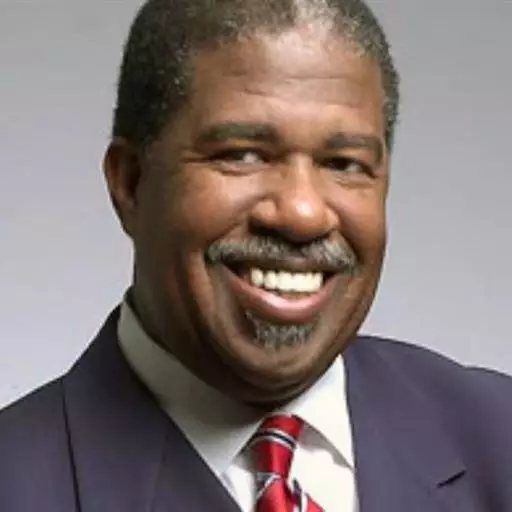
Palm Sunday Praise


Palm Sunday is a powerful picture of both celebration and contradiction. As Jesus entered Jerusalem, the crowd erupted in public praise, honoring Him before He even arrived. Yet beneath the celebration was a deeper tension. While some expressed genuine devotion, others missed who He truly was. In the home of Mary, we see private appreciation, a personal, sacrificial response to Jesus. But in the city, we also see personal agitation. Jesus wept over Jerusalem, knowing they celebrated Him outwardly while missing Him inwardly. He then cleansed the temple, restoring what had been compromised. Palm Sunday reminds us that it’s possible to praise Jesus publicly while resisting Him personally. The call is not just to celebrate Him, but to be transformed by Him.
Dr. Bernie Miller: You know you watch the bottom line. You know you don't write a check if you don't have the money in the bank. Well, if you watch the bottom line in your bank, why don't you watch the bottom line in your spiritual life? You ought to be ready for Christ's coming. That ought to be just as important to you as the bottom line in your bank.
Guest (Male): New Covenant Fellowship Church, in-person worship Sunday mornings at 10:30, 1326 North Moore Road in Chattanooga. New Covenant Fellowship Church, a place for every race.
Guest (Male): Now, from New Covenant Fellowship Church, All Things Are Possible. At New Covenant, we show and grow people in Christ and glorify God. It's what we believe. To say it another way, if you're looking to worship in a place without having to worry about what to wear or a plate being passed for money, come to New Covenant.
Every Sunday morning at 10:30, you'll enjoy great music and solid teaching from the Bible. You'll find us on North Moore Road in Chattanooga with directions right to our door at ncf.church. New Covenant Fellowship Church, we are a place for every race. And here's Pastor Bernie Miller.
Dr. Bernie Miller: A question I'd like to ask you today: have you ever noticed how some people praise differently depending on the situation? At a football game, you'll hear them screaming, high-fiving, spilling nachos on people sitting around them that they don't even know, and fellowshipping with strangers. But in church, they are more reserved.
But they yelled at the TV for hours watching March Madness. Some people praise God like they're at a golf tournament. Have you ever wondered how can a guy be talking about the golf tournament when the golfer is at the first hole and he's able to see that guy and the guy that's at the eighth hole? Well, it's because they're not out there. They're in a little trailer with a TV.
And here's what you probably heard them say. "Yeah, that's a nice shot, and he should be able to get that if it's just... I think he may be able to make this shot." And that's how some people praise God. "You know, that was a nice Jesus song." Others act like TSA agents at worship. "Sir, raising your hand looks suspicious. Please don't do that."
But on Palm Sunday, nobody held back. It was a loud, unquenchable kind of Holy Ghost praise. But some in the crowd that are shouting now at that particular time are only days away from silence and sleeping in the Garden of Gethsemane when Jesus asked them to pray. Gethsemane means "place of pressing."
Palm Sunday praise shows us three truths: one, public adoration; two, private appreciation; and third, personal agitation. You say, "Wait a minute, who's agitated?" You're going to find out. Jesus had to restore the temple's purity in the agitation part of that. In the first, the adoration, he was praised loudly. The second, private appreciation, he wept deeply, but he was also treated so kindly.
Before I go into the beginning verses of that, let me just set it up for you so you'll know where we are. Jesus has just finished telling a parable about a nobleman who gave ten minas—that's money—to each of his three servants. The first doubled his, the second came back with half, so it wasn't too bad. The third, though, he hid his in a handkerchief.
And Jesus asked this question in Luke chapter 19, verse 26. He said, "I tell you that to everyone who has, more shall be given. But from the one who does not have, even what he does have shall be taken away. But these enemies of mine who did not want me to reign over them, bring them here and slay them in my presence."
I wonder sometimes how we worship God. You don't need music to worship God; you need a spirit to worship God. And if the spirit is not right, the music ain't going to help you at all because it's really about the spirit in the person. And then after this, Jesus told his disciples to go into the village.
He said, "You're going to go into the village, you're going to see something tied up, a donkey, a colt tied up. And I want you to ask the owner when he asks you why you're taking my colt, tell them that the Lord has need of it." And that's all that he told them. And that's what they did. And they did that, and the man gave them what he wanted.
After that, we see the public adoration with loud emotional praise. In verse 37, it says, "As soon as he was approaching near the descent of the Mount of Olives, the whole crowd of the disciples began to praise God joyfully with a"—not a golf voice. It was like they were at the football game and Tennessee was winning.
They praised God joyfully with a loud voice for all the miracles which they had seen, shouting, "Blessed is the King who comes in the name of the Lord, peace in heaven and glory in the highest." He's hearing this praise coming his way, and Jesus' last week on earth was known as Passion Week because he would suffer humiliation so that we could be forgiven for our sins and our trespasses.
I've told you this before, but a trespass is something that you know it tells you not to do and you do it anyway. It's like the sign on the yard that says, "Do not cross my yard," and you crossed it anyway because it's a shortcut. That's a trespass. You knew better, and you did it anyway. It's kind of like my mom; she told me one time, "Do not," and what did I do? I did it.
Whenever somebody tells you don't do something, I don't know what it is about the nature. You know, whenever they say, "Don't do it," you go, "Well, why not? I mean, what's the problem?" They never tell you why not; they just say don't do it. And I was a curious young little lad, and I got the licks on my bottom to prove it. They don't do that much anymore nowadays, but my mama, she believed in punishment the old-fashioned way.
She'd have me go get my own switch. And y'all say, "What's a switch?" I'm glad y'all didn't grow up when I was. I mean, my mama, and if I come in there with something small, that would just agitate the stew out of her. She'd go out and get the one that she wanted, and then I knew I was in trouble.
But the whole week is set in Zechariah chapter 9, which talks about the fulfillment of a prophecy about this whole thing that's happening now with the palms and the shouting and all of that. Because in Zechariah 9, it says 450 to 500 years before his birth, it says that they would rejoice greatly and they would shout. Jerusalem would shout, and they would say, "Your King comes to you, righteous and victorious, riding on a donkey." This was back in Zechariah chapter 9.
Praise wasn't quiet; it wasn't reserved. It was overflowing with joyful gladness because of God's mighty works. And the word "works," the Greek word is "dunamis," D-U-N-A-M-I-S. It's where we get our English word "dynamite" from. But see, if you don't know how to handle dynamite, it's destructive. You're going to blow yourself up and everybody else around you.
But when God uses this word, it's constructive. So, he doesn't blow things up to destroy them; he uses it constructively. He uses the whole works business to construct something. That's why the Bible says God is always at work in us. That's the dunamis; he's always constructing something in us. Why? Because we are born for that reason.
He didn't save us just to stay the way we were. How many of you have ever bought a used car that was dirty, filthy on the inside? Did you keep riding it like that? Come on now, be honest. I mean, am I talking to myself? You mean you rode around in that filth? You didn't ride around in that filth; you spent money for that, and you probably told them, "You better clean this thing up, or I'm not going to buy it."
I don't buy nothing used that ain't clean. And God, when he takes us into his family, he does some cleaning. He cleans us up, and it's a constructive kind of way. The word "miracles" are constructive acts of God's undeniable power on display. They were praising based on what they'd seen. They praised him before he reached Jerusalem, which leads me to put this little thing together here: praise doesn't wait for arrival. It erupts in the approach.
Some of you probably rode here and you probably wasn't even thinking about worshipping God. But see, when we come, we come with—meaning my wife and I—we listen to praise music and what have you, and we come ready to worship. I mean, I'm down there; I don't have any seats up here to sit up on the throne. I'm down there with everybody else.
It's because I didn't come here to be on display. I came to work, but I also came to worship. I've got to worship before I get to work. And I'm worshipping before I get out the house, but I'm also worshipping in my mind and what have you on my way here, and I'm worshipping when everybody else is worshipping.
Praise doesn't wait for arrival; it erupts in the approach. It's like when you've been waiting for food in a restaurant. You've been waiting for the food to arrive, and you've been very impatient about it. The server says, "Your order will be out shortly. Sorry for the wait, sorry for the delay. Got a lot of people in there, you know. It's Palm Sunday."
Then later, the server says, "Your food is finally on the way," and suddenly you get spiritual about it. You start praising God before the food hits the table. "Hallelujah! Lord, I see it in the spirit, and I receive it before it gets here." The Mount of Olives is not just where praise happened; it's also where Gethsemane is located.
The same mountain of praise becomes a place of pressure because that's what Gethsemane means. It means "pressure." And Jesus showed us that when he was there praying. He was under tremendous pressure. And if you can praise him on the way down the mountain, you ought to have enough faith to pray in the garden of grief.
I've seen some people here hit hard by grief. But you know what? I remember one of our members; they told me when I walked in a few weeks ago, a parent was going through some difficult things. And I played something on my morning program and they told me, "I heard that song you played, and I had to stop and pull over." That's how you use praise.
I mean, when you're praising God and something hits you, you just can't do business as usual. Some people stop and pull over on the side and others do other things. But you know, if you're in the Garden of Gethsemane now, you're under a lot of pressure. I'm hoping that God will help you relieve some of that pressure because you need to come to the mountain of praise before it becomes too much pressure for you. If you can praise him on the way down the mountain, you'll have faith to pray in the garden of grief.
It reminds me of people at a concert. Some people go to a concert; they don't know nothing about the group. They only know about one song, and that's the song they go for. They pay $30 to hear them live to sing that one song when they don't know nothing about them. But they pay for that one song, and you've already paid twice. You got the CD, you know, but they don't know anything about the person. They don't know about the background or anything else; they just know, "I like that song."
And when you hear them coming to town, you're probably going to praise them and you're in concert, but you only know one song. You don't know the singer's history. But when their song comes on, they start singing it. That's Palm Sunday. And by the way, we've got somebody coming here in August. Now look, don't tell nobody. This is a secret. Okay, this is just between us. Bobby, muted. No, I'm just kidding.
I just got to tell you, they're coming. It's going to be good. I have a history with them, so does Brother Sam. You probably have a history with them. I ain't going to tell you who it is. I'm just going to tell you you better get your ticket early because some of the folks around town who haven't been to a concert recently, they're going to want to come to this one because, you know, it's a 30th anniversary for our church. 30 years we've been alive here. Hallelujah!
Yep, I started the church when I was 15. Y'all not believing none of that, are you? Okay, Chicago Mass is coming in the house! I couldn't keep it to myself, and look, don't tell nobody. And they're coming, if you know my wife's and my anniversary, you'll know that date pretty well. I ain't telling you. You have to figure that one out.
But Jesus, back to my message. They praised Jesus for his power, but they misunderstood his purpose. They didn't know any history about Jesus except that he was performing miracles and healing people. The night before Palm Sunday, Jesus accepted a dinner invitation where he enjoys private and personal appreciation.
John chapter 12, verse 1 says, "Jesus therefore, six days before the Passover, came to Bethany where Lazarus was, whom Jesus had raised from the dead. So they made him a supper there, and Martha was serving, but Lazarus was one of those reclining at the table with him. Mary then took a pound of very costly perfume of pure nard and anointed the feet of Jesus and wiped his feet with her hair. And the house was filled with the fragrance of the perfume."
"But Judas Iscariot, one of his disciples who was intending to betray him, said, 'Why was this perfume not sold for 300 denarii and given to the poor?'" Now he said this not because he was concerned about the poor but because he was a thief. And as he had the money box, he used to pilfer what was put into it.
Can you imagine that man? It's kind of like—we don't have that here, I just want y'all to know that. We don't pass the plates and all that. When you're leaving, we have baskets when you come in. If you can drop something in when you leave, you can drop something in, or you can go online.
But you know, I have a friend—not in this city—he don't allow certain people, his deacons, to count the offering. Because on Easter Sunday, they had a whole bunch of people. It was crowded. I mean, they couldn't find a parking spot. And so he saw people putting money in when they passed it down the row and everything. But when the deacons got back there, this particular one, the basket was hardly full.
And he was saying, "Wait a minute, this is the same amount that's in there during regular worship. What happened to the other half?" And so he changed the people who were counting and he changed deacons too.
You know, I have trusting people in our church, and we don't worry about all that because I trust people. I trust the people, and there's only one person in here that counts the money. And then they then give it to our CFO, and then they then put it together and then they put it in the safe in the closet and they lock up the safe. I got a key to the closet, but I don't know the combination to the safe. I don't want to know. I don't need to know. And you know, we don't have any money change hanging around because, you know, I got a little change in my pocket, and I don't need your change, and I don't need church's change. I can hit my wife up for some change if she's in a good mood. I'll get some.
Next verse, let me go on because I'm about ready to start some trouble here. I won't be able to get home. "Therefore Jesus said, 'Let her alone so that she may keep it for the day of my burial. For you always have the poor with you, but you do not always have me.'" The large crowd of the Jews then learned that he was there, and they came not for Jesus' sake only—but watch—but that they might also see Lazarus, whom he raised from the dead.
But the chief priests planned to put Lazarus to death also. They're going to kill him again! He's been brought back—I mean, these guys are crazy—because on account of Lazarus, many of the Jews were going away and believing in Jesus. Said they're going to kill the proof. But Jesus, if he raised him once, he can raise him again! I mean, I don't understand the logic in this. Have you ever noticed how people react differently to something valuable?
This guy brought his wife some very expensive perfume for their anniversary. This wasn't the "spray it and pray it lasts all day" kind. This was the "one drop equals your whole paycheck" kind. She opened it, got so excited, then did something unexpected. She sprayed it all over the house! She loved it so much—curtains, couch, and even the dog smelled like it. The dog smelled like Chanel number heaven.
Her husband panicked. "Baby, what are you doing? That cost $300! Wait, what are you doing?" She said, "But I love it so much, I didn't want to use it sparingly." When you really appreciate Jesus, you don't measure your worship. You pour it all on him.
Judas saw waste; Mary saw worship. She saw worth. Judas calculated the price, but Mary—Mary's appreciation didn't ask, "How little can I give?" It asked, "What does Jesus deserve?" Some people spray a little. Mary broke the bottle because when you know who Jesus is, you know he's worth it. That's why you don't dab a little on him. You dump it all on Jesus.
True worship isn't convenient; it's costly. You don't sprinkle your love on Jesus; you pour it all on him. He said, "Love me with all of your heart." He didn't say a little bit of it; he said all of it. You don't sprinkle just a little love on God—at least I don't. The question is: are you giving leftovers or are you giving everything?
Some people, they pay everything else before God, and if they got something left over, then they give him some. I learned a lesson on that a long time ago. I learned to give him something first, no matter how little, no matter how large. You know, it doesn't matter about if you give a tenth or one percent and all that; it really begins in the heart.
You know, and if you can't give ten, then you give one percent. Give whatever you can give. It's not about the amount. Jesus said you give out of a heart of love. "Give, and it shall be given to you, good measure, pressed down, shaken together, running over shall men give into your bosom."
And so, you know, my giving comes from God who gave it to me. So he puts it in my hand and then he tells me, "All right, now you take care of me, your bills. You got a little extra? Take your wife out, treat her to something. Let her buy something nice. You want something? Buy something. You taken care of your responsibilities."
And you know, when you get your income tax check, you know, that's not play money. Go out and play? No, wait a minute, how did you get that? You know, God made it available to you. Think about him. Think about how you're going to treat him, and then how you're going to pay off something. I mean, we're in debt up to our eyeballs, some of us. And you know, God sometimes blesses us so we can get out of debt, because he set us free from the law of sin and death and debt. And he wants us to have—and that's why we have the ministry that we have here, helping you get out of debt. And I thank God so much for for all the things.
True worship isn't convenient; it's costly, I said before. And you just don't sprinkle a little love on Jesus; I give him all. Luke chapter 19, verse 39: "Some of the Pharisees in the crowd said to him, 'Teacher, rebuke your disciples.'" But Jesus answered, "I tell you, if these become silent, the stones will cry out." I don't want no rock crying out in my place.
When he approached Jerusalem, he saw the city and he wept over it, saying, "If you had known in this day, even you, the things which make for peace! But now they have been hidden from your eyes." You know, because they didn't come with an inquisitive spirit. He wept—it doesn't mean a tear rolling down his cheek. It's a kind of loud sobbing that he was experiencing. It was a gut-level crying.
"Peace" means wholeness; it means reconciliation with Jesus and with God. Jesus saw what they couldn't have. It's kind of like a parent watching their child make a decision they know is going to hurt them. And I tell you, there's some times when my wife and I—our son is 28 now; his birthday was last week—and he makes decisions. And sometimes we want to step in there and say, "No!" And then we say, "No, we've got to stay out of his business." Now if he asks, we'll give him some advice.
But sometimes, you know, I pose it in a certain way. I know he's watching today, I'm talking to you. He's in Cincinnati watching because it's Palm Sunday, so he wants to know what I'm going to say today. But you know, there's times when we want to say something because we know that what he's doing is going to hurt him.
But you know, it's kind of like the kids are like a bow and arrow. You pull the string back with the arrow in it, you point it toward God, and you let it go. And you have to leave it up to God to direct it to the bullseye. You can't be God. I mean, you can try. You see it's going to hurt them, and it hurts you to your heart when you see your kids hurt.
But you know, we sometimes we get on this guilt trip. "Oh, if I'd have done this, they wouldn't have gotten hurt. If I'd have done—" No, no, you can't stop stuff. Forgive yourself. You can't stop stuff. You gave them birth and you gave them life, you let them go, and you pray for them as they're out there.
You know why I'm here as a pastor? Because my mama told me that when I was born out of wedlock, that her mama prayed for me. She said, "I pray that God will use this boy for his glory." And man, I went all around the barn to get to God. I mean, I just did so many crazy, ridiculous things. My mom even heard about it when I was in Chicago, and I'm talking to her, she said, "What are you doing up there?" I said, "Who you know up here?"
She said, "I know God. She said, I know you're doing something." I said, "Well, why you say that?" She said, "I got it in my spirit." I said, "Oh my goodness, okay." And I said, "Well, mama, I'm okay." She said, "No, you're not. I can tell in your voice." But she didn't try to tell me what to do; she just said, "I'm praying for you."
When she said that, I knew I was up the creek because if she's praying for me, her grandmama prayed for me. And then I got to be a pastor. And my mama said, "You know, my mama prayed for you that God would use you. Never thought he'd do it in this way, but he did." And I thank God for praying parents. And those of you that are parents, keep praying, you know. Don't ever give up. And get off this guilt trip. When they make mistakes, you couldn't have stopped it.
You know, Adam, he had free will. He didn't have to eat the fruit. But see, he was so in love with this woman! He was blinded by love, man, I tell you. He couldn't see nothing but that woman giving him something, and she was chomping on it, whatever it was. And she was saying, "Here, try it out."
I'm not mad with my son when he makes bad decisions; I'm just heartbroken because I knew there was a better decision. But he needs to grow up into that maturity. And so do your kids, you know. You can't control them. You can do your best, but you can't control them. When you tell them do not trespass, you know they're going to do? Trespass.
So stop telling them "Don't trespass." Tell them, "Go on out there and jump off the bridge." They ain't going to do it. You know why? They know better because you told them to do it. What if you told them, "Now don't go out there and jump off the bridge?" They go to the first one, "Where's Market Street?"
They celebrate the moment, these people. But Jesus mourned their misunderstanding. They shouted with excitement, but he sobbed with insight. They saw a King; he saw their condition. They welcomed him to the city but wouldn't surrender to him their hearts.
Next: personal agitation as he restores the temple's purity and priority. Luke 19:45: "Jesus entered the temple and began to drive out those who were selling, saying to them, 'It is written, and my house shall be a house of prayer, but you have made it into a robber's den.'"
Have you ever had one of those moments when something just pushed you too far? You walk into the house—when you got young kids or teenagers—you walk into the house, everything was clean when you left. But now, dirty dishes are in the sink, shoes are strewn everywhere across the floor when you're walking in, you're tripping over everything. You don't say a word at first. You just stand there looking, processing, calculating, "How did this happen?"
That's Jesus as he walks into his Father's house and sees money changers turning worship into a business. He's righteously angry and agitated. God's humble Savior starts flipping over tables because religion had become profitable instead of powerful. "To drive out" means to forcibly expel with authority. "This is my Father's house!"
"Den of thieves" means a hideout for corruption. They waved palms outside, but the purpose was polluted on the inside. They honored Jesus with celebration but dishonored him with compromise. Jesus walked in there, and he's going, "What?" Do we just publicly celebrate, or do we want a personal transformation?
I want a personal transformation. I want all of my family members who don't know the Lord to be saved, and I want those who are saved to grow up in the word. I mean, I can't point no finger at nobody else because, man, I was looney tunes until Jesus found me! And I was still a little looney even afterwards, you know. It took a little while before he gave me some wisdom, and that's how we all are.
Everybody's not saved and "I'm saved and sanctified" like you don't never do nothing wrong. But Jesus—he was in the temple, Luke 19:47. "He was teaching daily in the temple, but the chief priests and scribes and the leading men among the people were trying to destroy him." Jesus! "And they could not find anything that they might do, for all the people were hanging on every word he said."
Can you imagine that? Daily teaching, teaching daily. It means persistence. Truth doesn't hide itself; it shows up repeatedly, even when it's not welcome. I know sometimes I'm preaching some stuff y'all don't welcome, but that's all right. I've done my assignment. Yes, sir. I know God's word is not going to return to him void. Amen! You can get mad at me, but just don't come to the house and throw rocks and stuff.
The temple, like the church, is a battleground of truth. And every time truth goes out, there is warfare. The Bible says the devil tries to steal the word that's been sown in anybody who's willing to hear the word. Do you know there's spiritual warfare going on online and right now as I'm preaching? Because the devil wants to tell you, "No, no, no, no, no, no!"
And you'll start getting notifications on your cell phone, and you hadn't heard from that person in years. But now all of a sudden, you're hearing the word of God, and now you're distracted. Don't fall for it! Don't fall for it. Despite the danger, Jesus is accessible to the spiritually hungry but confrontational to the status quo.
Luke gives us a snapshot of three forces at once: Jesus was persistently teaching truth in the temple, and leaders were consistently plotting, but the people listened closely and continuously to his every word because their souls, like cell phone batteries, were on one percent and they knew it, and they wanted to be charged. That's why they're there listening intently.
Palm Sunday was about three things: how Jesus was praised loudly, why he wept deeply, and how he restored the temple's purity. Palms are easy to wave when life is going your way. But just a few days later: no palms, no parade, no crowd.
He's in the Garden of Gethsemane with his disciples, whom he told to stay awake while he went to pray, and they're snoozing. Then he prayed this wonderful prayer in Luke 22 and 44. Being in agony, his sweat became like drops of blood. I mean, this is intense! Then he prayed, "If it is possible, let this cup pass from me; yet not my will, but your will be done."
Jesus, under pressure, experienced blood, sweat, and tears—and that's not the group. He suffered it for us. Some of you came in closed in by stones, by shame, by silence. And God is trying to get you from behind that closure. God's calling you like Lazarus. He's saying, "Come forth!"
Some of you have had this shield up. You come to church, you're almost there, you've been circling the runway, but you haven't come down yet to get saved, but you keep coming. Today is the day. Come from behind that wall of silence, shame, stones. If I told you my story, you'd be wondering how am I still alive? In fact, I'm wondering about that myself. I've been in some places I wasn't supposed to come out alive.
God's calling you like Lazarus. He's saying, "Come forth!" The stone in front of your heart can be rolled away with a word from God. You can be set free from the law of sin and death with a word from God. God doesn't just bless what we hold; he moves through what we break.
Remember the alabaster box? It was broken. You know, there's something about the alabaster box: you can't open it. Just look it up; you can't open it. In order to get in it, you got to break it! God's been trying to get your attention, and he's been breaking things up all around you just to let you know, "I've been trying to get in!"
What else does he have to break? Does he have to break your heart? He'll do it. I mean, I had to—my heart was broken so many times till finally I understood God was trying to get rid of the heart of stone so that it could become a heart of flesh, so that I would listen to him and obey his word.
Like the alabaster box, it couldn't be opened; it had to be broken. Today, some of you are here today and you need to be broken. Don't put on airs; just go ahead and weep on the inside, let it out, because you know you've been holding it too long. Some of you, you just think you can handle it, but you can't handle this. This is God's business. Spiritual things—that's God's business, and you need some spiritual help, and you need it today.
And I want you to respond to God's word. If he's telling you to do something, do it! We're going to have an altar call and people are going to come down. If God is telling you you need to be baptized because you've not been baptized since you've been saved, then you need to do that. If you've never given your life to Christ, you need to do that.
You've been going church for so long, you've become a church person, but you haven't become a Christian yet. You can tell people quickly, "Oh yeah, I go to so-and-so church," but you can't tell nobody when you got saved. I mean, you don't even need to know the exact date, but what happened in your life to make you want to give your life to Christ?
There had to be—I can tell you what I was doing when I got saved. I mean, I don't know the exact date, but I know what happened. I got on my knees that day, that morning before I went to work, and gave my life to Christ. And when I came from work, the people that used to come over to my apartment, the bellman downstairs says, "Mr. Miller, so-and-so is here." I said, "No, I don't want to see them." I said, "I don't want to see them anytime. So if they come back again, I'm not here." I said, "You don't have to lie, just tell them I don't want to see you."
And I—because something happened on the inside. When something happens on the inside, something changes. Your habits change! In the Old Testament, God had a temple for his people. In the New Testament, he has a people for his temple. I am now the temple of the Holy Spirit of God. That's who's living in me! Now is that same God living in you? If not, please—I beg you—give your life to Christ.
Because you don't know what day you're going to take your last breath. I mean, we think we're going to be around until—how many years you think you're going to be alive? You know you got a date that you're not going to make that date. So you might as well give your life to Christ now because you may not even have an opportunity to live that long.
Some people were in an accident on their way somewhere and, bam, accident. Girl in Chicago walking—somebody out of the blue shoots her in the back. I mean, she is minding her business! You don't know what's going to happen. So if you don't know Jesus, and if he took your life today, you don't know if you're going to go to heaven, I'm telling you, you need to give your life to Christ.
Because if not, what you're saying is, "I'm going to beat the odds." No, you can't beat the odds because life and death is in his hands. And if you want your life to be changed, it can be, and God can use you mightily.
Guest (Male): All things are possible from New Covenant Fellowship Church. Connect with us anytime at ncf.church/connect or on social media at ncfchattanooga. Worship with us every Sunday morning at 10:30, in person at 1326 North Moore Road in Chattanooga or online at ncf.church/messages. New Covenant Fellowship Church, a place for every race.
Dr. Bernie Miller: Hate the sin, but don't let the hatred for the sin carry over to the sinner. They can be forgiven of that sin because that's why Jesus came. And you just need to, you know, take care of your own house.
Guest (Male): New Covenant Fellowship Church, in-person worship Sunday mornings at 10:30, 1326 North Moore Road in Chattanooga. New Covenant Fellowship Church, a place for every race.
Featured Offer

"How can I sleep peacefully at night with all that a pastor, husband, and dad has to face?" In this energetic volume, Bernie Miller answers this question that so many family and spiritual leaders face. Our best rest comes when we understand why God identifies Himself to His children as Jehovah Raah ("the Lord is my Shepherd") and Jehovah Jireh ("the Lord is my Provider"). Through a deep and delightful analysis of God's holy names, Miller plumbs the depths of all that the Good Shepherd promises—and proves—to be for His sheep. Looking for comfort and confidence grounded in eternal truth? Enjoy this encouraging study of God's manifestations to His children!
Past Episodes


Featured Offer
"How can I sleep peacefully at night with all that a pastor, husband, and dad has to face?" In this energetic volume, Bernie Miller answers this question that so many family and spiritual leaders face. Our best rest comes when we understand why God identifies Himself to His children as Jehovah Raah ("the Lord is my Shepherd") and Jehovah Jireh ("the Lord is my Provider"). Through a deep and delightful analysis of God's holy names, Miller plumbs the depths of all that the Good Shepherd promises—and proves—to be for His sheep. Looking for comfort and confidence grounded in eternal truth? Enjoy this encouraging study of God's manifestations to His children!
About All Things Are Possible
Dr. Miller's messages are centered on how to faithfully live an effective Christian life. The Bible says in Colosians 2:6 "Therefore as you have received Christ Jesus the Lord, so walk in Him." It's only when we walk in obedience to God that we discover "All Things Are Possible."
About Dr. Bernie Miller
Dr. Bernie Miller received Christ as his Savior in 1988 while vice president of artist and repertoire for SONY/EPIC Records in New York. He worked with 52 artist including Michael Jackson, The Jacksons and Luther Vandross.
As a songwriter, he has written several songs, for which he has received both gold and platinum record awards. One of his songs, "I Can't Stand the Rain," (recorded by Tina Turner and Missy Elliott), was one of John Lennon's favorite songs, according to Yoko Ono, Billboard Magazine and a book by May Pang.
Dr. Miller is heavily involved in the community. He's vice-chairman of the Chattanooga Housing Authority; serves on the boards of the Blood Assurance Foundation, UTC's College of Medicine Institutional Review Board and the Hamilton County Regional Health Council. He has received numerous awards from the Mayor, Hamilton County Commissioners and the State Senate. He is an ordained Baptist minister and a graduate of Covington Theological Seminary. He was formerly the senior announcer for Moody radio's WMBW for seven years. While working with Moody, he hosted "Gospel Praise," a nationally syndicated program that was heard on the Moody Broadcasting Network. Dr. Miller and his wife Madelene have a son named Zachary.
NCF was formed in June 1996 by God and founded by twenty-five born again believers from various cultures and denominations. We have steadily grown since then which is why we built our new 700 seat worship center situated on an 18 acre campus at 1326 N. Moore Rd.
Our purpose originates from Ephes. 2:8-10 "For by grace you have been saved through faith; and that not of yourselves, it is the gift of God; not as a result of works, that no one should boast. For we are His workmanship, created in Christ Jesus for good works, which God prepared beforehand, that we should walk in them."
Individuals are invited to enter into a relationship with Jesus that is both real and personal and is characterized by faith, obedience, and commitment. The result of this relationship is "good works." God prepared a plan for each of us in advance. The surest way to know if we are walking in that plan is to study the Bible.
Contact All Things Are Possible with Dr. Bernie Miller
http://www.ncf.church/
New Covenant Fellowship Church
1326 N. Moore Rd.
Chattanooga, TN 37411
1-423-899-8001