
Just a Moment (#2 of 2)


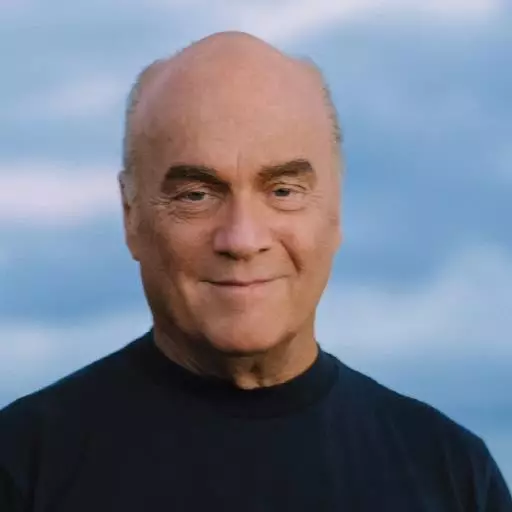
Some have their own life plan, and they ask God to bless it. Pastor Greg Laurie says God has a plan for our lives and He invites us to step up to that higher level! Wednesday on A NEW BEGINNING, Pastor Greg brings us an eye-opening look at the joy in our journey with God.
Greg Laurie: You want to know God's will? Don't be afraid. Just say not by will, but yours be done.
Guest (Male): Coming up today on A New Beginning, Pastor Greg Laurie explains the joy and satisfaction that come when we commit to doing God's will, God's way.
Greg Laurie: Oh, I don't want to say your will be done. What? Well, it won't be what I want. It'll be harder. Wait. What if it's better than anything you ever even imagined? Never be afraid to commit an unknown future to a known God.
Guest (Male): Campers who like to go out into the boondocks to find a remote campsite sometimes fly drones to look ahead at what's around the next bend. They can make better decisions with a bird's eye view. Well, we'll make better decisions about our lives if we trust God's view, the one that sees around the bend and well into the future. Today on A New Beginning, Pastor Greg Laurie brings some encouraging insights about the will of God and how it'll keep us from being spiritually stranded in the boondocks.
Greg Laurie: Let's turn in our Bibles to James chapter 4. The title of my message, just a moment. The brevity of life is what James is addressing now, and the importance of living your life in the will of God. James 4, let's read a few verses. I'm reading 13 to 17 from the New Living Translation. James says, look here. You who say today or tomorrow we're going to go to a certain town and stay there a year. We'll do business there and make a profit. How do you know what your life is going to be like tomorrow?
Asks James. Your life is like the morning fog. It's here for a little while, then it's gone. What you want to say is if the Lord wants us to, we will live and do this or that. Otherwise, you're boasting about your own pretentious plans, and all such boasting is evil. Remember, James says, it is a sin to know what you want to do and not do it. I'll stop there. Point number one, if you're taking notes, life is short. Live it well. Life is short. Live it well. James asks in verse 14, how do you know what your life will be like tomorrow?
Really what James is asking is what kind of life are you living? What are you doing with this precious gift called life right now? It's an important question to answer because life goes by so quickly. Bringing me to point number two, we should plan for the future, but put God's will first. Yes, plan for the future, but put God's will first. The problem with these folks James is addressing is they're believers, but they're living like practical atheists. And by that I mean they're not factoring God into anything. They're just making their plans and forgetting about God.
So James is reminding them, hey, keep God's will at the forefront of your life. To know God's will, point number three, you need to present yourself to God each and every day. This is based on Romans 12:1 and 2 where Paul says, I urge you therefore, brothers, by the mercies of God that you present your bodies, and that means your total being, your personality, your will, your future, present your bodies to God as a living sacrifice, holy and acceptable, which is your reasonable service, which means it's the logical thing to do. Then he says, don't be conformed to this world, but be transformed by the renewing of your mind that you may know what is the good and acceptable and perfect will of God.
You want to know God's will? Present yourself to him. And don't be conformed to this world, but be transformed by the renewing of your mind. How do you do that? Fill it with scripture. And then you'll know God's will. And what does he say about God's will? The good and acceptable will of God. God's will is good. God's will is perfect. Now sometimes the Lord says no to us. When we want to do something, he says no. Oh, God's out to ruin my fun. No, no. The Bible says no good thing will he withhold from those that walk uprightly.
So if God says no, it's for your own good. Now you're going to have to live a few years to figure that out maybe because you say, oh, no, I know better than God. Well, you'll see. Don't learn the hard way. Maybe learn from the experience of others. No plan of ours can improve on the will of God. We only see bits and pieces. He sees the whole. He sees the past, the present, and the future in its total context as related to eternity. So don't be afraid to say not by will, but yours be done.
So here's what you need to do. You need to come to the Lord, say all right, Lord. Here's the life you've given me. Here are my plans. Here are my aspirations. Here are my dreams along with my weaknesses and shortcomings and sins. I offer it all to you because I believe your plans are better than mine. That's really what this is all about. So I heard the story about a father and his son who went to the hardware store. The dad was finishing this purchase and and the owner of the hardware store pointed to a big jar of candy right there on the counter.
And he said to the little boy, son, take some of this candy. Grab a handful. It's free. Little guy just looked up at his father. And then the hardware store owner again said, son, I told you the candy's free. Grab a handful. Take as much as you want in your hand. Again, the little boy just looks up at his father. Finally, his dad grabs a handful of candy and gives it to his son. So they get in the car and they're driving home. The father asks the son, why didn't you grab the free candy? The boy with the big smile said, because dad, your hand is bigger than mine.
All right? You think you know where I'm going with this? God's hand is bigger than ours. Oh, I don't want to say your will be done. What? Well, it won't be what I want. It'll be harder. Wait. What if it's better than anything you ever even imagined? The Bible says he is able to do abundantly above and beyond that which you could ask or think. Listen, never be afraid to commit an unknown future to a known God. He loves you. His plan for you is good. So we need to include God in all of our plans.
Look at verse 16. Otherwise, you're boasting about your own pretentious plans, and such boasting is evil. I read the other day about a 45-year-old California man who was very successful in business. He made $800 million. So he sold his business. Now he has dedicated his life to becoming physically like an 18-year-old. He has employed 30 doctors, experts. He spends millions of dollars. He is on a strict vegan diet. He applies creams every day, undergoes laser therapy, uh, gets electromagnetic pulses along with strict exercise regimen and much more. Okay? So all right, go for it, I guess.
But guess what? The length of your life is determined by God, not you. Now you can be foolish. You can make bad decisions. You don't take care of your body. You don't eat well, and you can reap the consequences of that. But Jesus said in Matthew 6:27, can all your worries add a single moment to your life? Number five, we need to give God the glory for our life and health. So whatever you've accomplished in life or whatever you're about to accomplish in life, just remember God gave it to you. There are some people that have done very well.
They might say I've done well. I've been shrewd. I've invested well. I've saved. I pivoted at the right moment and done great in life. Okay? Fantastic. But remember Deuteronomy 8:18 says, remember the Lord your God gave you the ability to produce well. Okay? So whatever you've done, that's still a gift of God. Yeah, but I worked hard. God gave you the ability to work hard. God gave you the breath in your lungs. God is giving you the beat of your heart. The Bible tells the story of King Nebuchadnezzar ruling Babylon, which at that moment historically was the most powerful kingdom on the face of the earth.
And it was a magnificent kingdom for sure. There before Nebuchadnezzar was all the glory of this community and city he had built. One day he went out to his royal balcony and he surveyed his mighty kingdom. Before him rose the hanging gardens of Babylon, one of the ancient world's seven wonders stretched around Babylon where these huge walls that were 360 ft high, 87 ft thick, wide enough for six chariots to ride abreast. He's checking it all out and he says, check out this great city that I've built. And the Bible says before he could finish the sentence, God brought his judgment on Nebuchadnezzar.
He entered into a form of mental illness for a period of time where he literally thought he was an animal. He was on all fours. God restored his sanity, and Nebuchadnezzar turned to the Lord and believed in him. Remember, give God the glory for all that you have.
Guest (Male): Pastor Greg Laurie will have the second half of his message in just a moment.
Greg Laurie: You know, I've heard people describe a trip to Israel as seeing the Bible actually come to life. Hey everybody, Greg Laurie. And I've been to Israel many times and I've led a lot of tours, and I have to say that's absolutely true. Listen, when you're walking on the same stones that Jesus himself walked on, well that's something that's enriching to your faith. It's not just a travel experience, it actually energizes and enhances your study of the Bible. Think of it this way. It's a vacation with a purpose. And we're going to be taking a tour of Israel April 6 to 15, 2027.
You can find out more at israel.harvest.org.
Guest (Male): Step right into biblical history. Join Pastor Greg for a tour of the Holy Land April 6 through 15, 2027. Get details at israel.harvest.org. We're glad you're joining us for Pastor Greg's message today in James 4 called Just a Moment. Let's continue now.
Greg Laurie: One final point. We need to do what God has called us to do. We need to do what God has called us to do. Look at verse 17. Remember, it's sin to know what you ought to do and not do it. This is speaking of this sin of omission. In the Bible, there is a sin of commission and omission. Do you know the difference? Heard the story of a teacher that was speaking to her Sunday school class. She said, kids, today we're going to talk about sin. First of all, there's a sin of commission. Does anyone know what that is?
Little girl sitting in the front was waving her hand. Teacher said, go ahead. What is a sin of commission? She said, the sin of commission is when you do something you should not do. That's exactly right. And then the teacher asks the class, does anyone know what the sin of omission is? A little boy in the back of the room is waving his arm back and forth. Go ahead, son. What is the sin of omission? He said, the sin of omission, those are the sins you want to do, but you haven't gotten around to yet.
Not exactly. The sin of commission is what you do when you do what you shouldn't do, when you cross the line, when you break the commandment, when you fall short of the standard, which is God's glory. The sin of omission is when you know to do right and you don't do it. And I think Christians are more guilty of the sin of omission than they realize. To him that knows to do good for 17 and yet does not do it, to him it is sin. Let's take the gospel as an example. We have been commanded by Jesus to go into all the world and preach the gospel.
That's what he says. Go into all this world, preach the gospel, make disciples of all nations, baptizing them in the name of the Father, Son, and the Holy Spirit. We say, amen. Great. When's the last time you did it? When's the last time you engaged someone in a gospel conversation? Stats tell us that 95% of Christians have never led another person to Christ. 2% of churchgoers invited an unchurched person to church in the last year, 2%. I know someone, he's here right now, who has been coming here for a couple of years, and he has invited over 14 people to church with him.
I need more people like him. By the church full of people like him, we could change Orange County and Riverside, right? We could. Oh, you know, that's great. What's the last time you just invited someone to come to church with you? See, the problem for many of us is the great commission has become the great omission. Let me say something that might sound controversial, but I think it's biblical and true. It can be a sin to not share your faith with someone. Well, you're wrong, Greg. It you know, we should we should, but it's not a sin.
Hold on. To him that knows to do good and does not do it, to him it is sin. Let me illustrate. Let's say you're walking down the street and there's a house on fire and someone says, there's a child in there. Now I hope at the very least you will call 911. Maybe you'll be a hero and try to run in the burning house and save the child. But if you just kept walking, oh, first you take a picture. Got to post that on social. And you keep walking. That's irresponsible. That's almost criminal. Now we have a whole culture that needs to know God.
The Bible actually tells us that we should seek to snatch people from the flames of judgment. You say, oh gosh, Greg, you know, I don't know. I'm afraid I'll say the wrong thing or I won't have an answer to their question. Or yeah, okay. So I think you know more than you think you know. And I think you might be surprised at what will pop into your mind and out of your mouth when you take a step of faith and say, Lord, use me. In fact, you might be so good you want to take notes on yourself.
Wow, where did that come from? Well, you'd never know where it came from if you don't take the step of faith. And I suggest to you that there are times the Lord has nudged you to engage that person. You're walking along or some person sitting there on a bench all alone. They look sad and dejected. And maybe the Lord said, just go over there and tell them that they're loved by God. I don't want to do that. Why not? Well, what if they laugh at me? Yeah, well, what if they take an interest in what you 're saying?
Let me take it a step further. What if they want to hear what you have to say? What if they come to Jesus Christ? How about that? I'd rather take the risk and not have it go so well. But many times it goes better than you may think it will. And speaking of serving the Lord, I believe the Lord leads us all the time to serve him. You know, it's interesting the Bible uses different kinds of phrases over 58 times like love one another, care for one another, pray for one another, encourage one another, support one another, one another.
That's what it's all about. Here's how you know you're maturing spiritually when it stops being about you and it starts being about others. When instead of coming to a church, you don't say, what about my needs? But instead you say, I've been so blessed by God, how can I serve the Lord? And how do I serve God? I serve God by serving other people. Serving the Lord by serving them. How can I help? So when we get up here and say, you know, we could use some help in Sunday school or well, we could use some folks helping us in new convert counseling or uh, helping people find their seats or park their cars or well, we could use some help over here or there.
And you say, well, then you know, here they are, Lord, send them. And instead I should be saying, here I am, Lord, send me. Let me loop back to what I said in the beginning and we'll wrap this message up. I talked about living our lives well. They pass so quickly. You know, ancient merchants would often write the words momento mori over their accounting books. Ever heard that phrase before? Momento mori. It means think of death. Now it sounds kind of morbid. I don't want to think of death. Well, maybe you should a little bit.
The Bible says teach us to number our days that we may apply our hearts to wisdom. So it's not a morbid fascination with death, but it's an acknowledgment that it will come eventually. As I've often said, the statistics on death are quite impressive. One out of every one persons will die unless the Lord comes for us first. And I pray he does. But having said that, think about it. Now why did they write momento mori over their accounting books? Because you check out your bank balance and you say, look how much money I have saved.
Momento mori. One day you're going to give it to someone else. It's get perspective. But you just think about life in general. You know, think of the afterlife. It's not just about this life. It's about the next life too. How we're living our life, how we'll be rewarded in the afterlife for how we live in this life. These are all important things. But let me ask you this. What if this were your last day on planet Earth? Someone's name is going to be in the obituary column tomorrow. It's never going to be us, but one day it will be.
And where are you going to spend eternity? Now if you're a Christian, you don't have to be afraid because the Bible promises you'll go to heaven and you'll be in the presence of God where there is fullness of joy and pleasures forever more. But if you're not a Christian according to scripture, you will face judgment. Yes, there is a hell. And the last thing God wants is for anyone made in his image to spend eternity separated from him in this place called hell. Hell was not created for people. Hell was created for the devil, Jesus said, and his demons.
So if you're following the devil and his plan and his agenda and you end up in hell, in the end you'll have no one to blame but yourself because the gates of hell are locked from the inside. You made that choice. You made that decision, and it was a wrong one. You don't need to make that decision. This is why Christ died on the cross, you see. He died for our sin. He took the penalty we should have taken so we don't have to face it. He came to pay a debt he did not owe because we owe a debt we could not pay.
And then three days later he rose again from the dead and he's alive and he's with us right now wanting to come into your life and reveal his plan for you, which is better than your plan for yourself. He says he stands at the door of your life and he knocks. And if you'll hear his voice and open the door, he'll come in. But listen, only you can ask Christ to come into your life. I can't do that for you. Only you can open that door and say, Jesus, I want you to forgive me of my sin.
I want a relationship with you. So I want to close with an invitation for you to ask Christ to come into your life so you can know with certainty you go to heaven when you die. Let's pray. Father, I pray for every person here, every person watching and listening. If they don't know you, I pray that your Holy Spirit will convict and convince them of their need for you and that they will turn to you right here, right now. We ask this in Jesus' name. Amen.
Guest (Male): Today on A New Beginning, an important prayer from Pastor Greg Laurie for those who know they need to make a change in their relationship with God. And Pastor Greg, would you mind taking a moment right now to pray with the person listening who wants to do that very thing?
Greg Laurie: I'd be happy to do it. You know, as you've been listening to this today, maybe you've heard another voice. By that I mean, yeah, you heard me say a few things, but you heard God's voice speak to you deep in the recesses of your heart, and it suddenly dawned on you, this is what I need. Or to state it more accurately, this is who I need. I need Jesus and I want Jesus. But maybe you don't know how to make that connection. Let me help you. God is only a prayer away. He stands at the door of your heart and he knocks.
And Jesus says, if you'll hear his voice and open the door, he'll come in. Let me help you open the door so to speak of your heart as you invite Jesus to be your savior and Lord. So here's what I would like you to do. I'd like you to stop what you're doing and I want you to pray a prayer after me. I'll lead you in this prayer. And as you pray it, God will hear you. Pray this after me right now if you want Jesus Christ to come into your life. Lord Jesus, I know I am a sinner and I am sorry for my sin and I need your forgiveness right now.
Would you come into my heart, my life as savior, as God, as friend? I choose to follow you from this moment forward. Thank you for calling me and accepting me and forgiving me. In Jesus' name I pray. Amen. I know there was a relatively short prayer. Maybe you felt something as you prayed it. Maybe you felt nothing. That doesn't really matter because God's word says, these things we write to you that believe on the name of the son of God that you may know that you have eternal life. It doesn't say so you may think you have it or you may hope you have it if God's in a good mood.
No, that you can know it. And I want you to know if you pray that prayer in minute, Jesus Christ, the son of God has come into your life. So congratulations. You're now a Christian. Now continue to follow the Lord.
Guest (Male): Yeah, to help you as you follow the Lord, we'd like to send you something to help you begin to walk with the Lord. It's Pastor Greg's New Believers Bible. It'll answer many of the questions you might have and get you started off right in your new relationship with the Lord. So get in touch and ask for it. We'll send it free of charge. Call 1-800-821-3300. That's 1-800-821-3300. Or write A New Beginning box 4000 Riverside, California zip code 92514. Or go online to harvest.org and click know God. Well, Pastor Greg, let me let me read a listener comment that we recently received.
It goes, I have been a harvest partner for many years now and see the impact you've made on many people who have become Christians. I am in awe. I thank the Lord for the continued successful ministry of harvest on a daily basis. Thank you, Pastor Greg, for being used by God to change my life and redirect my paths. Your example of Christianity has been so consistent. Isn't that encouraging that she says those nice things, but also that she believes enough in this ministry to become a harvest partner? What is a harvest partner?
Greg Laurie: Well, a harvest partner is somebody that gives to our ministry on a regular basis, even on a monthly basis. And what I really appreciate about this listener, and if that person happens to be listening, let me just say to you personally, thank you so much. But what I really appreciated was when she said, I 've been doing it for years. And you know what I also want to say this to this person or any person that supports us in this way, you share in the fruit of what we are doing. There's an interesting story in the life of David where he was going against his enemy with his army.
They were tired from battle, and a bunch of them said, we just can't go into battle. And his army was already relatively small. They said, we're going to have to sit this one out. Well, the remaining soldiers went into battle. The Lord blessed and they were victorious. And when they returned with the spoils of the battle, those who had fought said, don't give any to those people that sat this out. Well, the fact is those folks who had sat it out on this occasion had fought in previous battles. And David said, hey, no. Those that tarry by the stuff, that's King James, those that hang out by our our possessions share in this as well.
And you know, the the reward, the blessing goes to all those who participate. It goes to all of us that believe in the power of the gospel. So when you give your part of the team, you're making it possible for us to reach more people with the gospel. So would you tarry by this stuff to put it in King James vernacular? Would you invest in our ministry and then we pray that you will share in the reward of what God is doing as well? As Paul said, it's fruit to your account, spiritual fruit to your account, laying up for yourself treasures in heaven.
So prayerfully consider becoming a harvest partner today.
Guest (Male): Yeah, that's right. And we can take your call right now. It's a 24/7 phone number, 1-800-821-3300. Again, 1-800-821-3300. Or write us at A New Beginning box 4000 Riverside, California 92514. Or just go online to harvest.org. Well, next time as Pastor Greg continues his study series called Walk This Way, we take a look at the eminence of the Lord's return and how we can be ready. Join us here on A New Beginning with pastor and Bible teacher Greg Laurie.
Featured Offer

Can we really know God exists? Can the Bible be trusted? Did Jesus truly rise from the dead? In the newly updated edition of I Don’t Have Enough Faith to Be an Atheist, Frank Turek and Norman Geisler examine the evidence for Christianity and show why biblical faith stands up to serious questions. Request your copy this month with your gift to Harvest Ministries.
Past Episodes
- 2007 Best of A New Beginning
- 2008 Best of A New Beginning
- 2010 Best of A New Beginning
- 2011 Best of A New Beginning
- Harvest America Specials
- Harvest Worship Band Interviews
- Heaven Studies
- High School Camp
- Hope for Hurting Hearts
- Hope from the Holy Land
- Making God Known: How to Bring People to Faith
- Marriage Specials
- Messages from the Holy Land 2012
- Mother's Day Special
- Pastor Chuck Smith Interview
- Pastors' Appreciation Event
- Post-Crusade Special
- Practical Christian Living
- Prayer Studies
- Pre-Crusade Week
- Prescription for Renewal
- Proclamation Season Launch
- Radio Crusade
- Ready or Not!
- Retro A New Beginning: Nostalgic Audio from Classic Videos
- Revelation: The Next Dimension
- Road to the Resurrection
- Romans

Video from Greg Laurie
Featured Offer
Can we really know God exists? Can the Bible be trusted? Did Jesus truly rise from the dead? In the newly updated edition of I Don’t Have Enough Faith to Be an Atheist, Frank Turek and Norman Geisler examine the evidence for Christianity and show why biblical faith stands up to serious questions. Request your copy this month with your gift to Harvest Ministries.
About A New Beginning
A New Beginning features the teaching of Greg Laurie, senior pastor of Harvest Christian Fellowship in Riverside, California. Join Pastor Greg as he teaches God's Word in a relevant, practical, and understandable way. Discover biblical insights and learn how to know God and make Him known!
About Greg Laurie
Greg Laurie is the author of over 70 books including Steve McQueen: The Salvation of an American Icon and Lost Boy amongst others. He has also produced several award-winning films including A Rush of Hope which saw millions tune in for the first-ever cinematic crusade. Greg is married to Cathe Laurie and has two sons and five grandchildren.
Contact A New Beginning with Greg Laurie
info@harvest.org
https://harvest.org/
A New Beginning
P.O. Box 4000
1-800-821-3300