
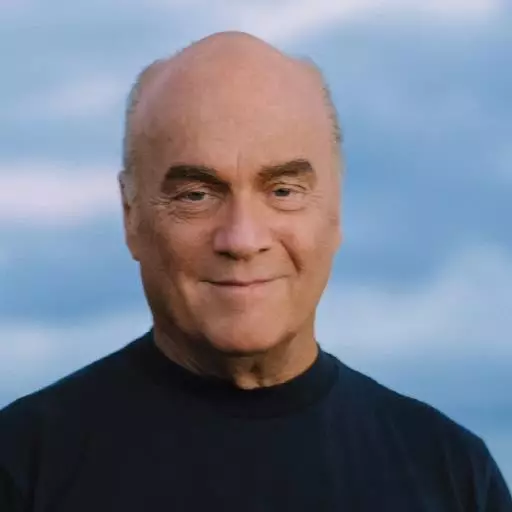
Just a Moment (#1 of 2)


Life passes by so quickly. How are we investing ourselves in life in the hereafter … life that never ends? Tuesday on A NEW BEGINNING, Pastor Greg Laurie takes us to the book of James for insights on living our lives well, living in harmony with God’s will.
Greg Laurie: What kind of life are you living? What are you doing with this precious gift called life right now?
Guest (Male): Today on A New Beginning, Pastor Greg Laurie brings us face to face with the reason we're here. We need to pause for a moment to consider just what we're living for and who we're living for.
Greg Laurie: When a person is truly coming to a relationship with Christ, it will be reflected in the way that they live. And you will want to do God's will.
Guest (Male): Many of us remember the stress of driving in an unfamiliar area before GPS. Do we turn at the next signal or the one after that? Or Or is it the one we just passed? Life got a lot simpler when our dashboard told us where to go. Today on A New Beginning, Pastor Greg Laurie points out the joy we can discover when we let God's will tell us where to go. We're thinking big picture things today as Pastor Greg takes us to James chapter 4 in his new series, Walk This Way.
Greg Laurie: One of the things that strikes me about life is how quickly it passes. You know, when you're young, doesn't it seem as though life moves at a snail's pace? I vividly remember being in elementary school, bored beyond comprehension. Just waiting, waiting for the clock to strike the right number and we got up for recess or we got out of school. It seemed like I was in elementary school for 30 years, right? Every day seemed to take forever. Now, time goes by so quickly. Weeks go by. What, it's Sunday already? What, it's the month is over already?
What, it is a new year already? A Billy Graham was once asked what the greatest surprise of his life was, and he said, the brevity of it. I think that's true. And so as life goes by so quickly, it just seems as though it's it's speeding up. It really isn't. Scientists tell us the reason life seems to go faster when you're older is because you're not having new experiences. You know, you you you get into a routine and you go to the same restaurant and you sit in the same table and you order the same thing off the menu and you come to church and you sit in the same seats.
And I know where you all sit, by the way. I know when you're not here. Oh, so and so is not here today. Where are they? Someone is in their seat. We we like routine, but when you're young, you're more open to change and new opportunities. I read an article yesterday in the paper about signs you're getting old. 2,000 adults were polled. Uh one of them was you forget people's names. Oh, that's so true, isn't it? That even happens when you're young, right? You're talking to someone, how are you? Hey, good to see you. I don't remember their name.
And you're hoping they'll use their name in a sentence. You're just waiting. Just waiting. Just say your name in some way and they don't say it. Good to see you. See you next time. Hey, you start forgetting things like that. Here's another sign of aging. You groan when you bend down. It It's just automatic. You sit down, you get up. Another sign you're getting old is when you're bending down, you wonder what else you can do while you're down there. Like it. I don't want to come down here again. So let's get it over with now.
Here's another sign of getting old. You don't know any songs in the top 10. I have to admit that may be true of me right now. Another sign of getting old is you avoid lifting things because of back concerns. By the way, this is a great way to get out of lifting things, too. I I can't. My back, you know. But seriously, I'll think if I take the other end of that sofa, am I going to pay for this later? Cuz you throw your back out, it's a situation, right? Another sign of getting old, you fall asleep in front of the TV every night.
Just last night, I was watching something. I fell asleep. Kathy says to me, Greg, are you sleeping? I'm like, no, I was. Why do we deny it? It's not a sin to sleep. Unless you sleep all day, but And here's another sign of getting old, complaining about things more. Complaining. Another sign, taking a nap every day. I I actually kind of like to do that, but that's a sign of getting older. Here's one final one. You start driving very slowly. I mean really slow. Like way too slow. Like just stop. Hurry. And you're always in a Prius.
You know it's true. It's true. I'm telling you this is totally true. There's something wrong with Prius drivers. How many of you drive a Prius? Seriously? Get out. No, don't. You probably get much better mileage than the rest of us. So congratulations on that wise car choice. And let me just say to you in closing, drive faster. No. Don't. Don't do especially if you're in the fast lane. But life passes so quickly. Job 14:1 says, how short is life? How full of trouble? We blossom like a flower and then we wither. Like a passing shadow, we quickly disappear.
Now, I know some of you who are young are thinking, oh, Greg, come on, this is a message for old people. I've got my whole life in front of me. Yes, you probably do. And I hope you do and I hope you live that life well, but you never know, right? I read a true story, a tragic story about a singer, Richard Versailles, age 63, singing at the Metropolitan Opera. He climbed up on a ladder for a scene and he was singing these lyrics, too bad you can only live so long. Then he had a heart attack and died on the stage in front of everybody.
How sad though. Too bad you can only live so long. And that's so true, too bad. But the brevity of life is what James is addressing now and the importance of living your life in the will of God. James 4, let's read a few verses. I'm reading 13 to 17 from the New Living Translation. James says, look here. You who say today or tomorrow we're going to go to a certain town and stay there a year. We'll do business there and make a profit. How do you know what your life is going to be like tomorrow?
Asks James. Your life is like the morning fog. It's here for a little while and then it's gone. What you want to say is if the Lord wants us to, we will live and do this or that. Otherwise, you're boasting about your own pretentious plans and all such boasting is evil. Remember, James says, it is a sin to know what you want to do and not do it. I'll stop there. Point number one, if you're taking notes, life is short. Live it well. Life is short. Live it well. James asked in verse 14, how do you know what your life will be like tomorrow?
Really what James is asking is, what kind of life are you living? What are you doing with this precious gift called life right now? It's an important question to answer because life goes by so quickly. Job 9 says, my life passes more swiftly than a runner. It flees away filled with tragedy. It disappears like a swift boat. You've heard of William Shatner. He played Captain Kirk in Star Trek and he made this statement a while ago, quote, I'm so not ready to die. It petrifies me. I go alone. I go to a place I don't know.
It might be painful. It might be the end. My thought is that it's the end. I become nameless and I spend a lifetime being known. And quote, someone needs to tell William Shatner that there's a God in heaven who loves him and he can know where he's going. He can go to heaven if he puts his faith in Jesus Christ and he can live long and prosper. Uh David says the same thing in Psalm 39. He says, my life is no longer than the width of my hand. An entire lifetime is just a moment to you.
Human existence is but a breath. We're merely moving shadows and are busy rushing ends and nothing. We heap up wealth for someone else to spend. And so Lord, where do I put my hope? My only hope is in you. Wow. So now James is addressing Christian business people. People who are out there working hard to make a living. Uh in this particular instance, he is talking to successful Christian business people. Those who had done quite well. He's commending them for it, but he's also reminding them to keep God at the forefront of their lives and remember that everything they've accomplished has come from the Lord because sometimes people forget about the Lord.
Bringing me to point number two, we should plan for the future but put God's will first. Yes, plan for the future but put God will first. Sometimes people may think it's unspiritual uh to plan and actually it's very spiritual to plan. Proverbs 6:6 says, take a lesson from the ants. You sluggard. Um learn from their ways and become wise. They labor hard all summer gathering food for the winter. Hey, check out the ants before you step on them. They work hard. They're always busy little ants moving big stuff around, ants getting ready for the future.
Take a lesson from the ants. You know, it seems right now that in our nation there's a trend toward laziness. Uh I think it was always there, but certainly COVID accelerated it, add a bunch of government money given to people. And a lot of people are not returning back to the workforce today. I don't know if you've noticed, but there's a lot of employment opportunities out there. It's getting hard for a lot of folks out there to find people to come in work. And we're losing that very principle our nation was built on. Our nation was built on the importance of personal responsibility, innovation, and working hard.
It's called the Protestant work ethic. It's a good thing. This is why we live in a strong and prosperous nation. If we lose it, we have problems. And the Bible tells us in Romans 12:11, never be lazy, but work hard and serve the Lord enthusiastically. So I don't know what you do for a living, but you should be the best at what you do. You should work harder than anybody else. You should get in early. You should leave a little bit later. You should work cheerfully and you should do everything you do for the glory of God, wherever it is.
God has not called everyone into so-called ministry. He hasn't called everyone to be a preacher, but he has called us all to minister and serve the Lord and give honor to God, whatever our profession is. If you're a doctor, do it for the glory of God. I'll tell you what, if I need surgery, I don't need a preacher. I need a godly surgeon who knows what he's doing. Right? Now, I may need a Christian attorney. I may need someone else in another field in building and in music and in art and in politics. We need strong believers out there to represent us well.
And so this is what we all are called to do, to work hard and to honor God. But the problem with these folks James is addressing is they're believers, but they're living like practical atheists. And by that I mean they're not factoring God into anything. They're just making their plans and forgetting about God. So James is reminding them, hey, keep God's will at the forefront of your life. Paul told the believers in Ephesus he would return to them if God wills. And then he wrote to the Corinthians, he planned another visit to them if the Lord wills.
So it's okay to make plans, but just always factoring it. This may change. We'll see what God has in mind, but if the Lord wills. Now, some people take this too far. You know, you say, hey, you want to go out to lunch after church? I don't know if the Lord wills. Well, if God speaks to you, we'll be at In-N-Out Burger, okay? And you get there, what are you going to get a burger? I don't know if the Lord wills. There's not a lot of other options here. It says In-N-Out Burger, okay? It's pretty much a burger or another variation of a burger.
But you know, you can use this sort of spiritual jargon. That's not what he's saying. The idea here is just factor God's will in whatever you do.
Guest (Male): Pastor Greg Laurie will have the second half of his message in just a moment.
Guest (Female): We really enjoy hearing when Pastor Greg's teaching and preaching touches lives.
Guest (Female): Pastor Greg, it's amazing how I all sometimes go to bed with something on my mind bothering me. And then I'll wake up, read your daily devotion, and it's on that very issue. During those times, I believe God is speaking through your words directly to me. It brings me peace, strength, and hope to start the day. Thank you so much.
Guest (Female): When we hear from you, it's not only a blessing. It also confirms that the program is making an impact. If you have a story to share, call Pastor Greg and let him know. Call 1-866-871-1144. Again, that's 866-871-1144.
Guest (Male): Well, we're in James chapter 4 today. As Pastor Greg brings his message, just a moment. Let's continue.
Greg Laurie: It should be the joy, it should be the delight, it should be the desire of every Christian to do God's will. When a person is truly converted, by that I mean when a person is truly coming to a relationship with Christ, it will be reflected in the way that they live. Starting with the repentance from sin, there'll be a humility there, a desire to pray. You'll have a new love for others that wasn't there before and you will want to do God's will. David wrote, I delight to do your will. Oh my God, do you delight to do God's will?
Here's the problem, is we think God's will isn't as good as our will. We think our plans are better than God's plans. And that's because we don't understand the Lord as we ought to. I think if you do your job well and put God first, God will bless your career. Yes, he can bless you financially. Yes, he can bless you in every way. I mean, I just think of a few companies that have put God first and look how well they've done. Take Hobby Lobby. You ever been to a Hobby Lobby? Right. So this is a Christian owned company, uh the Green family.
And they've been very successful financially. So they went and built something called the Museum of the Bible in Washington D.C. It's incredible. If you're ever in D.C., visit it. It's just amazing. They also invest in the work of a ministry and evangelism. It helped churches. They've even invested in our crusades financially and we appreciate that. That's a company that's successful and they honor God. And with their prosperity, they invested in the work of the kingdom of God. Then there's Chick-fil-A. Christian owned company. Also make a great chicken sandwich. There's always a line at Chick-fil-A. In fact, I want one right now.
But they're closed on Sunday. Not sure I love that part. But I appreciate it and I respect it. How about In-N-Out Burger, another Christian owned company, right? In fact, at the bottom of their cup, you'll notice John 3:16 is written there, but if you read it, you'll pour your coke on your lap. So just what till you're done with your coke. But I love that that they they put that verse there and and years ago when we were first starting our crusades in 1990, uh I'd become friends with Rich Snyder and he was running In-N-Out Burger.
He has since gone on to be with the Lord. But uh so we were contemplating going to a larger venue than the Pacific Amphitheater. So we were looking at Angel Stadium. And we asked, how much is it to rent Angel Stadium? Again, 1990, they said $50,000. Whoa, okay. We don't have $50,000. And that day Rich Snyder calls our office. Hey, what are you guys doing for your crusades? Is there anything I can invest in? Well, we we're reluctant to even tell him. Well, we just kind of want to go to the stadium, but it's $50,000.
He said, I'll have a check to you today. See that? They helped us get started in our stadium. You can glorify God wherever you are. Whatever field you're in, you can bring glory to God. And so this is the point that James is making is remember the factor the Lord in everything that you do. By the way, when we talk about the will of God, there are certain things in the Bible that are clearly God's will for everyone. This doesn't vary from person to person. You might want to write these verses down. Number one, it is the will of God that you are filled with the Holy Spirit each and every day.
Did you know that? That's God's will for you. Ephesians 5:17 says, don't act thoughtlessly. Understand what the will of the Lord is. Don't be drunk with wine because that will ruin your life. Instead, be filled with the Holy Spirit. And by the way, in the original language, that's a command. So God is saying, I command you to be filled with the Holy Spirit. And then also in the Greek, it speaks of something that's continuous, meaning do it over and over again. So God is saying, I command you to be filled with the Holy Spirit again and again and again.
So a great way to start your day, maybe when you're still laying in bed, you just say, Lord, fill me with the Holy Spirit today. Give me all the power that I need. Number two, God wants you to be holy and as a result sexually pure. 1 Thessalonians 4:3 says, God's will for you is to be holy. So stay away from all sexual sin. And every of you would control his own body and live in holiness and honor, not in lustful passions like the nonbelievers who do not know God. Okay. Well, what does this mean?
It's pretty clear. No premarital sex. No extramarital sex. The only sex God will bless is the union of a man and a woman in marriage. End of story. That's it. Not a man and a man. Not a woman and a woman. Uh not a man who wants to become a woman or a woman who wants to become a man. No. God's order is a man and a woman in marriage faithful to each other for life. Anything outside of that is not God's will. Here's another one. God calls each and every one of us to pray and give thanks.
1 Thessalonians 5:17 says, pray without ceasing. In everything give thanks for this is the will of God in Christ Jesus concerning you. So put God's will first in your life.
Guest (Male): Important precepts from scripture today here on A New Beginning. Pastor Greg Laurie is presenting his message called Just A Moment from our practical studies in the book of James. Uh Pastor Greg has been offering some foundational truths about living the Christian life today. But it's an important time to ask, are you living the Christian life? Or to be more candid, are you a Christian? Have you ever come to the Lord to ask him to forgive your sins? Uh Pastor Greg, what would you say to the person who's listening who's just not sure if they've ever come to the Lord and asked him to be their savior?
Greg Laurie: Yes. I think they need to make this commitment to Christ. Here's what the Bible says, whoever will call upon the name of the Lord will be saved. So you need to reach out to God. Not just think about it, not just say one of these days I would like to just do it. In fact, you can do it right now. You say, well, how do I call out to the name of the Lord? You do it through prayer. God is just a prayer away. He desires a relationship with you. He wants you to know him.
He wants to reveal himself to you. So you just need to call out and say, Lord, save me and help me. How about if I lead you in a prayer? And you could pray this prayer after me. You can pray it out loud if you like. You can pray it quietly in your heart, but direct this prayer toward God and you could pray it after me right now. You ready? Pray this after me. Lord Jesus, I know that I'm a sinner, but I know that you're the savior
Featured Offer

Can we really know God exists? Can the Bible be trusted? Did Jesus truly rise from the dead? In the newly updated edition of I Don’t Have Enough Faith to Be an Atheist, Frank Turek and Norman Geisler examine the evidence for Christianity and show why biblical faith stands up to serious questions. Request your copy this month with your gift to Harvest Ministries.
Past Episodes
- 2007 Best of A New Beginning
- 2008 Best of A New Beginning
- 2010 Best of A New Beginning
- 2011 Best of A New Beginning
- Harvest America Specials
- Harvest Worship Band Interviews
- Heaven Studies
- High School Camp
- Hope for Hurting Hearts
- Hope from the Holy Land
- Making God Known: How to Bring People to Faith
- Marriage Specials
- Messages from the Holy Land 2012
- Mother's Day Special
- Pastor Chuck Smith Interview
- Pastors' Appreciation Event
- Post-Crusade Special
- Practical Christian Living
- Prayer Studies
- Pre-Crusade Week
- Prescription for Renewal
- Proclamation Season Launch
- Radio Crusade
- Ready or Not!
- Retro A New Beginning: Nostalgic Audio from Classic Videos
- Revelation: The Next Dimension
- Road to the Resurrection
- Romans

Video from Greg Laurie
Featured Offer
Can we really know God exists? Can the Bible be trusted? Did Jesus truly rise from the dead? In the newly updated edition of I Don’t Have Enough Faith to Be an Atheist, Frank Turek and Norman Geisler examine the evidence for Christianity and show why biblical faith stands up to serious questions. Request your copy this month with your gift to Harvest Ministries.
About A New Beginning
A New Beginning features the teaching of Greg Laurie, senior pastor of Harvest Christian Fellowship in Riverside, California. Join Pastor Greg as he teaches God's Word in a relevant, practical, and understandable way. Discover biblical insights and learn how to know God and make Him known!
About Greg Laurie
Greg Laurie is the author of over 70 books including Steve McQueen: The Salvation of an American Icon and Lost Boy amongst others. He has also produced several award-winning films including A Rush of Hope which saw millions tune in for the first-ever cinematic crusade. Greg is married to Cathe Laurie and has two sons and five grandchildren.
Contact A New Beginning with Greg Laurie
info@harvest.org
https://harvest.org/
A New Beginning
P.O. Box 4000
1-800-821-3300