
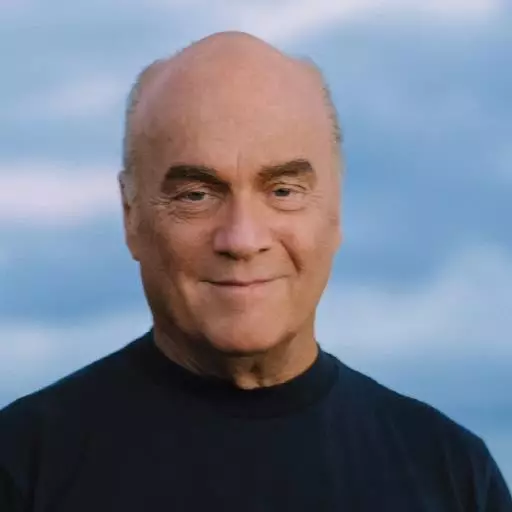
The Holy Spirit in Revival


In the late 60s and early 70s, in the midst of cultural chaos, God brought a spiritual awakening many have called “the Jesus Movement.” Tuesday on A NEW BEGINNING, Pastor Greg Laurie explains that he himself was a part of that time of change. And he points out what we can do to set the stage for another spiritual awakening.
Guest (Male): Pastor Greg Laurie points out when the culture seems to have lost its way, sometimes God brings a great spiritual awakening.
Greg Laurie: In the late 60s and the early 70s, America seemed to be unraveling. But in the middle of the drug revolution, in the middle of the sexual revolution, God sent the Jesus revolution. So it's good to look back and reflect and learn from it, because our prayer today is that God would do it again.
Guest (Male): God is not willing that any should perish, but that all should come to repentance. You can find those reassuring words in 2 Peter, chapter 3. And when a culture seems intent on its own destruction, sometimes God's hand moves in miraculous ways. It's happened before in the history of our country, and today on A New Beginning, Pastor Greg Laurie says it can happen again.
But we play a part in bringing it to pass. Glad you're along for a fascinating series that launches today.
Greg Laurie: We're going to take a little walk down memory lane and revisit the last great spiritual awakening that happened in America called the Jesus movement, also called the Jesus revolution. This revival, this awakening, impacted the church, it impacted the nation, and really, it impacted the world.
Some might say, "Well, why go back and look at something like that? That was a long time ago." Here's the answer: the fame of revival spreads the flame of revival. So it's good to look back and reflect and learn from it because our prayer today is that God would do it again, that we would see another spiritual move in our land because I'll tell you what, our country desperately needs it.
Back in the day, a lot of people wore their hair really long. I had long hair. I wish I had any hair right now. I miss hair. Listen, if you meet a bald guy and he says, "I don't even care about hair," they're lying. They want hair. I'm speaking on behalf of all bald men.
So back in the day, hippies, as they were called, would admit they're hippies. Yeah, we're hippies. Now today we don't really have hippies; we have hipsters. But the difference between a hippie and a hipster is a hipster will not admit they're a hipster. "Are you a hipster?" "I'm not a hipster. Yeah, I need a latte and some avocado toast, please."
Let's think a little bit. We have some young people up here in this stage. Let's talk about parallels between the 60s. Noel, in the 60s, a lot of young people were using drugs, and this is before we knew as much about drugs as maybe we know today and how destructive they are.
I would say today most people use drugs to numb themselves, to disconnect, to escape. Back in those days, many were using drugs, I have to say myself included, because we were searching. We were told, "Man, if you take drugs, it will expand your consciousness." In fact, the mantra of the day was "turn on, tune in, drop out." Many kids did to their own detriment, I might add.
But as you look at the culture today, you almost wonder if people are looking for some kind of family, some kind of community, because so many come from broken families today. You had an interesting thought about where people go to find that.
Noel: People today are going to social media trying to find their self-worth and trying to chase those likes or just trying to feel like they're wanted, like being a part of a group. Like back in the day, they were trying to find their self-worth in Woodstock and other groups like that, just trying to feel like they belong, a sense of community.
Today, because of social media and everything, it's really just causing everyone to be separated and being more isolated and more lonely than ever, than actually going face-to-face and finding that community out in the world, like where we should be, like at church and stuff like that.
Greg Laurie: It's all an imitation of the church. Wouldn't you say, Stephanie? You had some thoughts about that as well.
Stephanie: It reminded me as we looked back to the Jesus movement in time then and our generation now, how in Ecclesiastes it says that nothing is new under the sun and every generation is chasing something to find their worth and their identity.
I think it's so important that the church be aware of that as these new generations are coming because we know God's word doesn't change and we know we all have that void in our heart. We're seeking a relationship with Jesus, but how we approach that and how we connect. As Noel was saying, we're so isolated in our generation now. Knowing and trying to learn how do we connect with that generation then because things are different now.
Greg Laurie: Very true. But like you said, nothing's new under the sun. Things are different, and in another way, things are the same. Here's the big paradigm shift. Back when I was a kid, we were rebelling against the status quo and the status quo was largely conservative. It was pro-family, pro-values, TV shows like Father Knows Best and Leave It to Beaver. Father was a good authority figure. Now we have Modern Family, a reinterpretation of the family.
Everything's different. So those young kids, many of them went into academia, they went into the media, and in many ways they set the cultural cues. Now, instead of it being a largely conservative worldview, it's largely an unbiblical worldview. So when you're a follower of Jesus Christ, you're like the new rebel because you're not going with the grain of society. You're going counter-culture. Counter-culture now is biblical culture. That's the interesting thing how everything has sort of shifted since then.
But then there are some things that haven't changed. Back in those days, there were icons, musical icons like Brian Jones of the Rolling Stones, Jimi Hendrix, Janis Joplin, Jim Morrison of the Doors. These are people that were looked up to, but they all joined something called the 27 Club. That's because they all died at the age of 27, all drug-related deaths.
Fast forward a generation, you had Kurt Cobain from Nirvana. Fast forward some more years, you have more recently Amy Winehouse and the DJ Avicii. Electronic dance music—I didn't realize his popularity until I watched a documentary on him on Netflix. It was so sad because he's just a young guy and he's catapulted into fame and people are chanting his name, "Avicii, Avicii."
He's traveling the world and living the life that so many people want to live, and he's so miserable. He starts drinking heavily and he's damaging his body and, ultimately, he commits suicide. I thought, "You see," like you said, Stephanie, "nothing is new under the sun." It's the same old problems and it's the same answer. That's why our nation, that's why this generation, needs another Jesus revolution, another spiritual awakening.
This is something that we can pray for boldly. I don't think we need to be timid when we ask God to send an awakening. I don't think we pray along the lines of, "Well, God, if it's your will and if you want to do it and maybe you don't want to do it, but please." No, God wants to do it. He wants to pour his spirit out again.
In fact, he even gives a prescription for revival, if you will, in 2 Chronicles 7:14. That was given contextually to the nation of Israel, but I think principally applies to any nation when he says, "If my people, which are called by my name, will humble themselves and pray and seek my face and turn from their wicked ways, then," God says, "I'll hear from heaven, forgive their sin and heal their land."
I don't know when America has been more fractured, more divided than it is right now. We need that to happen. So let me make a distinction between the word awakening and revival. Awakening is what a nation needs. A revival is what the church needs. So we need to pray that it will start with us, and then it will spread to the rest of the culture.
So I want to talk to you about that a little bit today. Turn to Acts chapter 2, and the title of my message is "Jesus Revolution: The Holy Spirit in Revival." In the late 60s and early 70s, America seemed to be unraveling. There was a very real threat of nuclear war in the mid-60s. Nikita Khrushchev made some very serious threats against our nation, including placing nuclear missiles in Cuba.
President Kennedy faced off with him in what is called historically the Cuban Missile Crisis. For kids in school—I was one of those kids in school—we thought we might all die tomorrow. So we had bomb drills in our classrooms where we would get underneath our desks in case there was a nuclear blast. Which, when you look at it back in retrospect, do you think being under our desk would have saved us from a nuclear blast? I don't know.
One year after the Cuban Missile Crisis, our youthful president John F. Kennedy was assassinated in Dallas on November 22, 1963. This traumatized the nation, by the way. Some of you who were alive then will remember this very traumatizing event. All of America mourned. Meanwhile, the Vietnam War, which was never officially declared, raged on with young men coming home in body bags.
Then the drug revolution is breaking out at the same time. Thousands of kids are turning to drugs for some kind of self-realization, some kind of answer, hopefully. It just made things worse. Add to the drug revolution the sexual revolution with the discovery of the birth control pill in the early 60s. Free love reigned and everybody just wanted to express themselves and push away those parameters and those barriers that had existed for so long.
It all sort of culminated in a big music festival called Woodstock, which was billed as three days of peace and music. Jimi Hendrix played the Star-Spangled Banner on his electric guitar. Everything was really groovy, man. But then in 1968, all the psychedelic colors turned to black and white as reality began to kick in and we reaped the consequences of all of these horrible decisions.
It was in 1968 that civil rights leader Martin Luther King was assassinated. Then on the heels of that, shortly after as a matter of fact, Robert F. Kennedy, the brother of President Kennedy, who was running for the presidency, was also assassinated in Los Angeles, right here in California. Then all of these rock icons died in a relatively short period of time: Brian Jones of the Rolling Stones, Jim Morrison of the Doors, Jimi Hendrix, Janis Joplin.
This is the reality. Because things were so dark, with riots in the streets and division, Time Magazine put out an ominous cover story. Black cover, red letters reversed out: "Is God Dead?" That's how a lot of people felt, that maybe God was dead.
But God was not dead. God was very much at work. We don't know exactly when it started or where the actual beginning of it was, but in the middle of the drug revolution, in the middle of the sexual revolution, God sent the Jesus revolution.
Only a few years later, Time puts out this cover with "Jesus Revolution" on the cover. What a difference a few years make. What a difference a revival makes. So I have an issue of this and let me read to you something from that particular issue of Time Magazine and imagine for a moment reading this in Time Magazine today. Headline: "Jesus is Alive and Well."
The article says, quote, "Jesus is alive and well and living in the radical spiritual fervor of a growing number of young Americans who have proclaimed an extraordinary religious revolution in his name. Their message? The Bible is true. Miracles happen. God really did so love the world that he gave his only begotten son."
Is this Time Magazine? "Bibles abound, whether the cherished fur-covered King James Version or scruffy back-pocket paperbacks. They're invariably well-thumbed and often memorized. There's an uncommon morning freshness to this movement, a buoyant atmosphere of hope and love along with the usual rebel zeal. But their love seems more sincere than a slogan, deeper than the fast-fading sentiments of the flower children. What startles the outsider is the extraordinary sense of joy they're able to communicate," end quote.
Can you imagine, again, that being in Time Magazine today? That's exactly what was happening.
Guest (Male): Pastor Greg Laurie will have the second half of his message in just a moment.
Hey everyone, I want you to know about our app called Harvest+. Think of it as a Harvest version of Netflix. We have all of our resources in one place. We have our movies like Steve McQueen: The Salvation of an American Icon, Johnny Cash: Redemption of an American Icon, A Rush of Hope, and much more. Then we have our television program, daily devotions, and much more. So go and download the Harvest+ app.
We're revisiting the era of the Jesus movement today. Pastor Greg is pointing out how we need another great move of God's spirit. Let's continue.
Greg Laurie: Now a little history lesson, because it's important for us to know what God has done in the past so we can pray for what he wants to do in the future. America has had four great spiritual awakenings. The first awakening was in the 1700s, led by such men as Jonathan Edwards and George Whitefield. This is actually before we were officially a nation.
George Whitefield, an evangelist from England, came over and preached to so many people living in the colonies. Thousands were coming to Christ and a revival broke out. So you could make a very good case for the fact that America was born in a time of spiritual awakening. It was that fertile soil of revival that produced the parameters that we could safely have this great experiment in of liberty and freedom and a belief in God, as our founding fathers had. That was the first great awakening.
The second great awakening, the 1790s to 1840, was led by many, including Charles Finney. This was in the days of the Wild West. Law was disregarded, sexual sin was rampant. But people would gather for what they called camp meetings, often out in the middle of the forest. They would build little structures or put up tents and put the sawdust on the floor and people would walk forward to accept Christ. That's where the phrase "the sawdust trail" came from. That was a great revival.
The third great awakening in America was from around 1857 to 1859, led by a young man in New York named Jeremiah Lanphier. It started as a prayer meeting. Jeremiah Lanphier felt it would be a good idea for New Yorkers to start praying, so he called a prayer meeting at lunchtime in New York and, needless to say, very few people showed up.
Then the stock market crashed and then a lot of people showed up because people were alarmed and concerned. Within a relatively short period of time, thousands of New Yorkers were coming to Christ. There would be 10,000 additions to church membership every week during this revival. In one year alone, 50,000 people came to Christ. When it was all said and done, one million came to the Lord in this brief period.
That brings us to the fourth and the last great spiritual awakening, the Jesus movement. I had the privilege of being there. I had a front-row seat. I didn't know it was a revival. I didn't know I walked into the middle of a spiritual awakening. There was a man that opened his heart and opened his church to it named Chuck Smith.
So all these young kids are getting saved and they want to go to church. A lot of churches took one look at them and said, "You're not coming in here looking like that." But for the churches that opened their doors to the Jesus people, as they were called, or the Jesus freaks, as they were also called, those churches experienced revival. For the churches that kept their doors shut to these folks, they did not experience revival.
Here's some things that kind of stand out to me about that time. Number one, there was a sense of expectancy in the services. So when you came to church, you came with a sense that God is going to do something. We talk a lot about the need for anointed preaching, but I think there's also a need for anointed listening. That we come with the right attitude to church.
We come with an open heart, with an open Bible, come with a notebook listening, saying, "Lord, speak to me today." No one was ever late for church back in those days, by the way, because if you were, you wouldn't get a seat. So that sense of expectancy.
Number two, the word of God was pretty much taught in every service. Pastor Chuck Smith taught us to love the Bible and we would go through books of the Bible and our lives were changed by the Bible. We were a bunch of young kids that knew nothing. We were ignorant of all things biblical, but we developed at that time a biblical worldview.
Then also there was worship. It was a whole new kind of worship that was born before our very eyes. We would give invitations in pretty much every service. I think what happens is when non-believers come to a church that's alive, a church that's experiencing revival, they want to know God. So we brought friends and people would accept the Lord.
Here's another big earmark of that time. We believed in the imminent return of Jesus Christ. We believed that Christ could come in our lifetime. So some of you would say, "Well, what was that, 45 years ago? Your timing was a little off, Greg." Yeah, well, I don't regret living in belief that Christ could come back. We're 45 years closer to his return than we were then.
I still believe it. I believe Jesus could come in my lifetime, where we'd be caught up to meet the Lord in the air. I think it's a very important thing. Some might ask, "Well, why didn't he come back then?" Well, a lot of us were praying Jesus would come and catch us up to heaven in 1970.
But let me take a quick poll. How many of you have come to believe in Jesus since 1970? Raise your hand up. Aren't you glad God didn't answer our prayer? So here's what the Bible says: God is not late as some men count lateness. He's long-suffering toward us and not willing that any should perish but that all should come to repentance.
God is waiting for that last person to believe. Can you imagine if there was one person the Lord was waiting for and you knew who it was? Would you be tempted to pressure them? "Dude, will you get saved? What is wrong with you?" But the Lord knows who that person is and it will happen in his timing, of course.
But we need to pray that God will do this again. Psalm 85:6 says, "Will you not revive us again, that your people may rejoice in you?" The prophet Habakkuk understood this when he prayed this prayer in Habakkuk 3:2: "I've heard all about you, Lord, and I'm filled with awe by the amazing things you've done. In this time of deep need, revive your work as you did in years gone by. Show us your power to save us."
And so it's similar to how you might feel now. Some of you might be thinking, "Well, that must have been so great back then. I wish I could have been around then." God wants to do it again because Jesus is the same yesterday, today, and forever. So it starts with us.
Guest (Male): Pastor Greg Laurie with fascinating insights on the Jesus movement and how we play a part in inviting another great move of God's hand on our culture today. And before this edition of A New Beginning concludes, Pastor Greg comes back to lead us in a word of prayer.
Also, as you may know, there's a recent film called Jesus Revolution all about this moment in history, and it includes Pastor Greg's personal story. You can watch that film right now. It's now available for streaming on many platforms.
Pastor Greg, speak to the person who has been listening and they're pretty sure they themselves have made their peace with God. Maybe they can't think of a time when they made a deliberate decision for the Lord, but they're pretty sure everything's going to work out okay. That degree of uncertainty is not a good idea, is it?
Greg Laurie: No, and this is one area of your life you want to be sure about: where you're going to spend eternity. The Bible says these things we write to you that you may believe on the Son of God and that you may know that you have eternal life. Listen, I know I have eternal life. I know I'll go to heaven one day. I hope that doesn't sound boastful, and if it does, I'm boasting in what God has done for me, not in what I've done for God.
The reason I know these things is because I've turned from my sin and I've put my faith in Christ, you see. If you do the same, you can have this same hope. You just need to call out to the Lord and admit you're a sinner and ask Jesus Christ to forgive you and come into your life. The Bible says whoever will call upon the name of the Lord will be saved.
Will you call upon him right now? I'm going to pray a simple prayer, and I'm going to ask you to pray this prayer after me if you would. So if you want to know that you'll go to heaven when you die, if you want to know for certain that Christ is living in your life, then pray this prayer with me. Just pray these words:
Lord Jesus, I know I am a sinner. But I know you are the savior who died on the cross for my sin. I turn from my sin now and I choose to follow you from this moment forward as my savior and my Lord, as my God and my friend. Thank you for hearing this prayer. Thank you for answering this prayer. I ask this in Jesus' name, Amen.
Guest (Male): Amen. Listen, if you have just prayed that prayer with Pastor Greg and you've meant those words sincerely, the Lord has forgiven you of your sin and you're now a Christian. And we want to help you get started in this new life of faith.
Let us send you Pastor Greg's New Believer's Bible. It's in an easy-to-understand translation and there are scores of features to help a new believer build a solid foundation. So get in touch and ask for the New Believer's Bible. We'll send it free of charge. Just call 1-800-821-3300. You can call anytime, 24 hours a day, 1-800-821-3300. Or write A New Beginning, Box 4000, Riverside, California 92514. Or go online to harvest.org and click on "Know God."
Then thank you for partnering with us to help these daily studies continue. Your investments have eternal benefits. Why not make this a part of your personal ministry to partner in an effort that's making a real difference with the gospel of Jesus Christ? Thank you for your prayers and for prayerfully considering how God might lead you to help tangibly.
Online you'll find us at harvest.org and there you'll see the way we'd like to thank you for your donation right now. That's harvest.org. Or write us at A New Beginning, Box 4000, Riverside, California 92514. Or call us at 1-800-821-3300. We're here around the clock to take your call again at 1-800-821-3300.
Next time, more from Pastor Greg's message called "The Holy Spirit in Revival," exploring what we can learn from the Jesus movement. But before we go, Pastor Greg comes back to close today's study time.
Greg Laurie: America needs an awakening and the church needs revival. So I thought we would pray for that together. Let's pray that God revives the church. Let's pray that God will send a spiritual awakening and let's pray that it starts with us.
Father, you know better than any of us how badly our nation needs you. And Lord, we're asking for you to move powerfully by your Holy Spirit and send a spiritual awakening to America. We pray, Lord, that thousands and thousands of people will come to Christ as we've heard about in these last four great awakenings.
Lord, we're praying for a fifth great awakening in the name of Jesus Christ. And we're even going to ask for a sixth one and a seventh one. Lord, move powerfully, move mightily, and let this revival now start in us.
Let this revival start in me, in each of us individually. We need to be living in that close, intimate, first-love relationship with Jesus Christ. So let it start in our own hearts. And we ask it in Jesus' name, Amen.
Featured Offer

Relationships can be one of life’s greatest blessings. They can also be one of life’s greatest challenges. In his new book Am I Doing This Right?, Pastor Greg Laurie explores what the Bible says about singleness, dating, marriage, friendships, family, and even how we relate to people who don’t share our faith. Drawing from Scripture and personal experience, Greg offers practical guidance for building relationships that honor God and stand the test of time.
Request your copy this month with your gift to Harvest Ministries.
Past Episodes
- 2007 Best of A New Beginning
- 2008 Best of A New Beginning
- 2010 Best of A New Beginning
- 2011 Best of A New Beginning
- Harvest America Specials
- Harvest Worship Band Interviews
- Heaven Studies
- High School Camp
- Hope for Hurting Hearts
- Hope from the Holy Land
- Making God Known: How to Bring People to Faith
- Marriage Specials
- Messages from the Holy Land 2012
- Mother's Day Special
- Pastor Chuck Smith Interview
- Pastors' Appreciation Event
- Post-Crusade Special
- Practical Christian Living
- Prayer Studies
- Pre-Crusade Week
- Prescription for Renewal
- Proclamation Season Launch
- Radio Crusade
- Ready or Not!
- Retro A New Beginning: Nostalgic Audio from Classic Videos
- Revelation: The Next Dimension
- Road to the Resurrection
- Romans

Video from Greg Laurie
Featured Offer
Relationships can be one of life’s greatest blessings. They can also be one of life’s greatest challenges. In his new book Am I Doing This Right?, Pastor Greg Laurie explores what the Bible says about singleness, dating, marriage, friendships, family, and even how we relate to people who don’t share our faith. Drawing from Scripture and personal experience, Greg offers practical guidance for building relationships that honor God and stand the test of time.
Request your copy this month with your gift to Harvest Ministries.
About A New Beginning
A New Beginning features the teaching of Greg Laurie, senior pastor of Harvest Christian Fellowship in Riverside, California. Join Pastor Greg as he teaches God's Word in a relevant, practical, and understandable way. Discover biblical insights and learn how to know God and make Him known!
About Greg Laurie
Greg Laurie is the author of over 70 books including Steve McQueen: The Salvation of an American Icon and Lost Boy amongst others. He has also produced several award-winning films including A Rush of Hope which saw millions tune in for the first-ever cinematic crusade. Greg is married to Cathe Laurie and has two sons and five grandchildren.
Contact A New Beginning with Greg Laurie
info@harvest.org
https://harvest.org/
A New Beginning
P.O. Box 4000
1-800-821-3300