
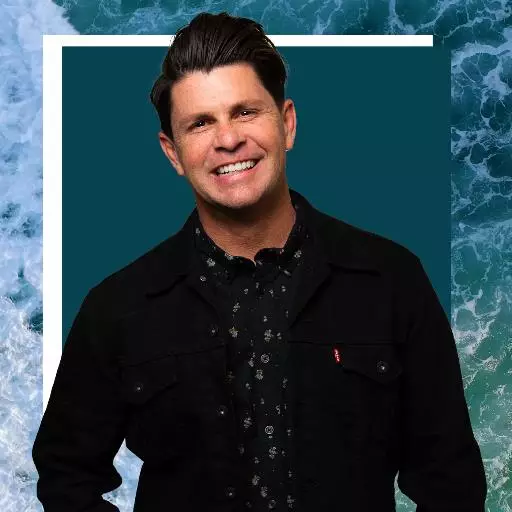
True Greatness Part 2


Do you want to be great in God’s kingdom? It looks far different than what we so often hear in the world! We’ll discover the path to true greatness involves being a servant, just as Jesus was.
Announcer: Pastor John Randall on true greatness.
John Randall: What is the path to greatness in God's kingdom? Serving others, dying to yourself. In 1 Corinthians 9 in verse 19, it says, for though I am free from all men, I have made myself a servant to all. It's a choice, do you see? It's something that I decide to do. The world says, let people serve you. Jesus said, serve other people. The world says, this is what greatness looks like. Jesus said, this is what greatness looks like. The world says, hey, listen, you're great if you've got a lot of people under you. Jesus said, you're great if you're under a lot of people. It's so different in the kingdom of God.
It's the opposite of the kingdom of this world.
Announcer: Do you want to be great in God's kingdom? If so, keep listening to A Daily Walk. It looks far different than what we so often hear in the world. We'll discover in a moment the path to true greatness involves being a servant, just as Jesus was. Pastor John Randall is developing his series in Matthew's Gospel, and today we'll focus on chapter 20, verses 17 through 34.
John Randall: Now, not everyone was excited about this request of the disciples, who the other disciples, because in verse 24, it says, when the 10 heard it, they were greatly displeased with the 2 brothers. I mean, think about this. These 2 were part of the inner 3. It was Peter, James, and John. They just cut Peter out. There's only 2 sides, you know, one right hand and left hand, so let's just get Peter out and get us in. I mean, they were upset. Why were the other 10 upset? Probably because they didn't think of it. It wasn't their idea. I knew we should have got our mom. You know, you guys, how could you do that?
Isn't it interesting how upset they were with them? But they were guilty of the very same thing. How easy it is to observe our sin on somebody else and think, I can't believe that they would do that. You mean what you did? Yeah, like why? They, you're so critical of somebody else, but that's exactly what you do. They're so upset over the fact that these guys were trying to get ahead of them. Jesus gives to his disciples another lesson on humility and what the prerequisites of true greatness in the kingdom of God really look like. Notice, first of all, in verse 24, so patient, Jesus called them to himself, and he said, you know that the rulers of the Gentiles lorded over them, and those who are great, they exercise authority over them.
Yet it shall not be so among you. For whoever desires to become great among you, let him be your servant, and whoever desires to be first among you, and let him be your slave. Just as the Son of Man did not come to be served, but to serve and to give his life a ransom for many. In this lesson on humility and greatness in God's kingdom, Jesus began by presenting a contrast to which the disciples were familiar with. He said, you know, you know how the Gentiles lorded over them, probably a reference to Roman occupation in Israel, how that Rome was so heavy-handed, so abusive, so oppressive that they bludgeoned the world into submission.
You've watched the tyrannical leadership of the Roman Empire, the commands of the Caesars and the puppet kings of Israel that do their bidding. You know how they lord it over. You know how they demand to be served and exercise that way over each other. But yet Jesus said, in verse 26, it shall not be so among you. This is not the model to follow. This is not the example that you are to emulate. Actually, it's to be the complete opposite of that. This is what the world does as it relates to leadership. They step on people, backstab people to get ahead of somebody else. Doesn't matter, it's just business.
Don't take it personal. And Jesus said, that may be how it is there, and you know that it is, but that's not how it's to be among you. There has to be a difference between the followers of Jesus and those who live in this world. And the fact is, there are many things, many models presented, examples in this world that some would want us to follow that are an abomination in the sight of God. God says, don't, not even close. That looks nothing like Jesus. It has to be the opposite. And we have to guard against falling prey to that fleshly notion of just the worldly mindset of being great in our own kingdom.
Jesus said, you are my followers, you're my disciples, and that's not how we operate. In the world, they might climb the ladder with intimidation or using people, not so among you. It's got to be different. And what does it look like? It's not tyrant leadership. Listen carefully. It's servant leadership. Servant leadership. You lead by the way that you serve. What are the prerequisites to greatness in his kingdom. He tells us here in verse 26, whoever desires to become great. You have that desire? Excellent. Where does it start? It starts by being a servant. The word servant there in the Greek, diakonos, to run errands, an attendant, the menial tasks, especially as it relates, if I may say, to pastors and church leaders.
We are called to be servants of God's people. Sometimes people misunderstand and think that pastor means, you know, something other than it means. It just is another word for servant. That's what it means. It means to serve. In fact, Paul would say concerning himself in 1 Corinthians chapter 4 in verses 1 and 2, he would say, let a man so consider us as servants of Christ and stewards of the mysteries of God, and moreover, it is required in stewards that one be found faithful. What is the path to greatness in God's kingdom? Serving others, dying to yourself. In 1 Corinthians 9 in verse 19, it says, for though I am free from all men, I have made myself a servant to all.
It's a choice, you see. It's something that I decide to do. The world says, let people serve you. Jesus said, serve other people. The world says, this is what greatness looks like. Jesus said, this is what greatness looks like. The world says, hey, listen, you're great if you've got a lot of people under you. Jesus said, you're great if you're under a lot of people. It's so different in the kingdom of God. It's the opposite of the kingdom of this world. If you want to be first, Jesus said, great, be a slave. What? That doesn't sit well with me. Jesus is reiterating, he's intensifying the description of greatness in the kingdom of God, and he takes it a step lower.
A servant was one thing, but a slave, that that's something different. You know, the word that's used there, doulos, it's where Paul would use this verse, or I should say this phrase concerning himself repeatedly in his letters. He would say, I am a bondservant of Christ. I am a bondservant of Jesus Christ. What was a bondservant? The bondservant comes from an Old Testament idea where it was described there in the Old Testament where if you wanted to be a servant by choice, then you could be a bondservant. And the master would then take you and he would pierce your ear with an awl, put a ring in it, and it signified to everyone, I am a servant by choice because I'm motivated by love.
Paul takes that example and he applies it to himself concerning his relationship with Jesus and says, I'm a bondservant by choice of Christ. I'm a servant by choice because of his love for me. There's being a servant, the word is slave. And the final word is sacrifice. In verse 28, it says, just as the Son of Man did not come to be served, but to serve and to give his life a ransom for many. If ever there was a person who could have demanded to be served and was worthy of it, it was Jesus. And yet Jesus says, I didn't come to be served. I actually came for the purpose of serving other people.
God incarnate comes and gives this example of serving people and said, this is the model, this is the example that you want to follow. This is what true greatness looks like. No one was ever greater than Jesus. He is the greatest in the kingdom, and this is his example that we are to follow, to serve other people. To give yourself away for the sake of somebody else. That's not the natural tendency in my life. The fleshly desire, the humanistic part of myself is, it's about me. When Jesus said it's not about you, and the world pushes this. Love yourself, you know, if you just would love yourself, then you could really be effective.
Listen, we love ourselves too much. That's why you're not effective. Love Jesus, love other people, die to yourself. That goes against everything that the culture shoves down our throat. Jesus said, it's to serve. In Philippians 2, Paul writes concerning the mentality, the mindset of Jesus, and he said, let this mind be in you, which was also in Christ Jesus, who being in the form of God, did not consider it robbery to be equal with God, but made himself of no reputation, taking the form of a bondservant and coming in the likeness of men. Found in the appearance of a man, he humbled himself and became obedient to the point of death, even a death on the cross.
Jesus didn't come to be served, but to serve. How is it that at times I feel that I've come to be served rather than to serve? Oh Lord, give me your heart, give me your mind. Jesus came, it says here, to be a ransom. It's a significant word. It's the word lutron in the Greek, and it means a price paid for a life. Jesus sacrificially gave his life for others. It was William Barclay that said these words, and boy, it's so, they were so powerful. He said, quote, the world may assess a person's greatness by the number of people whom they control or who are at their beck and committees of which they are a member, or by the size of their bank balance and the material possession which they have amassed.
But in the assessment of Jesus Christ, these things are irrelevant. And it's true. Do we want to be great in God's kingdom? If so, then we learn the lessons of the servant making a sacrifice. That's the school to be enrolled in. Jesus then demonstrates this as we conclude this chapter in verse 29. It says, as they went out of Jericho, a great multitude followed him, and behold, two blind men sitting by the road. And when they heard that Jesus was passing by, they cried out, and they said, "Have mercy on us, O Lord, Son of David." And the multitude warned them that they should be quiet, but they cried out all the more, saying, "Have mercy on us, O Lord, Son of David." So Jesus stood still, and he called them and said to them, "What do you want to do?
What do you want me to do for you?" And they said, "Lord, that our eyes may be opened. Now, apart from the cursing of the fig tree that we read later on, this was Jesus's final miracle before his crucifixion. Only in Matthew does it record that there were two blind men. Mark's gospel and Luke's gospel speak of one blind man, and Mark gives us insight as to the man's name. He was Bartimaeus. He was the spokesman for the two blind men. And all three gospels give us the record and account of the emphasis of the messianic title, Son of David. To call Jesus Son of David was to say, we believe that you are who the Old Testament predicted the Messiah to be.
You're the son of David. You're the Messiah. You're the Christ, the chosen one. Isn't it interesting that these blind men could not see, but they discerned that he was the son of David, and they cried out his name? A blind man in those days, they had no alternative in life except to be a beggar. That was your job. There's nothing else you could do with your life. And so they would set up outside the city gates as travelers would come in, hoping that they would give to them some kind of money in order that they could survive, maybe have a meal. That that's how they lived. That was their life. And it's interesting to point out that in this particular area of Jericho, there was a special balsam bush that grew from which medicine was made to actually treat blindness.
So it would not be uncommon in this area to have an unusually large number of blind people hoping for a cure. And here is Jesus passing through on a particular day, and two men hear of him coming, and they just start crying out in faith, just saying, have mercy on us. They'd never seen a miracle of Jesus, obviously. But apparently they had used their ears and they had heard of his power. Somehow these blind men knew that Jesus was able to heal them. These men also, you might notice, they were sitting by the roadside. In other words, they were positioned in the right place to receive from the Lord.
They needed a touch from him, and they were sitting in the place where they could receive it. You know, to me, that speaks to me of being seated in a place like this where you can receive from the Lord. The neglect of fellowship with God's people, not positioned in a place to receive a touch from God's word or from his spirit, is a sad place to be, but reading your Bible, engaging in prayer, being in fellowship, these are the things that put us in a position to hear from God, to receive from him. We also find that these blind men had to persevere in the midst of opposition because as they began to cry out, Son of David, immediately the multitude around them told them, be quiet, stop saying his name, stop saying that.
And you know what it says they did? They cried out louder. It only made them scream louder. And the word that's used, very interesting, the word that's used describes any sort of screaming or anguished shout. They were trying to draw near to Jesus, and there was opposition to try to stop them. And that is always the case as well. You want to draw near to Jesus, you'll always be opposed. You got to press through that. You got to persevere through that. But they also appealed to Jesus on the basis of his mercy. They didn't say, Lord, we deserve it. They said, Lord, just be merciful to us. Give to us what we don't deserve.
Be merciful. And this is this part right here. I love this part. This ministers to me so much in so many different, different ways when it says this, and Jesus stopped. He just stopped. And he called them, and he said, what do you want me to do for you? And they said, Lord. Notice that they call him Lord. That's a term of submission and surrender. Lord. We want our eyes to be opened. This is what we want. And it says, moved with compassion. Notice this, Jesus touched their eyes. Do you know that Jesus didn't heal everybody the same way? One blind man, he spit in the ground, made mud, and put it on his eyes.
Imagine that. Ew. Next thing you know, you're like, is this some kind of sick joke? What, you know, Jesus said, go wash in the pool of Siloam. I'm not washing, just put mud. No, he did. I always say that if I was to do a sermon on that subject, it'd be here's mud in your eye, but he would just, he went down and he washed, and he came back seeing. But here, he touches their eyes. He didn't do it the same way every time. He ministers to individuals. But notice he was moved with compassion, and he could have just said the word, hey guys, your eyes are open, just look at me, look right here. Hey.
How many fingers am I? He didn't, he didn't. He touched them. And it says they regained their sight. And then it says they followed him. And that is always the response of a person who's received a touch and had their eyes opened by Jesus. The response is you follow Jesus. How do you know if somebody's really a Christian? Who are they following? That's how you know. Because if they're a Christian, they're going to follow Jesus. They're not going to walk in the opposite direction of where Jesus is going. They are going wherever he's going. He opened their eyes, he's the one they're going to follow.
And that's what these men did. They followed him. Imagine being blind your whole life or reg- you know, and then all of a sudden it says they regained their sight. Perhaps they weren't blind their whole life, I don't know, but they were blind, I know that because it says it. But then their eyes were open and they could see. Folks, there is a greater blindness that exists today than physical blindness. It is a spiritual blindness. In fact, the Bible tells us in 2 Corinthians chapter 4 and verse 4, Paul said that Satan, who is the god of this world, has blinded the minds of those who do not believe, and they are unable to see the glorious light of the good news.
They don't understand the message about the glory of Christ, who is the exact likeness of God. They're just blind. They're walking around like they got 20/20 vision. They can see everything physically, but spiritually they're as blind as anybody was physically. They can't see. They need their eyes open, and that's, by the way, that's another reason why Jesus came. Jesus said it in John chapter 9. Jesus said, for judgment I have come into this world, and those that do not see may see. He came to open blind eyes, and there are people here today, myself included, who were as blind to the truth and the reality of salvation and the need for Jesus as anybody, and he opened our eyes.
And now I just want to follow him.
Announcer: That is Pastor John Randall, and this is the weekend edition of A Daily Walk. We're traveling through Matthew's gospel, one verse at a time. John will be right back with more. As we leave you today, we'd like to say how much it means to us each and every time we hear how God is at work in our listeners' lives. It would be so encouraging to hear from you, so please write today while it's fresh on your mind. Our email address is adailywalk@gmail.com. You can call us toll-free at 877-242-0828. Again, reach us at 877-242-0828. You can also visit our website to listen to today's message at adailywalk.org or wherever you get your podcasts.
We're also on oneplace.com. Our featured resource this month at A Daily Walk is, Did the resurrection happen really? In this short but powerful discussion about life, death, and hope, you'll read of a college campus that is rocked by a shooting spree that leaves 9 students dead. Their experience leads them to wrestle with whether or not Jesus rose from the dead, authored by Josh McDowell and Dave Starrett. The cost is just $6, so maybe get an extra copy or two to give away. Call 877-242-0828 or go to adailywalk.org for easy online ordering. That's 877-242-0828 and at adailywalk.org. Here at A Daily Walk, we look to the Lord to provide for and sustain us.
We know these are difficult and challenging financial times for many of you, but if God has blessed you with a little extra this month, we'd very much appreciate your support. It would be wonderful to hear from you right now. We've tried to make it easy to make a donation online at adailywalk.org or call 877-242-0828. There are some other ways we can stay connected. Check out Pastor John on X and Instagram for biblical encouragement throughout the week. Follow him on X at PJ Randall 7 and on Instagram at John P Randall. As we return to Pastor John, he poses an interesting question for us to mull over.
John Randall: Friend, listen, as we conclude this and prepare our hearts to take communion, listen, listen carefully. Jesus says these words here. What do you want me to do for you? What if the Lord would ask you that question this morning? What do you want me to do for you? What did you come in here looking for? What are you after? What are you seeking? What's on your heart this morning? What are you praying about? What have you been petitioning the Lord for? What do you want him to do for you? And let me remind you of what he already has done for us in his death and resurrection. But every single person here, something's going on in your life.
What would you, the words of Jesus, what would you have me to do for you? The Bible says to seek the Lord. It says to present your request to the Lord, to ask. It's okay to ask. What do you want Jesus to do? Maybe some of you, it's like, you know what? I really like him to work in my marriage. I, all right, ask him. You know, I really like the Lord to bring my son or my daughter back to Christ. that's a huge concern for me. Ask him. You know, I'd really like direction on if I'm supposed to go this way, or if I'm supposed to stay put, or am I supposed to do that? Am I... What do you want? What do you want me to do for you?
Lord, I just want you to show me what to do, and I'll do it. Confirm your, you know, what, you know, you know how it is. Ask him. And then listen. Allow him and understand this morning that he looks at you with compassion, and he wants to minister to you, to touch you, to meet your need this morning. And praise the Lord, folks, that he has met the greatest need that we will ever have for salvation. Amen.
Announcer: Well, Easter is a week away, and so we'll break away from our study of Matthew in order to bring you a special message from Pastor John Randall. We have that to look forward to next weekend on A Daily Walk. This program is brought to you by Calvary South OC and made possible through the support of our listeners.
Featured Offer

We’re very excited to tell you about a newly revised book from Pastor John’s wife, Michelle Randall! It’s, “The Great Exchange: Finding Freedom in Surrender!” Michelle calls the journey of surrendering our will for God’s will, the Great Exchange! And with candor, she shares her own real-life experiences of learning to relinquish her will for God’s will. With relatable, practical, and applicable insights for today’s struggles of faith and fear, “The Great Exchange” will encourage, strengthen, and challenge you in a quest for complete surrender and a fervent pursuit after God. Be set free as you exchange your will for God’s will.
Past Episodes

Featured Offer
We’re very excited to tell you about a newly revised book from Pastor John’s wife, Michelle Randall! It’s, “The Great Exchange: Finding Freedom in Surrender!” Michelle calls the journey of surrendering our will for God’s will, the Great Exchange! And with candor, she shares her own real-life experiences of learning to relinquish her will for God’s will. With relatable, practical, and applicable insights for today’s struggles of faith and fear, “The Great Exchange” will encourage, strengthen, and challenge you in a quest for complete surrender and a fervent pursuit after God. Be set free as you exchange your will for God’s will.
About A Daily Walk
John Randall is the Senior Pastor of Calvary South OC located in San Clemente CA. John has been serving in pastoral ministry for over 25 years and is the featured speaker on the Bible teaching radio program "A Daily Walk." He is known for his clear and relatable presentation of the Scriptures.
About John Randall
As a child, John’s family began attending Calvary Chapel Costa Mesa in 1974. It was there that he attended the elementary school, Jr. High, and graduated from Calvary Chapel High School. Following graduation he went on staff at Calvary Chapel Costa Mesa as a janitor. It was also at this time that he met his wife Michelle who was teaching at Calvary’s elementary school.
After four years on staff having served in children’s ministry, high school ministry and worship John went on staff at Calvary Chapel in Vista CA.
In 1997 the Randall’s set out on a venture of faith to the SouthEast of Florida where they planted their first church, Calvary Chapel of Brandon. After ten years of ministry in Florida the Lord called the Randall's back to Southern California where John currently pastors at Calvary South OC. John has been serving in pastoral ministry for over 25 years and is the featured speaker on the Bible teaching radio program "A Daily Walk." He is known for his clear and relate-able presentation of the Scriptures. John and his wife Michelle have four children.
Contact A Daily Walk with John Randall
http://www.adailywalk.org/
Address
Calvary South OC
1311 Calle Batido
San Clemente CA 92673
@johnprandall
@PJRandall7
Phone Number
877-242-0828