
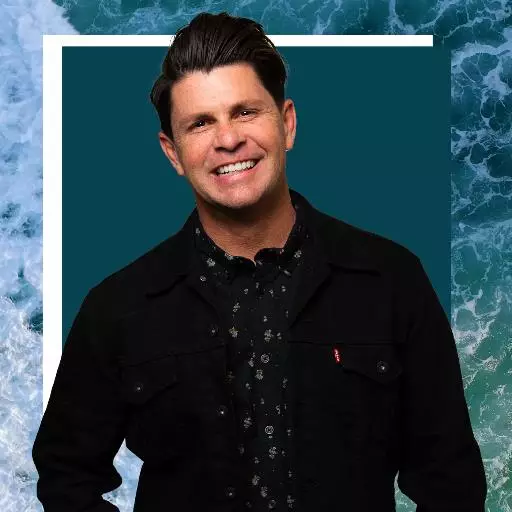
The Table and Tower Part 2


Throughout history man has attempted to get to God on his own... but each attempt fails miserably. We’ll soon see that false religion dates back to a tower called Babel. This was a city built for man’s glory, certainly not God’s.... pride was its foundation... and destruction was its destination. Today on a Daily Walk pastor John Randall returns to his verse by verse study of Genesis and takes us deeper into chapter 11.
John Randall: Can I ask you tonight, what are you building? What are you building in your life? Is God included in what your plans are? Are you asking, "Hey God, what do you think about this?" Is he involved in the... is he the master architect, or is it pretty much you just calling the shots and I'm mapping this out?
Man, if you've ever tried to map things out apart from God's help, it's a mess. And I can testify to that. I've mapped some things out in the flesh before Jesus got a hold of my life. And I'm so glad he got a hold of my life. Things are far better with him in charge.
Guest (Male): Throughout history, man has attempted to get to God on his own. But each attempt fails miserably. We'll soon see that false religion dates back to a tower called Babel. This was a city built for man's glory, certainly not God's. Pride was its foundation, and destruction was its destination. Today on A Daily Walk, Pastor John Randall returns to his verse-by-verse study of Genesis and takes us deeper into chapter 11.
John Randall: We move from the table to the tower. Check this out. Genesis chapter 11. Now the whole earth had one language and one speech. And it came to pass as they journeyed from the east, they found a plain in the land of Shinar, and they dwelt there. Then they said to one another, "Come, let us make bricks and bake them thoroughly." They had brick for stone, and they had asphalt for mortar.
And they said, "Come, let us build ourselves... pay attention here... a city and a tower whose top is in the heavens; let us make a name for ourselves, lest we be scattered over the face of the whole earth." At this time in the history of the planet, of the world, there was one language. We don't know what language it was, but there was one, that we know for sure, because it says it.
But what happens is these people are supposed to spread out, but they disobeyed. We're going to stay together. We're going to stay together and we're going to build something. We're going to build a tower. It's going to be called the Tower of Babel, as we'll see. But again, keep this in mind. This is only a few generations after the flood. Some have estimated 100, maybe 150 years. So the earth has been rather repopulated, but rather than spread out, they all stay together.
Do you think people would have remembered about the flood? But now the earth has grown, the population has grown, they're living in this area called Shinar. Shinar is located in the Middle East, it's another name for Babylon or Babylonia, and it's the region really of modern-day Iraq. And as the post-flood generations migrated east, interesting it says east from Ararat, actually Mount Ararat, they settled in this place called the Fertile Crescent. A well-watered plain near the Tigris and the Euphrates River, they felt like that's a place we want to set up.
And it seems likely that the tower that they were building was a tower that they were hoping would bring heaven down to earth, or maybe they could reach heaven if they could build it high enough. Some writers suggest, some scholars that have studied the Tower of Babel in greater detail, have suggested that this tower was tied to early development of astrology, the study and worship of the stars. They suggest that at the top of the tower, and the reason why they say this is because they've done excavations and they've found similar towers, similar to the Tower of Babel.
And they've found signs of the zodiac, this enormous symbol of man's attempt to control the universe apart from God. This suggestion seems likely because we know that astrology originated in ancient Babylon. By the way, that brings up a very valuable point that I want to encourage you to take into consideration. Don't read horoscopes, friend. "Did you read the horoscope today?" No, I read my Bible. I don't read horoscopes. No, it was legit, man. I'm telling you, the color purple was... no, don't read that. That's nonsense. Satanic, don't be getting into that stuff. It's bizarre, it's weird, it started back here in Babylon. Stay away from that.
All right, moving on. The tower was a united effort of humanity totally apart from God. Look at what we're going to do apart from God. You'll notice they're not saying, "Hey, I wonder what God thinks about this?" They're saying amongst themselves, "Hey, let us build something. Let us do this, let us do this, let us make a name for ourselves. Hey, forget you God, this is what we're going to build." It says they moved east. They were united as they journeyed to the east.
You know, it would seem that when you read through scripture, this is kind of a side note, but when you read through scripture, it seems that anytime people went to the east, it was associated with moving away from God. Have you ever noticed that? Adam and Eve were removed from the Garden of Eden and an angel was left there to guard the entrance, and they went east of the Garden of Eden. When Lot left Abraham to go to Sodom and Gomorrah, guess where he went? East. Go east, young man. No, don't go east, go west. Go toward the Lord. When Jacob left his family, where'd he go? East.
The Tower of Babel represents many things for us as you look at this. For one, I think it represents the rebellion of man against God. Rebellion of man against God. After the flood, God commanded again humanity to fill the earth. Humanity decided to do the exact opposite of what God said. God said spread out, they said let us build. God said go this direction, hey let's stay together. They did the exact opposite of what God had told them to do. Humanity decided to build a great city and all congregate there. A gigantic tower as a symbol of their power, to make a name for themselves.
They did the exact opposite. Can I just say to you that anytime you want to do the exact opposite of what God has told you to do, you're in... it's dangerous territory. "Do the exact opposite? God said don't do that." Well, I'm going to do it. "God said do that." I'm not doing that. Like that is the wrong thing to do. To walk in obedience to the ways of the Lord, there is blessing. To walk in disobedience to God's word, to walk in disobedience to God's command, there's no blessing in that.
I mean, God puts boundaries in our lives, sets us within those boundaries because he loves us. To go outside of that and outside of what God has said is to bring trouble upon yourself. It is to reap whatever you're sowing. If you're sowing to the flesh, you're going to reap the whirlwind of that. You don't want to do that. That's why God gives us warnings. Don't go there. Don't go outside of that. And if you're thinking about it or you're already there and you're over the fence and you're, "Hey, I'm over here and nothing's happened yet," get back in there, man.
Get back over there. That was pretty accurate, wasn't it? The tiny fence, tiny fence. Lord, make the fence bigger than that, right? But don't do it. Stay in there where God wants you to be. So they said we're going to do this. This is straight up rebellion against God. So foolish to rebel against God. You say, how do you know that? Read the Bible. Read the Bible. Think about all the people who rebelled against God.
Several names come to mind. I think of Saul, rebelled against the Lord. I mean, God had his hand on him, anointed him, blessed him, gave him this kingdom to rule and he blew it. God said I would have done this in your life, Saul, but now I can't. Oh, okay, that didn't go well. You did the exact opposite of what God said. You disobeyed his commands. How about Jonah? "Hey Jonah, I want you to go to Nineveh and I want you to tell those people about me."
And Jonah said, "Okay, I'm not doing that. I'm going to go the exact opposite direction as far away as this boat will take me." You know how that went. He still got there. God still put him there. Vomit-covered prophet as the whale had the urge to regurgitate and back onto the... and he went... you know what happened. You know that story. There's a picture of it downstairs in the children's ministry, big thing down there. Not the vomit part, just the whale swallowing. Come on.
But not only does it represent the rebellion of man, but I'll say secondly the pride of man, the pride of man. We can build something apart from the Lord. Make a name for our... God? No, no, no, ourselves. Make a name for ourselves. That's pride. That's pride. God hasn't been mentioned once, hasn't been consulted once. Can I ask you tonight, what are you building? What are you building in your life? Is God included in what your plans are?
Are you asking, "Hey God, what do you think about this?" Is he involved in the... is he the master architect, or is it pretty much you just calling the shots and I'm mapping this out? Man, if you've ever tried to map things out apart from God's help, it's a mess. And I can testify to that. I've mapped some things out in the flesh before Jesus got a hold of my life. And I'm so glad he got a hold of my life. Things are far better with him in charge and he knows what he's doing.
And if you let him do it and you surrender to him and submit to him. But these guys had a desire... this is the story about human pride, human pursuit, human achievement apart from God. And just like Adam and Eve, they took of the forbidden fruit, here they're going to build this tower and they think they're going to reach heaven. So man decides this is what we're going to do. But notice the building materials. Do you guys see that in verse three? They said to one another, "Come, let us make bricks and bake them thoroughly." And so they had brick for stone and they had asphalt for mortar.
Here we see man's ingenuity. The bricks were not as strong as building with stone, but things could be built faster. Let's just build it, who cares if it's solid? Let's just cut corners. Let's build this thing. We can make our own bricks. We don't got to quarry the stone. But later on, you find when they're building walls and they're building things, they're using stone. It takes more work. We don't want to do that. Here's a shortcut.
Listen, the devil always has a shortcut. You don't have to do it that way. Skip that. God didn't really... this is the lie from the beginning. You don't have to do it that way. You don't have to listen to that guy up there. He doesn't know what he's talking about. What's he talking about? Table of Nations? Whatever. You don't have to do that. You don't have to listen to God. Build your own tower. The materials that we build with in our lives are very important. Whatever you build with.
What are you building with? What are you building on? What is the foundation? Are you building on Christ? Are you building on sand? What are you building with? What kind of tools are you using? Also notice the motive behind the building. It was selfishness. It was self-motivation, selfish. They found, they said, they journeyed, let us, let us, ourselves. It was pretty much all about self. And that's something that the world caters to and encourages. Just all about you. Don't worry about anybody else, just you. It's just about you.
The whole purpose behind the building was not for the glory of God, but it was for the glory of man. How much do we get involved with today that is basically just for the glory of man and not the glory of God? This tower was replacing the need for God in their lives. Pride, also fear. But I want you to see what happens. So they build, all right, so they start. Look at this. Interesting. We're going to build this massive tower. It's going to reach heaven. We're going to make a name for ourselves. This is going to be great.
Is it? Look at verse five. But the Lord... actually verse four. "And they said, 'Come let us build ourselves a city and a tower whose top is in the heavens and let us make a name for ourselves, lest we be scattered abroad over the face of the whole earth.'" But the Lord came down to see the city and the tower which the sons of men had built. Now that just amuses me a little bit and let me tell you why. Because they said we're going to build a tower that reaches up to heaven.
It was so tiny God had to come down to see it. What is that? Okay, we got to go further down. I can't... no, further down. I mean, obviously God knew what they were building, but it's kind of like it's so tiny God's like, yeah, let's go down and check it out. Wow, nice tower. Ping. I mean, this is the God that spans the... this is the God that created everything, spans the universe with his hand. Oh, look at that tiny tower, you know, like wow. There he is, checking it out.
But look at what it says. Now when the Lord came down to see the tower which the men had built, verse six, "And the Lord said, 'Indeed the people are one and they all have one language, and this is what they begin to do; now nothing that they propose to do will be withheld from them.'" Now when you read verse six, you think, oh is God nervous? Oh man, they built a tower. Man, anything they do now, it's going to be wow. This could be something. We need to get together and figure out what we're going to do.
I don't want you to misunderstand this. When God sees this, in this verse six, God realizes that if we don't break this up, if we don't scatter this, if we don't intervene here, man is going to be destined to be lost forever. And if this is what man's doing to build a name for himself and to try to get... we've got to break this up because if we don't, they're never going to come... they would never be redeemed. Do you understand? So God's going to come down, he's going to shake things up. And I mean literally shake things up, and they're going to be... there's going to be confusion and they're going to have to spread out. And that's part of God's plan.
"Oh, we're going to build this and we're going to do that." And that would be the worst thing that could happen, the worst thing that could happen is for them to actually succeed in building this thing. So God, knowing and loving man enough, comes down and is going to scatter it. This is the worst thing that could happen for you to succeed in this because this will take you further away from God than you ever wanted to go. So here's what I'm going to do, I'm going to come down and I'm going to shake this up.
You think, how could God do that to me? Why would he allow that to happen? You've been living in disobedience and rebellion against him, and this is what you're doing. And so God lovingly comes down and you know the Bible says he chastens those whom he loves. He chastens us, he corrects us. So he breaks this up, or shuts that down, or closes that door, and we're like, "Huh? Why? This was for my glory God, how could you do that to me?" I don't know, maybe because it's for your glory. That's why. Because this will take you farther away.
And so the Lord does that sometimes because of his love. So he's going to come down, what does he do? Verse seven. "Come, let us go down and there confuse their language, that they may not understand one another's speech." So the Lord scattered them abroad, and they were over the face of all the earth, and they ceased building the city. Therefore, its name is called Babel, that means confusion, because there the Lord confused the language of all the earth; and from there the Lord scattered them abroad over the face of all the earth.
The Lord comes down and they're united in their building, they all are on the same page, and then God just instantly confuses their language. What was that like? Can you imagine that? We're all speaking English. Next thing you know, this guy's speaking Japanese, this person's speaking... what is that? Is that Italian? Is that... or is that Spanish? What is that? And nobody knows anybody's language. We all right now, imagine if right now we all just suddenly nobody spoke the same language.
And we try to communicate. "Hand me a hammer." I don't even know what you said. I'm not sure what that is. "Hand me another brick." For... what did he say? Did you hear what he said? And this guy, he doesn't know what he said. And then you got to find people that know what you're saying. And then you all get together and you say, "You know, see you later. We speak the same language. Bye you guys. I guess we're not going to..." They just scattered everywhere. All different... that's what happened here. God came down, confused it all.
Did you know the Bible says that God is not the author of confusion? He's not the author of confusion. But here God allowed this work of the flesh to come to nothing. This tower built in their name, for their glory, to be dispersed so that these people would seek God. They would seek God. This was an act of God's love. God wasn't threatened, "Oh man, they're going to reach heaven. Boy, what are we going to do? I'm so concerned." No, God was concerned that they would never see heaven. And so he scattered it abroad, confused it, so it would cause them to seek further.
I realize as I read this story of the Tower of Babel that man's plans never overcome God's will. Never. And no matter how far we advance or how far we go or how much we seek to do away with God, and we see this in our culture and our society today. Just get rid of God, do away with God. God's not a part of this. He is still God and he's still going to fulfill his will whether man fights against it or not. And I find courage in that, I find comfort in that, I should say, in knowing that God will ultimately fulfill his will.
The word of God is clear on this point. Mankind throughout the ages trying to achieve its own, as it were, Tower of Babel. But in the end, it comes to nothing. There's only one kingdom that lasts forever and that's the kingdom of the Lord. And so God scattered them in every direction. And as you go on, the genealogy continues. Chapters one through 11 in Genesis, the primeval history of man, the beginning of creation, the fall, the destruction of mankind, and the Tower of Babel.
Four events that we saw displayed for us very vividly, man and what he looks like when he lives in sin, and how God dealt with mankind. But when you come to Genesis chapter 12, actually chapter 12 through 50, the book of Genesis takes a radical turn because now we move from and it spans actually a time frame of about 350 years, but rather than focusing upon four different events, it focuses upon four different people and emphasizes their lives.
That's how the book of Genesis turns. You move from the primeval history of man to the patriarchal history, or the history of the patriarchs. Abraham, Isaac, Jacob, and then you look at Joseph. Four lives and the impact that they made. God will now be dealing with one man and from him making a nation. And so when you read, for example, Genesis chapters 12 through 23, you find Abraham, the man of faith. When you read Genesis 24 through 26, Isaac, his beloved son.
Genesis 27 through 36, you see Jacob who was chosen and yet chastened. And then in Genesis chapter 37 through 50, Joseph and his suffering and glory. And within these stories of the patriarchs, there's so much for us to glean. But I just want to just give you a little bit of a glimpse of it and then we'll conclude. Here it is, verse 27 of chapter 11. This is the genealogy of Terah. Terah begat Abram. There he is. That's his name before it was changed to Abraham, he was Abram.
Nahor, Haran; Haran begat Lot. And Haran died before his father Terah in his native land in Ur of the Chaldees. And Abram and Nahor took wives; so the mentions their wives. His wife Sarai who would become Sarah, and Nahor's wife Milcah, the daughter of Haran and the father of Milcah and the father of Iscah. But Sarah, notice this, and this is important, this the first mention of it, Sarah was barren. She had no child.
And I just want to say to you that in that culture, to be a woman incapable of having a baby, that was very important to be able to have a child, and she was barren. And we're going to learn more about her. But Terah took his son Abram and his grandson Lot the son of Haran, and his daughter-in-law Sarai his son Abram's wife, and they went out with them from Ur of the Chaldees to go to a land of Canaan and they came to Haran and dwelt there. So the days of Terah were 205 years and Terah died in Haran.
You pick up right here guys, the line of Shem and the genealogy that the writer focuses on from here on out because the line of Shem again will come to the line of the Messiah ultimately. And you find out a little bit about Abraham's background. His father's name was Terah. By the way, his father was an idolater. We come, you know how we know that? Because when you get to the book of Joshua chapter 24 in verse two, Joshua recounts the history of the nation of Israel so many years later after he brought them into the promised land, and he reminds them of something.
Joshua chapter 24 verse two when he said this, Joshua said to all the people, "Thus says the Lord God of Israel: 'Your fathers, including Terah, who was the father of Abraham and the father of Nahor, dwelt on the other side of the river in old times and they served other gods.'" Abraham came out of an idolatrous home. Came out of a home where they didn't know God, they didn't worship the one true God, they worshipped the stars, they worshipped all kinds of things there in Ur of the Chaldees.
They were an advanced people. In fact, there in ancient Ur, they found many things within the ruins, one of which primarily was idolatry. All kinds of things that they worshipped. Excavation teams have uncovered all kinds of things that point to their idolatry. Even royal cemeteries beneath a layer of silt, they found 16 large vaulted shaft tombs yielded a wide array of treasures, a gold dagger, interesting, a helmet, all kinds of things. He-goats, she-goats, I mean just strange things connected to idolatry.
And this is where Abraham grew up. But it was from this ungodly, idolatrous society in Ur of Chaldees that God was going to call a man. He was going to call a man out of that life of the world into a life of following him. And that is why in chapter 12 verse one, and here's where we'll conclude, now the Lord had said to Abram, "Get out of your country, from your family, from your father's house, to a land that I will show you. I will make you a great nation; I will bless you, I will make your name great; you shall be a blessing.
I'll bless those who bless you and I'll curse him who curses you, and in you all the families of the earth shall be blessed." So Abram departed as Lord had spoken to him and Lot went with him and Abram was 75 years old when he departed from Haran. Notice here the Lord said, had said, past tense, called Abram out of Ur of the Chaldees. Actually told him, "I want you to leave your father, I want you to leave your family, and I want you to go to a place that I'm going to show you."
The Bible tells us in the New Testament Abraham went out not knowing where he was going. But I also want you to note that his obedience was partial. God said leave everything. He didn't. He brought his father along, he brought Lot along, and they stopped in Haran. And when he stopped there, he was just marking time. God said, "I want you... I want you to come out of this. I don't want you to stay in it. I want you to leave this life of idolatry and I'm going to show you where I'm going to take you." And he went out kind of and then he stopped. Stopped.
And it wasn't until his father passed away that he actually began to follow the Lord once again. Something was, if I may say, holding him back. It was partial obedience. Eventually his father died and he picked up and began to obey the call of God once again. And God makes to Abram many promises. A great nation, he's going to make his name great, promised to bless him, promised to curse those that would curse him. These are radical promises that God made to this man.
There were many obstacles that he had to overcome. Leave your family, leave the place of security, leave all you've ever known, leave idolatry. And Abraham responded in obedience.
Guest (Male): Responding to God in obedience. What a good example there for us to follow. Hey, thanks for listening to A Daily Walk with Pastor John Randall. Would you like to hear this study from Genesis again or maybe share it with someone who might benefit by hearing this? Just drop by adailywalk.org or oneplace.com and you'll find our app when you search for Calvary South OC.
Anxiety, depression, and suicide are at all-time highs. And maybe you're wondering what, if anything, can be done about it. Today we'd like to offer *Stay Here: Uncovering God's Plan to Restore Your Mental Health* by Jacob Coyne. Giving hurting souls a reason to live, Jacob shows not only how Jesus brings life to the full, but also how anyone can find healing regardless of the past or pain. We're making it available today for the cost of just $12. You can order it today by going to adailywalk.org or call 877-242-0828.
And please remember us in your giving to the Lord. It's not only appreciated but will be responsibly used. We want this ministry to please God and help as many people as possible in their daily walk, and your gift, whatever the size, will help us accomplish that goal. Make a donation online at adailywalk.org or again call 877-242-0828.
If you find these studies helpful to your daily walk, Pastor John would like to know. He reads your emails and is so encouraged by what you have to say. You can write to him by email at adailywalk@gmail.com. Again, that's adailywalk@gmail.com. And let us know the station you listen to. We also want to tell you about the A Daily Walk devotional. Watch the video and be encouraged each day. You'll find it at adailywalk.org. Well, we'll catch you back here next time when our through the Bible study continues with Pastor John right here on A Daily Walk. This program is made possible through your generosity and brought to you by Calvary South OC.
Featured Offer

Anxiety, depression and suicide are at all-time highs. And maybe you’re wondering what if anything can be done about it? Today we’d like to offer you, “Stay Here: Uncovering God’s Plan to Restore Your Mental Health,” by Jacob Coyne. Giving hurting souls a reason to live, Jacob shows not only how Jesus brings life to the full, but also how anyone can find healing, regardless of the past or pain!
Past Episodes

Featured Offer
Anxiety, depression and suicide are at all-time highs. And maybe you’re wondering what if anything can be done about it? Today we’d like to offer you, “Stay Here: Uncovering God’s Plan to Restore Your Mental Health,” by Jacob Coyne. Giving hurting souls a reason to live, Jacob shows not only how Jesus brings life to the full, but also how anyone can find healing, regardless of the past or pain!
About A Daily Walk
John Randall is the Senior Pastor of Calvary South OC located in San Clemente CA. John has been serving in pastoral ministry for over 25 years and is the featured speaker on the Bible teaching radio program "A Daily Walk." He is known for his clear and relatable presentation of the Scriptures.
About John Randall
As a child, John’s family began attending Calvary Chapel Costa Mesa in 1974. It was there that he attended the elementary school, Jr. High, and graduated from Calvary Chapel High School. Following graduation he went on staff at Calvary Chapel Costa Mesa as a janitor. It was also at this time that he met his wife Michelle who was teaching at Calvary’s elementary school.
After four years on staff having served in children’s ministry, high school ministry and worship John went on staff at Calvary Chapel in Vista CA.
In 1997 the Randall’s set out on a venture of faith to the SouthEast of Florida where they planted their first church, Calvary Chapel of Brandon. After ten years of ministry in Florida the Lord called the Randall's back to Southern California where John currently pastors at Calvary South OC. John has been serving in pastoral ministry for over 25 years and is the featured speaker on the Bible teaching radio program "A Daily Walk." He is known for his clear and relate-able presentation of the Scriptures. John and his wife Michelle have four children.
Contact A Daily Walk with John Randall
http://www.adailywalk.org/
Calvary South OC
1311 Calle Batido
San Clemente CA 92673
Instagram:
@johnprandall
Twitter:
@PJRandall7
877-242-0828