
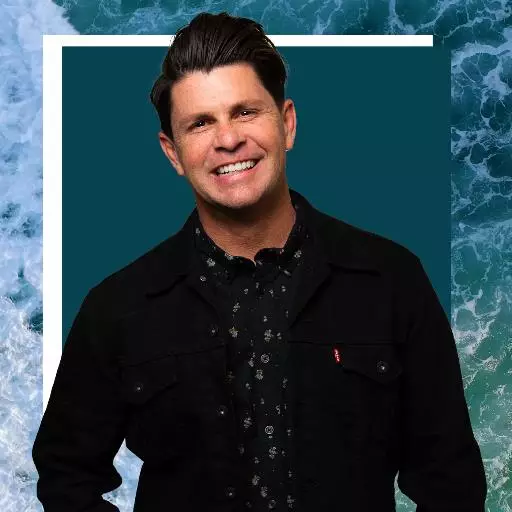
The Purpose and Power of Prayer Part 2


You might be pretty good about praying for others, but do you also ask others to pray for you? Both are important in our daily walk, and we see that modeled for us by the apostle Paul. Today on a Daily Walk pastor John Randall reveals how Paul didn’t shy away from asking the church to pray for him and the work of the ministry! And we shouldn’t either. Let’s turn to Colossians chapter four and take a look at what the conduct and conversation of the Christian should be!
Guest (Male): Pastor John Randall offers these tips as you talking with your unbelieving friends and family.
John Randall: When it comes to having a conversation with somebody who is outside as it relates to sharing the gospel, you're not there. Can I just encourage you? You're not there to win an argument. You're there to to win a soul. And you don't have to get heated and intense and angry. A soft answer turns away wrath. A gentle tongue breaks a bone. It says in Proverbs. But we should be able to give an answer to everyone who asks us for the hope that's within us. That's biblically sound. That's apologetically solid. But we do it in such a way that expresses the grace of God, the love of God, and perhaps will create within them a thirst for God.
Guest (Male): You might be pretty good about praying for others, but do you also ask others to pray for you? Both are important in our daily walk, and we see that modeled for us by the Apostle Paul. Today on a daily walk, Pastor John Randall reveals how Paul didn't shy away from asking the church to pray for him and the work of the ministry. And we shouldn't either. Let's turn to Colossians chapter 4 and take a look at what the conduct and conversation of the Christian should be.
John Randall: Paul encouraged the church in the midst of their prayer and and cultivating a prayer life. There's a need for perseverance. This is a fight. This is a battle. And because of that, you need to be vigilant. And they stay alert. Don't go to sleep on this. And also be thankful. But then Paul also asks the church to pray for him and for the work of the ministry. Now you remember the book of Colossians, like some of the other letters of the Apostle Paul, was written from prison. And here's Paul in prison. He's encouraging the church.
He's writing to them. He's exhorting them. But but then he mentions, hey, could you pray for us in the ministry? Notice what he says. Verse 3. Meanwhile, praying also for us that God would open to us a door for the word to speak the mystery of Christ for which I am also in chains, that I may make it manifest as I ought to speak. I'm encouraged by this personal request from the Apostle Paul because it reveals, for one thing, that he also needed prayer. Now Paul was quick to pray for everybody else. In fact, in some of his epistles, you can read some of the prayers that he wrote down in his letters, telling the churches, this is what I'm praying for you.
And I'm also praying for this. And they are wonderful prayers. But here, very honestly and candidly, in the midst of incarceration, he says, could you pray for me? On more than one occasion, within his epistles, Paul solicited the prayers of his fellow believers in the family of faith. For example, in Ephesians, in chapter 6 and verse 19, he said, and for me, in the context of prayer, and for me, that the utterance may be given to me that I may open my mouth boldly and make known the mystery of the gospel. Paul says, if you're going to pray for me, would you pray that I would be bold?
Wait a second, Paul. You are bold. I mean, I've seen you stand before kings and the book of Acts and leaders and and Pharisees and religious and you you were always bold. But but it tells you something. He's saying, could you pray for me? I need your I want to be bold. And maybe that's a prayer that you have. Would would you pray that I would be bold in speaking God's word? In writing to the Romans in chapter 15 and verse 3, again, Paul says to the church that he's writing there, I beg you, brethren, through the Lord Jesus, through the love of the Spirit, that you strive together with me in prayers to God for me.
Paul says, I'm asking you. Would you would you pray with me? And as you do that, would you also pray for me? And the truth of the matter is we all need prayer. We all need prayer from time to time, people to intercede on our behalf. But not only do I love the fact that Paul was honest enough to say that he needed prayer. But but also what amazes me is what he asked them to pray for specifically. Did you see it? He He prayed that God would open to us a door for the word to speak the mystery of Christ.
Now if I was in prison, my first prayer request would be, hey, could you pray that someone would post bail and get me out of here? Would you pray that I could be delivered from this prison cell so I could get back on the road and go on a few more missionary journeys, plant a few more churches? Hey, maybe even I'll be able to come see you in Colossae. What do you say? Pray that I for my release to get out of here. He doesn't pray for that. What he prays for is not to get out of prison.
He asks for prayer that God's word would go forth even right where he was. That God would open the door for us, he says, that he could share the word boldly. This is similar. You remember in 1 Corinthians chapter 16, the Apostle Paul said, for a great and effective door has opened to me, and there are many adversaries. Paul writes to the church in Corinth and he says, hey, I want to tell you something. There's a door that God has opened for us to go forth and preach the gospel. But I want to tell you something.
There's some real opposition. And and the only way we're going to get through this is through prayer. Would you pray with me? Would you pray for me? God's opening a door. But I'll tell you something. When God opens a door, the devil usually is on the other side of that door to try to stop us from going forward. In 2 Corinthians, Paul said it this way in chapter 2. He said, furthermore, when I came to Troas to preach Christ's gospel, an door was opened to me by the Lord. God had opened several doors for Paul in the ministry.
God made a way when there wasn't one. Doors that seem shut, doors that seem locked, there's no way to get in, there's no way to get through. God just opened the door. And that is consistent with God's character because the Bible does tell us in Revelation, doesn't it? In Revelation chapter 3, these things says he who is holy, he who is true, he who has the key of David, he who opens and no one shuts and shuts and no one opens. Listen, if God's going to open a door, there isn't anybody that can stand and hold it back.
God opens the doors. God makes a way. And if God shuts the doors, then we're not going through. I'm not going to huff and puff and blow it in. I'm not going to try to kick it down. If God's shutting the door, okay. But if God's going to open the door, then he 'll open it and nobody's going to stand. And that gives you such peace. They're going to be such assurance knowing that, God, you open the doors and you shut the doors. So you do what you want. I'm yours. You tell me where you want me to go and I'll go there.
And I've seen over the last 25 years plus of serving the Lord in full-time ministry, I have seen doors open that I never thought would have opened. And I have seen doors shut that I thought surely that they were going to open. I've seen both. But I've seen God's faithfulness in the midst of it all. Paul says, pray that a door would be open. Hey, can I ask you something? When was the last time you actually prayed and asked God to open a door for you to preach the gospel at your job, in your neighborhood?
Maybe right now your prayers have been primarily, Lord, give me out of this. I feel like I am in prison. I need to get I need to do something. Lord, I am tired of this. Have Have you prayed in the midst of this? God, give me an opportunity to preach the gospel. Lord, show me ways that I can be creative, whether it's through social media, whether it's through this or that, that I can make a bold witness. Are you using the platform that God has given you? Are you leveraging the opportunity that God's presented you to get the gospel out?
Or you got some other agenda that you're pushing? What is it you're presenting? Are you asking God to open the door? Or Are you just not even open to walking through it, even if it's wide open? These are the prayers that the the people of God should be praying. God, give us the door, the opportunity to preach the gospel. Paul said in verse He goes on to say to speak the mystery of Christ in verse 3, for which I am also in chains. I'm in prison because of the message that I preach, that I might make it manifest as I ought.
When Paul says that I might make it manifest, the gospel message in itself, a mystery, a secret during this time. People didn't fully understand the gospel. It was a mystery, but it had been revealed. And so Paul was unpackaging this revelation of the mystery of the gospel that was for both Jew and Gentile. And he was making it manifest. And this got him into a lot of trouble. I mean, the message that Paul preached was not the most popular message. Everybody was saying, you know what, Paul, I'm so glad you're here. Thank you. Let Let us show you to the nearest prison cell.
It's like either Paul was going into prison, coming out of prison, he was standing trial, coming out of trial, getting a beating or not getting a beating. That was pretty much his whole life. But he's saying here, just pray that this mystery that's seen in the types and the shadows and the sacrifices and and it's still hidden to natural man, that I could unfold and unravel this mystery that God has revealed to me so that people could be saved. The Apostle says, I want to be able to speak as I ought to speak. And his meaning is that he might deliver it with clearness and evidence and use the plainness of speech which the gospel and he as a minister ought to.
Not Not just some ambiguous expressions that nobody understands or equivocal phrases or double meanings or catchy phrases and things that that's not the gospel. It's almost like a positive thinking kind of a message, but there's no gospel truth to it. It just It really Boy, that sounds really good, but it's not really gospel and it 's not biblically centered. Can I say to you that there's some of that going around today? Feel-good phrases and things, but there's no there's no power to it because it's not rooted in scripture. It's rooted in the philosophies of man and it does nothing for people.
Doesn't change lives. It's not living and powerful. But God's word is. And so Paul saying, I want to be able to commend myself to every man's conscience in the sight of God. I want to speak it faithfully. I want to declare the whole council. I don't want to hold anything back. I don't want to water it down because this crowd might get offended or these people might look at me differently or I'm concerned about just pray that I would just be what I'm supposed to be and make it manifest without apology. That's what I need to do, Lord.
You know, my pastor used to always say, simply preach the word simply. Say it in a way and present it in a way that people can understand. If you're so theologically astute and so, you know, eloquent in your words and so people what do I don't that sounded amazing. I need a thesaurus to look up half the words, but I don't you know, what are you saying? Do people understand? Another way to put it, we used to say it this way, put the cookies on the shelf for people can get to them. It's allowing the common man to hear it gladly.
It's not so high and lofty that that people could never reach this area or get to what you're you're I mean, put it put it in shoe leather, man. Put it in a way that people can actually grab hold of it and take it down the street with them so they know what it's saying. Some people share the gospel or attempt to and you you don't you just don't know what they're saying. Again, you just can't grasp it. It's covered in in words that you you don't know what they mean. And people people need to understand.
And so we need to speak clearly, biblically. Paul said, as I ought to speak. Paul was still dependent, even with all of his knowledge. Think about this. Paul was so biblically knowledgeable. I mean, this guy had such a grasp on the Old Testament scriptures. You read the book of Romans and you read I mean, you read some of the things that Paul wrote and this guy was brilliant. He had such a command of Old Testament scripture and you can see it in the things that he wrote and the way that he ministered. But the interesting thing to me is that he was still completely dependent upon God for his ability to communicate.
It's not as though Paul was leaning upon his own giftedness as this is what's really going to grab hold of the people or or my charisma. Listen, without the Holy Spirit, without the foundation of God's It's just what is it? It's a nice little talk as opposed to something that is life-changing. Now Paul continues here to exhort now the church. We're getting close to wrapping this up. But he says in verse 5 that I would He's encouraging the church to walk in wisdom toward those who are outside. It's speaking to those who are outside the fellowship of faith and redeem the time and let your speech be seasoned always seasoned with grace, seasoned with salt, that you may know how you ought to answer each one.
Again, this is so practical for right now, the times in which we're living. Now when Paul says walk in wisdom, when the word walk is used, we mentioned this even last Sunday that it speaks of the way in which you live. It describes the order of one's behavior. Paul encouraged the believers in Colossae, walk in wisdom, real wisdom, godly wisdom. Remember, they were confronted by the false wisdom of man and the vain philosophies of man. But Paul says, listen, walk in wisdom, live in the wisdom of God. Paul encouraged them in this way. Live the life in front of those who don't know the Lord in a way that they could see God's wisdom.
Why is that important? Why is it important for believers in the midst of this world to walk in wisdom? Well, for one thing, people in this world will judge Christianity not by the profession that we make with our lips, but the life that we live in front of them. That is primarily how people observe or judge Christianity, whether it's authentic or it's hypocritical by how we live, not just by what we say. Also, they will judge Christianity not from preaching necessarily, not from books or from the conduct of Jesus revealed in scripture or the apostles that they've never met, but from what they see in daily living and conversation in the life of the members of the church.
That's where Christianity is on display. Third, they understand the nature of Christianity so well to know this that they are quick to observe and point out when there is any inconsistency. Have you ever noticed that? If one thing that a non-believer knows, that's not Christianity. Even though they're not a Christian themselves, but they could That's not Christ-like. You've heard it said. They set a much higher value on honesty, on integrity than they do on doctrines or creeds or bumper stickers on your car by professed believers who may be destitute of principles of truth and honesty.
They don't think any value of Christianity again if it 's not observable in the lives of those who profess to be followers of Jesus. And that is why Paul is so emphatic in this command when he says, hey, walk in wisdom. And as you walk in wisdom, one of the things that you will be doing as it relates to those who are outside, as you walk in wisdom, you're also going to be And I love this word this phrase here, redeeming the time, redeeming it. What does it mean to redeem something? It means the short answer, the definition means to buy it back.
If I am redeeming it, I am redeeming what is I I am buying it back is basically what it means. It means to buy up the opportunity. It's to make a wise and sacred use of your time. Time moves so rapidly. There's the brevity of life. Time just It just keeps moving. So what do I do? I want to redeem it. I want to buy it back. I don't want to waste it. I want to redeem it while I have the opportunity, while I still can because this life is a vapor. Remember Jesus, he modeled this, even said it to his disciples.
You remember he said in John chapter 9 in verse 4, he said, I must work the works of him who sent me while it's day because night is coming when no man can work. I need to do everything I can while I have the opportunity to do it because there's going to come a time when I won't have the opportunity to do it. So I don't want to waste time. I want to redeem it. In Ephesians chapter 5 verse 16, the Apostle Paul said gave us the reason why we should redeem the time. He said, redeeming the time because the days are evil.
Believers in Jesus are to walk in wisdom. And as they walk in wisdom, one of the things that they'll be doing is they will be redeeming, buying back time as opposed to wasting it. I remember reading at one point in my life and I don't know how I've never tested this out. You can test it out. Let me know if it's true or not. But you read these things from time to time. Someone estimated that 6 months, maybe more than that, of a person's life will be spent at red lights in waiting. Ever thought about that?
I I haven't. But you say I never stop at a red light. Oh, you listen. Listen. But he's saying, hey, pray. When When you're at a red light for 6 months, why not pray? Just say a prayer. You keep your eyes open. And if you close them, the person behind you lets you know. But didn't pray. Redeem that time. There's so many different ways in which we can redeem the time. Multitasking, working, praying, same time, redeeming it. You know, I think a lot of us we could look back at our life and and look at our life and think, man, I've I've wasted time.
But praise the Lord, we have the opportunity to redeem it, to buy it back. Paul then turns from the conduct of the Christian to the conversation of the Christian. This is what This is how you live, walk in wisdom, redeem the time. But this is how you to speak. This should be the the language in the life of the child of God. Well, what should I be saying? Look at what he says. Verse 6, let your speech always be with grace. Notice the word always. Seasoned with salt, that you may know how you ought to answer each one.
Let your speech It means your conversation. In the previous verse, the Apostle had given a general direction of conduct toward those who are not professing Christians should be wise and we should be prudent and and redeem the time. But now he says, hey, listen, here's what you're to be talking about. Here's what should be coming out your mouth. This is how you should be speaking. This is what they're going to pick up on the words that you say out of the abundance of your heart. The Bible says your mouth speaks. And so whatever is coming out of your out of your mouth is an indication of what's going on in your heart.
And some of those things aren't godly. And so here is Paul saying your conversation, let it always be And every one of us right now, we're just convicted because we can't say my speech is always gracious. No, there's plenty of times when it isn't. This is one thing that you find in the life of Jesus, though. This is something he communicated with such grace it astounded his hearers. In fact, in Luke's gospel in chapter 4 verse 22 it says concerning Jesus, so all bore witness to him and marveled at the gracious words which proceeded out of his mouth.
The gracious words, the conversation of Christ. Paul wrote to the Ephesians in chapter 4 and verse 29 and he said, let no corrupt communication proceed out of your mouth, but what is good for necessary edification that it may impart grace to the hearers. What's your conversation like? What are the words that you are speaking to those you are living with presently? Are they gracious words? I am sure again for most of us if we're honest before the Lord and the people sitting next to us, perhaps in our living room or wherever we're watching this, they they know and we know we haven't always been gracious.
But this is God's desire for us to show grace to one another and that our words be seasoned with grace. And if you haven't been gracious, then apologize. Even tonight before this service is over, maybe you've been in disagreement, maybe you've been saying things that are verbally abusive and just inconsistent with the character of Christ, hey, repent of that. I'm sorry. Forgive me for what I've said. I apologize. And ask the Lord to give you gracious words for others. Not only to always have gracious words, but did you see this This is an interesting phrase, that your words would be seasoned with salt.
Well, that's interesting. Salt, salty words, what does that even mean? You remember Jesus in Matthew's gospel, the Sermon on the Mount in chapter 5, he said, you are the salt of the earth. But if the salt loses its flavor, how shall it be seasoned? It's then good for nothing but to be thrown out and trampled underfoot by men. In Mark's gospel, the 9th chapter, in the 50th verse it says, salt is good, but if the salt loses its flavor, how will you season it? Have salt in yourselves and have peace with one another. Guys, think about it.
What does salt do? What does it produce? It enhances flavor. It It creates a thirst. It purifies what is decaying. Many times it can have a medicinal effect. It is a preserving influence. He's saying, let your words be a preserving influence. Creating thirst in those that you speak with. The conversation seasoned with grace, seasoned with salt. Now it doesn't mean that our conversation is always going to be deep theological conversations. You can be a a normal person and and and just have conversations about things in life anymore than than, you know, your food would only be salt.
What are you having tonight? I'm just just salt. That's all I want. I mean, what kind of food would that be? Same as conversation. But there should be something about our conversation that hopefully will point people who are outside to Jesus. Will they be thirsty for Jesus having had a conversation with us? Do we tell people about what Jesus has done, who Jesus is that makes them? Because listen, if they're outside, they don't know anything about that. They're like the woman at the well who's still thirsty. They don't know. And you know where the well is.
And you can tell them and they're thirsty. Seasoned with salt, balanced in conversation in order that you may know how to answer each one. This is important, especially when it comes to those who are outside. When it comes to having a conversation with somebody who is outside as it relates to sharing the gospel, you're not there. Can I just encourage you? You're not there to win an argument. You're there to to win a soul. And you don't have to get heated and intense and angry. A soft answer turns away wrath. A gentle tongue breaks a bone.
It says in Proverbs. But we should be able to give an answer to everyone who asks us for the hope that's within us. That's biblically sound. That's apologetically solid. But we do it in such a way that expresses the grace of God, the love of God, and perhaps will create within them a thirst for God.
Guest (Male): Some good guiding principles there for our conversations with those who aren't saved. Pastor John Randall will be right back with more. This is a daily walk. I have just a few things to tell you about that you may be interested in. What you heard today is one part of a series of studies based in Colossians. You can hear it again at a dailywalk.org, oneplace.com, or wherever you get your podcasts. Now this month, we've picked out a super cool adult tea that says, pray for the USA. Something we should do not only on and around the 4th of July, but all year long.
We're making it available to our daily walk listeners for the cost of $13. You can call us for the ordering details at 877-242-0828. Again, our phone number is 877-242-0828 or request it online at a dailywalk.org. We are thankful for your support, especially during these summer months. If you've been encouraged and blessed by the teaching of the word and want to help us deliver the good news all across the nation and the world, stop by a dailywalk.org or call 877-242-0828. And now with this brief review and closing thought, here again is Pastor John.
John Randall: So as we look at this tonight, very practical in verses 2 through 6, our prayer life. What's the prayer life of the Christian look like? There's perseverance. There's vigilance. There's thankfulness. There's intercession for those who are in ministry and and those who are in need. That's our prayer life. And also we how do we live? This is how we pray. Well, how do we live? Here's how you live. You walk in wisdom. Well, how do we talk? You talk with grace. The gracious words, very practical indeed and I would say very relevant and applicable tonight.
May God help us as believers to apply these things. God, help me to to pray as I ought to pray. Would help me to live the way you've called me to live. Lord, let me speak in a way that honors you and draws people to you.
Guest (Male): Next week on a daily walk, we'll have a look at the closing comments in Colossians. Don't miss it. This program is brought to you by Calvary South OC and made possible through your generous support.
Featured Offer

We’re very excited to tell you about a newly revised book from Pastor John’s wife, Michelle Randall! It’s, “The Great Exchange: Finding Freedom in Surrender!” Michelle calls the journey of surrendering our will for God’s will, the Great Exchange! And with candor, she shares her own real-life experiences of learning to relinquish her will for God’s will. With relatable, practical, and applicable insights for today’s struggles of faith and fear, “The Great Exchange” will encourage, strengthen, and challenge you in a quest for complete surrender and a fervent pursuit after God. Be set free as you exchange your will for God’s will.
Past Episodes

Featured Offer
We’re very excited to tell you about a newly revised book from Pastor John’s wife, Michelle Randall! It’s, “The Great Exchange: Finding Freedom in Surrender!” Michelle calls the journey of surrendering our will for God’s will, the Great Exchange! And with candor, she shares her own real-life experiences of learning to relinquish her will for God’s will. With relatable, practical, and applicable insights for today’s struggles of faith and fear, “The Great Exchange” will encourage, strengthen, and challenge you in a quest for complete surrender and a fervent pursuit after God. Be set free as you exchange your will for God’s will.
About A Daily Walk
John Randall is the Senior Pastor of Calvary South OC located in San Clemente CA. John has been serving in pastoral ministry for over 25 years and is the featured speaker on the Bible teaching radio program "A Daily Walk." He is known for his clear and relatable presentation of the Scriptures.
About John Randall
As a child, John’s family began attending Calvary Chapel Costa Mesa in 1974. It was there that he attended the elementary school, Jr. High, and graduated from Calvary Chapel High School. Following graduation he went on staff at Calvary Chapel Costa Mesa as a janitor. It was also at this time that he met his wife Michelle who was teaching at Calvary’s elementary school.
After four years on staff having served in children’s ministry, high school ministry and worship John went on staff at Calvary Chapel in Vista CA.
In 1997 the Randall’s set out on a venture of faith to the SouthEast of Florida where they planted their first church, Calvary Chapel of Brandon. After ten years of ministry in Florida the Lord called the Randall's back to Southern California where John currently pastors at Calvary South OC. John has been serving in pastoral ministry for over 25 years and is the featured speaker on the Bible teaching radio program "A Daily Walk." He is known for his clear and relate-able presentation of the Scriptures. John and his wife Michelle have four children.
Contact A Daily Walk with John Randall
http://www.adailywalk.org/
Address
Calvary South OC
1311 Calle Batido
San Clemente CA 92673
@johnprandall
@PJRandall7
Phone Number
877-242-0828